

“We do not need to go to the edges of the earth to learn who we are, only the edges of our self.” – L.M. Browning, in Seasons of Contemplation: A Book of Midnight Meditations
Some journeys are external others internal. Pilgrimages are travels we make to places that we feel hold spiritual significance—that will speak to our inner selves and transform us. We might travel to a place where grandparents were born, to a significant site connected to our history or a religion we practice. Pilgrimages connected to poetry attract me. The year I lived in the UK, I wanted to follow the Stanza Stones poetry trail. Located in the Yorkshire moors of England, this 47 mile trail contains six Stanza Stones, poems written by Simon Armitage and carved into stones naturally found in there by Pip Hall. Armitage collaborated with the Ilkley Literature Festival organizers to create the poems for the trail. To walk a landscape is to absorb the land’s language. Arimtage’s poems connect walkers to the landscape with words as they encounter the poems as in these lines from his poem, “Snow,” “What can it mean that colourless water can dream such depth of white?” Though I wanted to walk at least part of this trail, I wasn’t able to find a good way to connect to it without better transport the weekend I had free to visit the area, so let go of the idea of this pilgrimage.
Walking Basho’s poetry trail is another pilgrimage I dream of going on. Following this pilgrimage path, walkers can hike the 17th century trail where the great haiku poet, Basho, traversed through northern Japan’s mountains to the Sea of Japan, passing by Shinto shrines, through pine covered islands, and hot springs along the way. I don’t know if I will be able to get to Japan any time soon to make the journey that inspired many of Basho’s poems. I look at photos of it on the Internet, though, imagining the quiet joy of walking for days beneath bamboo forests and among ancient trees.


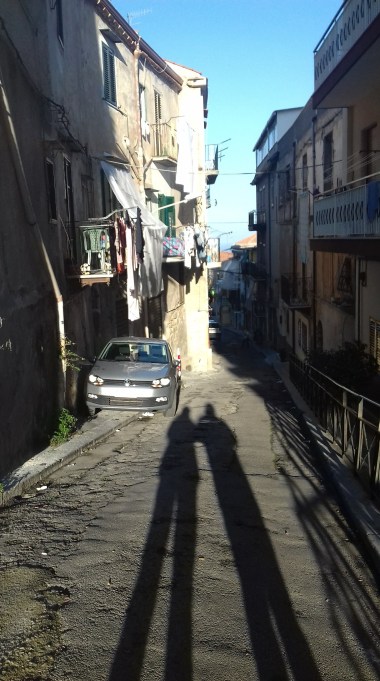
We’re not always able to make the trek of our dream or travel to another land. Nevertheless, there are pilgrimages available to us all: quests through books, and our journey through time. A favorite journey I’ve been on since 2012 is one of the imagination. This sojourn began when I wanted to collaborate with a colleague I worked with who played the cello beautifully, and who was going to move away at the end of the year. I suggested a collaboration where I would write a poem for a piece of music he chose to play, and we would record the pieces together. The music he selected was Fauré’s, Après un rêve, (Op. 7, No. 1). The piece evoked a sense of loss and longing, transporting me to Naples Bay’s enormous circumference where I’d recently sat with my husband at sunset. As the sky burning gold-orange, we watched a boat pull from shore, heading toward the wide horizon. I thought of his grandparents departing Italy for America—how they left behind the world they knew as well as everything and everyone in their village of San Lucido on Calabria’s coast. They had no pictures of the world they moved to, didn’t speak the language, had little money and likely no maps. They never returned to Italy. Leaving was risky, enormously brave, and they would never be the same. Neither am I, as without their departure, I would’ve never met the man I married.
After writing the first poem, “Luisa Leaves Home,” in response to the music, I wondered many things: Why did they leave Italy? What was life like in San Francisco when they arrived? How well did different ethnic groups get along? What are Italian-Americans contributions to American culture? How did World War II change Italian-Americans? What does it mean to be Italian-American today? What does it mean to be American? Hundreds of questions surfaced, and I searched for answers. Paradoxically, the more I researched and wrote with the aim of unraveling threads from a century ago, the more mysterious and complex the world grew. The more questions I had.
I began listening to news items and other people’s stories with a second ear. I applied situations and information to the immigrants’ lives I was writing about, and reflected on how my experiences connected to their world. After sharing one of the poems with a relative, she looked me straight in the eyes and said, “That poem isn’t Noni. I don’t know who you think you’re writing about, but it isn’t my grandmother.” She was right. I never met her grandmother or lived in San Francisco. I didn’t grow up in an Italian American family or neighborhood. Neither do I speak Italian. Any of these qualifications would be beneficial in helping me write about Italian immigrants to America. The Italian grandparents were from a different time period and culture, and had little education. I had no way to access their lives or inner worlds and the family knew few facts. I couldn’t truly write in their authentic voices. Every writer has limitations of gender, culture, and time period, however. I felt drawn to understand and to journey inside Italian immigrants’ world, so I turned to research and imagination, constructing possibilities to embody a story. Research helped me to put the few facts I knew into a larger picture with a wider frame. Imagination created a bridge to a culture, time period, and people that gave me greater awareness of the complexities inside choices immigrants made.
We look in the mirror when we are at six, sixteen, or sixty. All that came in the years before is mostly hidden from view, disappeared, but still present beneath the surface, creating the life we see and experience. There are myriad stories inside one story. We’re many selves inside one body. It’s the same with cities. Years back I read Italo Calvino’s book, Invisible Cities, where Marco Polo describes to Kubla Khan various cities, all of which are actually Venice. I began to see San Francisco in this way as well as I wrote—its subtle elements still present revealing the past or rising from a foundation into a remodeled version. When visiting the City, I recognized places I’d never been because I’d seen them in historical photographs and could recall events that took place there. It isn’t just San Francisco I see differently now as a result of searching for answers to my questions. The world I live in is larger and has greater dimension because of questions I’ve explored answers to. The walk into an unfamiliar world has been a pilgrimage that widened my perspective and has transformed me.

To step out on a journey into new territory can be unsettling for travelers. Today, people don’t think of Italians as the “other.” During the peak period of Italians immigration to America, however, Italians experienced prejudice. They were seen as lawless, treacherous, and having filthy habits. (See more at this CNN article, “When Italian immigrants were the other.”) Italians weren’t allowed to build a church inside Manhattan because city officials were fearful of Catholicism and the ceremonies they didn’t understand. The largest single lynching in America was of Italians in Louisiana 1891. Teddy Roosevelt, though not yet president, said of the lynching it was “a rather good thing.” The man who helped organize that lynching, John Parker, later became Louisiana’s governor in 1911.
Currently, similar to the time period one hundred years ago in America when Italian immigration to the US was at its peak, Americans’ fear of immigrants is heightened. Openness to new experiences, information and ways of seeing can enrich and expand our lives, and bridges that allow us to build deeper understanding of what is different can be helpful. Mahzarin Banaji co-author of Blindspot: Hidden Biases of Good People and Professor of Social Ethics in the department of psychology at Harvard explains in her interview with Krista Tippett that our minds are basically wired to distinguish differences in order to help us make sense of our world. This wiring creates biases and blind spots we’re not aware of. Tests created by researchers to help you see your biases at Project Implicit. People can, however, gain understanding of biases and blind spots by exposing themselves to ideas and people that stretch their boundaries of familiarity. Challenges to people’s preconceptions presented in contexts allowing them to continue to feel safe can help people grow in their understanding of others different from themselves.
One terrific way to do this is through reading, as reading allows us to learn from others without having to take personal risks as we step into their lives. Scientific American’s October 23, 2013 issue reports social researcher, Emanuele Castano and PHD candidate’s research evidence showing how literary fiction, delves into characters’ thoughts and interactions. In literary fiction, explains Kidd, “Often those characters’ minds are depicted vaguely, without many details, and we’re forced to fill in the gaps to understand their intentions and motivations.” As a result, readers have to imagine characters’ inner thoughts. This kind of thinking nurtures empathy as it leads readers to understand the complexity in characters’ lives and to reach for why they might do things differently than expected.
If reading literary fiction helps break down stereotypes and prejudices, enabling readers to develop empathy with those different from themselves, it follows that writing fiction could further expand this capability as authors not only step inside character’s minds, they create their thoughts and build contexts from which they flow. As a writer, you immerse yourself in your characters’ lives, become familiar with their setting, social context and way of seeing so that you can portray their world. You reveal your characters’ weaknesses and blind spots, and come to understand your own as well.
While most people aren’t fiction writers, we’re all creators of our own life stories. We can consciously aim to expand our understanding of new contexts and situations. Simple things like taking a new route home, listening to or playing a different type of music, going to a lecture on an unfamiliar topic, trying a new sport, hobby or food can all help us expand. We can learn a few phrases in a new language, take a class in a unfamiliar subject, learn about plants in our yard or types of architecture in the neighborhood, experiment with art or try building something. When meeting new people, we can ask questions to bring out their experiences or ways of seeing things. These actions may not seem like large leaps for some, nevertheless they can open new paths in our brains to carry us on journeys widening into new vistas of understanding.
Some journeys start before you know they’ve started. I’d written quite a few poems about Italian immigrants experiencing earthquakes, crossing the Atlantic, learning about the largest lynching in America, and Italians being removed from their homes to be taken to internment camps before I realized I was actually on a pilgrimage with them. I’ve made the pilgrimage with them as I could through writing, and the trek has caused me to view my own place in the world with greater humility.
Not every story is ours to tell, but this one called to me and I felt compelled to take the writing journey to tell it. A Space Between to be published by Bordighera Press (date to be determined) describes this journey, and I look forward to sharing it with you. If you want, you can read more about the book here.




 Anna Citrino---Poetry, Place, Pilgrimage