
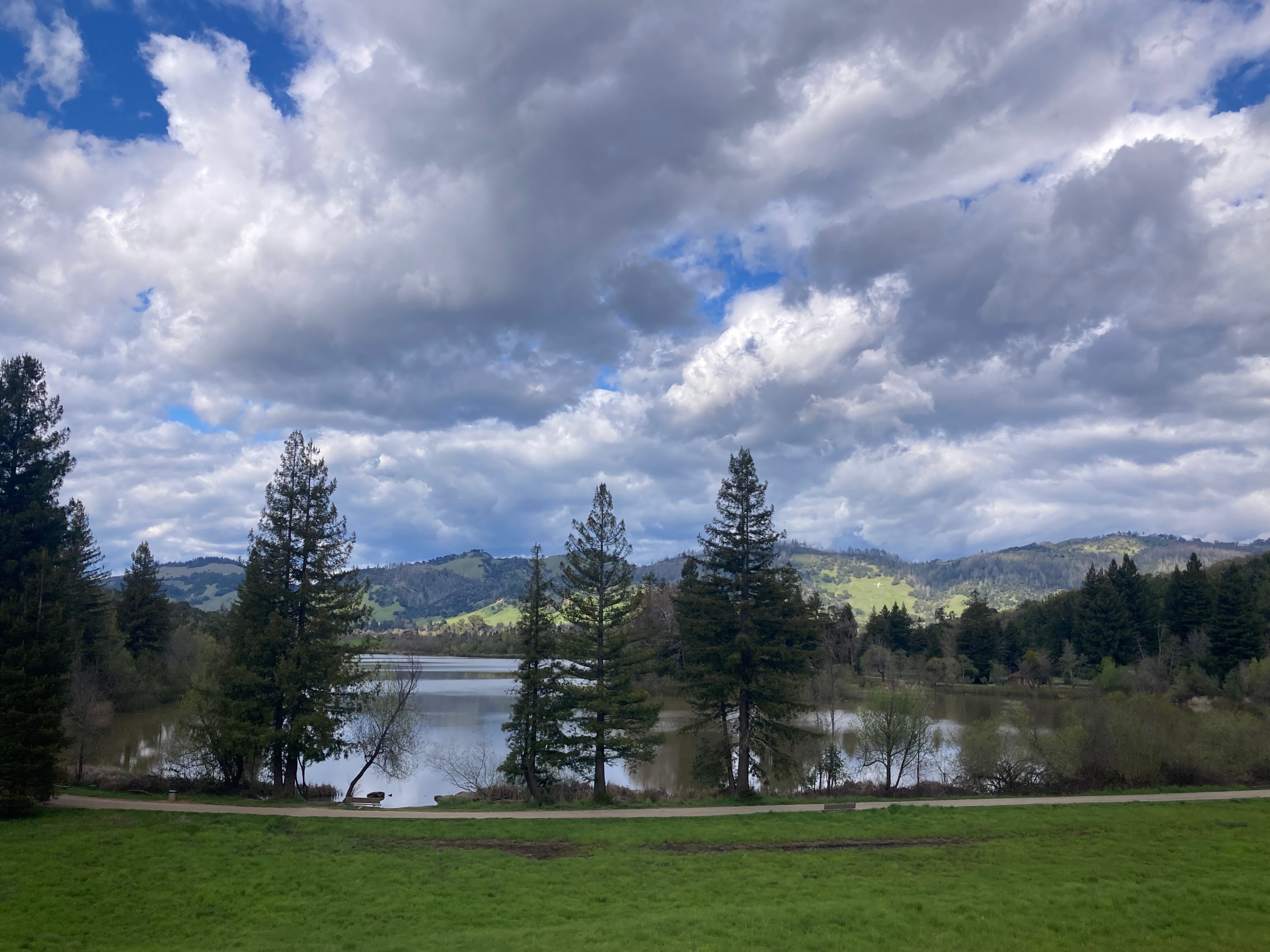
I went for a brisk walk in the wind today before the rain began. Branches twisting and turning wildly, I wondered if the redwood tree in a neighbor’s yard would continue to hold fast to its roots. Palm trees flailed their long limbs. Grasses bended and waved. Here and there, lichen covered branches that fell from the oaks above lay along the path. Gray light covered the sky. No sun in sight, and everything was astir. Though the morning news was bleak, walking in such air felt utterly invigorating, and made me consciously aware of the aliveness of everything around me.
The flood of current changes in the US have consequences for neighboring countries and countries throughout the world. Many have lost their jobs, and many others have died as a consequence of the current government administration’s activities. The natural world is suffering as well. It’s ugly and utterly heartbreaking. What can be said that doesn’t further emphasize the devastation and add to the information stress? What might bring insight or release?

Reflecting on these questions, Barry Lopez‘s essay, “Drought,” found in his book River Notes came to mind. Lopez tells the story of during a time of severe drought where a man dreams of a large fish that had fed himself too much and grew too large to escape the pool as the river receded around it. The river is slowly dying and the large fish stuck a shrinking pool in the river is dying as a consequence. The man wakes from his dream, goes to the spot in the river the dream depicted, and rescues the fish. The man doesn’t know if the river will return to life or if the drought will continue and cause the river will go completely dry. But he believes his relationship to the river is important and that responding to the dying fish’s needs is necessary.
“There’s power to dying,” writes Lopez, “and it should be done with grace.” After releasing the fish, the remaining larger stream of water in the river, because it was the most beautiful thing he could offer the river, the man does a dance like that of long-legged birds on the river’s shore. “A person cannot be afraid of being foolish. For everything, every gesture is sacred.” Though the dance seems an absurd, irrational act, he does it anyway. Doing something selfless, perhaps even silly so that we remember how to live is important.
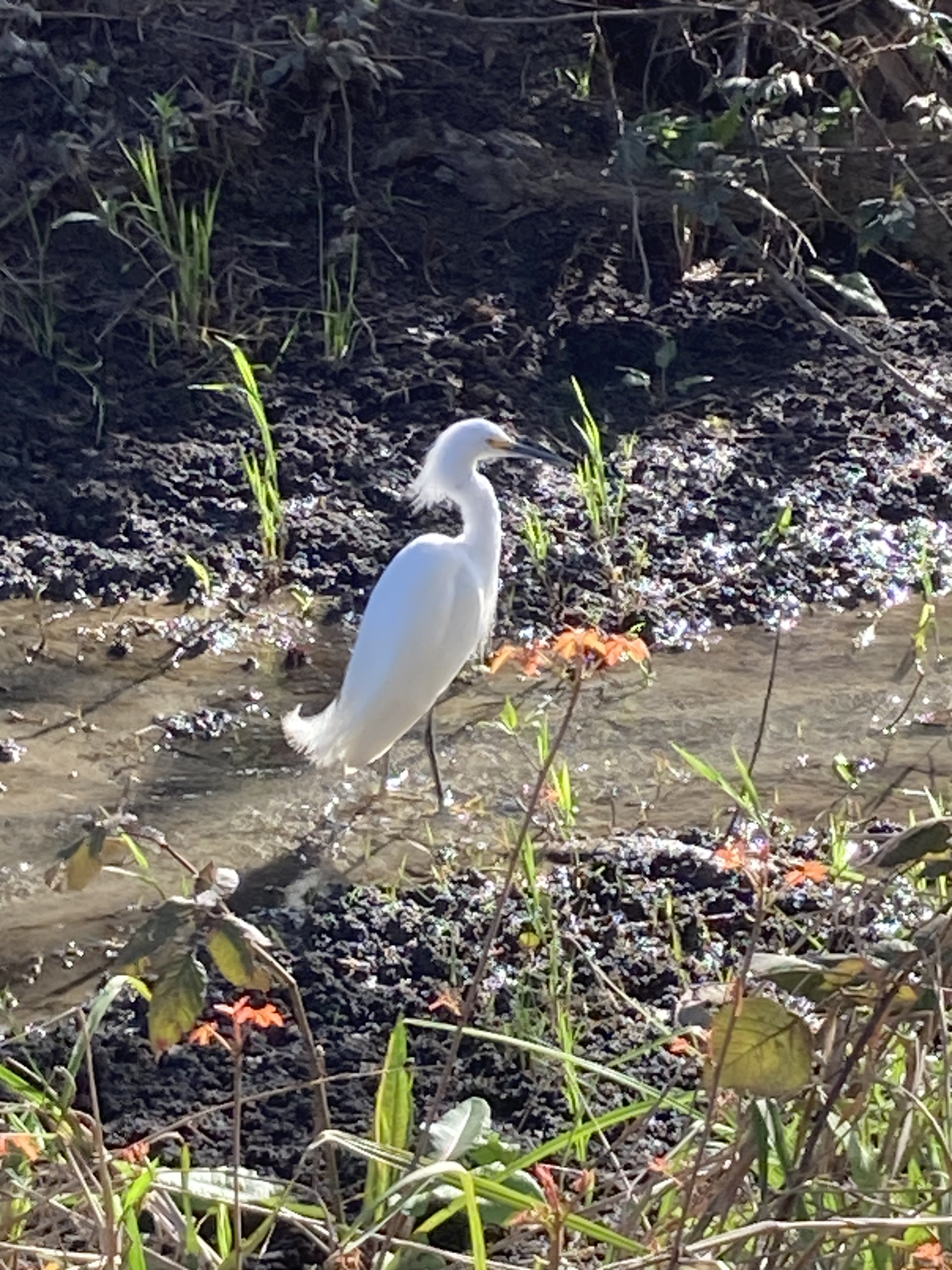
Gradually, the river returns to fullness. Reporters talk about the change, offer factual information about the river’s return, and people carry on their former way of living. But the dance the man did by the river sticks in the mind and changes the way we see not only the river but our way of living. When so many things we may have cherished and held dear are dying, Lopez reminds us of the importance of recognizing our relationship to the world around us. “Everyone has to learn how to die, that song, that dance, alone and in time. … To stick your hands in the river is to feel the cords that bind the earth together in one piece,” writes Lopez. Despite our ignoring the natural world’s ongoing generosity, despite differences in culture, values or beliefs we hold, we share this world together.
When we feel we’re going through a severe drought, when everything around us feels as if it is falling apart or appears in decline, it’s important to pay attention to dreams that call us to remember our connection to what brings life and to respond. When we see ourselves in a connected living relationship with the world, we respond to the world differently. The world is no longer an object to be used solely for utilitarian purposes.

Relationships are reciprocal. We take care of what we love and listen to those we love so that we can respond with care. How might I listen to the quality of my relationship with the world? Following Lopez’s narrative as an example, what beautiful thing might I offer the life around me today that will help me recognize my relationship to all that is and my responsibility toward it, even though it might seem silly? Making an offering, to the lives that sustain us might come in the form of a dance, a flower, a letter, a song, art, or a variety of other possibilities. It might feel awkward or silly, but such an offering is a way to remind ourselves that we’re in relationship with a world wider than our human effort, and that the choices we make ripple out to affect everyone, including the more than human world.
John O’Donohue writes in his poem, “Morning Offering,”
May my mind come alive today
To the invisible geography
That invites me to new frontiers,
To break the dead shell of yesterdays,
To risk being disturbed and changed.
May I have the courage today
To live the life that I would love,
To postpone my dream no longer
But do at last what I came here for
And waste my heart on fear no more.
In the midst of storms where winter feels it will never end, I wish for you to listen to the dreams of your heart, to go out on walks, to sit outside, or somewhere where you can simply stare at the sky, and listen for how you might respond with some gesture toward what is dying that you’ve long loved. Let us have the courage to risk being disturbed and changed, so that in the words of O’Donohue “we waste our hearts on fear no more.”

You can listen to a moving recording of Lopez reading his piece, “Drought” with David Darling playing the cello in the background here.

 Anna Citrino---Poetry, Place, Pilgrimage
Anna, this is a brave and beautiful piece to help guide us forward toward (rather than stray from, out of sheer horror) our inner gift.s Thank you so much. You pulled a lot out of that windy walk!
Pegatha I tried leaving this as a comment bu it said cold not be posted. Either way
All of this. Such thoughtful writing, a balm in my agitations. I’ve been thinking about what landscape I’d live in, the work I’d do if I could. I love the Lopez story–I’ve been revisiting Joseph Campbell, and his idea of “find your bliss” has been nagging at me, and your piece resonates the same way. He says that “a vital person vitalizes” the world, and you certainly do that. Thank you.
Sometimes going back to writing that resonated with us long ago, helps us see continued or deeper connections to life. “Finding bliss” as Campbell suggests is not necessarily an easy task and it might also shift through time.