art, Geography, poetry, Uncategorized, writing

Sicily, and Cathedrals of the Heart

20161219_100643-1

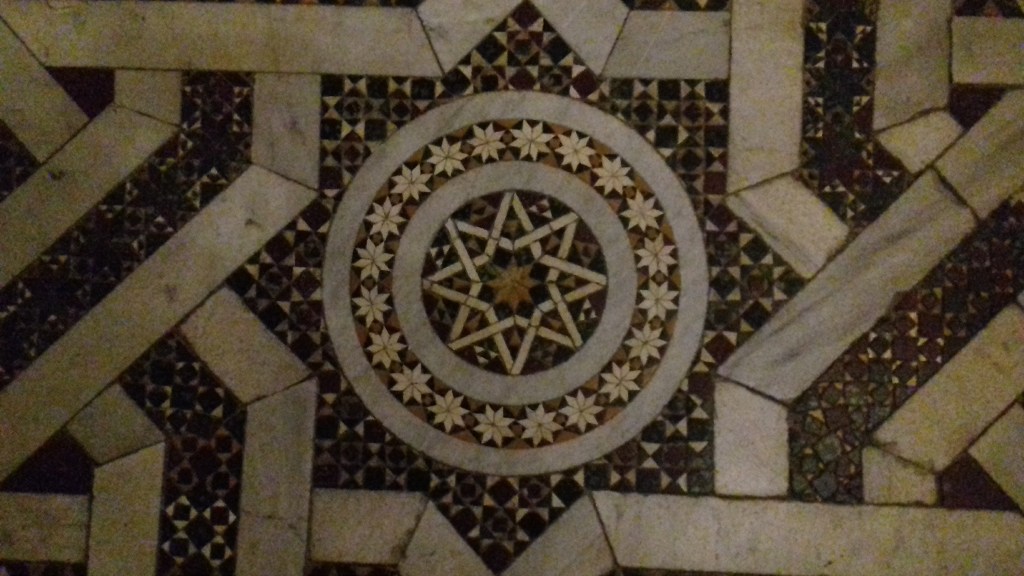
I’ve just returned from Sicily, a poor region of Italy, but a land rich in beauty–beauty enough to leave me speechless and in awe as I stepped inside Monreale’s cathedral and looked into the face of the pantocrator–Christ as the Lord of the Universe–depicted in the shining mosaics filling the central apse. The mosaic is so finely made it seems to be painted. A world heritage site, the cathedral holds the largest Byzantine mosaics outside of the Hagia Sophia in Istanbul. Mosaic art was practiced in the Byzantine empire since the fifth century (according to the Joy of Shards Site.) Thousands of skilled craftsmen had to have worked for centuries to be able to produce the level of skill to create the quality of workmanship presented in Monreale’s cathedral and cloister. (See more images here and here.) The walls depict various Biblical stories–God giving Adam the breath of life, Noah building the ark, Jesus holding out his hand to Peter who has jumped the fishing boat he was on with the other disciples in order to meet Jesus who he sees walking across the water–stories told through images of God interacting with the world and in humans’ lives.

20161218_164013Jungian psychologist Robert A. Johnson, in his book, Inner Work, writes of how the original meaning of fantasy comes from the Greek, phantasía, meaning “to make visible, to reveal.” Johnson explains how it’s our imagination that converts the invisible to the visible, enabling us to contemplate it. Interaction with world in the form of the arts and in writing enables us to understand spiritual truths. For the Greeks, Johnson goes on to say, phantasía was the way the divine spoke to the human mind. Until the Middle Ages, Johnson states, phantasía was thought of as the “organ that receives meanings from spiritual and aesthetic worlds and forms them into an inner image that can be held in memory and made the object of thought and reasoning” (p. 23). Phantasía was also the word Roman writers employed when wanting to “speak of the human faculty by which we express the contents of the soul by using poetic or spiritual energy.” In other words, practicing using our imagination, as artists and writers do, allows us to become conscious again of spirit. Johnson asserts also that when speaking of sensing the spirit, all ancient people understood, “Only our power to make images enables us to see it.”  In fact, Johnson explains, “When we experience the images, we also directly experience the inner parts of ourselves that are clothed in the images” (p. 25).  As Abigail Tucker reported in The Smithsonian’s article, “How Does the Brain Process Art?”, the brain signals the body to have physical responses to art, mirroring what is viewed.

The cathedral at Monreale, clearly demonstrates Johnson’s assertion of imagination’s power. Stepping from the everyday life of the street and entering the cathedral, I was carried out of myself into a place of wonder so astonishingly beautiful in its glowing color and intricately depicted images it could bring a person to tears—or at least it did me. A thousand years ago in Sicily, people worked the land, even as many do now—a challenging life, dependent on nature and the weather, as much of Sicily uses dry farming methods. Life could be difficult, but then there was the world inside the cathedral—a place of intense beauty, a heaven on earth, that could lift you from the mundane, and transport you into a place of wonder. In doing so, you understood your life was more than mere struggle. You were also part of a greater reality, you were also Spirit, and you participated in the life of that Spirit as revealed in the cathedral’s art.

Recognizing God speaks through nature, the Psalmist wrote, “The heavens declare the glory of God and the firmament shows his handiwork.” The Psalmist created music to express the presence of Spirit. Artist Georgia O’Keeffe painted flowers enormous on her canvases as a way to invite viewers to engage with the natural world. “Nobody sees a flower,” she wrote, “- really – it is so small it takes time – we haven’t time – and to see takes time, like to have a friend takes time.” Interacting with nature as an artist, as well as simply viewing paintings and pondering them are ways to touch Spirit. Similar to O’Keefe’s intention for viewers in the paintings she produced, though cathedrals’ construction were normally initiated by kings as expressions of their power, and often with political aims, cathedrals could also be viewed and embraced as embodiments of love—love expressed in and through the hands that made them. To produce works of such beauty, heart had to be invested, not merely the use of skill. A thousand years later, the mosaics in the Monreale’s cathedral beauty draws the world to stand before them in awe.

The Norman ruler, King William, ordered construction to begin on the Monreale’s Cathedral in 1172. The building was completed in 1176, and the mosaics by 1189. That is only 17 years for a work of monolithic and intricate beauty. I think of the difficult times we currently live in, and the tremendous effort needed to rise to the challenges–social, political, economic, and environmental–that we face, not unlike that of building a cathedral. Likely, all times could be identified as difficult depending on where you live and what you’re living through, but a particular area of current concern are the many in the world who have lost their homes. The Guardian’s December 31, 2016 article describes, “War, weather, climate change and terrorism have made millions homeless,” and then goes on to add starvation, and natural disaster to the list of causes. Sixty three million people today are fleeing disaster according to The Guardian. To address the needs of these displaced people so that their fundamental necessity for shelter is met will take the effort of millions. The forces at work to create such displacement are monumental. I’m wondering, though, how we might use our imaginations to create a cathedral of spirit amidst the poverty of our current situation in order to address the human needs of those around us.

20161218_150524

While reading Unsettling America, An Anthology of Contemporary Multicultural Poetry, I came across Maria Mazziotti Gillan’s poem “In Memory We Are Walking,” where Gillan describes how as a child, she once went on a picnic with her Italian immigrant family. The poem allows us to go inside the experience of what displaced people likely feel coming to a new land for reasons of necessity, and working to make it home. On a rare excursion, the poem’s speaker–a young girl–and her family left Patterson, New Jersey, walking out of their mill worker’s house “built cheaply and easily,” and past “squat middle-class bungalows” that, to her, appeared to be wealthy abodes. She describes how her father, hoping for a job, walked from Patterson to Passaic, nearly a two hour’s journey, to inquire about an opening. He didn’t have the money to take the train. When he arrived, a worker told him, ‘“You stupid Dago bastard,…/ Go back where you came from./ We don’t want your kind here.” The words from this poem resonate elsewhere in the world and across time. Reading current news stories, though the faces may be different now, one can still see how attitudes prevalent at the turn of last century regarding immigrants persist.

Before leaving to travel to Sicily this past December, I visited downtown London early one evening. When I emerged from the subway tunnel, I heard a loud voice calling out, “Help me. Somebody save me!” A man sat on the street outside the subway exit shouted to those walking by. I didn’t know what kind of help the man needed, or if he possibly might not be in his right mind. Like others, though, I crossed the street to wait for the bus—on my way to elsewhere. Ten minutes later, the man’s desperate voice could be heard shouting, his words echoing across the street. On and on he called, his plea reaching into my thoughts—fixing itself there, and becoming, somehow, the needy voice of us all.

20161215_174636

Further up the street, suspended in flight, angels hovered above the roadway in the form of electric lights. Christmas shoppers emerged from the brilliantly lit multilevel department storefronts, windows packed with a plethora of products–leather purses and shoes, sequined dresses, sportswear and down jackets, wool hats and scarves, specialty chocolates and teas. Streets drenched in abundance while at the same time, not far away, a man calls out for help, and none respond. Further down the street, I walked by a man in a grim looking Santa costume. He leaned against a wall above the sleeping bag where he slept, a cup held out for money. Entering another subway station, a second Santa stood by the escalators holding a cup for offerings, a thin woman with a drooping Santa hat, and wearing grubby Santa coat and a plaid skirt. Homeless Santas, and a man pleading to be saved–if not physical poverty, we live amidst a poverty of spirit. Those on the street have the humility to admit their need. The man on the street shouted out the words that we in our social silence, pride, and neglect fail to speak: that in many ways in the places we live, if not our lives and way of living, then in our hearts–connection to each other, is broken. If so many around us live in dire need while others of us live in physical abundance, then somebody help us.

From the crowded streets of our lives, the homeless part of ourselves calls out in our poverty. The somebody that must help us needs to arise from within. What kind of world do we want to live in? What does a beautiful world look like? How would people interact in order to create a world where we could live without fear, where all people’s needs are met? Just like those who built the cathedrals of Sicily, we each have skills we have built up over time. Humbly, and together, we can use these abilities to create the world we want to live in. We can do our art and look for ways to create neighborly acts of kindness and generosity wherever we are. Whatever the work we look for or do, we can make of our work a spiritual effort, a prayer. With our hands and mind, we can create sanctuaries of the spirit, cathedrals of the heart that transform ourselves and those around us. As poet Nancy Wood writes, “Patterns persist,/life goes on, whatever rises will converge./ Do what you will, but strengthen the things that remain.” We can use our imagination to discover ways to transform despair, and to practice the skills that will make a world where, like the cathedral of Monreale, a refuge of beauty and place of peace people a thousand years from now can inherit and inhabit.

Like the work to create the cathedral, creating such a world takes devotion, love, and hard work. Labor doesn’t have to be merely work, as it often becomes when the goal is merely for self interest and personal gain. Just as beauty can open our hearts, labor can also enlarge us as we work together. The two aren’t inseparable when we work with the intention that the labor we do is a way to give something needed for the betterment of the community–for the beauty of the earth and humanity.
20161218_163751

poetry, Uncategorized

Poetic Truth in a Post-Truth World

On the parkbench sleeps a tiger
With a very tall old lady
In his lap; she is so tall
(And so noisy) that her knees
Have attracted a pair of screechowls
To form on them a nest that sways.

–from Kenneth Patchen’s poem, “On the Parkbench”

This boisterous, fanciful scene from Patchen’s poem awakens the physical senses, describes the unbelievable, and invites us into a world of imaginative play we can delight in.

A while back I visited the Sherlock Holmes museum here on Baker St. in London. Since I received the book, The Adventures of Sherlock Holmes as a gift from my brother when I was in fifth grade, I’ve been an admirer of Sherlock’s keen ability to observe closely, to see the relevant details in a situation others passed over, and to draw conclusions from them. “The world is full of obvious things which nobody by any chance ever observes,” Holmes states in The Hound of the Baskervilles. Doyle’s Holmes had a wonderful ability to pull together a wide array of details, imagine himself into the scene, and to find the truth of the story that rested beneath the details that others pass over. What struck me as particularly interesting when I visited the museum, however, was how the docents would tell you in all seriousness as you entered a room in the house, “This is where Sherlock slept,” and “This is where Sherlock sat, “as if Sherlock were actually a living person. While here in London, I’ve visited Handle’s, Jimi Hendrix’s, Samuel Johnson’s, Thomas Carlyle’s, and Leighton Ford’s houses where you can read about their lives and see their work. These were, indeed, real people who actually did sit in specific chairs or slept in the beds in the house. Hendrix, for example, is said to have spent a lot of his time writing while in bed. Holmes, on the other hand, though he was concerned about truth, is still a fictional character–even if he seems vividly alive in our imagination. “Eliminate all other factors, and the one which remains must be the truth,” Holmes stated in The Sign of Four. This is why, even though I realize that the Sherlock Holmes museum is a tourist spot and is appealing to people’s need for a touch stone for this well-loved character, it struck me as odd to hear information given out about Holmes as if he had lived, and it made me wonder about the fiction’s role in our lives.

Unlike at the Sherlock Holmes Museum, at the Warner Brothers Harry Potter studio here in the UK, those who love J.K. Rowling’s books can go to the studio and experience how artists and set makers have turned the fictional scenes of the novel into tangible realities for the movies. You can see the Hogwarts’ castle bathed in dramatic light, step inside Dumbledore’s study, and observe see for yourself the golden snitch made for the game of Quidditch. This is invented reality. We know it, but like all good literature, the imaginative story in the Potter books holds life lessons we can learn from–the value of friendship, staying true to yourself to name but two.

Fiction offers truths that enable us to reflect on who we are and how we are living. Ralph Elison wrote, “Good fiction is made of what is real, and reality is difficult to come by,” a statement which seems quite relevant for our current social context. Susan B. Glasser, in her article in Politico Magazine, “Covering Politics in Post-Truth America,” mentions how, “a few days after the election the Oxford Dictionaries announced that post-truth has been announced as the 2016 word of the year, defining it as a condition in which ‘objective facts are less influential in shaping public opinion than appeals to emotion and personal belief.'” Facts are essential to our lives, and they are particularly important to poetry. Poets rely on facts to tell their truths. One of the great purposes of literature is to enable us to see truths about ourselves that we can’t see by simply reading the news. Poetry uses the literal realities of the world to aim at larger truths about the human condition. If you read Gerald Stern, for example, in his poem, “The Dancing,” you are brought through the facts of the poem into post World War Two as he describes his father in his family’s tiny apartment on Beechwood Boulevard,

his left hand under his armpit, doing the dance
of old Ukraine, the sound of his skin half drum,
half fart, the world at last a meadow,
the three of us whirling and singing, the three of us
screaming and falling, as if we were dying,
as if we could never stop–in 1945–
in Pittsburgh, beautiful filthy Pittsburgh, home
of the evil Mellons, 5,000 miles away
from the other dancing–in Poland and Germany–
oh God of mercy, oh wild God.

We can feel the tension between the dance punctuated by the “half fart” sounds coming from beneath the father’s arm pit in the poem and the war, “5,000 miles away” where Jews were “dancing” to keep away from Poland and Germany’s death camps. The family is dancing and laughing, falling as if dying as a way to deal with the horrors of the world. As readers, we see the pain between the lines, how the family is caught in their poverty and loss, and the greater loss of those who they feel connected to across the world, who are, in fact, dying. Similarly to the efforts of Sherlock Holmes, poets work to help us become aware of the larger connections of our inner world to outward realties so that we bring to the surface the details that enable us to begin to see the truth of our own experience. Though still affirming emotion, poetry in this way is a kind of corrective to a post-truth world where appeal to emotion matters more than facts.

Michael Longley, in a recent interview with Krista Tippett on her program, On Being, “The Vitality of Ordinary Things,” Tippett asks Longley, “What does poetry do? What does it work if it’s not solace?” Longley responds, “if you think of an out-of-tune violin, and tuning it up so that it’s in tune, I think that’s what art is, and that’s what art does. And good art, good poems is making people more human, making them more intelligent, making them more sensitive and emotionally pure than they might otherwise be.” This is a truth built from the fabric of the heart, and is also what I recall Lucille Clifton saying when I took a summer the Flight of the Mind writing workshop from her in Oregon during the 1990’s, “Poetry humanizes.”

Langley goes on to say in the interview with Tippett that “one of the marvelous things about poetry is that it’s useless. It’s useless. ‘What use is poetry?’ people occasionally ask in the butcher shop, say. They come up to me, and they say, ‘What use is poetry?’ And the answer is no use, but it doesn’t mean to say that it’s without value. It’s without use, but it has value. It has — it is valuable. And it’s the first thing — the first people that dictators try to get rid of are the poets, and the artists, and the novelists, and the playwrights. They burn their books. They’re terrified of what poetry can do….It means that — poetry encourages you to think for yourself…The image that I love the most… is English critic, Cyril Connolly, and he compared the arts to a little gland in the body, like the pituitary gland, which is at the base of the spine. And it seems very small and unimportant, but when it’s removed, the body dies.” Unlike those who embody a post-truth mentality, poetic imagination is central to helping readers see the truth of human experience beneath the rhetoric. Facts do matter. Intention matters. Poetry asks us to examine the details of our lives and the fabric they weave. Poetry calls us to think about what matters, and to move into relationship with the world around us.

In his poem, “Wounds” Langley writes,

Over a landscape of dead buttocks
My father followed him for fifty years.
At last, a belated casualty,
He said – lead traces flaring till they hurt –
‘I am dying for King and Country, slowly.’
I touched his hand, his thin head I touched.

Now, with military honours of a kind,
With his badges, his medals like rainbows,
His spinning compass, I bury beside him
Three teenage soldiers, bellies full of
Bullets and Irish beer, their flies undone.
A packet of Woodbines I throw in,
A lucifer, the Sacred Heart of Jesus
Paralysed as heavy guns put out
The night-light in a nursery for ever;
Also a bus-conductor’s uniform –
He collapsed beside his carpet-slippers
Without a murmur, shot through the head
By a shivering boy who wandered in
Before they could turn the television down
Or tidy away the supper dishes.
To the children, to a bewildered wife,
I think ‘Sorry Missus’ was what he said.

In Langley’s poem, we see the human side of dying for one’s country–the visual image of a wounded young man, and how “Paralysed as heavy guns put out/The night-light in a nursery for ever;” something that is often glossed over by politicians whose aim is to gain or maintain power while sending young men to war.

Poets must look closely at facts and tell them with the truest words they know.  Poets must aim to tell the truth so we don’t forget it, so we can find hope in bleak and difficult times that seek to erase those things that matter most.

poetry, Uncategorized, writing

On The Knees of Our Hearts

 20160924_142826

When difficult things happen to you, people sometimes tell you, “I’ll pray for you.” Some people would never say such a thing because the words sound religious, and such words would associate them with a perspective they abhor. Because of the divisive role religion has played historically and in the current political environment, prayer is not a part of many people’s vocabulary. But if, as Eboo Patel, founder of the Interfaith Youth Core, said during a recent On Being interview with Krista Tippett, “democracy is a place where you can make personal convictions public. You can make them public in politics, you can make them public in civil society, et cetera. Right? Diversity is not just the differences you like; diversity is the differences you don’t like,” then as democratic citizens, rather than cutting off those around us who we disagree with, perhaps we want to hear each other’s stories. Perhaps we should, instead, listen to the heart beneath the stories people tell in order to find the ground we hold in common so we can build communities where diversity’s value is a lived experience.

As Parker J. Palmer points out in his story on the Global Oneness Project site, “Five Habits to Heal the Heart of Democracy,” our hearts are the place “we integrate what we know in our minds with what we know in our bones, the place where our knowledge can become more fully human.” If we are going to heal our democracy, we must do it, Palmer describes, in our daily lives, the places where we live and work. Instead of being afraid of each other and our differences, Palmer suggests that  we go ahead and speak, knowing our voices need to be heard, but when we speak to do so with humility, recognizing that we are we live in a particular context that affects our vision, a context and vision others may not share or have experienced. Because of this, Palmer suggests we recognize that our truth is partial, and acknowledge that it may not even be true. This is why we need “to listen with openness and respect, especially to “the other.”” With the windows and doors open, so to speak, so new air can flow through, I want to speak of prayer, to lean into it with humility, and notice what I can learn by reconnecting to this ancient practice.

20161021_171129

St. Teresa of Avila called prayer “An intimate friendship, a frequent conversation held alone with the beloved.” While growing up, I said prayers my mother taught me. I recited them at the dinner table and before climbing into bed. My mother also prayed with me before heading to school each morning. As I grew older, however, I began conversations with God in my head as I walked to and from the bus stop, and as I climbed the hill behind where we lived. I walked through the dry grass there, to sit on granite boulders overlooking the valley beyond where I inhaled the earth and sky, experiencing a nonverbal communication with the natural world as the heat from the boulders I rested on seeped into my body, emitting comfort. I felt alive there, connected, and nurtured by the earth’s presence. In the silence of the heart, God speaks,” says Mother Teresa in her essay, “On Prayer.” “Listen in silence, because if your heart is full of other things you cannot hear the voice of God…We cannot find God in noise or agitation. Nature: trees, flowers, and grass grow in silence. The stars, the moon, and the sun move in silence. “Prayer, isn’t so much about us talking or asking God for things, Mother Teresa explains. It’s mostly about listening. We listen so we understand ourselves, and who we are in connection to everything else. Wandering on the hills as a child prepared me for this way of knowing.

The poet Czeslaw Milosz, explores this idea of prayer as connectedness in his poem, “On Prayer.” Prayer takes us to a place where “the word is/ Unveils a meaning we hardly envisioned./Notice: I say we; there, every one, separately,/ Feels compassion for others entangled in the flesh.” In prayer, Milosz tells the reader, time seems to stand still. This place of “is” Milosz refers to, suggests the awareness of being fully connected to the present moment, alive in our being, and aware of our connectedness with others. The Hindus have a wonderful metaphor describing all existence as interconnected net. Each intersection in the net is a diamond. Each diamond is a life form reflecting all the others. Prayer is the practice of listening that draws us into an awareness of this net, helping us to recognize how we’re part of each other.

Last summer, I went to dinner at a friend’s house where before the meal, the family recited a prayer together, asking for a blessing on the food. Hearing the prayer made me consider how prayer may not necessarily be the actual words said, but the heart’s intention behind the words, similar to how much of what is understood in spoken communication is not in what is said, but the words’ intonation. If the heart during prayer is open when the words are said, they change you. Jorie Graham suggests just this in her poem, “Prayer.” The poem describes a school of minnows as they turn and swirl, “re-infolding” upon themselves in the water until a current rising from below, changes their direction, carrying them somewhere new. Prayer isn’t about getting what you want in response to requests, Graham says. Instead, “What you get is to be changed.” You’re swimming along in your circling path, but prayer takes you out of your habitual pattern, and sets you off somewhere new.

At some point in life, we encounter serious difficulty. We come to the border of our ability to comprehend or cope with our circumstances. This is where we enter the territory of wordless prayer not of communion, but of yearning that arises from the deepest wells and holes in our selves where we reach out, yet have no words to articulate what’s in our hearts: we live the prayer of loss, grief, or pain. Vassar Miller in his poem, “Without Ceremony,” says, “Except ourselves, we have no other prayer.” We ourselves are prayer. Being is prayer, and in that state, similar to the prayer where we sense communion, we are fully alive, and one might say pure, in our trust and vulnerability because we are completely open—raw. When we bring ourselves to God in this state, we sense our longing so deeply, “Our needs are sores upon our nakedness,” to use Miller’s words. We know our weaknesses well, and we know we are naked, wounded, and in deep need. In this state, words aren’t necessarily needed. Our hearts cry out from within. “We fall, not on our knees, but on our hearts,/ A posture humbler far and more downcast;” writes Miller. Reading these poems about prayer affirms wordless desire, this intense thirst to touch life, to live fully.

20161003_164359

The deep longing in Miller’s poem, the need that is like a sore–the feeling like one is falling on the heart, the yearning for wholeness: we all come to know this ache. While living in Muslim countries, I heard prayer calls throughout the day. They reminded me to take a moment for mental prayer, to offer gratitude, and were an opportunity to purposefully notice what it was I was doing. If I sat in that silent space more often, allowing myself to cross the velvet bridge Milosz writes of, rather than relentlessly pressing on to the next task or chore, I would be in deeper conversation and relationship with God, with those around me, and with my own being. As a result, I believe I also would be less afraid and understand better how to live and to love. Listening requires time and focus. We don’t see what we don’t turn our eyes to. We don’t hear what we don’t tune our ears to listen to. How else might I hear God’s voice but by creating a space for entering into the place of being?

Prayer is a way for us to step outside ourselves and to listen to what lies beyond our own boundaries of vision and understanding. Prayer is listening to the words under the words. This past spring while snorkeling, I found myself in the midst of a large school of banner fish calmly floating by. As I peered out into the infinite stretch of blue at the fish slipping through the sapphire sea below, above and beyond me in complete quietness but for the sound of my breath, beauty overwhelmed me. I was swimming inside a living prayer. If “The heavens declare the glory of God, and the firmament shows his handiwork,” as the psalmist says, then the natural world is a kind of ongoing prayer without words. Ocean, mountains, stone and sky are all a kind of living prayer. Writing poetry requires me to notice and listen to the world and my inner self. It allows me to go down on the knees of my heart and find what is there. Writing poetry, for me, is a kind of prayer.

poetry, Uncategorized

Blue Sky Time

20161003_164855

“Oh dear! Oh dear! I shall be too late!” but when the White Rabbit actually took a watch out if its waistcoat pocket, and looked at it, and then hurried on, Alice startled to her feet. – Lewis Carroll, Alice’s Adventures in Wonderland

Since living in London, I’ve noticed how people seem to walk the streets with purpose and determination, and they walk fast, or at least faster than I’m used to seeing. Recently, I’ve begun to think of the rabbit in Lewis Carroll’s, Alice’s Adventures in Wonderland, and how easy it is to be a like him—anxious about where we’re going and if we’re going to make it on time. Time as marked by watches and clocks is an invention, yet as Glenn Aparicio Parry mentions in his article in the January/February issue of Resurgence and Ecologist, “Think of Time as Nature Thinks,” Time as we think of it today, measured out in precise linearly calculated capsules of existence, is an abstraction, and a somewhat recent phenomena. Previously, time was something people noticed as seasons change and animals migrated. Time was perceived as more circular, and things weren’t necessarily perceived as progressing and becoming better in the present than they were previously, Parry explains. Perry goes on to describe the Hopi, who had no words for the past, present or future. Instead, they believed things that things that happened previously were stored up and could be manifested later on. Events in this vision of time are a kind of interweaving.

I read Parry’s ideas, and wonder what the world would look and feel like if we lived with a different view of time. When you travel or live in a different culture, you enter a different reality, see through different windows. Richard Lewis, a linguist and one who studies cross-cultural phenomena, in his article in Business Insider, “How Different Cultures Understand Time,” describes some of the varying views of time. “Spaniards, Italians and Arabs will ignore the passing of time if it means that conversations will be left unfinished. For them, completing a human transaction is the best way they can invest their time.” The Japanese, Lewis describes, “must experience an unfolding or unwrapping of the significant phases of the event. It has to do with Asian indirectness, but in Japan it also involves love of compartmentalization of procedure, of tradition, of the beauty of ritual.” The view of time in Madagascar is different yet again, according to Lewis. “The Malagasy imagine the future as flowing into the back of their heads, or passing them from behind, then becoming the past as it stretches out in front of them. The past is in front of their eyes because it is visible, known and influential. They can look at it, enjoy it, learn from it, even “play” with it.”

20161016_143402

While Lewis’s descriptions are generalizations regarding the various cultures, the Anderson Institute, a high technology research institute devoted to finding scientific solution to space time physics problems, describes most Americans as “feeling rushed,” and that because the culture pressures people to “do more, earn more, and consume more,” people, feel rushed. While Americans essentially lack free time, because for us White Rabbits, checking our watches and how much we can get done, it’s difficult to relax. This is utterly different from the Pirahã people of the Amazon rainforest. The Anderson Institute website explains the Pirahã as using no art, having no letters, or numbers, and no concept of time. For them, everything exists in the present.

With these varying cultural concepts of time, we can see a connection between how people perceive time will create qualitatively different perceptions of existence as well. The question this raises is how might we live within a culture where time is linear, and yet still step into a wider, more generous sense of being so that we allow ourselves to experience the sacredness of existence and our relationship to the world around us. It seems this might only be possible if we have a clear vision of another way of being, and we hold other worlds inside us. The Caterpillar in Alice’s Adventures in Wonderland asks Alice, “Who are YOU?” Who we are is somewhat a mystery, even to ourselves. We hold multiple worlds within us. Who others see we are often depends on the context they know us in. Who we are can also vary depending on where we came from. Experiencing significant changes or defining moments in our lives such as deaths, births, or moving to a new culture, we might see ourselves like Alice who replied to the Caterpillar, “I–I hardly know, sir, just at present– at least I know who I WAS when I got up this morning, but I think I must have been changed several times since then.” But beyond the significant changes we might experience in our lives, and the multitude of transformations we might go through, underneath the exteriors of our housing, or occupations, our clothes, or cars, lies our essence, our common humanity, in touching that, we find our selves.

When I stand in the subway tunnels here in London, I look into the windows that flicker past as the trains move off down the tracks, and notice the myriad faces fluttering by, faces I glimpse for just a moment—the tired man wearing a baseball cap head bent in sleep, the woman with her perfectly combed hair and dangling earrings heading out for the evening, the travelers holding on to their luggage, lovers deep in conversation, a child leaning into a parent’s arm—the myriad of lives rushes by as in a moving picture. We move from one place to another, we see each other but don’t meet or know each other. We are not what we own, what we have or do. How can we find each other in our common humanity? “I am because you are,” is the meaning of Ubuntu, a way of being together understood by Africans who hold to traditional ways and shown on this short video from the Global Oneness Project.

20161001_160110Recently, I read a book of poems by the Turkish poet Nazim Hikmet. Though Hikmet later won the International Peace Prize, as a Marxist, he spoke out against the use of power to oppress the common person in his home country, and wrote in his poems about his longing for those who were poor to have a better life. For his political beliefs, Hikmet was imprisoned for thirteen years and spent thirteen years in exile. Though his life was threatened even by those from within the communist party, Hikmet fervently held to his beliefs throughout his life. Reading his poems is moving. While in solitary confinement in 1938, Hikmet wrote his poem, “Letters From a Man in Solitary.” In this poem, he describes carving his wife’s name into his watchband with his fingernail. He’s not allowed to see the sky, not allowed to talk with anyone. He describes to his wife the passing of time by the shadows that climb the walls. At the end of his poem, Hikmet writes,

And inside this is spring’s darkest hour.
In short, the demon called freedom,
with its glittering scales and fiery eyes,
possesses the man inside
especially in spring…
I know this from experience, my dear wife,
from experience…

Sunday today.
Today they took me out in the sun for the first time
And I just stood there, struck for the first time in my life
by how far away the sky is,
how blue
and how wide.
Then I respectfully sat down on the earth.
I leaned back against the wall.
For a moment no trap to fall into,
no struggle, no freedom, no wife.
Only earth, sun, and me…
I am happy.

What time is to a man in solitary confinement is utterly different than those pressed by time, and who like the White Rabbit are in a state of constant low grade anxiety, rushing to meet a schedule (though this is certainly an oppression and confinement of its own kind.) When Hikmet describes sitting down on the earth at last, after being held inside walls for so long, I felt the respect he describes, and the way the sky opened to him like the deepest heart of love, and gave him its blueness, its breadth—how utterly broken open he must have felt at that moment, and utterly alive with the full presence of being. Time is broken here. There is no clock. Just an entering into of all that is. These are moments we long for, when the world shifts, and we see we aren’t caught in watching the clock tick or the shadow move slowly up a wall. Instead of staring at face endlessly flickering past us tunneling their way toward the next station, we step inside the phenomenal essence of the material world and experience it as spirit and gift, perhaps even as love.

In her poem, “I Worried,” Mary Oliver writes,

Finally I saw that worrying had come to nothing.
And gave it up. And took my old body
and went out into the morning
and sang.

Time doesn’t have to be a prison to escape from. Perhaps it’s time we find ways to learn from different cultures—to purposefully notice the walls we are living with. We can learn to tell ourselves different stories about time and what matters, and look for those who will join us in finding ways to sit respectfully on the earth, and lift our faces, to see the sky in all its blueness.

20161016_144055

gratitude, poetry

In Ordinary Time

20161001_114249
Laundry drying

I read Richard Wilbur’s poem, “Love Calls Us To the Things of This World,” and think he is writing it for me. Arriving again in a new world and culture after moving from India, I see anew the million wonders of this earth, and marvel once more at human productivity and creativity. Living now in London, this is the sixth country I’ve lived in outside of the US. Different than visiting as a tourist, when you live in a place, your threads weave deeper into the fabric of the location. You absorb more of the culture’s spirit and geography, or perhaps it is living in a place that allows it to inhabit you. Maybe it takes most your life to get your bearings anywhere you live. The Australian aboriginals were nomadic people, and sang songs as they walked from place to place—the rhythms, pacing and words corresponding with the landscape’s features as you moved across the terrain—enabling the traveller to recognize their location. Like the Australian aboriginals, many things here in England appear familiar from photos, stories, history, and previous visits, but because I’m living here, the context is new. As I ride the subways, visit houses and museums, and walk the neighborhoods, I see sites I would never see elsewhere. The myriad languages, hairstyles, clothing styles, and the layers of history intermingle here, and rest side by side. When I read, Wilbur’s words,

The eyes open to a cry of pulleys,
and spirited from sleep, the astounded soul
Hangs for a moment bodiless and simple
As false dawn

my ears grow wide. An invisible pulley is, indeed, calling. I have merely to exit my door and I can see amazing things—an elderly man with long white hair dressed in a pure black suit wearing a crisp, for example, wearing a white shirt and Borsalino hat—traditional amongst Orthodox and Hassidic Jews, or I look up from conversation to discover a man in
a shining red jacket with brass buttons and black beret atop his head hightailing it down the road in his wheelchair. At the National Museum, I see Turner’s enormous painting of Hannibal crossing the Alps, and consider the feats humans have attempted—both Hannibal and Turner. I stand in the room where Samuel Johnson penned his dictionary, where Handel composed his music, and where Hendrix slept, or visit a bookstore that holds over 200 thousand volumes, barely able to breathe thinking of the explosion of stories, ideas and the immeasurable hours of research and effort that went into their making. How does one take in such wonders? In this city, however, such things are common. Histories are sandwiched together, living side by side. “Outside the open window,” writes Wilbur, “The morning air is all awash with angels,” and this is how it seems here in London. The ripples of lives inter-lap with each other, resonate together, creating an enormous symphony of life. The English countryside needs to remain as it is—gentle and subdued with rolling hills, weather misted over and gray, in order for there to be space for the overwhelming mountains of everything else that resides here in the way of literature, history, and art. To allow sun and the geographic drama of precipices and volcanoes into the scene as well would stagger the body and mind beyond recovery. I drink in this place in sips and gulps. Like the bed sheets and blouses in Wilbur’s poem that “rise in calm swells/ Of halcyon feeling, filling whatever they wear/ With the deep joy of their impersonal feeling,” I sit on the subway and though no one wants to be seen looking directly at each other, I think: for however briefly, I am part of this world. These people with their multitude of ways, languages and thoughts are my people—they fill my life with a new spirit, a different vision of the world and how it looks and behaves. The world can’t remain as it was. It must widen, old ways of doing, thinking and being crack open. Whatever is solid inside will emerge.

20160914_134059
Stiperstones, UK

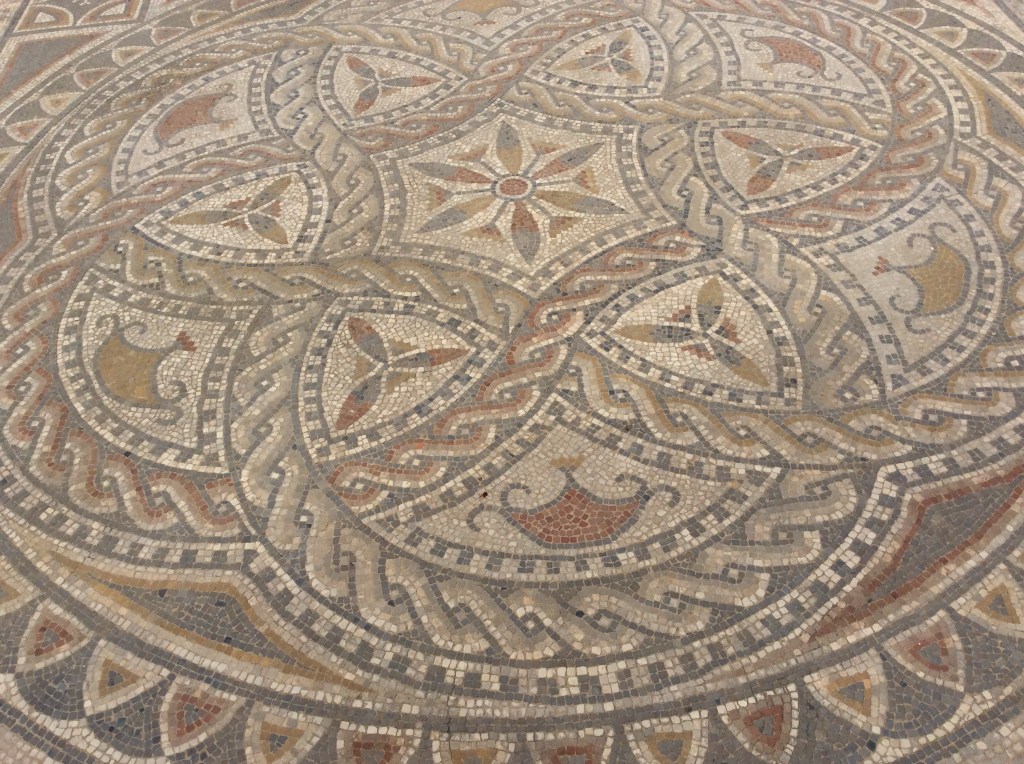
It’s a challenge to be here, though, difficult to rise every day and recreate the world again as I start a new school year in a new school teaching with an entirely new approach from all the years I’ve previously taught. When I get to Wilbur’s lines describing how “The soul shrinks/ From all it is about to remember,/ From the punctual rape of every blessed day,” I recognize the difficulty he describes. I know this year I will face a mountain of papers to read and evaluate, and recognize the devotion and energy that takes. My knees are still swollen and recovering from the five-hour hike I took with students through the Stiperstones nature reserve over a week ago now on a school trip. My body says I’m living on the edge of my ability to do such things, best to make way for a bigger change to come. But for some reason I hope will reveal itself to me, I felt called to come here and teach for one last year. I remember walking amongst the damp and drying sheets my mother hung on the line when I was a child. I loved inhaling their coolness, their clean scent, on hot summer days. It would be wonderful if the world were as Wilbur’s description of the beautiful laundry on the line—“Nothing but rosy hands in the rising steam/ And clear dances done in the sight of heaven,” but there would be no substance there. We have to accept, as Wilbur describes it, “the bitter love” of the “waking body.” We walk into an ancient building with its beautiful mosaic floors and sculptures, absorb its beauty at a glance—all the time, knowledge, effort, skill, devotion, money and effort it took to make what we see. It astonishes and overwhelms the eyes and heart—the “prodigious reality of the world,” as Octavio Paz calls it. We stand on shoulders that stretch across millennia to make whatever it is we create or do. It is too much to fully absorb. What does it all mean, though, for this one small life of mine? Who or what am I in the face of such giants? The immensity of work done by certain singular humans is not the work for all to aspire to. Numbers and size impress, but bigger, better, more—these are not what love calls us to.

Bring them down from their ruddy gallows;
Let there be clean linen for the backs of thieves;
Let lovers go fresh and sweet to be undone,
And the heaviest nuns walk in a pure floating
Of dark habits,
keeping their difficult balance.”

These words suggest that substance is found in the body. I must do my work, whatever it is: that daily effort—the habits kept in secret that enable us to keep our balance, and making it possible for beauty to float out through them—moving beyond the borders of our actions. The end of Wilbur’s poem brings us back to the poem’s title: “Love Calls Us to the Things of This World.” We must take up our cross, so to speak, and carry our weight. We don’t love on a grand scale. We love in small numbers, in relationships of twos or possibly tens, and relationship is what brings us meaning and is where we find love. It is doing our daily work, our recognition of that ongoing effort that allows us to stand in awe at the grace in a sweeping marble staircase, powerful words and worlds emerging from writers’ pens, or laundry fluttering so effortlessly in the wind. Though we don’t often take the time to notice it, even ordinary life is extraordinary. When I consider the multitude of people, effort, time and knowledge it took to bring me my meal tonight, it is an astonishing gift—the salmon swimming in the ocean, the fisherman who caught it, the sun shining down on the lettuce leaves and olive tree, the goat eating the grass that made the milk that allowed us to later produce cheese from that milk, the truck drivers, grocery store workers, the cooks who taught us to cook—the collective effort of all that is surrounds and sustains us. The blessings come.

20160911_124942
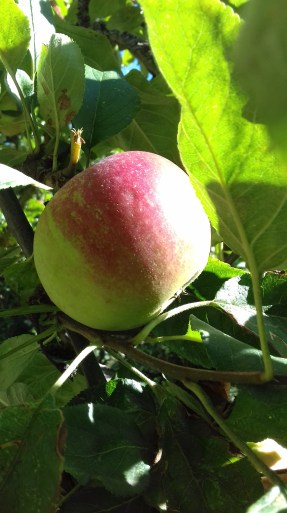
Apple at Fenton House, Hampstead Heath, UK
poetry, Wonder

Falling Into Wonder

to my aunt blanche
who rolled from grass to driveway
into the street one sunday morning.

—Lucille Clifton, “Praise Song,”

IMG_5516

Aunt Blanche in Lucille Clifton’s “Praise Song” reminds me of the many times I’ve told myself I’m going to do (or not do) something, only to metaphorically fall off the lawn regarding commitments I had made to myself. Clifton’s poem presents the reader with Aunt Blanche standing in the yard with her family, experiencing the day together. It’s a Sunday, a day of relaxation, and a time to gather with family. Things seem to be going fine until, boom, down goes Aunt Blanche, slipping off the yard and into the street! Clifton explains that Aunt Blanche had a basketball body, indicating her aunt likely hasn’t practiced the habit of healthy eating, or she probably wouldn’t be as round as a basketball. In spite of her love of food, or even perhaps because of it, Aunt Blanche is a resilient woman: basketballs bounce, and this is exactly what Aunt Blanche does; she bounces up from the street, and out of danger’s way.

It’s interesting to note that Aunt Blanche’s family doesn’t run into the street to rescue her. Clifton explains that as a ten year old observing her aunt’s fall, she “understood/ little or nothing of what it meant,” but she had faith in her aunt to get up from the humbling event. “Praise to the faith with which she rose,” writes Clifton, describing her belief in her Aunt’s ability to return to the family. Thankfully, Aunt Blanche has enough wits about her to recognize she was in danger, and works to get her self out of the possibility of further harm from oncoming cars. Drivers, too, see the situation Aunt Blanche is in, and respond by moving out of the way, so as to not harm her. Then, similar to the father who waited for the Prodigal Son to return home, Aunt Blanche’s family, too, waits for her with open arms as she climbs out of the street and rejoins them on the grass: an occasion for praise. The horror that might have happened didn’t. Aunt Blanche sighs a bit, showing her dismay at her own behavior, but doesn’t stay in the road carrying on about how silly she was. Neither does she blame anything or anyone in her situation. She simply gets herself out of danger’s way, and walks back to her family, a place she knows she is safe, a place she belongs. When we fall, rather than judging or blaming, we all want to know there’ll be open arms waiting for us when we rejoin others. As Clifton indicates, such an attitude of acceptance is “like God.”

IMG_5544

People are social beings who need to feel they belong and are respected by those in their group. What stories do we tell ourselves about those experiences where we fall that allows us to bounce back up like Aunt Blanche, dust ourselves off, forgive ourselves, and walk back onto the lawn and continue conversation with others because we understand that in the bigger picture of things, falling is part of the learning process? How might societies as a whole create ways of reacting to those who have fallen so that they can be drawn into the arms of others?

Poet and physician Rafaelo Campo, describes one of those ways in his poem, “What I Would Give.” Many of us carry a fear of falling ill, and Campo’s poem describes the fear people carry when they come to see him for medical help. The poem specifically mentions fears regarding lungs and melanoma, but these are merely examples of the myriad fears we carry with us from day to day: fears that our bodies won’t hold up under the activities we plan to undertake, fears about appearance, fears we won’t complete our work on time or meet people’s expectations, fears about how a new change we are making will affect our family or relationships, so many fears. Campo describes in his poem that what he wants to offer people, though, is “not the usual prescription with/ its hubris of the power to restore,/ to cure.” Perhaps because Campo is not only a doctor but also a poet, he understands that wellness is more expansive than physical wellness alone. It’s also connected to our emotional and social wellbeing, and how these are intertwined with our relationship to the physical environment.

Not all illnesses, aches or pain lead to recovery. If a person has arthritis, for example, she doesn’t get better. The disease progresses. When I see a person walking with a cane, I think of how challenging it is for that person to live with pain and ongoing suffering. Campo’s vision of healing moves beyond the elimination of pain to a wider plane. Even if we can’t be cured, his poem infers, we can be well. How that is possible, Campo suggests, is by opening ourselves to wonder.

I’d like to give them my astonishment
at sudden rainfall like the whole world weeping,
and how ridiculously gently it
slicked down my hair; I’d like to give them that,
the joy I felt while staring in your eyes
as you learned epidemiology
(the science of disease in populations),
the night around our bed like timelessness,
like comfort, like what I would give to them.

IMG_6938These lines show the wisdom of purposefully looking beyond disease and suffering to affirm the gifts abounding around us—to notice what is perhaps commonplace in life, yet amazing: rain falling gently on hair, or joy lighting the eyes of a loved one in the discovery of something new. Campo draws our attention to the idea that wholeness doesn’t have to mean a perfectly attuned body and mind. Healing is a part of a bigger dynamic of how we relate to both the natural world and to those around us. Seeing our connection to the physical world, and delighting in relationships with those around us can enable us to move beyond isolated suffering, and into seeing ourselves as part of the greater whole. It is this “seeing” that makes us whole again, even in our incompleteness. This is the larger healing Campo wants to give. Strength to deal with the pain (and the etymology of “comfort” is to intensify strengthening) comes from finding a way to stay in love with life even amidst struggle and pain. When we let ourselves reconnect to an awareness of life’s enormous gift, we lose ourselves into timelessness. In the process, we find a larger self. Even in the midst of danger, we feel safe, so that even “the night around our bed,” whether a bed of illness leading to death, or the bed of simple sleep, is a place of “comfort.” We can be at home with what is.

All illnesses, discomforts, failures, and “falls,” are opportunities to practice reframing suffering and pain within a wider perspective. Suffering and pain can engender compassion and gratitude, but we have to cultivate those qualities. Some people at an early age are faced with challenges or disabilities requiring them to grapple with how to live with great hardship. To be at home with whatever life gives us is extremely difficult. This is a journey that requires practice, likely years of practice, perhaps a lifetime. When you are ill, you recognize what a gift it is to be well, to be able to walk, to see, to breathe. I lived in a city with air quality so poor that it’s rare to see a cloud or blue sky, as I did for nine years in Delhi, taping the front door each night to reduce the smell of smoke. To see a blue sky filled with clouds large as mountains, for me, is truly a wonder, not a commonplace fact. Practicing gratitude in times of ongoing suffering or pain enables us to recognize we are connected to something bigger than our grief and our pain, and allows us the opportunity to identify with others around the world who suffer too.

Thoreau, in his experiment in living simply at Walden Pond, said he “went to the woods because I wished to live deliberately, to front only the essential facts of life, and see if I could not learn what it had to teach, and not, when I came to die, discover that I had not lived.” I want to live deeply. When I work, I give myself to that work fully, but I must remind myself to guard my energy, and practice purposefully widening my view—attending my ear and heart to the possibilities that allow connections to the natural world to surface. I need to practice making room for both work and wonder. “The beginning of our happiness lies in the understanding that life without wonder is not worth living,” writes the Jewish scholar, Abraham Joshua Heschel, and like Heschel, I want to walk in wonder.

 IMG_5551

poetry, Uncategorized

Between Boundaries

When bicycling, you feel the wind brush your skin, and you inhale the landscape. When walking, however, you can move slowly enough to notice things you wouldn’t otherwise. You can easily stop and look closely; you can pay attention, and perhaps that is an important reason why walks are often refreshing. It’s not just the movement and blood circulation walks offer; it’s the opportunity they open for your mind to wander associatively, weaving together your feet with your breath, body, and the earth. Thoreau, in his essay, “Walking,” writes about those who go sauntering—roaming the countryside under the guise of going to the sainte terre, the Holy Land, but who were actually simply wandering the countryside. In Edward Hirsch’s poem, “Late March,” the poem’s speaker takes a walk. If you also read the poem as a walk, as Ammons suggests that poetry is, and saunter along with Hirsch through the poem’s landscape, you might find that by the time you reach the poem’s final lines, you’ve found a way to arrive in a kind of sainte terre.

IMG_2307

Hirsch describes “Late March’s” setting details vividly. You sense the landscape with your body as the walker journeys, and you read: the biting cold, the sky blue as in a Magritte painting—how winter has left so recently that if you look hard, you can “almost see it/ disappearing over the hills in a black parka.” At the poem’s start, Hirsch never states that the walker sets out with a specific purpose. The path he takes very well might be one he travels frequently, but this particular walk occurs on the first day of spring, and something unknown is surfacing. You can feel the lightness Hirsch describes in the air’s chilly sting, and in his use of imagery—how “the skyscrapers stood on tiptoe,” in addition to the very sounds of the words he uses, the near weightlessness of the numerous “s” s and “t” s in the second stanza’s second half, that add to the sense of release. As Hirsch moves into the third stanza, a sense of airy quality continues in images he chooses of the moon as “a faint smudge” in the sky’s “vacant mind,” and seagulls that emerge “out of vapor,” while all along, an opposite force, some sense of gravity, pulls the walker down to the sea.

By the time the fourth stanza appears on this walk’s horizon, the reader notices a boat. The suspense created earlier in the poem with the wind whispering a secret to the trees, now expands into a fanfare for passengers leaving for unknown destinations. As the boat leaves its pier, Hirsch describes some of those left on shore as “jubilant,” others as “broken-hearted.” It’s here we pause in our walk because as the boat sets out across the water, the poem, too, moves further into its depths: the poem’s speaker says he has “always been both.” We understand now that while the walker in the poem may have started out simply to stroll, he ends up on the shore—a borderland where he stands between realities—and that the experience of living in this in between state is the poem’s destination. The poem is a walk, but imbedded in the walk is an exploration of those moments in our lives where we are brought to stand at a frontier between worlds—between winter and spring, shore and sea, grief and joy—and find ourselves participants of opposite realities at the same time.

The border world is a liminal space of transformation and possibility. Standing in that boundary area makes us aware of our aloneness. This is not a place others stand with the walker. In his last stanza, Hirsch highlights this idea in his description of how the boat “rumbles into the future” the crowd cheering the departure on, their cry cutting the air, “like an iron bell ringing/in an empty church.” A bell is meant to call the faithful to gather in common recognition that they’re not just on a journey through time. They share life together. In Hirsch’s poem, however, the sound is heavy as death, and the church is empty. Traditionally, cathedrals have a nave, the long, central portion of the church where the congregation sits. Symbolically, because the nave is also in the shape of a cross, it represents sailing across the life’s ocean together, recognizing in that journey, the need to live together in awareness of the love given them in Christ’s life and death. In Hirsh’s poem, however, when the ship sails out of sight, the crowd’s cheering ceases, and the community disperses. The experience is a kind of death, the people on the ship—those who were the cause of celebration, have gone. The walker is left alone, deserted.

IMG_2417

In the poem’s first stanza, the poem’s speaker says he is alone, and he carries as his companion, “a book of the Alone.” At the end of the poem, the walker is still alone. “I felt lucky to see it off/ and bereft when it disappeared,” says the walker of the boat. Underneath the noise, expectation and excitement, in the turning moments when others or we ourselves move off into the future and change, we experience the loss and emptiness of what we left behind as well. Beneath and beyond the celebration, we’re alone in working out how we will embody the transition between worlds. Part of us cheers, part of us cries as we stand there on the dock between worlds. “What are these comings and goings about?” we wonder. “What world am I a part of?” We are forced to contemplate who we are, and to notice we participate in more than one world at the same time. All we’ve experienced continues as part of us, even the worlds we’ve only imagined.

Significant moments of change in our lives make us more conscious of the multiple realities we participate in. But in actuality, we’re always standing alone in the liminal doorway between worlds. All of life is a turning, a greeting and a parting, a birth and a death. We don’t get one without the other. Whether the journey in this poem is about life, or death’s great journey into the unknown, a part of us is always dying while part of us is also being born. In Hirsh’s poem, the seagulls, creatures who live out their lives on the border, dip into both sea and sky crying out, “Don’t let our voices die on land,” as if to speak the words those who have departed on the ship are thinking. I think of the many, both past and present who have left their homes, sailing towards some vague notion of a place holding the dream of a better life in a different land—the bravery it takes to leave, but the courage, as well, to be those who stay behind, either by choice, or because they’re unable to leave. They, too, want to know their voices will not die on the land they’ve left—that their story continues on.

IMG_2314

What is it about, this walk to the sea where we see a boat leaving for some far place we don’t even know—this journey that ends in no journey? What is our walking for? Some years back, I traveled to the Farasan Islands off Saudi Arabia’s coast. Before going there, I imagined the islands as so remote that visiting them would be like venturing back in time, where I would witness another way of being—a place somewhere like Sana’a, Yemen’s mud city, but smaller. When I arrived on the Farasans, however, I noticed people lived in concrete houses similar to those in the city where I lived. They drove cars through the town, stopped at the grocery stores and carried on life as people do in many other small towns across the world. I learned, however, that the islands had mangroves, a castle, some abandoned homes cut from ancient dead coral beds, and a mosque with an ornate and beautifully carved façade—all unexpected and wonderful to experience. In “Late March,” the walker’s journey leads to a place where sky and water meet—a place between known destinations, and in that frontier space the walker stands alone, participating equally in both joy and sorrow, joined to opposites at the same time. As sainte terrers, we roam the world telling stories and creating meaning. But what things actually are, is often different (and frequently more) than any story we might shape. What if we let our journeying lead us to a place between, like the walker in “Late March,” where we simply stood on the shores of our lives, open to the comings and goings, the joys and sorrows, equally willing to experience it all? Maybe the Holy Land is found when we allow ourselves to stand between boundaries and move beyond definitions of this and that, here and there.

poetry

A Beautiful Perseverance

IMG_5349

THE AMEN STONE

Yehuda Amichai

On my desk there is a stone with the word “Amen” on it,
a triangular fragment of stone from a Jewish graveyard destroyed
many generations ago. The other fragments, hundreds upon hundreds,
were scattered helter-skelter, and a great yearning,
a longing without end, fills them all:
first name in search of family name, date of death seeks
dead man’s birthplace, son’s name wishes to locate
name of father, date of birth seeks reunion with soul
that wishes to rest in peace. And until they have found
one another, they will not find a perfect rest.

…read the rest of the poem here

We can plan many things, carefully drawing designs, listing steps, following through with what inspires or seems important in order to move us in a direction we want to go. Sometimes, however, a great wave rises up in our world, and we are caught in a current of events that sweeps away all, or nearly all. You have little choice but to let go into the current. During this time, it’s all you can do to focus on the necessities at hand, swimming along in the current stroke by stroke, aiming toward home. Though we may have experienced an undertow earlier, or previously been nearly carried away by a powerful wave, it doesn’t make it easier when the tsunami rolls in and we’re caught in its path. Making it through to the other side is more than a struggle, it’s a miracle of perseverance.

In Yehuda Amichai’s poem, “The Amen Stone,” Amichai describes a destroyed Jewish graveyard, and the painstaking effort of a man whose yearning for wholeness has made it his work to restore a fragmented and broken past. Though the tsunami of events that destroyed the graveyard happened ages ago, the effects of the fragmentation are still felt generations later. The broken stones with their names and dates are scattered “helter-skelter” over the earth. No act of God created this landscape. A tsunami of human choices made the situation, and we don’t have to know the specific event to understand that it’s more than just stones in the poem that are broken. Families have been split, histories scattered. Effort has been made to wipe from memory the story of the lives on the stone fragments. Longing speaks from the scattered stones to the man in the poem whose heart sees in the stone fragments a story yearning to be told.

IMG_5925

What is possible to know from the story of broken gravestones? When we walk past names on stones in ancient graveyards, do we know much of anything regarding the tales they tell? I think of Pip, in the opening scenes of Dicken’s Great Expectations, standing at his parents’ gravestones, trying to discern the quality of his parents’ character by the script style imprinted in the stones. We might not be able to tell much about the lives, but the gravestones’ existence speaks of those who lived and shaped their world, making together what has come to us through time. In a world of brokenness where people separate into camps of perceived right and wrong, left and right, allowing for no in between, brokenness prevails. Amichai’s poem begins with the word “Amen” in the first line, a word meaning “so be it,” a word often said at the end of a prayer. The world is broken, there it is. So be it. Look at it. See the world’s state for what it is. We are a scattered people, and not just those in this graveyard—economics, race, religion, politics, age, gender—there is so much we have let divide us from the common ground we could rest together in, and as Amichai states, “until they have found one another, they will not find a perfect rest.”

How do we live after a tsunami, real or political, has destroyed our land, our people, our hearts? Is it possible to become whole again? Can we heal the past? The root of the word religion is to rebind. Religions across the world hold as their foundations an understanding that humans are fragmented beings. Even if we can’t or don’t say it directly in words, when we acknowledge our brokenness, when we search for and tenderly lift the fragments of our world with the intention to restore, as did the “sad, good man” in the poem in his act of cleansing the gravestone shards, we enter into a sacred, and one might even say, religious act. Through the man’s creative effort of documenting what once was once whole, he unifies again what had been broken for generations. Healing begins.

IMG_5920

Interestingly, at the poem’s end Amichai uses the word child’s play to describe the man’s act. Some, perhaps, would consider the man’s effort a ridiculous waste of energy and time. His is an intuitive act of heart, rather than of logic. Children are the natural advocates for the value of play, and putting together the puzzle of broken stones must in the end be play because it is play that renews, and remakes us. Re-creation is what the man’s perseverant play has accomplished. By the poem’s end, we realize we are witnessing a paradox, a world that is broken and whole at the same time, as a mosaic is both broken and whole.

Does the man’s effort to restore the gravestones make a difference to those whose lives were blasted apart? If we understand our lives are connected into a webbed circle of being, as science leads us to understand, then what we do in one place and time affects the life of the whole. One act of kindness and healing changes the quality of all. The stone fragment the speaker in the poem saves is triangular, like the shape of the A in the word “Amen.” The poem relates a triad of actors, the destroyers who turned the gravestones to fragments, the man who “resurrects” the lives of the dead by reunifying the gravestones, and the preserver—the man who saves the stone with “Amen” written on it, putting to rest the prayer inside the stones’ longing: the story of the lives they stand for given back their substance. In the gravestones’ reconstructed puzzle and re-unified presence, the dead are re-given life. They are released—let go at last into a place of peace.

IMG_0442

A few months ago, I remember standing in a crowded New Delhi subway car at rush hour as the train door opened and passengers crammed and shoved their way through the door, hoping not to have to wait for the next car’s arrival. Pushed into the car’s back wall and pressed into a corner against the opposite wall, I watched as a woman hefted her large bag through the open door and pushed it across the floor between a profusion of bodies, then held on to the vertical steel bar in the middle of the floor, hoping to get her balance before the train took off. Behind her, though, passengers continued to shove themselves through the subway car’s open door—bodies piling into each other in a crush of sweating humanity. Hand still wrapped around her bag’s plastic rope handle, the woman attempted to stand. The bodies flooding through the doorway drove her toward the floor, however, catching her hand between the rope and the handrail. The woman cried out, straining to remove her strangled fingers from passengers’ weight pressing against her. She plead for people to stop. Deaf to her protests the deluge of bodies at the door, driven only by thought of getting on the train, continued to push forward.

Stunned, I watched in silence, as the tsunami of bodies rammed through the door. I expected people to calm down, notice what they were doing, that the woman would be okay, but the situation continued. My husband, standing closer to the scene, pushed the men away from the woman, and joining her in protest, called out “Stop!” Finally, the subway doors closed, the flood resided, people found space to put their feet, and the woman could release her hand from the plastic rope handle’s stranglehold on her. She stood up. She was a short woman, I noticed, ruffled, but still in possession of herself.

Why didn’t I act, I later wondered. What was it that made me simply stand there, saying nothing? As an outsider living in a foreign country, it’s not always clear when it’s okay to enter in to a scene, and when it’s not a good decision. Nevertheless, this woman was in need and yet I did nothing. Plenty enough times in my adult life I have felt powerless in situations, caught, and unable to discern the best course of action. These are fragmented parts of myself, and they don’t bring rest. If these moments were concrete objects, they could be dated and scattered about in the graveyard of past mistakes. What, though, if I took the journey of the man in Amichai’s poem? What if I bit by bit gathered the broken pieces, scrubbed them so I could name them clearly, and as if creating a work of art, gently set them together to let them tell their story and be released to a place of rest? Then, perhaps, I could live into a new story.

The Japanese have a practice called wabi sabi—of filling cracked pottery pieces with gold. The cracks aren’t removed, but when the pot is repaired, it is even more beautiful than before. Brokenness creates space for acts of compassion and gentleness. This is how we make beauty from brokenness.

IMG_0441

poetry, Uncategorized

Seen and Heard


A great man was coming to visit, was going to step inside our walls, walk inside our rooms. We had prepared ourselves as best we could–put on clean clothes and shoes, combed our hair, opened our faces into smiles. Some us stood in a line at the door with palms held open, expectantly waiting. All eyes turned toward the light streaming into the narrow passageway from outside where the man would step into the room we prepared for him decorated with white satin and gold colored cloth draped from the walls. His foot paused in the doorway, and one thousand four hundred of us fell silent. We knew it was a rare moment.

_D4D8226
Dalai Lama, photo by Mark Cowlin

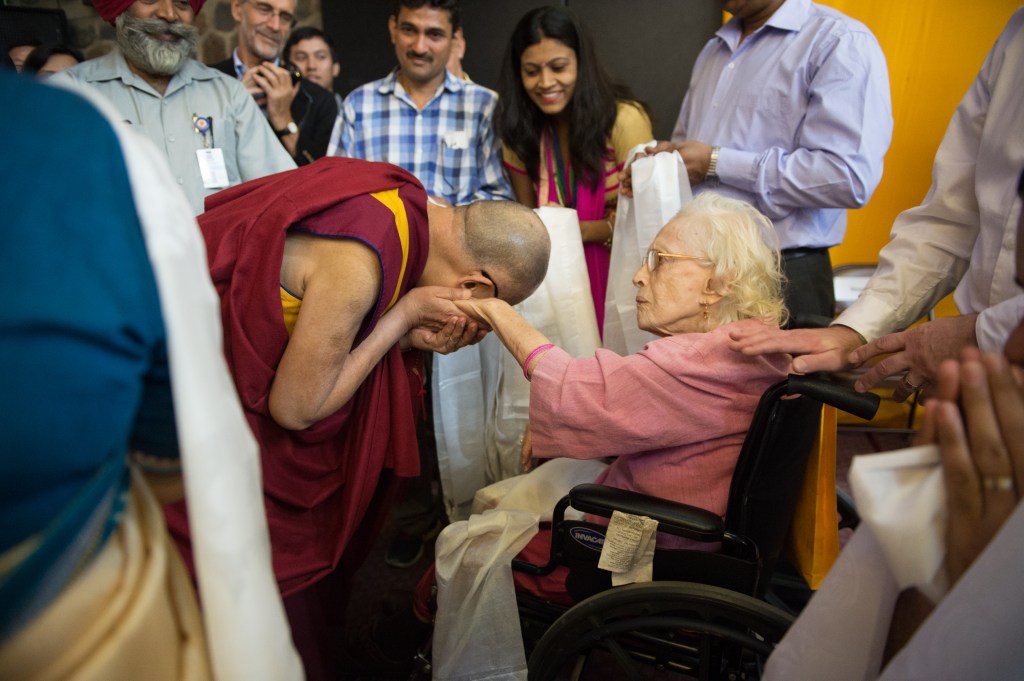
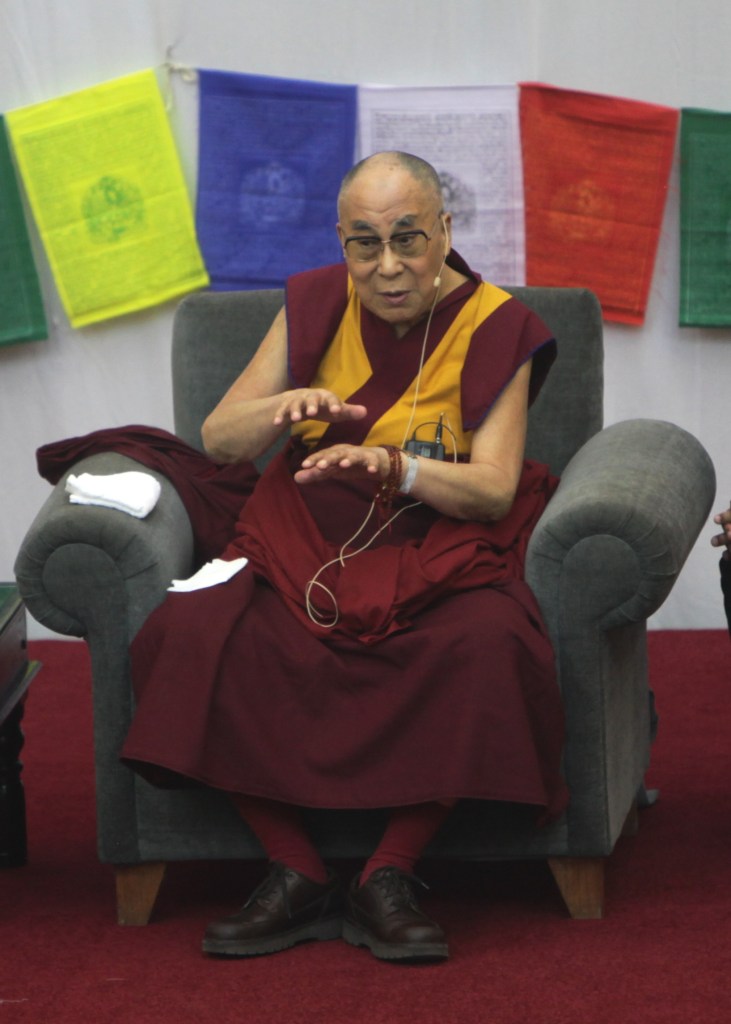
At last he walked in, wearing his red robe and glasses. All rose in unison, except those who could not. When the 98 year old woman sitting in her wheel chair saw him, she threw up her arm and called out “Where have you been?” into the expectant silence.

“Right here in the world, with you,” said the Dalai Lama, as he bent and bowed before her, holding her hand.

When he turned to the receiving line where I stood waiting, a voice inside called out silently (as I’m sure happen to all those near me) that he would look at me in the face, reach out his hand to mine, touch me, and in that touch somehow know me. Bless me. I didn’t want to press myself in front of others to be noticed. If he touched me, I reasoned, it would be his choice, and up to fate. Some people he did look at in the face and greet. Some, he touched their hand or head as he passed by. Others, faces glowing with the light of happiness, ended up in photographs.


_D4D8293
Dalai Lama, photo by HHDL office


Though he glanced at me briefly, he didn’t touch me or look straight into my eyes as I hoped for, however. Neither did I appear later in a photograph, though those on either side of me did. There is no photographic record of this encounter. No one will later know I was there unless someone later tells a story, as perhaps I’m telling you now, that includes my name. Though I was close to him, I was one the Dalai Lama passed by.

Why does that matter? Why did I want him to touch my hand? What did I, or any of us, hope to gain by his touch? What kind of connection or knowing might have occurred through that brief moment? I remember when president Obama visited Delhi several years back, how he and Michelle shook my hand. Though it was an encounter I never dreamed I would experience, I couldn’t exactly say after that that the experience had changed my life. Still, I felt somehow connected to my country in a more concrete way that I wasn’t previously aware of.

We all long to be known, to be visible, to matter. There is a kind of knowing when someone looks directly into our eyes and when we hold in ours the hand of a person we care about. Similarly, rather than merely gazing at photos of the home we love, we like to walk the land, hear the sounds, smell the earth. There is a felt presence and an exchange that occurs with physical reality, with touch. A thousand faces may stream by us in a subway tunnel, and we will not feel seen or known. A different kind of encounter occurs, when we gaze out at the world with an expectant heart, waiting to receive. We long for connection.


IMG_0589
Dalai Lama, photo by Eric Johnson

People recognize that the Dalai Lama is a man of integrity, someone who seeks to live in honesty and who has given himself over to be a living presence of peace. That is difficult, and we all know it. We want to listen to such a man. He might have something to say that will help us understand how to live. We want to look in his eyes, to touch us, because in some unspoken way, we recognize that our lives connect when we touch. Maybe something of that peace will enter into our own lives and change us.

We know when a loved one is present in a room when we first open a door, though we can’t see the person. When I was injured in college, my mother half way across the country woke in the night and knew something had happened to me. She also knew her brother had died before she was told. The body has a kind of knowing that moves through the heart.

We’re told of how when he was here on earth, people clambered around Jesus, hoping to touch him. Perhaps you recall the story of the woman who amidst the crowd reached to touch the hem of Jesus’s clothes, believing that if she did so, her life would be changed. I picture her threading her way through bodies, stretching her hand to reach the hem of his clothes from a stair below as he passed by. Though the crowd pressed in around him, Jesus noticed her, and turned around to see who it was. He must have looked into her eyes directly, recognized her in the vulnerability and longing revealed in her face. “Take heart,” he told her, her faith had made her whole. There is an interconnection, an exchange of energy, when hearts open. Some door opens that isn’t there otherwise, some liminal curtain is pulled back. An exchange happens. Lives connect. Perhaps this is how miracles are able to occur.

Where have we been all our lives? We are here in the world with each other. We have something to give one another, and the world around us in the open heart of our presence. The evening I first went out with the man who is now my husband, he told me at dinner as we watched rain dripping down the crystals at the now burned down Triton restaurant in San Diego, “The world is held together by strands of light.” We are more than the sum of our bones, body and breath, but through these, we touch life.

What we are living is mostly a mystery. We need containers to allow ways in to experience. But the real knowing spills over and out of these. That is why we need art, poetry, dance, literature. E.O. Wilson speaks of how in the future humans will be more and more integrated with machines, and that is why we will need literature and the humanities more than ever–to help us explore that territory of what it means to be human with all its difficult questions.

Words can be a way of finding how to be present in the world, a pathway into letting the invisible become visible to us. Words are strands of light we make to help us see the world and who we are, what it is we are living. Here is my poem I wrote several years back, “Seen and Heard,” that appeared in my chapbook, Saudade about this practice of presence. We don’t have to be the Dalai Lama. Everyone we know and encounter, wants to know that somehow inside the press of the crowd and busyness of the day and its multitude of priorities, that it is still their presence matters most. In our look, we can bless. In a pause, the tone of our voice, we can bring peace. With a simple gesture or touch, we can lets others know they are seen and heard. Perhaps that, too, is the light that holds the world together.

Seen and Heard

As a child, I stared long at the hidden pictures
in children’s magazines, looking for the lamb
inside the cloud, the face inside a pleat or tree,
the button or missing bow that made one figure
different from another. What satisfaction
when I found them. How affirming it was
to know that all those little details, the small
realities of the world that begged to be seen
could be found, recognized, known.

Today when I peer out at the world, the picture
I see is workers, day after day rising with the sun
to start their tasks. They feed the fire or prepare
the mortar for the brick. Some lift bundled
branches to their shoulders. Some hammer nails
or paint the walls. Others sort through files, prepare
documents, answer calls, gather round tables,
or read books deep into the night.

We do our tasks, we make the rounds.
Still, things hide there inside the walls
and trees, pressed inside the body’s quiet
folds of those we meet, waiting
to be found if we know how to see.

Cezanne looked for them, the hidden forms—
the cylinder inside a tree, the sphere inside
the head, the geometry of nature, and though
his eyesight was weak, or perhaps
because of this, he found the hidden shapes
and painted them in plains of color
so the rest of us could find them.

Goya, too, painted the secrets others meant
to cloak, the fear inside the peasant with arms
uplifted, his white shirt glowing against
night’s darkness, the hidden faces of the men
turned away from view, their guns that showed
the world in thickly painted strokes the torment
of a deaf world.

We turn through the pages of time
and off we go each day to make our story,
paint our picture, lift our bricks, do our work.

Our eyesight is weak, our hearing faulty,
but we stare at the pages anyway, trying
to make sense of the world, hoping to find
the forms inside of forms, to hear the unspoken
voices or even our own voice inside
the night sky darkness we might be standing in.

There we are with our boards to nail, bushes
to trim, our books piled beside us—
with whatever it is we discover and make
and love our world with, our arms
thrust up to the heavens, hoping someone
will see us. Hear us. Hoping someone has looked
long enough, hard enough to recognize us
hiding there inside the pleats and paint of life.


poetry, spirtuality, Uncategorized

A Visit from the Dalai Lama and 10,000 Shades of Blue

More important than what was recorded, these evenings
deepened my life: they framed every event

or thought and placed it with care by the others.
As time went on, that scribbled wall—even if
it stayed blank—became where everything
recognized itself and passed into meaning.

–William Stafford, “Keeping a Journal”

image

“The next hot job in Silicon Valley is for poets,” says the Washington Post today, describing how the tech industry is working to improve the interactive quality of the voice and personalities behind the artificial intelligences we interact with on the Internet, like Apple’s Siri, Amazon’s Alexa, and Microsoft’s Cortana. To do this, software engineers are turning more and more to poets, fiction writers and comedians in a new wave of jobs in artificial intelligence. Additionally, an article in Motherboard, Robots are coming for our poems,”now two years old, examples are given of robots co-authoring Shakespearian sonnets and haikus. An android learns the algorithms of language you give it, makes predictions about what words will be chosen over others, and uses these to write a poem. I don’t know the definition of “co-authored” as it is used in the context of the robot working together with a human, or how many trials it took to get a poem that feels cohesive and reads like a poem, but I enjoyed the sonnet, as well as a haiku a robot created that are included in the article.

Sasha Chapin’s article, “When robots write poetry,” written this past February, also describes how the algorithms are used that enable robots to write poetry. More interesting, however, is Chapin’s statement at the end of the article, “The coming artificial beings may love good poetry for the same reason we do: how it can seem to bridge the boundaries between consciousnesses. But they will possess a consciousness we couldn’t possibly understand. And when they write poetry, it will not be for us.”

While I question whether robots have consciousness, as Chapin implies, there is a difference between a living, human mind raising questions and pondering life and poetry artificial intelligence produces using algorithms, rather than conscious reflection. The Atlantic reports that number of non-book readers has tripled since 1978. Currently, I’m preparing to present a week long workshop on poetry and poetry writing with middle schoolers at ACS Hillingdon International School, a school just outside of London. As I consider what those students’ interests and concerns might be, I’m turning over the question in my mind, why is it we write for purposes other than to carry out necessary tasks, and in particular, what value does writing poetry hold?

Though  it may be helpful to learn that the job market is currently opening up for poets and fiction writers in the tech industry, there are deeper reasons to write and to read poetry, and these have to do with the poetry’s potential to connect us to the physical world, notice its mystery, and value its presence. If you’ve not seen this short TED talk about the worldwide telescope, it’s worth viewing. What Google earth has done to map the world is now being pieced together for the universe, enabling you to map your own virtual tour of the universe with images currently available. When I watched the talk and viewed the images, I felt humbled by the wonder of all that is—the immensity of creation and the miracle that I’m alive on this planet, existing amidst it all. Writing poetry is the opportunity to reflect on that wonder. Perhaps it’s interesting that a robot can write poetry, but how much more amazing it is to experience the poetry writing process yourself—to try and put words to what it means to be alive in this moment. As Salman Rushdie describes, “A poet’s work is to name the unnameable, to point at frauds, to take sides, start arguments, shape the world, and stop it going to sleep.” That’s a challenging task, but certainly a valuable one.

Recently, the Dalai Lama visited the school where I work. During his talk to the student body, he repeatedly emphasized humanity’s interconnectedness with each other and with the natural world. A compassionate heart and a calm mind go together, he explained, and a disturbed mind affects the body. There’s hope for a more compassionate world if we make an attempt, he said. With anger, there is no hope, and he admonished us to make an effort.
With effort, this century can be a happy, a peaceful century, he explained. When there is too much stress, violence comes. Human rights violations are first emotional problems, he stated. Violence comes as a consequence of emotional problems. “We have to make an effort to promote more warm heartedness so there will be no opportunity to kill or bully, because we take care. No one can survive without community,” he said. Selfishness destroys your own happiness. “Society is the basis of our happy life, so we have to take care of society. West needs East. Southern and Northern worlds need each other—not this notion or that,” he said. Around us we see so much fear and distrust, yet friendship is dependent on trust, and trust is dependent on compassion, he explained. Narrow mindedness and shortsightedness brings disaster.

In aiming to build a compassionate world, poetry is a valuable asset. Poetry nurtures our inner life and helps us to understand what it means to be human and to stand in relation to the world around us. Robots might be able to write, but we are human. We want to know what that means—what we can give to the world to meet its deep need, and thereby meet our own deep desire to feel we belong in this world by knowing what we can give to it. Writing poetry, in its aim to find the best words to describe experience, requires observation and awareness, as well as reflection. Because the problems we face both individually and collectively are complex, the practices of observation, awareness are especially needed. Deep reflection, allows us to work out our connections to each other and to the natural world, along with the disconnects we experience in trying to do so. Deep reflection is the territory poetry explores.

Before Old French gave the English language the word “orange,” English speakers referred to the color as yellow-red, ġeolurēad in Old English, according to, Matt Soniak, writer for Mental Floss. It’s not that orange didn’t exist before we had the word, but having the word created a clearer picture of the idea. Tech Insider the origins of another color, blue in this video, demonstrating that without a word for something we physically experience, such as the color blue, people have significant difficulty recognizing it. This phenomena emphasizes the benefit of both verbalizing what we are experiencing, as well as reflecting on those experiences in written words. Additionally, because languages have their own music and mirrors, reflecting the world in different ways, speaking and writing in more than one language expands the potential language has to enable us all to better understand ourselves and our interconnection to others and the world around us. If we are going to find how to live together peacefully, as the Dalai Lama suggested is both possible and important, we need tools to do so. Writing and poetry in specific, is a wonderful tool to use for this purpose. As T. S. Elliot said, “Poetry may make us from time to time a little more aware of the deeper, unnamed feelings which form the substratum of our being, to which we rarely penetrate; for our lives are mostly a constant evasion of ourselves.”

It’s possible that one could sit with pen in hand or type at the computer, and plod mindlessly through a series of steps or items and produce writing. I’ve read this kind of writing before. But if taken to heart, writing can be a tool that enables the mind to unwind its string of thoughts and make patterns that hold meaning and change our lives both individually and collectively. Poetry and literature is our attempt to explore the meaning of being human. As Barry Lopez, explains, “I believe in all human societies there is a desire to love and be loved, to experience the full fierceness of human emotion, and to make a measure of the sacred part of one’s life. Wherever I’ve traveled–Kenya, Chile, Australia, Japan–I’ve found the most dependable way to preserve these possibilities is to be reminded of them in stories. Stories do not give instruction, they do not explain how to love a companion or how to find God. They offer, instead, patterns of sound and association, of event and image. Suspended as listeners and readers in these patterns, we might reimagine our lives. It is through story that we embrace the great breadth of memory, that we can distinguish what is true, and that we may glimpse, at least occasionally, how to live without despair in the midst of the horror that dogs and unhinges us.” We need stories, and poetry. They are our thread through the labyrinth of existence.

While diving in the Maldives a few weeks back, the boat I was living on passed over and past 10,000 shades of blue—blues we have no word for. I found a wonderful color palate for different shades of blue, along with their names on Wikipedia, but though many colors are represented here, it falls far short of what the eye actual sees—the way the white-blue sky bends down into the sea and becomes the sea, for example, or the depth of blue reaching for infinity behind the shoals of yellow, white and black banner fish, along with all the subtle gradations between shades of turquoise as water shallows and then brushes against white sand shores. To try and name any of the experiences we have is to call them, again, into existence, and to share with others what moves us, and what is meaningful–this is what poets aim to do. It is the focus and goal of their efforts, even though what we hold most precious is often beyond naming. “The power of poetry,” says Michael Lewis, “is the ability to express the inexpressible, and to express it in terms of the unforgettable.”

If we are to build a compassionate world, we need to be able to recognize how to nurture our lives and wellbeing of the world around us. We need to be able to reflect on our lives. In his poem, “Keeping a Journal,” William Stafford, identifies the value of writing in his closing lines when he explains how through the process of writing he found his journal to be a place where “everything/recognized itself and passed into meaning.” To speak with an open heart in a journal or a poem takes courage, but in doing so, we can gain insight into ourselves and our relationship to the world, insight that can enable us to transform the way we live and interact. Writing poetry helps open our eyes and reach for meaning. As David Whyte says in his poem, “The Opening of Eyes”

That day I saw beneath dark clouds
the passing light over the water
and I heard the voice of the world speak out,
I knew then, as I had before
life is no passing memory of what has been
nor the remaining pages in a great book
waiting to be read.

It is the opening of eyes long closed.
It is the vision of far off things
seen for the silence they hold.
It is the heart after years
of secret conversing
speaking out loud in the clear air.

We write and our lives are deepened. This is what is important about poetry—it teaches us how we can live.