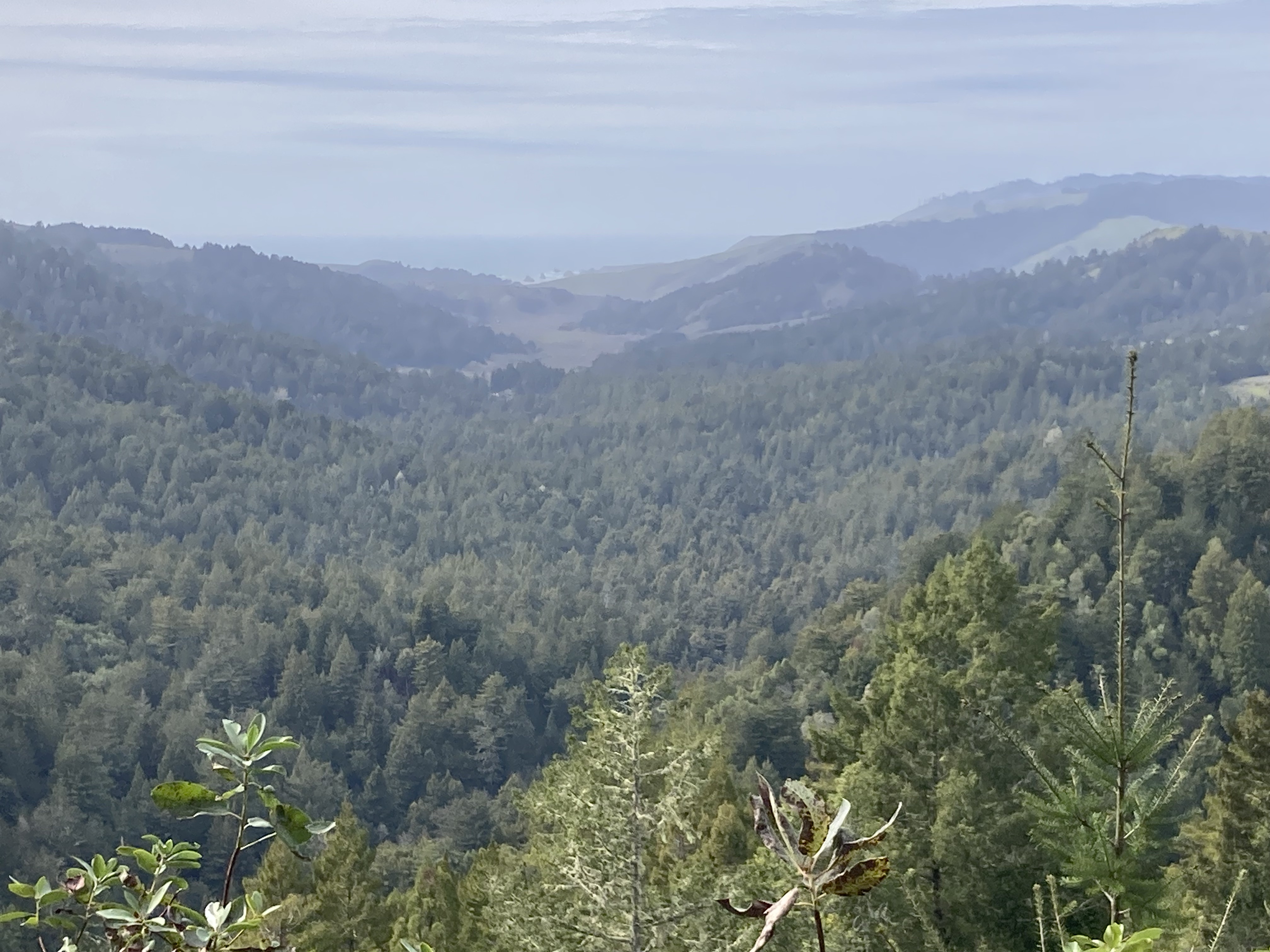
Overlook of Pomo Canyon, Sonoma County, California
So many voices are clamoring for attention these days. I’ve felt the need to go into my garden pull weeds all day, go out on long walks and long bike rides to be in the green world, the world that is growing, generous and lifting from heavy earth in wondrous color and life. Recently, I attended an online poetry reading with Shanti Arts. At the end of the reading one person asked. “What are people taking from poetry or going to poetry for in the environment…we’re living in. What can poetry do for us?” One of the central values of reading poetry for me at this time is the reminder that there’s a larger world than the circles of fear that want to take hold in the mind. Life that has been waiting for months and months is pushing up from the earth. There is pain, oppression, loss, grief, yes, so much grief in this world. Let them be acknowledged and known. But notice also green life is there pushing through into the light of day. Earth’s continuous effort is to sustain life. Including ours.
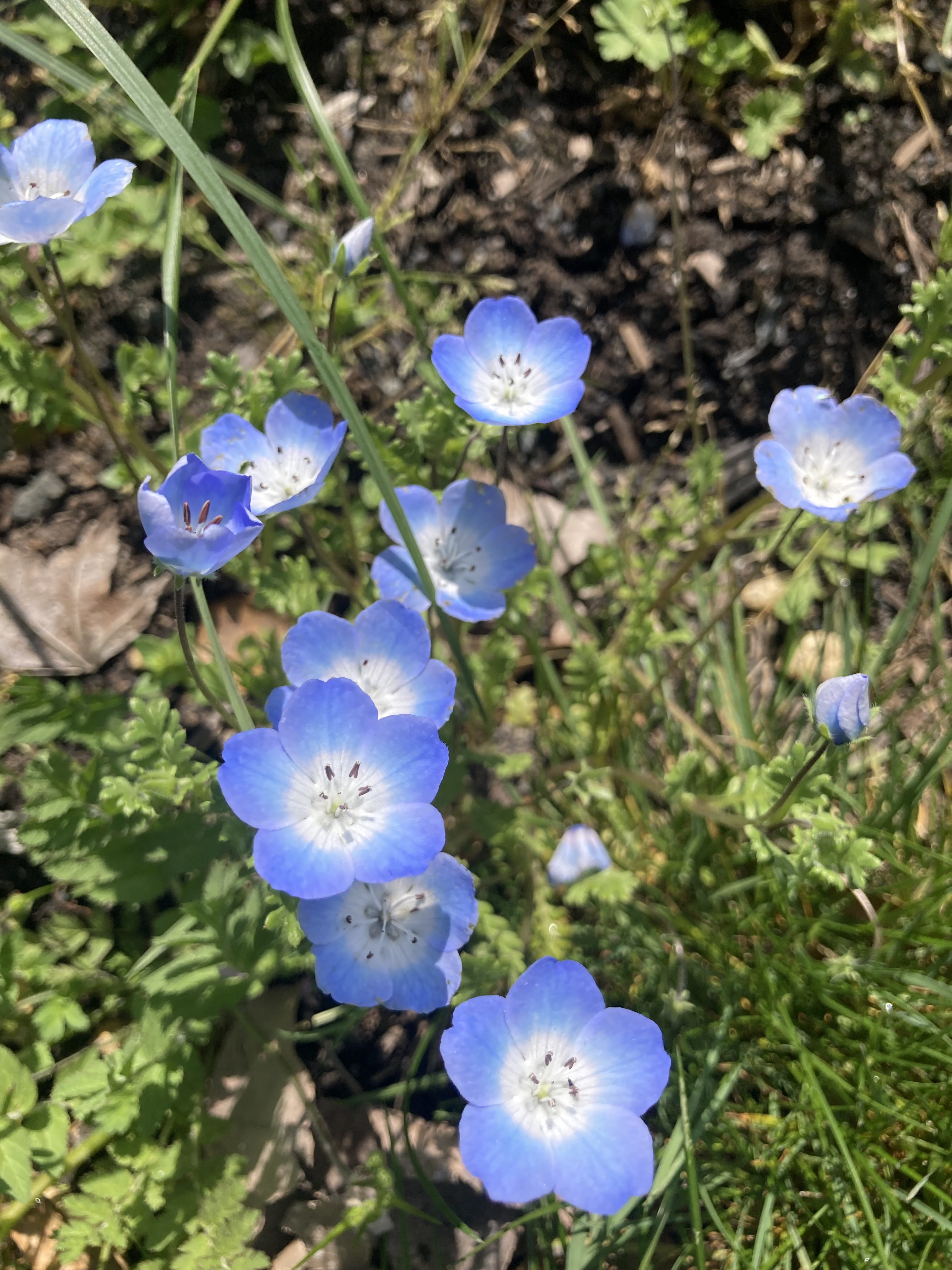
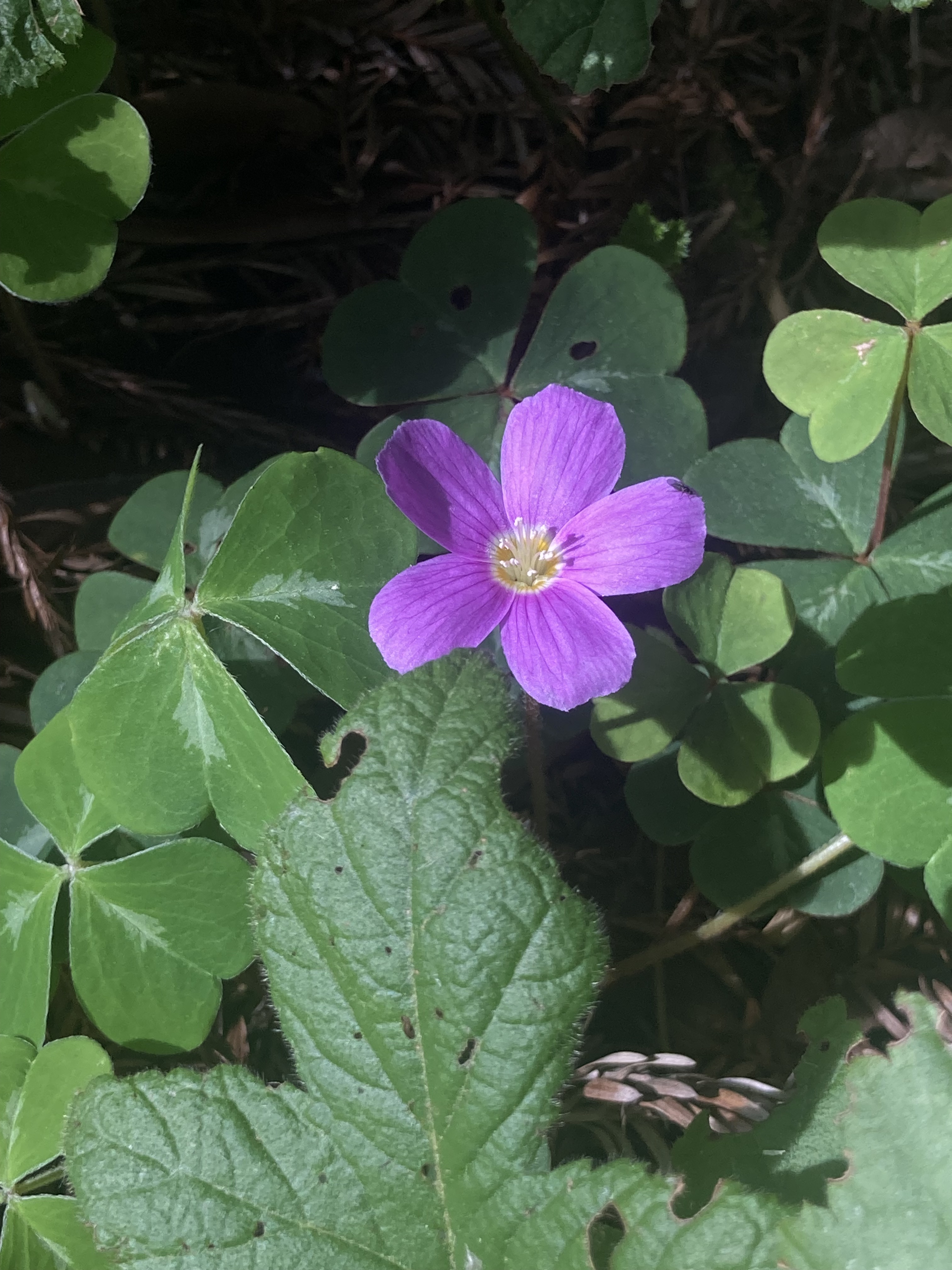
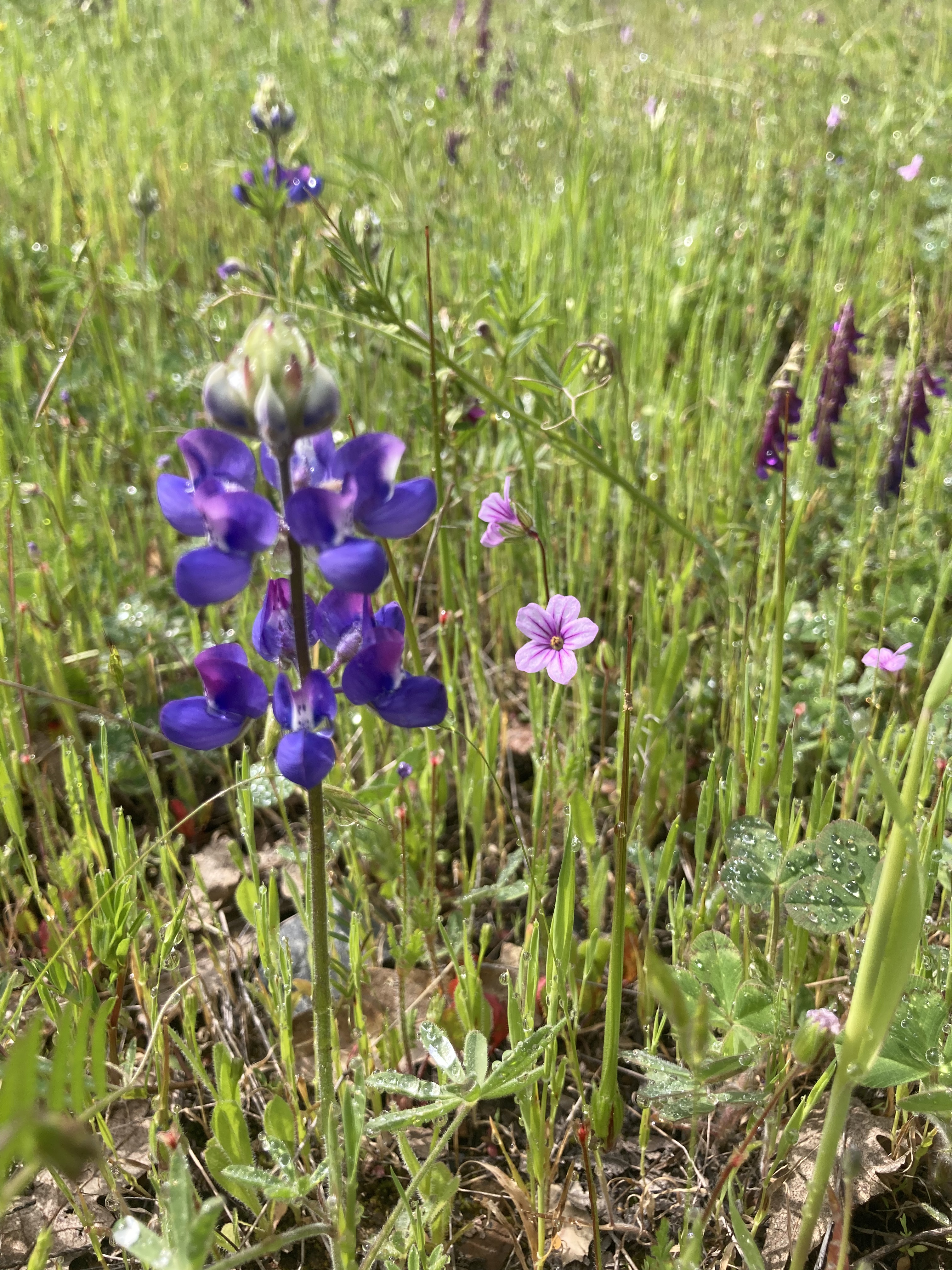
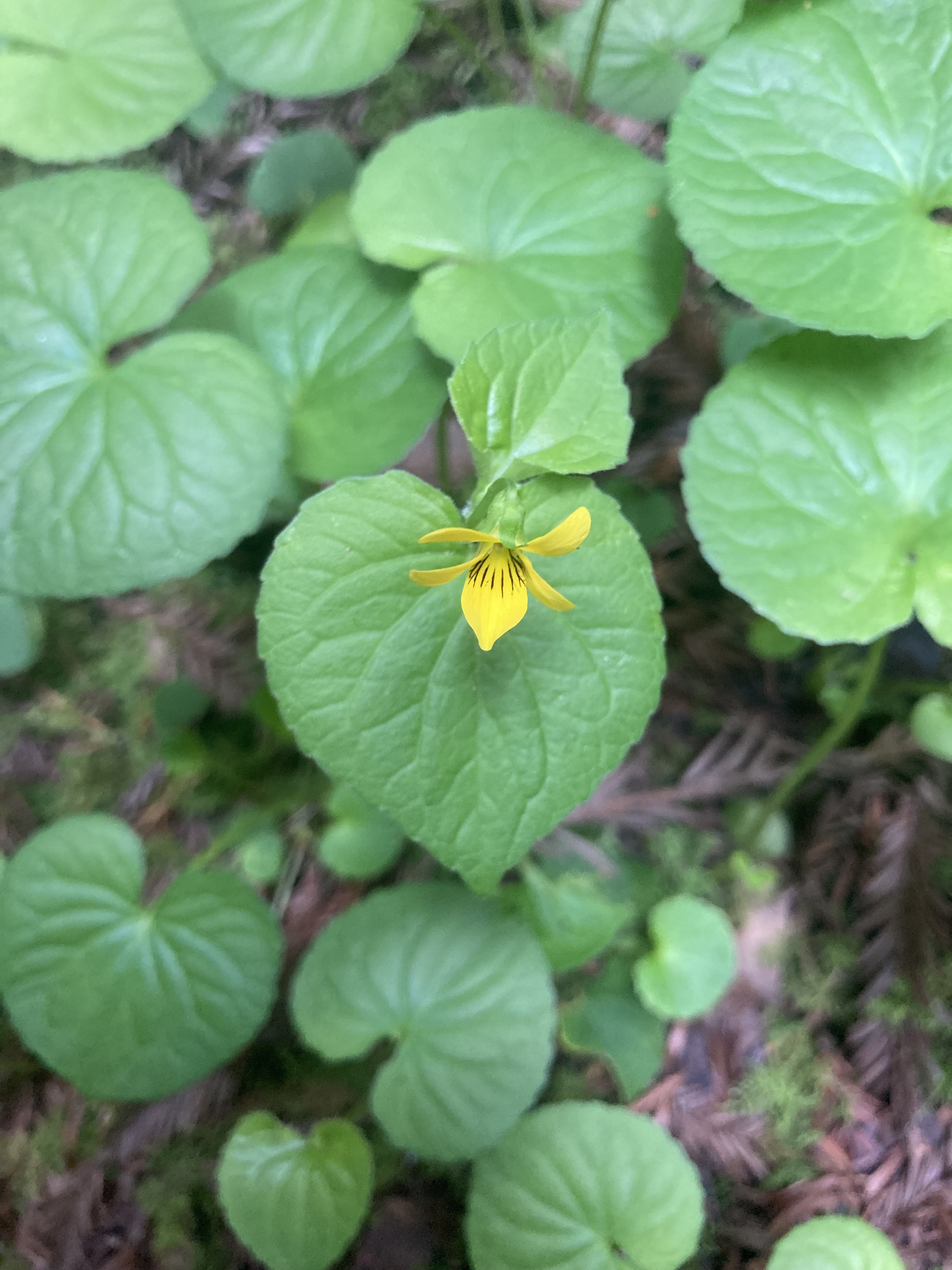
Blue-eyed grassSuncupsBaby Blue EyesRedwood sorrel Douglas iris
I like to go walking most any time. But when my heart feels heavy, I especially appreciate getting out for a hike in the hills. I need to be in the natural world to remind myself that the experience of being alive, and life itself is larger than the things that work to remove the structures that enable the world’s flourishing. Looking out across the ocean or gazing up into the sky, I can literally see the universe is vast. My understanding will always be limited. We may have maps of the world’s geographic landscape but there are worlds within worlds we don’t understand.
A number of years ago when visiting St. Petersburg, Russia, I remember a Russian man at a restaurant we were eating at ask where my husband and I were from. When we said “The U.S.,” he told us, “You can go where you want. You have no idea what it’s like to not have that freedom.” He was right. To some extent I could imagine the limitation of movement, but the emotional and psychological impact of that is an entirely different thing. Choosing to stay in a particular place versus knowing you’re not allowed to move beyond an authority’s set boundary is different.
Back in the mid 90’s I was speaking with a student’s mother in the hallway at a school in Kuwait where I was teaching at the time. The family had came to Kuwait from Bosnia and Herzegovina to escape the war that was going on there. My students were collecting oral histories and traditional tales from family and community members from the cultures the students were connected to and sharing them with Inuit students in Alaska and high schoolers in Sandy, Utah. I don’t now remember what my student’s mother and I were specifically speaking of, but suddenly the mother choked-up and said, “You have no idea what it’s like in my country right now, what is going on there, what is happening.”
She was right. I didn’t know. The Bosnian War “was characterised by bitter fighting, indiscriminate shelling of cities and towns, ethnic cleansing, and systematic mass rape,” I read in Wikipedia. “The massacre of over 8,000 Bosniak males by Serb forces in Srebrenica is the only incident in Europe to have been recognized as a genocide since World War II.”
Sarajevo, photo courtesy of CFaZeSarajevo, photo courtesy of CFaZeSarajevo, photo courtesy of CFaZeSarajevo, photo courtesy CFaZe
“Estimates suggest over 100,000 people were killed during the war. Over 2.2 million people were displaced, making it, at the time, the most violent conflict in Europe since the end of World War II. In addition, an estimated 12,000–50,000 women were raped, mainly carried out by Serb forces, with most of the victims being Bosniak women.” (source: Wikipedia) How could a person find the strength to speak of such atrocities or to ever absorb the emotional trauma and horror behind those statistics?
When I think of the conversation with my former student’s mother as I consider the growing ways people in my country are now being dehumanized and deprived of rights, the fear people around me express for their sense of safety, it’s extremely sobering. What seeds and sun inside our collective social structures need to be watered and nurtured so we can clearly see and care about each other’s humanity, build on common values, and begin to trust, respect and appreciate each other more?
It feels particularly important to find ways to enter the quiet spaces within us so we can consciously, purposefully listen to not only the truth our own inner voice wants to tell us, but to the voices of with those we interact with. We need to listen for the words and the life that wants to come forward underneath what is spoken and aim to hear and see the humanity in each person we interact with. I’m reminded of Sherman Alexie’s recent poem, “Bad Back” (March 16, 2025, Rattle) where he writes,
I know, as a writer and an Indian and an Indian writer that I am
expected to offer advice. But I have nothing but this consolation: Everything you’re feeling now
is what I’ve always felt as a reservation-raised Indian.
What is currently happening in the US with the disrespect for the rule of law, the mistreatment of fellow humans, the reckless unconcern for the abuses of the natural world–our forests, oceans, natural habitats, and our very air is a reflection of the stories we hold about the world inherited from the past. The stories we carry with us affect the way we treat each other and the way we treat the earth. The two are connected. Every country has their histories to confront. Transformation is a continuous process. We all benefit from allowing ourselves to grow into new ways of thinking and being. Alexie ends his poem “Bad Back” saying, “I’m going to press / my bad back against the earth / and wait for everybody’s rebirth.” Rebirth is, indeed, what we need right now.
The stories we hold ripple through our actions and way of speaking. If we listen beneath the chatter in the daily news and the chatter in our minds, what new story and new life wants to come forth? We can purposefully pursue to renew our minds and actions. Pascha, Passover, Ramadan, Easter. These ancient traditions remind us there is life beyond slavery, and that we can be renewed. We have the opportunity to teach ourselves what it’s like for others to go without basic necessities such as food and clean water. In doing so, we can water seeds of empathy and grow toward deeper recognition of all people’s need for social justice.
We’re not meant to stay on the very same path we were born onto. Just as the earth renews itself and the cells of our bodies renew, we too are meant to transform our minds, renew our stories. What better time than spring to start? I appreciate the way Billy Collins emphasizes this willful act of spring renewal in his poem, “Today.”
If ever there were a spring day so perfect, so uplifted by a warm intermittent breeze
that it made you want to throw open all the windows in the house
and unlatch the door to the canary’s cage, indeed, rip the little door from its jamb,
a day when the cool brick paths and the garden bursting with peonies
seemed so etched in sunlight that you felt like taking
a hammer to the glass paperweight on the living room end table,
releasing the inhabitants from their snow-covered cottage
so they could walk out, holding hands and squinting
into this larger dome of blue and white, well, today is just that kind of day.
Source: Poetry (April 2000)
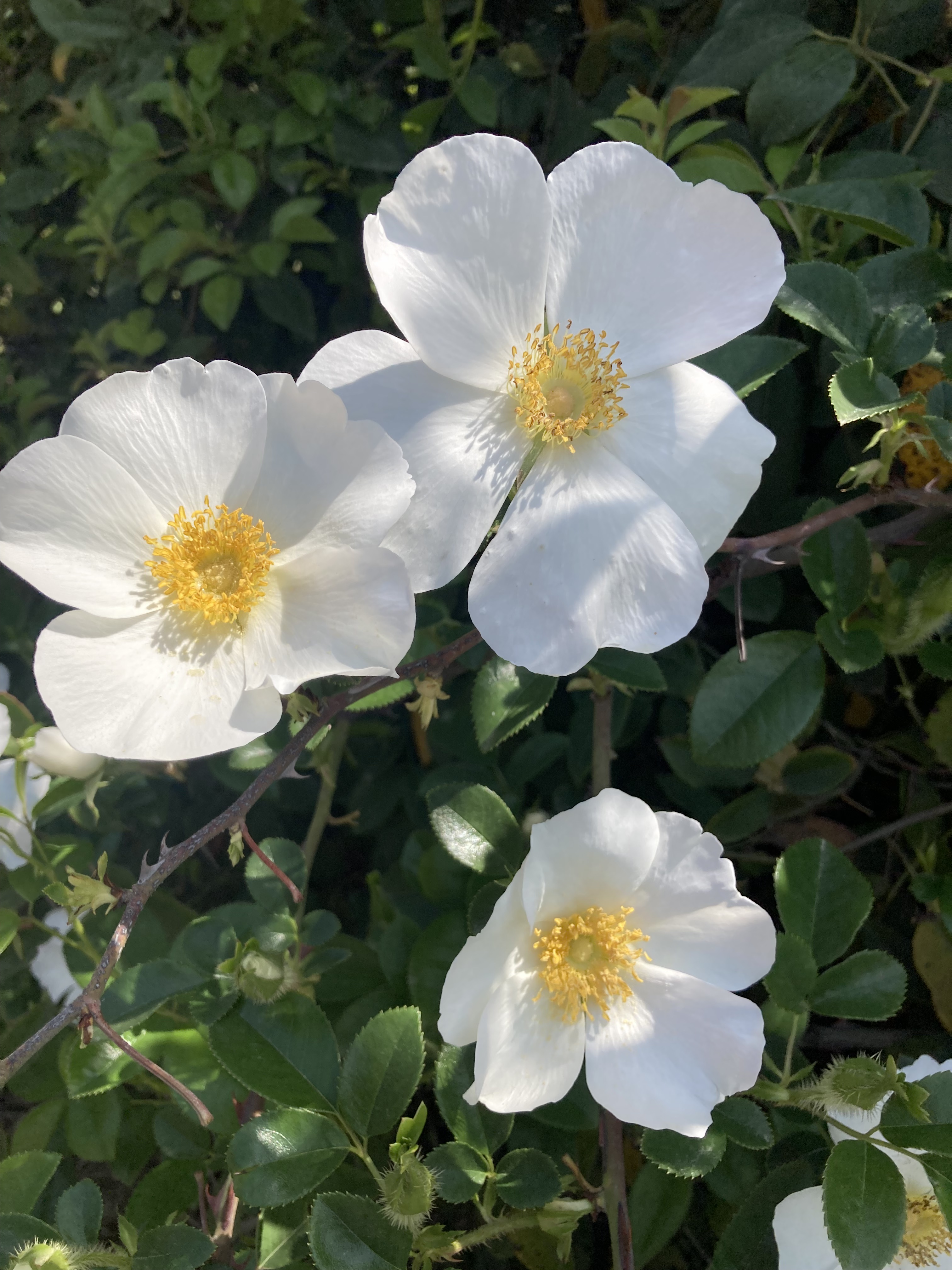
Wild roseWild hyacinthShooting startrillium
Spring is calling you outside. The earth reaches out to renews you! Check out the ways! If you can, go for a walk, a swim, or a bike ride.
If you can’t do any of those things, find someone whose hand you can hold while staring up into the forever sky. In the midst of despair life is there, present, waiting to give itself to us. We can turn toward it at any time.
“Man is hungry for beauty. There is a void.”—Oscar Wilde
In the streets of my Delhi neighborhood, workers are building new apartments. Women carry sand on their heads. Bricks are stacked on the walkway. Yesterday the populous celebrated Republic Day, and I was reading Pamela Timms’ book, Korma Kheer & Kismet, the chapter titled “Independence Day in Sadar Bazar” where she describes the civic protests of 2011 where social activist, Kisan Baburao “Anna” Hazare, began a hunger strike in protest of government corruption. Concerned with the amount of interest Hazare stirred up in the populace, prime minister of the time, Manmohan Singh responded, ‘”Corruption manifests itself in many forms. Funds meant for schemes for the welfare of the common man end up in the pocket of government officials. In some other instances, government discretion is used to favor a selected few. There are also cases where government contracts are wrongfully awarded to the wrong people. We cannot let such activities continue unchecked.”’ Hazare’s hunger strike began the day after the prime minister made the statement, reports Timms, and goes on to describe some of the corruptions in the system—food vendors paying as much as a quarter of their salaries to the police to be able to stay open, and rickshaw drivers paying as much as 20% of their salaries to police to prevent their tires from being slashed, families having to pay bribe money to secure a place for their child at school. (p. 55) (You can read an overview of large-scale corruption in India here if you wish.)
New Delhi construction worker at work
Burning roadside trash can. Mussoorie, India
Bricks on New Delhi roadside ready for use.
It’s no surprise that corruption is present not only in India. It is a worldwide problem in both businesses, see a list here of top business corruption cases, and governments. Take a look at the thematic map from Transparency International here, to see a visual representation of corruption levels in countries across the world. Justice doesn’t prevail. In many cases, it’s simply the way the world functions where people live, and the everyday person, if he or she wants to function in society, doesn’t have a lot of choice about it.
With corruption and misuse of power so widespread, an enormous percentage of people in the world are pawns to those who hold the power. How do people manage? How do people—any of us and all of us—caught in such systems go on living with good conscience? I remember listening to Garth Lenz describing on his TED Talk about the effects of mining for oil in Canada’s tar sands had on the native people of the area. Parents in that area are caught in the dilemma of needing to feed their children, yet the toxins in the river are causing cancers at the rate of 10 times what it is in other parts of Canada. Because it’s very costly to fly in all the food a person needs in order eat, the aboriginal people are forced to eat the food “..as a parent, I just can’t imagine what that does to your soul. And that’s what we’re doing,” says Lenz. (transcript available here.) Certainly there were people during the time of Spain’s inquisition, in Nazi Germany and in Pol Pot’s Cambodia who didn’t agree with the government’s position but felt compelled to go along with the crowd mentality for fear of their own lives and those of their children’s. Certainly, there are people today in our own institutions who disagree with the use of power and yet are afraid of speaking out for fear of losing their jobs and the livelihood for their families. Not everyone can just move on or move out to a new situation, new job, new country, new life, and even if that were possible, where might one live or work where corruption was not part of the way of life? We have to learn to live in a fallen world.
I’m reminded of Maria Mazziotti Gillan’s poem, “I Open a Box,” in her book, Ancestor’s Song, where she describes her Italian immigrant mother’s doctor coming to her New Jersey tenement to assist her in the delivery of her baby. He arrives late, and Gillan’s mother has already given birth, cut the umbilical cord, and washed her child. When the doctor finally arrives, he doesn’t even enter the room. Instead, he distances himself from the situation.
“He washed his hands, wiped
them on one of the rough linen towels
I brought from Italy, stood in the doorway.
“You’ll be okay,” he said, and left.
“Oh, well,” my mother said, “I think
he was afraid of catching it.”
“Catching what?” I asked.
“Poverty,” she said.
New Delhi neighborhood street.
Poverty is often perceived by wealthier countries as something out there over there, not mine not related to one’s own life. Like the doctor at the door, people want to distance themselves from the poor, not realizing their lives are connected. We may want to stand at the door like the doctor of this poem observing a world we don’t want to be a part of. We may think we can wash our hands, bid others well and walk away, and disconnect ourselves from what we don’t want and live in a different neighborhood. But our lives are intertwined. One example: A few years back, students in my speech class debated whether the lithium beneath Bolivia’s salt flats should be mined. The area is of tremendous beauty yet the area holds more than half the world’s lithium. Lithium is a lightweight metal used in powering our high tech products—iPhones, iPods, and other handheld devices. Now, as the world searches for alternative energy and looks towards ways to store electricity in batteries in order to meet more of our needs, including the use of batteries for electric vehicles, the need for lithium grows in greater and greater demand.
Dan McDougal, in his article on Mail Online “In search of Lithium: The battle for the third element” quotes a lithium-ion battery producer, Mary Ann Wright of Johnson Controls-Saft, ‘Since a vehicle battery requires 100 times as much lithium carbonate as its laptop equivalent, the green-car revolution could make lithium one of the planet’s most strategic commodities.’“ There’s not enough lithium to power the world’s 900 million vehicles, however, McDougal observes. Bolivia has significantly large amounts of the needed lithium to produce the batteries for the growing electric car industry, an industry that most people perceive as a green technology. Mc Dougal reports that according to “William Tahil, research director with technology consultancy Meridian International Research, ‘to make just 60 million plug-in hybrid vehicles a year containing a small lithium-ion battery would require 420,000 tons of lithium carbonate – or six times the current global production annually.” To continue, McDougal goes on to report that “The US Geological Survey claims at least 5.4 million tons of lithium could be extracted in Salar De Uyuni, while another report puts it as high as nine million tons.”’ Bolivia is a very poor country. Child workers are exploited, but children work to help their families. While mining the mineral would bring needed jobs and money into the country, a problem is that mining the mineral requires an abundance of water, and water is a rare commodity in Bolivia’s high desert. Bolivia has experienced exploitation by outsiders before in the tin and silver mining industries. An overuse of water could significantly affect the country and its people in numerous ways—making it difficult to have enough water for daily use, as well as for farming. Additionally, mining pollutes water with toxins as well. McDougal asks his readers “Is the world’s need for a green solution to transport worth the destruction of this unique environment and way of life that it lives on?”
Transportation is necessary. Our society is structured in such a way that few of us can walk to work. We need some way of getting to work. We want to do that in the least harmful way to the environment and others. As a result, in the desire to move away from our dependence on oil, many people are looking toward buying an electric car. These same people may be unaware that in doing so they are connected to moral dilemmas of another sort. We are all part of the greater web of being.
Walls and grass in Vicalvi, Italy sunset.
Parker Palmer, in his book, The Courage to Teach, which I’m currently reading, talks about the biologist Barbara McClintock, who was given the Nobel Prize in 1983 for her work that changed our understanding of genetics. Prior to her work, people thought of genes as separate things, not in connection to the environment they were a part of. Palmer explains that McClintock’s interviewer who wrote her biography, Fox Keller, “wanted to know, ‘What enabled McClintock to see further and deeper into the mysteries of genetics than her colleagues?’ McClintock’s answer, Keller tells us, is simple: “Over and over again she tells us one must have the time to look, the patience to ‘hear what the material has to say to you,’ the openness to ‘let it come to you.’ Above all, one must have ‘a feeling for the organism.’” We co-create our world. We can’t stand at the door. The burden of the cost of anything is born by all eventually. As Palmer goes on to say, “Modern knowledge has allowed us to manipulate the world but not to control its fate (to say nothing of our own), a fact that becomes more clear each day as the ecosystem dies and our human systems fail.” (p. 57) Perhaps, then one important way of living inside of corrupt systems and move ourselves and society toward greater wholeness is to do what we can with those around us to build and restore relationships constructively. Some things or many things may not be in our power. But some things will. We can learn to listen closely to the interrelationships of people and things so we gain a greater connection to life. With this understanding, we can better comprehend what actions will create harmony both with others and with nature.
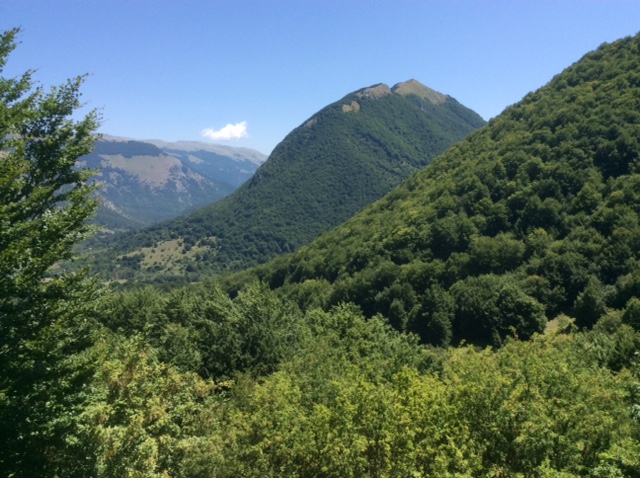
Abruzzo National Park, Italy.
Dostoyevsky said, “Beauty can save the world.” While it may not appear to be a solution to growing environmental and social concerns, the idea deserves a closer look. What connection does beauty have in showing us a way through our dilemmas of how to live in unjust social systems? The New York Times “Books” section, published in 1987 includes an excerpt from Richard Ellman’s essay “Oscar Wilde.” Ellman relates the story of Oscar Wilde coming to New York City in 1882. “Beauty is nearer to most of us than we are aware,” Wilde explained talking to reporters. One of the reporters wanted to know if a nearby grain elevator was beautiful. Earlier in the conversation, Wilde had said, ‘I am here to diffuse beauty, and I have no objection to saying that.” As reporters continued probing, Wilde explained further his ideas about beauty. ”’It’s a wide field which has no limit, and all definitions are unsatisfactory. Some people might search and not find anything. But the search, if carried on according to right laws, would constitute estheticism. They would find happiness in striving, even in despair of ever finding what they sought. The renaissance of beauty is not to be hoped for without strife internal and external.” ”Where then is this movement to end?” ”There is no end to it; it will go on forever, just as it had no beginning. I have used the word renaissance to show that it is no new thing with me. It has always existed. As time goes on the men and the forms of expression may change, but the principle will remain. Man is hungry for beauty. . . . There is a void; nature will fill it. The ridicule which esthetes have been subjected to is the only way of blind unhappy souls who cannot find the way to beauty.”’ Creating a world of beauty is creating the ideal world. Creating a heaven, so to speak. To do so will take great effort. But people are hungry for it, as Wilde says. We are hungry for beauty, and that hunger connects to the desire for a world without corruption. Without corruption, beauty has a better chance of thriving.
Elaine Scarry, author of On Beauty and Being Just, speaks on her Harvard Thinks Big, “Beauty as a Call to Justice” about how experiences of beauty help to move humans toward justice. When we experience the beautiful, we are pulled out of our everyday way of interacting with our surroundings. We stand still. We are transfixed, she explains. In those moments, beauty pours into us an awareness of the “surfeit of aliveness.” It takes us out of ourselves, and connects us with a larger reality. Scarry makes the case that this experience of beauty helps lead us to love what we see and to want to care for it and have a relationship with it.
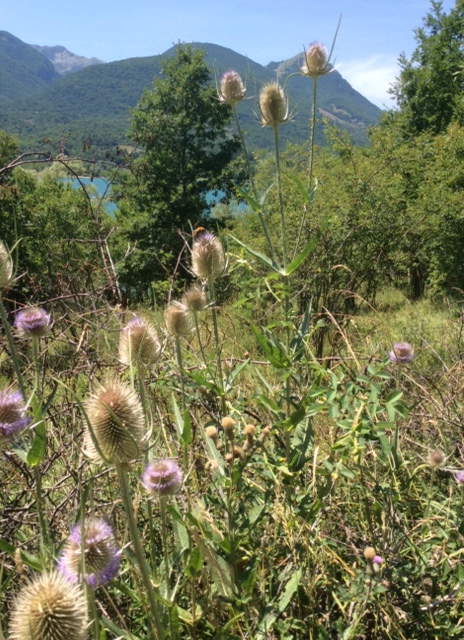
Wildflowers, Vicalvi, Italy.
I don’t know if its true as Keats said in his “Ode to a Grecian Urn” that “Beauty is truth, truth beauty,–that is all/Ye know on earth, and all ye need to know,” but I do believe we need to have a much deeper knowing of beauty than we currently hold. There is a relationship between our loss of beauty in many of our urban environments, a loss resulting from our pragmatic values that relegates beauty to the bottom realms, and efficiency to the higher realms of priority. When I speak of beauty, I’m not talking about beauty in the decorative or commercial sense. I’m speaking of the beauty such as nature gives us in a star strewn sky or a valley sweeping down in green fields from stoney mountain peaks. I’m speaking of the beauty Scarry described above—that stops us short, that overwhelms, and then lifts us out of ourselves. Is our culture’s pragmatic love of efficiency causing us to structure society in such a way that it’s actually challenging to make deep connections with others? We have connection to people on Facebook, but does the minimalistic communication that exists there nurture deep conversation and relationship? I doubt it. Could it also be true that our lack of seeing ourselves as connected to the beauty of the Bolivian salt flats and the lives of Bolivian miners as we pursue our technological development (and other similar realities) is part of the reason corruption continues to thrive? Do people act in ugly ways because they live in a world where connection to the natural world is broken? In glimpses of beauty, we can see the world we want to belong to, a world of balance and wholeness, and are drawn to it. If we gave beauty a place of respect and honor in our cultures, possibly we would treat the world with more respect. If we developed more of a relationship with those around us and with the natural world, wouldn’t we understand our connection to the world and realize more fully the effects of our choices? Is our collective loss of beauty causing us to lose our souls?
At the castle ruins, Vicalvi, Italy.
I never used to understand the Jesus prayer—the ancient prayer that says, “Have mercy on me.” I felt it seemed too focused on the negative and I already struggle to move beyond my failures. But as I see myself more and more intertwined with the existence of all that is, I see the value of this prayer. What the world is or isn’t, isn’t all up to me, but I’m also a part of all that is. How do we live in a corrupt world and yet continue to grow toward wholeness? The problems are all much bigger than me but mercy is extended. “For the Beauty of the Earth” is an old song that carries with it the idea of giving praise for the world around us and to the skies. Perhaps the ongoing practice of noticing and valuing beauty in the world, as the words of this song illustrate, acts to create a greater awareness of our interconnectivity. It’s worth trying.
One of the especially valuable aspects of creative work—of art and literature, of writing—is the way it nurtures the inner life. The artist must look very carefully at whatever she or he is drawing in order to see it and how it functions in relationship to itself and to the world it inhabits. In writing, an author must delve inside the subject with imagination in order to understand the subject and the interrelationship of the subject to oneself and the world. To write or to do art is to cultivate beauty. It is a way to reconnect to the world, is a way of making whole again as telling our story is a way of making us whole again. The flourishing of this kind of empathetic understanding that comes through our interaction with literature and the arts is important to not only the continuance of the world, but the continuance of a world that is good to live in.
Wherever we are, we can work with others to create greater wholeness. If we are going to change at all, it will be a step-by-step movement toward wholeness. In the mean time, we can pray as we walk, “have mercy,” and, by grace, we will continue on.













 Anna Citrino---Poetry, Place, Pilgrimage