Uncategorized

Fruits From Other Worlds

“Earth teems with sights and textures, sounds and vibrations, smells and tastes, electric and magnetic fields. But every animal can only tap into a small fraction of reality’s fullness. Each is enclosed within its own unique sensory bubble, perceiving but a tiny sliver of an immense world.”― Ed Yong, An Immense World: How Animal Senses Reveal the Hidden Realms Around Us

An absolute plethora of fruits grow in the country of Colombia. In a recent trip to Bogota I visited a local produce market and explored a different world of fruits and vegetables from those familiar to me in the temperate climate where I currently live. Colombia’s fruits are unique to many other tropical countries because they are native to the Andes mountains. 

At the market, my friends and I wandered slowly through the aisles examining the fruits’ textures and inhaled their distinct fragrances. Here’s some of what we found:

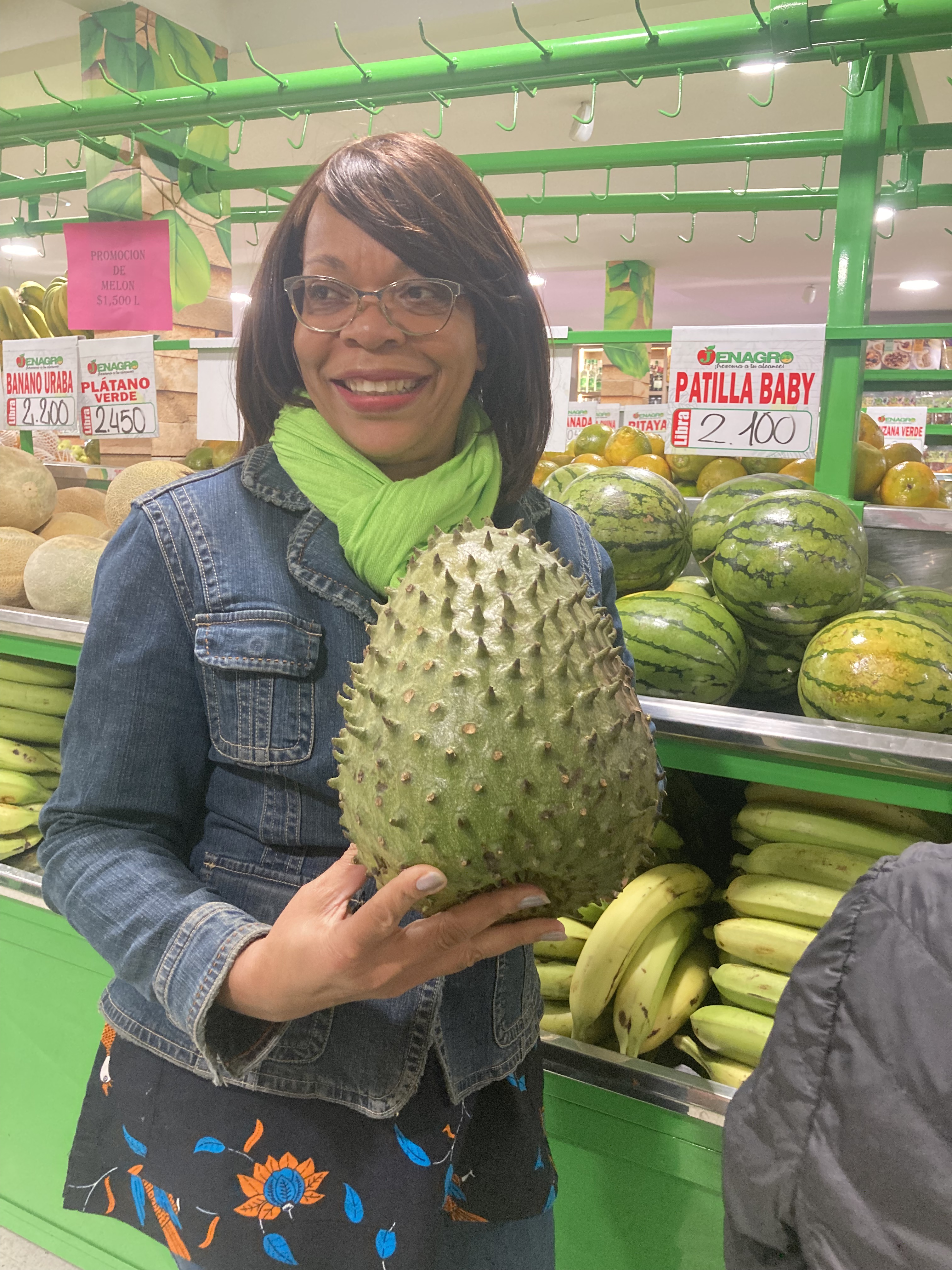
  • The enormous and spikey guanabana, also known as soursop, paw paw, or graviola.
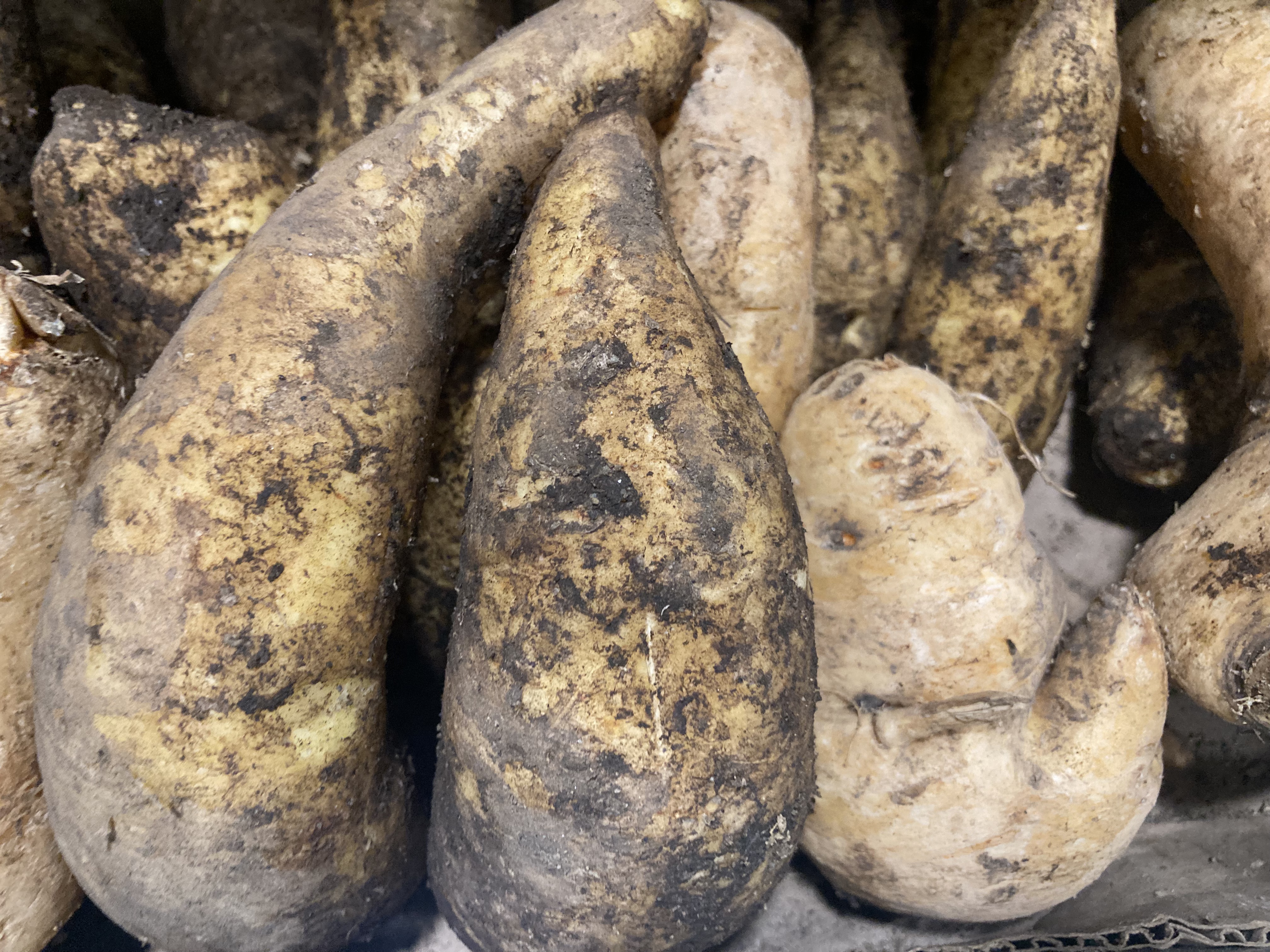
  • Chuguas, a type of tuber that has been cultivated for thousands of years by indigenous people of the Andes.
  • Pepino guiso, a kind of vegetable used in stews or sauces.
  • Cubios, another indigenous tuber of the northern Andes with a similar taste to a potato.
  • The Colombian zapote comes from the Amazon rainforest. 
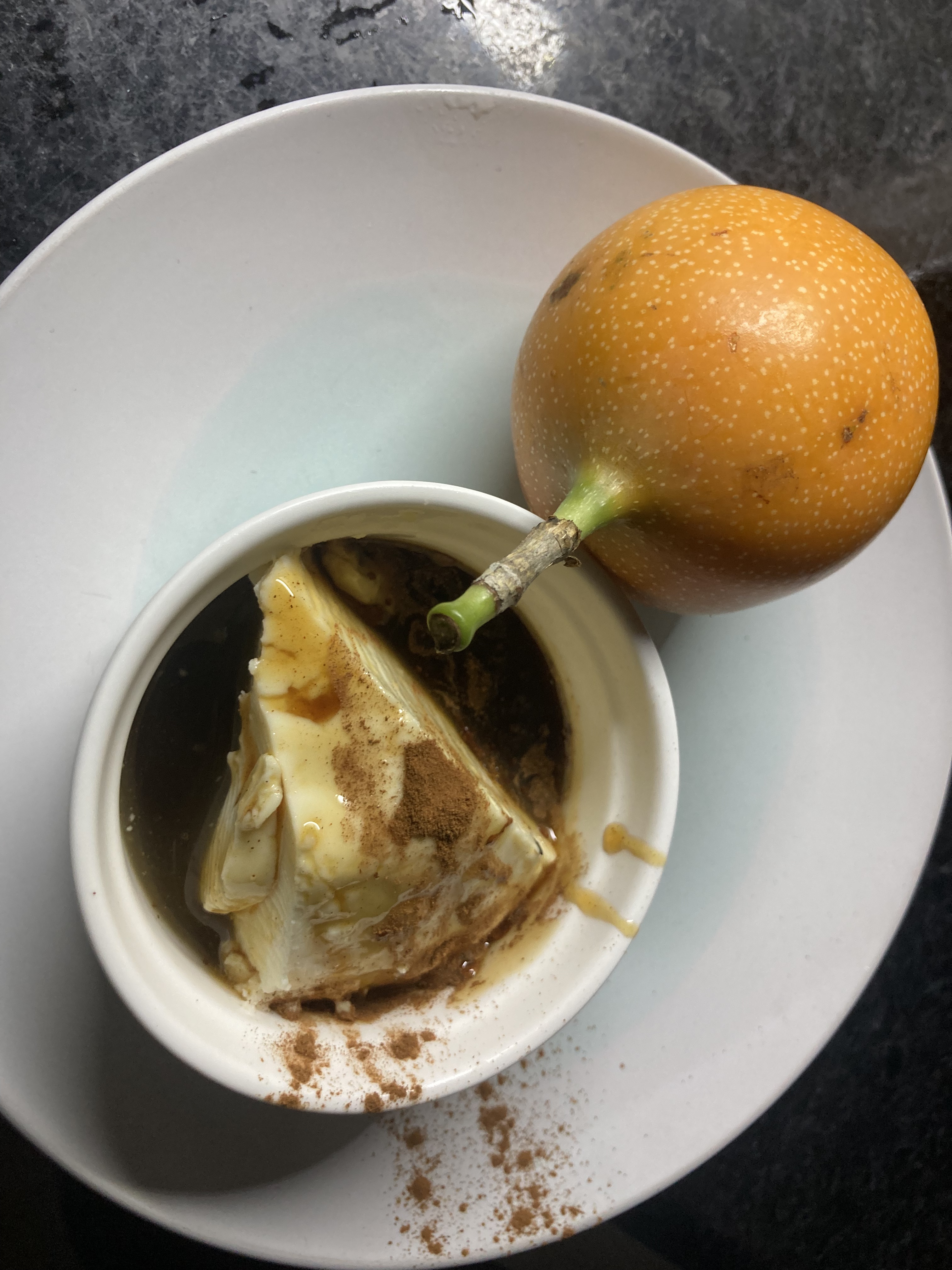
  • Granadilla, similar to a passion fruit.
  • Lulo, a citrus-flavored fruit native to the Andean region,
  • Tomato arbol rojo, eaten raw, as a juice, or cooked in hot sauces.
  • Ciruela roja, the word translates into English as “red plum,” but this fruit is a tropical fruit that actually belongs to the cashew family.
  • Curuba, also known as a cloud passion fruit since it is grown in high elevation cloud forests.
  • Platanos, bananas specifically used for frying.
  • Star fruit. 

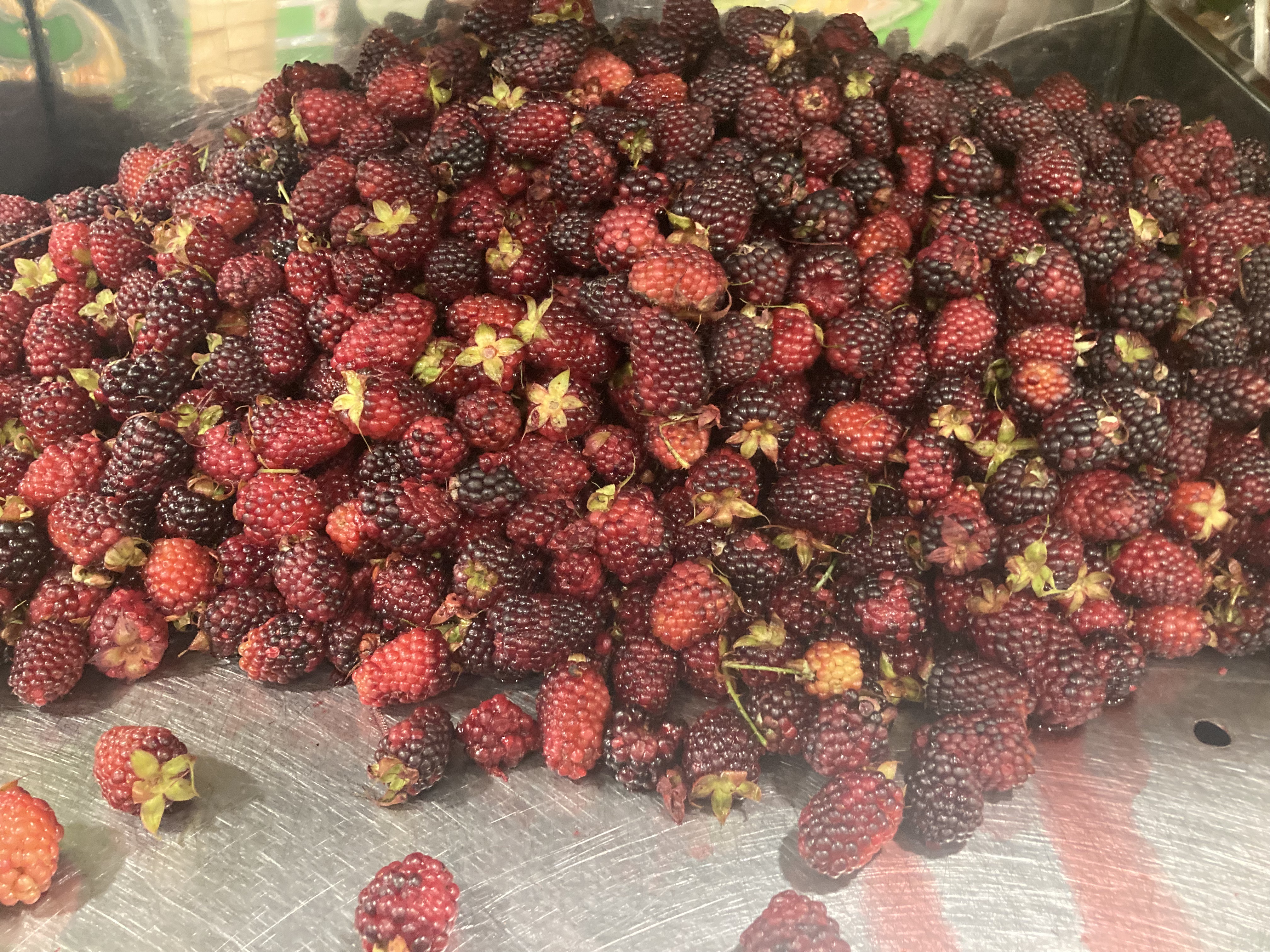
We also found some fruits more commonly known in the US such as pomelo, mora or mulberry, feijoa, a pineapple guava, dragon fruit, and maracuya, and passion fruit.

As Ed Yong describes, the world abounds with an enormous variety but we “tap into a small fraction of reality’s fullness.” The small fraction of reality that my California yard holds of Earth’s enormous variety are a lemon, lime, mandarin, pomegranate, sour cherry, plum, apple, loquat, kumquat, and fig tree. In addition we grow a variety of berries: strawberry, boysenberry, blackberry, blueberry, as well as a currant shrub, and two grape vines. Throughout the year I observe the plants’ growth, and in summer look forward to tasting their fruit, and sharing them with neighbors and friends. Without exposure to other worlds, I might think my world and what it holds is the whole world. 

As Yong points out, “By giving in to our preconceptions, we miss what might be right in front of us. And sometimes what we miss is breathtaking.” We’re mostly unaware in our day to day lives of the astounding amount of life around us everywhere that contributes to the life-force that sustains us. According to the Seed Collection site, a single handful of soil “(about 200g) suitable for growing crops can contain a staggering number of organisms: 50km of fungal filaments, about 5000 individual insects, spiders, worms and molluscs, 100,000 protozoa, 10,000 nematodes, and 100,000 million bacteria (that’s 100,000,000,000 individual single-celled organisms!)” We likely don’t typically think about that when stepping into a garden.

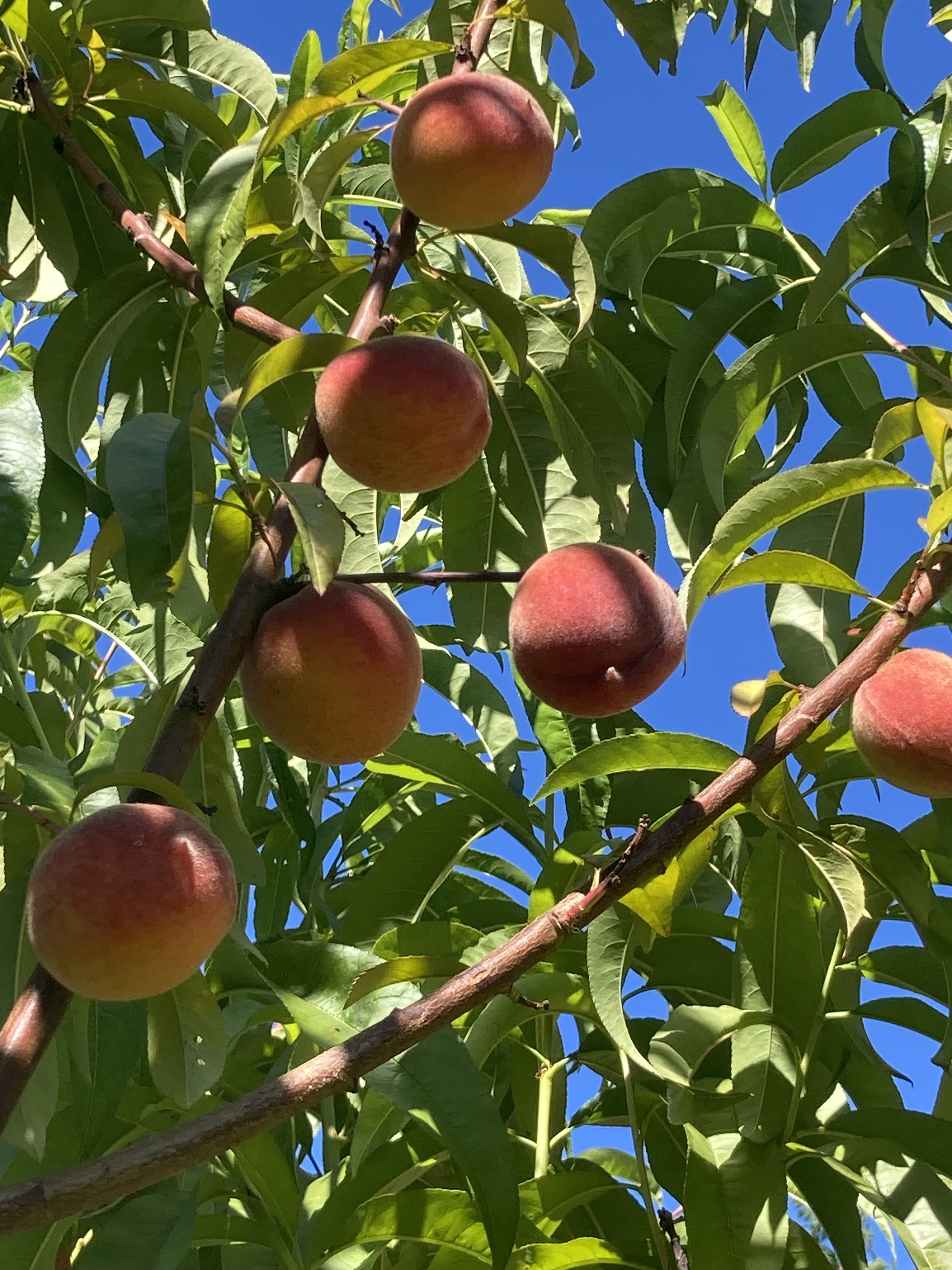
I think of the fruits in my yard as native because I’ve grown up with them and they are familiar. In reality, though, these fruits originated in other lands. The peach, for example came from China, and spread through Asia and Europe before being brought to the new world by Spanish explorers. The pomegranate, according to the Kew Royal Botanic Gardens, is one of the oldest fruits known to humans and is thought to have originated in Iran, southwest Pakistan, and portions of Afghanistan. (Surprisingly, the pomegranate is technically a berry.) Black currants are native to northern Eurasia. The sour cherry likely has its origin somewhere between the Black Sea and the Caspian Sea according to Science Direct. The fig (related to the mulberry) is native to an extensive area ranging from Asiatic Turkey to northern India.
The association between apples and US culture has had such a strong connection since WW2 that there’s a common saying, “As American as apple pie.” Apples, however, came from Kazakhstan, in central Asia east of the Caspian Sea. In fact, the former capital of Kazakhstan, Alma Ata, means “full of apples.” Wild blueberries are one of the few fruits in my garden that originated in North America. After the glaciers receded approximately 10,000 years ago, they began to appear in the area known as The Barrens of Maine, and in Eastern Canada, and Quebec. My life is thoroughly enriched because of what has been brought to me from worlds beyond the borders of where I live.

Travel to a different part of the world to walk around in a different biome or culture, and one right away becomes more alert to the differences of landscape, climate, unique ways of organizing reality and ways of interacting with it.
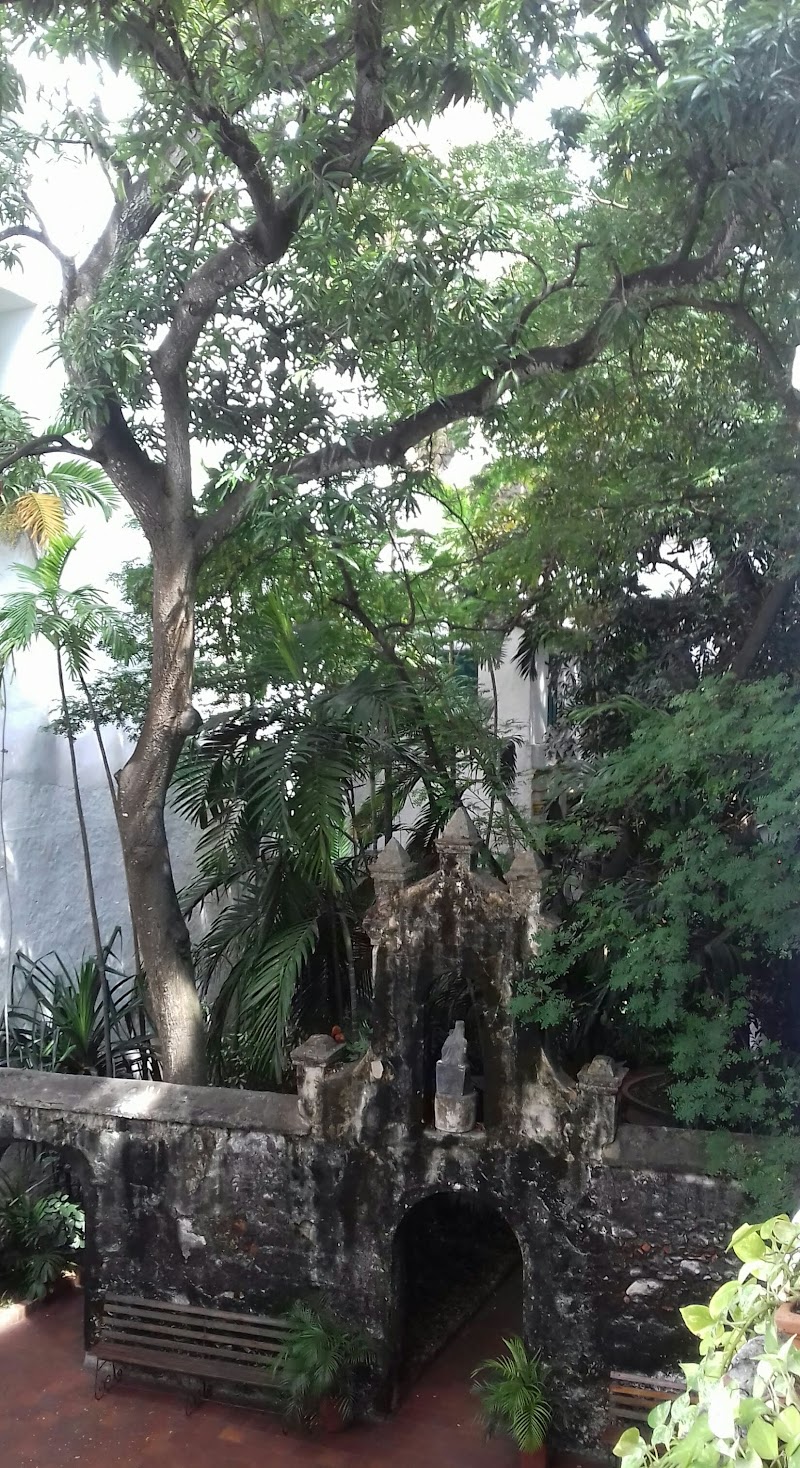
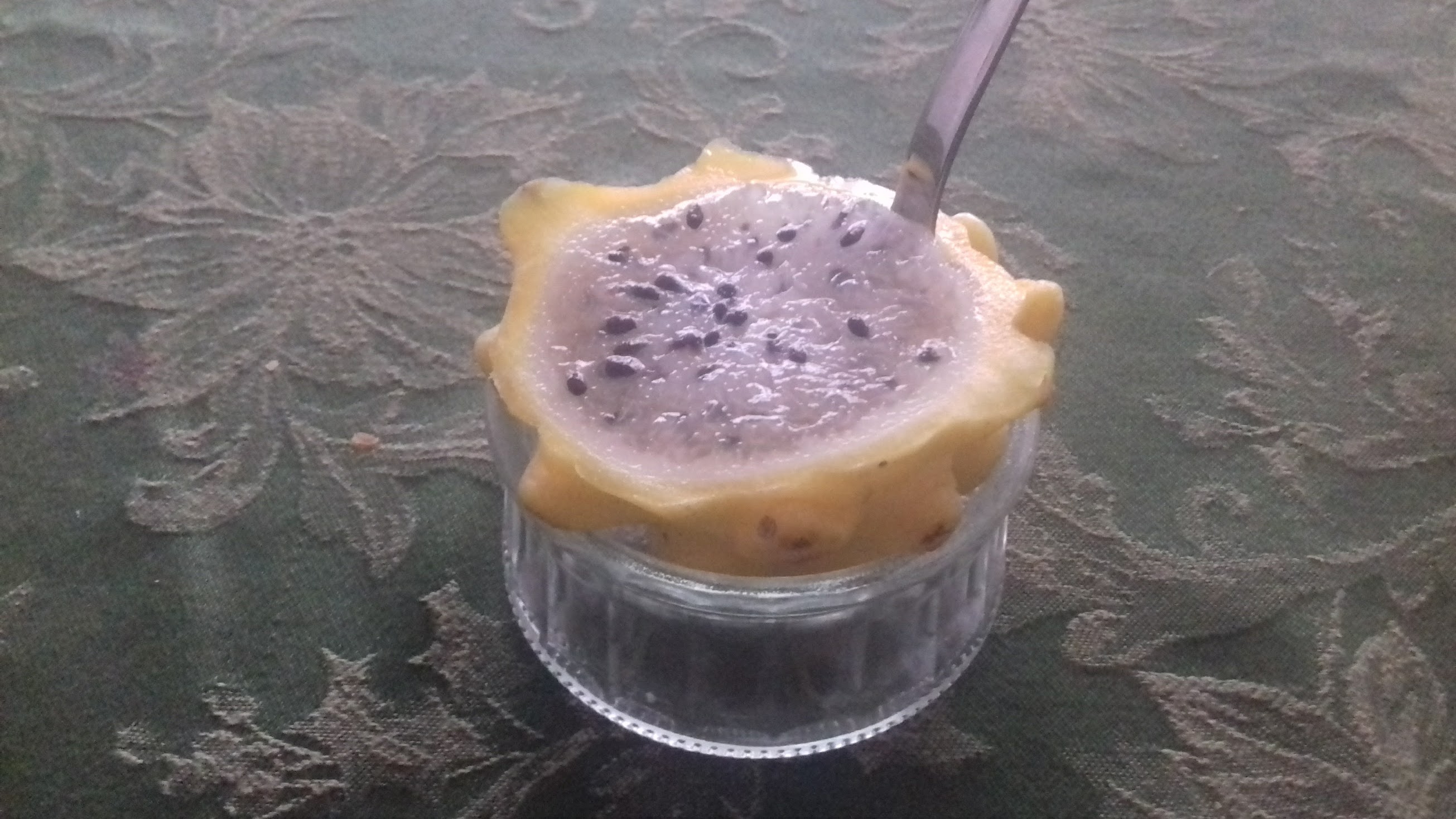
It’s human to like what is comfortable and known. In a world where much feels uncertain, where countries and people are pulling into themselves, fearful of what’s to come. People generally want to avoid situations that provoke fear. The natural world, however, wants to offer its abundance irregardless of the challenging environment it finds itself in. Wandering through the Bogota neighborhood market was a window into the natural world’s extravagant diversity, not just to see and touch it, but also to taste it. What an enlivening experience that can be!

The plant world opens, and opens into a universe of wondrous fecundity of 400,000 plant species. We are part of the natural world that created the cornucopia of thousands upon thousands of fruits found worldwide. Even in the most ordinary of days, to walk on this earth is an extraordinary thing. It took eons upon eons to create the world as we know it in all its rich variety. Like each of us, I’m here to allow myself to participate in that life flow–to let it in, immerse myself in it, and share it with others. Humans are meant to share the fruits of our lives as season after season we re-vision who we are and give back to life. As Kate Baer writes,

Idea

I will enjoy this life. I will open it
like a peach in season, suck the juice
from every finger, run my tongue over
my chin. I will not worry about clichés
or uninvited guests peering in my windows.
I will love and be loved. Save and be saved
a thousand times. I will let the want into
my body, bless the heat under my skin.
My life, I will not waste it. I will enjoy this life.
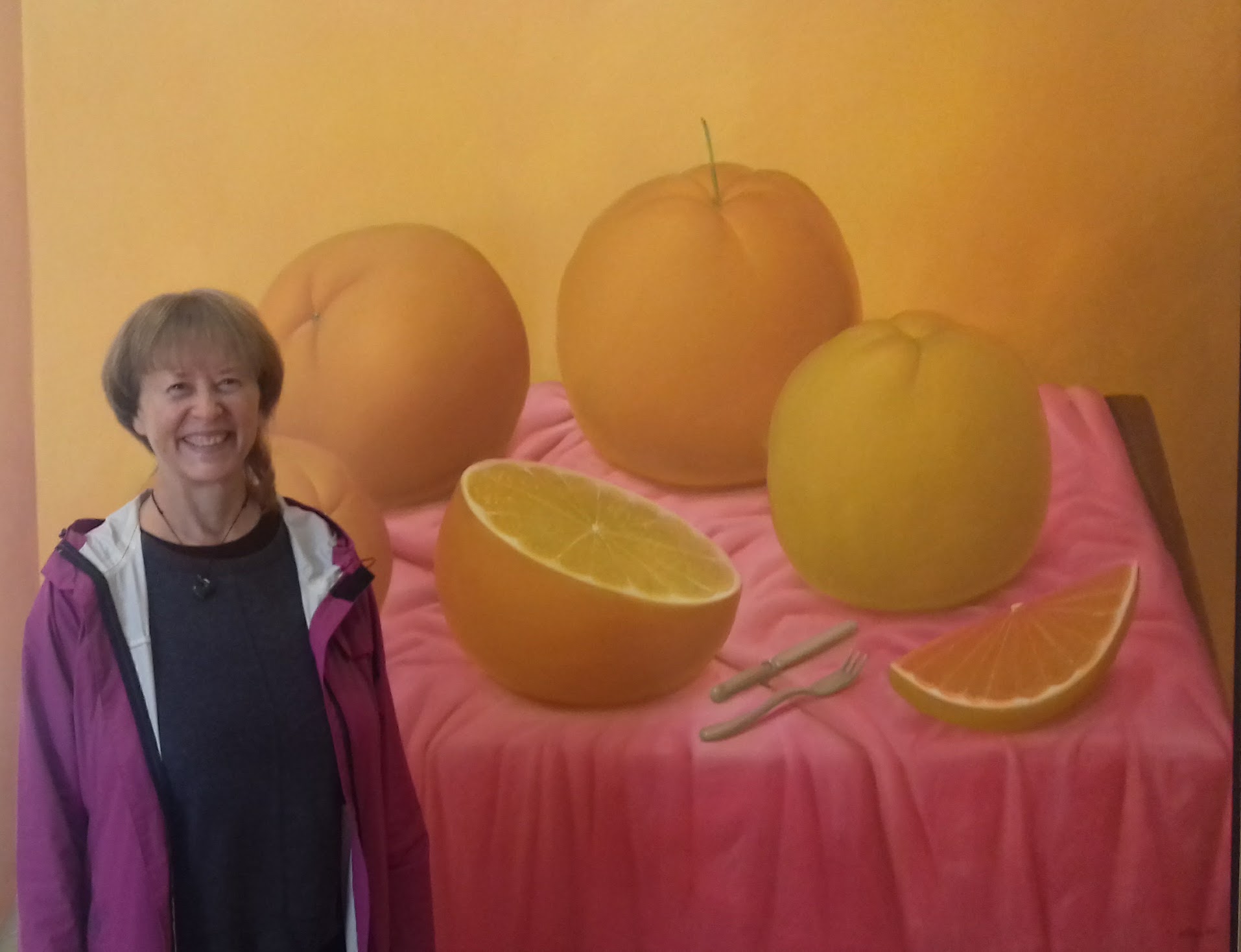
Anna by a Fernando Botero painting
Uncategorized

Sweet and Cool

“Italians just want to welcome people by sharing what they have, however simple, in abundance. An Italian’s role in life is to feed people. A lot. We can’t help it.”  —Giorgio Locatelli, Made in Italy, Food and Stories

It’s the hot time of year in the northern hemisphere. I’ve been dreaming about granita, and thought it would be fun to share the granita al caffe recipe my husband and I invented. The recipe appears in the electronic cookbook we made as a companion for my book, A Space Between, after it was published in 2019. We took a year to create recipes for foods mentioned in A Space Between, then compiled the recipes in the cookbook along with vignettes I wrote for each recipe. I hope you enjoy the story and the granita.

GRANITA AL CAFFÉ

Relatives from Reggio once told how family members in Sicily brought snow from the mountains in early summer to make granita—lemon, almond, coffee—so many delicious flavors! Determined to surprise the family with a treat, Gaetano’s uncle Rafaello made a plan for bringing snow to Amantea for granita. Though it was several day’s journey to the Sila Mountains, sometimes Rafaello went there with his mule, Dolcecino who pulled Rafaello’s cart to collect wood for his father’s carpentry work. 

One early summer day Rafaello set out for an area in the mountains near Lorica. After collecting wood, he found an area with ample pockets of clean snow in a shady space sheltered under a stony overhang. Packing the snow in a bucket, he placed it in a wooden box, stuffing ferns, straw and snow between the bucket and the box walls for insulation. Then he began the journey home.

When he arrived a few days later in Amantea, the whole family—cousins, uncles and grandparents hustled to his house to gather around the box to see if the snow would still be waiting inside. When he lifted the lid, to everyone’s delight snow crystals peered back up at them, the perfect texture for granita. 

Aunt Terezina poured cold coffee left from breakfast into a container mixed with cream and some precious sugar over the snow and served it up in bowls as the citrine sun streamed through the open door. 

Years later, living alone in San Francisco, when Vincenzina offered him granita, Gaetano remembered his uncle’s joy when he opened the box, how the whole room felt buoyant that day as the family savored their first granita. Worries melted and someone pulled out a concertina and began to play. 

What brings happiness? Maybe it’s a long journey that at its end for a few moments fills everyone with sweetness.

Ingredients:

  • 4 cups strong coffee
  • ½ cup water
  • 6 squares dark chocolate (this is optional)
  • 1 cup fine sugar or powdered sugar (you can reduce this if you like)
  • 2 spoons for the whipped cream
  • 1 carton whipped cream
  • 1 or 2 teaspoons sugar
  • 1 teaspoon vanilla

Directions:

Make the strong coffee and pour the coffee into a large bowl.

Grate chocolate into the bowl while the coffee is hot.

Add fine sugar (or the powder sugar, whichever type sugar you chose) to the bowl while the coffee is still hot and allow it to melt. 

Allow the mixture to come to room temperature and cool completely.

Put the coffee in a sealable plastic freezer bags so it can lie flat in your freezer, allowing it to freeze quickly. Put in the freezer to freeze. While it’s freezing, keep crunching the bags, about once every half hour to keep frozen pieces smaller. 

Once the granita is frozen, process the granita in a food processor blending it to fine ice. 

Make half a carton of whipped cream with 1 or 2 spoons of sugar. Add a teaspoon of vanilla if you like. 

Put a layer of whipped cream in the bottom of each glass followed by a layer of the granita and top with another layer of whipped cream. Garnish as desired. We used half a pecan and a borage flower.

Eat slowly, thinking of the sweet things of life you treasure.

If you’ve not yet read A Space Between, here’s a couple of comments about the book taken from the Barnes and Noble site and GoodReads sites. The book is also available on Amazon.

“Beautifully and artfully written story of the heartbreaking immigrant experience. One could easily race through it in a day but I urge readers to slow down and savor Anna Citrino’s poetic wordsmithing. Sublime.”–Allison Pharis

“A massive, ambitious effort of epic proportions that rewards with its interweavings of history, consequence, heritage, and legacy. How heartening it is to witness in these poems the resonance through generations of immigration and sacrifice to provide for living, surviving, prospering. ” –Nicholas Samaras

A place by water with a cool breeze might be a superlative place to enjoy the book as well as the granita. Let me know you think!

poetry, Uncategorized

What We Need is Here


20161227_124415
Parco delle Madonie, Sicily

Sicily’s countryside speaks in dramatic beauty–sheer stone faced mountains and sweeping valleys fringed by sea, pastures with grazing sheep and mists drifting below craggy ridges, olive groves speckled with wild yellow sour grass (oxalis stricta) blossoms, and wide fields waiting for wheat. Though the historical centers of Sicily’s cities are filled with stunning architectural beauty, since ancient times, agriculture has been central to Sicilian life. Along with several other products, the Greeks introduced grapes and olives to Sicily. For the Roman Empire, Sicily served as its breadbasket. When the Arabs arrived, they introduced irrigation, which served to further intensify farming in Sicily. Traveling though Sicily, it’s exhilarating to see vast expanses of open space on land that has been inhabited from so far back in time that the stories of the original people seem to seep into the earth itself–roots half hidden in the soil, and not completely understood.

In trying to learn more about Sicily before visiting it, I came across the beautiful film, Sacred Flavors of Sicily, describing Sicilians’ connection to food through the celebration of sacred rituals. Fabrizia Lanza, historian and museum curator, heads the Anna Tasca Lanza Cooking School in Sicily, previously run by her mother. One of Lanza’s projects is to archive videos demonstrating food techniques, that, as she explains on her web page, are in danger of extinction. In Sacred Flavors of Sicily, Lanza describes her deep interest in food. “To me, food holds significance far beyond consumption. It is a chain of humanity, encounters, and sensuality. More than an object, food is our guiding metaphor.”

As I listened to and watched Lanza’s film, it occurred to me that the people she interviewed weren’t simply describing their work as cooks or bakers. Food wasn’t a commodity. The Sicilians in her film were intimately part of the food they grew, made, and ate. Food was the tangible representation of people’s shared coexistence with the land and their neighboring community. The film shows an elderly woman, Nellina Selvaggio, making lace cookies to place on an altar for the feast of St. Joseph, the patron saint of the family. A tree of life motif decorates every scartuciatte cookie, explains Selvaggio, “with a stem that is never interrupted.” Food in her world demonstrates the interconnectivity of all life, and serves as a bridge from the past to the future as she passes on her skill. The fruits and flowers on the lace cookies “represent the things we create through our lives as offerings to God,” explains Selvaggio. The community prepares an abundance of foods for the Feast of St. Joseph, and people make vows. When people prepare food with their own hands, present it as a sacred offering, and share it with others, an I-Thou relationship is nurtured with the land and neighbors. One of the household members in the film offered up this prayer for St. Joseph’s, beautifully summing up this lived connectivity between the soil, human activity, and the sacred.

Love the bread, heart of the home
perfume of the table, the joy of the heart.
Honor the bread, glory of the fields
fragrance of the land, feast of life.
Respect the bread, sweat on your brow
pride in work, poem of sacrifice.
Don’t ruin the bread, richness of your country
that holy gift for human toil.

Surprisingly, when I looked up who wrote the prayer, I learned Mussolini was the author. Simonetta Falasca-Zamponi, in her book, Fascist Spectacle: The Aesthetics of Power in Mussolini’s Italy, explains that these lines are actually from a speech Mussolini made to imitate the structure of a prayer. Mussolini words were part of a larger intention. He used people’s dependence on bread as a political symbol, connecting it to the nation’s wealth, explains Falasca-Zamponi. Mussolini embodied his idea in what he termed the Battle of Wheat. Speaking to representatives of the agricultural unions of the time, he played on their sense of pride, telling them it was a shame that Italians had to look for work abroad. He appealed to values of hard work rural Italians held in order to gain their support in so they would be willing to become soldiers. Falasca-Zamponi explains Mussolini’s aim was to gain rural people’s backing in order to accomplish his desire of expanding Italy’s access to resources through invading and controlling other areas such as Ethiopia. Quoting Mussolini, Falasca-Zamponi states he wanted to ‘”augment the nation’s [Italy’s] power and virility.”‘ Different, however, is the way his words are used in Lanza’s film, Sacred Flavors of Sicily. When the speaker in the film reads the words about the bread, nothing of Mussolini’s political motives appear to inhabit them. Instead, the words demonstrate honestly valued connections between land, food, human labor and life. Placed in a context that honors the flow of life embodied in their presence of bread, and without ulterior motives, the words function truly as a prayer–affirming life, and the human effort to bring forth its bounty.

Wheat, vegetables, and fruit growing in the fields all look beautiful from a distance, but few of us pause long to consider the link of life connecting from field to farmer to food on the table. Farming has always been a difficult life. In southern Italy there are nuances to farming beyond the struggle with nature to achieve a harvest. The Maffia has controlled the food system there, making farming even more difficult. In February 2016, Reuters reported that “Italy’s mafia has infiltrated huge swathes of the country’s agriculture and food business, earning more than 16 billion euros ($17.7 billion) in 2015 from the industry.” Additionally, as Rebecca Roberts explains in her May 2014 article, “Rise of the anti-mafia land movement,” The Mafia uses food as “a tool of power, with the residents of southern Italy literally relying on the Mafia for their daily bread.” The food costs less when bought through Mafia controlled businesses, but also is often coated with pesticides or E.coli. Cooperatives like Libera Terra, however, are working to free people from this kind of oppression, and to give control back to those working the land and shop owners who sell agricultural products.

Much of the food we buy today at grocery stores is raised on commercial farms, farms, which according to Jeff Vidal’s article, “Corporate stranglehold of farmland a risk to world food security “are growing in size, and squeezing out small farmers, even though their farmland is generally more productive and sustainable. Roberto Romano’s 2010 film, “The Harvest/La Cosecha,” depicts the difficult life of farmworkers this century on commercial farms, and their struggle for necessities, education, as well as their altogether herculean effort to hold on to dreams.

20161220_112705The loss of the sacred, our turning most everything into mere commodities demeans existence. When we our gaze consistently views the world through a lens of self gratification, when we value earth’s fecundity and wild abundance only for utilitarian purposes, we reduce and diminish life to a few hard, dry crumbs. We want more from life, but end up with less. We have it all, but remain empty. In Wendell Berry’s poem, “Manifesto: The Mad Farmer Liberation Front,” Berry writes about the experience of this kind of life,

Love the quick profit, the annual raise,
vacation with pay. Want more
of everything ready-made. Be afraid
to know your neighbors and to die.
And you will have a window in your head.
Not even your future will be a mystery
any more. Your mind will be punched in a card
and shut away in a little drawer.
When they want you to buy something
they will call you. When they want you
to die for profit they will let you know.
So, friends, every day do something
that won’t compute.

It’s inspiring to see people in Sicily working the land, and to watch women like Nellina Selvaggio in Lanza’s film create art with the food they make. Most people, though, will not likely be taking the time to create such food in this way, or at least not frequently. How, then, do we find a way to step off the treadmill where everything must be accounted for, everything compute? How do we nurture an awareness of our connection to the earth, our food, and our communities so we find again an I-Thou relationship with life? Berry, long an advocate of knowing the land you live on and understanding its needs, suggests that if you eat, you are a part of the food system. In his article, “The Pleasures of Eating,” Berry presents several ideas we can consider in an aim to find a deeper connection with food:

1. Participate in food production to the extent that you can… 2. Prepare your own food… 3. Learn the origins of the food you buy, and buy the food that is produced closest to your home… 4. Whenever possible, deal directly with a local farmer, gardener, or orchardist…5. Learn, in self-defense, as much as you can of the economy and technology of industrial food production…6. Learn what is involved in the best farming and gardening…7. Learn as much as you can, by direct observation and experience if possible, of the life histories of the food species.

Though we may live in cities where open land is difficult to come by, we can grow a plant in a container for a window to help ourselves remain mindful of the earth and our ultimate dependence on it. In California, as part of a Curated Feast, and in a collaboration between historians and chefs, you can sit with others at a meal and learn about the origins of the food as you eat. This could be an engaging way to kickstart a venture into learning to be your own curator of the foods you eat, as Berry suggests. Beginning with one thing, one practice, we can change our story into a different narrative, one with a more satisfying plot.

In Berry’s poem, “Wild Geese,” the poem’s speaker goes on a horseback ride one Sunday morning where he eats persimmon and wild grapes, and opens a seed with the promise of a tree to be–

what we need
is here. And we pray, not
for new earth or heaven, but to be
quiet in heart, and in eye
clear. What we need is here.

We have what we need to connect to the earth. Simple, daily practices can help us understand how. We have what we need to feel alive again. It is a seed inside us. We can help it grow into a tree.

Uncategorized

Treasuring the Tangible

For over a  year now, I’ve been working on a poetry manuscript, Finding Home, about Italian immigrants from Calabria in southern Italy to San Francisco early in the last century. The research I’ve done while writing the poems has opened up whole new worlds, and deepened my understanding of Italy and Italians. When many of us think of Italy, we think of the beautiful countryside and the fantastic food, of art, rich traditions and frank, open-hearted animated people who understand that relationships matter, and who value family connections. While these qualities are in general true, the book I’m currently reading by Luigi Barzini, The Italians, draws a more complex picture of Italian character.

“This obvious predilection of the Italians for the solid, the all-too-humman, the comprehensible, the pleasurable; this constant suspicion of the honorable, the unworldly, the chivalrous, and the noble; this persistent fear of emotional traps; this concentration on private interests and disregard for public welfare; this certainty that all things no matter how alluring, will end up badly, all these have been constant characteristics of Italian life since time immemorial. They are ancient mental precautions and expedients, unconsciously accepted by almost all, developed by the people in order to get through life unscathed.” (p. 170, Barzini,The Italians)

The preference for what is tangible, stable, and for what can be understood through the senses, is something that appeals to me as someone who writes poetry, because the way a poet describes the world is through the felt experiences of physical reality–through the senses. The sensory world is the tangible expression of spiritual reality. While doing research, I came across this fabulous description on Mozzarella Mama’s blog depicting just how much the the physical world can embody a deeper expression of relationship and love for an Italian. The writer, Trisha, an American woman working and living in Italy, slips into the church in the Basilica of Santa Maria in Trastevere, an old neighborhood in Rome, on a hot August afternoon, and finds herself listening in on a funeral ceremony where a middle-aged man is giving the eulogy for his mother. In Trisha’s words,

“With a tremendous sigh he put a couple sheets of paper down in front of him, adjusted the microphone and said, roughly from my memory: “Melanzane parmigiane, Ravioli con ricotta, stracchino e gorgonzola, Fiori di zucca ripieni di tagliolini al limone, these are just a few of the divine dishes mother prepared for us. These are the specialties into which she poured her love into and served to us. And now she is gone.” I gasped. Food. Love. Loss. It was devastating. I looked around at all the people dressed in black gently wiping away the tears with kleenexes. And then it came over me, the SAD WAVE. I felt it starting in my stomach working its way up to get a grip on my heart and into my brain. Just before the tears could come sliding down my cheeks, I jumped up and left the church. The August heat in the piazza was fierce, but it brought me back to my senses. “Trisha, you were about to start crying over the lost chance to eat that kind lady’s melanzane parmigiane.” (Mozzarella Mamma, “Dressed in Black”)

I’m still trying to grasp more of the particular quality of what Barzini means when he describes the Italian’s propensity for suspicion of the unworldly and the honorable, and the belief that things are bound to end up badly. But as the anecdote above so aptly describes, Italy is a country where food is not only precious, but more or less counted as a sacrament of daily life. It seems to me, most of us could learn a lot from seeing not just food, but the whole of the physical world around us in such terms, and by considering the effort of people in our families and throughout the world have given to make possible the every day items used in our homes. The effort and hard work of the world adds to, assists, and perhaps even enables our own contribution. Maybe if more of us purposely and frequently take notice of the way the physical world offers itself to us, how it reaches out to nurture and restore, we will experience ourselves in a deeper, more meaningful and felt relationship to the world and to life.