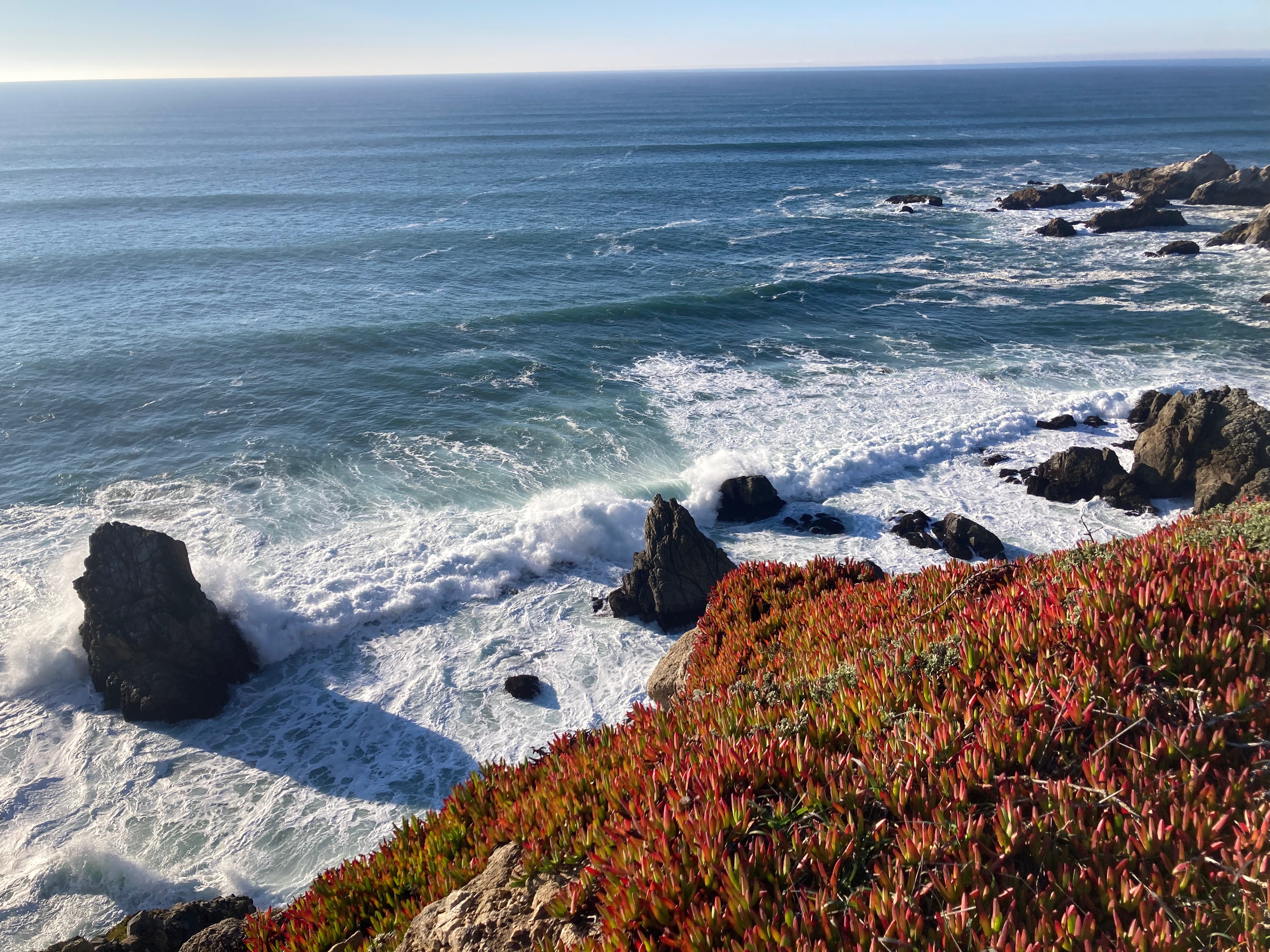
Today I was out wandering the coastal path along Bodega Bay here in Sonoma County. The sky was as blue as dream, the light clear as cut glass. My eyes stretched across the bay about 35 miles to the Point Reyes headlands while above me sea gulls careened through the air in drifts of white. I always look forward to visiting Bodega Bay to walk along the cliffs. It’s the landscape that convinced me I could move away from Santa Cruz County. Here in Sonoma County I could still be near sea and trees and beauty. My soul would be well.
Perhaps you, too, have landscapes that have spoken to you or fed your soul. I remember standing years ago on the red earth outside of Wheatland, Wyoming. I climbed up on a piece of red sandstone and looked far across dry horizontal landscape to the distant horizon. Not a person or building in sight. Dark clouds hovered above and it began to rain. Thick drops splatted hard against the stone and earth. Everything around me felt absolutely elemental. I thought of my mother whose hair was red like the earth around me, and how durable a person’s body and spirit would have to be to hold up in such an environment, how resilient. Standing there on that land I understood my mother in a way I had never had before.
When people settled the West in America, they plowed up about half of its native grasses, approximately 5.2 million acres in the Great Plains and effectively destroyed the soil, leading to the Dust Bowl. Our interactions as Emmanuel Vaughan-Lee states in his talk, “Enraptured with Earth,” “…union is the state in which the world really functions.” People in the past may not have understood the land they were living on, how it needed to be treated and whether or not it was capable of providing people with the nurturance and productivity settlers of the era sought. In our day, however, we have an abundance of information to help us understand what creates a healthy relationship with the environment. We know now that time spent in nature can improve our physical and mental health, as well as our thinking, creativity. This is encouraging and affirming news for human well-being.
For the character Adah inStories We Didn’t Tellthe land is a steady friend that helps her endure through difficulties and trauma.
During Drought Beaver Creek, Weston, Wyoming Adah, 1908 (age 19)
Earth crackled underfoot, hot winds peeled the skin, crops shriveled and collapsed, banks floundered, farmers sold their livestock.
Some lost their farms, others their homes. Then, on the brink of famine at the end of a decade of drought, I was born.
The ghosts of the world that came before and what was coming next rose from the soil to the fever-weary air.
Parched earth’s despair eventually passed, but a new drought arrived when I got pregnant. Barely past childhood, I was living in one world,
then woke to realize I was living in another.
Arid wind evaporated my life, withered thoughts of any restful future.
Heat exhausts. Lack of water alters the mind. We need rain, streams, lakes. We need rivers’ soft arms to hold us.
I understood little about anything. Except thirst.
So, I went to the fields and meadows, days and months walking alone through wave-thick grass, green and gold pastures under gentle skies strewn with clouds. Flowing forth as if a spring, crested penstemon and desert buckbean grew out of cracks in rocks.
Shadows shifting and lifting in crests across the prairie, I journeyed into fields, the earth’s wordless voice entering slowly through my feet and eyes, seeping through the silence, whispering within the perseverance of its expansive presence that I was more than the hurt and harm I felt, larger than what had happened to me, and that like the earth, I, too, would find a way to endure.
I wish for you a relationship with the natural world that allows you to absorb through your eyes, or skin, or to feel beneath your feet the earth’s expansive presence. Even if your connection is simply attentively noticing the color of leaves through your morning window, the architecture of a tree’s branches in your neighborhood, or the weight of your cat resting on your lap, spend some time with the natural world. As you listen attentively over time to that connection, you’ll find how without words it speaks to you and works to support you, assists in allowing hurts or harms you may have experienced or are experiencing now to move through you. Like Adah, I hope you will find in that connection what you need to endure.
This coming Tuesday, 16 December, I’ll be giving a reading from Stories We Didn’t Tellon Zoom in connection with North Bay Poetics. I invite you to attend. The time listed below is Pacific Time.
(You can find the poem above, “During Drought” in Stories We Didn’t Tell, published by Shanti Arts.)
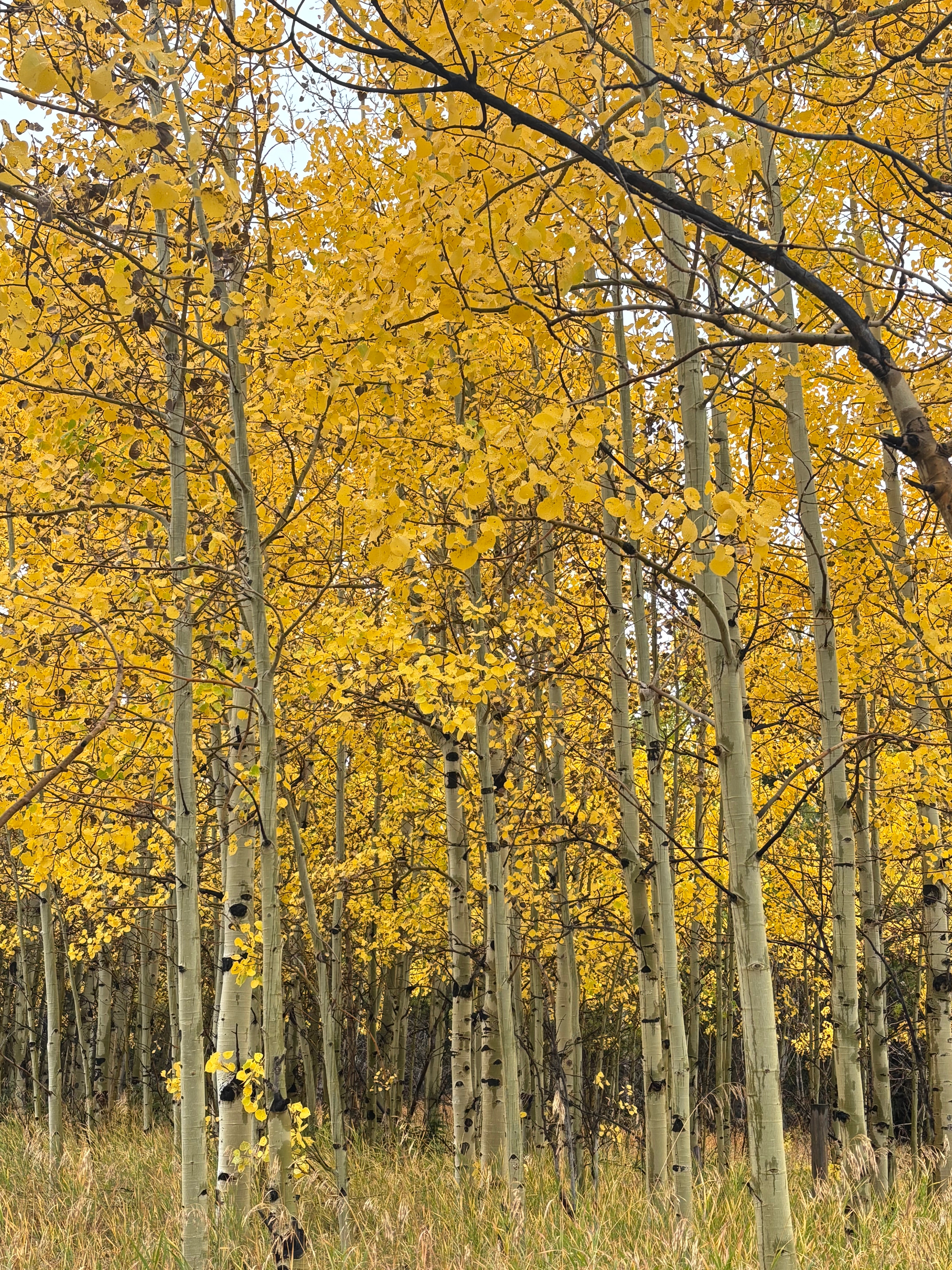
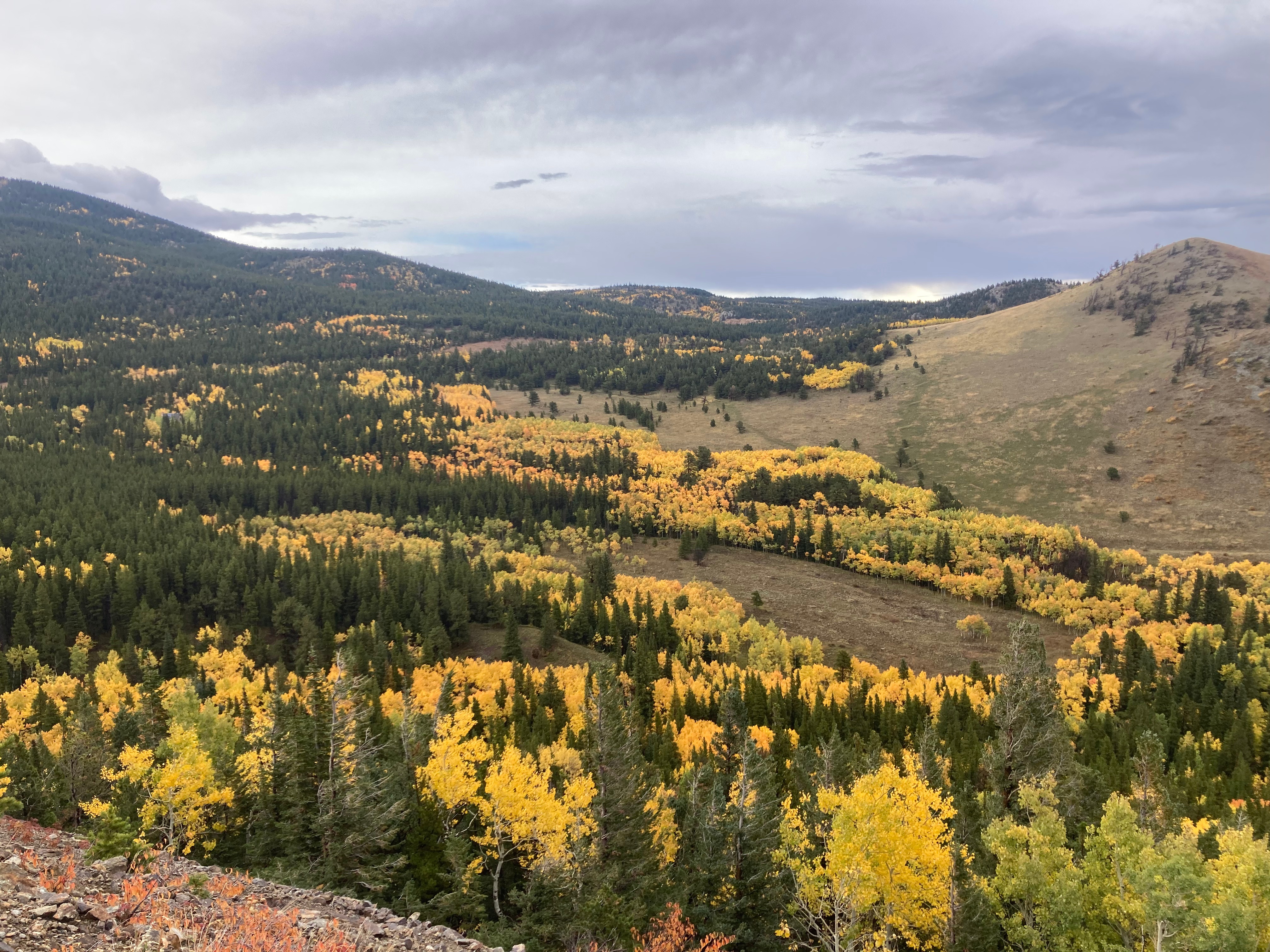
Recently, I visited Colorado where I gave a reading in friends’ backyard from my recently published book, Stories We Didn’t Tell. Leaving Denver’s airport, my friend drove me through the mountains where we viewed the aspen quilting the hillsides in gold between patches of green. Walking amongst the aspen, I felt I was wandering inside the glittering gold of a Klimt painting. Such astonishment of color! What life autumn brings. Clouds filled the sky as we drove and lighting let loose its ecstatic bolts of electricity, but the hills overflowed with vibrant yellow, leaves fluttering and swiveling in the brisk air. What a gift to be alive.
I’m grateful to live near trees. As I write, I look across an empty field. At the far end rests a line of redwoods. My great aunt, the central character in my new book, was raised on the prairies with its ocean of grass. Like her, I didn’t grow up with trees, but am grateful for their presence. Daily, they add beauty to my life. Landscapes shape our way of seeing the world. A walk in the woods can literally affect our sense of happiness, health, and wellbeing.
September 29 would have been my great aunt’s 135 birthday. Here’s a piece from Stories We Didn’t Tell in honor of her.
THE TREES North Little Rock, Arkansas, 1946 Adah, age 57
A short time ago this town held four thousand German prisoners of war. Things are calmer now, thankfully, so this morning Litton and I drove around Little Rock to explore Autumn.
Sweet gums at the capitol dressed themselves in topaz and copper. Maples on riverbanks huddled together beneath red and amber blankets. Up north, oaks wore suits of rust.
The cold that brings these gifts of color is a sign the trees soon will lose all they hold. Seems I should feel sorrow standing beneath their branches, knowing their loss grows daily, but the War is over, and it’s my birthday. Mostly, I feel embraced.
I’m a woman of the prairies and open skies. When I speak, my accent tells the story: I’m an outsider here. Sugar maples, hickory, dogwood, and gum— trees in general are foreign to me. My history is from a different world, one made of grass.
Life here has comforts I enjoy. Same as for others who live nearby, Litton and I have electricity, indoor toilets, heat, a toaster, refrigerator, and a radio. Now and then, though, I take off my shoes, walk barefoot to remember what it feels like.
Every place has something important it wants to tell us. In spring, Little Rock’s magnolias lift their flowers like cups to gather the afternoon’s blue, and redbuds grow blossoms on their trunks. In fall we ride roads curling through trees aflame with brilliant color. Still, sometimes I wish to hear the fields of prairie grass sigh when the wind moves through. I long for its voice whispering in my ear.
Arkansas isn’t my forever home, but likely I’ll miss people’s accents, sweet tea, and the city’s abundant trees when I leave.
All of us in the family, including Mama, Father, their parents and great grandparents too—everyone left the land they were born on, and I have too. Don’t know if I’ll ever return to Nebraska or will want to. For now, I carry my home with me, choose the parts to keep.
Today I stood beside the river in the afternoon’s gold light, opened my arms to a maple’s leafy blaze, and made my birthday wish: to be like these trees— the way they allow their beauty to burn and burn and yet don’t die, even after losing all that allowed them to live into their fullness, even as every colorful leaf drifts down to earth.
May this autumn season bring you beauty, a deep sense of wellbeing, and an awareness life’s fullness meeting you as you savor color wherever you meet it.
“Imagination is more important than knowledge. For knowledge is limited to all we now know and understand, while imagination embraces the entire world, and all there ever will be to know and understand.”—Albert Einstein
Fascinated by their colors, shapes and textures, my attraction to the mineral world began as a child. My family lived in a house where the driveway’s earth contained an abundance of mica. I loved its sparkle, the glints of light shining up from the ground and found it wondrous. “It’s fools gold my older siblings informed me,” as if to explain away its marvel. But I went on finding it magical. Real gold, wouldn’t have made it more fantastic. In my five year old eyes, the glints in the sand were marvel enough as they were.
Throughout my life I’ve loved looking for stones that call to me to notice them. I scanned the landscape for rock crystals in the Saudi desert, searched the ground for amethyst in Thunder Bay, Canada, and hunted for rose quartz on my grandmother’s property in South Dakota’s Black Hills. The gift of rock salt from Colombia and pebbles from the beach in the town in Calabria, Italy where family ancestors were born, these are precious treasures connected to a larger story reaching far back through time.
The beginning of my childhood rock collection
Living amidst the world’s current disruptions, fear expanding in explosions like July fourth fireworks from news headlines, recently I’ve been thinking again about rock hunting and the quiet pursuit of the beauty’s solid expressions that have been forming and residing in the earth since its foundation.
Foundational writings in historical US documents has promoted the idea of pursuing happiness, felicity achieved by independent effort and the belief in “pulling one’s self up by the bootstraps,” as the saying goes. Happiness for some is food on the table, water to drink and bathe in, clothes to wear, and heat when the day is cold, and the rent paid. For others the pursuit of happiness includes the comforts of fine dining, vacation time in far off places, brand name clothing and the newest gadgets and the ceaseless busy pursuit to pay for it all. People have different definitions and expectations for happiness.
Meanwhile, amidst the endless chase to live happily, U.S. institutions that provided public good such as schools, consumer protection agencies, and emergency assistance programs, are being dismantled. The world U.S. citizens once lived in is crumbling. Chunks of stability and support people once counted on are falling away. What’s needed now for the long term social good and happiness is something far greater than fine food at a restaurant or a week or two holiday. We need a new way of being together that promotes the flourishing of all lives. Whether we want to or not, it’s important now to swim across the river of change we’re in the midst of, and to imagine into being the different shore we want waiting there to receive us.
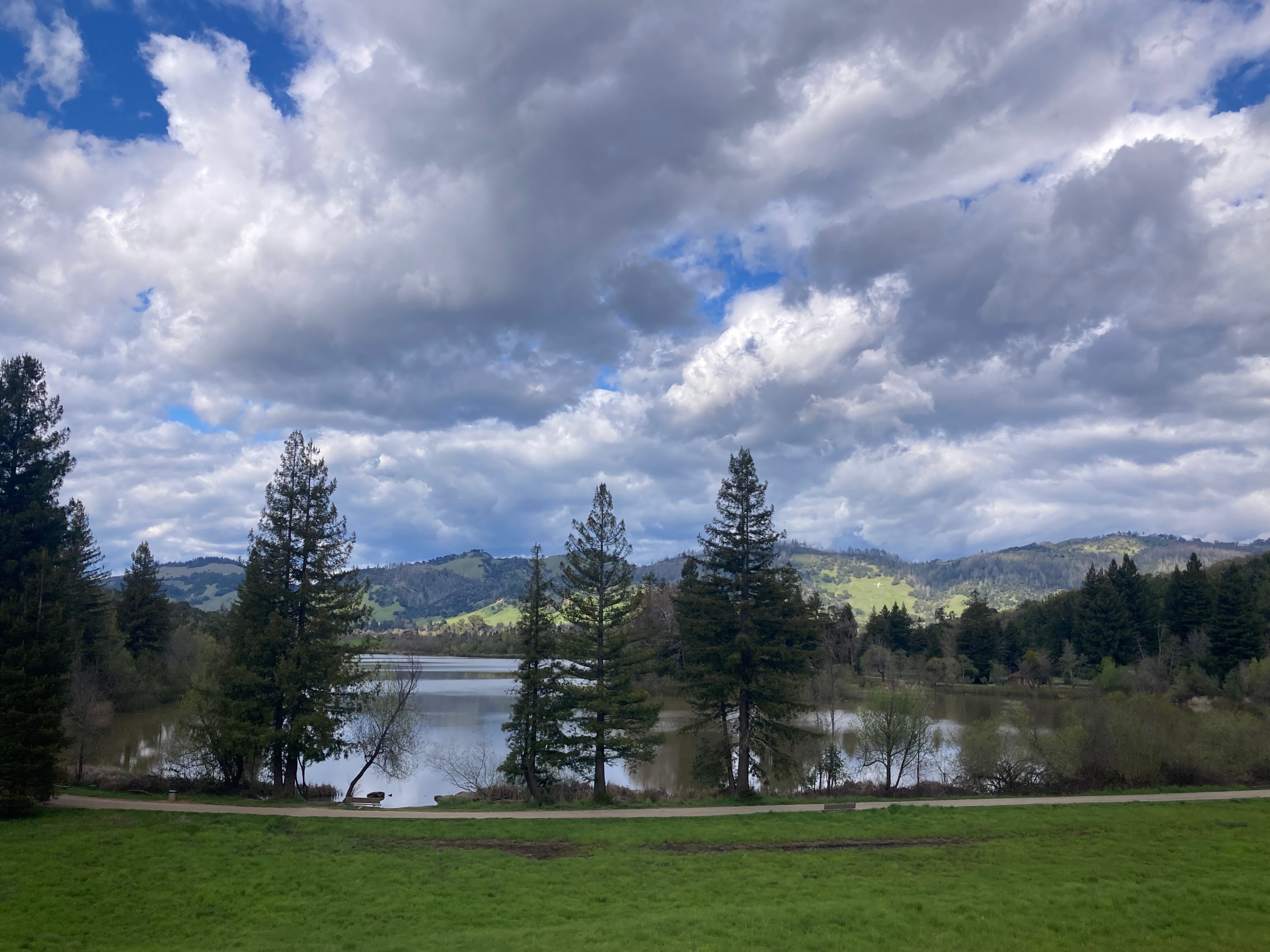
Spring Lake, Santa Rosa
Imagining that other shore, the quality of its shape, texture is important. What does it look like to reconcile our nation’s inherited past with a vision of one where reparations are made for injustices and the common person doesn’t have to live in fear of not being able to sustain their own lives. How would we live differently if we consciously saw the natural world as wondrous, not just when gazing at a waterfall or a super bloom of wildflowers in spring, but as a daily foundational awareness as we went about our everyday lives?
To imagine that world, what it means for us personally to embody the world we want to live into it, it’s valuable to step away from cultural mandates that encourage us to be continuously productive and to do something different. In my book Stories We Didn’t Tell coming out later this year with Shanti Arts, the character Avery goes rock hunting in the Wyoming outback with his brother Leith. The ending portion of the poem reads:
After miles of flatland and shrubs, we climb
from the car to inhale the earth’s rich scent. The ground stuffed with stones like chips in a cookie, buckets in hand, we comb the earth looking for agates’ lacy plumes, snail-shaped fossils, red jasper, and petrified wood.
No specific purpose needed when rock hunting. No timeline or agenda to fulfill, just walking the land with the possibility of reaching into the soil to find something formed several million years before we touched it— something solid, beautiful and unrelated to any need for productivity.
Productivity isn’t the measure of life. As Mary Oliver writes, “Listen, are you breathing just a little, and calling it a life?” Finding moments in our day and our week where we disengage from productivity, where we wander out into the desert, forest, lake shore, or prairie without a particular goal is important. It restores us, brings us back to our bodies and our connection to the life that both births and sustains us.
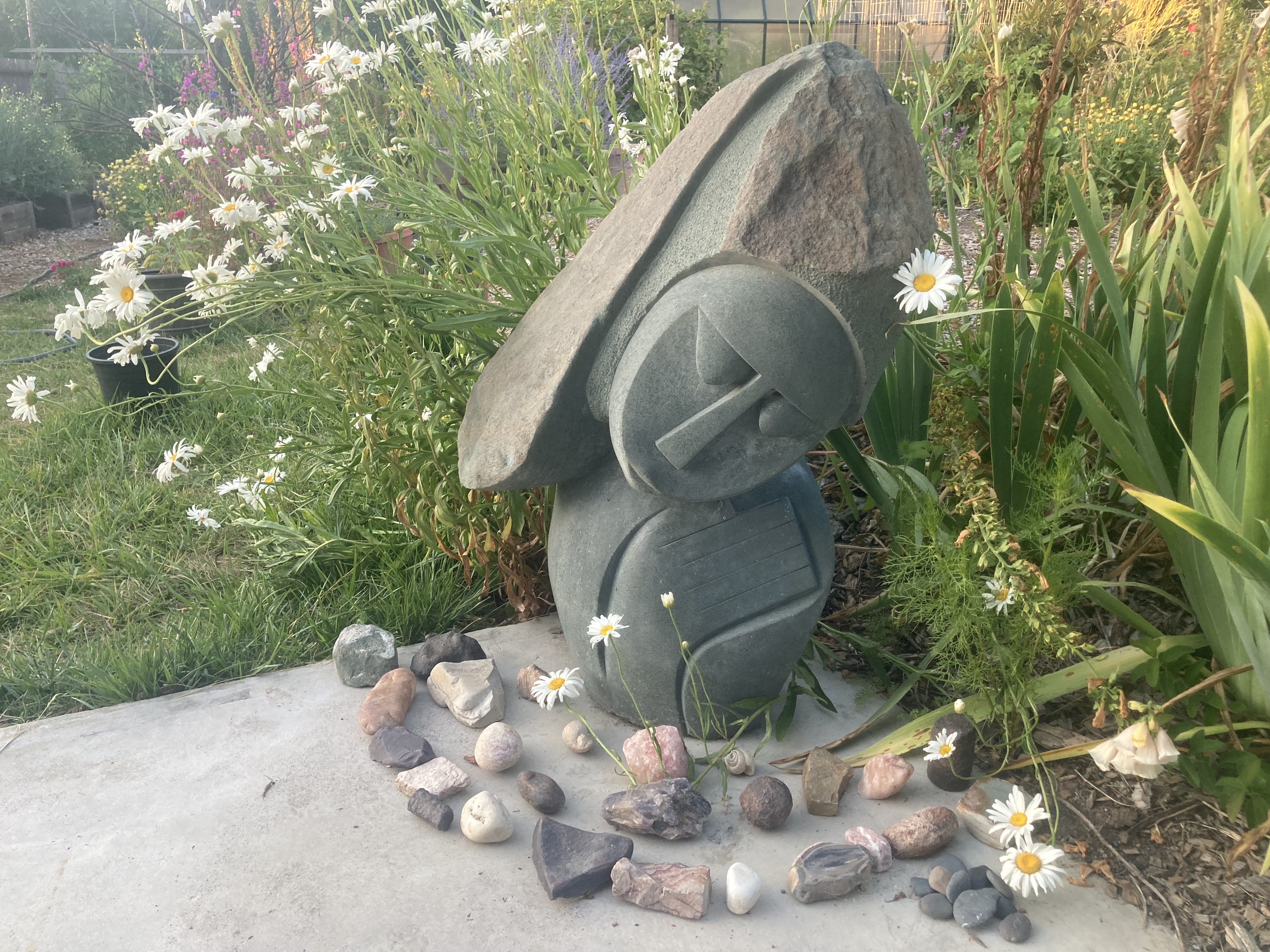
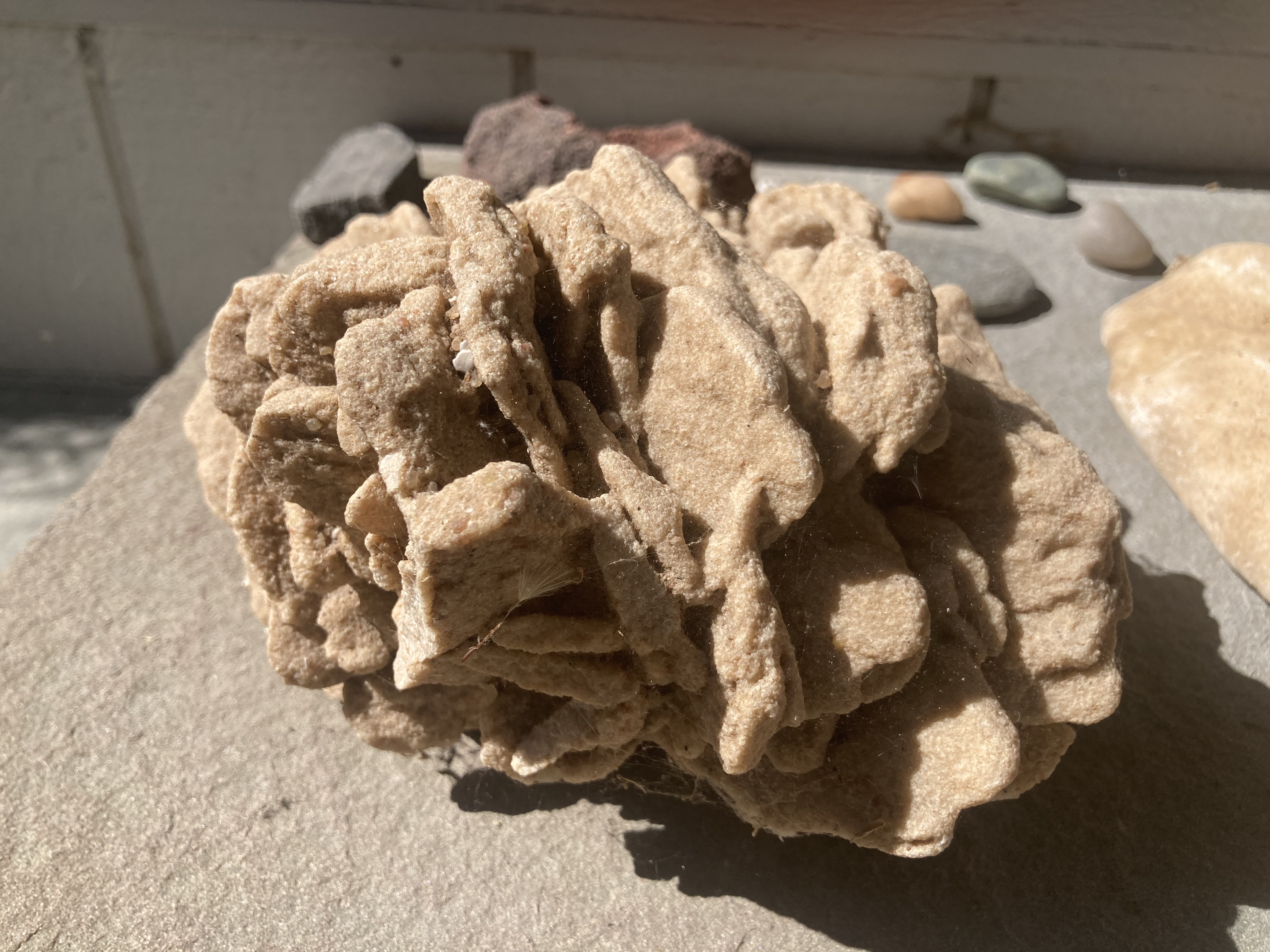
from top left to right: rose quartz, Colombian rock salt, amethyst, pudding stone, gypsum rose
Rocks and stone are both solid and the physical result of great change. They are, so to speak, the physical embodiment of the earth’s imagining. Like rocks, we are people of this earth. Maybe it’s time to go out rock hunting to find the rock you can carry in your pocket as a reminder of solidity amidst change. As Byrd Baylor writes in her children’s book, Everybody Needs a Rock. You want to be able to look your rock right in the eye and chose a rock that fits comfortably in your hand.
Quiet spaces, such as one might find while rock hunting are valuable to our inner lives. I hope you find a place where you might see the wind turn the leaves of trees, watch the ocean waves’ ceaseless motion, sit and savor the flavor of fresh peach, or just plain sit and stare off into space. Wherever it is you can sense your life is part of the earth’s great body, let that place hold you. Be present with it.
Imagination takes time to form. It might take time to hear what it has to say, like it takes time for a stone to form. Listen for what rises there.
“Earth teems with sights and textures, sounds and vibrations, smells and tastes, electric and magnetic fields. But every animal can only tap into a small fraction of reality’s fullness. Each is enclosed within its own unique sensory bubble, perceiving but a tiny sliver of an immense world.”― Ed Yong, An Immense World: How Animal Senses Reveal the Hidden Realms Around Us
An absolute plethora of fruits grow in the country of Colombia. In a recent trip to Bogota I visited a local produce market and explored a different world of fruits and vegetables from those familiar to me in the temperate climate where I currently live. Colombia’s fruits are unique to many other tropical countries because they are native to the Andes mountains.
At the market, my friends and I wandered slowly through the aisles examining the fruits’ textures and inhaled their distinct fragrances. Here’s some of what we found:
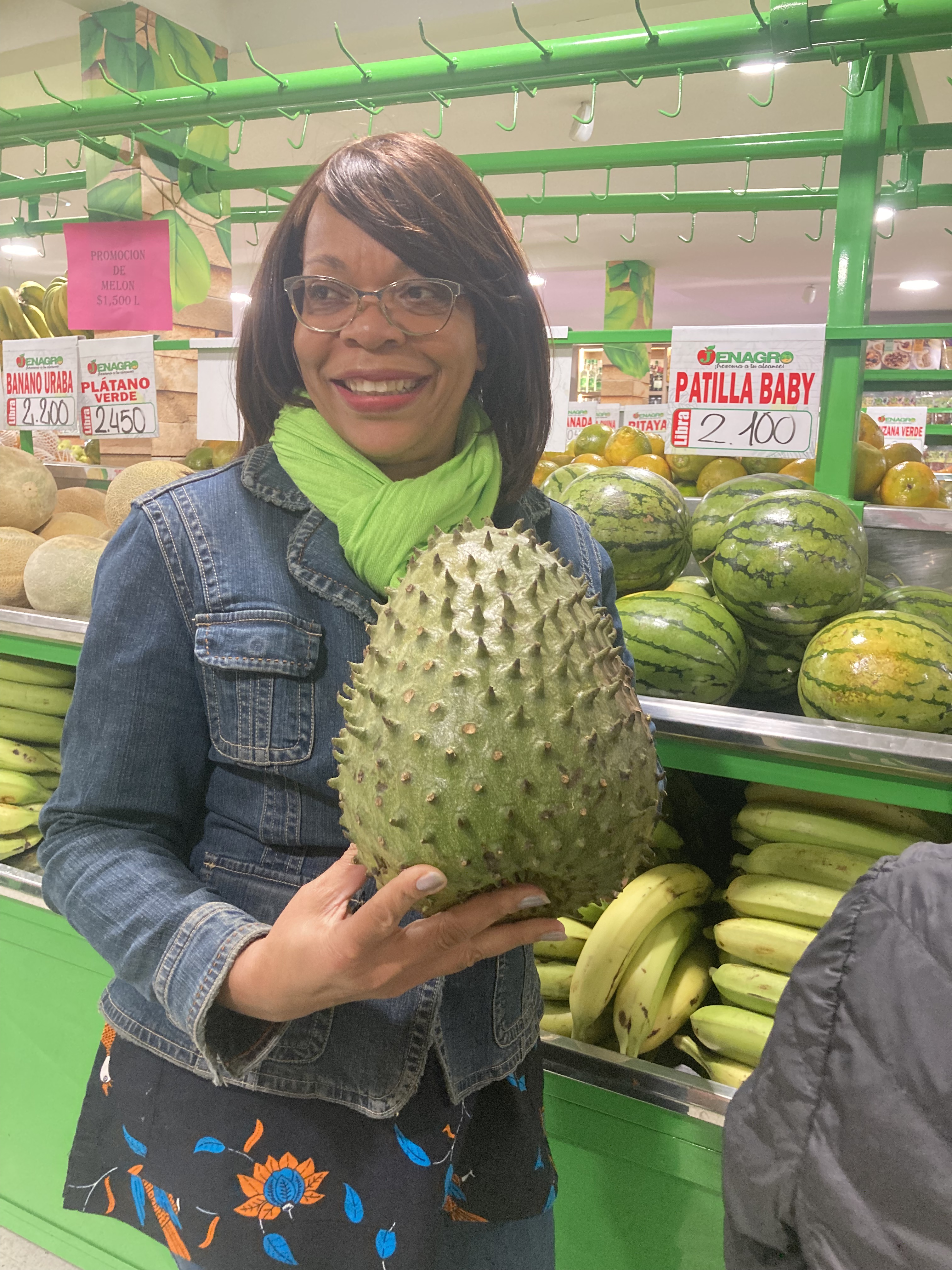
The enormous and spikey guanabana, also known as soursop, paw paw, or graviola.
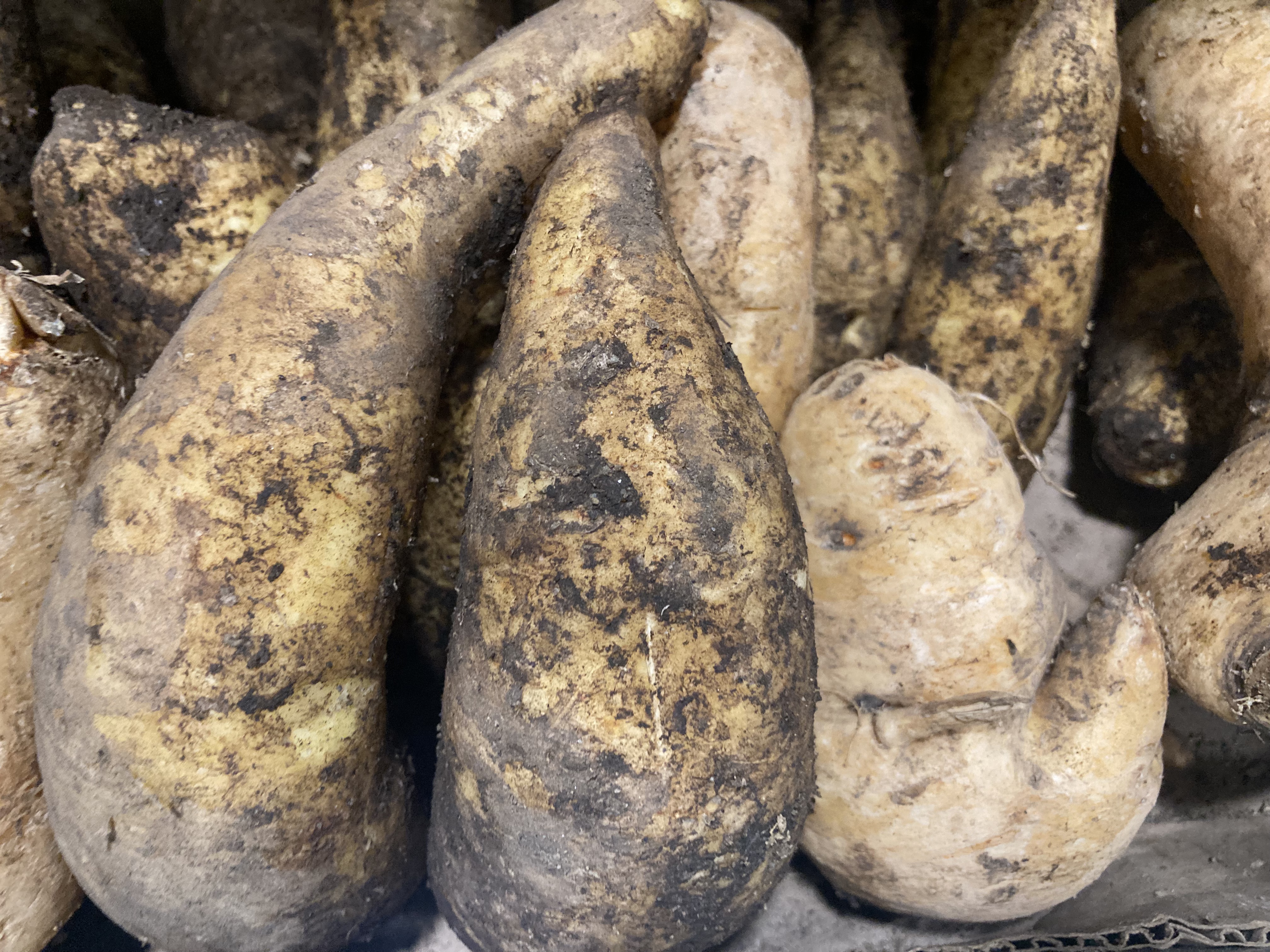
Chuguas, a type of tuber that has been cultivated for thousands of years by indigenous people of the Andes.
Pepino guiso, a kind of vegetable used in stews or sauces.
Cubios, another indigenous tuber of the northern Andes with a similar taste to a potato.
The Colombian zapote comes from the Amazon rainforest.
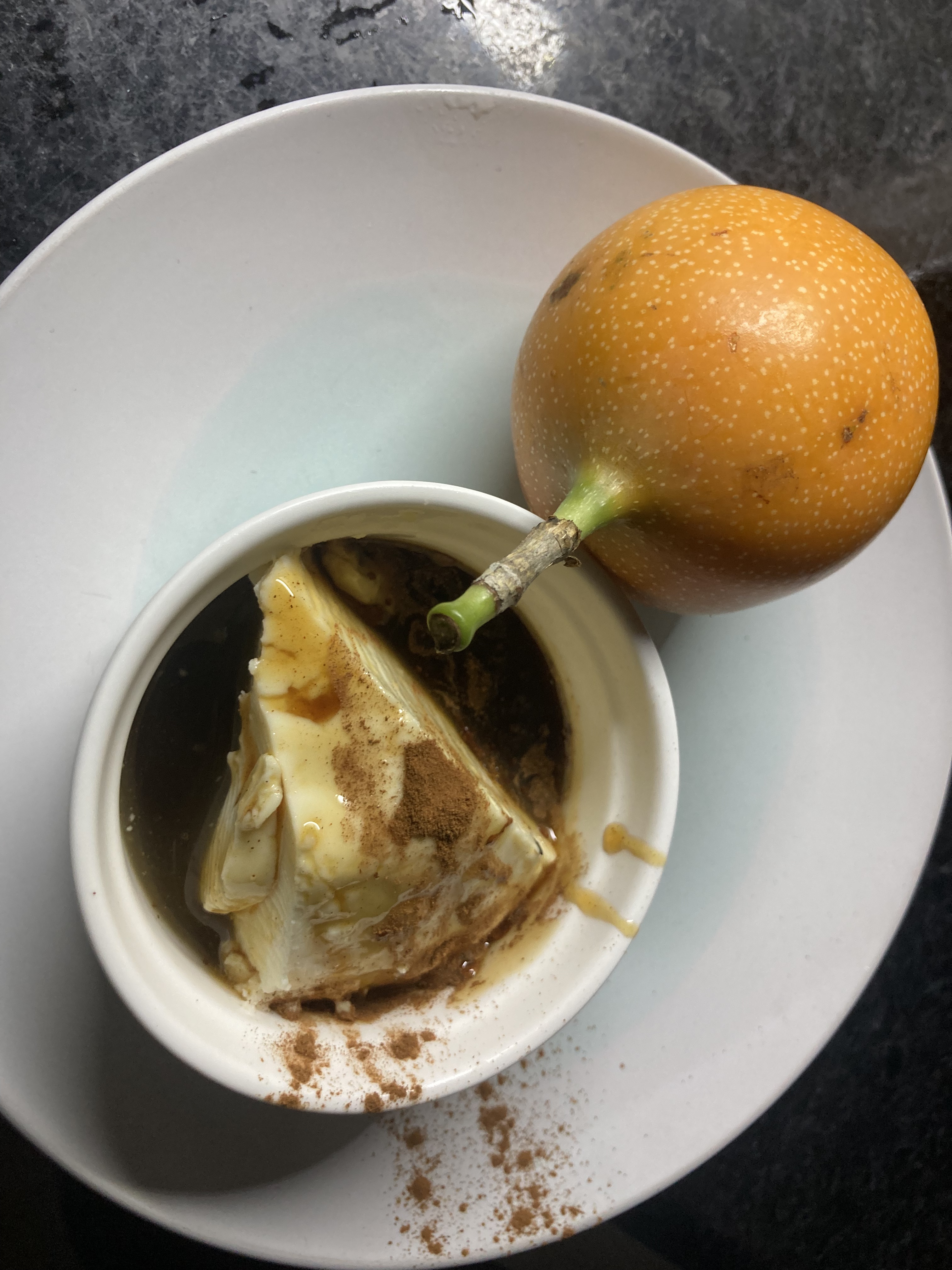
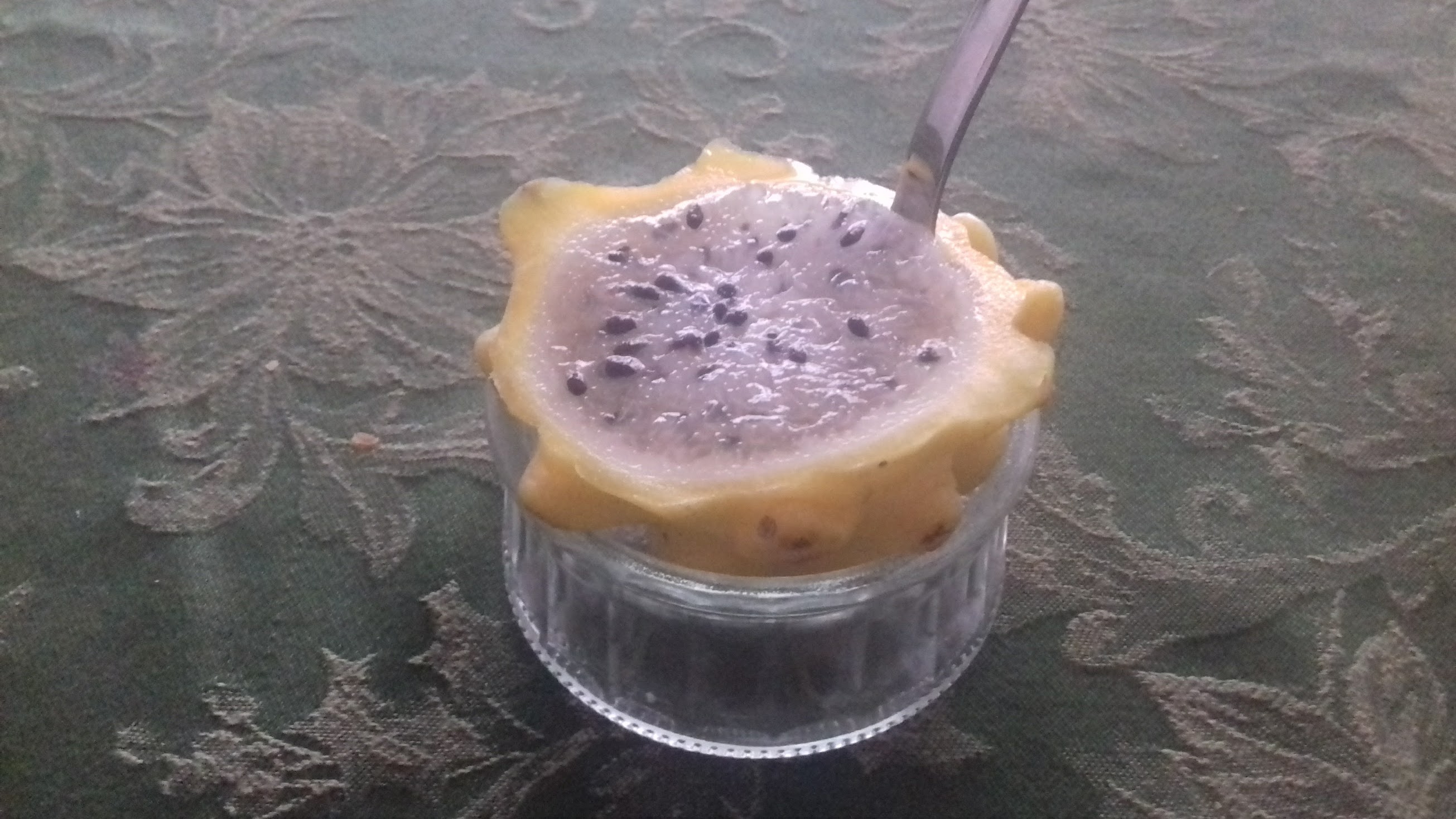
Granadilla, similar to a passion fruit.
Lulo, a citrus-flavored fruit native to the Andean region,
Tomato arbol rojo, eaten raw, as a juice, or cooked in hot sauces.
Ciruela roja, the word translates into English as “red plum,” but this fruit is a tropical fruit that actually belongs to the cashew family.
Curuba, also known as a cloud passion fruit since it is grown in high elevation cloud forests.
Platanos, bananas specifically used for frying.
Star fruit.
cubiosfeijoatomate arbol rojopepino guisozapotedragon fruitmoraplatanoschuguaspapaya and mango
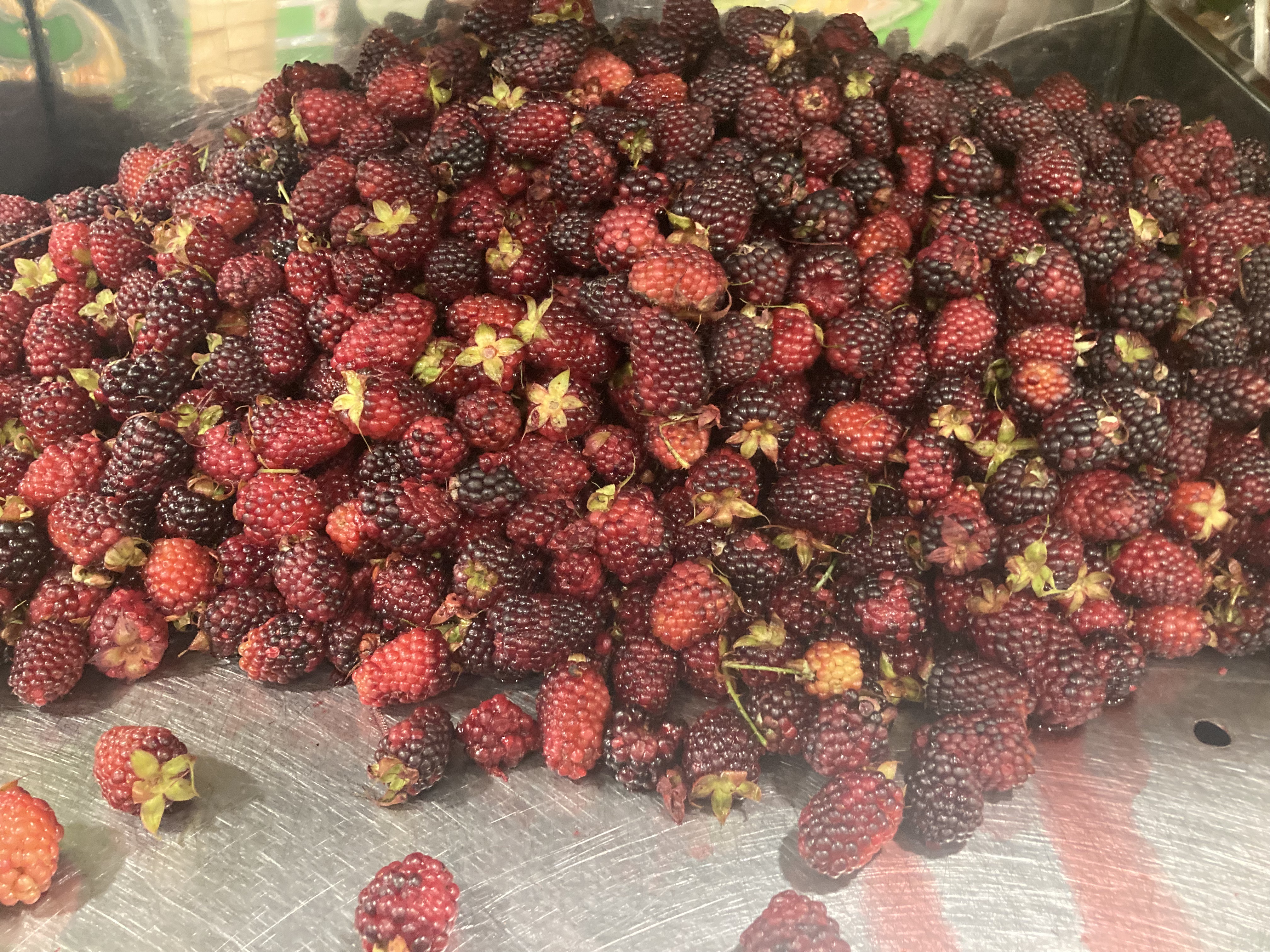
We also found some fruits more commonly known in the US such as pomelo, mora or mulberry, feijoa, a pineapple guava, dragon fruit, and maracuya, and passion fruit.
As Ed Yong describes, the world abounds with an enormous variety but we “tap into a small fraction of reality’s fullness.” The small fraction of reality that my California yard holds of Earth’s enormous variety are a lemon, lime, mandarin, pomegranate, sour cherry, plum, apple, loquat, kumquat, and fig tree. In addition we grow a variety of berries: strawberry, boysenberry, blackberry, blueberry, as well as a currant shrub, and two grape vines. Throughout the year I observe the plants’ growth, and in summer look forward to tasting their fruit, and sharing them with neighbors and friends. Without exposure to other worlds, I might think my world and what it holds is the whole world.
As Yong points out, “By giving in to our preconceptions, we miss what might be right in front of us. And sometimes what we miss is breathtaking.” We’re mostly unaware in our day to day lives of the astounding amount of life around us everywhere that contributes to the life-force that sustains us. According to the Seed Collection site, a single handful of soil “(about 200g) suitable for growing crops can contain a staggering number of organisms: 50km of fungal filaments, about 5000 individual insects, spiders, worms and molluscs, 100,000 protozoa, 10,000 nematodes, and 100,000 million bacteria (that’s 100,000,000,000 individual single-celled organisms!)” We likely don’t typically think about that when stepping into a garden.
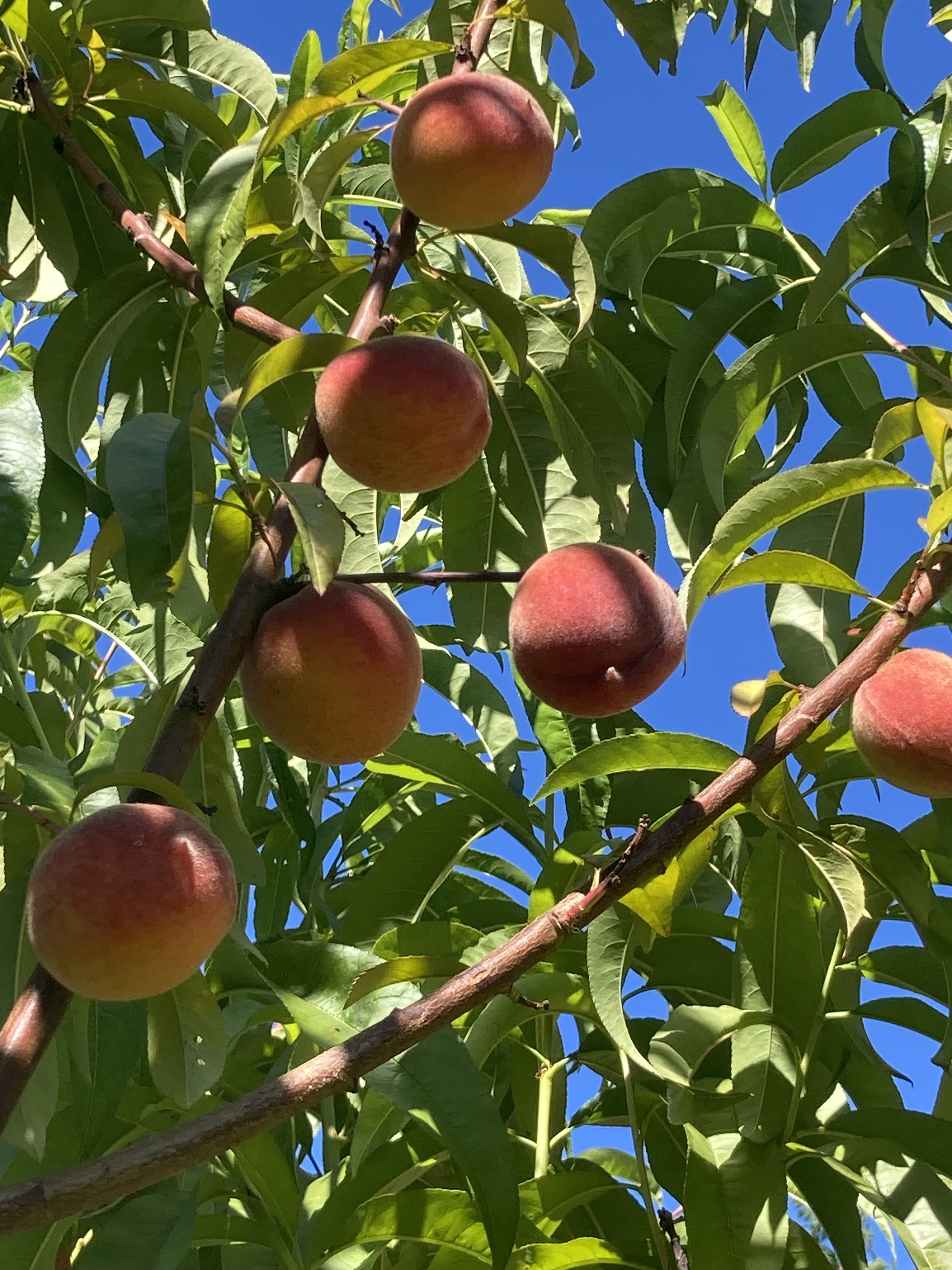
I think of the fruits in my yard as native because I’ve grown up with them and they are familiar. In reality, though, these fruits originated in other lands. The peach, for example came from China, and spread through Asia and Europe before being brought to the new world by Spanish explorers. The pomegranate, according to the Kew Royal Botanic Gardens, is one of the oldest fruits known to humans and is thought to have originated in Iran, southwest Pakistan, and portions of Afghanistan. (Surprisingly, the pomegranate is technically a berry.) Black currants are native to northern Eurasia. The sour cherry likely has its origin somewhere between the Black Sea and the Caspian Sea according to Science Direct. The fig (related to the mulberry) is native to an extensive area ranging from Asiatic Turkey to northern India.
The association between apples and US culture has had such a strong connection since WW2 that there’s a common saying, “As American as apple pie.” Apples, however, came from Kazakhstan, in central Asia east of the Caspian Sea. In fact, the former capital of Kazakhstan, Alma Ata, means “full of apples.” Wild blueberries are one of the few fruits in my garden that originated in North America. After the glaciers receded approximately 10,000 years ago, they began to appear in the area known as The Barrens of Maine, and in Eastern Canada, and Quebec. My life is thoroughly enriched because of what has been brought to me from worlds beyond the borders of where I live.
Travel to a different part of the world to walk around in a different biome or culture, and one right away becomes more alert to the differences of landscape, climate, unique ways of organizing reality and ways of interacting with it.
It’s human to like what is comfortable and known. In a world where much feels uncertain, where countries and people are pulling into themselves, fearful of what’s to come. People generally want to avoid situations that provoke fear. The natural world, however, wants to offer its abundance irregardless of the challenging environment it finds itself in. Wandering through the Bogota neighborhood market was a window into the natural world’s extravagant diversity, not just to see and touch it, but also to taste it. What an enlivening experience that can be!
The plant world opens, and opens into a universe of wondrous fecundity of 400,000 plant species. We are part of the natural world that created the cornucopia of thousands upon thousands of fruits found worldwide. Even in the most ordinary of days, to walk on this earth is an extraordinary thing. It took eons upon eons to create the world as we know it in all its rich variety. Like each of us, I’m here to allow myself to participate in that life flow–to let it in, immerse myself in it, and share it with others. Humans are meant to share the fruits of our lives as season after season we re-vision who we are and give back to life. As Kate Baer writes,
Idea
I will enjoy this life. I will open it like a peach in season, suck the juice from every finger, run my tongue over my chin. I will not worry about clichés or uninvited guests peering in my windows. I will love and be loved. Save and be saved a thousand times. I will let the want into my body, bless the heat under my skin. My life, I will not waste it. I will enjoy this life.
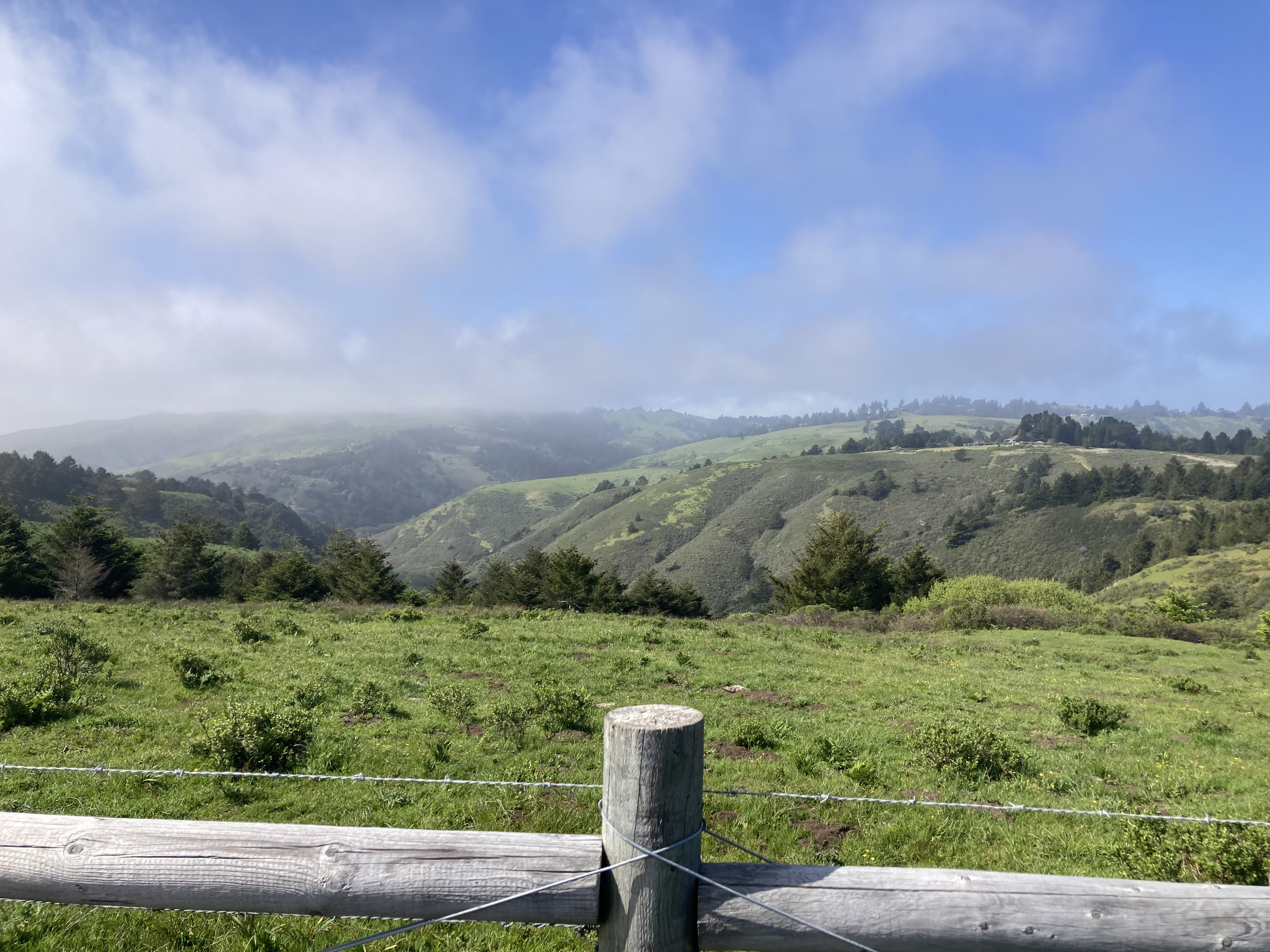
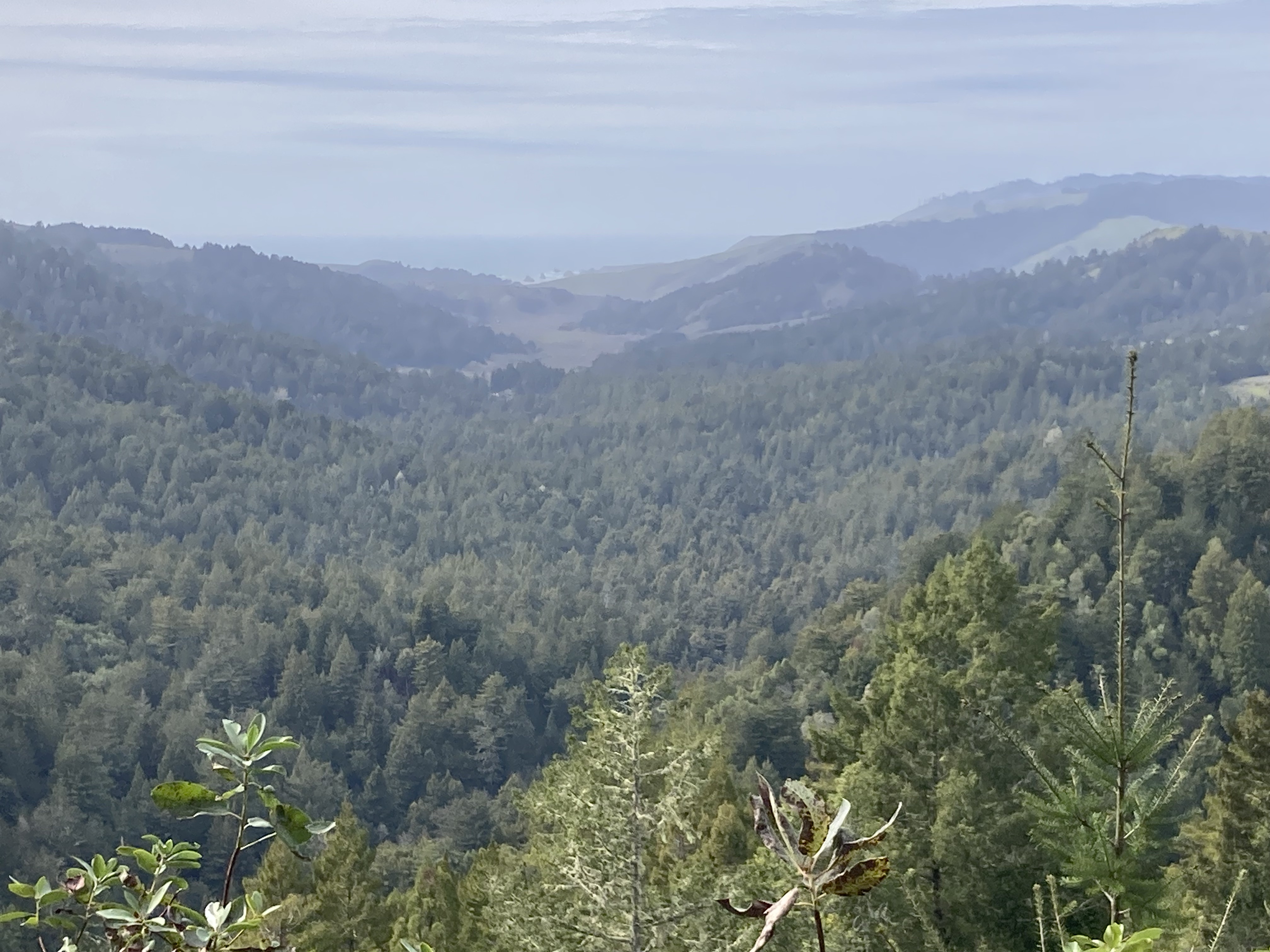
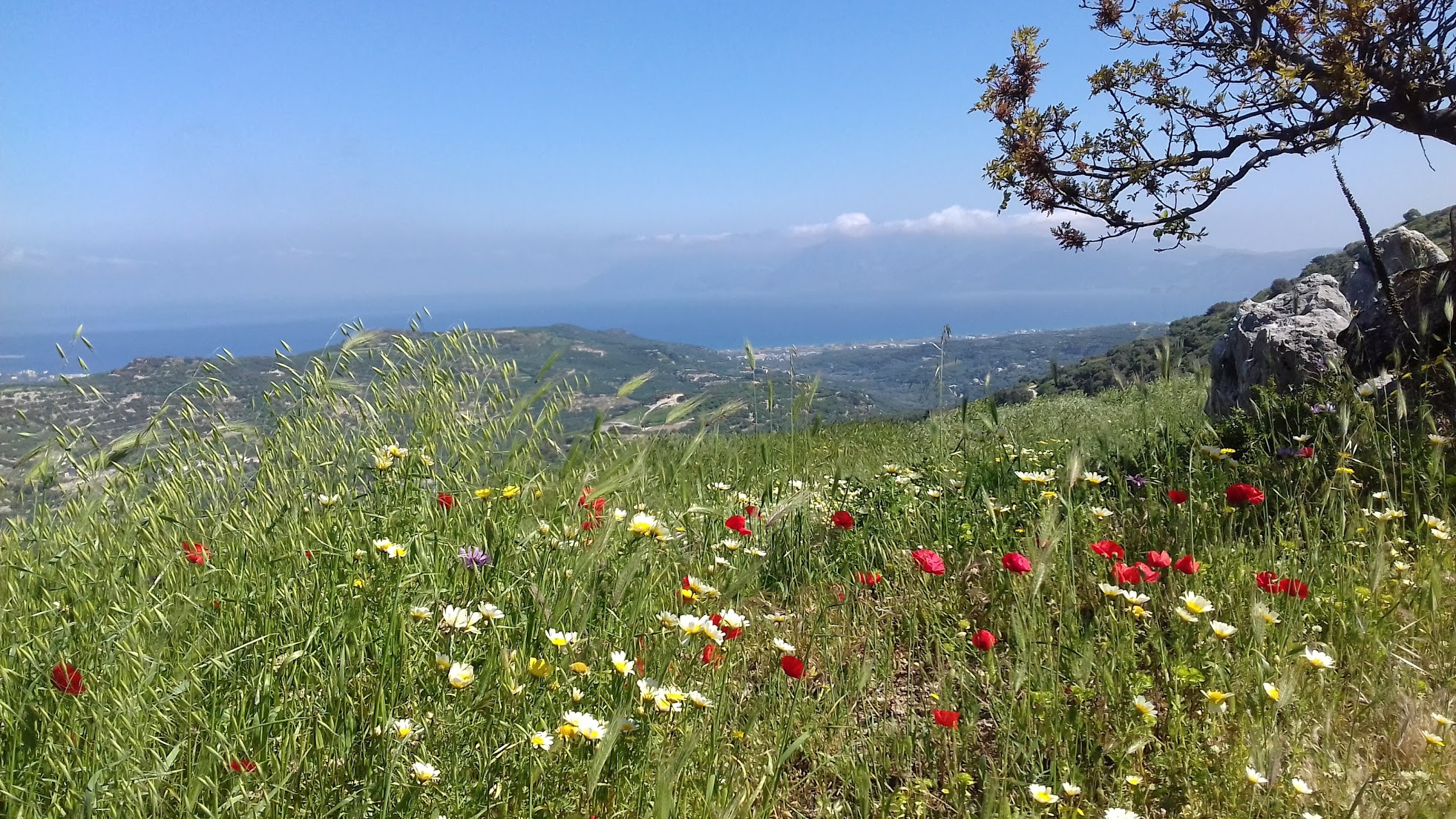
Overlook of Pomo Canyon, Sonoma County, California
So many voices are clamoring for attention these days. I’ve felt the need to go into my garden pull weeds all day, go out on long walks and long bike rides to be in the green world, the world that is growing, generous and lifting from heavy earth in wondrous color and life. Recently, I attended an online poetry reading with Shanti Arts. At the end of the reading one person asked. “What are people taking from poetry or going to poetry for in the environment…we’re living in. What can poetry do for us?” One of the central values of reading poetry for me at this time is the reminder that there’s a larger world than the circles of fear that want to take hold in the mind. Life that has been waiting for months and months is pushing up from the earth. There is pain, oppression, loss, grief, yes, so much grief in this world. Let them be acknowledged and known. But notice also green life is there pushing through into the light of day. Earth’s continuous effort is to sustain life. Including ours.
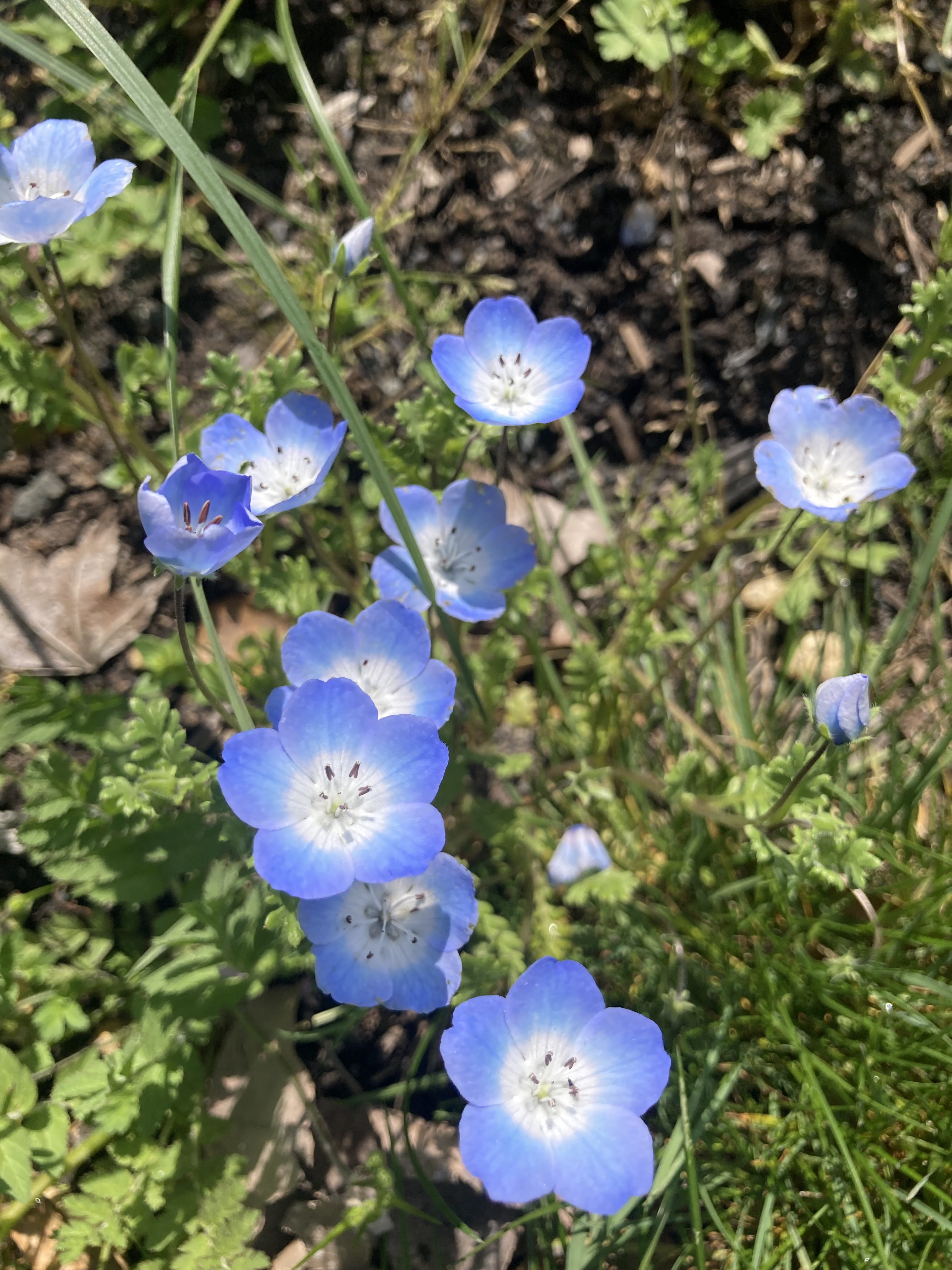
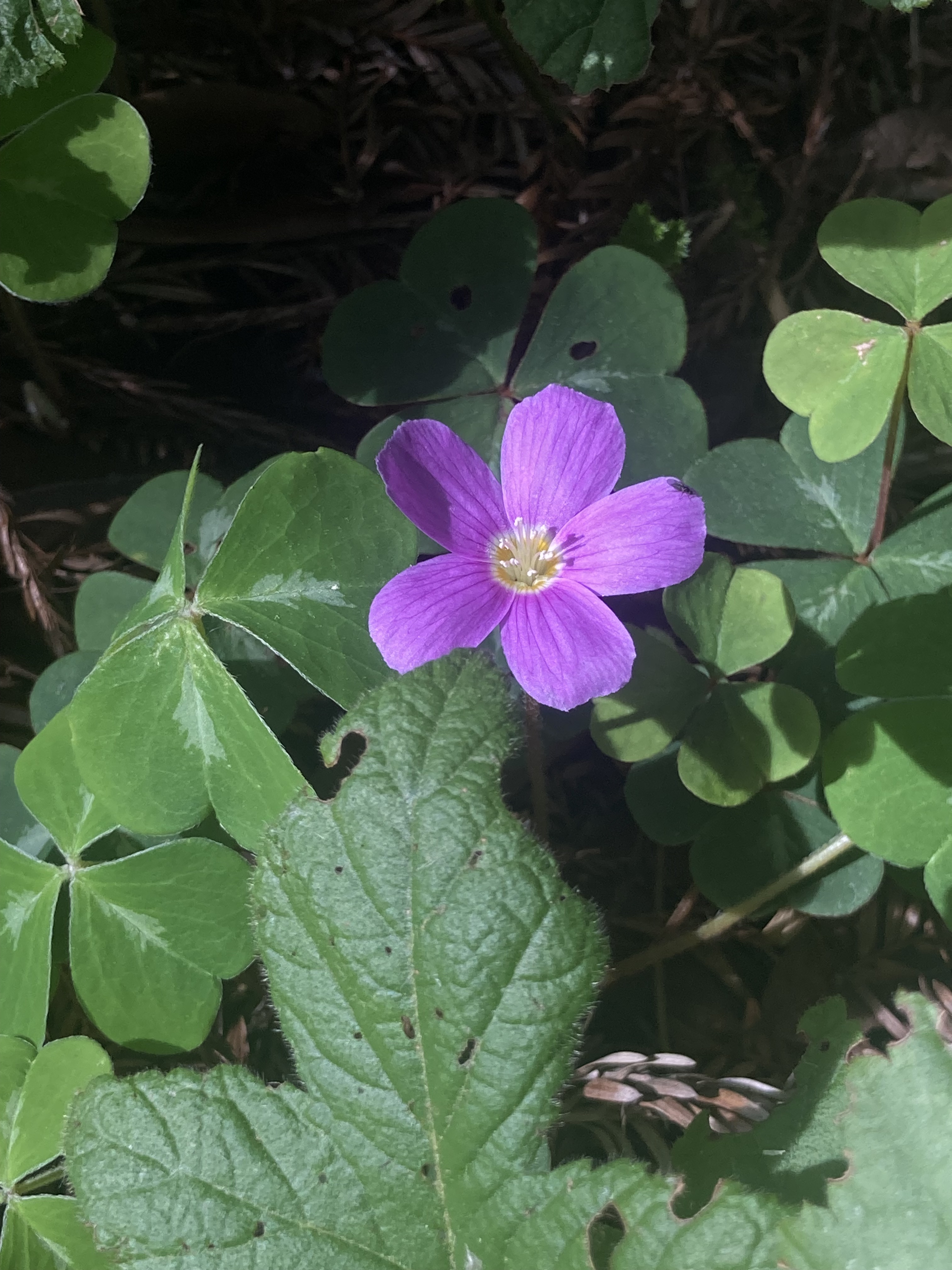
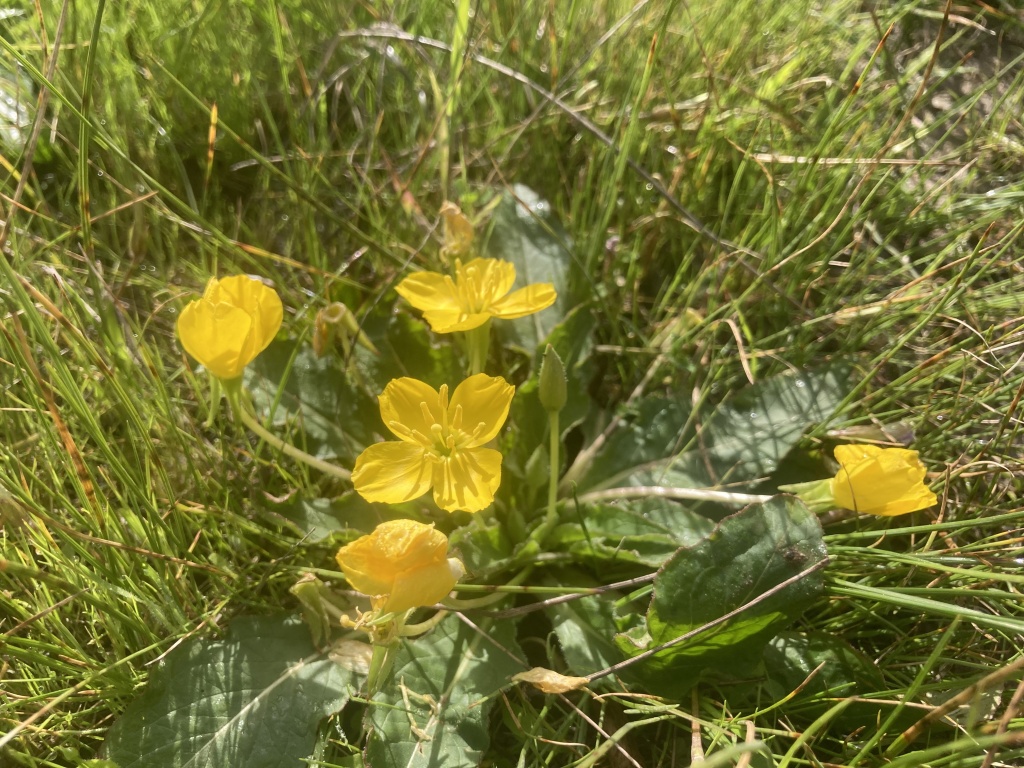
Blue-eyed grassSuncupsBaby Blue EyesRedwood sorrel Douglas iris
I like to go walking most any time. But when my heart feels heavy, I especially appreciate getting out for a hike in the hills. I need to be in the natural world to remind myself that the experience of being alive, and life itself is larger than the things that work to remove the structures that enable the world’s flourishing. Looking out across the ocean or gazing up into the sky, I can literally see the universe is vast. My understanding will always be limited. We may have maps of the world’s geographic landscape but there are worlds within worlds we don’t understand.
A number of years ago when visiting St. Petersburg, Russia, I remember a Russian man at a restaurant we were eating at ask where my husband and I were from. When we said “The U.S.,” he told us, “You can go where you want. You have no idea what it’s like to not have that freedom.” He was right. To some extent I could imagine the limitation of movement, but the emotional and psychological impact of that is an entirely different thing. Choosing to stay in a particular place versus knowing you’re not allowed to move beyond an authority’s set boundary is different.
Back in the mid 90’s I was speaking with a student’s mother in the hallway at a school in Kuwait where I was teaching at the time. The family had came to Kuwait from Bosnia and Herzegovina to escape the war that was going on there. My students were collecting oral histories and traditional tales from family and community members from the cultures the students were connected to and sharing them with Inuit students in Alaska and high schoolers in Sandy, Utah. I don’t now remember what my student’s mother and I were specifically speaking of, but suddenly the mother choked-up and said, “You have no idea what it’s like in my country right now, what is going on there, what is happening.”
She was right. I didn’t know. The Bosnian War “was characterised by bitter fighting, indiscriminate shelling of cities and towns, ethnic cleansing, and systematic mass rape,” I read in Wikipedia. “The massacre of over 8,000 Bosniak males by Serb forces in Srebrenica is the only incident in Europe to have been recognized as a genocide since World War II.”
Sarajevo, photo courtesy of CFaZeSarajevo, photo courtesy of CFaZeSarajevo, photo courtesy of CFaZeSarajevo, photo courtesy CFaZe
“Estimates suggest over 100,000 people were killed during the war. Over 2.2 million people were displaced, making it, at the time, the most violent conflict in Europe since the end of World War II. In addition, an estimated 12,000–50,000 women were raped, mainly carried out by Serb forces, with most of the victims being Bosniak women.” (source: Wikipedia) How could a person find the strength to speak of such atrocities or to ever absorb the emotional trauma and horror behind those statistics?
When I think of the conversation with my former student’s mother as I consider the growing ways people in my country are now being dehumanized and deprived of rights, the fear people around me express for their sense of safety, it’s extremely sobering. What seeds and sun inside our collective social structures need to be watered and nurtured so we can clearly see and care about each other’s humanity, build on common values, and begin to trust, respect and appreciate each other more?
It feels particularly important to find ways to enter the quiet spaces within us so we can consciously, purposefully listen to not only the truth our own inner voice wants to tell us, but to the voices of with those we interact with. We need to listen for the words and the life that wants to come forward underneath what is spoken and aim to hear and see the humanity in each person we interact with. I’m reminded of Sherman Alexie’s recent poem, “Bad Back” (March 16, 2025, Rattle) where he writes,
I know, as a writer and an Indian and an Indian writer that I am
expected to offer advice. But I have nothing but this consolation: Everything you’re feeling now
is what I’ve always felt as a reservation-raised Indian.
What is currently happening in the US with the disrespect for the rule of law, the mistreatment of fellow humans, the reckless unconcern for the abuses of the natural world–our forests, oceans, natural habitats, and our very air is a reflection of the stories we hold about the world inherited from the past. The stories we carry with us affect the way we treat each other and the way we treat the earth. The two are connected. Every country has their histories to confront. Transformation is a continuous process. We all benefit from allowing ourselves to grow into new ways of thinking and being. Alexie ends his poem “Bad Back” saying, “I’m going to press / my bad back against the earth / and wait for everybody’s rebirth.” Rebirth is, indeed, what we need right now.
The stories we hold ripple through our actions and way of speaking. If we listen beneath the chatter in the daily news and the chatter in our minds, what new story and new life wants to come forth? We can purposefully pursue to renew our minds and actions. Pascha, Passover, Ramadan, Easter. These ancient traditions remind us there is life beyond slavery, and that we can be renewed. We have the opportunity to teach ourselves what it’s like for others to go without basic necessities such as food and clean water. In doing so, we can water seeds of empathy and grow toward deeper recognition of all people’s need for social justice.
We’re not meant to stay on the very same path we were born onto. Just as the earth renews itself and the cells of our bodies renew, we too are meant to transform our minds, renew our stories. What better time than spring to start? I appreciate the way Billy Collins emphasizes this willful act of spring renewal in his poem, “Today.”
If ever there were a spring day so perfect, so uplifted by a warm intermittent breeze
that it made you want to throw open all the windows in the house
and unlatch the door to the canary’s cage, indeed, rip the little door from its jamb,
a day when the cool brick paths and the garden bursting with peonies
seemed so etched in sunlight that you felt like taking
a hammer to the glass paperweight on the living room end table,
releasing the inhabitants from their snow-covered cottage
so they could walk out, holding hands and squinting
into this larger dome of blue and white, well, today is just that kind of day.
Source: Poetry (April 2000)
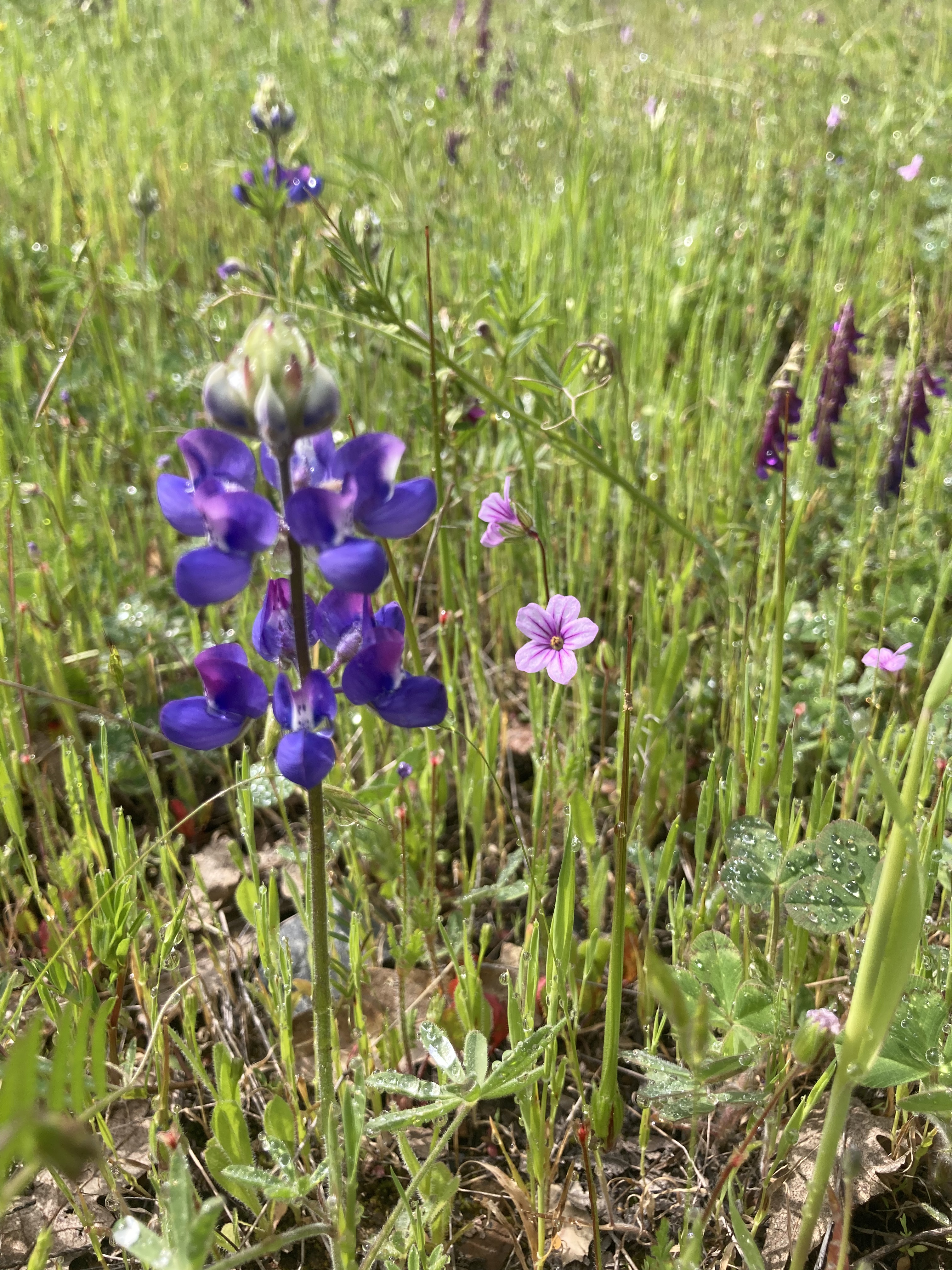
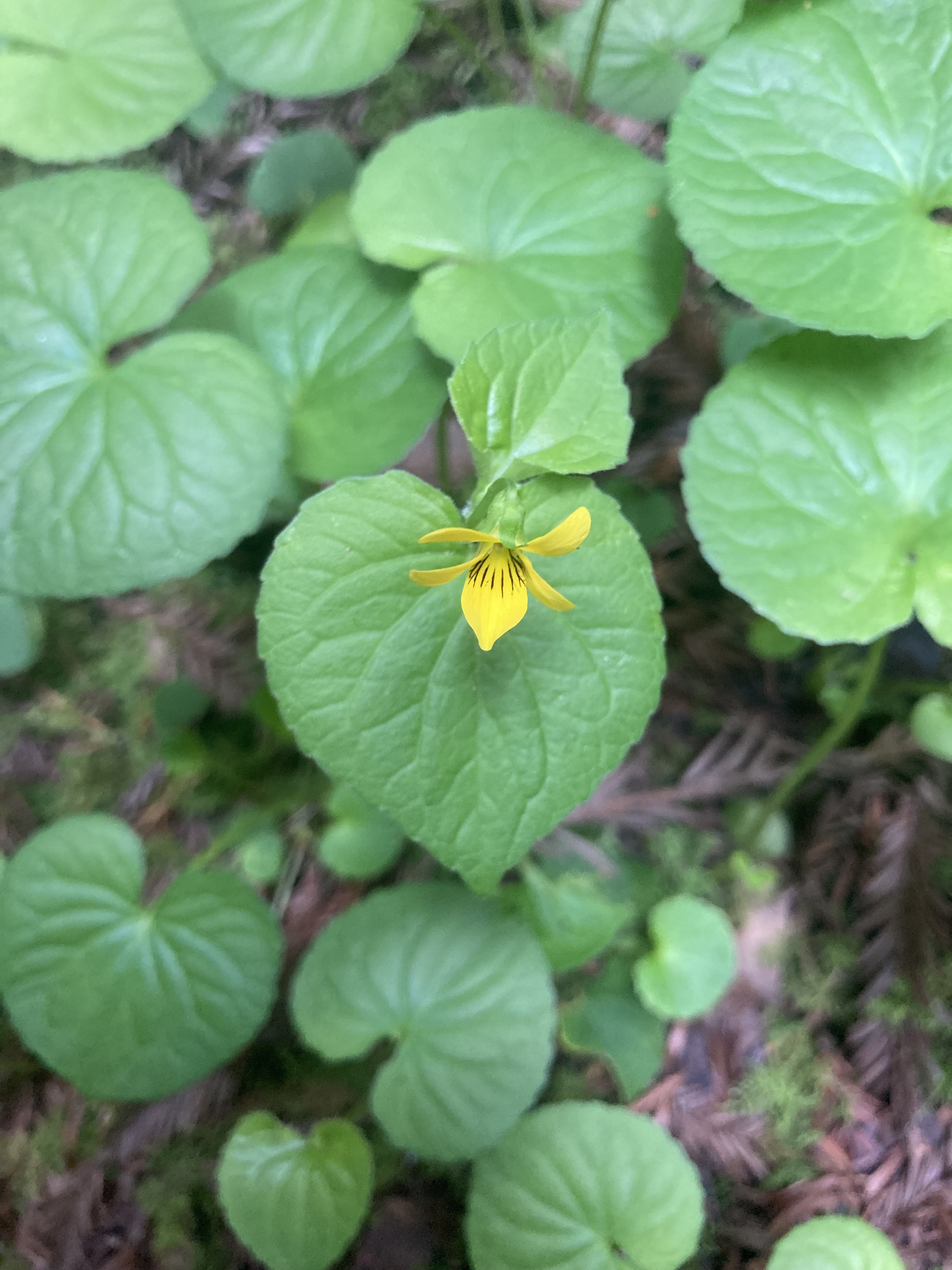
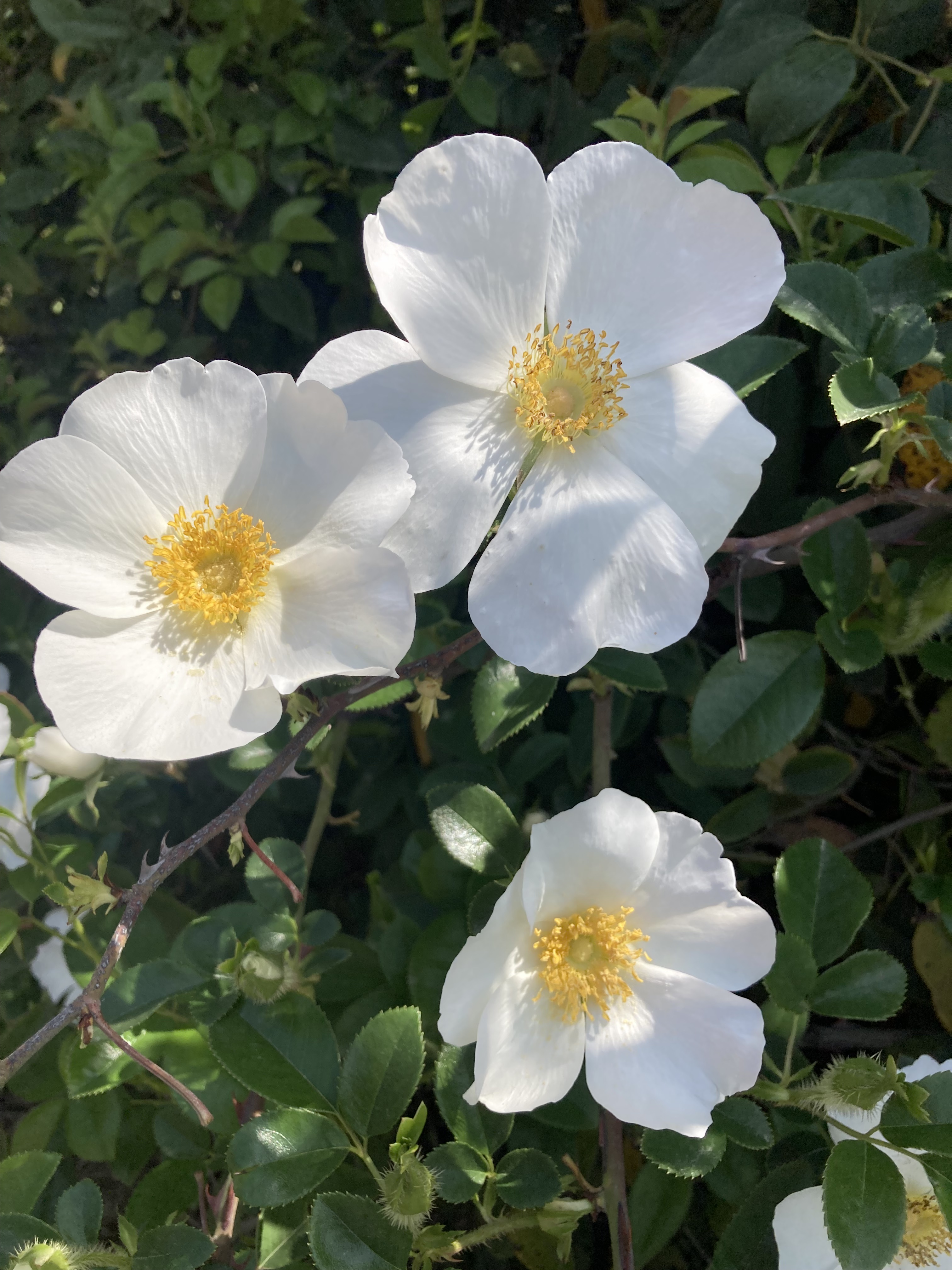
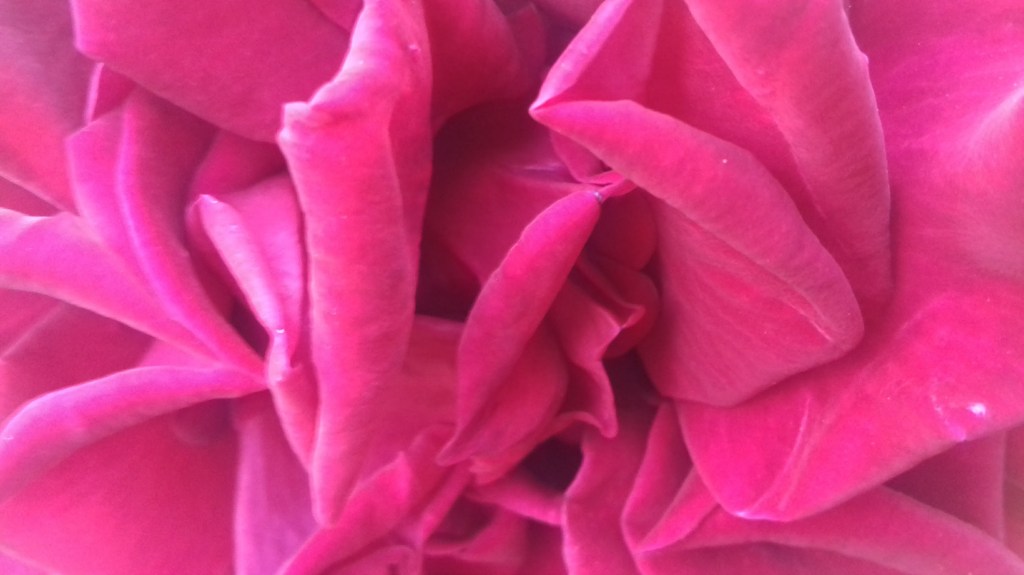
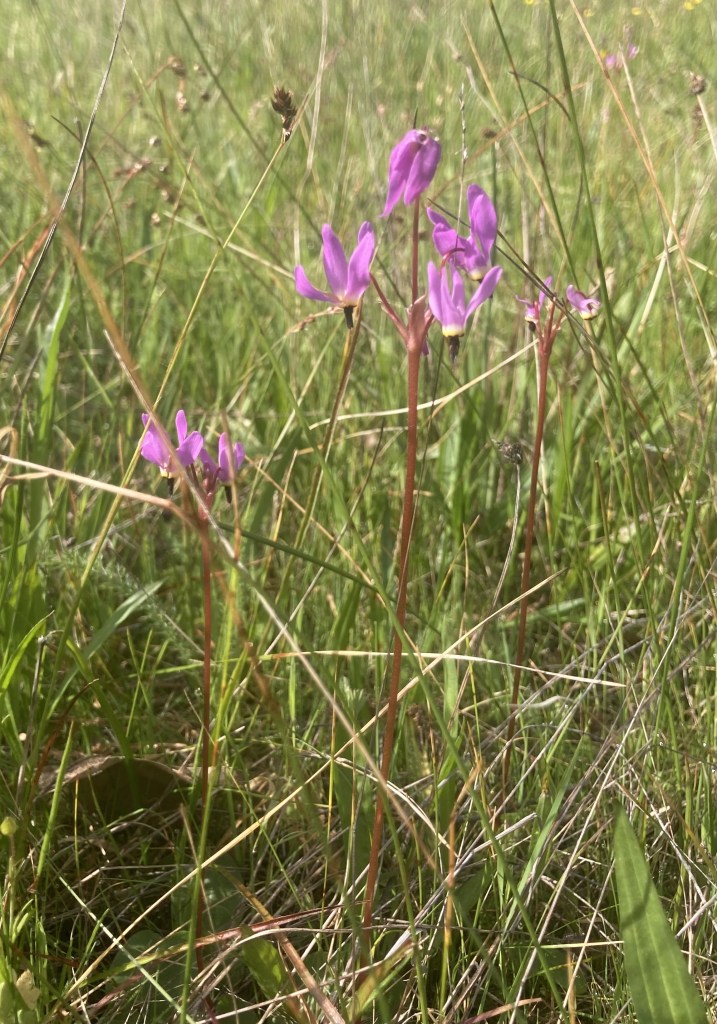
Wild roseWild hyacinthShooting startrillium
Spring is calling you outside. The earth reaches out to renews you! Check out the ways! If you can, go for a walk, a swim, or a bike ride.
If you can’t do any of those things, find someone whose hand you can hold while staring up into the forever sky. In the midst of despair life is there, present, waiting to give itself to us. We can turn toward it at any time.
I went for a brisk walk in the wind today before the rain began. Branches twisting and turning wildly, I wondered if the redwood tree in a neighbor’s yard would continue to hold fast to its roots. Palm trees flailed their long limbs. Grasses bended and waved. Here and there, lichen covered branches that fell from the oaks above lay along the path. Gray light covered the sky. No sun in sight, and everything was astir. Though the morning news was bleak, walking in such air felt utterly invigorating, and made me consciously aware of the aliveness of everything around me.
The flood of current changes in the US have consequences for neighboring countries and countries throughout the world. Many have lost their jobs, and many others have died as a consequence of the current government administration’s activities. The natural world is suffering as well. It’s ugly and utterly heartbreaking. What can be said that doesn’t further emphasize the devastation and add to the information stress? What might bring insight or release?
Reflecting on these questions, Barry Lopez‘s essay, “Drought,” found in his book River Notescame to mind. Lopez tells the story of during a time of severe drought where a man dreams of a large fish that had fed himself too much and grew too large to escape the pool as the river receded around it. The river is slowly dying and the large fish stuck a shrinking pool in the river is dying as a consequence. The man wakes from his dream, goes to the spot in the river the dream depicted, and rescues the fish. The man doesn’t know if the river will return to life or if the drought will continue and cause the river will go completely dry. But he believes his relationship to the river is important and that responding to the dying fish’s needs is necessary.
“There’s power to dying,” writes Lopez, “and it should be done with grace.” After releasing the fish, the remaining larger stream of water in the river, because it was the most beautiful thing he could offer the river, the man does a dance like that of long-legged birds on the river’s shore. “A person cannot be afraid of being foolish. For everything, every gesture is sacred.” Though the dance seems an absurd, irrational act, he does it anyway. Doing something selfless, perhaps even silly so that we remember how to live is important.
Gradually, the river returns to fullness. Reporters talk about the change, offer factual information about the river’s return, and people carry on their former way of living. But the dance the man did by the river sticks in the mind and changes the way we see not only the river but our way of living. When so many things we may have cherished and held dear are dying, Lopez reminds us of the importance of recognizing our relationship to the world around us. “Everyone has to learn how to die, that song, that dance, alone and in time. … To stick your hands in the river is to feel the cords that bind the earth together in one piece,” writes Lopez. Despite our ignoring the natural world’s ongoing generosity, despite differences in culture, values or beliefs we hold, we share this world together.
When we feel we’re going through a severe drought, when everything around us feels as if it is falling apart or appears in decline, it’s important to pay attention to dreams that call us to remember our connection to what brings life and to respond. When we see ourselves in a connected living relationship with the world, we respond to the world differently. The world is no longer an object to be used solely for utilitarian purposes.
Relationships are reciprocal. We take care of what we love and listen to those we love so that we can respond with care. How might I listen to the quality of my relationship with the world? Following Lopez’s narrative as an example, what beautiful thing might I offer the life around me today that will help me recognize my relationship to all that is and my responsibility toward it, even though it might seem silly? Making an offering, to the lives that sustain us might come in the form of a dance, a flower, a letter, a song, art, or a variety of other possibilities. It might feel awkward or silly, but such an offering is a way to remind ourselves that we’re in relationship with a world wider than our human effort, and that the choices we make ripple out to affect everyone, including the more than human world.
May my mind come alive today To the invisible geography That invites me to new frontiers, To break the dead shell of yesterdays, To risk being disturbed and changed.
May I have the courage today To live the life that I would love, To postpone my dream no longer But do at last what I came here for And waste my heart on fear no more.
In the midst of storms where winter feels it will never end, I wish for you to listen to the dreams of your heart, to go out on walks, to sit outside, or somewhere where you can simply stare at the sky, and listen for how you might respond with some gesture toward what is dying that you’ve long loved. Let us have the courage to risk being disturbed and changed, so that in the words of O’Donohue “we waste our hearts on fear no more.”
You can listen to a moving recording of Lopez reading his piece, “Drought” with David Darling playing the cello in the background here.
When researching for my book A Space Between, I learned histories, geographies, and perspectives I was previously unaware of. Though born an American citizen, there are many histories I am unaware of even in my own place of birth. Locations we inhabit today are the crossroads of many histories and people. As Italo Calvino showed in his book, Invisible Cities, the place we live contains many worlds.
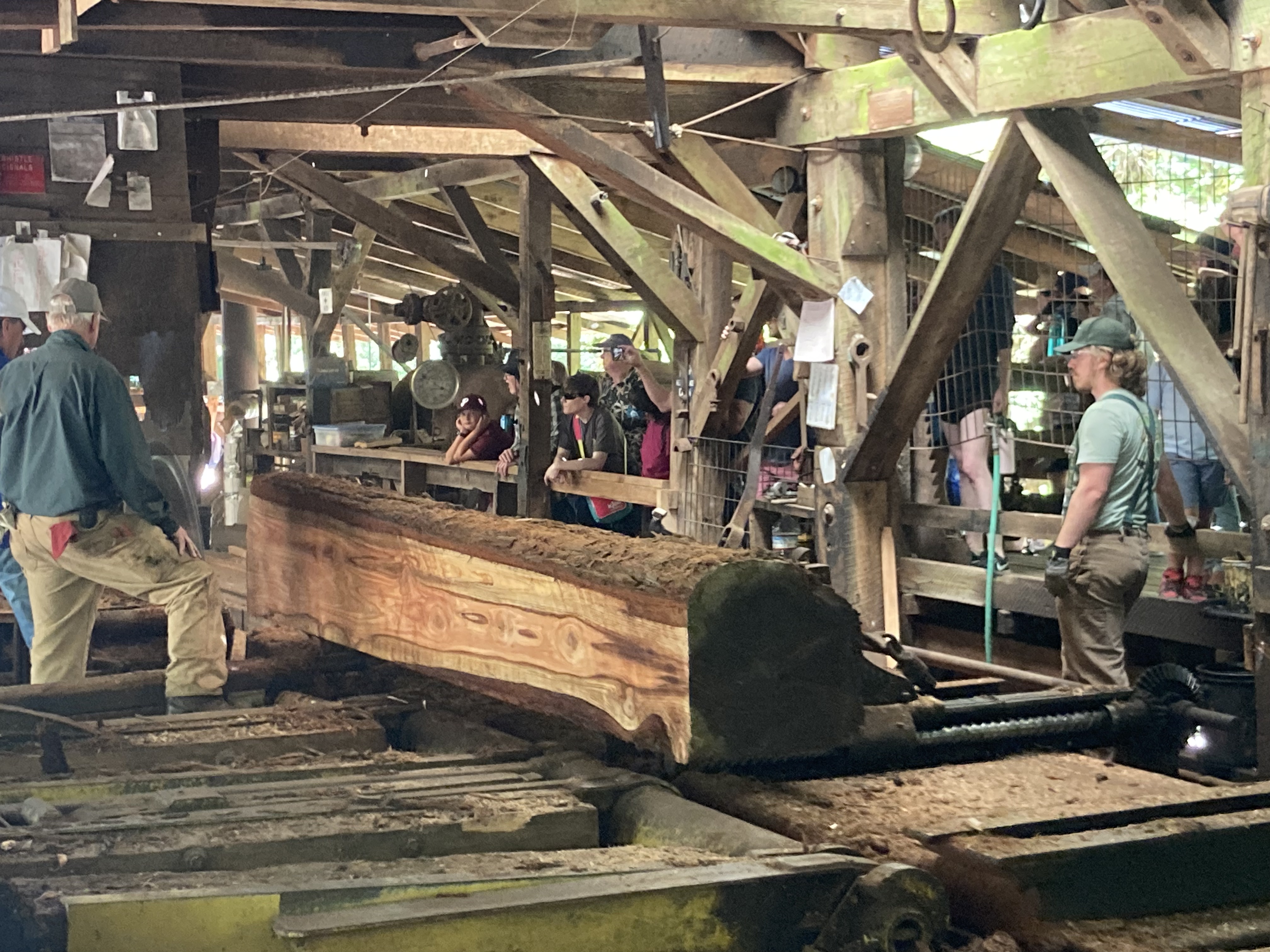
Recently, I visited Sturgeon’s Mill in Sonoma County where I observed the mill, in operation a only few days a year, that cut redwoods that provided the lumber for rebuilding houses after the 1906 San Francisco earthquake and subsequent great fire where over 3,000 people died and 80% of the city was destroyed. To date, that quake remains the deadliest in US history. According to Redwood Ed: A Guide To The Coast Redwoods For Learners and Teachers, in 1905 85-90% of the redwood forests were not yet logged. (You can view several astonishing historical photos of loggers cutting redwoods on this site when scrolling down.) The mill is steam powered, and still operates four weekends a year run by a group of volunteers.
A visit to Sturgeon’s Mill allows observers a glimpse of how redwood was processed into lumber used for building during the era before and after the 1906 San Francisco quake and fire. Old-growth redwood forests store at least three times more carbon above ground than any other forest on earth,” says Altea George. When traveling through San Francisco’s neighborhoods today, however, the disappearance of much of California’s redwoods in the effort to rebuild the city after the quake isn’t something we often think about.
Though the value of preserving forests is better understood now than it was in the last century, following WW2 between 1945 and 1948, sawmills around the Bay Area more than tripled. A further housing boom in the 1960s added to the demand for redwood and fir lumber. “Today over 95% of the original redwood forest area has been logged at least once.”
Redwood stump at Armstrong Woods State Park, California
Our homes today are the result of ideas and products from many origins we’re often not conscious of. As Kamala Harris has stated, “You exist in the context of all in which you live and what came before you.” Wherever we go, we carry our histories with us. Our ancestors’ histories and modes of thinking have shaped our lives and way of being in the world. Those living in California’s wider Bay Area still inhabit many houses constructed with redwood taken from forests after the 1906 quake. The quake led to changes in the way commercial buildings are made. Previous to the quake, concrete buildings were thought ugly. Because concrete is an inflexible material, people didn’t want to use it in an earthquake zone. One building that didn’t fall during the quake, the Bekins building , was made of steel reinforced concrete. This observation led to a change in building codes in 1908 influencing the way urban structures are built in cities today.
A California native, I grew up on a hillside strewn with granite boulders and covered with yellow grass. Evenings, I listened to cricket throb and coyotes calling across the valley. Soundscape ecologist Bernie Krause tells us, “Every soundscape that springs from a wild habitat generates its own unique signature, one that contains incredible amounts of information.” Not only does the built environment help us understand where we are, the land itself speaks in a way that helps us recognize where we are, and I’ve loved the way the land I was born on has sung its shape into my heart.
I’ve also stood on a red rock resting outside the small town of Wheatland, Wyoming where my mother was born, the plain stretching far into the distance, and sensed its solid presence rise through my feet. Outside Chugwater, Wyoming where my great grandparents and great aunts and uncles lived and worked, I’ve stood in a field between the thick grassy strands of wheat and felt its welcome, touching vicariously the land of my origin though I’ve never lived there.
Driving down roadways, we move with the traffic’s flow, all those around us carrying their own histories and stories. Whitman wrote, “(I am large, I contain multitudes.)” We don’t have to have lived in a place to sense a connection to it. Many homes coexist in us. There’s the home of our native tongue, the home of our way of seeing and thinking, and the home of particular clothes we wear that allow us to feel relaxed. There’s the home of foods that comfort us such as spaghetti, or tom kha gai soup, the home of routines with morning tea or coffee, for example, and the home of habits we follow such as reading the morning news, sitting for a morning meditation, or taking an evening stroll.
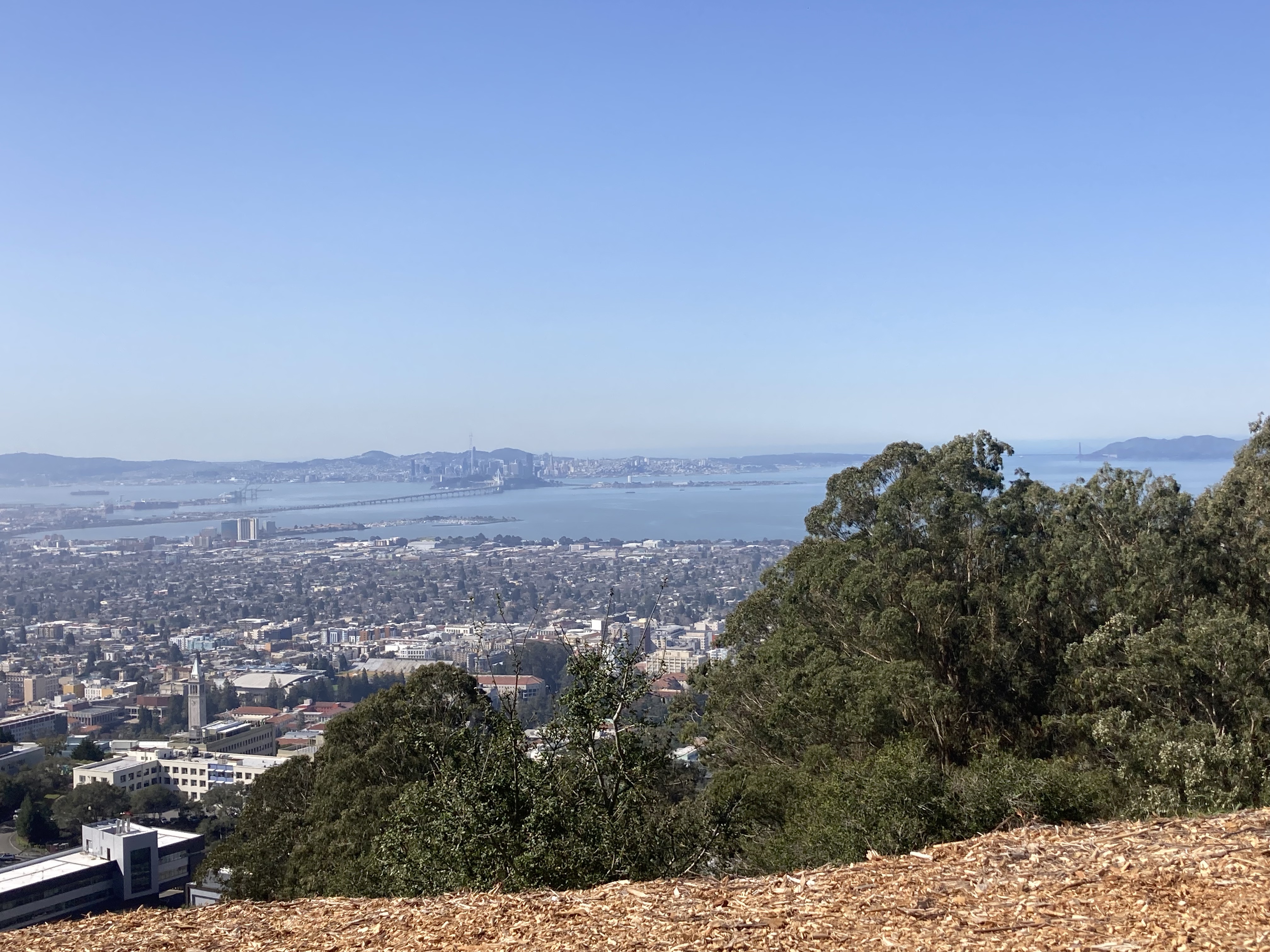
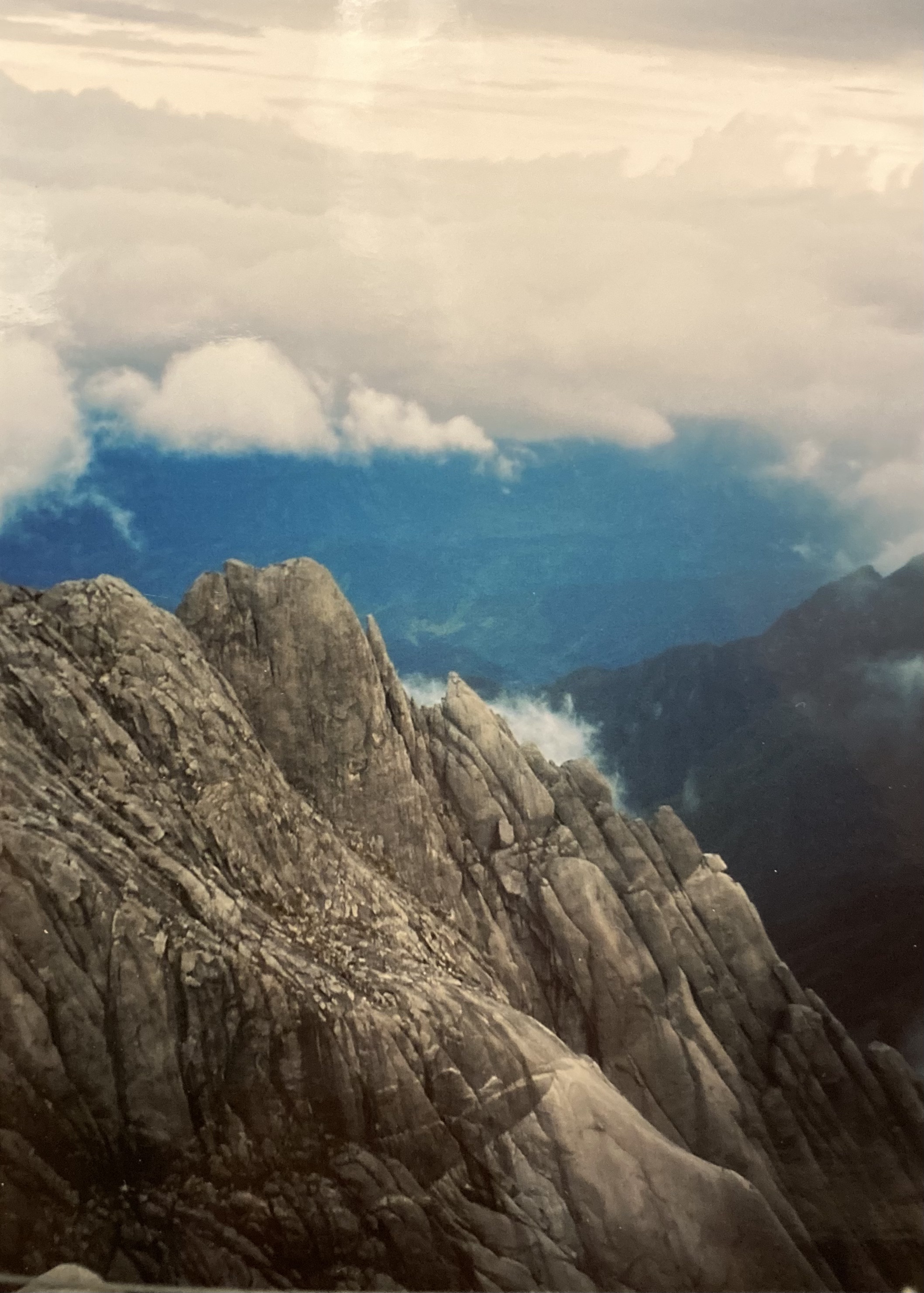
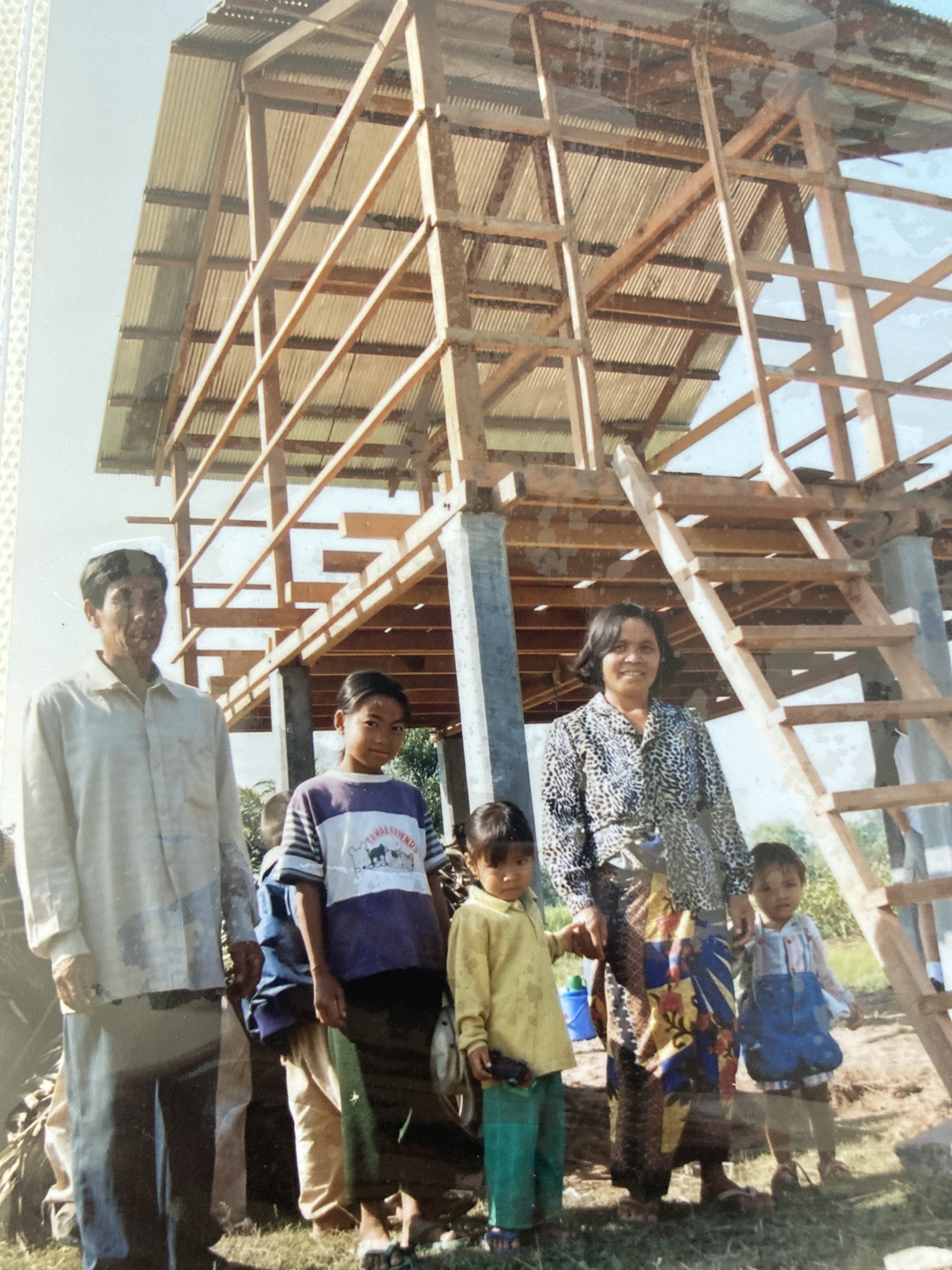
We rely on resources from around the world to create homes we live in. What is the value of knowing the history and origins of our way of life that have come together to create a place we call home? I’ve lived in six different countries outside of the US. Each one has left its imprint and came to feel like a kind of home. We can move across the world, to live in or visit a place that has entirely different protocols for how to eat food or negotiate and still can find connections to those around us, to the city, or the natural world. In Vietnam I’ve stood with hundreds of others in Tien Son Cave who lifted their arms with hands outstretched hoping drops of sacred water. In Saudi I’ve shared iftar after Maghrib prayer, and have stood in an empty lot with students in Kuwait, waiting to be cleared after a bomb threat. I’ve worked with fellow divers and a Cambodian family to build house, celebrated the Mid-Autumn Lantern Festival with friends in Singapore, and endured torrential rains in the forests on Mt. Kinabalu. I’ve attended weddings in New Delhi, and funerals in the US. I’ve ridden calmly to my destination with thousands of strangers on subways in London and St. Petersburg, been swept along by undersea currents near Palau. I’ve walked through Columbia’s Catedral de Sal de Zipaquirá carved by miners beginning in the fifth century BC, and have stood on the African continent’s southernmost edge and thought of the many ships that sailed past its windy coast whose voyages changed the shape of history. Each experience and countless others have helped me understand that though I was born in a particular place, my actions are part of a greater stream of life. All that has come before me as well as the variety of ways people interact with the world shape what I experience at any one point in time. What we call home is a collective making. Each of us are part of a greater whole. As Whitman writes in Leaves of Grass, “Past and present and future are not disjointed but joined.” Each of us is a continuation of the past, an embodiment of the present. We hold the future in the way we pass on our thoughts and carryout our actions and intentions.
Rock Island, PalauPalauMt. KinabaluDivers who helped build house, Cambodia Anna Citrino, Cambodia Cambodian family
William Stafford, in his poem, “Being a Person,” writes,
Be a person here. Stand by the river, invoke the owls. Invoke winter, then spring. Let any season that wants to come here make its own call. After that sound goes away, wait. A slow bubble rises through the earth and begins to include sky, stars, all space, even the outracing, expanding thought. Come back and hear the little sound again. Suddenly this dream you are having matches everyone’s dream, and the result is the world. If a different call came there wouldn’t be any world, or you, or the river, or the owls calling. How you stand here is important. How you listen for the next things to happen. How you breathe.
Though we are born into a particular place in time and way of thinking, we benefit from expanding our awareness of the worlds and people that create the place we call home. We can renew our lives through choosing to be hospitable to new ideas and ways of being, even seemingly foreign ones. Here’s a few possibilities: Ask relatives about the stories of their lives and the experiences that shaped them. Try taking a new route home or tasting a new food. Listen to a type of music you’re not familiar with. Practice a few phrases in a language you don’t know. Visit an art gallery and read about how that art connects to the thinking of a particular era. Read about the history of your city. Find out the names of plants on your street, which are native to your area and which aren’t. Learn the story of a bridge or building in your area. Have a conversation with someone of a different background, age, or ability level from you. Listen to what they tell you about their lives. Look for new insights and connections. There are many ways to renew and expand our experience of home and to be at home with those around us.
Every day we make use of ideas or rely on inventions passed on to us from elsewhere and previous times. The wheel, the battery, and the telephone–we rely on myriad things that weren’t part of our original human home. Languages borrow words from other languages when there’s no equivalent in one’s own language. For example, the Turkish language has borrowed the word asansör from the French ascenceur (elevator in English) and the Japanese language has borrowed arubaito アルバイトfrom the German word for part-time job arbeit. None of us are the product of a single, unified story. Embracing new words, ideas, and even worlds can enable us to thrive and grow whole.
Lumber mills like Sturgeon’s here in Sonoma County that cut the redwoods that rebuilt San Francisco after the 1906 quake changed California’s environment. Ancient redwood forests once occupied 2 million acres. After visiting redwoods near Eureka, California, John Reid in his opinion article “Thinking Long-Term: Why We Should Bring Back Redwood Forests” published on the Yale School of the Environment‘s website writes, “The beginning of the old growth is like a threshold between beauty and magic. The giants make time visible. Which makes me think a thousand years forward. If an entire landscape of this should exist in the year 3023, students of our culture may be tempted to conclude that, in our time, forests were sacred.” We share the world together with our neighbors as well as those across the world. What are your dreams for the kind of home you want to inhabit? Most of us would like to live in a world that is both beautiful and kind. As Stafford says, “this dream you are having matches/ everyone’s dream, and the result is the world…/ How you stand here is important…How you breathe.”
“Never once in my life did I ask God for success or wisdom or power or fame. I asked for wonder, and he gave it to me.” –Abraham Joshua Heschel
Spring has arrived in the Northern Hemisphere, the calendar says. It’s raining outside today but two days ago the world was full of sun and wildflowers. Walking in a field of wildflowers isn’t like walking in the Queen’s Garden at Regents Park, a world redolent with roses, stuffed with enormous, full blossoms filled with color, rich with light.
Wildflowers, on the other hand, are generally small, their forms simple. One might even call their appearance ordinary. But these ordinary flower folk spread across a hillside delight the heart. People long for their appearance, often travel miles to see them, and walk across hillsides for hours in hopes for a glimpse at their ordinary faces. Milkmaids, Douglas iris, buttercups, sun cups, shooting stars, though their forms are ordinary, come spring we long to greet them.
We long for the newness and color spring brings. We want to breathe it in, surround ourselves with swaths of landscape tinted with blossoms–the pale pink blush cherry trees wear, plum blossom’s gowns of white lace, and azalea’s soft pastels. We want to swim in rivers of bluebells, dance through fields of poppies’ brilliant red skirts swirled around their narrow stems. “Colours are the wounds of light,” said Blake. Indeed, as if smitten with Cupid’s dart, springs’ flowers can make us swoon. Though these spring blossoms are small, they can be myriad, their bodies singing in a great chorus their love of being alive, their wish to give more life. Wildflowers come to us of their own accord, not because of something we do. They are an unspoken embodiment of grace, a reminder of all the earth bestows on us, a love letter soaked through with color, wound with light, written in the language of pollen and petals.
There’s nothing a person can do to impress a wildflower, yet in the wonder of their ordinary forms their beauty repeatedly impresses us. In his poem, “The River of Ordinary Moments,” Max Reif writes,
I am stunned by the beauty of the ordinary, so that sometimes the ordinary seems mis-named, and yet it is ordinary because it is quiet with no fanfare … No one is famous to the ordinary, you can’t impress it.
If one stops to think about it, the most ordinary of moments in life are also simultaneously filled with the extraordinary. Wildflowers, for all their appearing simplicity in their forms, nevertheless support entire ecosystems. They don’t need pampering. They just want to grow. As Ire’ne Laura Silva writes in her post “Where Wildflowers Bloom,” on the Texas Highways site, “Wildflowers are not just pretty spots of roadside color or willful weeds; wildflowers are a reminder that where life ends, it will return. That beauty endures. That the stubborn and glorious earth harbors and nourishes and compels life to bloom again and again.” Life is in continuous rebirth. What an extraordinary thing to consider as we think about our own life’s revolutions.
Most of us live what we likely consider ordinary lives. We rise each day and do our work. We make plans with family members or friends, experience loss and pain. We learn what we love and celebrate with neighbors. We grow, we change. Humans share the collective knowledge across millennia. If we consider the trajectory of history and the struggles everyday people have faced over time, human experience isn’t particularly ordinary. Leymah Gbowee, who had a significant part to play in ending Liberia’s ongoing civil war, says: “Everyone has a role to play in changing the tide in our world. It has nothing to do with your academic background or your social status. It has to do with your tenacity, your strength and your willpower to want to make change.” Even our own personal struggles to adjust to ongoing change, adapt to new roles and successes, or to cope with our particular illnesses, ongoing pain, or griefs–all of these things require courage, even bravery in the most ordinary of days.
Our lives are made up mostly of these ordinary days. Each of them are full of wonder. It’s wondrous to have rolled topsy turvy across the grass as a child, to have tasted the spark of snowy cold on my tongue, to have jumped through my own arms, felt ocean waves pull against my calves, smelled the sweat from a horse I rode after racing across a meadow, and to have sung with my mother at the piano. It’s wondrous to sense the warmth of my partner’s hand in mine, and to feel my cat’s calm presence beside me. Wonder abounds.
Emily Dickinson wrote “I am Nobody! Who are you?” It’s perhaps out of fashion to be Nobody. These days voices clamber everywhere to be heard. Everybody seems to want to be Somebody. As does all of nature, wildflowers simply want to just go on being what they are. What they are in all their ordinary wonder is needed. They are part of a greater interbeing. Reif goes on to say in his poem,
I do not want to be taken from the flow of the ordinary to any pinnacle or promontory from which I will only have to climb, or fall, down again, I do not want to be special in that way, I want the tick of thoughts in my mind to run out and the storehouse of thoughts to be emptied and not replaced by any others, I want to disappear, disappear and become that current that all distinct drops are lost in, and then the ocean into which all rivers go to die.
Flowers bring us together and share their beauty. They fill us with hope. Whether you are able to see wildflowers in person or view photos of them, or simply stand in an open space remembering them and wishing for their presence, may you sense their lives fill you with joy and carry you into a place of gratitude and wonder, and give praise the ordinary.
I leave you with this short film Gratitude with Louis Schwartzberg’s time-lapse photography and words from Benedictine monk Brother David Steindl-Rast. I’ve watched it many times and the beauty it reveals still fills me with gratitude for the wonder of being alive.
Now is the season to know everything you do is sacred.
–Hafiz
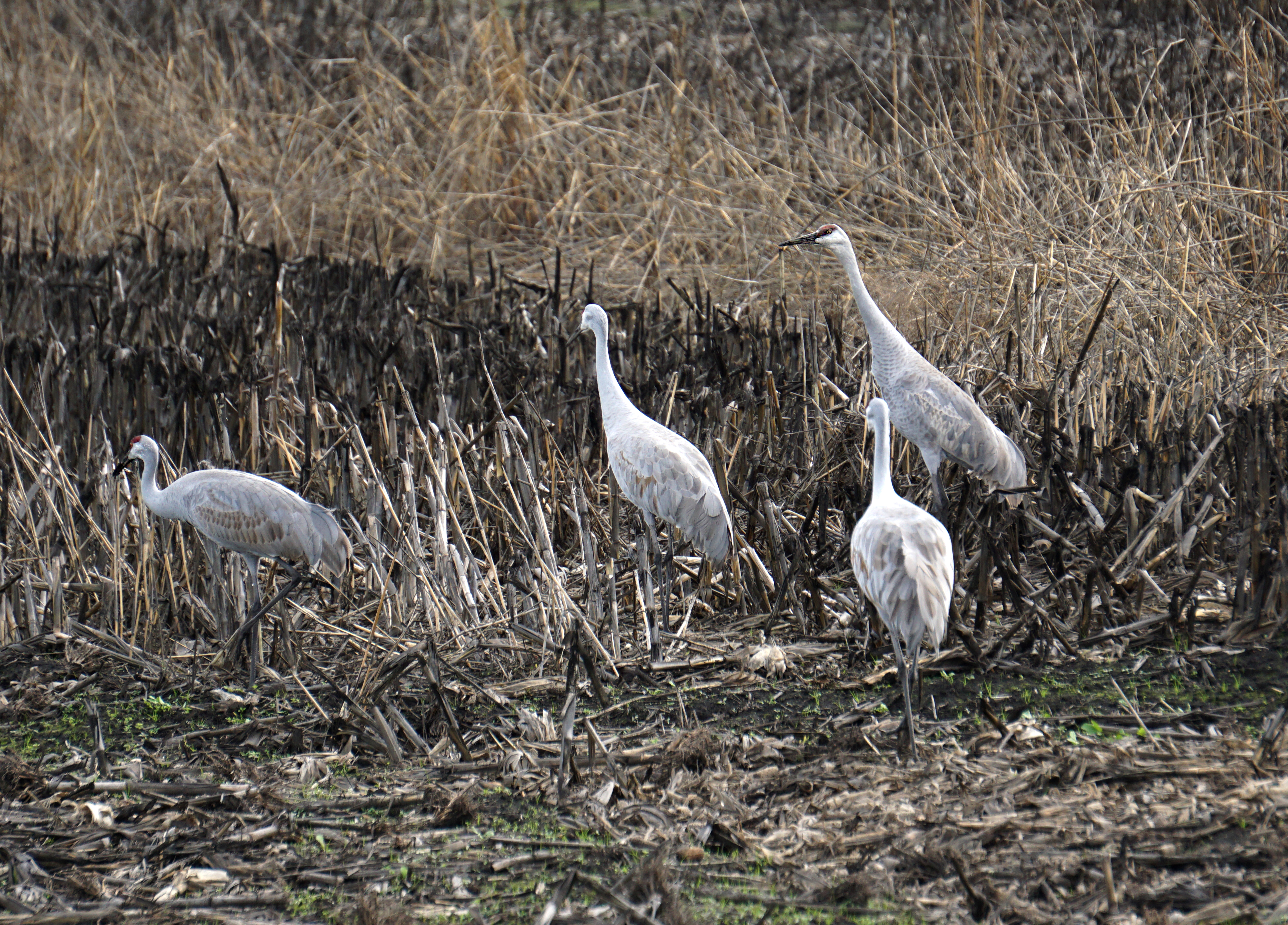
Recently, I traveled to Staten Island in California’s Central Valley near Lodi, California. An important wintering spot for migratory waterbirds, the Central Valley supports 60% of wintering waterfowl in the Pacific Flyway and 20% of the winter waterfowl in the whole of the US. According to the Audubon website, “The four Central Valley regions hosted approximately 65 million migratory land birds in the spring and 48 million in the fall.” My purpose in the visit was to see the sandhill cranes. Since the cranes like marshes, bogs, agricultural lands, river valleys, and open prairie, California’s Central Valley is a perfect wintering location for the birds.
The largest gathering in the world of sandhill cranes is in Nebraska, where over a quarter million sandhill cranes gather in spring on the Platte River. Witnessing the multitude of bird life gathered in that location, the air filled with their wing-flutter, their voices calling to each other across fields, and the enormous energy of their life-force could carry one into a state of awe. The Nature Conservancy’s excellent short video of the sandhill cranes’ spring presence in the Platte River Valley enables people to visit the spectacle vicariously. Viewing the film brought me into sharper awareness of the myriad worlds that occur simultaneously alongside our human one.
Sandhill Cranes, Staten Island, California
At least 3,000 years ago bird migration patterns were noticed in various cultures of the Pacific islands as well as in ancient Greece, and are also referred to in the Bible in the books of Job and Jeremiah (Wikipedia). While humans are out traversing the highways, working in fields, gathering in buildings, or sitting in around the dinner table discussing who to vote for in upcoming elections, sandhill cranes and other migratory birds have their own motivations and are flying by the thousands upon thousands to locations they’ve gathered at for millennia.
While we move through our day unaware of nature’s larger rhythms, a great cycle of being is unfolding all around us and we are part of it. Like an Indian raga, the movements of animals flow in cyclic rhythms of time across the globe in circuitous routes, increasing in volume, size, and energy at different locations, then quieting down and moving on as seasons change, only to be repeated again the following season. Flyways and the myriad patterns of many other animals moving across the globe–leatherback turtles, whales, monarch butterflies, bats, salmon, pronghorn deer, each following ancient rhythms, can be seen on interactive maps like this one, as well as this video of global animal movements.
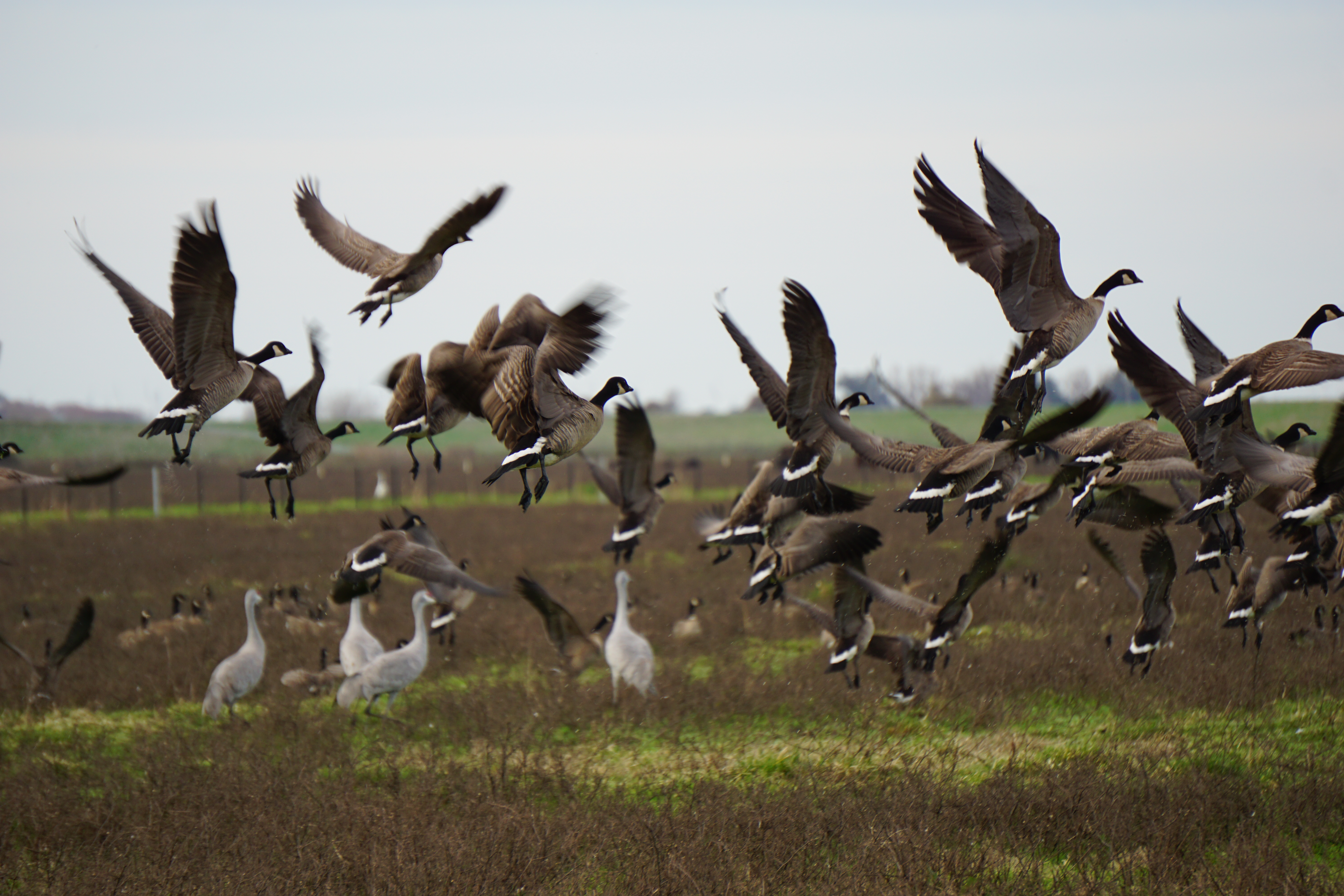
Geese flying above Staten Island, California
The whole of creation is in a state of continuous change. Though trees are rooted, Chelsea Steinaur-Scudder and Jeremy Seifert, in their article in Emergence Magazine, “They Carry Us With Them: The Great Tree Migration,” describe tree migrations that have occurred over millennia, and that are presently taking place as a result of a variety of factors not as yet totally clear, but including “changes in climate, past and present land use and management, the proliferation of native pests and plants, the introduction of non-native species, and the built landscape.”
A big part of my reason for wanting to see the sandhill cranes is because many of my great aunts and uncles were born in Nebraska. I’ve been writing about them, and want to experience more of the landscape they inhabited to better imagine their voices and to sense how the land there might have shaped their lives. Though they lived at Nebraska’s western edge and not in the Platte River Valley, they may well have experienced the cranes’ migration, and I like the idea of my life intersecting with a vision of these birds that may have also been a vision they had. My ancestors migrated from the eastern US states to Nebraska. I never met most of them because by the time I was born, my parents had migrated to California. My great grandparents, as well as several of my great aunts and uncles, died before I was able to meet them.
Geese, Staten Island, California
In Western culture we like to think of time as linear and often depict history on timelines. A different way of looking at existence is to imagine it as circular or a great spiral–the spiraled twist of DNA helix, the chambered nautilus’s fibonacci whorl, the swirled currents of wind and water, and the cosmic curled tail of our galaxy. We are all part of the great movement of becoming. In our migrations, we say goodbye to what was and reach toward what will renew and nurture us in body or spirit. To live is to be part of the great cycle of birth and death. There are many deaths and births before we let go of our bodies.
Humans generally like firmness and solidity. We live in a certain location or in a particular period of time. Nevertheless, it’s also true that humans have been migrating since the dawn of their existence, as this National Geographic map shows. Many times, people move from their birthplace to other locations. According to the UN, “more people than ever live in a country other than the one in which they were born.” When we choose to move elsewhere, we generally hope the move will carry us to an environment we perceive is better than the one we left behind. These maps depict human migration in recent times, making it clear not everyone migrates out of choice. Whether people migrate from their own choice or not, letting go of one’s former life carries with it a kind of grief.
Gail Rudd Entrekin‘s poem “Finally,” (used with her permission) found in her excellent book of poems, Walking Each Other Home, takes a close look at what it’s like to come face to face with losses we don’t necessarily expect during the migration of our lives as we move from birth toward maturity.
Finally
Every morning now it’s the big girl pants and they are not black silk with lace, but cotton voluminous and white. You’ve seen them hanging on clothes lines back in the day, functional pants for women who mean business. They mean to get things done no allowance for pain, don’t mean to spend a single minute caressing their losses. These women look straight ahead and forget to smile at children, forget to touch their husbands’ hands, their old husbands wandering like children, these men who were supposed to be gods and fell unable in their duty to protect, left these women to drop their peacock feather earrings, chop off their long thick hair, toss their wild photos into an old shoe box, and take charge, grow up, finally, grow all the way up.
The poem brings us into the world of navigating inside those difficult migrations life inevitably brings our way. The underwear described in the poem aren’t black silk with lace. They are “functional,” the kind perhaps our grandmother or great grandmother might have worn, women so busy trying to survive they didn’t take time to soothe themselves regarding what they lost. We need dear ones close by to help steady us but for various reasons, we don’t always have the support we need.
Often times when entering into difficult life passages, we recognize the journey’s challenges and find ourselves needing to turn serious and grow practical. Entrekin’s poem describes these women, they who no longer do such things as wear their lovely peacock feather earrings. They cut their thick hair, and toss the photos of their wilder days in an old shoe box. In confronting hardship, they’ve let go their adornments and spontaneity. Out of necessity they “take charge, / grow up, finally, grow all the way up.” There is such sobering responsibility and finality embedded in those words. Courage and bravery too. I read the lines and think of people I know right now who are having to do just that as they confront various difficulties.
There’s also a sadness there, a sorrow in this letting go of a former self in order to “take charge.” Things that have delighted and brought us joy are important touchstones to memories that helped shape and give texture to our lives. Even if out of necessity, we don’t want to stuff them away in a shoebox never to be seen again. We need the things that give us beauty and joy in order to keep going. Nevertheless, eventually, as we approach our life’s last days, everything we’ve held so precious will need to be set aside. We will need to let go of everything we’ve ever held dear.
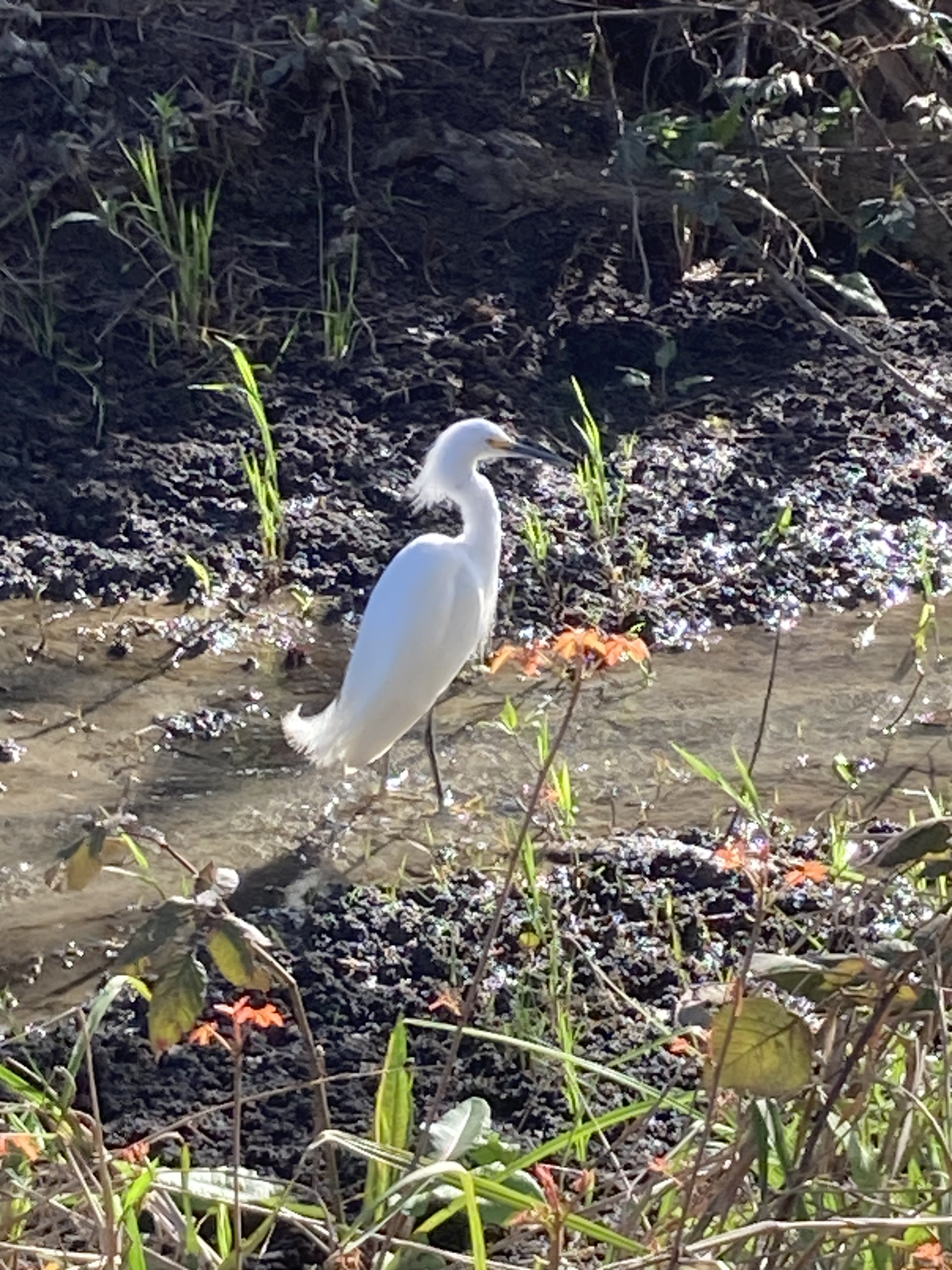
Egret, Staten Island, California
Entrekin titles her poem “Finally.” When we retire from work we felt dedicated to for years, or when someone dear to us becomes seriously ill or dies, we leave one world behind for another. These situations and circumstances require us to leave behind a familiar reality for a different one and are a kind of interior migration as well as a death of a former way of living.
The arrival of bodily death is the ultimate finality. Contemplating our death can help us recognize what it is that truly matters. To help us do this, Buddhists recommend people practice reading or reciting what they call the Five Remembrances:
I am of the nature to grow old. I cannot escape old age.
I am of the nature to grow ill. I cannot escape sickness.
I am of the nature to die. I cannot escape death.
I will be separated from everything and everyone I hold dear.
My only true possession is my actions.
Frank Ostaseski, head of the Zen Hospice center in San Francisco, California, in his book, The Five Invitations, encourages us to sit down with “sister death,” to have tea and conversation with her because in doing so we learn how to live more fully. Ostaseski suggests that as we turn toward the griefs we carry, we become more whole. “Every time we experience a loss, we have another chance to experience life at a greater depth,” he writes. “It opens us to the most essential truths of our lives: the inevitability of impermanence, the causes of suffering, and the illusion of separateness. We begin to appreciate that we are more than our grief. We are what the grief is moving through.”
Geese at Staten Island, California
“In the end,” Ostaseski goes on to explain, “we may still fear death but we don’t fear living nearly as much. In surrendering to our grief, we have learned to give ourselves to life.” Ostaseski’s talk about poetry and the end of life, is moving, and I recommend it.
The other side of grief is love. For me, both Entrekin’s poem and Ostaseski’s insights emphasize the preciousness of every moment. The simplest things are treasures: sitting in the presence of those we love, the taste of a good meal, a walk under billowed clouds spread across a wide sky. Life is ephemeral. This is why in the end, acts seemingly as simple as walking across a room are not simple or trivial. They are rich and lavish gifts of being. As the 14th century Iranian poet Hafiz wrote in The Gift, translated by Daniel Ladinsky:
Now is the Time
Now is the time to know That all that you do is sacred.
Now, why not consider A lasting truce with yourself and God.
Now is the time to understand That all your ideas of right and wrong Were just a child’s training wheels To be laid aside When you finally live With veracity And love.
Hafiz is a divine envoy Whom the Beloved Has written a holy message upon.
My dear, please tell me, Why do you still Throw sticks at your heart And God?
What is it in that sweet voice inside That incites you to fear?
Now is the time for the world to know That every thought and action is sacred.
This is the time For you to compute the impossibility That there is anything But Grace.
Now is the season to know That everything you do Is sacred.
“The unchosen thing is what causes the trouble. If you don’t do something with the unchosen, it will set up a minor infection somewhere in the unconscious and later take its revenge on you. Unlived life does not just “go away.“–Robert A. Johnson
The shortest day of the year, the longed-for turning point when the earth again travels toward light, has come, and passed. The earth now journeys toward longer days again, slowly leaving behind the long periods of dark. But while the days are still mostly full of shadow, I want to take time to grow quiet and explore that space a bit more.
Many find it challenging to pay for food, rent, and meet basic needs. Throughout the world, innocent people are suffering, hungering for peace. From within and without people ache for greater sustenance, mobility, improved eyesight or foresight, connection, and love. When hard times and difficulties come, most of us long to leave them behind. Desertification, trillions of micro-plastics in the oceans releasing toxic chemicals into the water, and the food chain, loss of species—the very body of Earth cries out for support.
Reading through news feeds and social media voices everywhere call out for attention. “We are presently dealing with the accumulation of a whole society that has worshiped its light side and refused the dark, and this residue appears as war, economic chaos, strikes, racial intolerance. The front page of any newspaper hurls the collective shadow at us.” Writes the Jungian psychologist Robert A. Johnson. How do we take it all in and go on living with so much need everywhere? Johnson suggests we begin by stepping in closer toward those shadow parts of ourselves and our culture. We’ve have participated in creating our shadows, Johnson explains. Instead of ignoring or running away from them we can, instead, turn toward them. “…our own healing proceeds from what we call that overlap of good and evil, light and dark. It’s not that the light element alone does the healing. The place where the light and dark touch is where miracles arise,” explains Johnson. “The tendency to see one’s shadow “out there” in one’s neighbor or in another race or culture is the most dangerous aspect of the modern psyche. It has created two devastating wars in this century and threatens the destruction of all the fine achievements of our modern world. We all decry war but collectively we move toward it. It is not the monsters of the world who make the chaos but the collective shadow to which everyone of us has contributed.”
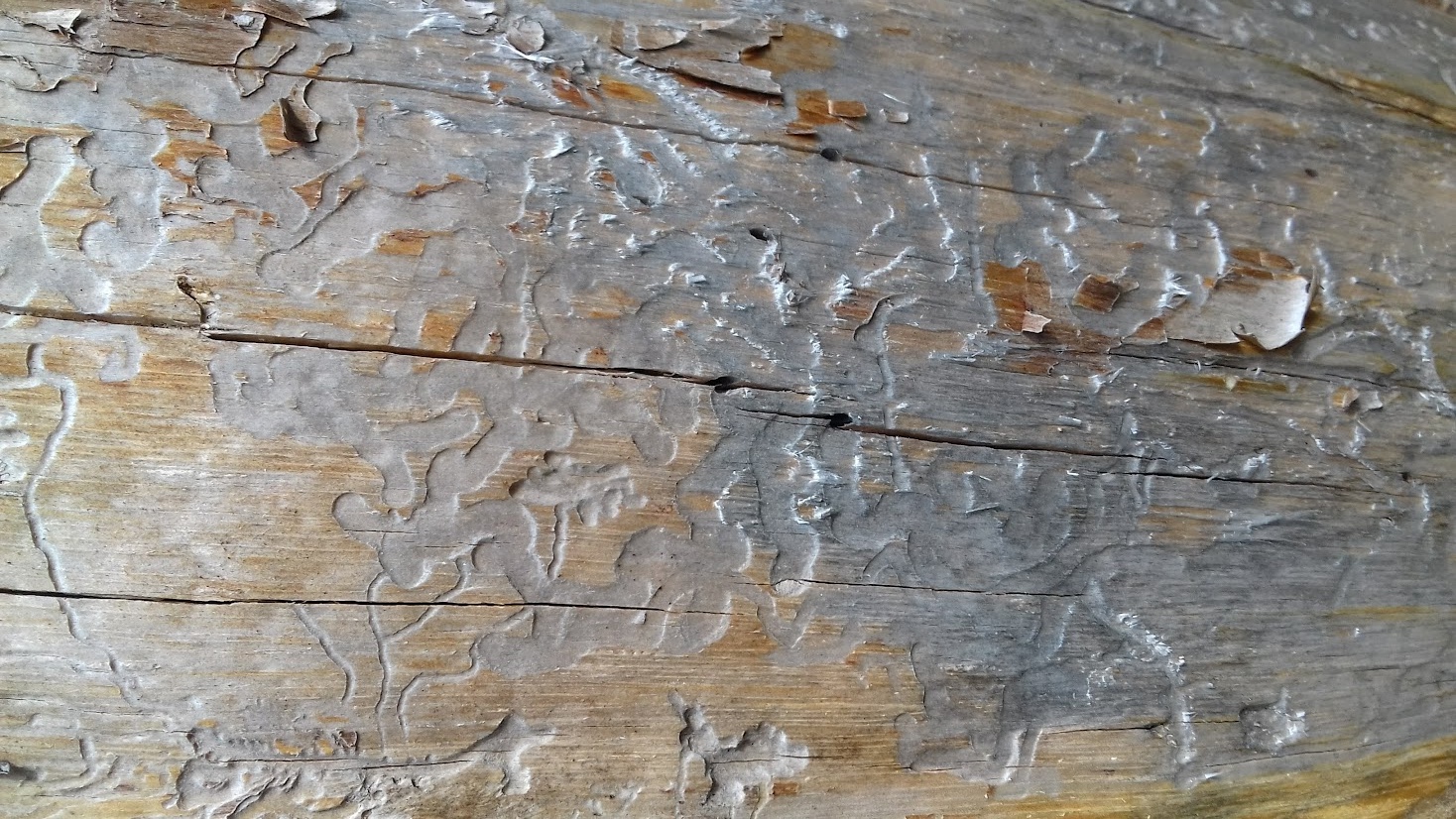
I recall seeing logs with cryptic squiggles on them looked like some kind of calligraphic writing while camping at Wright’s Lake in California Sierra Nevada mountains. These mysterious markings are made by bark beetles as they eat between the bark and the tree trunk. Stressed, diseased, or injured trees are susceptible to bark beetles attacking them and sometimes the trees can’t adequately protect themselves against the beetles. The beetles carry fungi that further weakens the tree’s defense. When the tree dies and loses its bark, we can see the squiggly pathways the bark beetle left. Bark beetles are only about a quarter inch long, but they feed on the trees living tissue and make the tree unable to take up the nutrients it needs for survival.
Like the bark beetle, our shadow sides can eat away at that part of us that carries our life. It’s best to turn toward our shadows. “To honor and accept one’s own shadow is a profound spiritual discipline. It is whole-making and thus holy and the most important experience of a lifetime,” writes Johnson.
In Western culture, we pay so much attention to control and rational thinking. French mathematician, physicist, inventor, writer, Blaise Pascal wrote, “The heart has its reasons which reason knows nothing of… We know the truth not only by the reason, but by the heart.” In this time of lingering darkness, I want to lean into the wisdom of the heart and learn from it more of what the shadows have to teach.
As a child, my mother brought me out on the front porch at dusk to listen to the sounds as day changed into evening. We listened to voices of coyotes echoing through the valley, of owls, became aware of the cooling air, then later the star light pricked night. In this experience, whole other worlds and ways of being in the world emerged. Listening to the spaces between seeing and the challenges of seeing, knowing and not knowing; leaning into the voices speaking from below the surface, the half inaudible voices–what might we sense nudging at our hearts?
Ted Kooser, in his poem, “A Letter in October,” describes a scene where he used to be able to sit at his window at dawn to see a doe
“..shyly drinking, then see the light step out upon the water, sowing reflections to either side” but now sees “…no more than my face, mirrored by darkness, pale and odd, startled by time… … And I, who only wished to keep looking out, must now keep looking in.”
Sooner or later it seems we will all be confronted with ourselves and the need to look inward. Why not begin now? Sit by the night window, on your night steps, or take a night walk, dance with the lights out, record your dreams, pull out photos of your ancestors long gone if you have them, tune in to the turning point in your breath. By attuning ourselves to that in between space of knowing and not knowing, belonging and not belonging, comfort and discomfort, giving this a name perhaps as if it is a presence, and making friends with it, what might we learn?
A song for wholeness, by Melanie DeMore. “All One Heart.”















































 Anna Citrino---Poetry, Place, Pilgrimage