Uncategorized

Worlds We Carry With Us

“…she knew her memory was failing and she said to me, ‘I can’t forget them. If 
I do, there will be no one left to remember that they ever existed.’” –Anne Berest, The Postcard

Moving back to the United States after living abroad in six different countries for over two and a half decades, I now want to get a better understanding of the country I live in and the land I live on. Something I’ve noticed in adjusting to living in different cultures and in visiting countries occupied by various other cultures over long periods of time is that people who have left one region of the world for another carry the world they came from with them. 

Great Basin, Nevada, US

When early settlers from the East Coast came to the western states, they learned that the land there had different needs and requirements. The soil and climate were different. More land was needed to achieve the amount of food production desired. The world one arrives at after a move is not the one that is left behind. It takes time to understand and adjust to a world not your own and cultures that function with different organizational structures, have different ways of seeing and follow different rules. The environment in one area isn’t the same those in other areas, and the needs aren’t always understood when moving to a new area.

When I moved to Sonoma County two years ago, I encountered a part of American history I was formerly unaware of–that portions of the county were formerly a Russian colony. Years ago, I visited Sitka, Alaska, and learned of its history as a Russian settlement. Called Novo-Arkhangel’sk by the Russian colonists, Sitka came into existence for the purpose of expanding Russia’s fur trade in the area. (Read more about the history here.) What I didn’t know when visiting Sitka, was that Russia had also set up a colony on native people’s lands north of San Francisco in the early years of the 1800s. Because of the cold climate, it was difficult to keep Russian colonies in the northwest adequately supplied with provisions. As a result, the Russians sought a settlement further south on the American continent’s western coast.
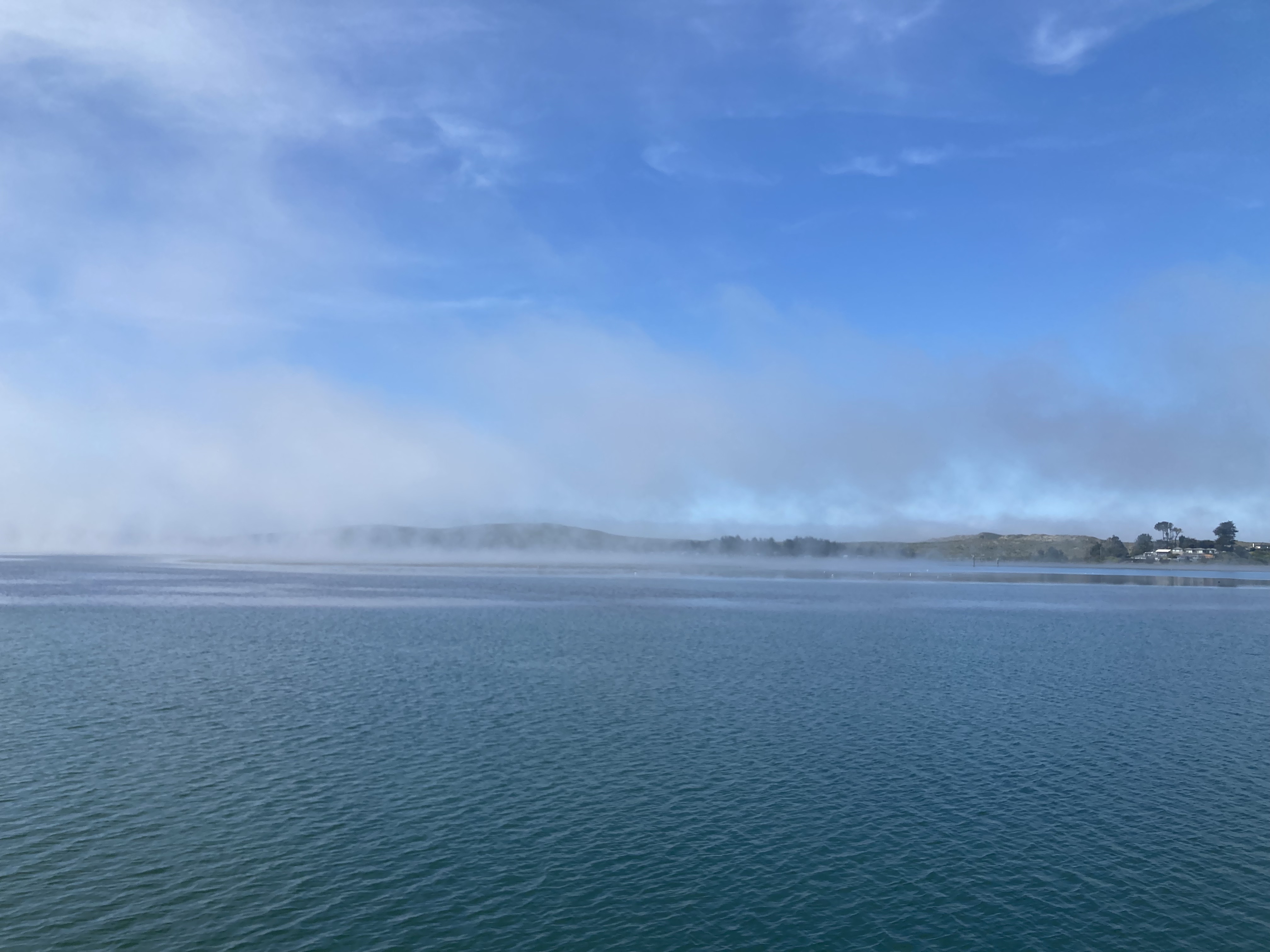
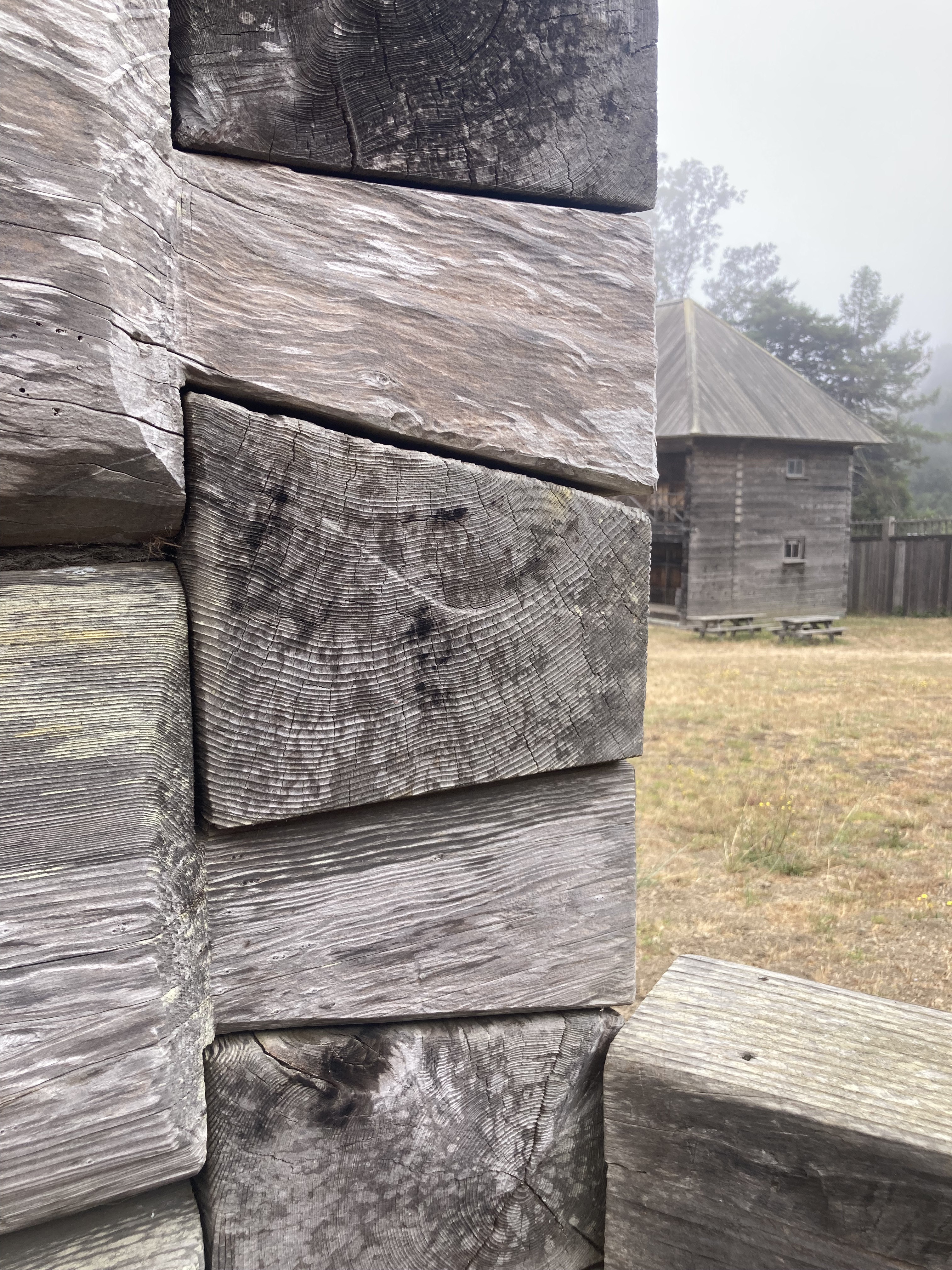
Russians used Bodega Bay’s outer waters as a harbor and renamed it Rumiantsev Bay, and built a fort further north on the Sonoma Coast using building styles similar to those in Sitka and in Siberia. The stockade, blockhouses, and log buildings were completed on August 30, 1812. Cannons were placed in the stockade and blockhouses and the flag of the Russian-American Company was raised. Known now as Fort Ross, its name likely coming from the fort’s connection with Russia, Rossiia, being an alternative from of the word Russia, and Ross a shortening of Rossia, is now a California State Park.

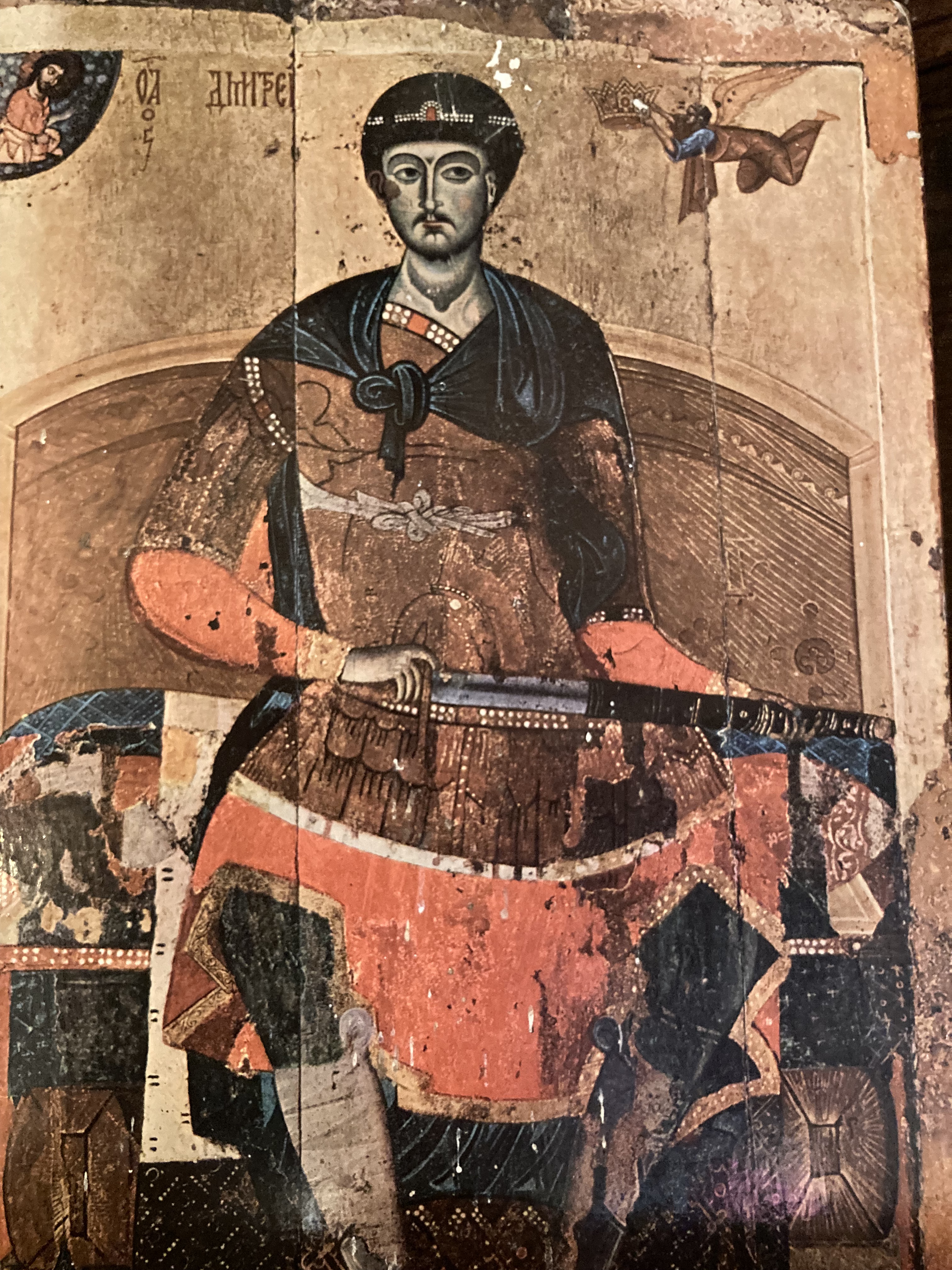
Craftsmen at the fort made barrels, plows, and built ships and boats. People at the fort gardened and raised cattle. A chapel was built at the fort in the Orthodox style where weddings, baptisms, burials, prayer and other religious practices were held. The fort’s inhabitants carried out experiments in farming. Grape stock was brought from Peru and peach trees from Monterey, as well as apples, cherries, pear, wheat, corn, beans, and tobacco–all of these crops and activities familiar to their own culture.
According to the Sonoma Index Tribune, Russians brought Gravenstein apples to the Fort Ross area. Later, in 1850s, the apples were brought to the area around Graton in Sonoma County. More orchards were planted in the area, and apple production was a central agricultural product in the area, giving Sebastopol a nation-wide reputation for its apples.

The architectural forms the Russians’ buildings took and the way they were made are unique to their culture as well. They didn’t use the structural methods of the people native to the lands they were occupying. Additionally, the Russians hunted for otter along the coast until their presence was exhausted, leading to the collapse of the Russian colony.

Though stories of the Russian colony on the US western coast is one we may be unfamiliar with, it nevertheless helped to make the world we walk around in. There can be a variety of reasons for our not knowing the stories of the land we inhabit. The people who came before us may have endured such hardship that it was too painful to tell the stories, alternatively, sometimes shame surrounds how the land we live on was acquired and people don’t want to tell the story or create an alternative story or simply keep silent about the story, as Louise Dunlap suggests in her book Inherited SilenceOther people are so caught up in their own daily story that they haven’t considered the story of the land they live on. Nevertheless, as Berest writes in The Postcard, “I carry within me, inscribed in the very cells of my body, the memory.”

Author Dale M. Kushner, in her blog post, “The Things We Carry: How Our Ancestors’ Traumas May Influence Who We Are,” explains how research findings in the field of behavioral epigenetics, “have documented that trauma can affect the expression or suppression of certain genes, not only for the person involved but also for succeeding generations,” as can experiences of familial shame, guilt, despair, rage, hopelessness, evidence suggests,” says Kushner, but she goes on to explain how Jungian psychologist James Hollis suggests we “look to our imaginations as a portal to healing,” to the “arts of ceremony and ritual, and to our in-dwelling creative spirits that remain alive no matter what terrible thing has happened to us.”

Sunset looking toward Fresno, California

Alberto Rios in his poem “A House Called Tomorrow” writes

When you as a child learned to speak,
It’s not that you didn’t know words—

It’s that, from the centuries, you knew so many,
And it’s hard to choose the words that will be your own.

From those centuries we human beings bring with us
The simple solutions and songs,

The river bridges and star charts and song harmonies
All in service to a simple idea:

That we can make a house called tomorrow.
What we bring, finally, into the new day, every day,

Is ourselves. And that’s all we need
To start. That’s everything we require to keep going. 

It’s important to consider what we bring to the communities we interact with so that we co-create the kind of world we want to exist. Though it’s not humanly possible to know every culture’s perspective, we can be aware that our way of seeing is but one way and that there are others that may be more fitting. As Rios says, what we bring into the new day, every day is ourselves and that is what we need to start and to keep going. We don’t live separate lives. Many cultures and ways of seeing and acting form our world. We each participate in making the world we inhabit as well as the one those after us will live in.

The natural world is one of generosity and community. Trees, for example, give shade to anyone who walk beneath them. Rivers give water to all who drink from them without withholding. Charles Eisenstein states in his article, “The Relationship Between Gifts and Community: on the Daily Good website offers a beautiful way we can begin to create community and a more generous world. “Community is woven from gifts,” Eisenstein states, and suggests creating gift circles where people gather to express their needs, share with each other something they would like to give, and then later gather to give gratitude for what was given. As Rios points out in his poem, “we can make a house called tomorrow.” That tomorrow begins with becoming gifts to each other and recognizing the gifts that abound everywhere in the around us.

Park in Telluride, Colorado, US
art, Wonder

Holding Time in the Presence of Art

As I walked down the subway tunnel in St. Petersburg, Russia recently, observing the living river of people moving in the opposite direction, I thought about how vast the world is and the ideas it contains in people’s thoughts beyond the world I know and live in. Emily Dickinson wrote, “I am nobody, who are you?” It is a line of poetry I identify with as one who has lived outside my own country for more than two decades. When traveling to a new country and encountering entire cities filled with people who have a different history, who wear clothes with a different sense of style, and who don’t speak my language, I’m again made aware of my smallness.

I had come to St. Petersburg to see the art as its museum, the Hermitage, an art museum known as one of the finest in the world. Once inside the vast building, we found ourselves wandering through rooms of Rubens, Rembrandt, Gauguin and crystal chandeliers.

Stepping into the room that held the da Vinci paintings, I noticed how crowds clamored in front of them, hoping to get a glimpse. One man I noticed worked his way up to the front to look at the painting of the Madonna Litta through his phone’s camera lens just long enough to take his snapshot, then turned immediately away. Observing this behavior repeated by others as well made me wonder what is it we actually see when we gaze at a painting? Most of us aren’t trained artists. What are we looking for and what do we find when viewing art? When does a painting speak to you and why? What makes it stand out in someway beside all the others of similar subject matter? Is it the name of the artist that tells us this painting is from a master and therefore valuable, or is there something more? To what level do we actually see something of ourselves and our world in the art we view?

One of the reasons I appreciate visiting art galleries is for the glimpse they give into other minds, other ways of being. It is also a way to time travel. If you recall when you last visited an art gallery, you probably remember seeing paintings of people you’ve never heard of, or paintings by artists you know little about. Perhaps you see the portrait of a duke or a countess who were considered to be somebody in their day, and an artist painted their portrait, maybe even a well-known artist, but today hardly anyone passing by even knows who they are. Thinking again, of the anonymity in crowds, I began to take more notice of paintings of people and by artists I’ve never heard of when I came across a painting that said it was by an unknown artist. Neither the artist or the subject are known by name, yet here the portrait or sculpture was, hanging in the gallery. No one crowds around to view the paintings by the less well known, but thousands see them every day in galleries like the Hermitage, and someone recognized the value of the artist’s work so that it ended up in the gallery. What might these pieces have to say?

When I encountered this painting of Ivan Kramskoi by Ivan Shishkin in the Russian Museum, it seemed as if Shishkin could step out of the painting and have a conversation with the people in the room. He appears so alive, ready to engage. Shishkin was a landscape painter, and Kramskoi was a leader in the Russian democratic art movement. The realistic quality of these paintings is echoed by another painter of the 1800’s, Nikolai Ge, in his Portrait of Olga Kostycheva, a girl whose eyes reflect a kind interior sadness.

Standing before the portrait of Marina Derviz, by Jean-Joseph Benjamin Constant, I felt I wanted to know her thoughts. She appears sensible and the upturned edge of her lips suggest she is kind. Her face seems open and approachable, even though she wears a stiff high collar and pearls demonstrating wealth and status.

FullSizeRender (6)
Pavel Chistiako, “Jovannina Sitting at the Window Sill”

Art reflects life and the artists’ way of seeing and interpreting life. There are a variety of reasons an art piece might speak to a person, of course. Some paintings I observe for what they might say about how the artist used the brush strokes to create the form. Other paintings I recognize from seeing copies of them in books. Still others depict familiar stories or embody larger ideas or responses to events. It’s interesting to see the artist’s interpretation and perspective of these events and stories, and this is an activity that requires close observation and interpretation of gesture and facial expressions. This painting by Pavel Chistiako, Jovannina Sitting at the Window Sill is beautiful in the quality of quiet reverie it evokes.

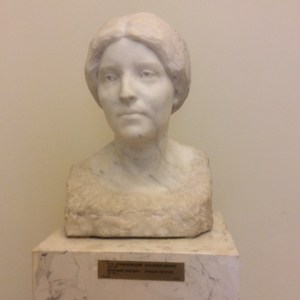
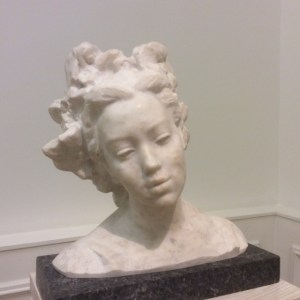
The sculpture on the left below by Gleb Deriuzhinsky is of an unnamed woman and is simply titled Female Portrait. Next to it is, Youth by Ekaterina Belashova-Alexeyeva. Both depict a woman without a name and instead, reflect life at a particular age and moment.

None of these artists or art pieces was I familiar with before seeing them in St. Petersburg, and yet they are of excellent quality.

2,000 years ago, Socrates taught people by asking questions. He didn’t work in an established school. Instead he taught in the streets. He was a “nobody” in the sense that he didn’t write anything down himself. Plato’s written version of his dialogs has helped students of succeeding generations to see how curiosity and reflective inquiry can help us to better understand our thinking and that of others around us. The older I grow and the more I travel, however, the more I realize there is so little I truly understand or grasp of the world around me. Constantly, I’m lead back to the mystery that life is, and this is what happens to me when I stand before art such as these few pieces I’ve mentioned. Vistors walk by a thousand art pieces and see their beauty, the immense skill, the hours and hours of dedicated work and effort they represent. There are rooms and rooms of art, and “experts say that if you were to spend a minute looking at each exhibit on display in the Hermitage, you would need 11 years before you’d seen them all,” says the Hermitage museum site. We can hardly take in what it means. It’s too large to grasp. Socrates said, “I know that I do not know,” and we consider him a wise man. Maybe the beginning of any kind of understanding is the humble acknowledgement of our smallness. Our life experience can lead us into an understanding of what is important in life, but in the face of all the flow of humanity and the experience represented there, in face of all the art, it’s also worth recognizing that there is much we don’t know and can’t do. We are led back to a place of humility, and perhaps even awe at what it means to be alive, to be part of history’s vast river. This, again, is a valuable reason to view art–to gaze into other worlds and to listen to what is being expressed beneath the words because art, by its nature, leads us into a world that communicates beyond words and is both inside of time and is in some sense timeless–speaking to us of our bonds to humanity beyond a particular period. When viewing art, we look into the face of humanity in its variety of activity, moods, and moments, and for a few moments we hold time before us to savor and wonder at its meaning.

IMG_5852
Queue, by Alexi Sundukov

Art works are invitations for reflection and serve as mirrors of the time and society. They communicate a way of seeing and expressing the world, inviting us to see something about ourselves, ourselves in relationship to the world, or the artist’s vision of the world. Art asks us to notice texture, color, shape, line and form—the fundamental essences that compose physical reality. In how much of our lives do we function on routine procedure? Art is there to bring us back into a place of being, to rejoin us with the awareness our humanness and to enable us to connect consciously to the life we live.

So, what do we see when we look at art? We can ponder the open face that appears ready to engage in communication and those that are haughty. We can notice Kadinsky’s playful lines, the energy explosion on a Pollock canvas, the quietness of a Monet haystack under morning light. We can also learn from those who wanted to be “nobodies,” whose aim wasn’t to be known, but instead focused on doing their work. We can make it our aim to be the unknown life-giving presence to the unknown face in the gallery by the unknown artist who reveals his or her life’s message, a message that might be simple as taste the water, watch the circling bird, listen to the song inside a boysenberry’s bursting juice as you bight in, dance with the village, or notice the pain inside the choice you made and what it teaches. Rest in the window. The Persian poet, Hafiz, wrote in his poem “Deepening the Wonder”

The impermanence of the body
Should give us great clarity,
Deepening the wonder in our senses and eyes

Of this mysterious existence we share
And are surely traveling through.

If I were in the Tavern tonight,
Hafiz would call for drinks

And as the Master poured, I would be reminded
That all I know of life and myself is that

We are just a midair flight of golden wine
Between His Pitcher and His Cup.

Art asks us to deepen our wonder, to recognize we are but the liquid flight between the Master’s picture and his cup. Art asks us to look at life as a felt experience, to notice humanity and the world in its myriad expressive forms and appreciate its diversity. We want our lives to have meaning, so why not practice noticing the life we live. Next time we look at an art piece, or the things in our world that art depicts— the cup resting on your table, the face of a stranger or the one you love, notice the texture of things, the color, the turn of line. To practice noticing as a way of returning to being. What are the questions the people and things you observe are asking underneath the surface of their presence? Let’s listen to the things, to faces and bodies and beings.