Uncategorized

Imagining Beyond The Days of Winter

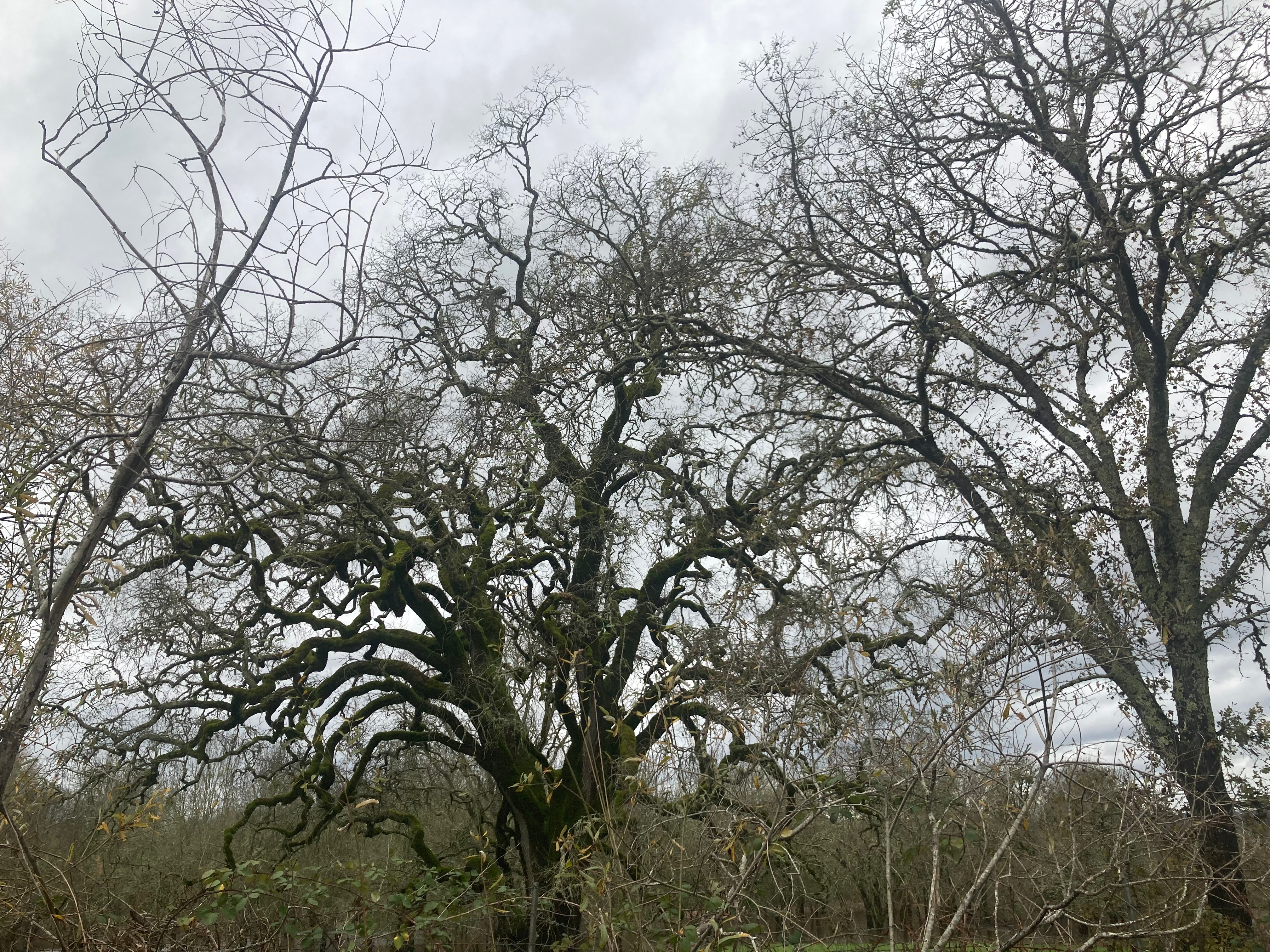
We’re in the midst of January, spring’s burst of buds and flowers are some way off, but when I went for a walk in the late afternoon alongside oaks bathed in yellow light and looked out across fields lit with a fluorescent green glow as if spread with peridot jewel, I couldn’t help but think about resurrection. Yes, it’s cold and the willows’ branches are bare. My backyard garden is bare now too—the peach, sour cherry, fig and apple all stand bereft of leaves. It’s winter. The layers of leaves have fallen away and we see the exposed structure of things. The dying back is necessary. But harbored beneath the soil and inside the roots and trunks of trees life is at work beneath surface of what looks dead, rebuilding what it needs to recreate spring. 

Culturally speaking, the US is living through a harsh winter. There’s a lot of cold. The leaves have fallen away exposing a structure previously covered over. We see behind the curtain. In the streets of the US today, as Minnesota’s governor Tim Walz has described, Immigration and Customs Enforcement (ICE) agents have gone door to door asking neighbors to tell which of their neighbors are immigrants and minorities. ICE agents have deported people without due process of law, have grabbed people, stuffed them in cars and taken them away, shot innocent people dead, wounded others. People in government positions mislead the public regarding events that occur and attempt to control others through intimidation, violence and fear. The media has likened ICE’s tactics to the Nazi gestapo in WW2. The Nazis, however, as Sarah Al-Arshani’s article in Business Insider learned from racist thought and tactics used in the America’s Jim Crow south. “Some Americans,” writes Al-Arshani, “including ones as prominent as Henry Ford, Helen Keller, and Alexander Graham Bell, began championing eugenics — a pseudoscientific ideology arguing that genetically “inferior” people should be sterilized to prevent offspring with undesirable traits…Historians said the eugenics preached in the US gave Nazis a blueprint of sorts.” Today, the US is looking and experiencing directly a resurfacing of perspectives left over from the country’s past that were never fully transformed into the country’s ideals of liberty and justice for all.
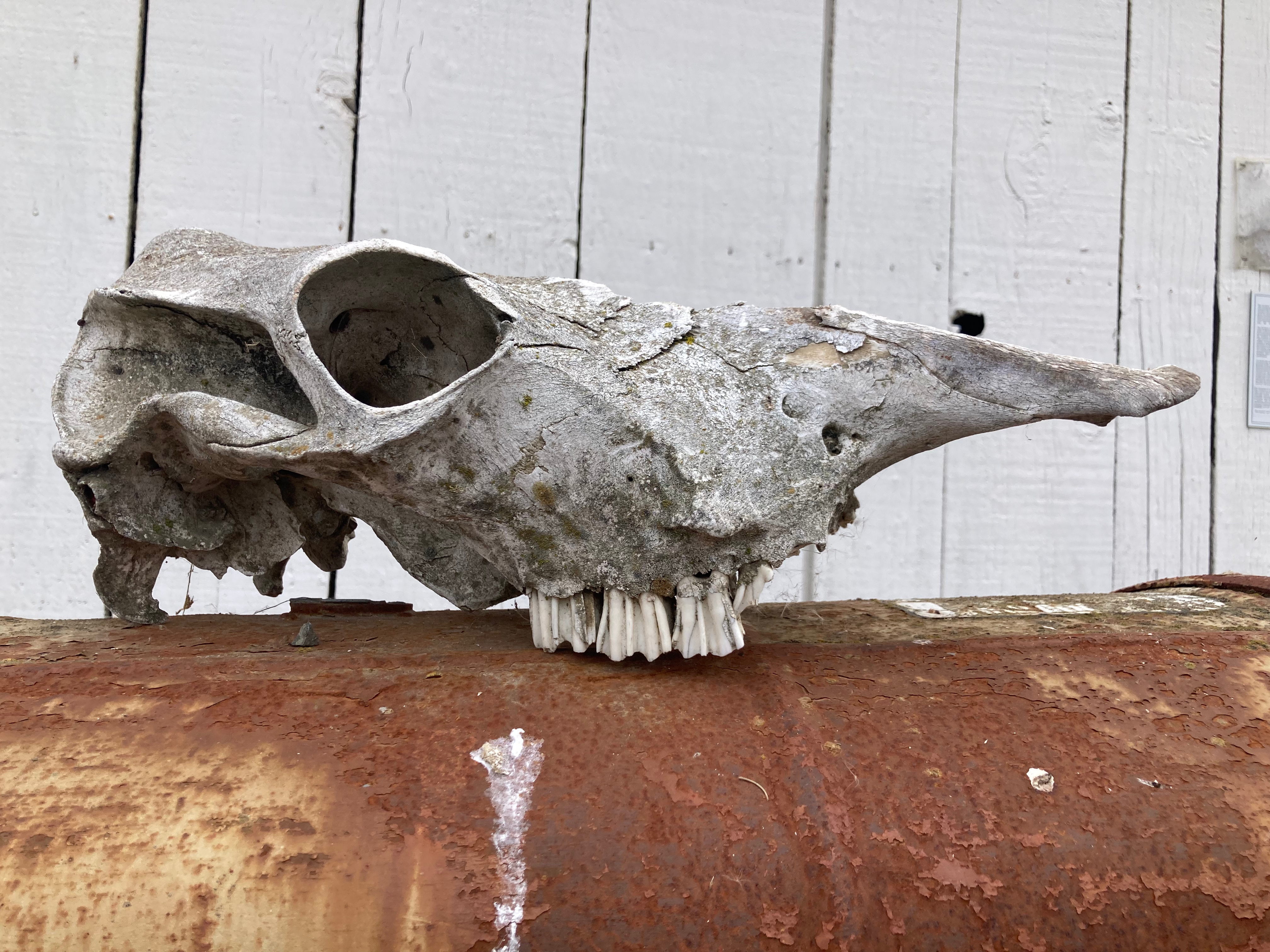
All growing things need tending. It’s important for our interior lives as well as the systems and structures we’ve created. This time of living through days of minimal light and meager foliage have me thinking how death and life are closely entwined, and how what looks like death can also be the beginning of a new life in the making.

A short time ago I attended an evening with vocal activist Melanie DeMore and the Joyful Noise choir leader Benjamin Mertz, musicians steeped in the tradition of African American spirituals. From the concert’s first moment DeMore brought the entire audience of several hundred people together in song, the whole place hummed with a life-filled felt presence. A sense of peace fell over the room. Something deeply restorative was at work in the music, as if collectively we had simultaneously come home to ourselves. Spirituals like “Wayfaring Stranger” and “Balm in Gilead” arose from the lives of people long oppressed who found a way to keep going despite grinding circumstances that otherwise might drive them to despair. The songs embody a sense of perseverance and determined focus to and be free, to rise up out of the quagmire of an environment that wanted to press them down, and to instead embrace the fire of hope for a new and better life. As the words in the spiritual sung by the Golden Gospel Singers “Oh Freedom!” state, “Oh, freedom, Oh, freedom / Oh freedom over me / And before I’d be a slave / I’d be buried in my grave / And go home to my Lord and be free.” Belief in an afterlife a world beyond the current bleak one is a hope that allows one’s spirit to press on in an austere world where comfort and ease are difficult to come by. That afterlife can be right here on earth in a new world we create together where each person has dignity and the world we live in actively works to support our wellbeing.
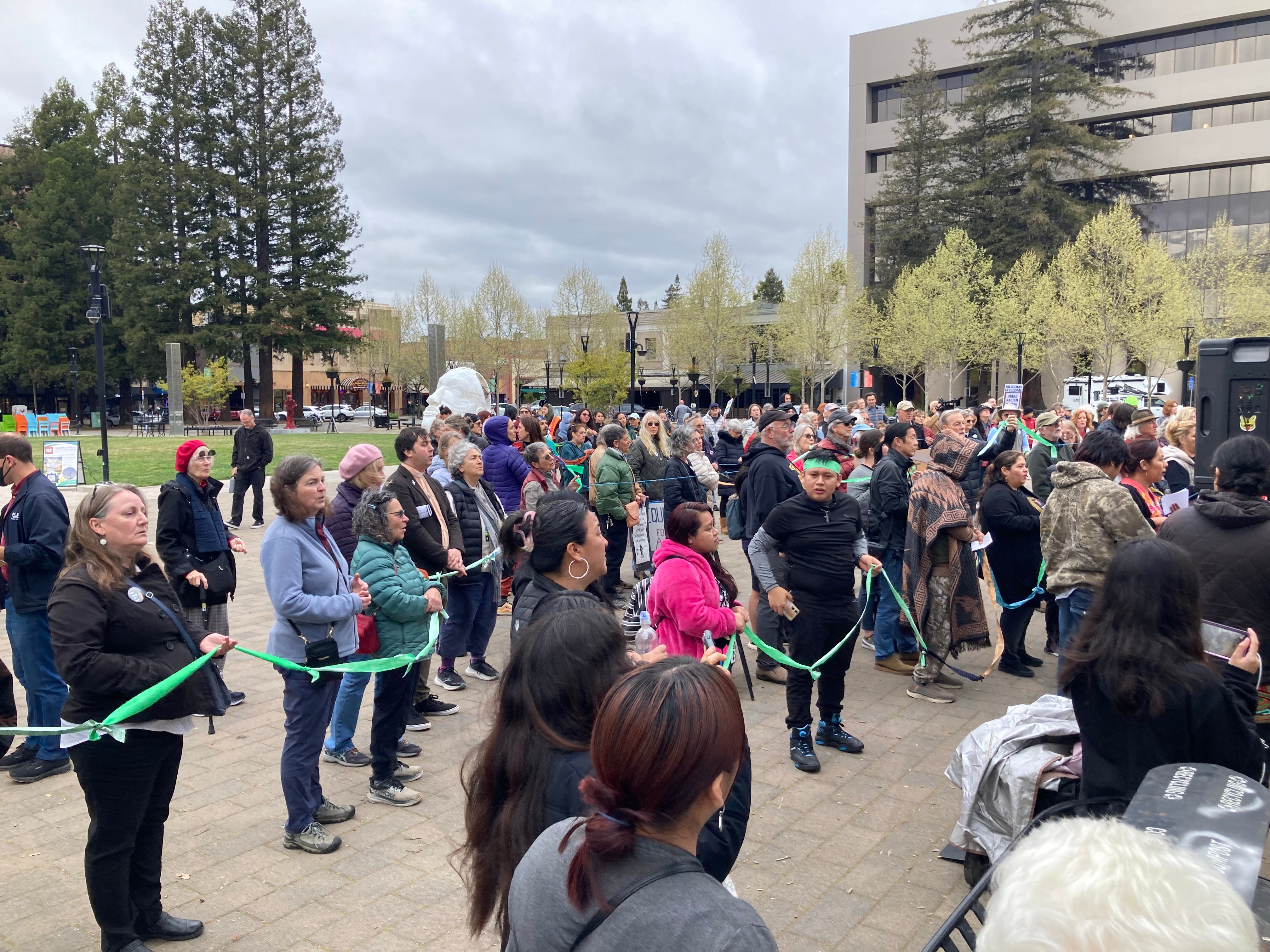
Winter’s cold months are the time to trim the grape and berry vines and thin the fruit trees’ branches so when spring arrives the plants get more light and can better hold the weight of the fruit that’s to come. What builds community, enables people to thrive, nurtures their spirit? What nurtures life-giving resources? In winter we can see more clearly where we might trim back the branches preventing us from viewing each other heart to soul. In the midst of winter, we can sing of resurrection, dream of what it would take to allow people to reconnect human to human. We can stand together with others in protest of ICE’s violence, share a dinner with new neighbors, vote for those in the next election that support our constitution and stand by the rule of law. There is life beyond the death we’ve seen. Now is the time to proclaim resurrection.

Continuously learning from our experiences, we are all students of life. The school I worked at in New Delhi, India holds the following statements as the community’s focus:
–nurturing the intellectual, physical, social, and emotional development of each student
–fostering each student’s potential to achieve and to make a difference.
–developing a service ethic and practice.
–protecting nature and the environment.
–improving student learning through research, reflection, and innovation.
–practicing transparent and collaborative decision-making while maintaining effective governance.

Aiming to live together by making the above statements foundational to our actions goes a long way toward enabling everyone in a community feel they belong and have something valuable to offer each other. They are values good to hold through all seasons and beyond days of formal schooling.
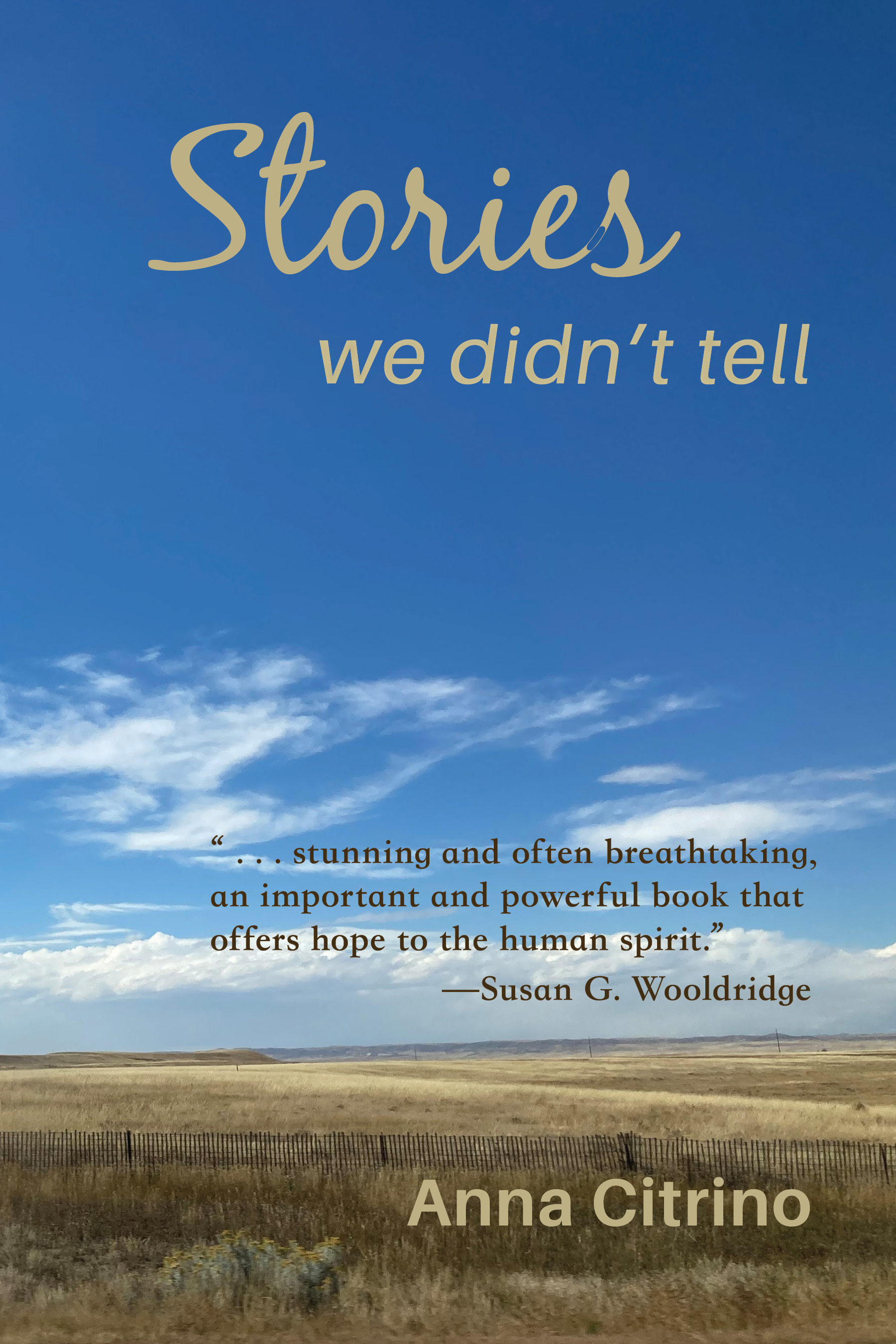
In the poem “Barn Dance With The Family” in my book Stories We Didn’t Tell, family members attend a barn dance. Day to day, they are quiet people focused on their labors. They haul hay, fix fences, do laundry, cook for ranchers, milk sheep. No matter the weather or physical challenges, sore muscles, arthritic joints or exhaustion, with resolve they carry out their tasks. But when there’s a barn dance, they show up for joy and for each other. As Avery, a character in the book who loves to dance describes at the end poem’s end,

The bass keeps rhythm as guitars strum in harmony 
while the mouth harp whines and moans
and spoons keep beat. Banjo players’ fingers
fly like bird wings and I soar, my feet 
slipping back and forth across the floor. 

A fiddler’s bow races up the scale, transports 
the crowd, spinning and sliding into a world 
of dizzy motion. The guitarist strums out 
“We Shall Rise.” Humming along, I find
an empty bench to stretch out on for a rest,
“On that resurrection morning when death’s 
prison bars are broken, we shall rise,”
the last words I hear before drifting off to sleep.  

Dancing, singing, gardening, taking time to share life and joy with those around us to build community–these, too, are resurrection activities. Dreaming and imagining are important. During the year’s dark days when hope for a different world seems far away, consider these words from Alberto Rios’s poem  “We Are of a Tribe” to keep your hope of our resurrection into new life together alive,

We plant seeds in the ground
And dreams in the sky,

Hoping that, someday, the roots of one
Will meet the upstretched limbs of the other.

It has not happened yet.
We share the sky, all of us, the whole world:

Together, we are a tribe of eyes that look upward,
Even as we stand on uncertain ground.

The sky is our common home, the place we all live.
There we are in the world together.

The dream of sky requires no passport.
Blue will not be fenced. Blue will not be a crime.

Friends from my days of working there at the school in New Delhi, India recorded “We Shall Rise,” for me. I’m including it here.

“On that resurrection morning when death’s prison bars are broken, we shall rise.” Let’s set our vision on the world we wish to see.
Uncategorized

Stepping Into the Warmth of the Day’s Full Sun

“History is not to shame you. It’s not to guilt you. It’s a part of what makes us who we are. The good, the bad, the ugly. Our nation is like a family—we have stuff that nobody wants to talk about, nobody wants to deal with. But the problem is as long as we keep burying it or try to take it out of the public conversation and take it out of the public square, then we can never heal.”
—Dr. Wylin D. Wilson.

When I read Wilson’s above statement I couldn’t help but think about its connection to the stories my ancestors held but didn’t want to talk about either because it was too painful, they didn’t have the words to describe their experience, because there was no available container to safely hold such experiences, or a variety of other possible reasons. While I imagine what my ancestors may have wanted to say about their experiences in Stories We Didn’t Tell, I didn’t write the book without concern for how readers might receive the words. As Ursula K. LaGuin has stated, “Writers know words are their way towards truth and freedom, and so they use them with care, with thought, with fear, with delight. By using words well they strengthen their souls… And their words make the souls of their readers stronger, brighter, deeper.” Many of the stories in my new book are difficult ones. My hope is that through imagining ancestors’ voices, buried stories can be heard and a healing occur.

There are truths about life we wouldn’t know without the imagination ignited through books and through writing. Reading and writing are portals where we can enter into other worlds to commune with people and places we might not know otherwise, ways of thinking, being and living we’d find difficult to understand if we’d not taken that journey as a reader or writer.  Imaginatively stepping into the circumstances of my characters’ lives in my book and the historical circumstances they lived in allowed me to understand with greater depth the kinds of challenges my ancestors faced and especially how certain social structures functioned in oppressive ways for women in the past century. Walter Brueggemann writes, “You can’t make nice with injustice. This requires fierce, brave confrontation–which is difficult for those taught to be nice.” I was taught to be nice. But I want to live in ways that enable both myself and those I interact with to live into greater wholeness. I’m realizing that sometimes growing into greater wholeness means recognizing when it’s the right time to be brave, and when the situation requires me, to be fierce.

One of the reviewers for my book wrote that Stories We Didn’t Tell “is full of characters who are brave, resilient, and flawed.” I appreciate that comment because aren’t we all flawed? I hope for the book to honor both people’s struggles as well as strengthen readers who might identify with the challenges characters in the book face. In exploring the book’s themes, I’ve sensed my own need to be brave in facing up to some of the things I became aware of in my country’s history and in the past of those who came before me.

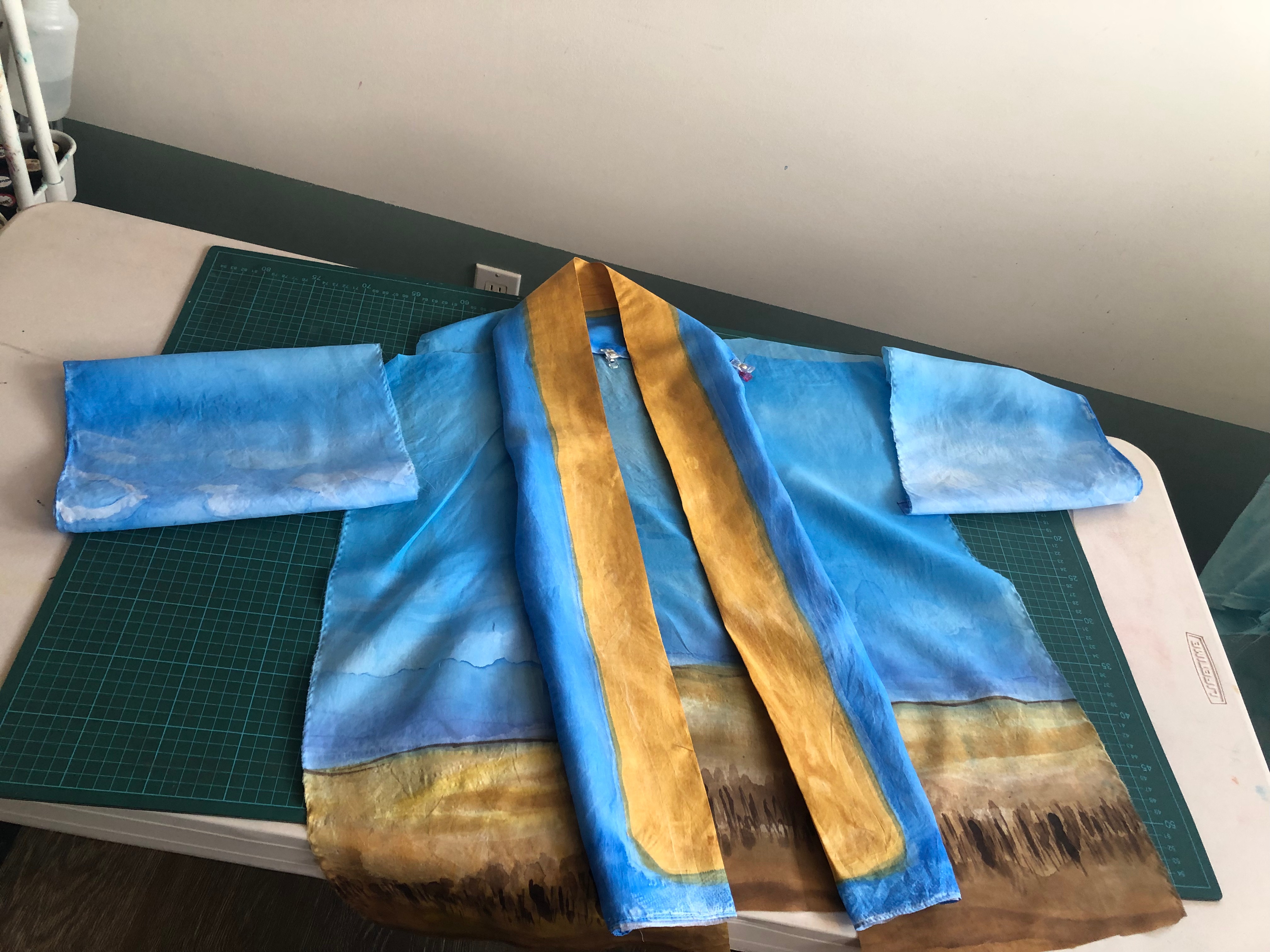
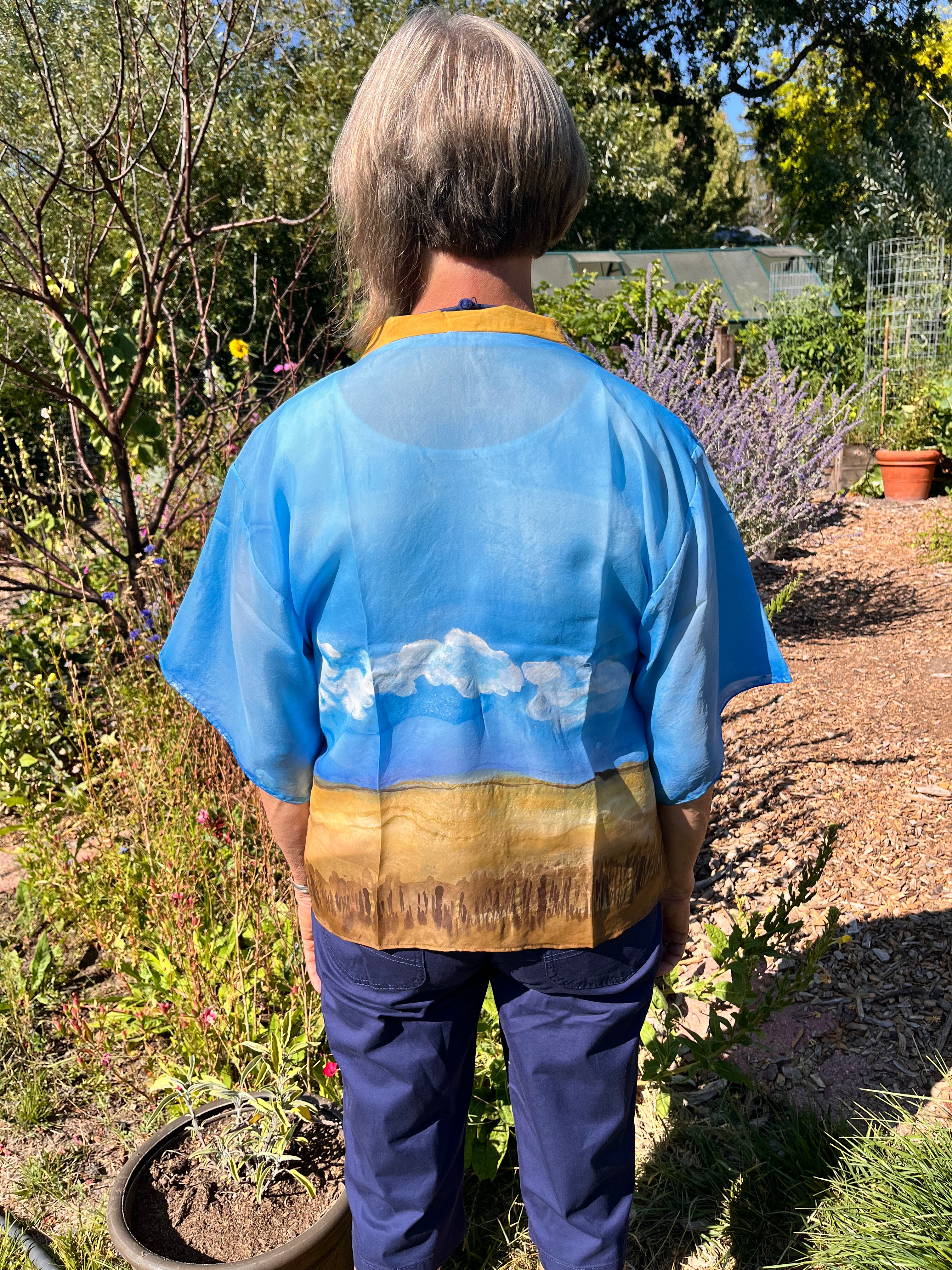
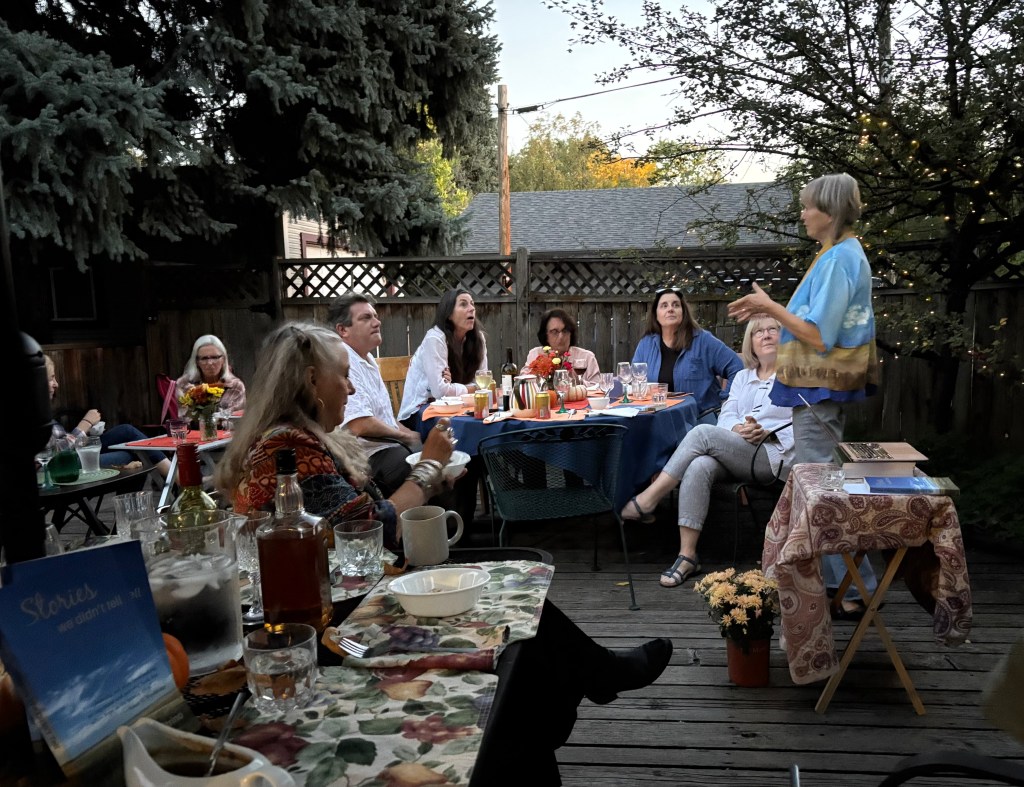
Writing a book requires serious and sustained effort. Birthing it into the world asks for an entirely different set of skills. Like my book’s character, Adah, who asked her sister to sew her a dress that ended up changing her life, I asked my friend Ann Pervinkler, of AnnsSilksofHawaii, if she would sew a kimono-type top for me and paint my book cover on it. Enfolded in an image of the book’s landscape, and enveloped in the silk of her friendship and care, I believed I could summon what I needed to introduce the book to audiences and give it the opportunity to speak.

“My art is a combo of skill, silk painting fun, and letting go. I’ve been sewing since childhood. Fiber arts since 1970,” Ann tells me. Below is her process for the kimono she made for me.

I’ve wanted to write the story contained in Stories We Didn’t Tell for decades. What an enormous gift of generosity it is to have a friend’s help in the effort to step more fully into my own becoming. Opening the package Ann sent the kimono in, I pulled away layer by layer the delicate tissue she’d wrapped it in, saw her husband’s colorful photo of a spring tree she’d enclosed with it, and lifted it’s cloud-like essence. What beauty her hands had made!

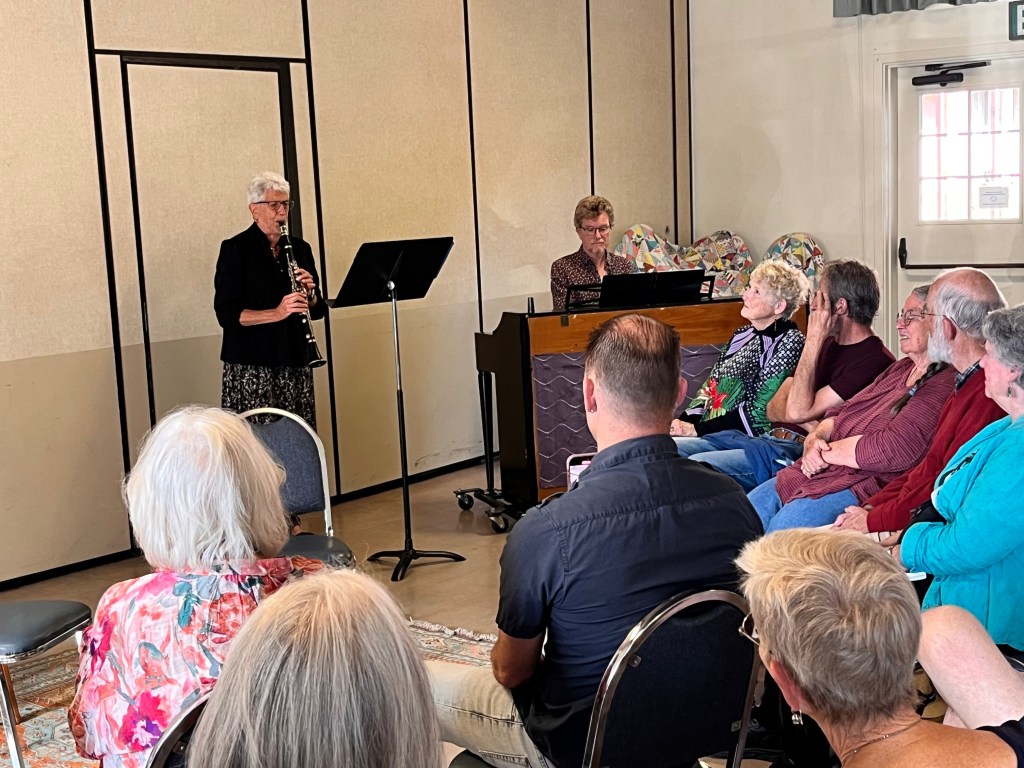
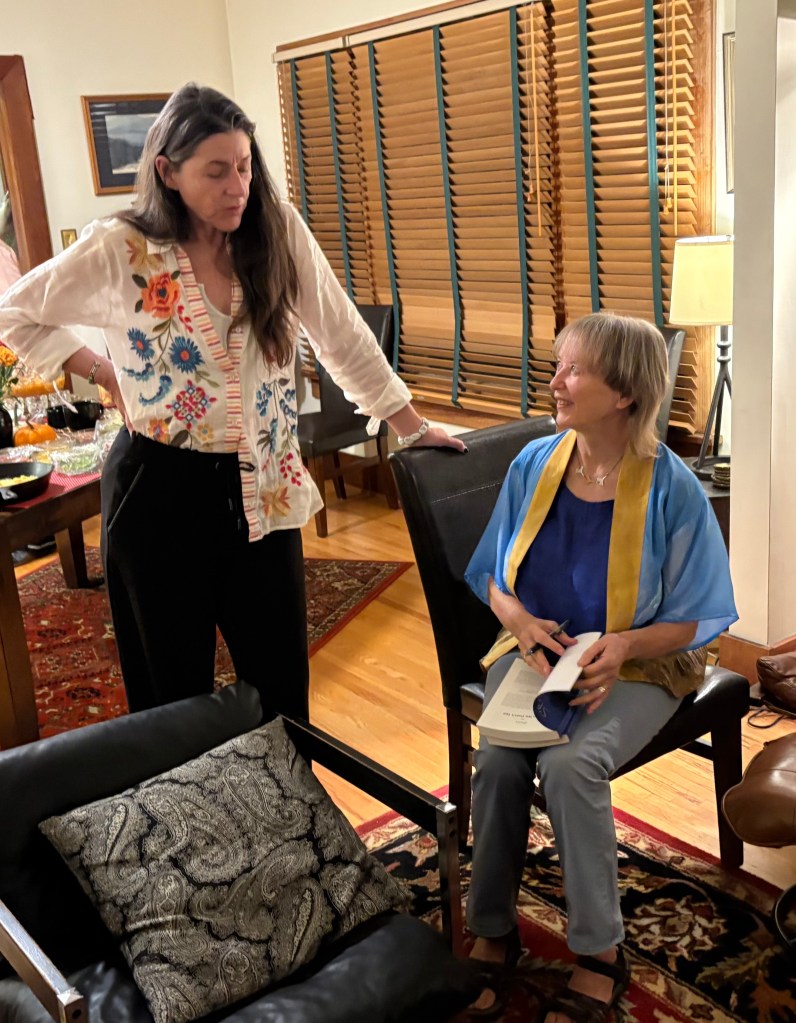
I wore the kimono for my book launch in Sebastopol, California, as well as to the reading I had a few days later in Fort Collins, Colorado, and felt wrapped in the support of not only of my friend Ann, but so many others on my writing journey. From my husband Michael’s many hours of listening to my poems in their draft form, to those who read portions of the manuscript, friends playing music at the book’s launch, and my friends the Fraziers generously opening their home and inviting friends over for a reading, my publisher’s belief in the manuscript at Shanti Arts Publishing in Brunswick, Maine, as well as my many teachers, publishers, fellow writers and readers over the years, and countless other people’s supportive efforts on my behalf, it’s very clear to me that though I might have my name on the cover, the book is but a thread in a long fabric of people’s nurturing effort and attention to my life that has allowed this book to become a reality. Ann’s generous gift to me of the kimono is a symbol of all those who have stood by me and affirmed me through the years in my effort to find a few well-considered words to say something that might add to the good of people’s lives. Thank you to all of you who take the time to read what I write.

We are meant to transform. Our flawed and incomplete selves can learn from those who bravely stepped toward creating a different future. Because we’ve lived through experiences of hurt, have known harm, been pushed aside, or discredited, because we know grief and loss, we can recognize in someone else the bravery it takes to step beyond boundaries we’ve been given or assigned ourselves to. This is what happens when my character Adah learns about the news in the town she came from in the following poem from Stories We Didn’t Tell.

LISTENING LONG AND FAR
Mesa, Arizona, 1957
Adah, age 68

I was doing laundry, scrubbing stains from
last night’s napkins when Litton came in with news
from Arkansas, “Governor Orval Faubus surrounded
Little Rock’s Central High School with the National Guard.”
Litton opened the paper and read, “Soldiers, armed
with rifles and carbines, turned back nine Negro students.”

I put down the napkins and took up the paper showing
Elizabeth Eckford in her crisp, clean clothes walking
away from the crowd that pushed her along, and the girl
behind her with the scrunched-up vinegar face,
bared teeth, and lips curled into a snarl.
That girl’s warped face pierced me.

I looked up from the paper to gaze through
the window remembering cactus’ sharp spines,
how I once accidentally backed into one
and it took a pair of pliers to remove its barb.

The steadfast set of Elizabeth’s face
is what sticks with me most, the small furrow
in her brow above her dark glasses, her head
tilted slightly down, watching where she’s going.

I don’t know Elizabeth’s story,
but recognize the look of a woman
silently holding herself together
beneath what can’t be said.

It’s not just today’s angry crowd that girl
suffers from. She’s moving into history’s
windstorm when trying to enter that school—
a cyclone, a hurricane, a blowing over
of the million little rocks men mortared together
and are used to standing on.

People can demand control, bring out their
armed guards, their tractors and chemicals,
make the world we live in a giant factory, can
process people through a convoluted system.
They can storm and shout, show up as vigilante
crowds with their curses, guns and rope.

But people like Elizabeth don’t do things solely
to keep their days happy. They do things
because beneath a desert’s angry heat
and the rigid rock weight of hard-hearted rules, life
begs to break through and rise from dry soil
with the surprise of color from land
believed to be barren.

How she’s able to walk through the crowd’s mass
of churning ire, I don’t know, except that her vision
must be as expansive as the sky, clear
as the water that streamed from the rock
Moses struck to slake the thirst
of multitudes.

I’ve traveled into the desert here
outside Mesa where I now live, sat
on a slab of sandstone and listened
long and far to the land’s
deep silence.

The sky’s expansive blue settles over me.
A wordless voice
drifts down
gentle 
as a feather—
says Earth
is borderless
belongs to itself.
Holds everyone.

I’m old, worn as a sandstone slab.
Don’t have Elizabeth’s courage
to walk through doors I’ve never entered,
but ache for the strength of a spring desert flower
to stand like Elizabeth, the open petals of her humanity
set on absorbing the warmth of the day’s full sun.

I hope you’ll read Stories We Didn’t Tell and that in its pages you’ll discover more of how you want to step into the day’s full sun of your own story.