Stories shape our lives, yet sometimes people hold their stories inside and never tell them, perhaps because they are too painful, they fear might bring shame, or words simply can’t be found to tell them. Sometimes the dominant culture we live in doesn’t allow certain stories to be told or heard. When we hear them at last, those stories can be transformative.
Born in California, I had little contact with relatives living where my parents were born and raised on the Great Plains and in South Dakota. Curious about my origins, I wrote to relatives and traveled to interview them. Those interviews, together with further research of US history deepened my understanding of what it means to be a descendant of settlers, as well as the difficult social expectations and restrictions women of my ancestor’s era confronted as they worked to create lives they wanted to live. My new book, Stories We Didn’t Tell, released in September is the result of this research. Told in the voices of a family living on the Great Plains, Stories We Didn’t Tell begins when the US wars with Wyoming and Nebraska’s Native people have ended and concludes in the mid 1980s.
Spanning an era of extraordinary change, people on the Great Plains played a significant role in creating the America we live in today. Told in interconnected narrative poems, Stories We Didn’t Tellexplores stories that reside inside and beneath the surface of our country’s history. The book opens during a time when women were expected to be wives and mothers and where the working world held few options for women. Farm women were to be mothers and housewives, President Theodore Roosevelt told the public in 1907, “whose prime function it is to bear and rear a sufficient number of healthy children.” While not suffragettes or feminists, the book’s female characters are perseverant and resilient as they seek to create the lives they want within the constraints of the time they live in.
“A masterful book with sweeping scope and depth, Stories expresses the courage, daring and despair of Americans settling the west. The themes in this book are as relevant today as ever. I can’t imagine a more wide-ranging history of western expansion with its undercurrents and repercussions… Stories is an important and powerful book that offers hope to the human spirit.” —Susan G. Wooldridge, author of poemcrazy: freeing your life with words.
Join me to celebrate the publication of my new book, Stories We Didn’t Tell, Saturday 27 September, at 1000 Gravenstein Hwy N, Sebastopol, CA 95472 Fellowship Hall 3:30 to 5:30 for readings from the book, music, food, and book signing.
Living on what was previously called the Great American Desert, Adah’s family of homesteaders and ranchers seek to eke out a life on the Great Plains amidst the effects droughts, economic depression, two World Wars the mechanization of farming, and the forging of modern America. Confronting the many challenges, Adah, seeks to define a life for herself larger than the confining one she was born into.
Books will be available beginning September 2 on the Shanti Arts website as well as other common locations for finding books.
In this uncontainable night, be the mystery at the crossroads of your senses, the meaning discovered there.
And if the world has ceased to hear you, say to the silent earth: I flow. To the rushing water, speak: I am.
–Rilke, from “Let This Darkness Be a Bell Tower”
While Nebraska and Wyoming are often areas people in the US dismiss as boring, I think my new book coming out later this year, Stories We Didn’t Tell (to be published by Shanti Arts) will change your mind about that. A tale with prairie landscape, blue skies, tremendous storms, and endless wind tides, there’s more to Nebraska and Wyoming than first meets the eye. The horizontal lines of the grasslands landscape are but the surface. Stories We Didn’t Tell will take you into the depths of life’s hardships yet instill you with heart and spirit that offers a vision for ways to live inside the challenges of our own era. As my 10th grade world history teacher Mr. Pegas, quoting Voltaire used to say, “Common sense isn’t so common.” Neither are the lives of ordinary people.
The book’s main character, Adah, a feisty female, is born into a family of homesteaders in Nebraska during a century of immense change. As in our own times, the characters in Stories We Didn’t Tell inhabit an era of environmental and social uncertainty. Adah and her family live through repeated droughts, economic depression, a pandemic, two World Wars, the Korean War, the Vietnam war, the development of mechanized farming and agribusiness, the rise of mega churches, and the arrival of birth control and arguments over women’s rights–concerns that continue to resonate today.
Currently in the US, government officials have approved the sale of thousands of acres of public land to private entities that “could destroy some of America’s most treasured places and imperiled wildlife habitat,” says Randi Spivak, public lands policy director at the Center for Biodiversity. US federal agents are pulling citizens off the streets without being told the charges against them. The US government has laid off hundreds of staff members at the National Oceanic and Atmospheric Administration, including employees of the National Weather Service, responsible for weather forecasts and alerts across the country. Donald Trump signed an executive order to abolish the US Department of Education, meaning “less resources for our most vulnerable students, larger class sizes, fewer special education services for students with disabilities, and less civil rights protections,” says National Education Association President Becky Pringle. Each of these things affects future lives in dramatic and disturbing ways.
Things we thought were solid are falling apart.
It’s true that everything changes and we’re meant to change too. The question is what do we want to change into and who do we want to become? Our lives are interconnected with each other. All beings want to be treated with care and kindness, including animals and the whole of the natural world. The thoughts we nurture and choices we make create effects that ripple through our lives, our communities, and across the world.
It takes time to learn how to leave behind the world we came from, and to create the world we want to live in, as this short piece shows from Stories We Didn’t Tell where early on in her marriage Adah describes the world she wants to live inside.
Speaking of Desire Adah, 1911 Des Moines, Iowa
We’ve moved to Des Moines. Gerard is learning carpentry and making cabinets. His father wanted his help at his shop.
Like my father, Gerard’s father is a religious man with demanding expectations. Unlike my father, he is kind.
As before marriage when living at Lenore and Jed’s house, I wash clothes, cook, keep house. There’s a lot I don’t understand about relationships and living with a man, but I do know I want to be more than simply useful to Gerard, more than a helpful assistant, chosen because I happen to be there, the way a paintbrush might be selected for a needed task.
I want to be valuable. Not for what I can do, or who I remind him of: his sister who shares my same name, his first wife who died in childbirth, a woman he joins in bed, or some role I fill, but for myself.
Gerard works at the shop all day. Evenings he labors at the desk over the business’s books he keeps for his father. We both work long hours.
Setting work aside to wander down a road hoping to discover something unexpected— that is what I long for. A spring afternoon beside the river, our voices mingled with water and a cedar waxwing’s whistle, or us walking under a cottonwood’s flame that burns into a cloudless sky—these are what I wish for—life full with possibility, open like the plains.
I want Gerard to reach for my hand, gather me to him in a smile that says I matter more than the role given me, more than all the rules about clean houses in paradise, ledgers between us balanced.
How we speak about and treat others is vitally important in creating the world we will end up living in. As Charles Eisenstein writes in The More Beautiful World Our Hearts Know is Possible, “We are all here to contribute our gifts toward something greater than ourselves, and will never be content unless we are.” Let our words and actions be gifts of life.
“Our work is to call each other home, to call to one another’s spirits and say, “This is for you. This is what it means to be human, to love and be loved. Let’s learn from one another as we go.”
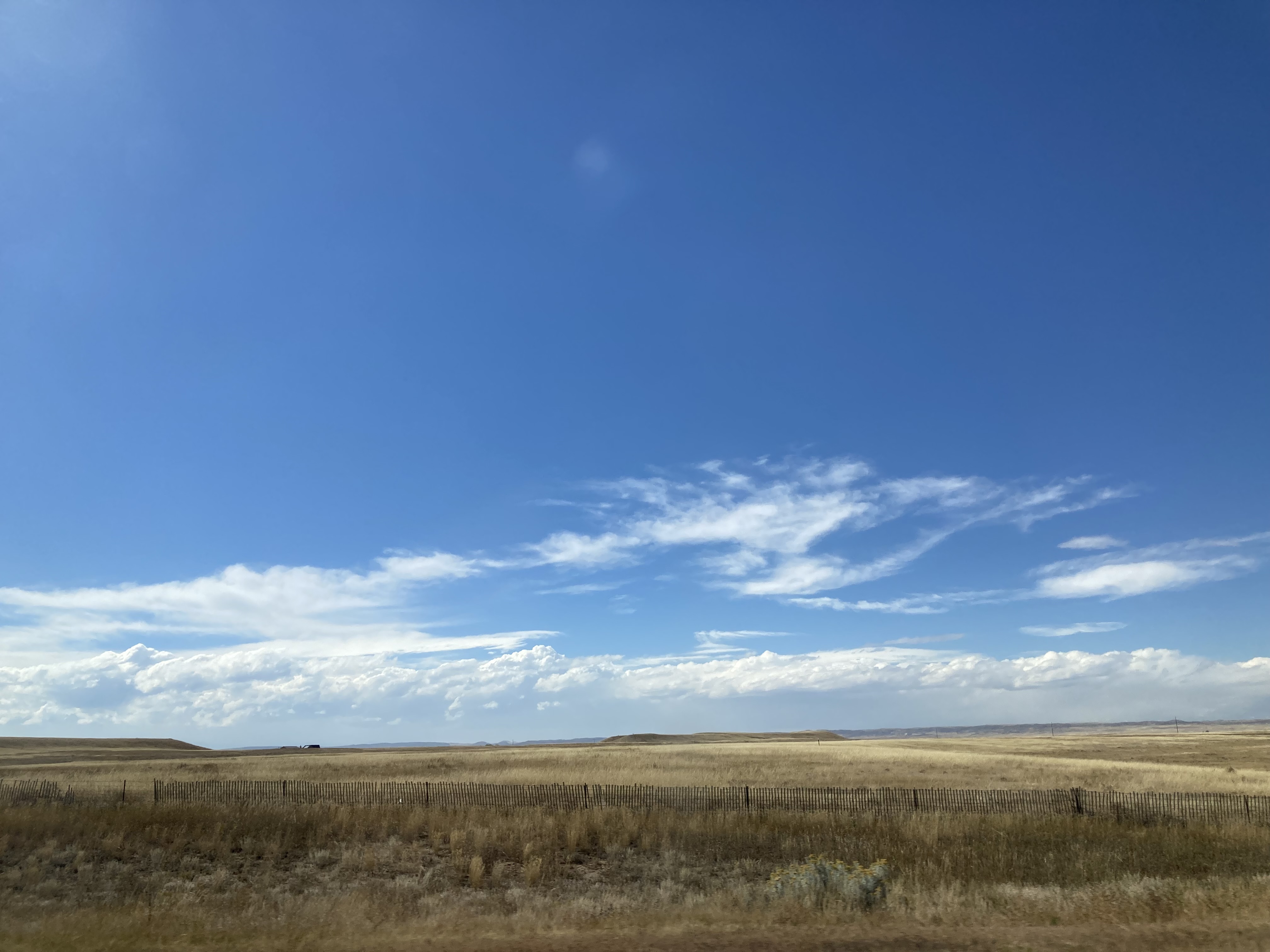
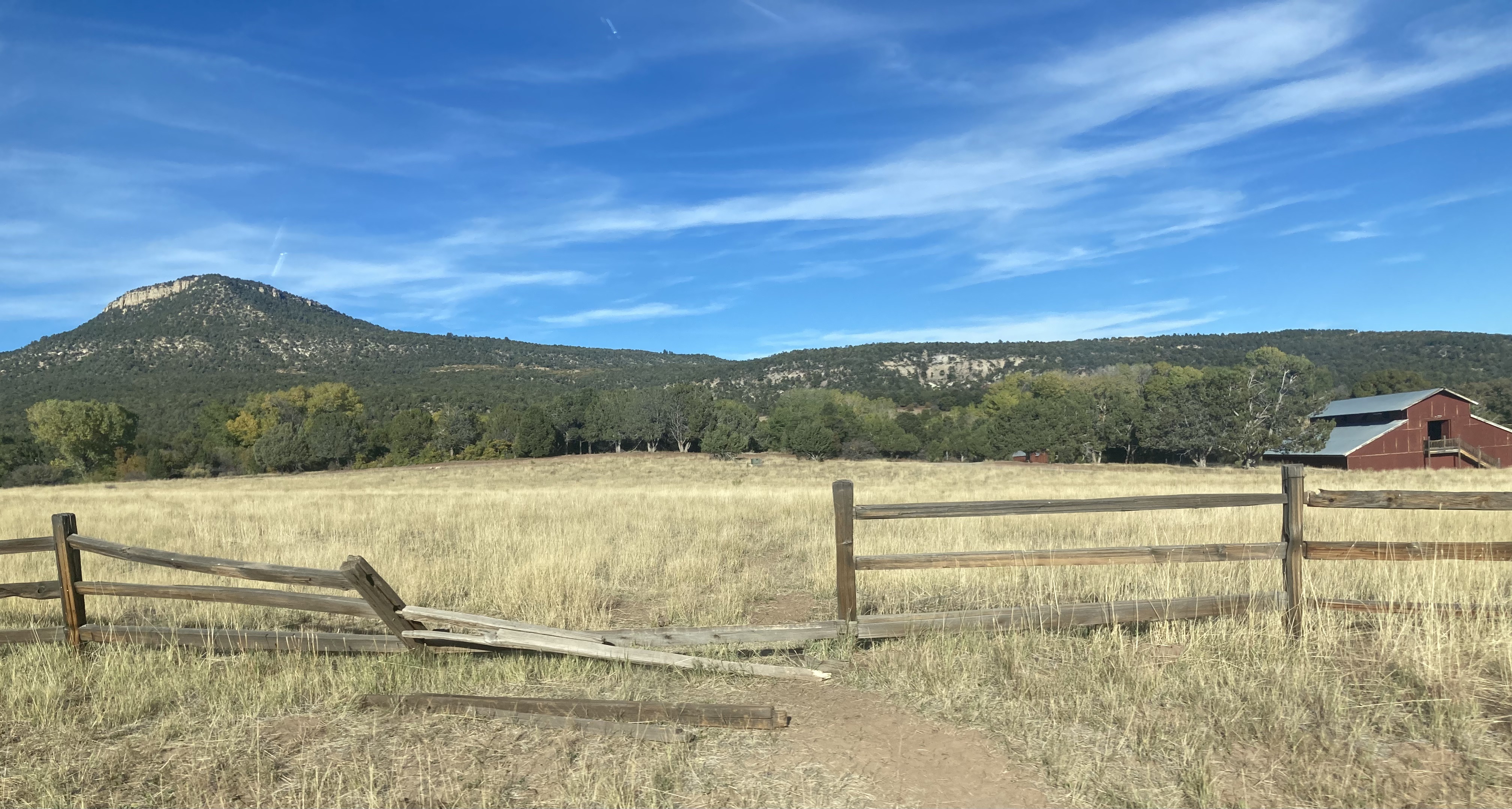
Recently, I travelled to Cheyenne, Wyoming via Fort Collins, Colorado. Though I never lived in Wyoming, I have ancestors who once did, and I wanted to experience what it felt like standing on that earth and to absorb some of the history of this part of the US through being there. Traveling across the landscape to get to Cheyenne, I felt the wide embrace of the grassy plain, and a calm, deep presence of the earth’s steadfastness. The sky holds you inside its rich, blue center and presents you with its expansive heart. There’s a sense of oneness between earth and sky, as when looking out over the ocean where the sea meets the sky.
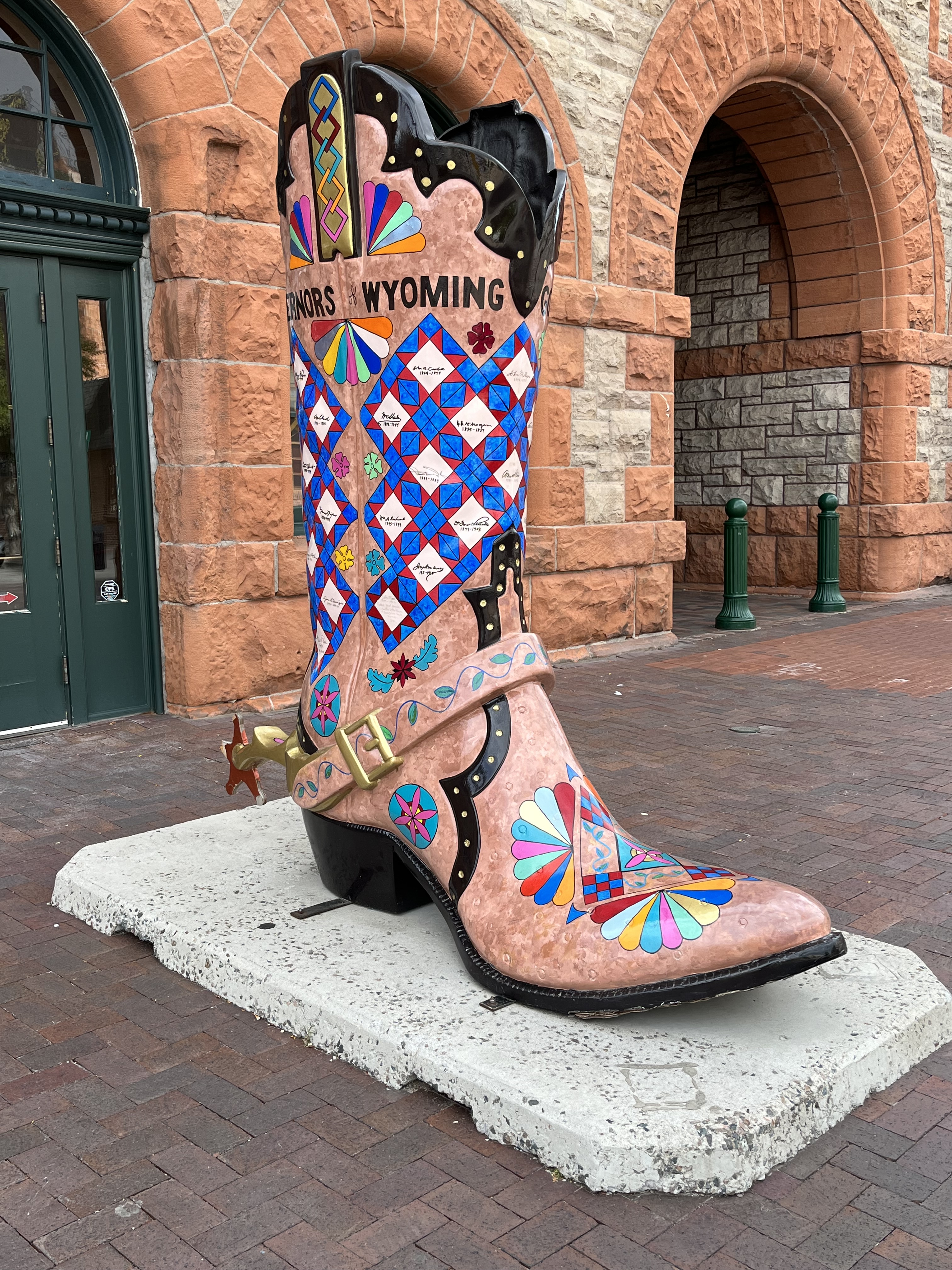
In Cheyenne, I could sense a part of American history still alive there that one is less aware of when living far from that part of the US. Wyoming’s history plays an important part in the creation of present day US. After the US Civil War, the US government wanted people to move into Wyoming and Nebraska and settle there. The Homestead Act gave people 160 acres of land for a small fee if the independent farmer would live on the land and cultivate it for five years. Building the railroads was fundamental to that effort. Homesteaders needed supplies, and the railroads brought supplies to them. The US government gave extensive grants of land to the railroads in order to encourage settlement, 175,000,000 acres, an area greater than one tenth of the whole of the US. Building the railroads decimated the bison that roamed the plains. Buffalo Bill was hired by the Kansas Pacific Railroad Company, and is reported to have killed more than 4,000 buffalo. Former trappers, turned to hunting the buffalo as well. 200,000 buffalo were killed annually, nearly annihilating the population. Native tribes depended on the buffalo for sustenance. As Gilbert King’s Smithsonian article “Where the Buffalo No Longer Roamed,” states, “By the end of the 19th century, only 300 buffalo were left in the wild.” The decimation of the buffalo in turn decimated the way of life for the plains Indians.
Driving in the final stake of transcontinental railroad drove a stake into the heart of Native Americans’ ability to sustain their way of life. As King’s article states, “Sheridan acknowledged the role of the railroad in changing the face of the American West, and in his Annual Report of the General of the U.S. Army in 1878, he acknowledged that the Native Americans were scuttled to reservations with no compensation beyond the promise of religious instruction and basic supplies of food and clothing—promises, he wrote, which were never fulfilled.” Native people were stripped of their culture, forced to assimilate for survival, in turn this resulted in the US winning its war against Native Americans and their possession of the land.
Cheyenne is known as one of America’s windiest cities. It’s perhaps less well known that in 1882 Cheyenne was the wealthiest city per capita in the world. Wyoming was a lucrative location in those early days, where cattle barons sunk millions of dollars into their deep pockets with the extensive herds they owned. Electric lights brightened streets, and the city had an opera house and a men’s club serving fine food, liquor, and fancy cigars. In 1886 and 1887, however, subzero temperatures and blizzards killed thousands of cattle at one stroke, an event referred to as the Great-Die Up, bringing an end to cattle drives across free range.
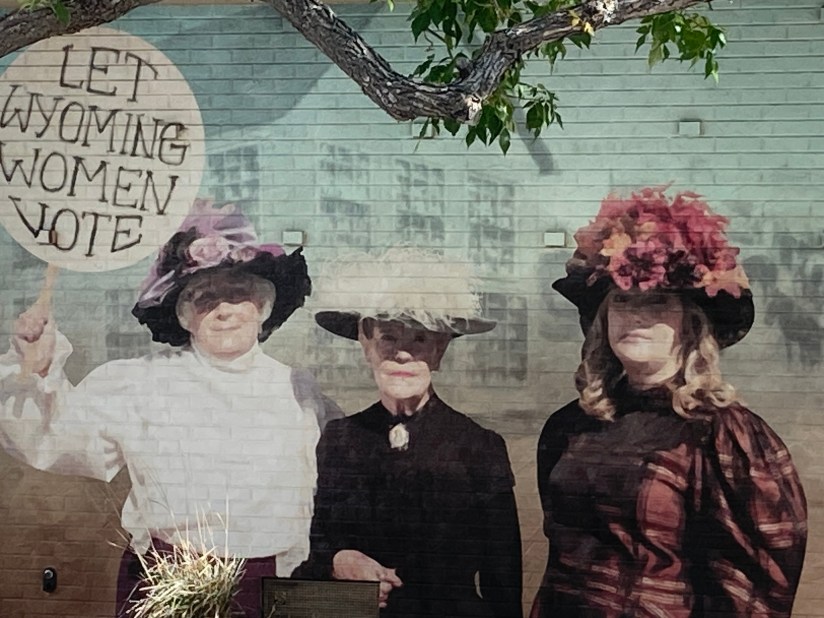
What we become isn’t usually the result of a single story. We live in an interconnected world. We inherit layered histories and stories as well as layered silences. Our understanding of who we are and how we connect with the world around us is lifelong work. While bison and Native American populations were being exterminated and crushed the women’s suffrage movement was also occurring. In 1869 women in Wyoming were the first in the US to receive the right to vote.
As Potawatomi American writer Kaitlin B. Curtice points out, in Simian Jeet Singh’s interview with her on “Anti-Racism as a Spiritual Practice,” America is “a settler colonial state and it’s difficult to reckon with.” Coming to terms with our past is and what it suggests is challenging. Nevertheless, in recognition of the difficult and problematic history regarding how America came into being, I want to better understand and respond to the place I inhabit in American culture and what that means for how I should live.
Coming home to ourselves means in part to understand what our home is and the forces and people that came together to create it. As May Sarton writes in her poem, “Now I Become Myself,” it takes “Time, years, and many places;” perhaps one will be “dissolved and shaken,” as she describes as well. History is complex, our own, and that of a nation or a culture. We are many worlds in one body. Louise Dunlop, in her book, Inherited Silence, writing about how the difficult and uncomfortable history of how America came into being writes, “Settler people experienced a different wounding in this terrible history. We, too, need healing practices to transform the shame and trauma we carry and continue to pass on. That shame is the root of our silence. We need songs poems, inspiration, spiritual practices, and affirmation that make it positive to acknowledge our history.”
Our very existence depends on the support the natural world offers us, as well as the support of people all around us and what we’ve inherited from those who came before us though we may not even know their names or be aware of their actions. I come from a line of settlers, though much of their personal stories I don’t know and have only learned from reading about the history of the time period, the area, people’s histories, and oral stories. Because I know little of my ancestors’ stories, and because they didn’t tell their stories, as a way to try and understand their lives and their challenges, I’m imagining what those stories might be and am writing them. I’m calling to the spirits of my ancestors, so to speak, saying, “This is for you. I’m reaching to understand more of what it means to be human. I want to learn from you.” Recently published in Waterwheel Review, “Remembering Adella,” is written in the voice of a great aunt imagining the voice of her mother, a woman of the grasslands.
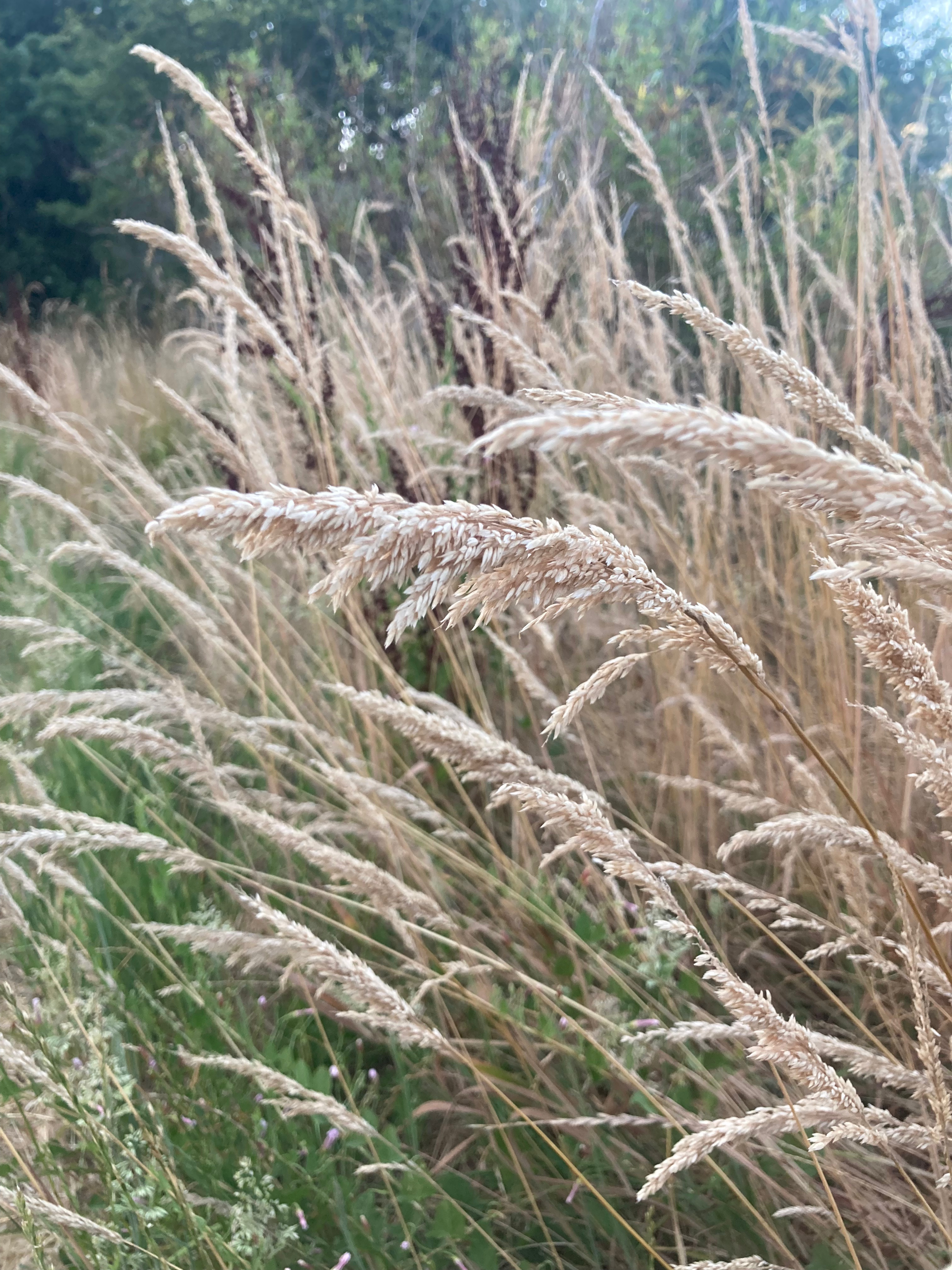
Your story may not connect to a grassy plain or rich blue sky. Your story might be rooted in the tropics, a cityscape, snowy mountain or desert, but all stories touch each other on our great web of interbeing of life on this planet. Whatever your story, I wish for you to find a way to be at home, that all wounding from your past be healed, that you find peace with yourself and with those around you. I leave you with this 1888 Antonio de Torres guitar piece, “Home,” played by Andrew York, and a photo from my home in California.










 Anna Citrino---Poetry, Place, Pilgrimage