Uncategorized

An Inheritance of Open Space

Instructions for Having a Soul”

Take it out in the rain sometimes. 
It has vast, invisible wings that gather dirt 
and need rinsing. 
When it tries to kill you 
that is because you’ve forgotten 
to let it look into someone’s eyes 
for longer than a minute. 
It needs that the way a bee needs nectar 
in the early morning dew. 
Every so often, take it on a journey. 

an excerpt from—Joseph Fasano

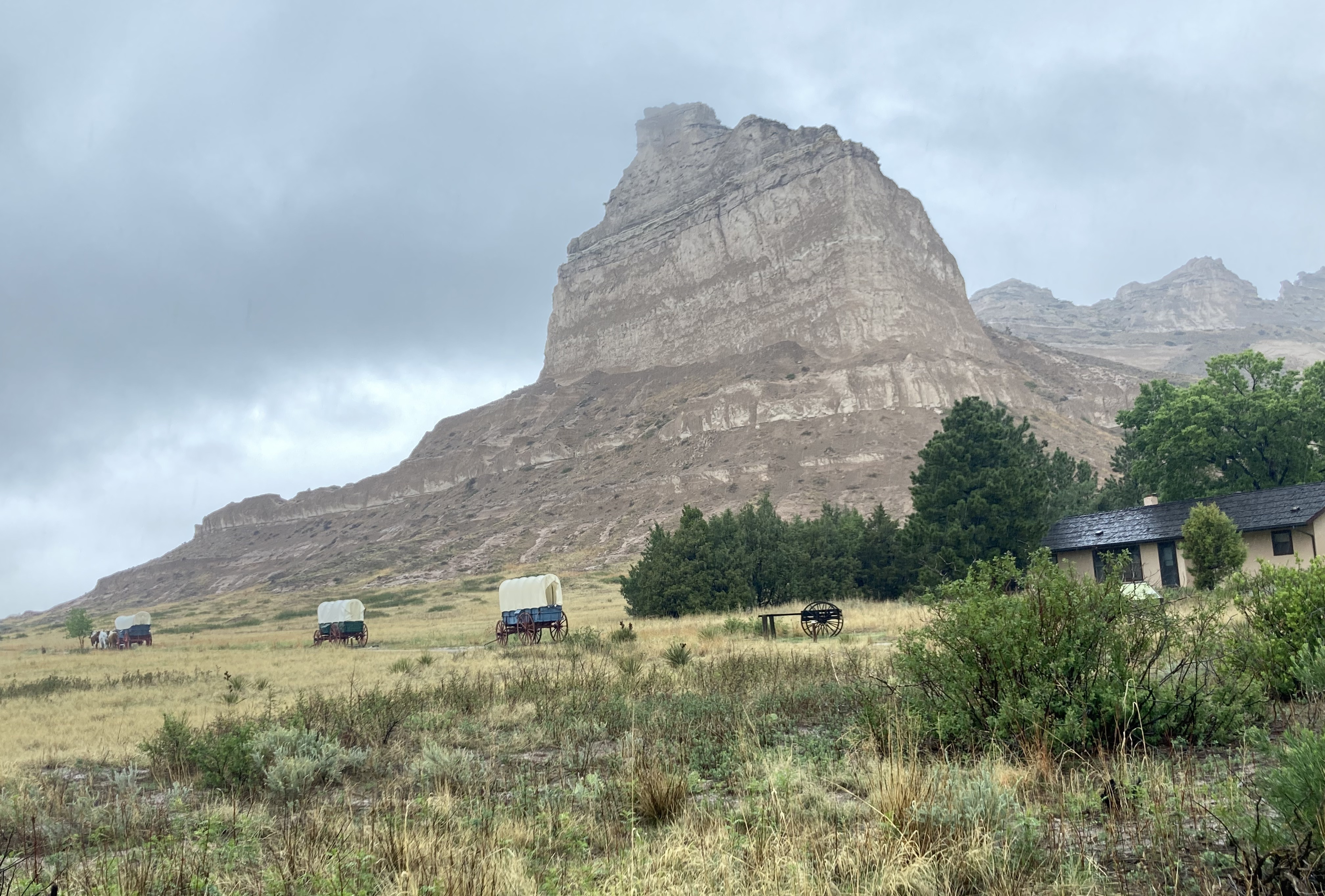
This past June I took a trip to visit the place my grandparents and great grandparents lived and worked. Though I never lived there, Nebraska, Wyoming, and South Dakota are central to my heritage. It’d been years since I’d visited these states. I wanted to place my feet on that earth once more, and sense how it felt. After writing Stories We Didn’t Tell, I wanted reimagine the lives of my ancestors who made their way through an era of extreme change during their lives while once again walking the land they walked. I wanted to stand on that land, breathe its air, and let my eyes gather the landscape into my soul. I wanted to deepen my awareness about what it means to inhabit such a place, and it to inhabit me.

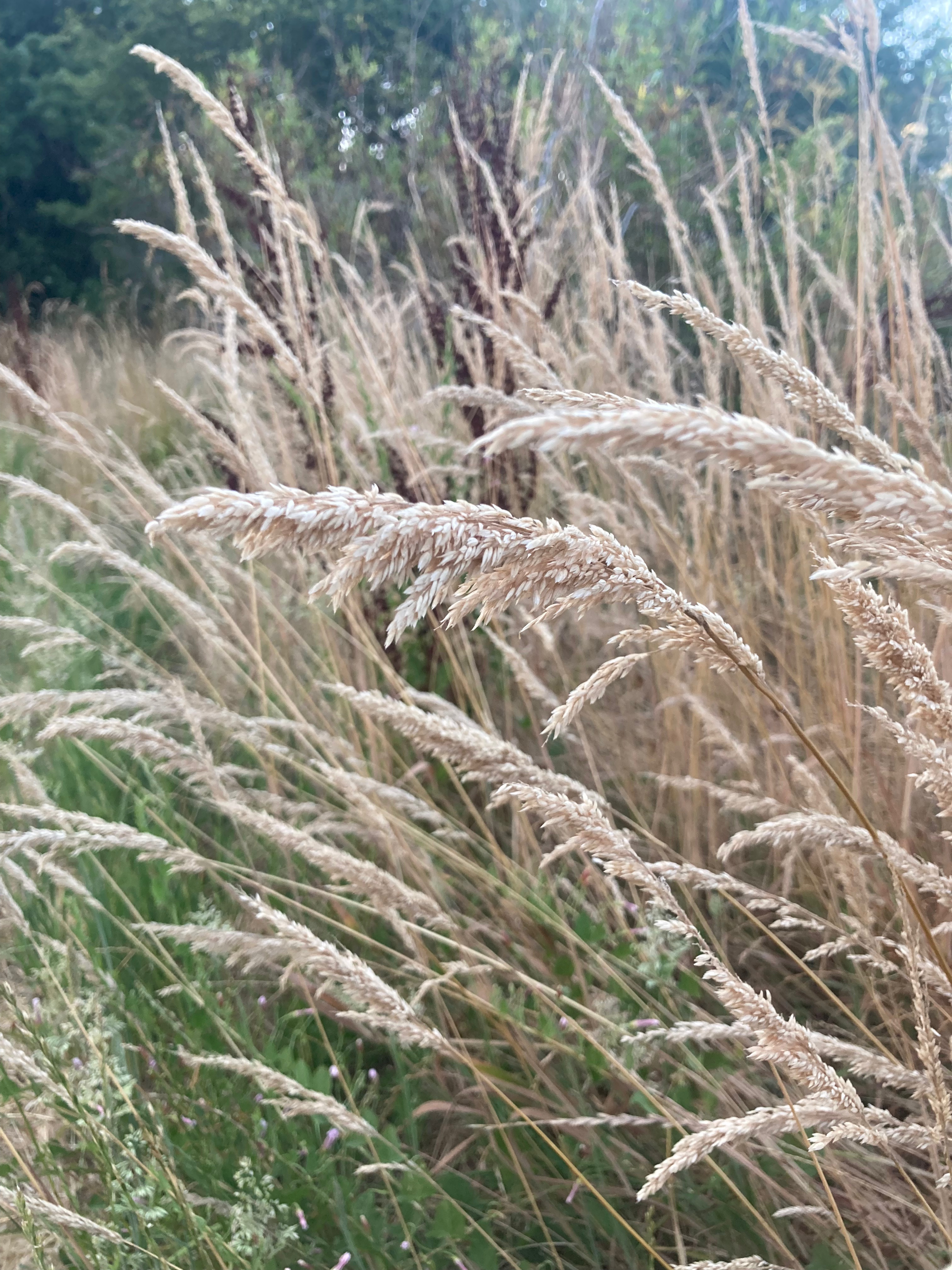
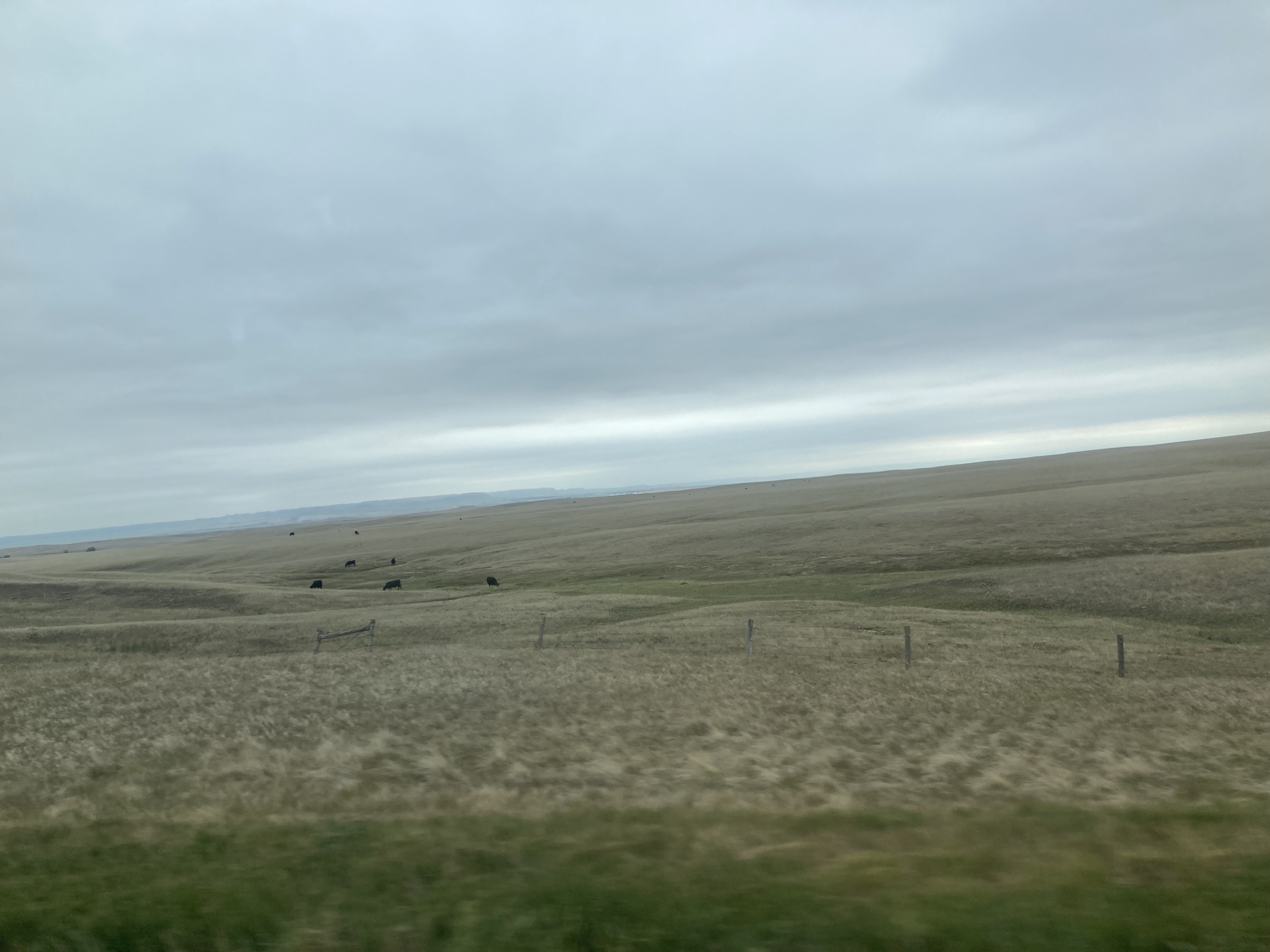
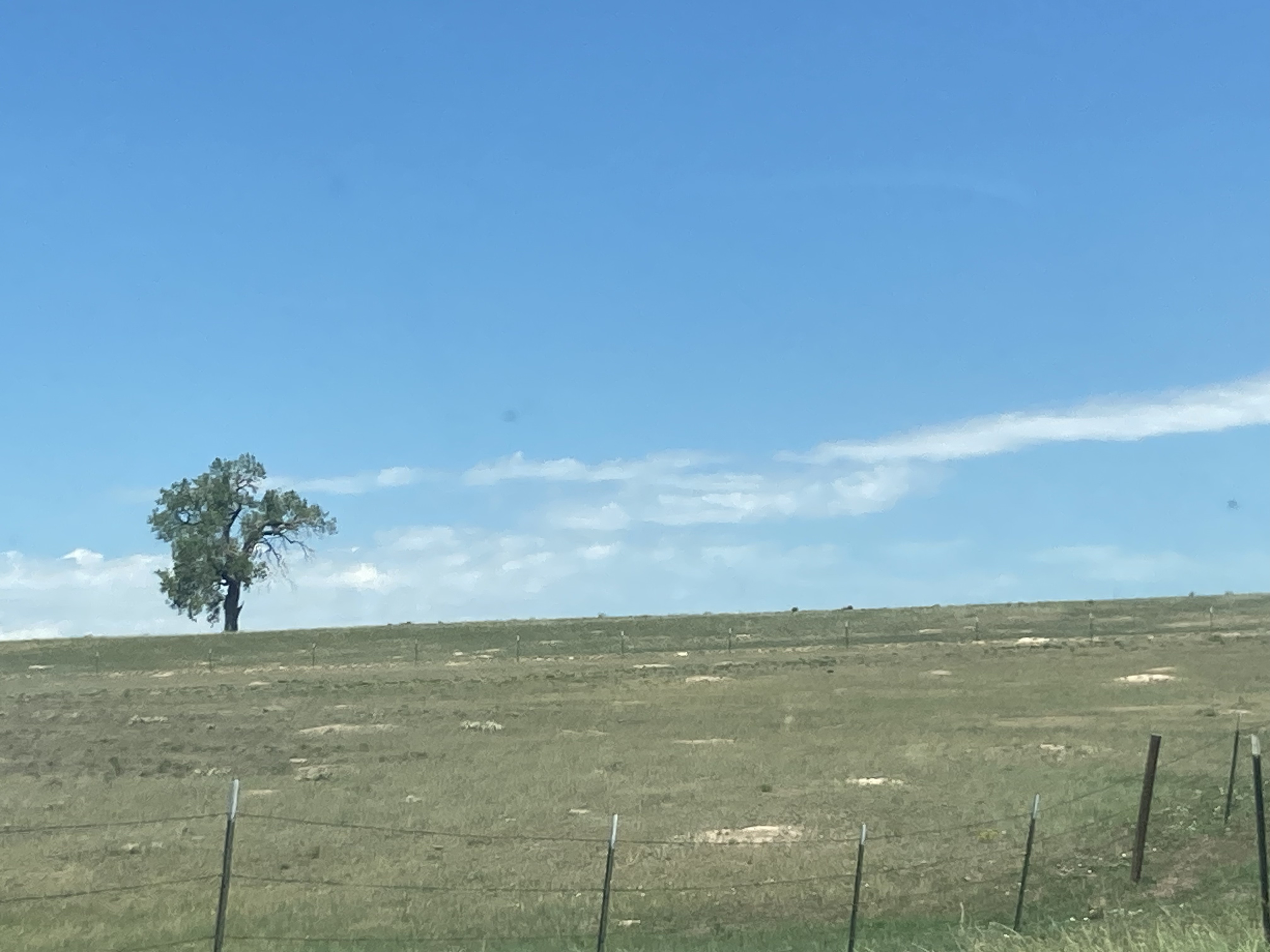
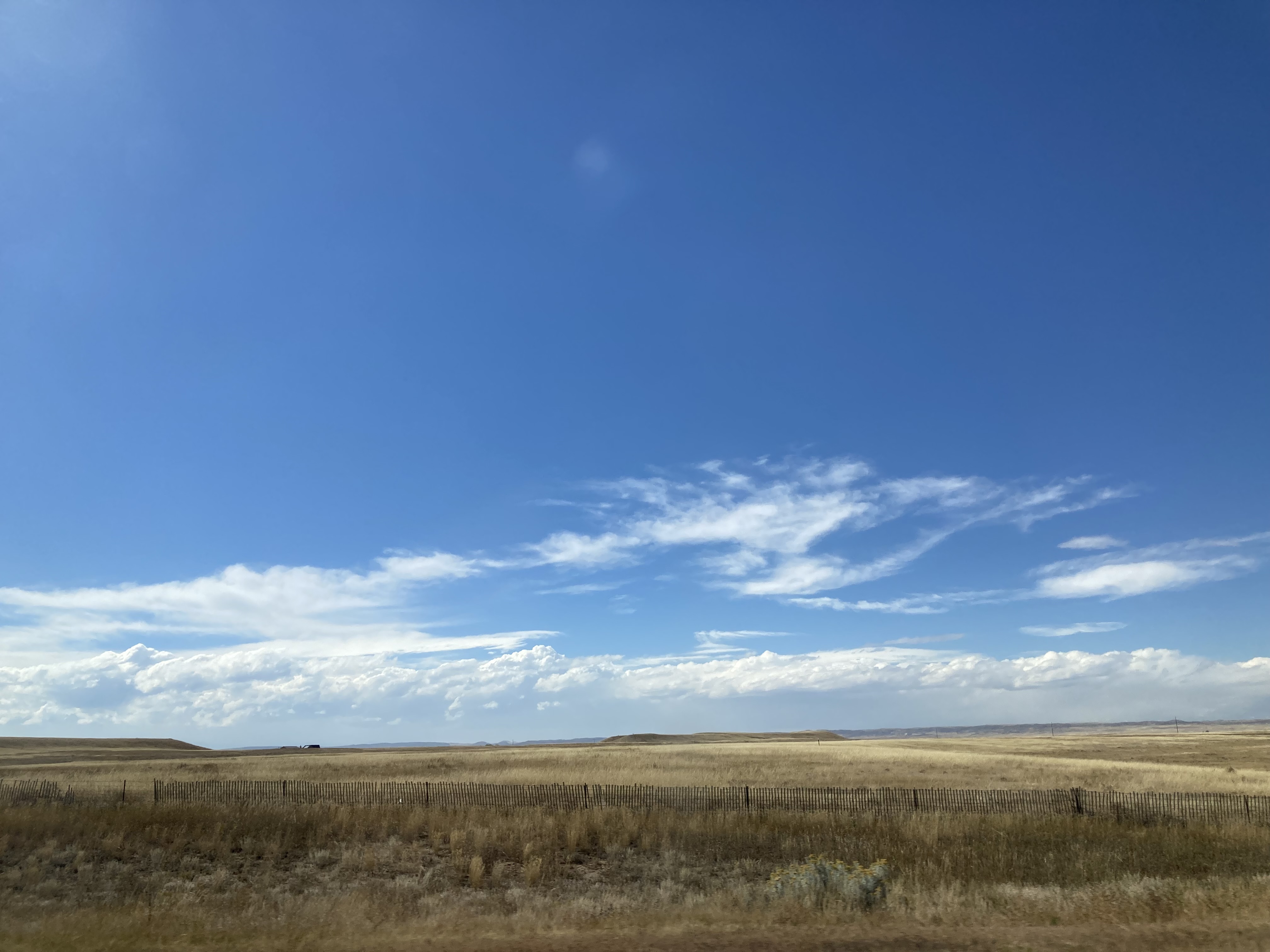
When driving from Hot Springs, South Dakota to visit Fort Robinson outside of Crawford, Nebraska, we stopped the car and got out to take in the Oglala Grasslands, a vast expanse of prairie expanding in every direction. Clouds hung low. Wind whispered through the grass, quivered wild flowers’ purple tips. As I stood listening, absorbing the scene, I imagined my great grandparents walking and working the land. There’s a kind of voice in the voicelessness of the grasslands that speaks of time, endurance, and the strength of perseverance through all kinds of weather and change. The land’s silence fell into me like a pebble dropped into a deep well. Even now, if I go back to that moment in my mind, I feel the ripple effect of standing on that ground in all its solidness, a profound, ancient quiet reaching into my bones, wrapping me in it like a shawl.
Born into an era where many people were small farmers living in remote landscapes with no running water or electricity, life changed for my ancestors with the arrival of telephones, then the radio, and later the automobile with the subsequent development of highways. My grandparents survived the Great Depression, observed the airplane’s invention, and the arrival and departure of two world wars. Small farms and ranches mostly became a thing of the past as the country turned to the use of pesticides, big machinery, and industrial farming. My ancestors experienced the emergence of television, witnessed the moon landing, the rise of women’s rights and civil rights, and the emergence of environmental awareness. Combined together, these changes fundamentally and dramatically altered the way we live and function as a society.

My grandparents and great grandparents’ lives and the communities they were a part of, along with everyone else’s ancestors, helped shape who we became as a nation. Learning more of a place’s history can give us a clearer picture of what in our culture may have been invisible or hidden in shadow so we can make better choices that will affect our future. We don’t live individual lives isolated from the past or from the actions of people across our neighborhoods, cities, country or the world. The way we respond to events and the choices we make or fail to make today in connection with those events shapes our lives now and in the future.
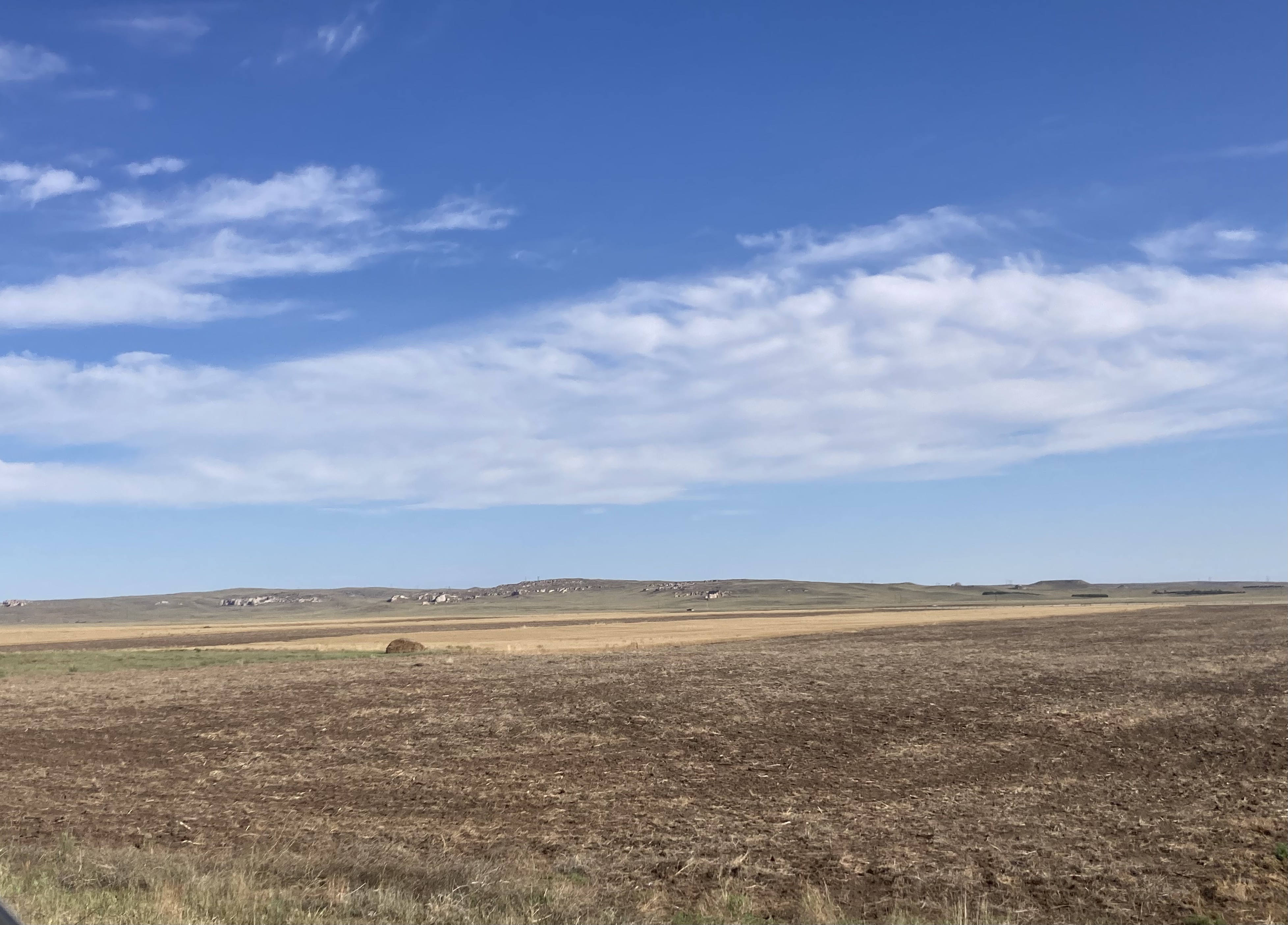
landscape outside Chugwater, Wyoming

I lived outside of my home country for more than two and a half decades. Each culture taught me different ways of seeing the world that arose out of their history, traditions, and interaction with the land the people inhabited. Returning to the US, I realized there’s a lot to learn about my country’s history that I was unaware of earlier. Writing both Stories We Didn’t Tell and A Space Between helped me see a fuller and more detailed picture of my cultural roots, heritage, and my country’s history. One book that has been especially helpful for me to understand current dynamics and tensions in the US is Colin Woodard’s American Nations: A History of the Eleven Rival Regional Cultures of North America. (You can see a map of the different cultural nations inside of the US map here and hear Woodard talk about some of the main points in his new book on this topic here.) The various values and characteristics of the nations people had previously lived in who first came to what we now call the North American continent, continue to affect us today, explains Woodard. One current example of this tension are those organizations in the US that work to preserve and protect forests such as American Forests, The Conservation Fund, The Nature Conservancy and the National Forest Foundation. “Recognizing “enoughness” is a radical act in an economy that is always urging us to consume more,” writes Robin Wall Kimmerer in her book, Serviceberry: Abundance and Reciprocity in the Natural World. “When an economic system actively destroys what we love, isn’t it time for a different system?” A different perspective, however, is taken by the current US administration, (influenced by values prevalent in the area Woodard calls Tidewater and the Deep South.) This month the US president’s administration proposed opening nearly 45 million acres of national forest land across 37 states to commercial logging, mining, and road construction.

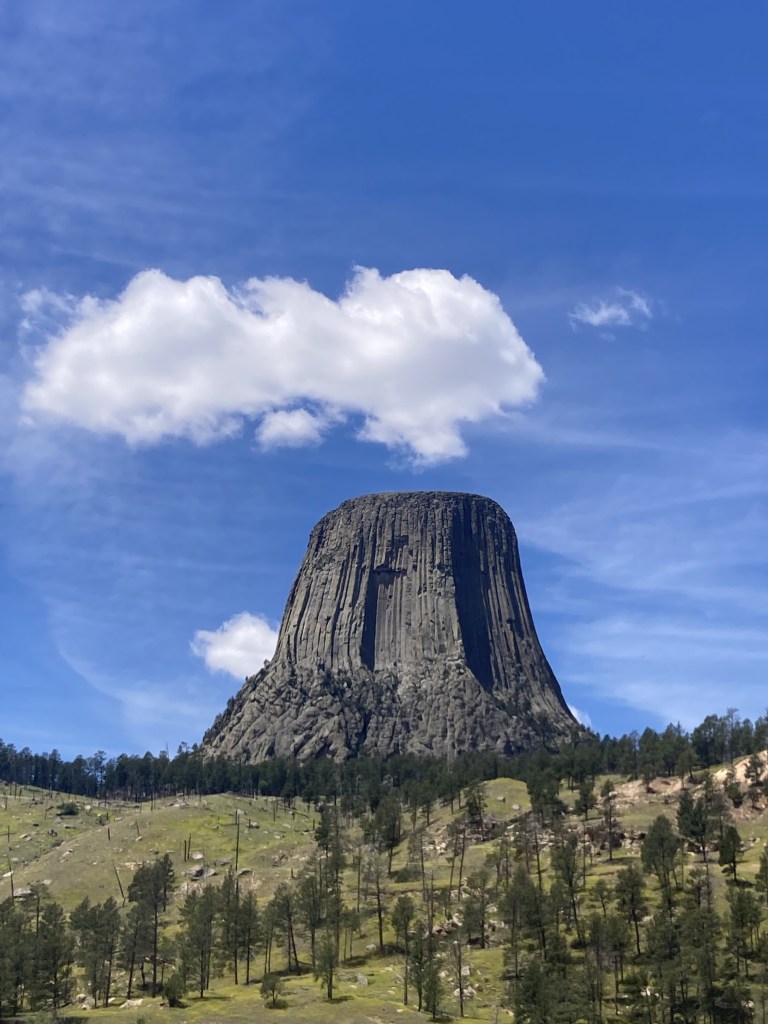
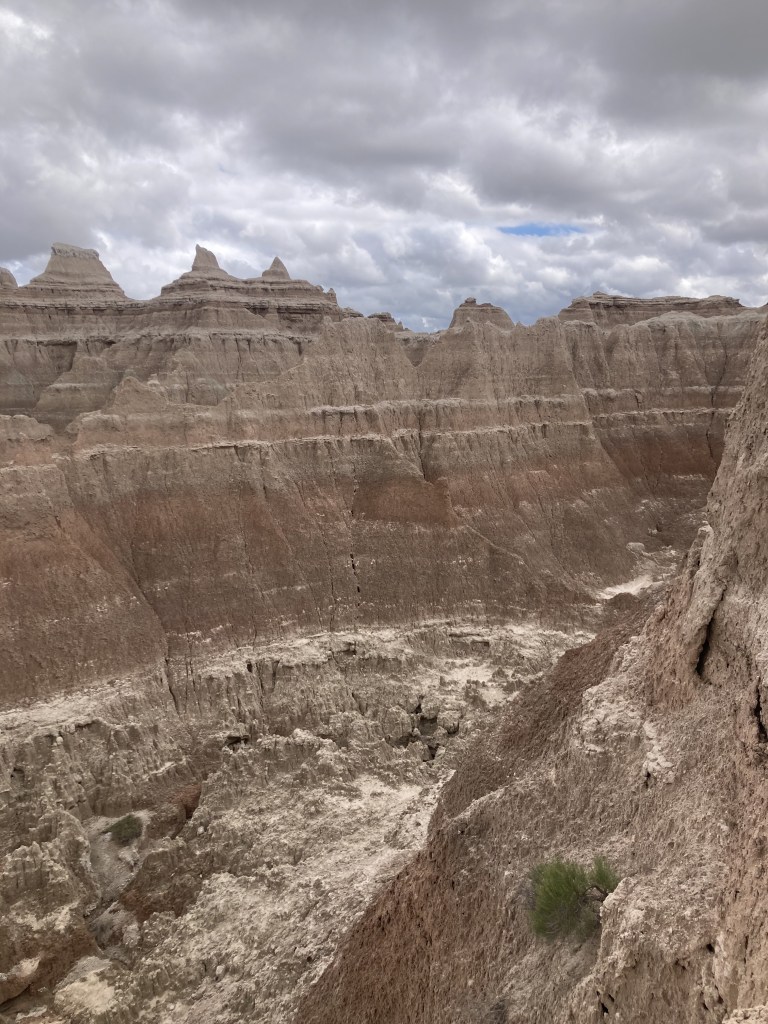
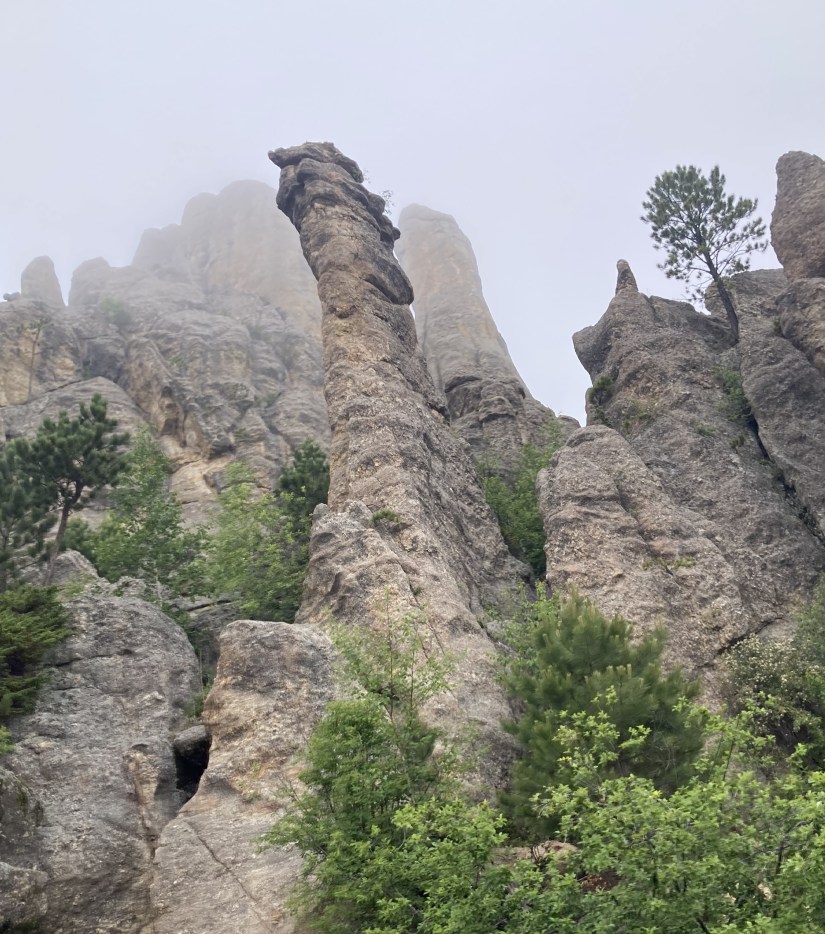
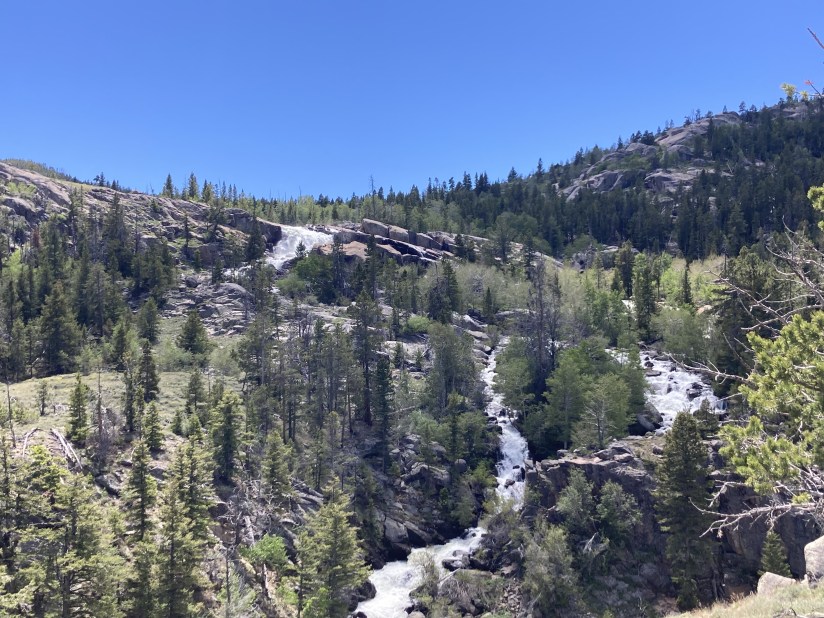
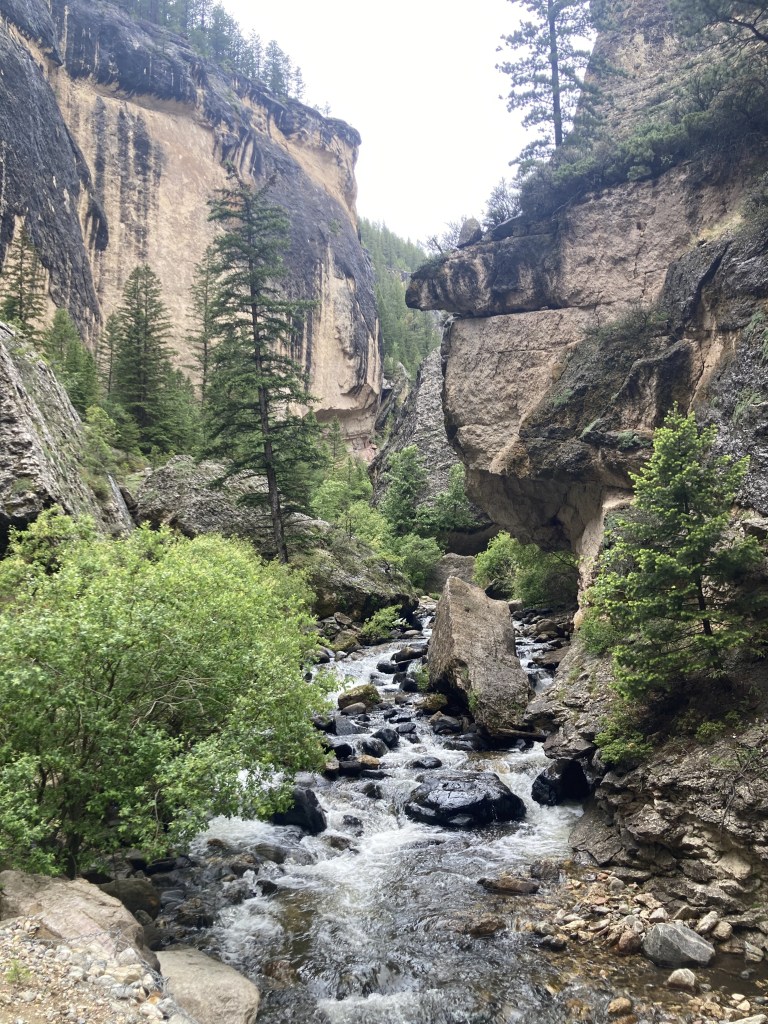
Why must the natural beauty of open spaces offer constantly be pushed aside in the name of business and development? Hiking through Sinks Canyon and Crazy Woman Canyon, visiting Devils Tower in Wyoming, driving around the area of the Badlands and through the Needles Highway in South Dakota, would be enough, it seems, to encourage us to answer Kimmerer’s question with a resounding yes, we need a different system, a different way of thinking. These areas are sacred places full of beauty. The entire area evoked in me a continuing sense of awe, the kind I’ve felt when staring up at the night sky sensing my small place in the cosmos. Open landscapes nourish us and help us regain our souls.
In a recent conversation with Bebo Franklin, author of The Harbinger of Elemdale about about the creative process of authoring a book Franklin writes, “The deeper I went into creating characters and understanding why they might behave as they did, the harder it became to reduce people to simply good, bad, broken, etc. They became much more complicated.” Writers create worlds in their books that help us look at the worlds we live in more closely. We might not be authors, but we’re living the stories we write with our lives. We’re flawed people trying to create the story we want to live in together, a life we want to inhabit as well as pass on. Wherever you live and whoever you are, we’re part of the creative process of life on this planet. Our character manifests itself in the place we live and the history we create. What we do ripples out through time to touch the world around us both now and in the future.

We can choose to be intentional about the transformation we bring about within ourselves and the world. We can make a practice of taking time to purposefully notice the natural world and its contribution to our lives. Go into your back yard and spend time with your favorite flower, stroll through a city park listening for birds, drive, bike or walk in some open space your heart calls you to and let that place speak to you. Try one of these fifty seasonal meditations from Emergence Magazine. “What if our metrics for well-being included birdsong, the crescendo of crickets on a summer evening, and neighbors calling to each other across the road?” writes Robin Wall Kimmerer. That’s the kind of world I want to live in.
Uncategorized

The Extraordinary Lives of Ordinary People

Stories shape our lives, yet sometimes people hold their stories inside and never tell them, perhaps because they are too painful, they fear might bring shame, or words simply can’t be found to tell them. Sometimes the dominant culture we live in doesn’t allow certain stories to be told or heard. When we hear them at last, those stories can be transformative.

Born in California, I had little contact with relatives living where my parents were born and raised on the Great Plains and in South Dakota. Curious about my origins, I wrote to relatives and traveled to interview them. Those interviews, together with further research of US history deepened my understanding of what it means to be a descendant of settlers, as well as the difficult social expectations and restrictions women of my ancestor’s era confronted as they worked to create lives they wanted to live. My new book, Stories We Didn’t Tell, released in September is the result of this research. Told in the voices of a family living on the Great Plains, Stories We Didn’t Tell begins when the US wars with Wyoming and Nebraska’s Native people have ended and concludes in the mid 1980s. 

Spanning an era of extraordinary change, people on the Great Plains played a significant role in creating the America we live in today. Told in interconnected narrative poems, Stories We Didn’t Tell explores stories that reside inside and beneath the surface of our country’s history. The book opens during a time when women were expected to be wives and mothers and where the working world held few options for women. Farm women were to be mothers and housewives, President Theodore Roosevelt told the public in 1907, “whose prime function it is to bear and rear a sufficient number of healthy children.” While not suffragettes or feminists, the book’s female characters are perseverant and resilient as they seek to create the lives they want within the constraints of the time they live in.

“A masterful book with sweeping scope and depth, Stories expresses the courage, daring and despair of Americans settling the west. The themes in this book are as relevant today as ever. I can’t imagine a more wide-ranging history of western expansion with its undercurrents and repercussions… Stories is an important and powerful book that offers hope to the human spirit.” —Susan G. Wooldridge, author of poemcrazy: freeing your life with words.

Join me to celebrate the publication of my new book, Stories We Didn’t Tell, Saturday 27 September, at 1000 Gravenstein Hwy N, Sebastopol, CA 95472 Fellowship Hall 3:30 to 5:30 for readings from the book, music, food, and book signing.

Living on what was previously called the Great American Desert, Adah’s family of homesteaders and ranchers seek to eke out a life on the Great Plains amidst the effects droughts, economic depression, two World Wars the mechanization of farming, and the forging of modern America. Confronting the many challenges, Adah, seeks to define a life for herself larger than the confining one she was born into.

Books will be available beginning September 2 on the Shanti Arts website as well as other common locations for finding books.

Uncategorized

Contributing Our Gifts

In this uncontainable night,
be the mystery at the crossroads of your senses,
the meaning discovered there.

And if the world has ceased to hear you,
say to the silent earth: I flow.
To the rushing water, speak: I am.

–Rilke, from “Let This Darkness Be a Bell Tower”

While Nebraska and Wyoming are often areas people in the US dismiss as boring, I think my new book coming out later this year, Stories We Didn’t Tell (to be published by Shanti Arts) will change your mind about that. A tale with prairie landscape, blue skies, tremendous storms, and endless wind tides, there’s more to Nebraska and Wyoming than first meets the eye. The horizontal lines of the grasslands landscape are but the surface. Stories We Didn’t Tell will take you into the depths of life’s hardships yet instill you with heart and spirit that offers a vision for ways to live inside the challenges of our own era. As my 10th grade world history teacher Mr. Pegas, quoting Voltaire used to say, “Common sense isn’t so common.” Neither are the lives of ordinary people.

The book’s main character, Adah, a feisty female, is born into a family of homesteaders in Nebraska during a century of immense change. As in our own times, the characters in Stories We Didn’t Tell inhabit an era of environmental and social uncertainty. Adah and her family live through repeated droughts, economic depression, a pandemic, two World Wars, the Korean War, the Vietnam war, the development of mechanized farming and agribusiness, the rise of mega churches, and the arrival of birth control and arguments over women’s rights–concerns that continue to resonate today.

Currently in the US, government officials have approved the sale of thousands of acres of public land to private entities that “could destroy some of America’s most treasured places and imperiled wildlife habitat,” says Randi Spivak, public lands policy director at the Center for Biodiversity. US federal agents are pulling citizens off the streets without being told the charges against them. The US government has laid off hundreds of staff members at the National Oceanic and Atmospheric Administration, including employees of the National Weather Service, responsible for weather forecasts and alerts across the country. Donald Trump signed an executive order to abolish the US Department of Education, meaning “less resources for our most vulnerable students, larger class sizes, fewer special education services for students with disabilities, and less civil rights protections,” says National Education Association President Becky Pringle. Each of these things affects future lives in dramatic and disturbing ways. 

Things we thought were solid are falling apart.

It’s true that everything changes and we’re meant to change too. The question is what do we want to change into and who do we want to become? Our lives are interconnected with each other. All beings want to be treated with care and kindness, including animals and the whole of the natural world. The thoughts we nurture and choices we make create effects that ripple through our lives, our communities, and across the world.

It takes time to learn how to leave behind the world we came from, and to create the world we want to live in, as this short piece shows from Stories We Didn’t Tell where early on in her marriage Adah describes the world she wants to live inside.

Speaking of Desire
Adah, 1911
Des Moines, Iowa

We’ve moved to Des Moines. 
Gerard is learning carpentry and making cabinets. 
His father wanted his help at his shop.

Like my father, Gerard’s father is a religious
man with demanding expectations. 
Unlike my father, he is kind.

As before marriage when living at Lenore
and Jed’s house, I wash clothes, cook,
keep house. There’s a lot I don’t 
understand about relationships and living 
with a man, but I do know I want to be more 
than simply useful to Gerard, more than 
a helpful assistant, chosen because I happen
to be there, the way a paintbrush 
might be selected for a needed task.

I want to be valuable.
Not for what I can do, 
or who I remind him of:
his sister who shares my same name,
his first wife who died in childbirth, 
a woman he joins in bed, 
or some role I fill,
but for myself.

Gerard works at the shop all day. 
Evenings he labors at the desk 
over the business’s books he keeps 
for his father. We both work long hours. 

Setting work aside to wander down a road
hoping to discover something unexpected— 
that is what I long for. A spring afternoon
beside the river, our voices mingled with 
water and a cedar waxwing’s whistle, 
or us walking under a cottonwood’s flame
that burns into a cloudless sky—these 
are what I wish for—life full with possibility, 
open like the plains. 

I want Gerard to reach for my hand, 
gather me to him in a smile that says 
I matter more than the role
given me, more than all the rules 
about clean houses in paradise, 
ledgers between us balanced.

(Originally published on Beate Sigriddaughter’s site, Writing a Woman’s Voice)

How we speak about and treat others is vitally important in creating the world we will end up living in. As Charles Eisenstein writes in  The More Beautiful World Our Hearts Know is Possible, “We are all here to contribute our gifts toward something greater than ourselves, and will never be content unless we are.” Let our words and actions be gifts of life.