Uncategorized

An Inheritance of Open Space

Instructions for Having a Soul”

Take it out in the rain sometimes. 
It has vast, invisible wings that gather dirt 
and need rinsing. 
When it tries to kill you 
that is because you’ve forgotten 
to let it look into someone’s eyes 
for longer than a minute. 
It needs that the way a bee needs nectar 
in the early morning dew. 
Every so often, take it on a journey. 

an excerpt from—Joseph Fasano

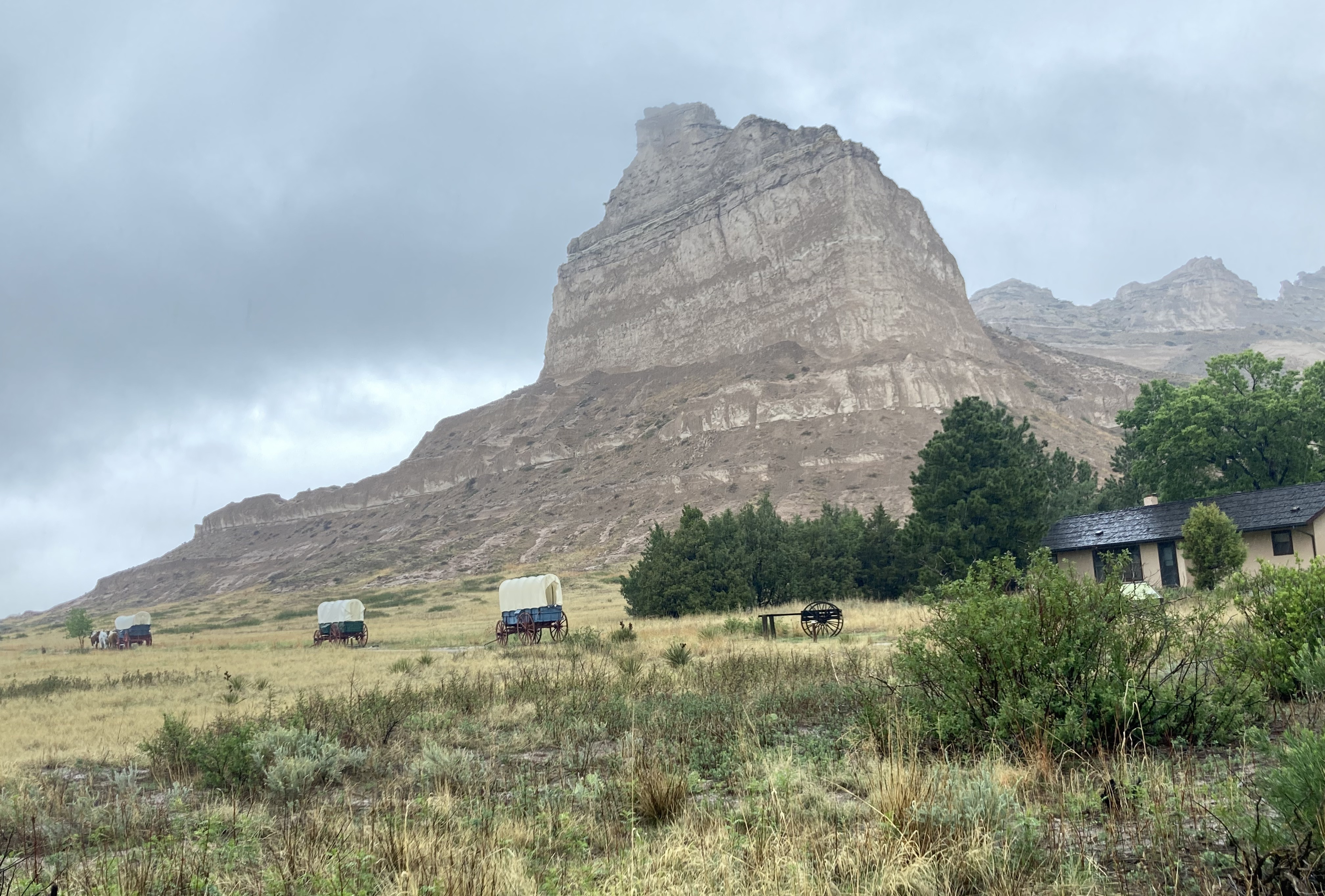
This past June I took a trip to visit the place my grandparents and great grandparents lived and worked. Though I never lived there, Nebraska, Wyoming, and South Dakota are central to my heritage. It’d been years since I’d visited these states. I wanted to place my feet on that earth once more, and sense how it felt. After writing Stories We Didn’t Tell, I wanted reimagine the lives of my ancestors who made their way through an era of extreme change during their lives while once again walking the land they walked. I wanted to stand on that land, breathe its air, and let my eyes gather the landscape into my soul. I wanted to deepen my awareness about what it means to inhabit such a place, and it to inhabit me.

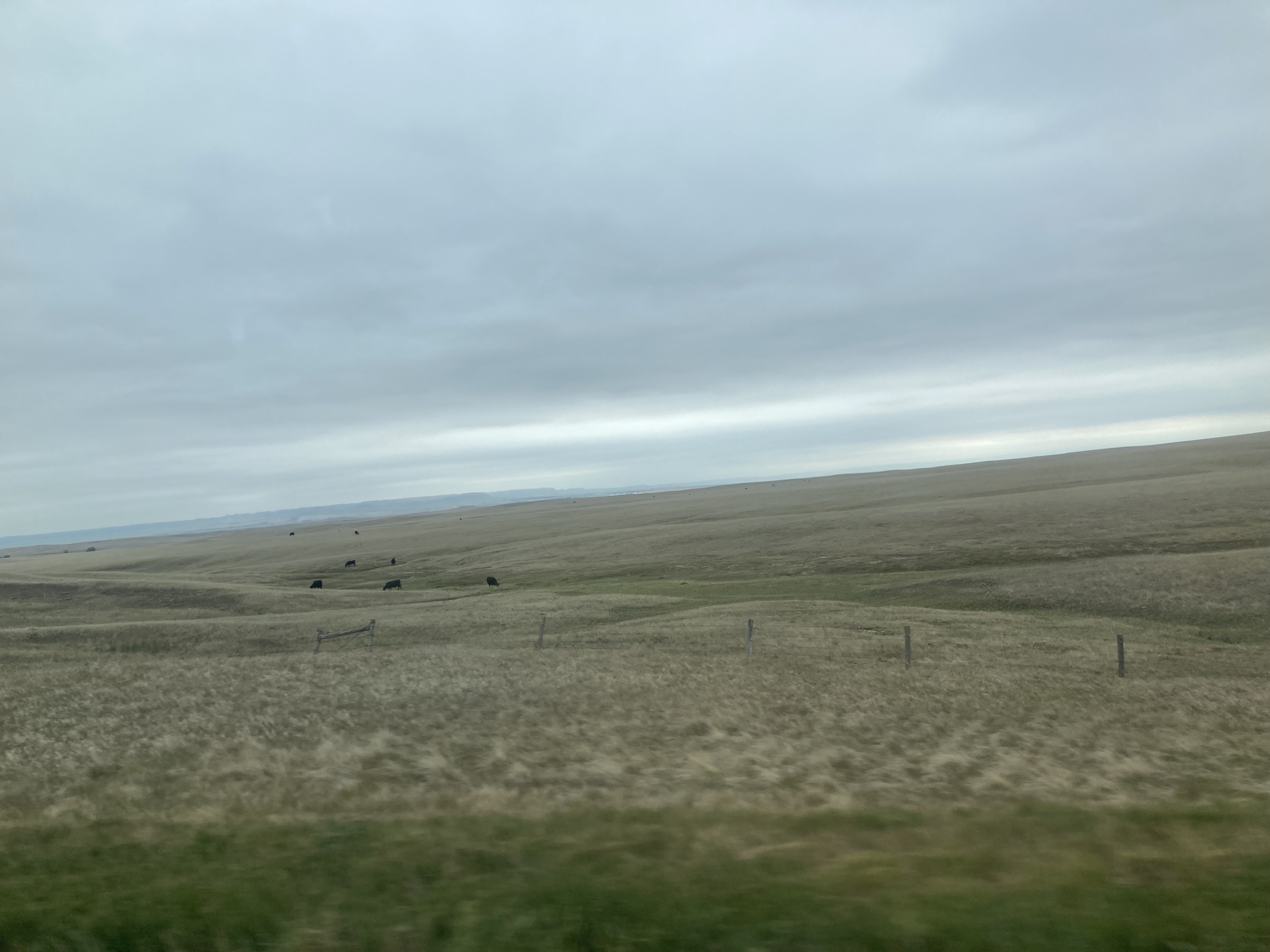
When driving from Hot Springs, South Dakota to visit Fort Robinson outside of Crawford, Nebraska, we stopped the car and got out to take in the Oglala Grasslands, a vast expanse of prairie expanding in every direction. Clouds hung low. Wind whispered through the grass, quivered wild flowers’ purple tips. As I stood listening, absorbing the scene, I imagined my great grandparents walking and working the land. There’s a kind of voice in the voicelessness of the grasslands that speaks of time, endurance, and the strength of perseverance through all kinds of weather and change. The land’s silence fell into me like a pebble dropped into a deep well. Even now, if I go back to that moment in my mind, I feel the ripple effect of standing on that ground in all its solidness, a profound, ancient quiet reaching into my bones, wrapping me in it like a shawl.
Born into an era where many people were small farmers living in remote landscapes with no running water or electricity, life changed for my ancestors with the arrival of telephones, then the radio, and later the automobile with the subsequent development of highways. My grandparents survived the Great Depression, observed the airplane’s invention, and the arrival and departure of two world wars. Small farms and ranches mostly became a thing of the past as the country turned to the use of pesticides, big machinery, and industrial farming. My ancestors experienced the emergence of television, witnessed the moon landing, the rise of women’s rights and civil rights, and the emergence of environmental awareness. Combined together, these changes fundamentally and dramatically altered the way we live and function as a society.

My grandparents and great grandparents’ lives and the communities they were a part of, along with everyone else’s ancestors, helped shape who we became as a nation. Learning more of a place’s history can give us a clearer picture of what in our culture may have been invisible or hidden in shadow so we can make better choices that will affect our future. We don’t live individual lives isolated from the past or from the actions of people across our neighborhoods, cities, country or the world. The way we respond to events and the choices we make or fail to make today in connection with those events shapes our lives now and in the future.
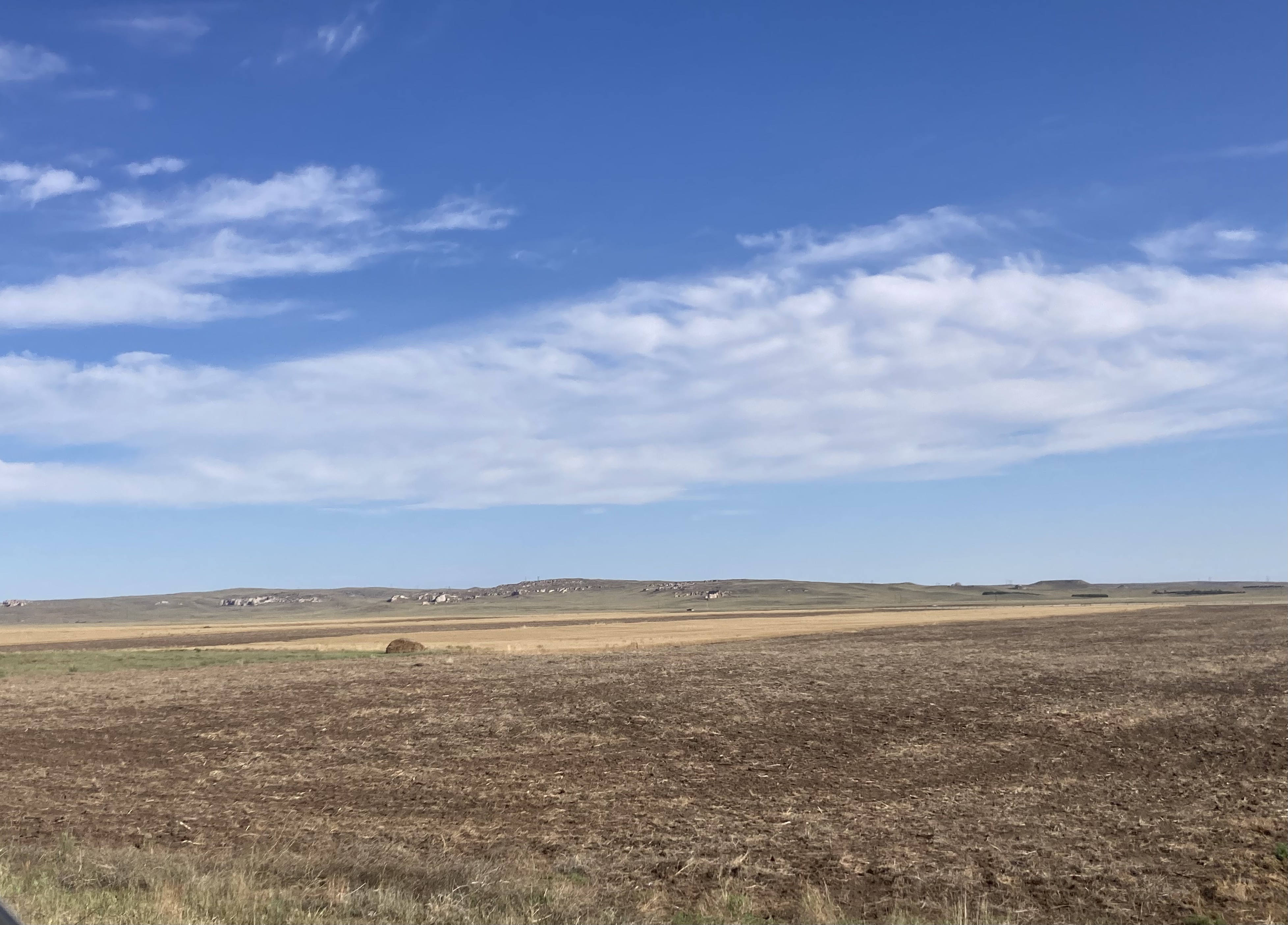
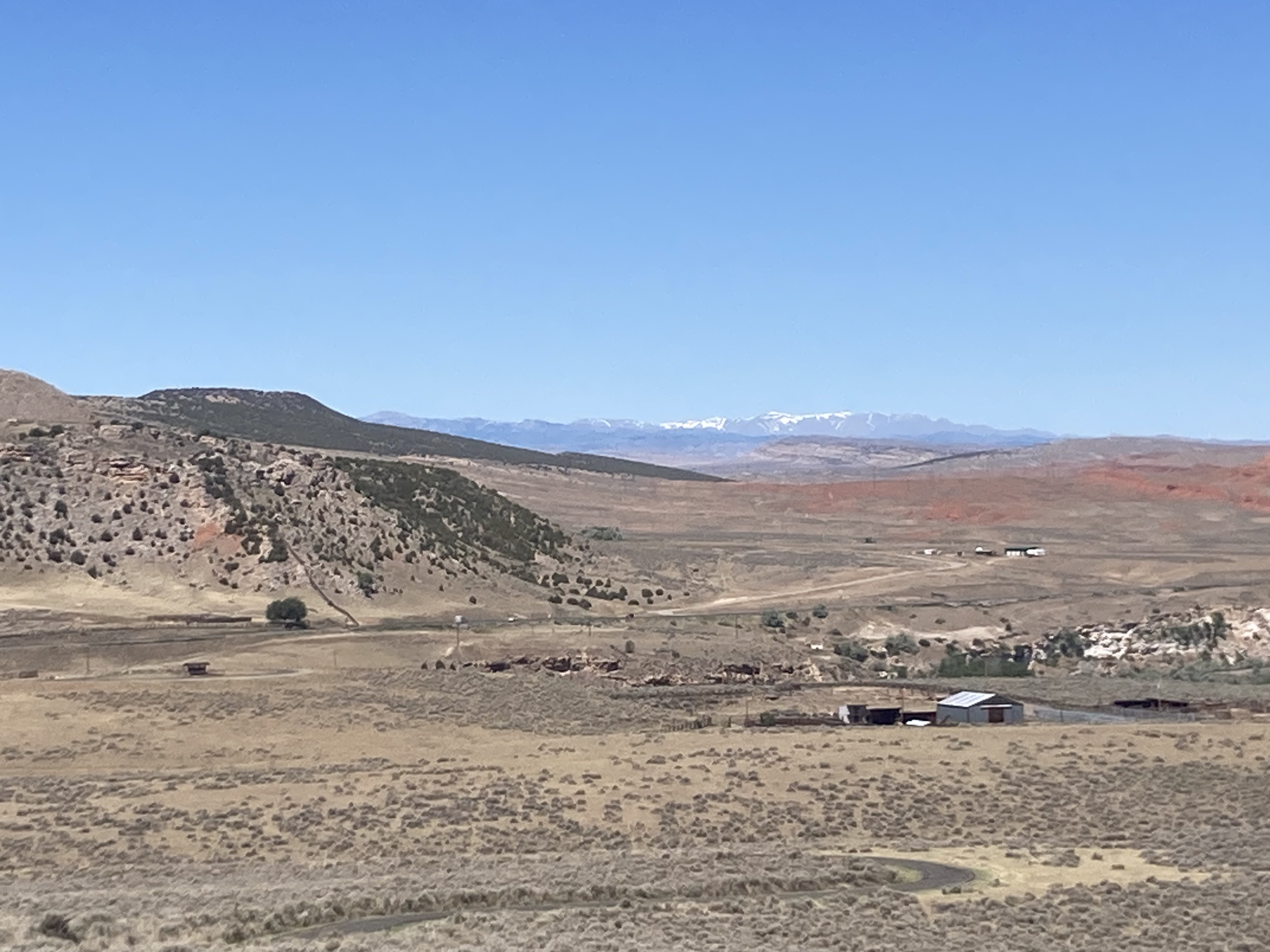
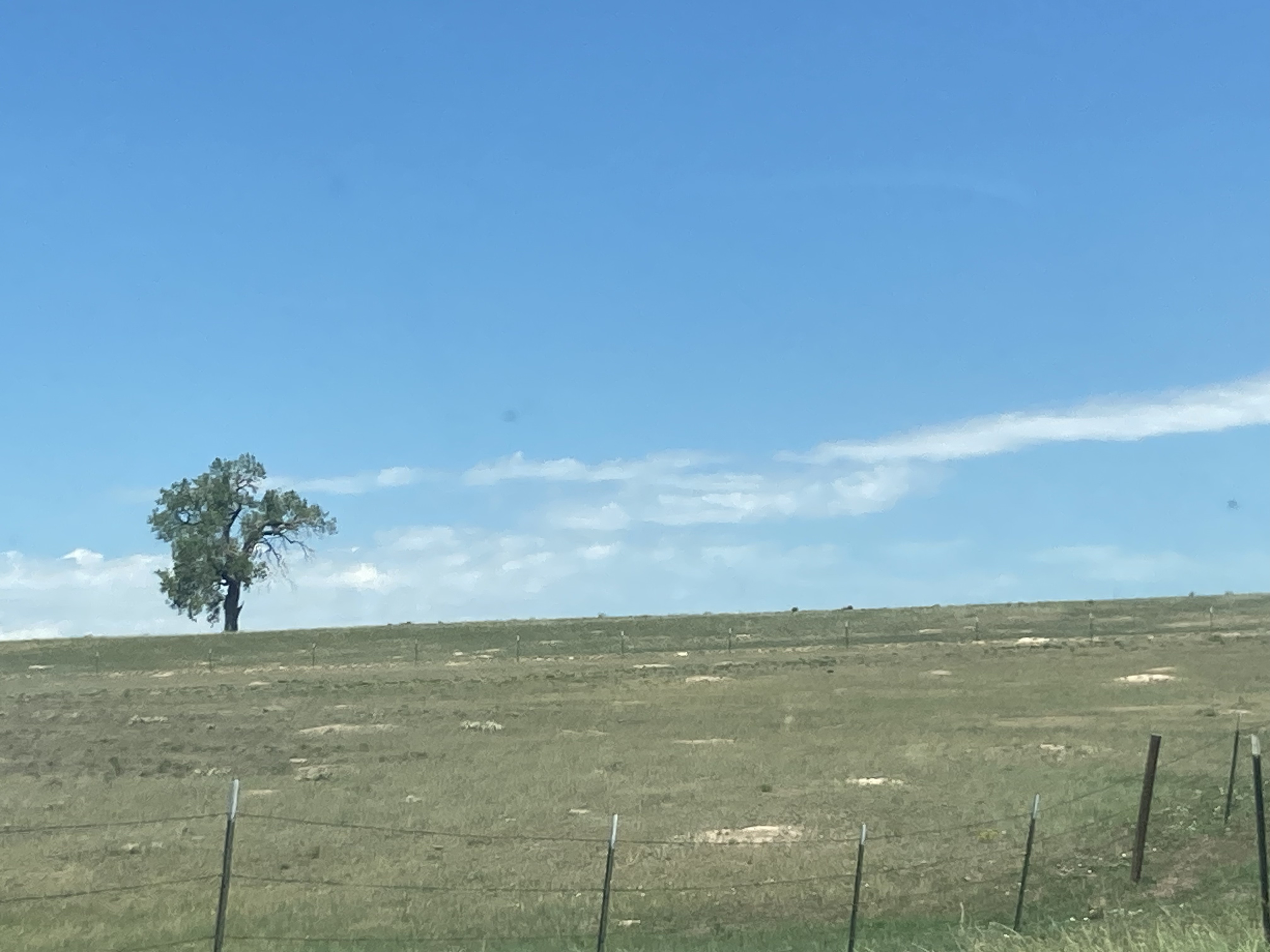
landscape outside Chugwater, Wyoming

I lived outside of my home country for more than two and a half decades. Each culture taught me different ways of seeing the world that arose out of their history, traditions, and interaction with the land the people inhabited. Returning to the US, I realized there’s a lot to learn about my country’s history that I was unaware of earlier. Writing both Stories We Didn’t Tell and A Space Between helped me see a fuller and more detailed picture of my cultural roots, heritage, and my country’s history. One book that has been especially helpful for me to understand current dynamics and tensions in the US is Colin Woodard’s American Nations: A History of the Eleven Rival Regional Cultures of North America. (You can see a map of the different cultural nations inside of the US map here and hear Woodard talk about some of the main points in his new book on this topic here.) The various values and characteristics of the nations people had previously lived in who first came to what we now call the North American continent, continue to affect us today, explains Woodard. One current example of this tension are those organizations in the US that work to preserve and protect forests such as American Forests, The Conservation Fund, The Nature Conservancy and the National Forest Foundation. “Recognizing “enoughness” is a radical act in an economy that is always urging us to consume more,” writes Robin Wall Kimmerer in her book, Serviceberry: Abundance and Reciprocity in the Natural World. “When an economic system actively destroys what we love, isn’t it time for a different system?” A different perspective, however, is taken by the current US administration, (influenced by values prevalent in the area Woodard calls Tidewater and the Deep South.) This month the US president’s administration proposed opening nearly 45 million acres of national forest land across 37 states to commercial logging, mining, and road construction.

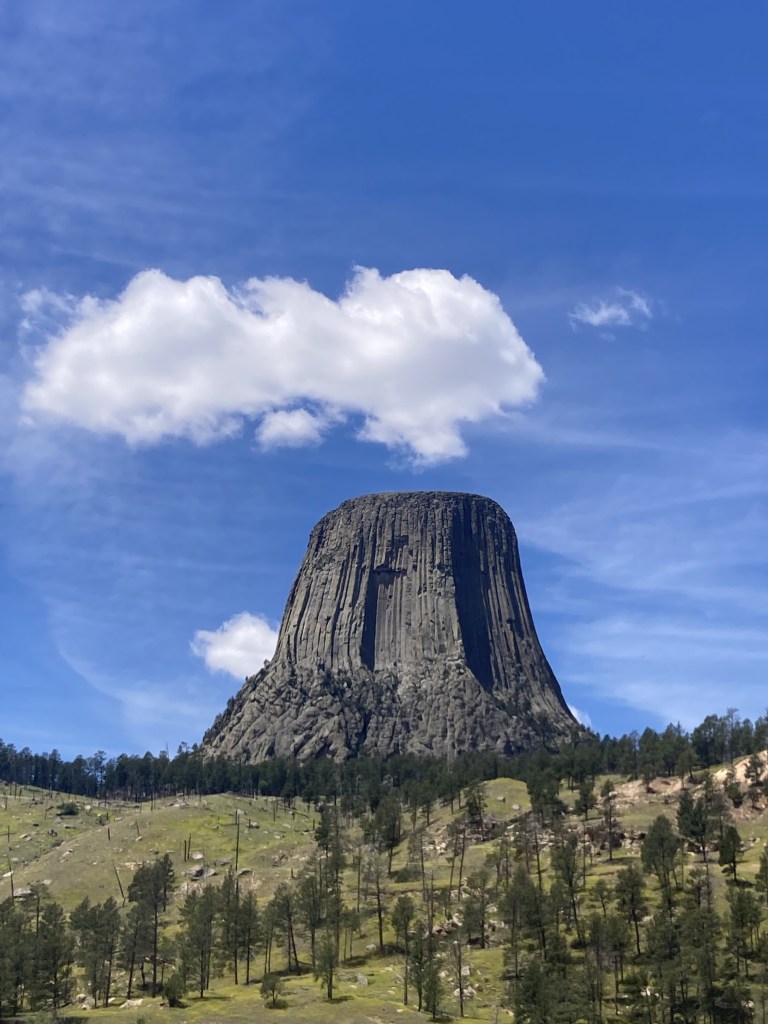
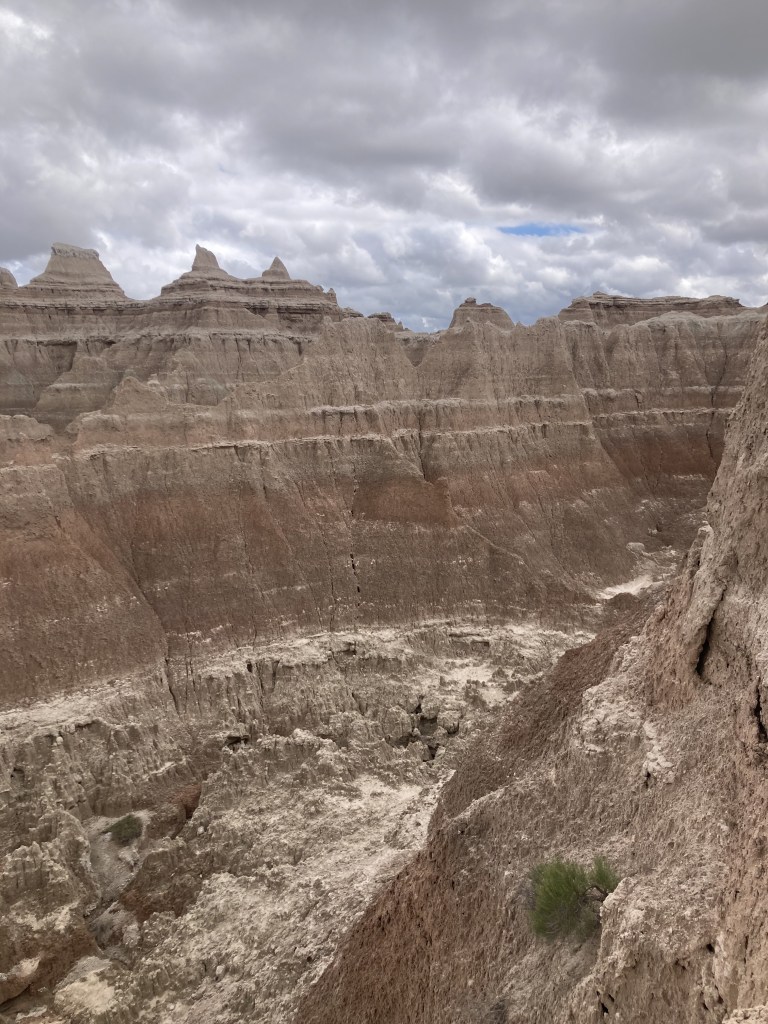
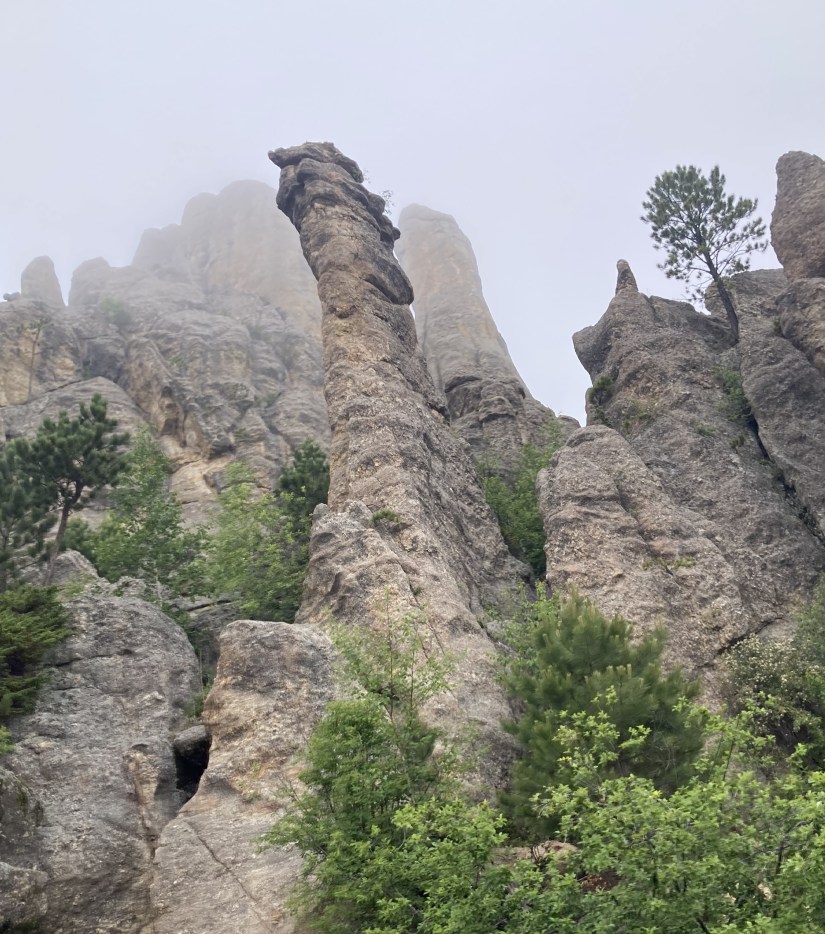
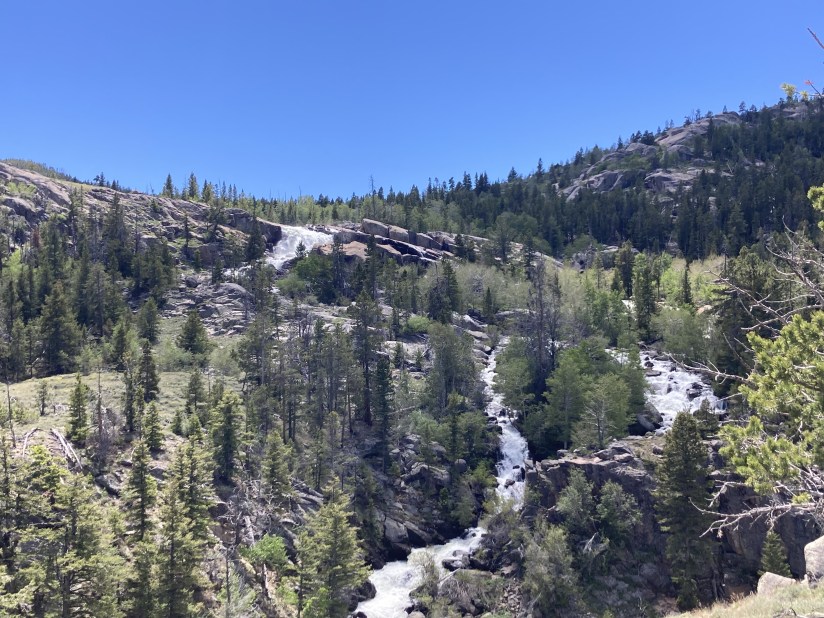
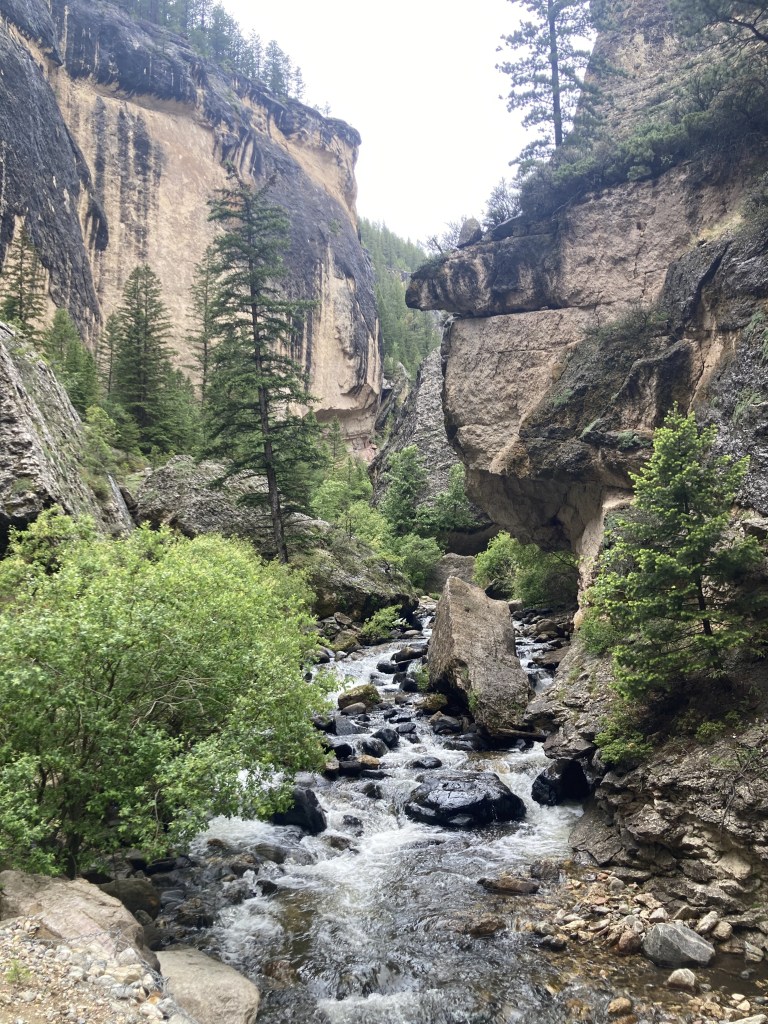
Why must the natural beauty of open spaces offer constantly be pushed aside in the name of business and development? Hiking through Sinks Canyon and Crazy Woman Canyon, visiting Devils Tower in Wyoming, driving around the area of the Badlands and through the Needles Highway in South Dakota, would be enough, it seems, to encourage us to answer Kimmerer’s question with a resounding yes, we need a different system, a different way of thinking. These areas are sacred places full of beauty. The entire area evoked in me a continuing sense of awe, the kind I’ve felt when staring up at the night sky sensing my small place in the cosmos. Open landscapes nourish us and help us regain our souls.
In a recent conversation with Bebo Franklin, author of The Harbinger of Elemdale about about the creative process of authoring a book Franklin writes, “The deeper I went into creating characters and understanding why they might behave as they did, the harder it became to reduce people to simply good, bad, broken, etc. They became much more complicated.” Writers create worlds in their books that help us look at the worlds we live in more closely. We might not be authors, but we’re living the stories we write with our lives. We’re flawed people trying to create the story we want to live in together, a life we want to inhabit as well as pass on. Wherever you live and whoever you are, we’re part of the creative process of life on this planet. Our character manifests itself in the place we live and the history we create. What we do ripples out through time to touch the world around us both now and in the future.

We can choose to be intentional about the transformation we bring about within ourselves and the world. We can make a practice of taking time to purposefully notice the natural world and its contribution to our lives. Go into your back yard and spend time with your favorite flower, stroll through a city park listening for birds, drive, bike or walk in some open space your heart calls you to and let that place speak to you. Try one of these fifty seasonal meditations from Emergence Magazine. “What if our metrics for well-being included birdsong, the crescendo of crickets on a summer evening, and neighbors calling to each other across the road?” writes Robin Wall Kimmerer. That’s the kind of world I want to live in.
Uncategorized

On the Road

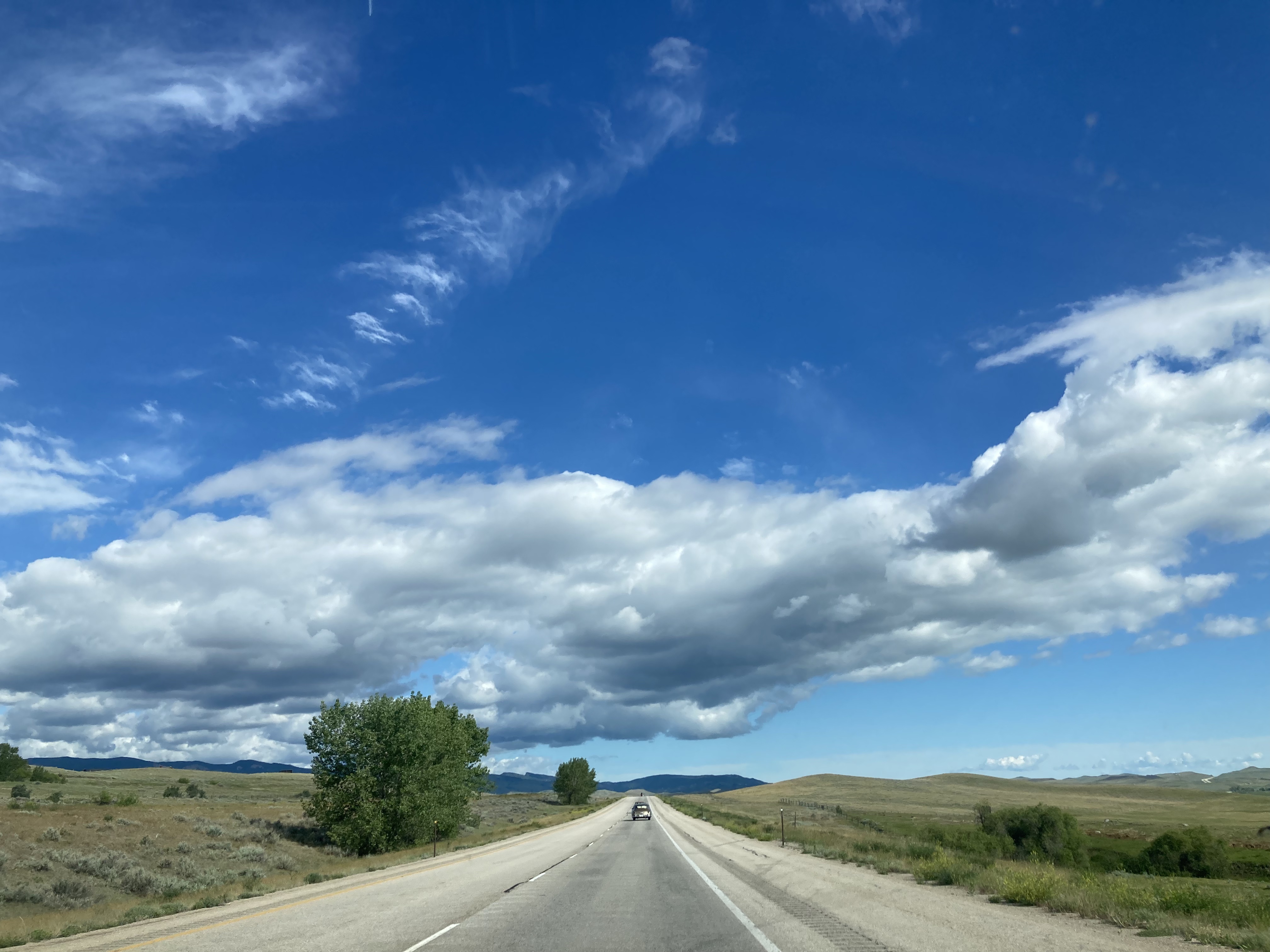
On the road near Buffalo, Wyoming

 “To be honest, I view all stories as journeys. Journeys are the essential text of the human experience—the journey from birth to death, from innocence to wisdom, from ignorance to knowledge, from where we start to where we end. There is almost no piece of important writing—the Bible, the Odyssey, Chaucer, Ulysses—that isn’t explicitly or implicitly the story of a journey. Even when I don’t actually go anywhere for a particular story, the way I report is to immerse myself in something I usually know very little about, and what I experience is the journey toward a grasp of what I’ve seen.”–Susan Orlean, Introduction to My Kind of Place: Travel Stories from a Woman Who’s Been Everywhere. Random House, 2004

I love the way travel enlarges us, makes us asks questions about ourselves, our habits, values, and what we take for granted in the world we travel from. When we travel, we enter unfamiliar landscapes and places unlike our home. Travel helps us become more aware that there are many ways of being, many ways of organizing life. Our way isn’t the only way. Isn’t one of the reasons we travel because we recognize we want to enter a world unlike the one we’re used to? We want to hear different ways of speaking, discover new scenery, explore a bit, learn some new things about people or the world around us, and see life through a different lens.

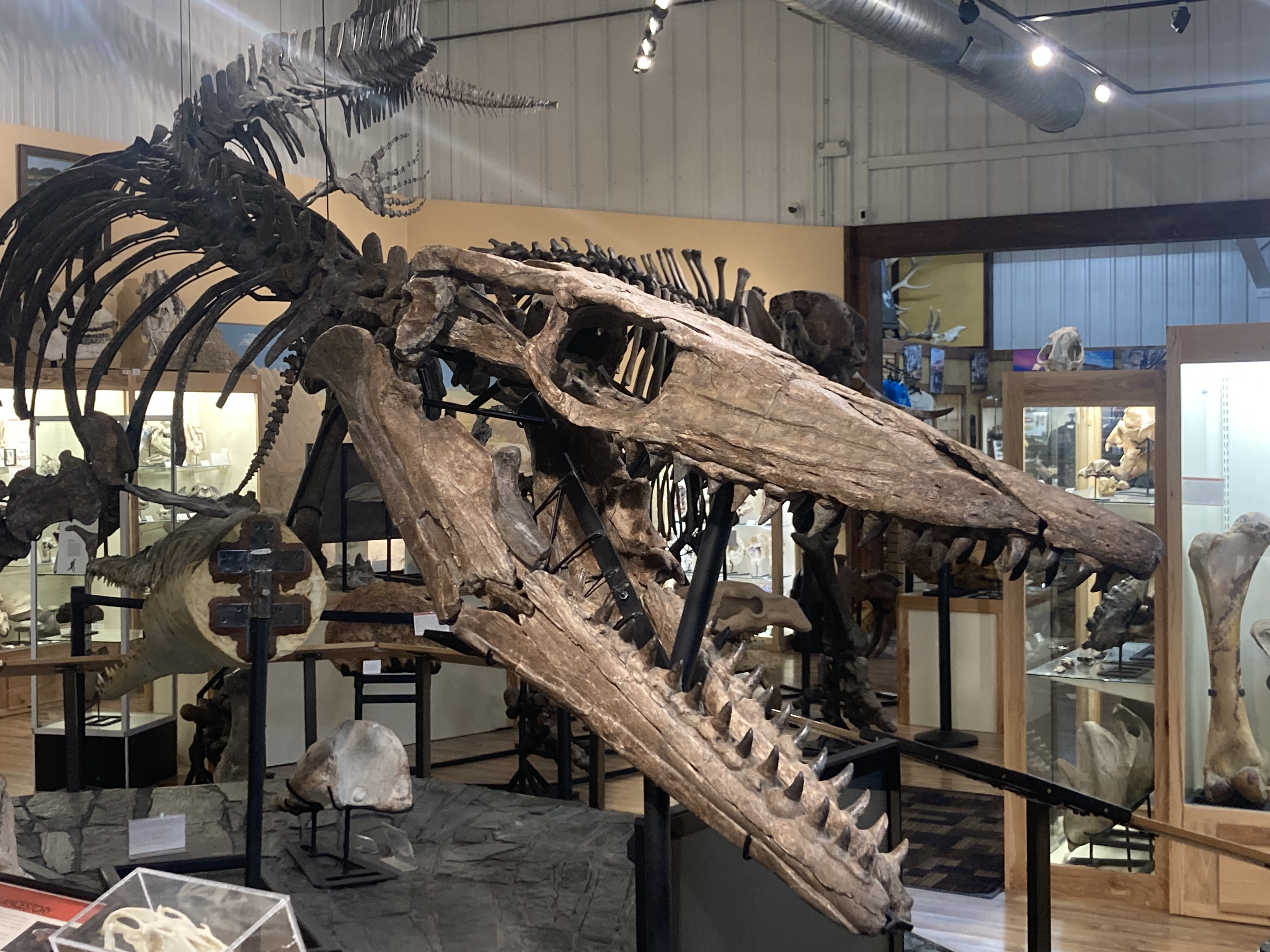
On my journey last month through Wyoming, South Dakota, and Nebraska, over and over road signs indicated fossils could be found in the area. Museums throughout the region had numerous fossils on display. Fossil beds aren’t common in the area where I live, but to drive through the landscape in these states is to repeatedly be reminded that of the long, evolutionary process of life on Earth. Existence is rolled out on such a vast scale of time. It’s challenging to conceive of a time stretching over such immense periods as the era long ago where dinosaurs lived. Life forms on this planet were so different then from those found on Earth today.

I viewed dinosaur bones in museums I visited. I read the information about them and the plants they ate. I learned somethings about the climates that previously existed in the region and how very different they were from what we experience today. The visit to the area and the museums there reminded me that human presence and consciousness is a recent occurrence in the enormous developmental cosmic process we live inside. Things have been changing on Earth since its beginning. The planet is constantly in transformation, ceaselessly remaking and renewing itself.

View outside of Thermopolis, Wyoming

As I drove through Wyoming’s long stretches of open sky and wide, sandy plains filled with sedges, I noticed how the landscape continued to hold the impression of its history eons previous to our current time when much of the state rested beneath enormous ancient seas. The Western Interior Seaway in the late Cretaceous period 100 million to 60 million years ago divided the North American continent between the Gulf of Mexico and the Arctic Ocean. Previously, in the Jurassic period, 165 to 120 million years ago, a portion of the Arctic Ocean spread down in a shallow sea named Sundance from western Canada into what is now the US that includes portions of Wyoming. Above the Sundance Formation near present day Thermopolis (also a geothermal site) lies a sedimentary layer that holds one of the world’s richest areas in dinosaur fossils. The dinosaurs walked along the shorelines of the ancient sea. It’s possible to see their tracks at Red Gulch Dinosaur Tracksite. Native people of the area have known about Wyoming’s fossils for thousands of years and those who first came across them must have been astonished. I’m still astonished by them.

World Fossil Finder Museum, Hot Springs, South Dakota

Two other sites on my trip, Worland, Wyoming, and Hot Springs, South Dakota also are sites abundant with fossils. Fossil sites can give us new understanding about how the ecosystem responded to climate change previously in Earth’s history so we can better understand how changes to climate are happening now and how to better make wise choices about our future way of living. Carlo Levi wrote, “The future has an ancient heart.” When thinking of Wyoming and South Dakota, in the future, we can also bring to mind the ancient, primordial past held in the dinosaur bones buried there that were part of the process that brought us into the life we have today.

Travel isn’t only about where we take ourselves to on a holiday. It’s also about our travel through time on the journey of understanding about ourselves and the world we inhabit. A new territory we’re traveling into now is the growing information people are gaining about plants. Zoë Schlanger, author of The Light Eaters tells us in her interview with Romany Williams in Atmos magazine, plants don’t have a central nervous system like humans, nevertheless, science is showing us plants have language, family structures, and make allies with enemies. They also have preferences, plan ahead and can remember. Plants have been doing these things all along, but humans weren’t aware of it. We thought only humans did these things based on the way we typically have categorized information.

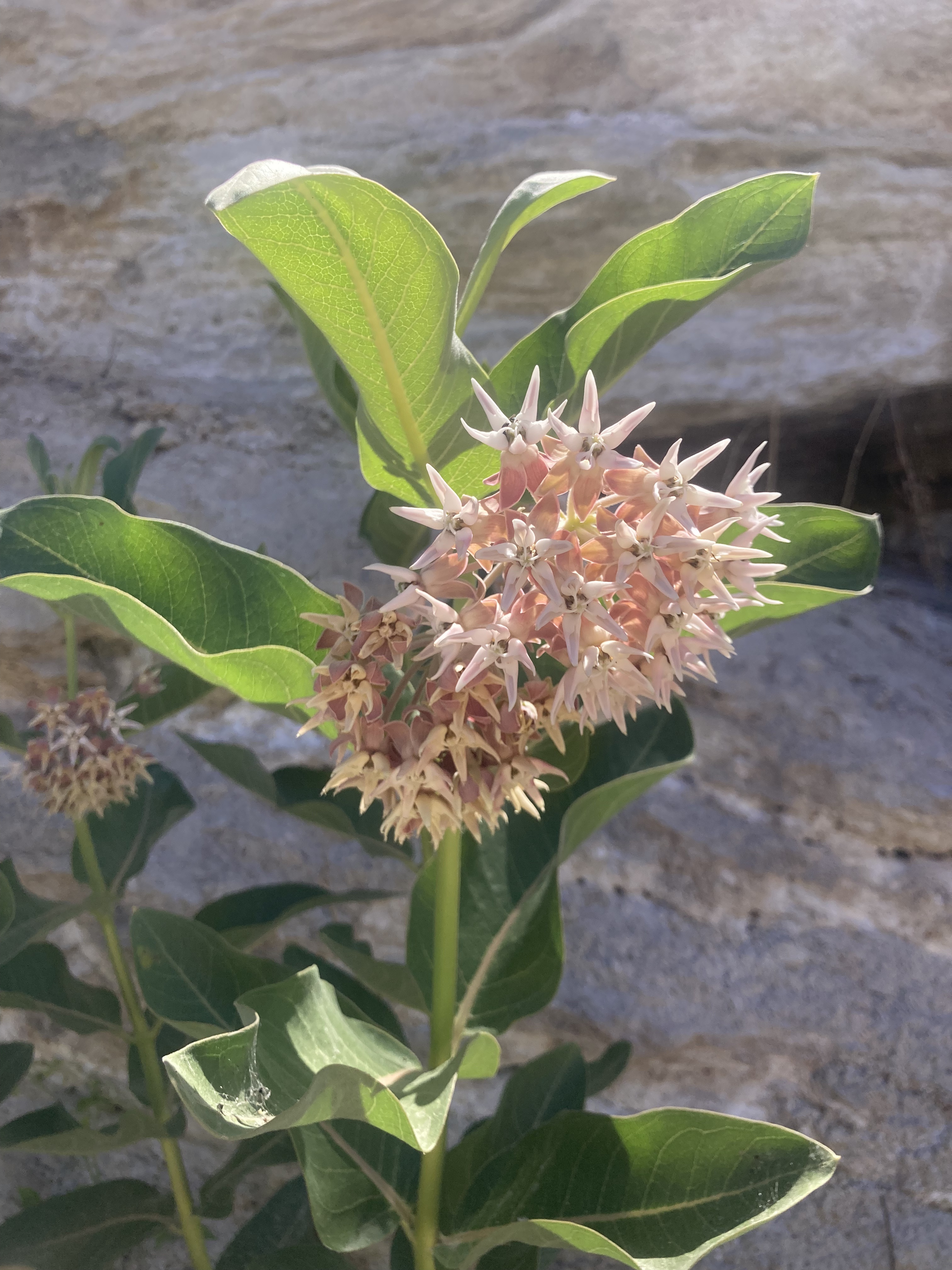
Milkweed plant at Thermopolis, Wyoming

As we reexamine what we think we knew about plants, we now have questions to ask about how we relate to the world around us. “Science indeed has no agreed-upon definition for life, death, intelligence, nor consciousness,” says Schlanger. Travel often raises questions in our minds that we didn’t have before and this new territory of information about plants is creating fresh debates about consciousness. The new information about plants encourages us to open the boxes that previously contained our thinking and to look at our relationship with the world of plants in a larger, more complete map. New inquires arise about our connection to the world around us and how we the environment is something greater than background scenery. Vegetables and fruit are used for mass consumption but Native cultures have long thought of plants as sacred. “I understood them to be relatives and living beings with emotions and lives of their own. I learned that they are part of my life as well and that I should always care for them,” writes anthropologist and ethnobiologist from the Rarámuri culture, Enrique Salmón. “Cultural perception, language, and thought are related to both the land and cultural histories…Beliefs help people recognize their links to the natural world and their responsibility to ensure its survival…There is little distinction between our world and that of nonhumans.” New understandings about plants can give us new ways of speaking about the natural world that influences our thoughts and actions as we travel into the future, and perhaps will connect us in new ways to old understandings about the land we walk on and the vegetation growing there. “You come to understand yourself as just one product of the unending, riotous, messy experiment that is evolution,” Schlanger says. “We’re all trying to find a way to make it in this environment. It’s not a spiritual concept but it comes close to recognizing this unifying truth that evolution is not a hierarchical process.”

Travel places us in a kind of liminal space between worlds–we’re frequently arriving somewhere new but are also soon to depart. Journeys are circular. In between those two points, we gain new understandings, find new words to explain our experience, and we’re changed. But we also circle back to old understandings, old pathways with the ability to see them from a different angle with new light. A further fairly recent significant discovery is the pathways of the interstitium, the spaces between the body’s tissues and cells that’s filled with fluid. This fluid moves nutrients and waste around. It also connects and cushions cells. This fluid route in the body has always been there, but people didn’t notice it because they weren’t looking at the body’s interconnected parts. “There are very specific laboratory reasons why the interstitium was not discovered until a few years ago – the histological method was hiding the canals. But there are also psychological reasons we could not ’see’ the fascial system or the interstitium because we tend to think in parts, not wholes,” explains Tom Myers author of Anatomy Trains. “We’ve known about interstitial fluid for years; we just didn’t know about its ‘organized” nature until we could 1) see in vivo, and 2) think in terms of whole systems instead of discrete ‘organs’… systems are not simply a sum of all their objective parts. Systems are also the rules that govern the relational behavior.” (Read more here.) This pathway of fluids supporting and moving between the body’s organs seems to be a metaphor for the journey of the era we’re traveling through at this time. We’re in the midst of a shift between an old way of thinking that viewed the world as filled with separate objects to be managed and brought under control, and are moving into new world connected in thinking to an ancient one that recognized the world is built of relationships where people sought to acknowledge and respect them.

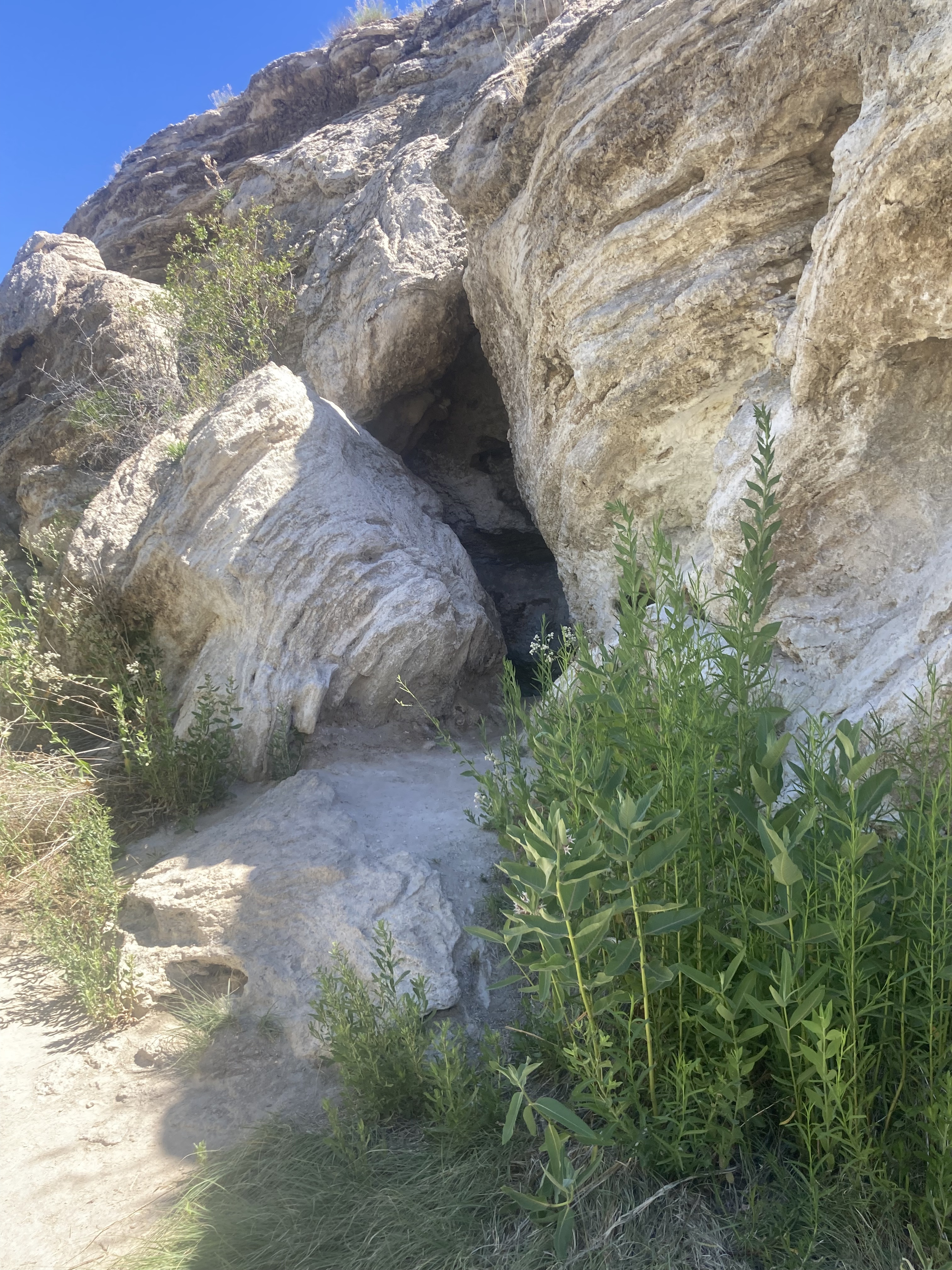
Opening of spring water at Thermopolis, Wyoming

The road Earth has journeyed from the primordial past is still present with us, even if not always visible or obvious. Traveling down new roads, new ways of thinking can motivate us, like Galileo, to think in new ways. What we observe can be confusing, difficult, and uncomfortable, but we learn things that change us. The presence of fossils, recently expanded understandings about plants, and the discovery of the interstitium–all help us see that we are part of an enormous net of interwoven realities. The world is full of wonders and we live inside of mysteries wrapped around further mysteries. Traveling into these unfamiliar territories provokes interesting queries about how we’re connected to the larger whole of life and who we are as humans in the midst of that expansive unfolding existence.

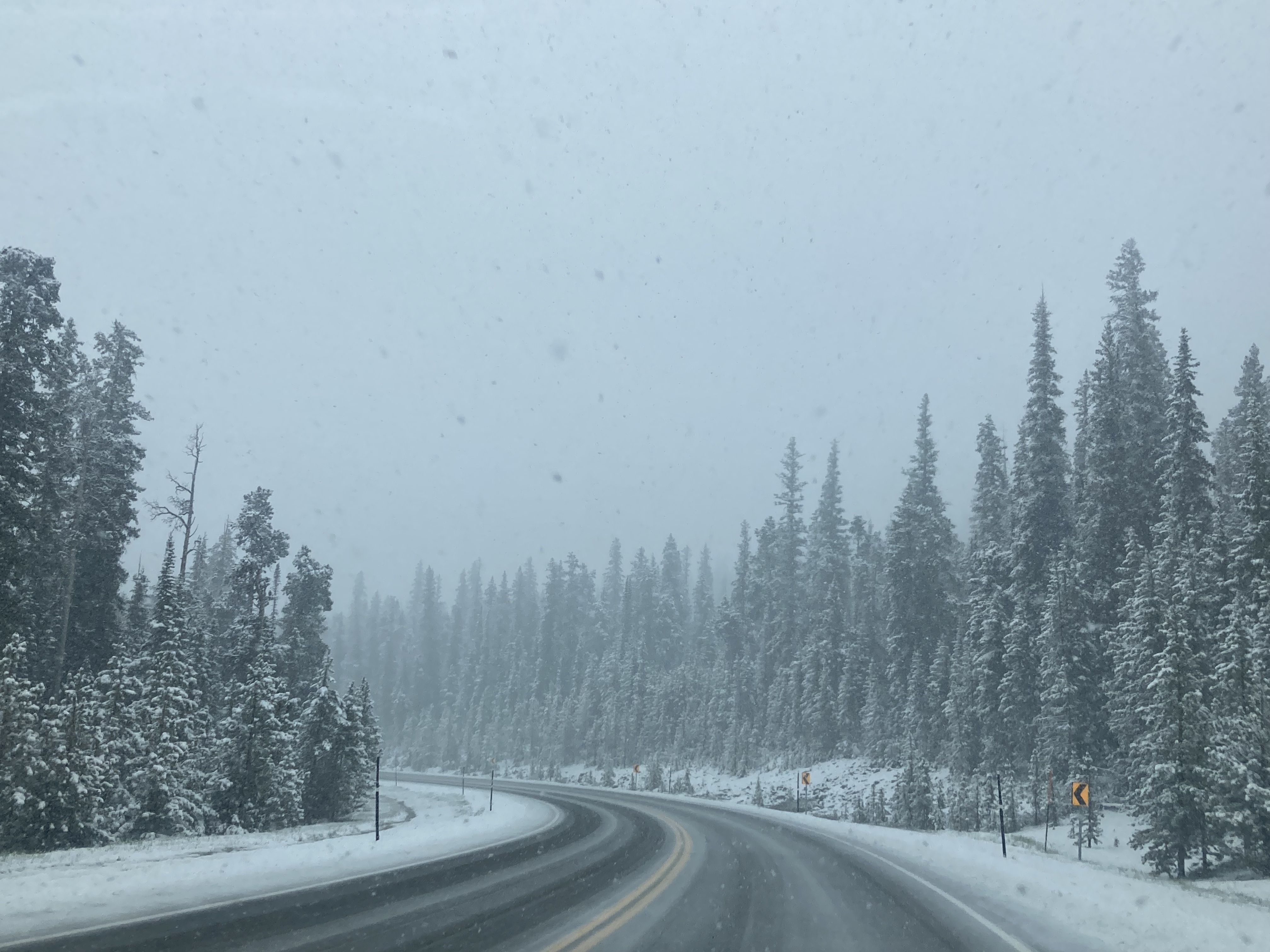
Travel writer Susan Orlean suggests that travel is always a journey. When traveling, she immerses herself in something she doesn’t know much about then journeys toward grasping what she’s seen. There’s a whole lot humans don’t understand. We’re all on this journey traveling through time together. Things can be painfully difficult if we miss a flight when traveling or if our vehicle slides around on a road threatening our safety because it’s snowing unexpectedly. Things can be challenging when you thought you understood the way things worked, where you were going, what was true and real, only to discover something that wasn’t on the road map you were using and you end up in an unexpected situation. Sometimes that unexpected situation turns out to be a delightful one, one that changes your life for the better. Whatever the experience, it’s often eye opening and allows us to see ourselves and the world from a different stance.

“Nel mezzo del cammin di nostra vita / mi ritrovai per una selva oscura, / ché la diritta via era smarrita,” writes Dante, In the middle of the journey of our life I came to myself within a dark wood where the straight way was lost.” It feels like humanity has arrived at a new place, one that’s asking us to confront our ways of living and thinking that are preventing us from living together well. The planet along with the bulk of humanity is struggling for survival and to live together peacefully while others have far more than would be needed in a thousand lifetimes and are creating enormous disruption to human cooperation and thriving, exponentially exacerbating people’s emotional pain, and needlessly causing death for entire groups of people, along with a plethora of other griefs and losses. We won’t be on this road forever. Everything changes. People in Galileo’s era thought his theories were incorrect, but new understandings and time proved differently. Our present culture is caught in division over many things. We often reject what our minds can’t comprehend or that are outside of our habitual way of seeing things. But if we’re realistic, we can recognize that though we try our best based on the knowledge we have, our reasoning can be faulty. What is the meaning of the whole trajectory of life on earth and the cosmos itself? It’s a complex mystery.

Whether embarking on travel that takes us to a new location in the world or traveling into new understandings brought about through scientific or personal inquiry, the questions we hold as we travel will move us into new territory. What if we purposely assumed the mindset of a traveler and sought a transformation of mind as we move through this unpredictable time we’re living in? Rather than clinging to ideas that keep us stuck, what if we recognized we can’t reason our way through to make sense of everything and valued the journey, even the painful bits? What if we let what provokes and discomforts us become our adventure, if we allow what disorients us to be our exploration, our encounter with something that calls us further into the depth of our being?

On the road in June over Powderhorn Pass, Wyoming, 9,660 feet elevation

Ada Limón in her poem “Salvage” writes about a madrone tree that’s half-burned from the fires. Half of the tree is ashen and burned, the other half green. She writes,

…I have
been staring at the tree for a long time now.
I am reminded of the righteousness I had
before the scorch of time. I miss who I was.
I miss who we all were, before we were this: half
alive to the brightening sky, half dead already.
I place my hand on the unscarred bark that is cool
and unsullied, and because I cannot apologize
to the tree, to my own self I say, I am sorry.
I am sorry I have been so reckless with your life.

We’ve been journeying on this road of sorrow for what feels like a very long time now. I don’t know how much more disappointment grief we can bear. My hope is that the sorrow takes us on a journey where we hear the ripples of Wyoming’s ancient ghostly seas telling us, yes there was terrible ice flows, great droughts, and fire. The waters receded. But the plants went on talking amongst themselves. The world flowered, moved through the eons building mountains, creating icebergs and rivers, plants and animals, gave birth to humans and histories. Sands shift across the ancient shore where the dinosaurs once walked. You wonder how it’s all going to go. But the truth is, even now a spring flows through the interstitum pathways between Earth and humanity, working to bring life out of the recklessness. Together, we can make a different life possible.

Let this poem of Anthony Machado encourage you on your journey “Last Night As I Was Sleeping.

art, poetry, Uncategorized, writing

Looking Deeply: Art, Poetry, and Presence

Barry Lopez in his children’s book, Crow and Weasel, writes, “Remember on this one thing, said Badger. The stories people tell have a way of taking care of them. If stories come to you, care for them. And learn to give them away where they are needed. Sometimes a person needs a story more than food to stay alive. That is why we put these stories in each other’s memories. This is how people care for themselves.”

Stories connect us to the people who came before us, the narratives they live out and the tales they tell us about what the world is, and who we are in the world. We live by the stories that have shaped and taught us. They give meaning to our experience and direct us in our journey. Stories condense experience, give us the opportunity to examine our difficulties, and to reflect on how our struggles might enable us to grow.

The oldest form of story is poetry. Before poems were ever written, they were told. People’s histories were given in poetry–words constructed to call up experiences through sound and imagery that evoked emotion and helped people remember who they were, what they had done, and why it was important. In listening to poetry, we can step inside a reflection of life that holds up a mirror, and at the same time speaks to something beyond what is experienced. It is a way to reconnect to what it means to be human and to the mystery of existence. As Dana Gioia writes, “In a moment’s pause another world / reveals itself behind the ordinary.” By extension, because poetry was once connected to other art forms, stories, music, and dance, these are doors we can open to that allows us to walk into a larger reality, to see the world from a wider perspective.

image

The idea that the physical world intersects with the spiritual world is an ancient one, found in many traditions; the Celtic, Catholic, and Native American being a few examples of these. St. John Damascene, a Syrian monk who lived from c. 675 or 676 –to 749 CE, wrote a defense for the use of icons (see more here) that shaped the direction of the church. Though others at the time argued against the use of icons and representational art. God is bigger than any particular physical form, the thinking went, and therefore representation of God in icons should not be allowed. St. John of Damascene argued, however, that if God became human in the form of Christ, then two are intermingled. The sacred could be seen living and breathing through the human form, and therefore it was completely acceptable, he argued, to create icons, to worship through icons, and to paint the human form. In fact, art was a way for the illiterate to see God, Damascene explained, and to read the story of God’s compassion for and interest in humans through the paintings. Damascene demonstrated an acceptance of paradox, and the idea that one’s thinking doesn’t have to be contained in tight boxes of either or. William Dalrymple, in his book, From the Holy Mountain, quotes Damascene saying, “‘…the flower of painting makes me look, charms my eyes as does a flowering meadow and softly distils the glory of God in my soul.'” Through painting, as through nature, Damascene declares, God communicates his presence in the world, and art is a central way in which humans can experience and connect with the Divine.

imageThough Dalrymple describes the cave where St. John of Damascene wrote these thoughts in The Fount of Knowledge, as “crude and primitive,” he goes on to say that, “Without Damascene’s work, Byzantine ars sacra would never again have been permitted, Greek painters might never have been able to pass on their secrets to Giotto and the Siennese, and the course of the Renaissance, if it had happened at all, would have been very different.” I’m very grateful for Damascene’s words and thoughts regarding art. Without them, we’d likely be deprived of much beauty, and the spirit that speaks through that beauty.
In her poem, “Pray for Peace,” Ellen Bass speaks of this interconnection of the everyday world around us with the world of spirit.

Pull weeds for peace, turn over in your sleep for peace,
feed the birds, each shiny seed
that spills onto the earth, another second of peace.
Wash your dishes, call your mother, drink wine.

Shovel leaves or snow or trash from your sidewalk.
Make a path. Fold a photo of a dead child
around your VISA card. Scoop your holy water
from the gutter. Gnaw your crust.
Mumble along like a crazy person, stumbling
your prayer through the streets.

Though a way of communicating half forgotten these days, Bass helps the reader to see that prayer can be any act we do with full attention and heart. When we pay attention to our lives, doing what we love presence, that is prayer–a breathing, walking prayer that adds meaning to our lives, and enables us to grow toward wholeness. Making a routine out of things saves energy and time, but even routines can be done with attention and heart. How do we cultivate the kind of noticing awareness in our every day lives, the ways of being that enable the act of living to become prayer?

Involvement in a creative act is a central way to connect the physical world with the inner world. Though there are a variety of art forms that can enable a person to live in fuller awareness of a connection to life’s mystery, writing is an excellent path from which to begin this journey. Whenever I leave the house, I carry imagemy journal, a small book that easily fits inside a pocket. I carry it because at any time something might appear, or someone might say something that needs to be noticed, and I want to be ready. My journal is my fishing line, so to speak. Though I may miss many things swimming in the world around me, because I’m prepared with pen and paper to notice something, I am more likely to find and catch something than if I had no tool at all to help me. Whatever I’m working on as a writer, I look and listen for moments that speak to me while moving through the day—a random phrase, a gesture, a sudden familiar scent that might embody the idea I’m reaching for in a writing piece I’m working on. I remain attentive to sounds, textures, colors, actions—the world’s details that define a place or time. As a result of knowing the questions I’m living with and what I’m looking for, things tend to show up and announce their connection like a kind of internal spark. Suddenly, as if witnessing the embodiment of a metaphor, I see, for example, how something I’m looking at or hear is related to something seemingly completely different. The discovery has a wonderful quality to it, and to then write it out is to be able to embody that insight. Sharing it with others deepens a sense of connection to the world.

Writers aim to name the world, and doing so is to participate in a kind of co-creation of life, at least this is how I experience what happens while writing, and it is one of the motivating reasons to write. To write is to observe closely, and to observe closely moves me to an awareness that I am part of a greater something beyond myself–that I swim in the mystery of existence. Writing is a path that allows me to enter a space where I’m both fully present in my life, and somehow not present at the same time as I step inside the weave of words. This is because I’m living inside of the thing I’m writing about, and what I’m writing about is bigger than me. As poet Nicholas Samaras explained to me once, writers are always writing, even when not writing. I agree with Samaras when he says, on Poetry Net, “God is in the point of my pen.” In losing myself in the work I am doing, I’m made more alive, full, and solid. It’s a paradox.

image

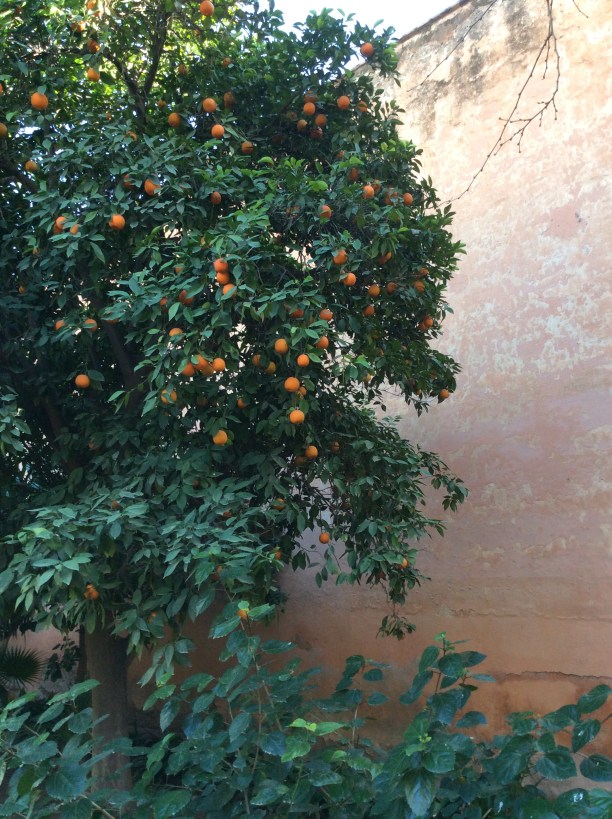
Writing poetry can be a kind of prayer. My father wrote stories and poetry, but my mother taught me to pay attention to the world around me. She constantly noticed the natural world, flowers on the bank or scent of orange blossoms from the orchard, bees at the birdbath, a fox that came through the front yard, or hawks that circled above the hill behind us. The wind as it blew through the pines where she grew up in the Black Hills of South Dakota, was an ancient choir, she said. As she described the experience to me, I could hear the wind as if it were real. She recalled wild gooseberries’ tart flavor, and told me the names and shapes of wildflowers that grew on the land of her childhood home. Her descriptions lived in my mind as if they were real. Even though where I grew up in eastern San Diego county’s dry desert–very different from the Black Hills, I felt preciousness my mother’s memories of her childhood’s natural environment. Her respect for those experiences nurtured in me a love of my own childhood’s natural environment.

I played outside every day as a child, climbed around on granite boulders, or sat inside the branches of an avocado, umbrella or pepper tree. Our front door often stood open to the outside air. I ran through the yard barefoot, watched clouds parade by, and sunsets spill across the horizon. Coyotes’ yips echoed through the valley in the evening. Crickets sang. Stars came out. These were all gifts, and I belonged to that earth. The experience of growing up in such a place with the opportunity to experience the natural world as part of the rhythms of every day life created in me a foundation for wanting to remain connected to the earth. To have our feet on the earth, to literally ground our selves there, is life engendering. If deprived of such experiences, I think our bodies and spirits still long for them without possibly even knowing it.

image

Poetry relies on imagery and figures of speech. It integrates the physical world with the world of language. It tells abstract ideas by recreating the physical world. It reconnects the writer and the reader back to place, and this is a central reason why I find it so powerful. In our world, the culture of the workplace pushes us to compete, to gain power and control. When writing poetry, however, I interactively participate in reconnecting to the physical world and the presence residing beneath and inside the movement of life. I trace my origin of wanting to write back to these childhood experiences of connection to the earth’s vibrant, sustaining presence. Willa Cather writes in My Antonia, “I was something that lay under the sun and felt it, like the pumpkins, and I did not want to be anything more. I was entirely happy. Perhaps we feel like that when we die and become a part of something entire, whether it is sun and air, or goodness and knowledge. At any rate, that is happiness; to be dissolved into something complete and great. When it comes to one, it comes as naturally as sleep.” To be able to wander in time, to play in a landscape or place is to be transformed and enlarged by it. Writing poetry focuses the writer on presence, and in doing so, helps move the writer toward wholeness. I recommend it.

image