“To be honest, I view all stories as journeys. Journeys are the essential text of the human experience—the journey from birth to death, from innocence to wisdom, from ignorance to knowledge, from where we start to where we end. There is almost no piece of important writing—the Bible, the Odyssey, Chaucer, Ulysses—that isn’t explicitly or implicitly the story of a journey. Even when I don’t actually go anywhere for a particular story, the way I report is to immerse myself in something I usually know very little about, and what I experience is the journey toward a grasp of what I’ve seen.”–Susan Orlean, Introduction to My Kind of Place: Travel Stories from a Woman Who’s Been Everywhere. Random House, 2004
I love the way travel enlarges us, makes us asks questions about ourselves, our habits, values, and what we take for granted in the world we travel from. When we travel, we enter unfamiliar landscapes and places unlike our home. Travel helps us become more aware that there are many ways of being, many ways of organizing life. Our way isn’t the only way. Isn’t one of the reasons we travel because we recognize we want to enter a world unlike the one we’re used to? We want to hear different ways of speaking, discover new scenery, explore a bit, learn some new things about people or the world around us, and see life through a different lens.
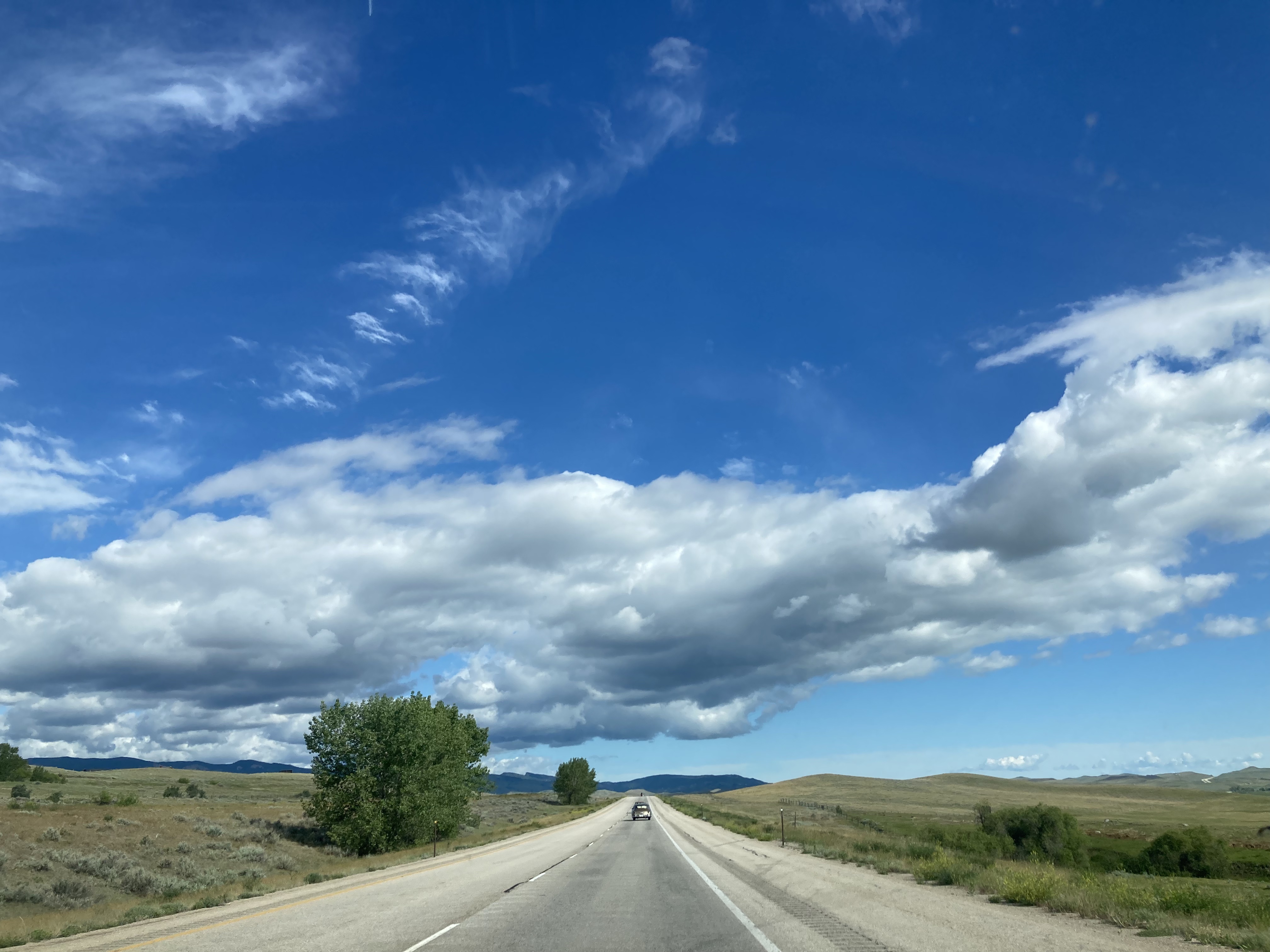
On my journey last month through Wyoming, South Dakota, and Nebraska, over and over road signs indicated fossils could be found in the area. Museums throughout the region had numerous fossils on display. Fossil beds aren’t common in the area where I live, but to drive through the landscape in these states is to repeatedly be reminded that of the long, evolutionary process of life on Earth. Existence is rolled out on such a vast scale of time. It’s challenging to conceive of a time stretching over such immense periods as the era long ago where dinosaurs lived. Life forms on this planet were so different then from those found on Earth today.
I viewed dinosaur bones in museums I visited. I read the information about them and the plants they ate. I learned somethings about the climates that previously existed in the region and how very different they were from what we experience today. The visit to the area and the museums there reminded me that human presence and consciousness is a recent occurrence in the enormous developmental cosmic process we live inside. Things have been changing on Earth since its beginning. The planet is constantly in transformation, ceaselessly remaking and renewing itself.
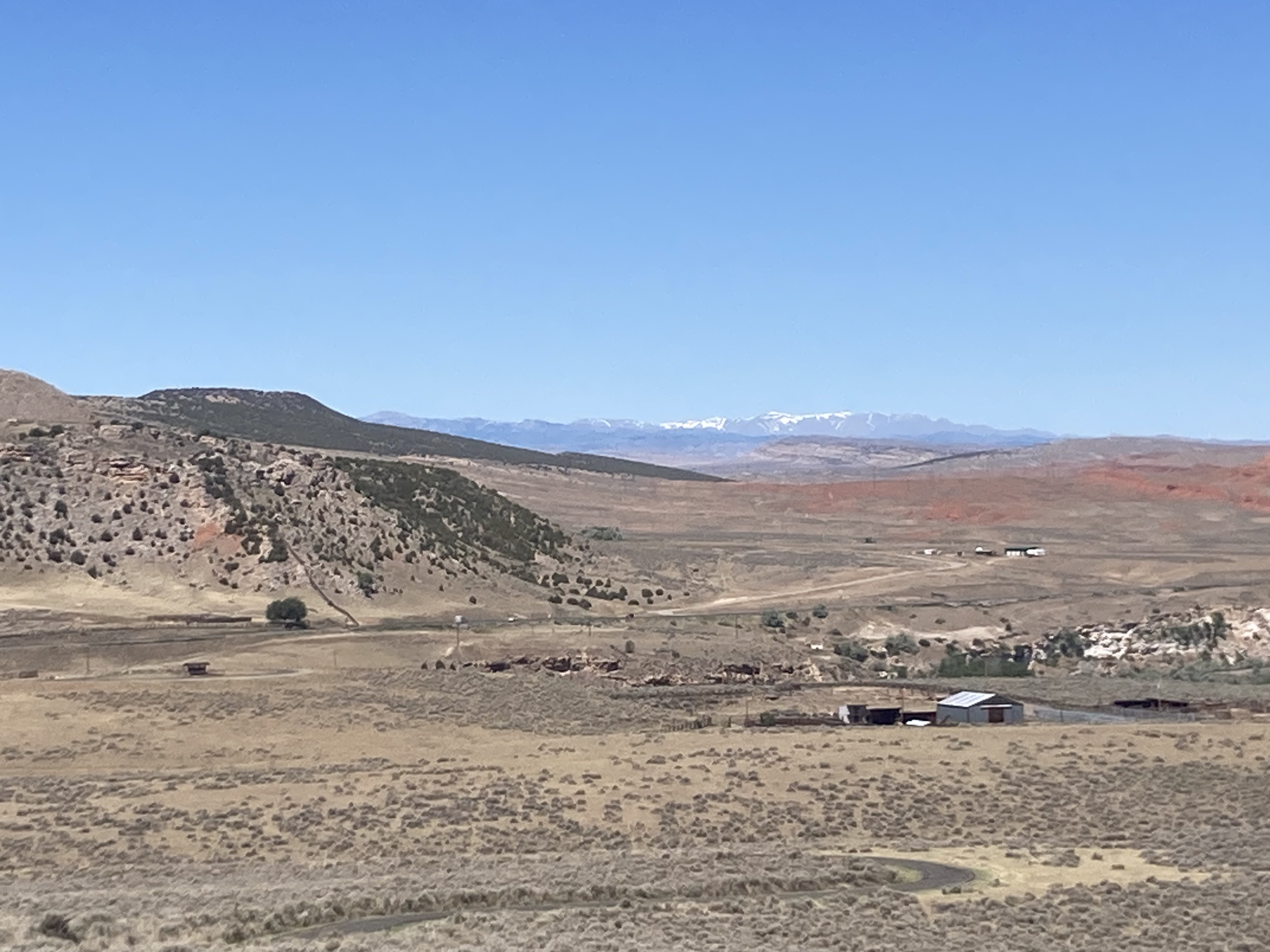
As I drove through Wyoming’s long stretches of open sky and wide, sandy plains filled with sedges, I noticed how the landscape continued to hold the impression of its history eons previous to our current time when much of the state rested beneath enormous ancient seas. The Western Interior Seaway in the late Cretaceous period 100 million to 60 million years ago divided the North American continent between the Gulf of Mexico and the Arctic Ocean. Previously, in the Jurassic period, 165 to 120 million years ago, a portion of the Arctic Ocean spread down in a shallow sea named Sundance from western Canada into what is now the US that includes portions of Wyoming. Above the Sundance Formation near present day Thermopolis (also a geothermal site) lies a sedimentary layer that holds one of the world’s richest areas in dinosaur fossils. The dinosaurs walked along the shorelines of the ancient sea. It’s possible to see their tracks at Red Gulch Dinosaur Tracksite. Native people of the area have known about Wyoming’s fossils for thousands of years and those who first came across them must have been astonished. I’m still astonished by them.
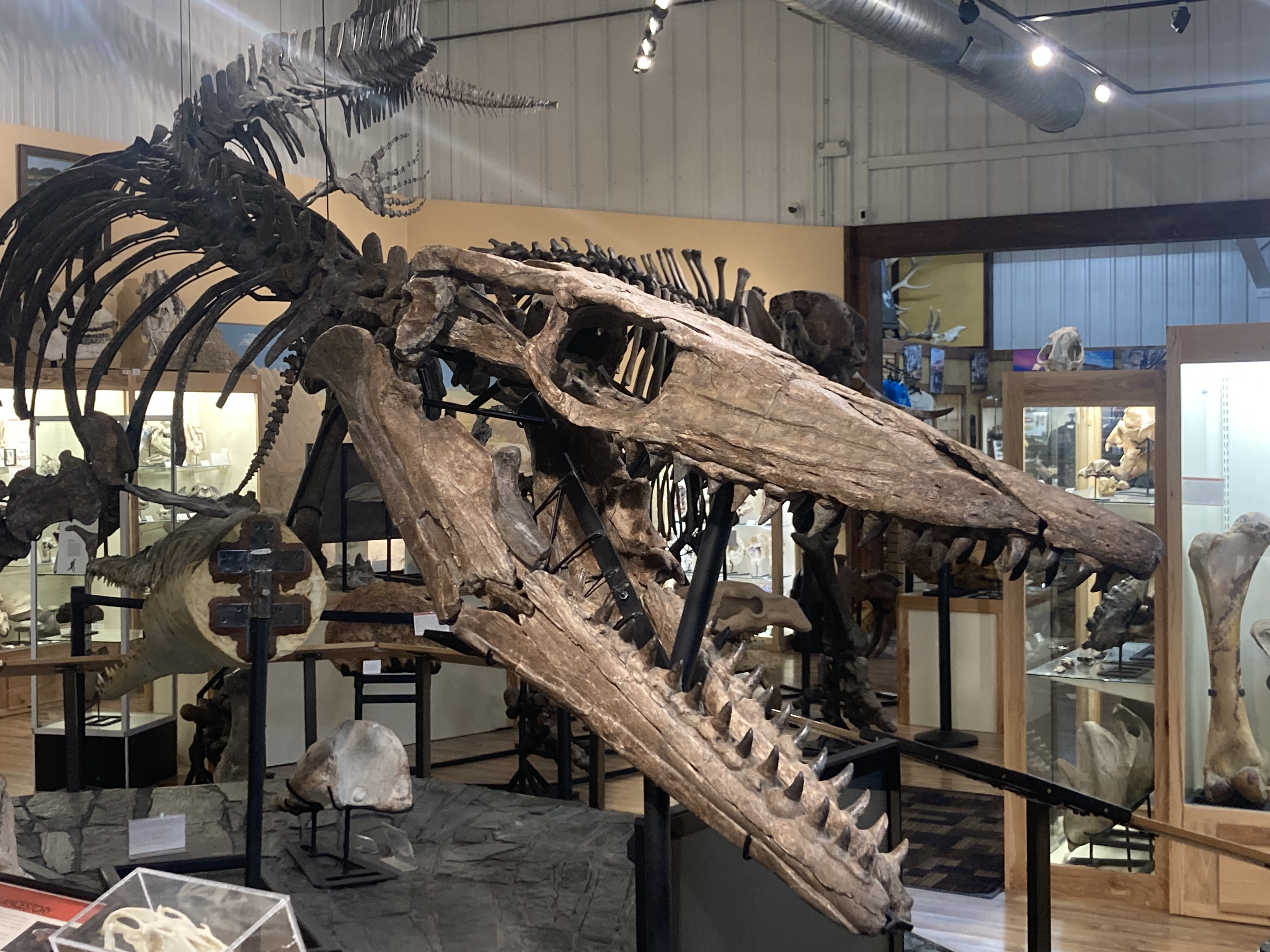
Two other sites on my trip, Worland, Wyoming, and Hot Springs, South Dakota also are sites abundant with fossils. Fossil sites can give us new understanding about how the ecosystem responded to climate change previously in Earth’s history so we can better understand how changes to climate are happening now and how to better make wise choices about our future way of living. Carlo Levi wrote, “The future has an ancient heart.” When thinking of Wyoming and South Dakota, in the future, we can also bring to mind the ancient, primordial past held in the dinosaur bones buried there that were part of the process that brought us into the life we have today.
Travel isn’t only about where we take ourselves to on a holiday. It’s also about our travel through time on the journey of understanding about ourselves and the world we inhabit. A new territory we’re traveling into now is the growing information people are gaining about plants. Zoë Schlanger, author of The Light Eaters tells us in her interview with Romany Williams in Atmos magazine, plants don’t have a central nervous system like humans, nevertheless, science is showing us plants have language, family structures, and make allies with enemies. They also have preferences, plan ahead and can remember. Plants have been doing these things all along, but humans weren’t aware of it. We thought only humans did these things based on the way we typically have categorized information.
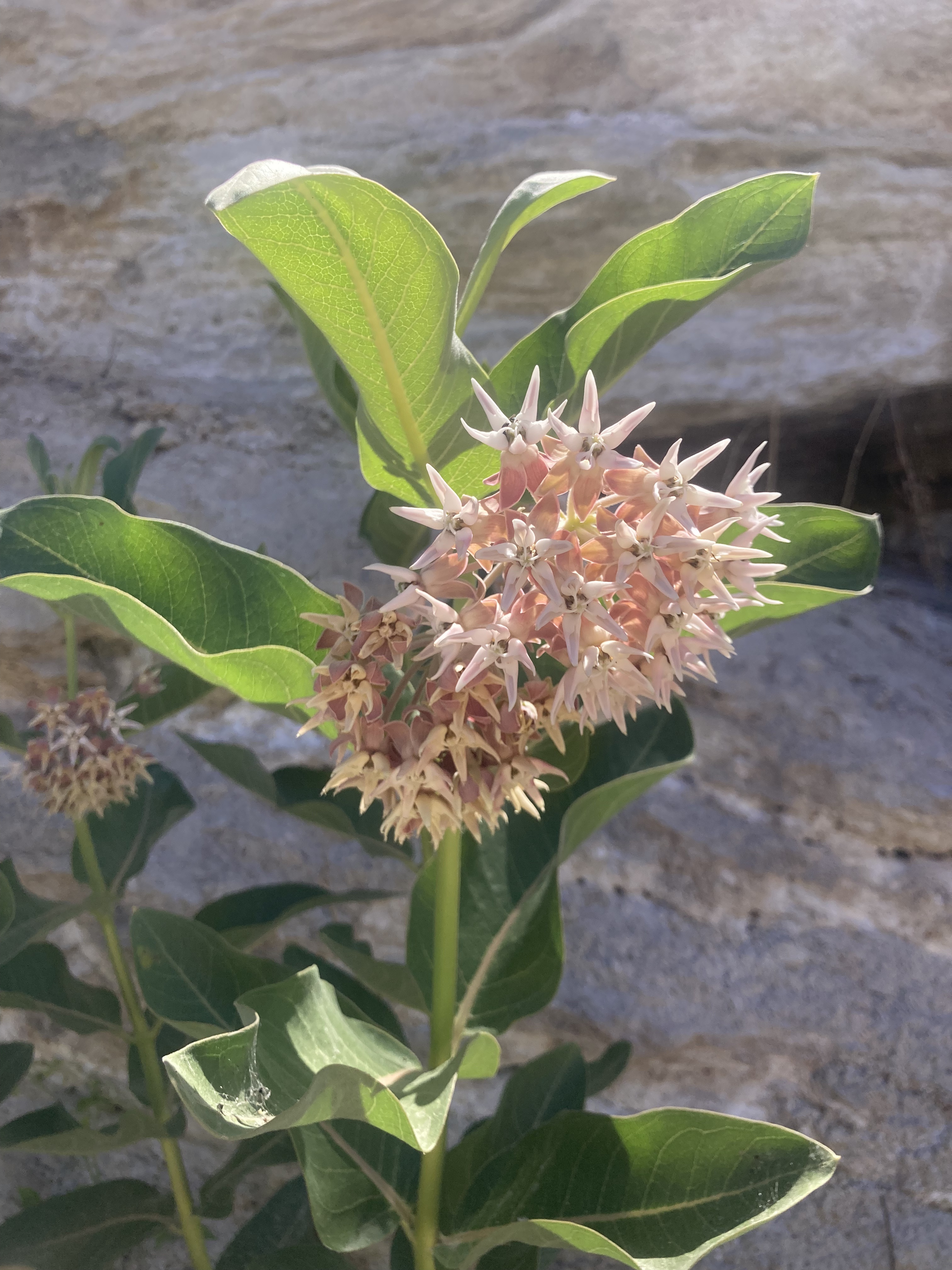
As we reexamine what we think we knew about plants, we now have questions to ask about how we relate to the world around us. “Science indeed has no agreed-upon definition for life, death, intelligence, nor consciousness,” says Schlanger. Travel often raises questions in our minds that we didn’t have before and this new territory of information about plants is creating fresh debates about consciousness. The new information about plants encourages us to open the boxes that previously contained our thinking and to look at our relationship with the world of plants in a larger, more complete map. New inquires arise about our connection to the world around us and how we the environment is something greater than background scenery. Vegetables and fruit are used for mass consumption but Native cultures have long thought of plants as sacred. “I understood them to be relatives and living beings with emotions and lives of their own. I learned that they are part of my life as well and that I should always care for them,” writes anthropologist and ethnobiologist from the Rarámuri culture, Enrique Salmón. “Cultural perception, language, and thought are related to both the land and cultural histories…Beliefs help people recognize their links to the natural world and their responsibility to ensure its survival…There is little distinction between our world and that of nonhumans.” New understandings about plants can give us new ways of speaking about the natural world that influences our thoughts and actions as we travel into the future, and perhaps will connect us in new ways to old understandings about the land we walk on and the vegetation growing there. “You come to understand yourself as just one product of the unending, riotous, messy experiment that is evolution,” Schlanger says. “We’re all trying to find a way to make it in this environment. It’s not a spiritual concept but it comes close to recognizing this unifying truth that evolution is not a hierarchical process.”
Travel places us in a kind of liminal space between worlds–we’re frequently arriving somewhere new but are also soon to depart. Journeys are circular. In between those two points, we gain new understandings, find new words to explain our experience, and we’re changed. But we also circle back to old understandings, old pathways with the ability to see them from a different angle with new light. A further fairly recent significant discovery is the pathways of the interstitium, the spaces between the body’s tissues and cells that’s filled with fluid. This fluid moves nutrients and waste around. It also connects and cushions cells. This fluid route in the body has always been there, but people didn’t notice it because they weren’t looking at the body’s interconnected parts. “There are very specific laboratory reasons why the interstitium was not discovered until a few years ago – the histological method was hiding the canals. But there are also psychological reasons we could not ’see’ the fascial system or the interstitium because we tend to think in parts, not wholes,” explains Tom Myers author of Anatomy Trains. “We’ve known about interstitial fluid for years; we just didn’t know about its ‘organized” nature until we could 1) see in vivo, and 2) think in terms of whole systems instead of discrete ‘organs’… systems are not simply a sum of all their objective parts. Systems are also the rules that govern the relational behavior.” (Read more here.) This pathway of fluids supporting and moving between the body’s organs seems to be a metaphor for the journey of the era we’re traveling through at this time. We’re in the midst of a shift between an old way of thinking that viewed the world as filled with separate objects to be managed and brought under control, and are moving into new world connected in thinking to an ancient one that recognized the world is built of relationships where people sought to acknowledge and respect them.
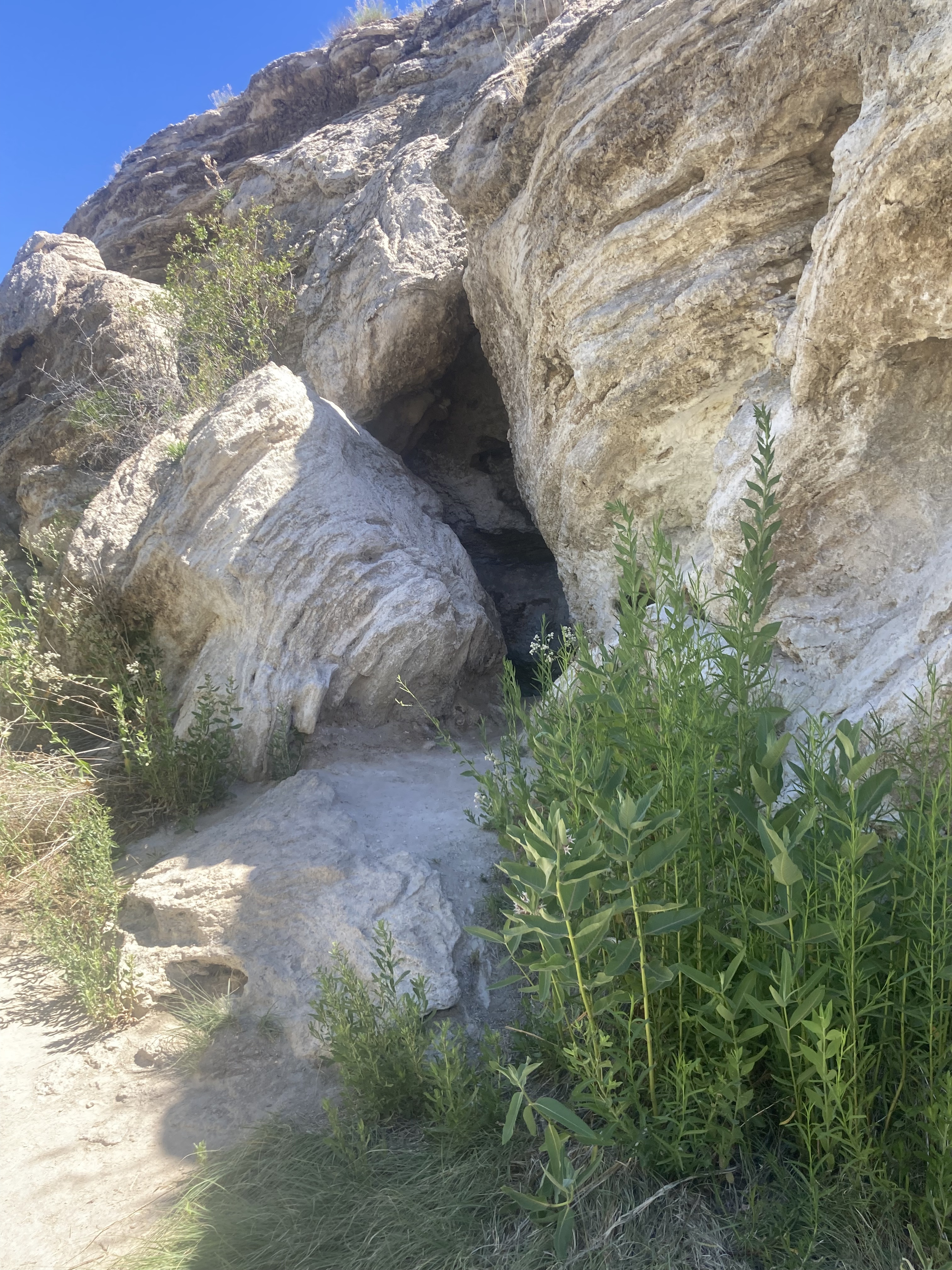
The road Earth has journeyed from the primordial past is still present with us, even if not always visible or obvious. Traveling down new roads, new ways of thinking can motivate us, like Galileo, to think in new ways. What we observe can be confusing, difficult, and uncomfortable, but we learn things that change us. The presence of fossils, recently expanded understandings about plants, and the discovery of the interstitium–all help us see that we are part of an enormous net of interwoven realities. The world is full of wonders and we live inside of mysteries wrapped around further mysteries. Traveling into these unfamiliar territories provokes interesting queries about how we’re connected to the larger whole of life and who we are as humans in the midst of that expansive unfolding existence.
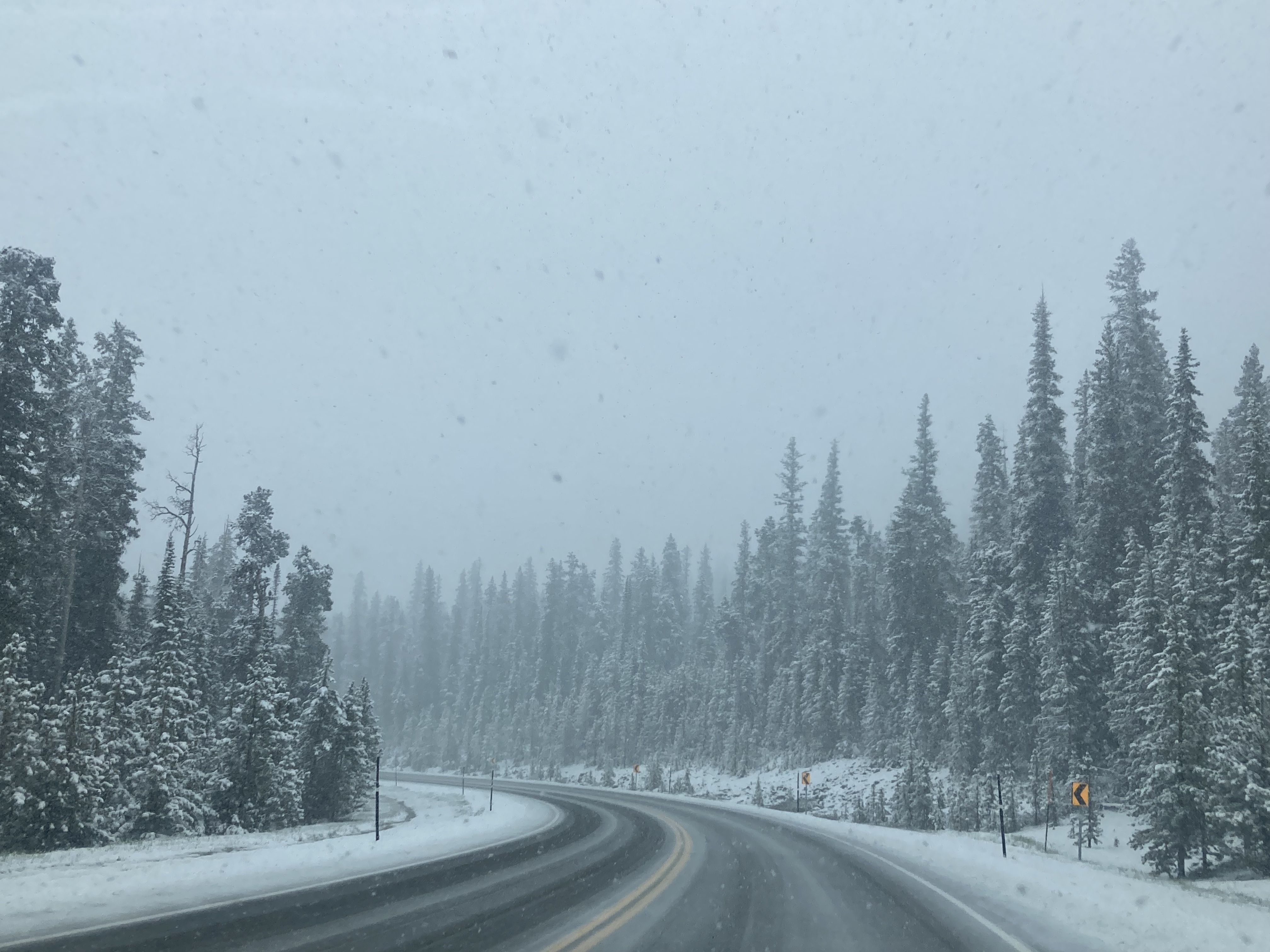
Travel writer Susan Orlean suggests that travel is always a journey. When traveling, she immerses herself in something she doesn’t know much about then journeys toward grasping what she’s seen. There’s a whole lot humans don’t understand. We’re all on this journey traveling through time together. Things can be painfully difficult if we miss a flight when traveling or if our vehicle slides around on a road threatening our safety because it’s snowing unexpectedly. Things can be challenging when you thought you understood the way things worked, where you were going, what was true and real, only to discover something that wasn’t on the road map you were using and you end up in an unexpected situation. Sometimes that unexpected situation turns out to be a delightful one, one that changes your life for the better. Whatever the experience, it’s often eye opening and allows us to see ourselves and the world from a different stance.
“Nel mezzo del cammin di nostra vita / mi ritrovai per una selva oscura, / ché la diritta via era smarrita,” writes Dante, “In the middle of the journey of our life I came to myself within a dark wood where the straight way was lost.” It feels like humanity has arrived at a new place, one that’s asking us to confront our ways of living and thinking that are preventing us from living together well. The planet along with the bulk of humanity is struggling for survival and to live together peacefully while others have far more than would be needed in a thousand lifetimes and are creating enormous disruption to human cooperation and thriving, exponentially exacerbating people’s emotional pain, and needlessly causing death for entire groups of people, along with a plethora of other griefs and losses. We won’t be on this road forever. Everything changes. People in Galileo’s era thought his theories were incorrect, but new understandings and time proved differently. Our present culture is caught in division over many things. We often reject what our minds can’t comprehend or that are outside of our habitual way of seeing things. But if we’re realistic, we can recognize that though we try our best based on the knowledge we have, our reasoning can be faulty. What is the meaning of the whole trajectory of life on earth and the cosmos itself? It’s a complex mystery.
Whether embarking on travel that takes us to a new location in the world or traveling into new understandings brought about through scientific or personal inquiry, the questions we hold as we travel will move us into new territory. What if we purposely assumed the mindset of a traveler and sought a transformation of mind as we move through this unpredictable time we’re living in? Rather than clinging to ideas that keep us stuck, what if we recognized we can’t reason our way through to make sense of everything and valued the journey, even the painful bits? What if we let what provokes and discomforts us become our adventure, if we allow what disorients us to be our exploration, our encounter with something that calls us further into the depth of our being?
Ada Limón in her poem “Salvage” writes about a madrone tree that’s half-burned from the fires. Half of the tree is ashen and burned, the other half green. She writes,
…I have
been staring at the tree for a long time now.
I am reminded of the righteousness I had
before the scorch of time. I miss who I was.
I miss who we all were, before we were this: half
alive to the brightening sky, half dead already.
I place my hand on the unscarred bark that is cool
and unsullied, and because I cannot apologize
to the tree, to my own self I say, I am sorry.
I am sorry I have been so reckless with your life.
We’ve been journeying on this road of sorrow for what feels like a very long time now. I don’t know how much more disappointment grief we can bear. My hope is that the sorrow takes us on a journey where we hear the ripples of Wyoming’s ancient ghostly seas telling us, yes there was terrible ice flows, great droughts, and fire. The waters receded. But the plants went on talking amongst themselves. The world flowered, moved through the eons building mountains, creating icebergs and rivers, plants and animals, gave birth to humans and histories. Sands shift across the ancient shore where the dinosaurs once walked. You wonder how it’s all going to go. But the truth is, even now a spring flows through the interstitum pathways between Earth and humanity, working to bring life out of the recklessness. Together, we can make a different life possible.
Let this poem of Anthony Machado encourage you on your journey “Last Night As I Was Sleeping.“