community, place, trees, Uncategorized

Our Many Homes

When researching for my book A Space Between, I learned histories, geographies, and perspectives I was previously unaware of. Though born an American citizen, there are many histories I am unaware of even in my own place of birth. Locations we inhabit today are the crossroads of many histories and people. As Italo Calvino showed in his book, Invisible Cities, the place we live contains many worlds.

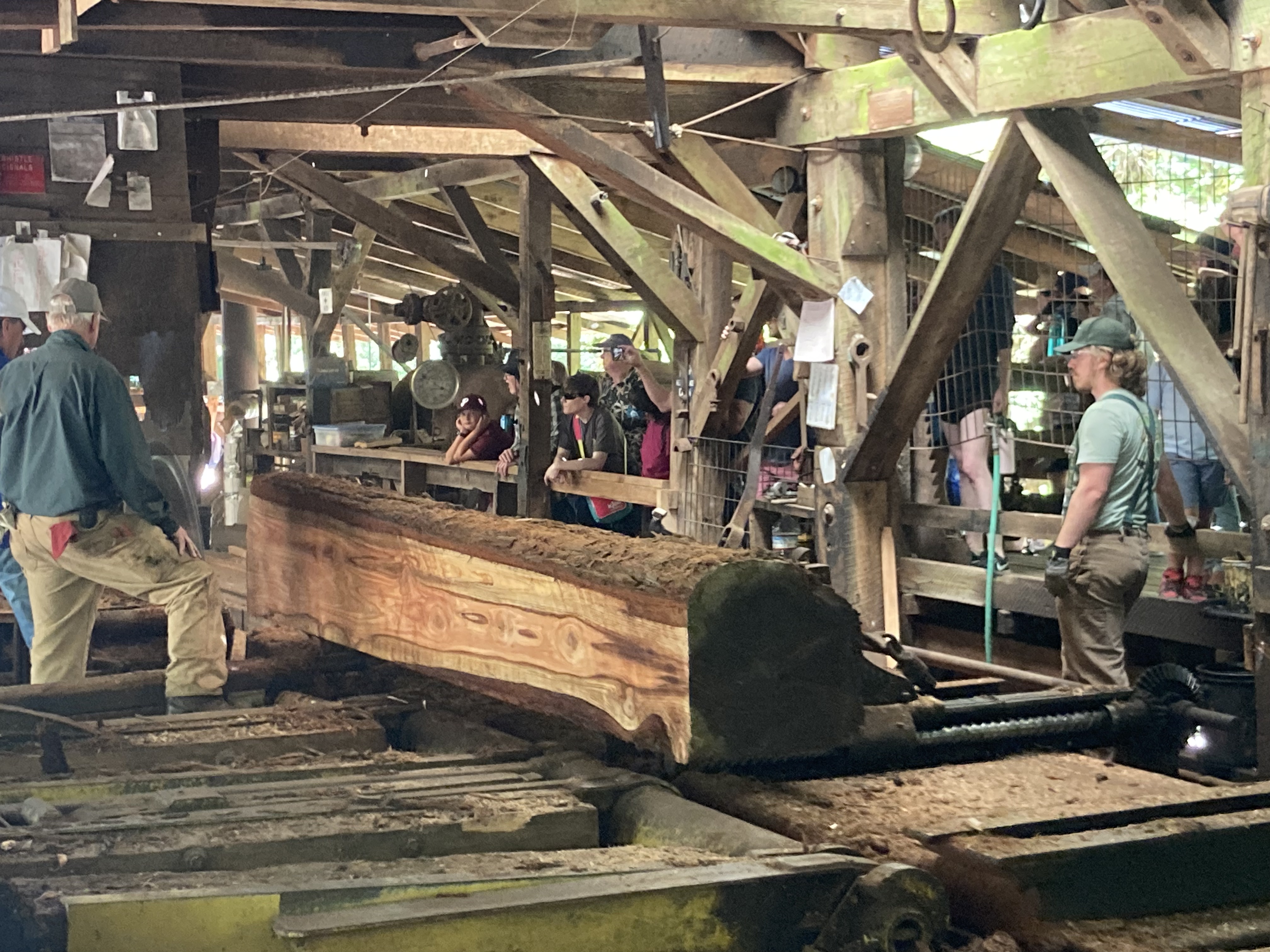
Recently, I visited Sturgeon’s Mill in Sonoma County where I observed the mill, in operation a only few days a year, that cut redwoods that provided the lumber for rebuilding houses after the 1906 San Francisco earthquake and subsequent great fire where over 3,000 people died and 80% of the city was destroyed. To date, that quake remains the deadliest in US history. According to Redwood Ed: A Guide To The Coast Redwoods For Learners and Teachers, in 1905 85-90% of the redwood forests were not yet logged. (You can view several astonishing historical photos of loggers cutting redwoods on this site when scrolling down.) The mill is steam powered, and still operates four weekends a year run by a group of volunteers.

A visit to Sturgeon’s Mill allows observers a glimpse of how redwood was processed into lumber used for building during the era before and after the 1906 San Francisco quake and fire. Old-growth redwood forests store at least three times more carbon above ground than any other forest on earth,” says Altea George. When traveling through San Francisco’s neighborhoods today, however, the disappearance of much of California’s redwoods in the effort to rebuild the city after the quake isn’t something we often think about.
Though the value of preserving forests is better understood now than it was in the last century, following WW2 between 1945 and 1948, sawmills around the Bay Area more than tripled. A further housing boom in the 1960s added to the demand for redwood and fir lumber. “Today over 95% of the original redwood forest area has been logged at least once.”

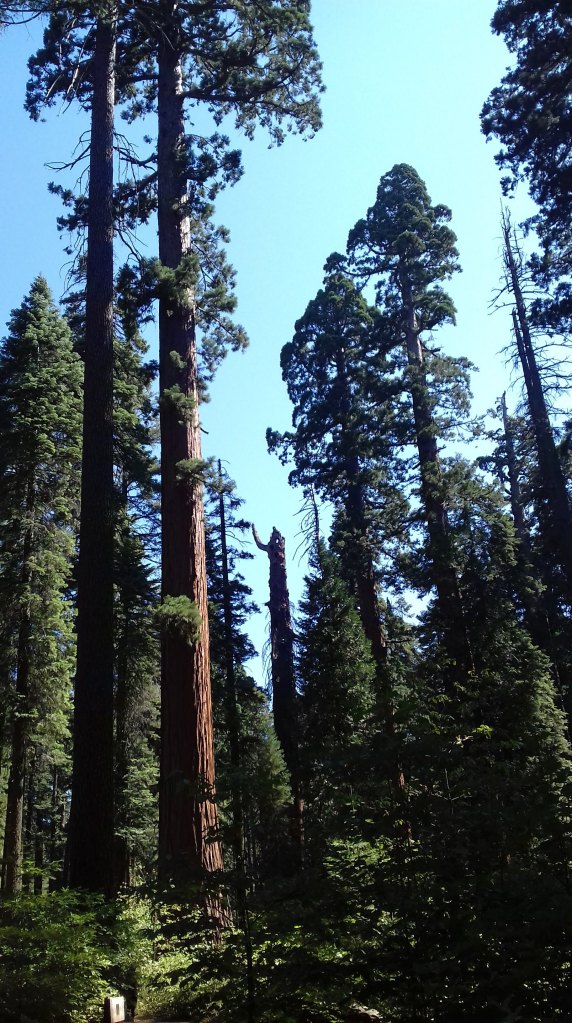
Redwood stump at Armstrong Woods State Park, California

Our homes today are the result of ideas and products from many origins we’re often not conscious of. As Kamala Harris has stated, “You exist in the context of all in which you live and what came before you.” Wherever we go, we carry our histories with us. Our ancestors’ histories and modes of thinking have shaped our lives and way of being in the world. Those living in California’s wider Bay Area still inhabit many houses constructed with redwood taken from forests after the 1906 quake. The quake led to changes in the way commercial buildings are made. Previous to the quake, concrete buildings were thought ugly. Because concrete is an inflexible material, people didn’t want to use it in an earthquake zone. One building that didn’t fall during the quake, the Bekins building , was made of steel reinforced concrete. This observation led to a change in building codes in 1908 influencing the way urban structures are built in cities today.
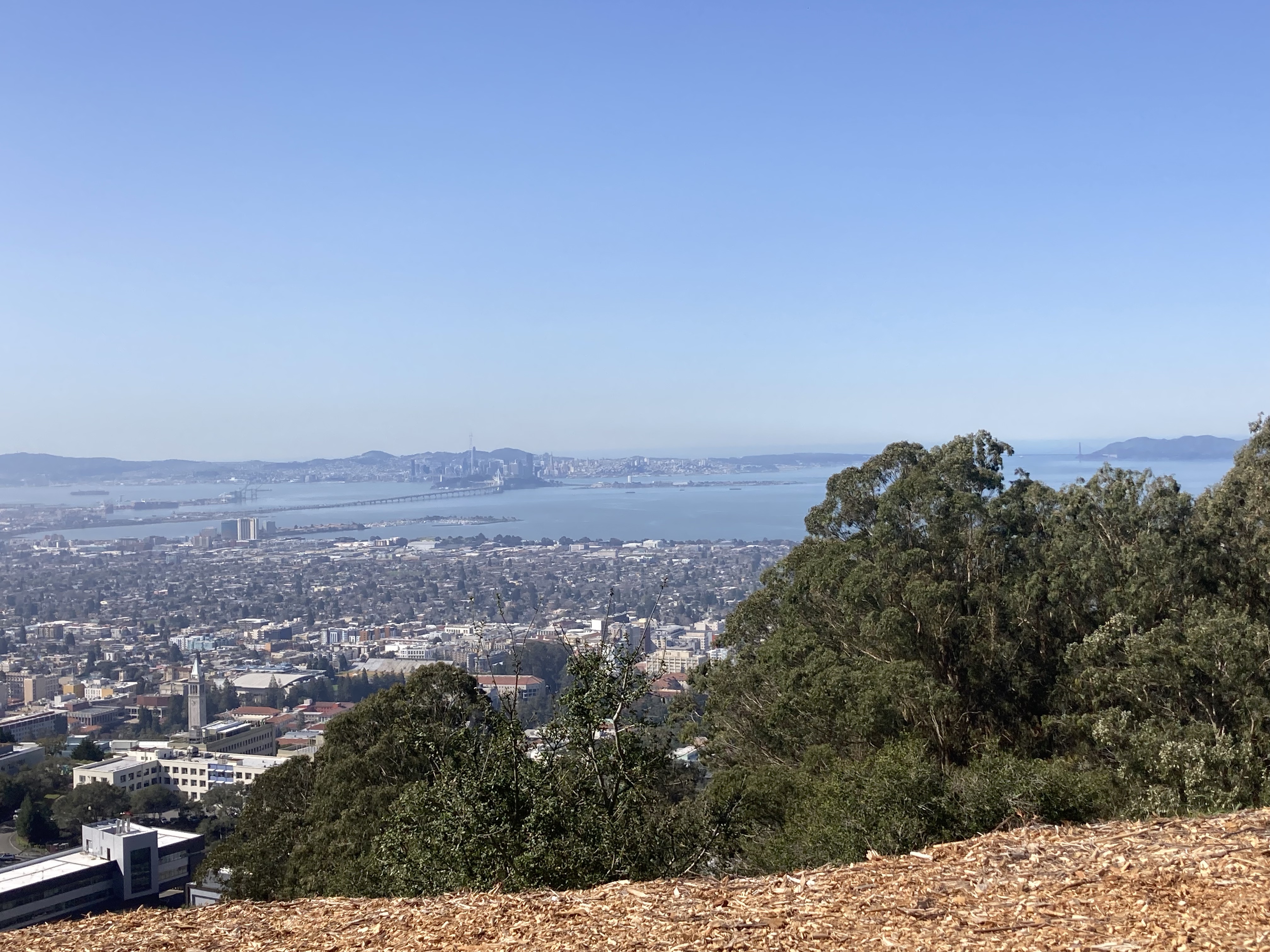
A California native, I grew up on a hillside strewn with granite boulders and covered with yellow grass. Evenings, I listened to cricket throb and coyotes calling across the valley. Soundscape ecologist Bernie Krause tells us, “Every soundscape that springs from a wild habitat generates its own unique signature, one that contains incredible amounts of information.” Not only does the built environment help us understand where we are, the land itself speaks in a way that helps us recognize where we are, and I’ve loved the way the land I was born on has sung its shape into my heart. 

I’ve also stood on a red rock resting outside the small town of Wheatland, Wyoming where my mother was born, the plain stretching far into the distance, and sensed its solid presence rise through my feet. Outside Chugwater, Wyoming where my great grandparents and great aunts and uncles lived and worked, I’ve stood in a field between the thick grassy strands of wheat and felt its welcome, touching vicariously the land of my origin though I’ve never lived there. 

Driving down roadways, we move with the traffic’s flow, all those around us carrying their own histories and stories. Whitman wrote, “(I am large, I contain multitudes.)” We don’t have to have lived in a place to sense a connection to it. Many homes coexist in us. There’s the home of our native tongue, the home of our way of seeing and thinking, and the home of particular clothes we wear that allow us to feel relaxed. There’s the home of foods that comfort us such as spaghetti, or tom kha gai soup, the home of routines with morning tea or coffee, for example, and the home of habits we follow such as reading the morning news, sitting for a morning meditation, or taking an evening stroll. 

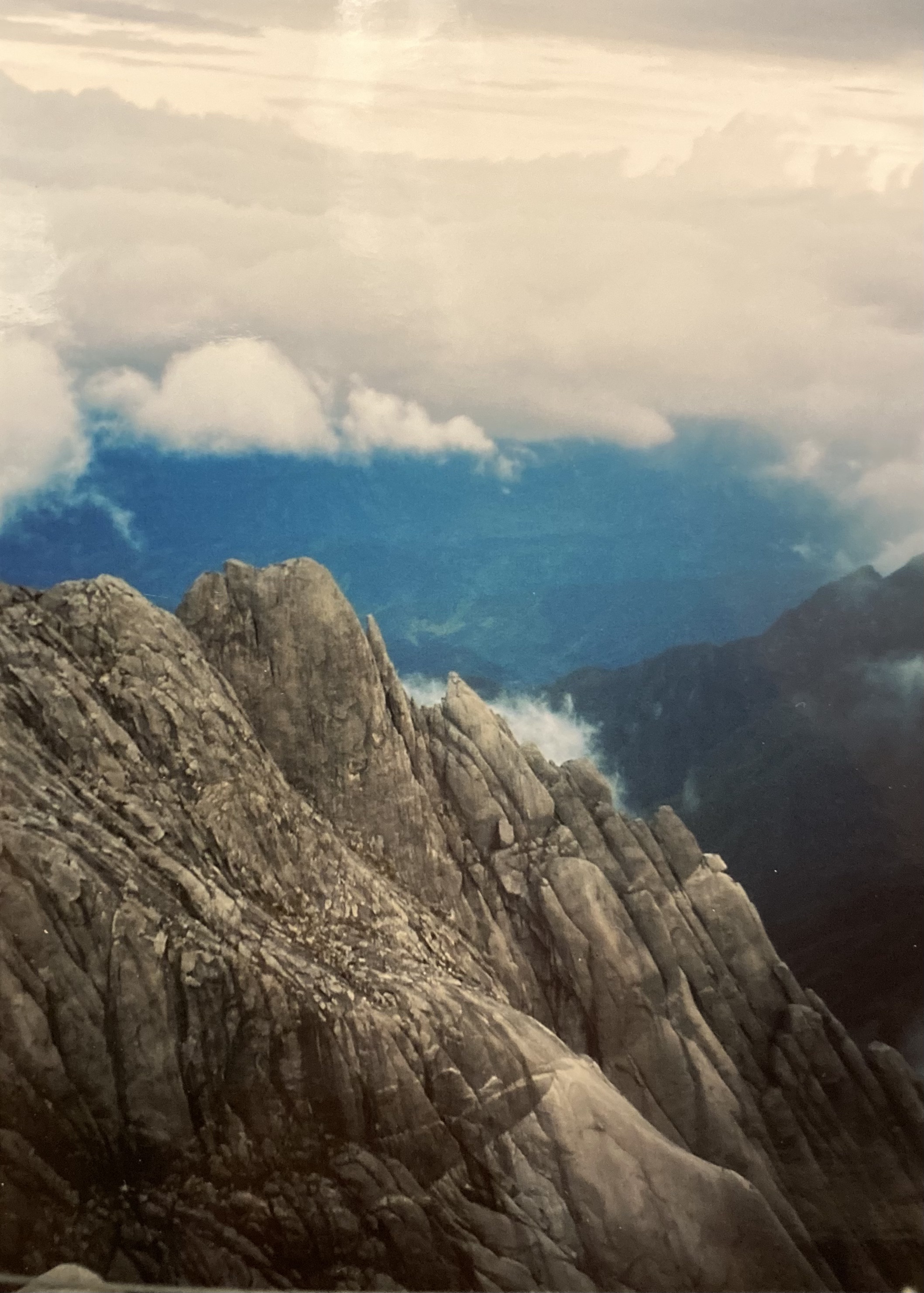
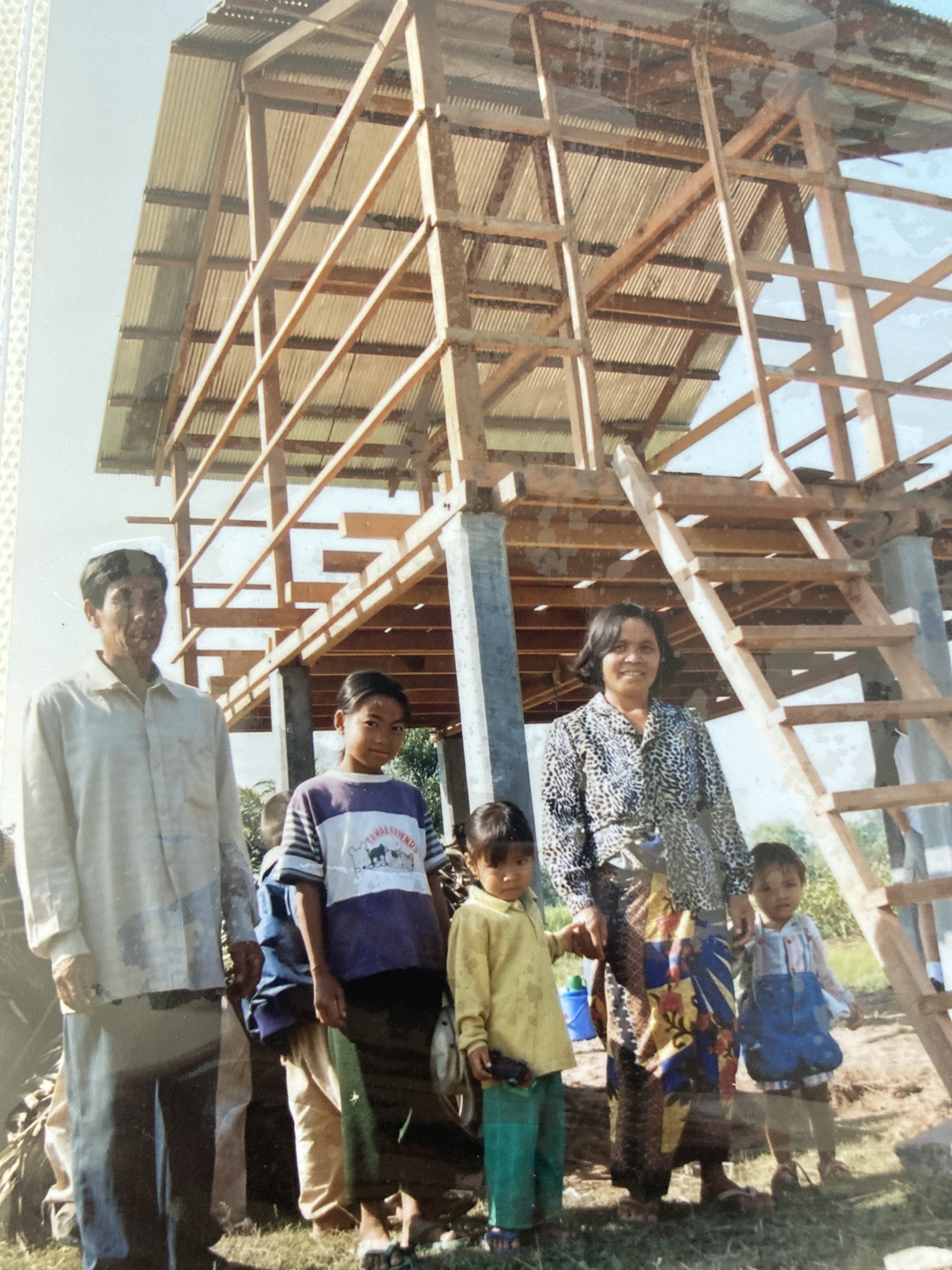
We rely on resources from around the world to create homes we live in. What is the value of knowing the history and origins of our way of life that have come together to create a place we call home? I’ve lived in six different countries outside of the US. Each one has left its imprint and came to feel like a kind of home. We can move across the world, to live in or visit a place that has entirely different protocols for how to eat food or negotiate and still can find connections to those around us, to the city, or the natural world. In Vietnam I’ve stood with hundreds of others in Tien Son Cave who lifted their arms with hands outstretched hoping drops of sacred water. In Saudi I’ve shared iftar after Maghrib prayer, and have stood in an empty lot with students in Kuwait, waiting to be cleared after a bomb threat. I’ve worked with fellow divers and a Cambodian family to build house, celebrated the Mid-Autumn Lantern Festival with friends in Singapore, and endured torrential rains in the forests on Mt. Kinabalu. I’ve attended weddings in New Delhi, and funerals in the US. I’ve ridden calmly to my destination with thousands of strangers on subways in London and St. Petersburg, been swept along by undersea currents near Palau. I’ve walked through Columbia’s Catedral de Sal de Zipaquirá carved by miners beginning in the fifth century BC, and have stood on the African continent’s southernmost edge and thought of the many ships that sailed past its windy coast whose voyages changed the shape of history. Each experience and countless others have helped me understand that though I was born in a particular place, my actions are part of a greater stream of life. All that has come before me as well as the variety of ways people interact with the world shape what I experience at any one point in time. What we call home is a collective making. Each of us are part of a greater whole. As Whitman writes in Leaves of Grass, “Past and present and future are not disjointed but joined.” Each of us is a continuation of the past, an embodiment of the present. We hold the future in the way we pass on our thoughts and carryout our actions and intentions.

William Stafford, in his poem, “Being a Person,” writes,

Be a person here. Stand by the river, invoke
the owls. Invoke winter, then spring.
Let any season that wants to come here make its own
call. After that sound goes away, wait.
A slow bubble rises through the earth
and begins to include sky, stars, all space,
even the outracing, expanding thought.
Come back and hear the little sound again.
Suddenly this dream you are having matches
everyone’s dream, and the result is the world.
If a different call came there wouldn’t be any
world, or you, or the river, or the owls calling.
How you stand here is important. How you
listen for the next things to happen. How you breathe.

Though we are born into a particular place in time and way of thinking, we benefit from expanding our awareness of the worlds and people that create the place we call home. We can renew our lives through choosing to be hospitable to new ideas and ways of being, even seemingly foreign ones. Here’s a few possibilities: Ask relatives about the stories of their lives and the experiences that shaped them. Try taking a new route home or tasting a new food. Listen to a type of music you’re not familiar with. Practice a few phrases in a language you don’t know. Visit an art gallery and read about how that art connects to the thinking of a particular era. Read about the history of your city. Find out the names of plants on your street, which are native to your area and which aren’t. Learn the story of a bridge or building in your area. Have a conversation with someone of a different background, age, or ability level from you. Listen to what they tell you about their lives. Look for new insights and connections. There are many ways to renew and expand our experience of home and to be at home with those around us.

Every day we make use of ideas or rely on inventions passed on to us from elsewhere and previous times. The wheel, the battery, and the telephone–we rely on myriad things that weren’t part of our original human home. Languages borrow words from other languages when there’s no equivalent in one’s own language. For example, the Turkish language has borrowed the word asansör  from the French ascenceur (elevator in English) and the Japanese language has borrowed arubaito アルバイトfrom the German word for part-time job arbeit. None of us are the product of a single, unified story. Embracing new words, ideas, and even worlds can enable us to thrive and grow whole.

Lumber mills like Sturgeon’s here in Sonoma County that cut the redwoods that rebuilt San Francisco after the 1906 quake changed California’s environment. Ancient redwood forests once occupied 2 million acres. After visiting redwoods near Eureka, California, John Reid in his opinion article “Thinking Long-Term: Why We Should Bring Back Redwood Forests” published on the Yale School of the Environment‘s website writes, “The beginning of the old growth is like a threshold between beauty and magic. The giants make time visible. Which makes me think a thousand years forward. If an entire landscape of this should exist in the year 3023, students of our culture may be tempted to conclude that, in our time, forests were sacred.” We share the world together with our neighbors as well as those across the world. What are your dreams for the kind of home you want to inhabit? Most of us would like to live in a world that is both beautiful and kind. As Stafford says, “this dream you are having matches/ everyone’s dream, and the result is the world…/ How you stand here is important…How you breathe.”

Beauty, trees, Uncategorized

On Blindness and Learning to See

Como el cometa

Quiero sentarme donde la rima no me alcance
lejos de bordes y límites, métodos y axiomas.
Donde dos más dos sea cualquier cosa menos cuatro.
Donde el ser fluido se mezcle con todo
y nada se acuerde de lo que es.

I´d like to sit where rhyme cannot reach me
far from edges and limits, methods and axioms.
Where two plus two is anything but four.
Where fluid self mixes with everything
and nothing remembers what it is.

–excerpt from Virginia Francisco’s, Like The Comet

The lines from Francisco’s poem above describe a self so completely connected to her surroundings that she merges with it, borders dissolved. How do we live a life that comes from a place of inner wholeness, that is in process of working toward unity with the world around us? We hear many voices in our world, often with opposing viewpoints, stating they are giving us the truth. Though we might have been raised in a particular way, as we age and come in to contact with other traditions, experience other cultures or other people’s ways of thinking and living, our picture of what the world is and how it works can grow less sharply defined. Instead of experiencing a sense of unity, we live in a place of inner dissonance. We might wonder how to see clearly again and ponder if we’re going blind or whether our vision is merely changing, the focus of the lens readjusting as we enter into a larger understanding of the world.

I’ve been sitting on my front porch in the morning, practicing being still. Eyes closed, I listen, and am noticing how the borders of sound are not firmly defined with specifically shaped form and edges. Sound is elastic. It bounces, reverberates, and stretches into diminishment, is more like the fading of light at sunset. As I listen, leaves rub against one another and grass rustles. Panting dogs run up the nearby road. Prayer flags flap overhead. Bees hum intermittently as they move among the borage in the planter bed. Sounds surface I earlier wasn’t aware of, and my thoughts turn to my sister who has been losing her sight to a rare disease that causes the eyes’ cones to stop functioning. How differently she negotiates now through every environment in the loss of sight. I think of her many adjustments to a new way of living and consider my own blindness in understanding what that would feel like, be like. There are many worlds that fall below my awareness. I have so much learning to do. Blindness of the mind. Blindness of the heart. As William Stafford has written in “Ritual to Read to Each Other,” “the darkness around us is deep.”

Blindness isn’t limited to physical blindness. Last week I went to the Calaveras Big Trees State Park here in California. I’d wanted to visit the trees since first reading about them in Simon Schama’s book, Landscape and Memory while living in Singapore quite a few years ago. In his book, Schama tells about the “Discovery Tree,” a sequoia that was felled in 1853. The tree was so enormous it took three weeks to cut it down. After turning the giant sequoia into a stump, people put a gazebo over it, and danced on it. The fallen portion of the trunk also had a structure put over it and it was used as a bowling alley. (Drawings of the tree and photos of the area from the time period can be seen here.)

The motivation for cutting the tree was the desire to make money. As Frances E. Bishop and Judith Cunningham state on the Calaveras History site, “Captain William H. Hanford, president of the Union Water Company, viewed the Big Tree and envisioned a way to make a fortune by stripping the bark and sending it on tour to New York and Europe. The bark was exhibited first in San Francisco and then New York, where it was consumed in a fire.” Felling the tree to prove such amazing beings existed proved futile, however. Not only did people believe the tree’s enormous size was faked, felling the tree caused much of the trunk’s wood to shatter. According to the National Park Service site, because sequoias’ wood is brittle, as much as 75% of the tree’s wood can be wasted when it falls.

The felled “Discovery Tree” measured 25 ft in diameter and the ring count ring count showed the tree to be 1,244 years old. Had it been left alive, some scientists say it would be today the largest living thing on earth other than the mycelia that is found beneath the earth’s surface.

When I saw the “Discovery Tree’s” stump, I was awed at its stupendous size and moved by the beauty in the turns of wood at the ancient trunk’s base. At the same time, I felt appalled and grief-stricken at what had been purposefully carried out. A portion of the fallen trunk that had been used as a bowling alley rested on the ground a short distance away. Sequoias have an average life span of 2,000 years but can live as much as 3,000 years. Looking at its enormous girth lying on the ground inert knowing very well it might  still be living, I felt remorse that something so rare and wonderful was cut down for such frivolous reasons.

“Discovery Tree” stump

A second famous tree in the North Grove area of the park is called the “Mother of the Forest.” D. A. Plecke on the  Cathedral Grove website states the tree was named for its graceful form. This tree also was destroyed upon discovery by people of European decent. In 1854 a scaffold was built to the height of 120 feet, and the tree was stripped of its bark, an act which destroys the tree. The bark was sent first to New York then onward to London in an attempt to make money, as well as to prove that trees as gargantuan as these exist. People who hadn’t seen the trees in person, however, didn’t believe they were real, and their views didn’t change after being presented with the physical evidence. The bark was put on display at the Crystal Palace in the UK but was destroyed by a fire in 1866. The tree was 2,520 years old, 305 feet high, and had a 63 feet circumference.

Mother of the Forest in the far center distance.

Walking among the sequoias, standing at the foot of the gargantuan wall of their trunks, one can’t help but feel both humbled, and speechless. Though nature is a refuge for our spirits and trees are a boon to our lives, little seems to have been understood about the value of trees’ living presence. We know things about trees now that weren’t understood in 1853. Among other things, they reduce asthma and depression, as well as help lengthen our life span. Trees’ benefit to our lives and complex nature are only recently growing to be understood. Even though this is true, it’s still difficult to understand why it would seem like a good idea to destroy these enormous, magnificent and ancient trees.

Cutting these giant sequoias demonstrates a blindness regarding the value of the trees’ lives. As Leo Hickman states in his article, “How a giant tree’s death sparked the conservation movement 160 years ago,”  at the time the trees were cut, Americans believed nature was theirs to exploit. Nevertheless, there were at least those who felt enough outrage at felling these trees that an effort to save other remaining trees was made. Deforestation didn’t cease, however, as these images from 1915 depict. Today, according to the Save the Redwoods League, only 5 % of the original redwood forests survive. Our blindness continues.

Plant blindness, the inability to see plants and to recognize them is real, is a term coined by Elisabeth Schussler and James Wandersee. People tend to live outside of an awareness of trees and plants precious, life-giving presence. As mammals, our brains more readily pay attention to those things similar to us. Because of this, we don’t tend to see the plants in our environment. A botanist and biology educator, Schussler explains “humans can only recognise (visually) what they already know.” Few today are involved in nurturing plants, and plants are also nonthreatening. As a result, plants tend to blend into a background of green and people mostly ignore them.

We need wood for buildings, tools, furniture, fuel, and paper. But trees, and plants in general, are also important beyond their utilitarian function. What appears to be missing in our awareness as we use wood, as well as other resources, is a connection between our use of resources and our responsibility to the greater community of life–a foundation of respect for the natural world that sustains our life. As Richard Powers in his book Overstory states, “What you make from a tree should be at least as miraculous as what you cut down.”

In Thailand, the culture has a tradition of erecting spirit houses when humans choose to purposefully change the land or do something that alters its natural state. Spirit houses are physical embodiments of a cultural recognition that when land is built on, the life energy of the land and all it sustained is disturbed. There is an acknowledgement that one’s actions have consequences for others beyond what is seen. Spirit houses are a beautiful expression of an awareness of human interdependence with nature. In America, some people celebrate Earth Day and Arbor Day, giving recognition to the earth’s gifts, but these are one day events rather than a practice or a continuing way of seeing or interacting with the natural environment. What stories or practices might help our eyes be opened to see how the sanctity of human life depends on respect and care for life in other forms?

We are born into and grow in a particular environment or environments. Life is a long process of learning who we are, what the world is, and what our relationship to it is. While life differs from place to place and culture to culture, some form of loving our neighbors is found in beliefs around the world. Plants are most certainly our neighbors. Perhaps now could be a good time to get to know our plant neighbors better and to explore more of how we belong together in the world, and the joy a relationship with them brings. We don’t have to remain plant blind. We can start with learning the names of plants outside our door and in our neighborhood and discover what is native to our area. This website gives links as well as book titles with information to help you identify and learn about plants in various world regions. Here is a website for the US to help you do that, and also a plant database to help you learn about native plants of North America based on their characteristics. As Mary Oliver writes in her poem, “Don’t Hesitate,”

We are not wise, and not very often
kind. And much can never be redeemed.
Still, life has some possibility left. Perhaps this
is its way of fighting back, that sometimes
something happens better than all the riches
or power in the world…
…whatever it is, don’t be afraid
of its plenty. Joy is not made to be a crumb.