Uncategorized

Finding Ourselves and the Poetry of Maria Mazziotti Gillan

While looking for new ideas for teaching poetry this past week, I discovered a wonderful writer, Maria Mazziotti Gillan, an Italian American poet whose poetry recreates scenes with such vivid detail that you are literally inside the setting with her, living what it is she relates. In her poem, “My Daughter at 14: Christmas Dance,” Gillan puts the reader directly into the scene and the mind of a mother’s discussion with her daughter about her daughter’s experience at a dance. You feel the tension the mother experiences in wanting to support her daughter as at age 14, she learns to navigate emotions and relationships. While reading, you’re firmly aware of the difficulty and tension the mother experiences as she walks the line between affirming and cautioning her daughter.

We ride through the rain-shining 1 A.M.
streets. I bite back words which long
to be said, knowing I must not shatter your
moment, fragile as a spun-glass bird,

you, the moment, poised on the edge of
flight, and I, on the ground, afraid.

photo-8
Alberico Gaetano Pacifico Citrino with son

You feel the human dilemma poignantly in this poem–the difficulty and challenge in knowing how to understand the needs of the situation and to love another in a way that allows freedom and growth–blossoming, rather than fear.

In another of her poems, “Betrayal,” Gillan describes a daughter’s embarrassment of her Italian-American father when she was younger, her mortification at his yellow teeth, how he drank coffee from a saucer, and how he didn’t speak standard English. Then, as a grown woman, the tables are turned, and the daughter’s son finds her embarrassing and tells her so. The daughter remembers an earlier moment in her youth and how she treated her father,


I was sixteen when you called one night from your work.
I called you “dear,”
loving you in that moment
past all the barriers of the heart.
You called again every night for a week.
I never said it again.
I wish I could say it now.

Dear, my Dear,
with your twisted tongue,
I did not understand you
dragging your burden of love.

It takes most of us a long time to truly hear each other, to comprehend others’ lives on a deeper level. A recurring theme in Gillan’s poems is the theme of shame about social class, and how that gets in the way of understanding each other. It has been years since the last time I read Dickens’ Great Expectations, but after reading Gillan’s poems this past week, I am reminded of scenes from the Dickens’ novel where Pip, too, is ashamed of his father. Pip, an orphan, also was raised in a working class family. He gains education through the generous gift of anonymous benefactor (that happens to be a convict, though he doesn’t know it at the time) and with that education, a growing sense of shame for his humble social class origins develops. “I wished Joe had been rather more genteelly brought up, and then I should have been so too,” Pip explains. His stepfather, Joe, dearly loves Pip, but with Pip’s growing sense of status and pride, he finds his relationship with Joe awkward and visits less and less often. It’s not until much later, when he learns who his benefactor is that Pip is able to move beyond his false sense of self, and build a view of the world that enables him to move beyond his fixation on relationships where he projects on to them his own desires for status and power and that caused him suffering. Gillan’s poems, too, demonstrate the kind of understanding about the self and others that comes through time,  experience, and suffering that allows empathy to grow.

The most powerful of Gillan’s poems that I read this past week was her poem, “Daddy We Called You.” The visual details in the writing are perfectly chosen to help the reader envision the scene of the daughter in the poem speaking with her boyfriend under a streetlamp light while never aknowledging her father’s presence as stands nearby at the bus stop, waiting for a bus to take him home from work. The daughter is ashamed of her father’s inability to speak standard English, embarrassed of his being an unskilled laborer in a world that honors status. Now, as an adult looking back at everything her papa did, the daughter recognizes the love her father had for her and for the family. That love was the foundation beneath her father’s life. Gillan portrays so well the kind of commitment fathers of this generation often had to their families–a commitment not given in words but lived out in faithful dedication to providing for their families, often through difficult physical work.
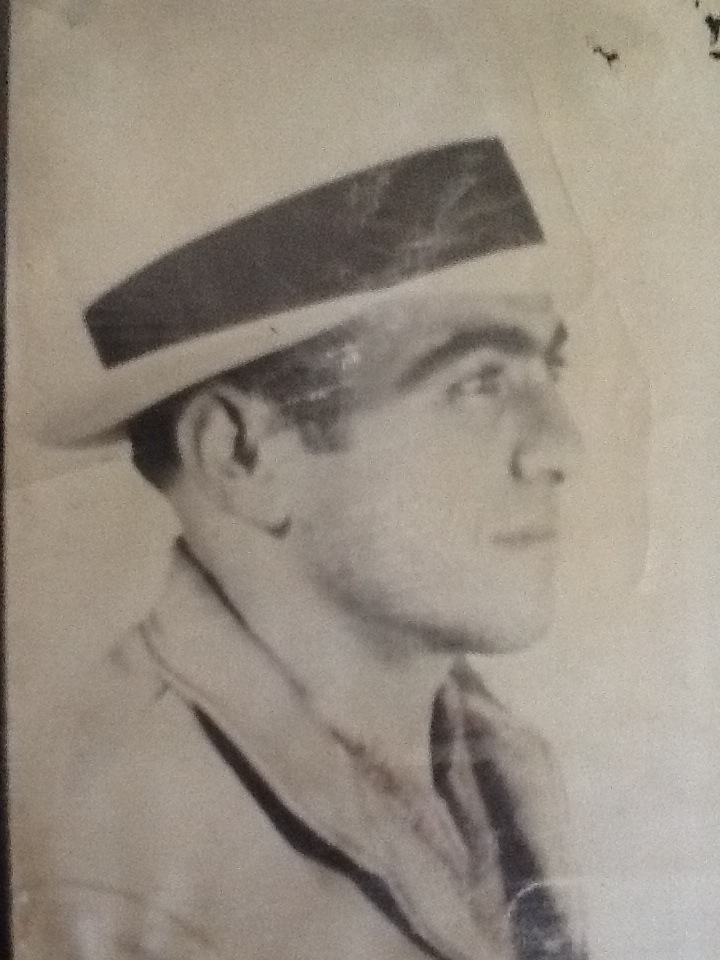
John Peter Citrino
John Peter Citrino

The final lines of “Daddy We Called You” demonstrate the awareness that time brings the daughter in this poem as she sees beneath her father’s actions to the heart of who he is–the way he bore up under  hard work and difficulty because of his devotion to his family. The photos here in this post are from Citrino family history because these men, too, like my own father, and those in the Gillan’s poem, were fathers who worked long hours not for themselves and their own reputations, but out of love and dedication to their families–in order to give their children a chance to do something with their lives more than they themselves had the opportunity to do.

In a world today where money and status are power, Gillan affirms in this poem the dignity of those those around us who are often ignored because of their humble positions in life. Yet it is because power and status are not the center of their sense of self that these very people in their humility can, if we have eyes to see, restore us to a sense of what is truly valuable: our commitment to relationships with others. Humble people, those unconcerned with status and whose lives are not centered around their own egos and desires like the father in Gillan’s poem, treat others with love and respect even though people around them may ignore them and fail to return their love. This strength of character demonstrates a way of living and being that are sorely needed in our world. Gillan’s poem closes with these lines,

Papa,
silk worker,
janitor,
night watchman,
immigrant Italian,
better than any “Father Knows Best” father,
bland as white rice,
with your wine press in the cellar,
with the newspapers you collected
out of garbage piles to turn into money
you banked for us,
with your mouse traps,
with your cracked and calloused hands,
with your yellowed teeth.

Papa,
dragging your dead leg
through the factories of Paterson,
I am outside the house now,
shouting your name.

The daughter shouts the name aloud because she finally sees who he is; she proclaims his name unashamed, and sees who she is in relationship to her father. Both powerful and moving, the poem closes in a moment of redemption. Wholeness is restored.

You can hear Maria Mazziotti Gillan reading the audio version of this poem here. I recommend it. You can also read the full words of the poem here.

What is it we hold as most precious in our lives? What do we live for from day to day? Italian American immigrants were mostly illiterate. Their ambitions weren’t to make it rich. Their central value was relationship–to provide for their families. The table is the symbolic center of that life, a gathering round in appreciation of the sustenance that bonded them. Whatever our heritage, it is good to be reminded of our roots–the earth and the bounty given there that holds us up, and then enables us to hold each other. We hold each other as we stand beside each other through each difficulty life gives. We are present, affirming the value and gift in the presence of each other.

Why are these poems important–poems about immigrants, about Italian immigrants? Italian immigrants were one of the largest groups of immigrants to the U.S., and yet their story isn’t well known. But more than this, these poems are important because most of us today, live with a mix of cultures and social class all around us. At the same time, there is so much misunderstanding between cultures and the social classes. The German poet, Rilke said, “Love consists of this: two solitudes that meet, protect and greet each other.” We need these poems because we need to learn how to see past the media representations of the “other” and find how to be human together. We need to discover how to find and be our true selves underneath the weight of what we see in advertisements, propaganda or other projections of what we think we should be. “For one human being to love another: that is perhaps the most difficult of all our tasks, the ultimate, the last test and proof, the work for which all other work is but preparation,” says Rilke. This is the true work of our lives, whatever it is we do or occupy ourselves with, and this is what Gillan’s poems reveal.

Uncategorized

Endeavors in Art

The world holds so much beauty–waterfalls and lakes, mountains and flowers. As Gerard Manley Hopkin’s poem, “God’s Grandeur” states,

The world is charged with the grandeur of God.
It will flame out, like shining from shook foil;

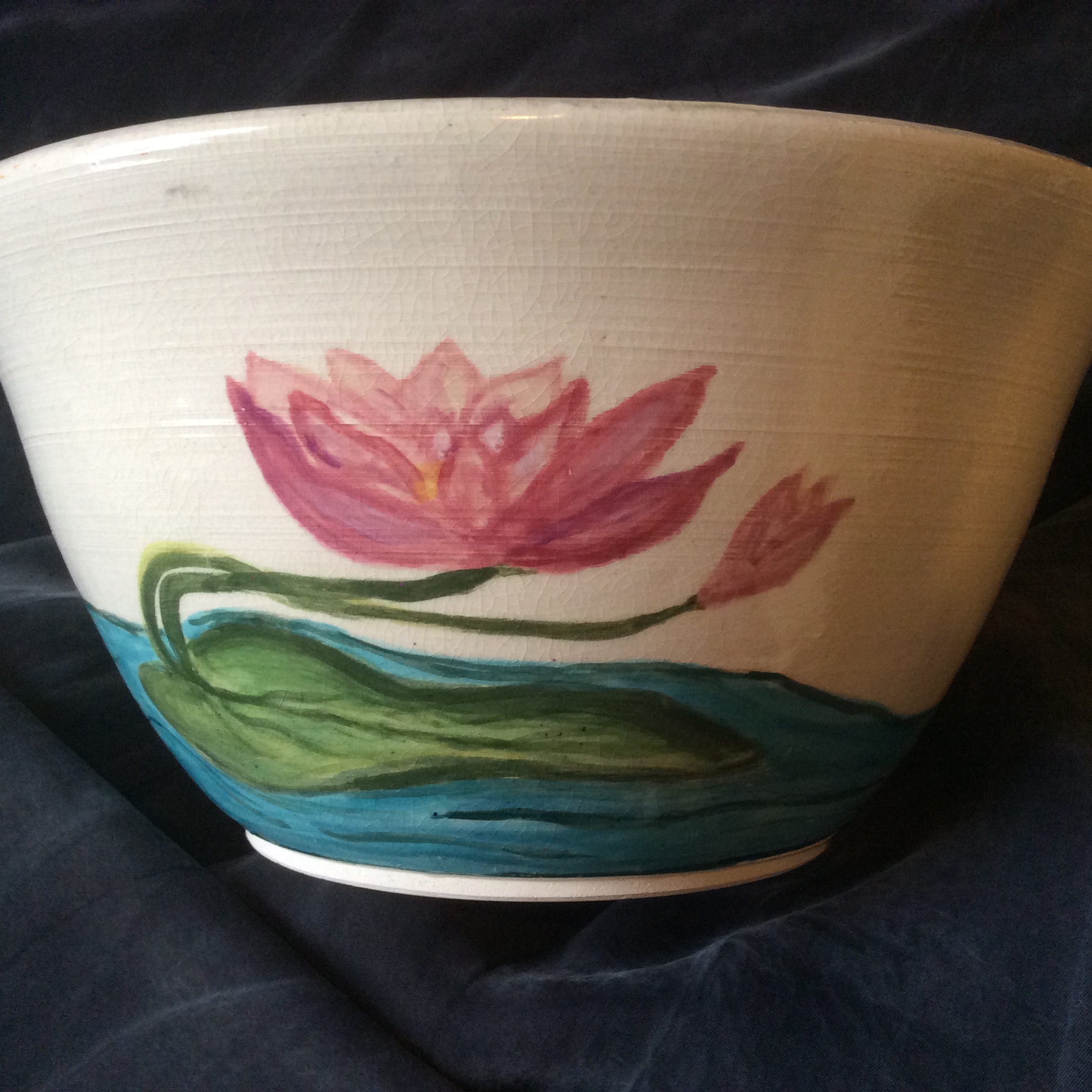
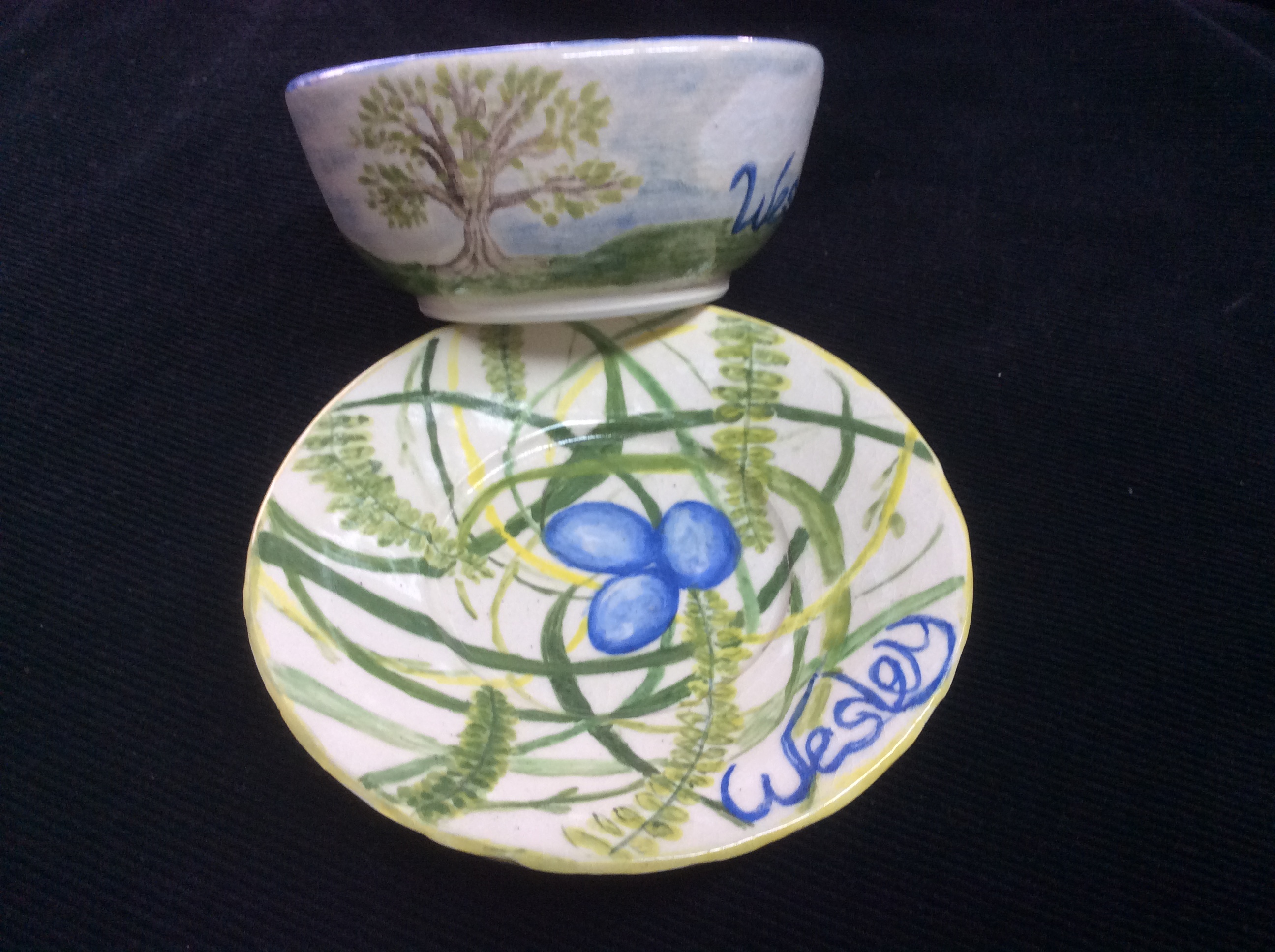
For a person to create anything of beauty, however, takes time, and learning to make something beautiful could take a lifetime. Nevertheless, the endeavor is a wonderful effort. Here are my two newest efforts, a lotus bowl and a bowl and plate for a friend’s baby. It’s a pale reflection of God’s grander but made with the hope that it is a small reflection of my love for that greater beauty.

IMG_3830 IMG_3827 IMG_3822 IMG_3814 IMG_3813 IMG_3812

Uncategorized

Out of Smoke and Silence

Last night the smoke in Delhi was thick. The acrid smell climbed in to all the crevices and cracks in doors and window frames and asserted itself with caustic breath. The air quality index nearby at RK Puram rated the particulate matter in the air as 534, which is rated as hazardous by the Environmental Protection Agency. AQI greater than 300, according to the Air Now air quality guide, “would trigger a health warnings of emergency conditions. The entire population is more likely to be affected.” We have three large air purifiers in our apartment, but last night breathing was still painful. The lungs ached.

Several years back, the World Health Organization stated that air pollution is the greatest threat to health, and in Delhi in particular. (See more here.) It’s worse on the roadsides, according to Time, in an article “New Delhi, the World’s Most Polluted City is Even More Polluted Than We Realized” writer Rishi Iyengar explains that “average pollution levels were up to eight times higher on city roads, the Associated Press reports.” With the number of diesel cars on the road, old cars, and the growing number of cars on the road, things are bad, and they are especially bad in winter when people burn whatever they can find in open fires in order to stay warm. The suffering continues. The problem continues.

Suffering, however, is a world wide phenomena, and comes in so many forms. Only a few weeks ago, you may recall, Boko Haram in Nigeria opened attack on villagers, burned people in their houses and left what CNN says was nearly 2,000 people dead. 30,000 people were displaced. This kind of suffering doesn’t end by people moving to a new location.

Coming to terms with the horror of such experiences make indelible marks on people’s lives that continues on for decades. You may recall genocide in other locations and eras as well. Between April and June of 1994, for example, the BBC  says, somewhere around 800,000 Rwandans were killed within the span of 100 days. That is a statistic that holds underneath it a grief too staggering to comprehend. Last week by accident, I came across the Isaha iteragera Misingi choir, from Kigali Rwandan choir on the Net. (Take a listen.) Since a friend of ours had lived there for several years, I wanted to hear them. Though I didn’t know the meaning of the words the choir sings, a spirit of joy and love comes through their bodies’ expression and their faces. It’s palpable, and I it made me wonder what it is that allows people who have known such deep suffering to express the sense of joy and open heartedness in their music.

We might be going along thinking we’re managing things okay from day to day. We may be able to do this for years, but then something happens that makes us realize we are standing on different ground: a loved one suddenly dies, becomes ill, has an operation or an accident. We lose our job, our house. What then? How do we manage? How might the way the Rwandans are dealing with their suffering suggest how others might deal with their suffering? What strikes me as particularly interesting is that in Rwanda, healing is taking place as a community and through community effort. As Henri Nouwen points out, “Suffering invites us to place our hurts in larger hands.” We go to the community for help and a growing number of Rwandans today are coming together to deal with the problems of the deep wound left behind from the catastrophic experience by using “community based sociotherapy.”

“The effectiveness of the sociotherapy in Byumba relies on the following principles which are considered as the backbone of the approach: Interest in people, Equality, Democracy, Here and Now, Responsibility, Participation, and Learning by Doing,” says Jean de Dieu Basabose in his article, “Community Based Sociotherapy” on the Insight on Conflict website connected with Peace Direct. Victims and offenders alike meet face to face, recognizing that they are in need of support and restoration. In learning to forgive, people are released from their suffering. (See the movie trailer, As We Forgive about this.) To add to this story, however, something worth noting is that in Rwanda, the offenders are also rebuilding the country. In recognizing the wrongs they committed, offenders work to take an active part in their communities in setting things right. Words and action together are making the change.

There are some principles here that are useful. We aren’t alone when we suffer. We rely on the resources within the community to move toward the needed changes. We work to build community and mutual respect for each other within the community. We nurture our spirits and skills so we can give to our communities what is needed. We do what we can in the sphere we are part of to helps create community.

Will that effort be enough? Will it end the air pollution problem within my life time? Will it end genocide? That depends on what we do with what we’re given. If we build community, we will have the support of those around us to carry us through the difficulties, and that is no mean comfort. In the midst of our suffering, it is good to know, as William Stafford says in his poem, “Assurance”

You will never be alone, you hear so deep
a sound when autumn comes. Yellow
pulls across the hills and thrums,
or the silence after lightening before it says
its names- and then the clouds’ wide-mouthed
apologies.

__

In the silence and the smoke, the loss, we can speak together for a better, more humane world. Though we will always be incomplete and fall short. We are human. But together we can hold each other up and become more than we are.

Uncategorized

Solitude, Song & Poetry

When power leads man toward arrogance, poetry reminds him of his limitations. When power narrows the area of man’s concern, poetry reminds him of the richness and diversity of existence. When power corrupts, poetry cleanses.John F. Kennedy

I’ve begun reading Diana Senechal’s book, The Republic of Noise. In the first chapter she talks about the “virtual clutter” of our lives–it’s jittery jangle that has us jumping–and how the slow movement that has caught on because people are trying to fight back and regain something meaningful in their lives. The problem, Senchal suggests is connected to “our weakened capacity for being alone and our dwindling sense of any life beyond the immediate scramble.” (p. 5) Senechal works to define a way of living that is neither disconnected from contemporary society, nor sucked into its whirlpool, and writes to help readers define the “strength it takes to do what we find most rewarding. The strength it takes time to build.”

Artists need hours alone behind doors tuned in to their work, she explains. So do we all. In our scramble for quick answers, she suggests that we may be going against what we really want. We need, instead, to be able to stand alone and apart, to know our own thoughts–thoughts not based on what someone will “like” on a social network site. What we need most of all, Senechal states, is solitude.  “We cannot have meaningful relationships with others unless we know how to stand apart. We cannot learn unless we make room for learning in our minds. We cannot make sound decisions unless we are able to examine the options on our own, in quiet, along with any advice or information at hand. We cannot distinguish fads from sound ideas if we have never questioned social pressures and fashions. We cannot participate in democracy without the deep understanding of the issues at stake. We cannot accomplish anything of beauty unless we are willing to spend many hours working on it alone. We cannot endure disappointment, rejection, bereavement, or distress unless we have a place to join in ourselves. Without solitude, our very thoughts tend toward one-liners. Without solitude, we set ourselves up for halfhearted pursuits. The catch is that solitude, by its nature, cannot be a movement. Each person must find it alone.” (p. 9-10)

I’ve recognized for years that I need a lot of quiet time in order to restore myself and regain energy for the week ahead where I interact with people all day long. I need the time to write, do art, go out into nature for a bike ride or walk. I need the soundless open hours for inner thought in order to gain the strength to go on giving the rest of the week, and it’s affirming to read a book declaring the value of solitude. In solitude, Senechal explains, we get to know who it is we really are and how to hold on to that knowing. We live in a society where collectivism (her word) is promoted. But, without knowing how to separate ourselves from a group, she states, we also won’t really know how to create community because we won’t have an authentic self to bring to a group.  Solitude allows us to confront ourselves–our faults and strengths, and gives us the opportunity to practice becoming who we are. It’s not going to wipe away problems but it will give us a way to “collect ourselves,” she explains, and can help keep us from giving up. When we let go of solitude, we give in to the group because we don’t have the strength to “stand up for something or to stand apart…Without time to stand back or the strength to separate oneself, one has little opportunity to form one’s own thoughts, let alone defend them.” This is the root of loneliness, Senechal suggests.

But where are we encouraged to stand apart, I wonder? Certainly, the arts is a place where individual expression is still valued. This is, in part, why I’m attracted to them. Perhaps it is also a reason why the arts and artists have long lived on society’s fringes. Artists live inside their respective cultures, but also nurture a critique of it. I’m reminded of an interview with Ilya Kaminsky on the Poetry Society’s web site. “Writing about blackbirds, in our day and age, is political,” he explained to the interviewer. Everything is political, he suggests. It’s true. People don’t give that much attention to nature, to our connection to the natural world, so, yes, writing about blackbirds, for example, can be a political act.  “Our job is to discover something new and fresh and transformative in language; to tell something unexpected or deeply moving about human condition,” Kaminsky continues. “We don’t get there by avoiding certain subjects all together. To do so is shallow.

” In the interview, Kaminsky states that Wallace Steven’s poem, “Mozart, 1935”, “is one of the greatest poems ever written during a time of war.” The poem describes the artist at work at the piano playing while the “The snow is falling/And the streets are full of cries.” In the way the pianist plays his music, he describes the world’s wordless grief, anguish and fear at that moment in history. The artist gives the humanity a way to express the soul. (Read the full poem here.) This is why the artist shuts the door and does his work, why she goes on doing the slow work of developing her skill, so that she can give back beauty to the world, and the strength needed to keep on going in the dark hour.

Earlier, I’ve written about the value of singing as a way to keep your heart open and to give you strength of heart for each day. A favorite song of mine for this, as I’ve said in a previous post, is O Sole Mio. It lifts the heart even on dark and gloomy days because when you hit the high notes, it can’t but help but carry out into the world your pain and grief as if on the wings of a bird or in the crash of a wave, and you are somehow lifted out of yourself as a result.

This past week I’ve woken up with a different song that has me breaking out into song, “How Can I Keep From Singing,” a hymn widely used by Baptists and Quakers alike. Though I’ve no idea what brought it to mind as I’ve not heard it sung in ages, I love the encouragement in the words when thinking of them in relationship to the problems across the world I read about in the news, those learn about from different people’s struggles and disabilities, and as I face each day hoping to give to it whatever is needed. The lyrics remind me that whatever difficulty I or others face, the difficulties of the moment are not totality of life experience. By not taking things completely at face value and assuming a wider view, I can keep myself from being consumed by whatever the problem of the moment is. There is a new creation, I can make in myself while practicing day to day–one not based on fear.

To do this I must center myself elsewhere on a larger, wider, deeper foundation that is drawn up out of the well of hours in solitude. When focusing on this center, the tempest can roar, but inside, I can know the storm isn’t the world. As the lyrics state, tyrants can roar, but their time will come to an end and their power pass away. Love’s truth is bigger. We can cling to that knowing, and in that clinging we can find ourselves restored again.

Living in this mind frame when things are falling apart is difficult. Music is one of the things to help us remember ourselves, and to stay centered. You might like this version of the song, sung with lovely harmony by the group T Sisters.  I especially like Eva Cassidy’s version of the song. She sings it with a gospel flair, and her voice delivers the lines with a soulful power that can’t help but strengthen one’s own soul while listening. Whoever you are reading this, whatever you are facing in your life, I hope you find the way to keep on singing.

“How Can I Keep From Singing?”

My life goes on in endless song
above earth’s lamentations,
I hear the real, though far-off hymn
that hails a new creation.

Through all the tumult and the strife
I hear it’s music ringing,
It sounds an echo in my soul.
How can I keep from singing?

Oh though the tempest loudly roars,
I hear the truth, it liveth.
Oh though the darkness ’round me close,
Songs in the night it giveth.

No storm can shake my inmost calm,
While to that rock I’m clinging.
Since love is lord of heaven and earth
How can I keep from singing?

When tyrants tremble in their fear
And hear their death knell ringing,
When friends rejoice both far and near
How can I keep from singing?

No storm can shake my inmost calm,
While to that rock I’m clinging.
Since love is lord of heaven and earth
How can I keep from singing?

My life goes on in endless song
Above earth’s lamentations,
I hear the real, though far-off hymn
How can I keep from singing?

Lord, how can I keep from singing?
Oh, how can I keep from singing.

Uncategorized

What is Interesting, What is Memorable, What is Beautiful

“…experiences of beauty remain among the principal reasons for being alive, for wanting to remain alive, for sharing the joys of living with others…once we go beyond sheer survival…the quality of one’s life proves of the essence. And a life bereft of beauty–or, if you prefer, without the potential for beautiful experiences–is empty.”–Howard Gardner, Truth, Beauty, and Goodness Reframed

Traditionally, the criteria for great art was beauty. While across cultures people still find natural scenery like lakes and mountains beautiful, beauty has pretty much lost its place as an important criteria of Great Art, says Gardner. But beauty isn’t necessarily a criteria for art any longer, Gardener explains. What matters more now is whether art is memorable, whether it stimulates our interest–if it makes us see anew. This may be true,  but I think for many, standing in a cathedral like Barcelona’s Sagrada Familia, still is capable for carrying people into a place of wonder and awe at how much beauty light hold can as it shines down through the glory hole above the altar because of the angle and shape of the skylight there as the golden walls reach up to the heavens.

Gardner’s criteria of making something that will niggle at people’s minds, stimulating their interest in memorable ways is possible if you are Antonio Gaudi. Gaudi’s Sagrada does both of these things in addition to being truly beautiful. I, on the other hand, am still working on practicing the most basic of basics in art. Last weekend I spent the afternoon painting on a pottery bowl–dragonflies, lily pads and grassy reeds. I’m new to drawing and painting, so it takes be longer than it would a person who is trained as an artist, but I don’t mind because the process itself engages me. For me, painting on pottery is a grand experience of experimentation. How will the design fit dynamically within the space without looking too crowded or too empty? How will I draw a design that’s not too complicated for my skill level? How will the line transform with the application of a particular glaze’s viscosity on the brush? How will the glazes’ s color change after firing that will influence what colors I choose before firing? I am a beginner, and these are questions I ask while working. Benchmarks of beauty for the the beginner in a particular field or craft are different from those who have been doing their work for years. Though it won’t pass for a high standard of beauty in the world at large, for a beginner the work one does can still be interesting and memorable–the hours spent creating completely absorbing.

My current drawing is a realistic one, but to paint it, I have to break the forms in the composition into their structural parts–deconstructing and then reconstructing objects in order to be able to paint them. I’m barely beginning to understand how to do that at the simplest level. Painters like Picasso, and Cezanne, deconstructed forms–painting from the inside of structures, so to speak, or the idea of what the structures suggested. Their work delves much further into complex understandings of what a forms are. I play with forms in order to understand how they function. Art masters, on the other hand, have gone through that stage long ago and have come out the other side. They understand forms so well that they have gained a flexibility that allows them to return to play with them anew–experimenting with them and knowing them in more intimately as a result. John Berger, in his book, Ways of Seeing, says, “The relation between what we see and what we know is never settled. Each evening we see the sun set. We know that the earth is turning away from it. Yet the knowledge, the explanation, never quite fits the sight.” Maybe this is why artists are constantly making, and making again, trying to show what they see inside an object, the feeling suggested in the form that makes it come alive.

Poetry is sound and line, shape–the use of white space to create meaning. As with visual art, in poetry also there is a kind of meta meaning going on between physical form and feeling. Beneath a poem’s words is the sound of words and the poem’s design on the page that is an integral part of the poem’s meaning. The artist places a line on the page and it, too, takes shape and meaning. Jeanette Mullaney, who writes and edits e-mails for the Metropolitan Museum of Art, talks about visual art’s marriage to poetry. These two art forms can take you away from where you are or bring everything together, she says. In my view, they might also sometimes paradoxically function to do both at the same time.

The connection of sound to emotion is interesting, even if there are no words or the words are indistinct. If you listen to just the sounds in this short animated Pixar film, La Luna, or this Polish, British, Norwegian animated film, Peter and the Wolf(see more about the film here) much can be understood without specific words. Just the music and general sounds give an idea of what is happening. Connecting art and poetry, allowing them to resonate off of each other. Last year, poet Kenneth Goldsmith performed poems at the Museum of Modern Art in New York City while standing in front of various art pieces. According to the MOMA site, nearly everyone at the readings felt they had an impact on their visit, some saying that the associative connection between the art and the words deepened their experience of each.

Beauty is all around us in the very structure of nature–the Fibonacci curves of roses, pinecones, and the nautilus shell, for example, a structure that is beautifully balanced. It takes time to learn how to see. I want to create something beautiful but doing that is no small task. Nature took millions of years to develop, so of course I should understand that it’s going to take me a while too. But the time element doesn’t matter, really. Just working with color and shape hour after hour is somehow very satisfying.  Art and poetry connect in the journey toward finding a life of meaning. Creating art, whether the form is  poetry, film, painting or dance, is a way to enter in to and connect with a state of being that engenders attentiveness to life. It’s calming, refreshing, and an antidote not just to the pace of modern life but to its process as well. As Gardner stated, without beauty, life feels empty.

Uncategorized

Where Does Democracy Begin?

The human heart is the first home of democracy. It is where we embrace our questions. Can we be equitable? Can we be generous? Can we listen with our whole beings, not just our minds, and offer our attention rather than our opinions? And do we have enough resolve in our hearts to act courageously, relentlessly, without giving up–ever–trusting our fellow citizens to join with us in our determined pursuit of a living democracy?
–Terry Tempest Williams

Habits of the Heart that Encourage Democracy, from Parker J. Palmer’s book, Healing the Heart of Democracy

1. An understanding that we are all in this together.

2. An appreciation of the value of “otherness”

3. An ability to hold tension in life-giving ways.

4. A sense of personal voice and agency.

5. A capacity to create community.

Parker J. Palmer discusses Alex de Tocqueveille’s suggestion that democracy in America would be successful depending on the habits of the heart Americans nourished. Global Oneness Project discussion of  these habits.

Video introduction to the habits by Parker J. Palmer.

Uncategorized

The Importance of Doing Nothing

photo 1 (10)
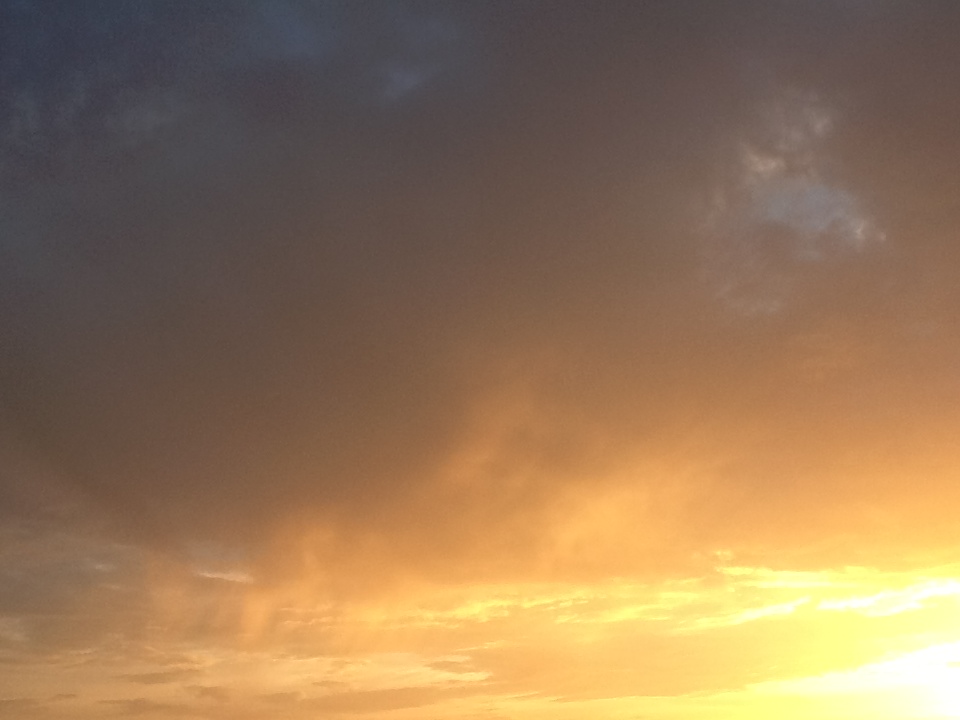
Cloudscape, Wildomar, California

In an age of constant movement, nothing is so important as sitting still.“– Pico Iyre

This summer I was taking photos of clouds, fascinated by their shapes, something that is uncommon in Delhi’s skies this time of year where mostly what one sees is a haze hanging in the street from the ongoing air pollution. Gavin Pretor-Pinney, a graphic designer from the UK moved to Rome and began noticing clouds in paintings and it made him think he should do something more with clouds. He gave a lecture at an arts festival, and the Cloud Appreciation Society was born. The society post images, poetry and music inspired by clouds, and has a manifesto that essentially declares if we had blue skies every day, it would be monotonous. Clouds are nature’s poetry, expressing mood. Their beauty is overlooked, and contemplating them benefits the soul, the manifesto describes. I’ve got to say, the benefits are certainly enticing.

In his interview with Guy Raz on the TED radio program, Pretor-Pinney explains that gazing at clouds benefits us, and that we should really look up more often. “We need to be reminded that slowing down and being in the present – not thinking about what you’ve got to do and what you should have done, but just being here, letting your imagination lift from the everyday concerns down here and just being in the present. It’s good for you. It’s good for your ideas. It’s good for your creativity. It’s good for your soul.” I imagine staring at clouds does something similar for the mind as going for a walk–it encourages associative thinking and nurtures creativity as a result.

Currently, the air quality at the measuring station across the street of particulate matter in the air at 2.5 is at 253, which causes “significant aggravation of heart or lung disease and premature mortality in persons with cardiopulmonary disease and the elderly; significant increase in respiratory effects in general population,” according to the US embassy air quality data site here in Delhi. It hasn’t been a good day, overall, for cloud viewing, but the idea of finding value in letting the mind wander, allowing it to take a break from thinking about the long list of what needs to get done has got me interested wanting to drift with clouds. Recently, I participated in a guided imagery in which the leader asked people to go in their minds to a place that made them very happy. I went directly to my garden in California, and I visualized myself sitting in the dirt, letting it sift through my fingers. I wasn’t traveling to some fabulous location to dive, wasn’t wandering down a beautiful street in a foreign city or climbing a mountain. I was doing the most mundane thing, doing nothing, really, and was feeling supremely content. What is it about doing nothing that is so satisfying?

photo 2 (8)
Southern California clouds at sunset

It seems I’m not the only one thinking about the need to simply do nothing, Pico Iyer, known for his writing about global citizenship, in his TEDRadio hour interview, also with Guy Raz, “How Can We Find More Time To Be Still,” says he left New York because he was “making a living there, but wasn’t making a life.” What is more satisfying in life, he says, relationships and quiet exploration–the invisible things. Most people live in cities where the pace is intense. Often work place increases its demands. It is the constant speed of everything we do, Iyre suggests, that creates the yearning for the opposite. “…in an age of acceleration, nothing can be more exhilarating than going slow. And in an age of distraction, nothing is so luxurious as paying attention. And in an age of constant movement, nothing is so urgent as sitting still.”  The desire, the need, to do nothing is felt by many. Lawton Ursey on the Forbes site talks about Andrew Smart’s book Autopilot: The Art and Science of Doing Nothing. He explains that research shows that when not focused on a specific task, the brain becomes more active, “more organized and engaged in idleness.” This is a positive thing. It seems that focusing too hard on getting things done, might actually make us less efficient. Doing nothing, it appears, is underrated.

When we have to make difficult decisions, when we’re under stress, we are actually less able to see the big picture, less able to think clearly and act out of a wiser, balanced position. What can we do to take back our lives from the pressure of obligations and to create more space? Many people are talking about the need to create space in their lives so they can live a reflective life, but how many of us actually do it? We are admonished to find balance, but the structures and systems we live in make that very difficult. Over 200 years ago, Wordsworth wrote, “The world is too much with us; late and soon,/Getting and spending, we lay waste our powers.” It doesn’t seem much has changed in this respect since he penned those lines.

photo (10)When my recent 49 days of purposeful observation ended, the thing I realized is how much I have cramped my life into a corner, and how in need I am of opening up more space for being. My intention was to use the observation time to make more space in my life. Sometimes my “purposeful observation” was literally reduced to a few seconds.  I don’t think anything will open up and change much in my life if I continue to let the pressures of the world around me control my life. I must return to a practice that allows me to learn how to create space, and create life for myself. I suspect most of us can’t move away to a new city right now like Pico Iyre did. If we want more space in our lives to live and move and experience being, perhaps it would help if we could find one simple thing we can begin with where we are, and then start to practice it. For example, I might set a focus for the day, something I am going to purposefully work on, then coming back to it at the end of the day and keeping track of how it went. Something I long for is a sense of spaciousness, so maybe lighting a candle purposefully might be a good focus practice. For others who have a similar need, maybe it is sitting in the doorway sun for 10 minutes in the morning, if you have a house where you can do that, or for others it might be listening to a piece of music with full attention–one small thing to create a crack that will lead to a larger crack in the structure we’ve built that doesn’t makes space for breath, for living the other part of ourselves–our unlived lives, so to speak. Richard Rohr in his article in Sojourners, advocates a daily time of silence. I’m reminded that catholics have a practice of the Examen, and this might be useful for some. We don’t need to do all, be all, have all. Maybe we need to remind ourselves of  E.F. Schumacher’s idea more often, that small is beautiful, as his book title says. It can be enough.

We can be intentional with our time and presence. Creating the conditions for change and then practicing them until they habituate is necessary. All skills take training, even creating space for rest.

photo 1 (11)

Uncategorized

Living in a World of Need

Why do I continue living in India year after year? There are practical reasons, of course, but there are other reasons too. Just last week, for example, I saw a camel walking down the road amidst busy traffic. One doesn’t see that sight on the street every day! It’s not exactly common here either, but then again, it’s not something that could never happen.

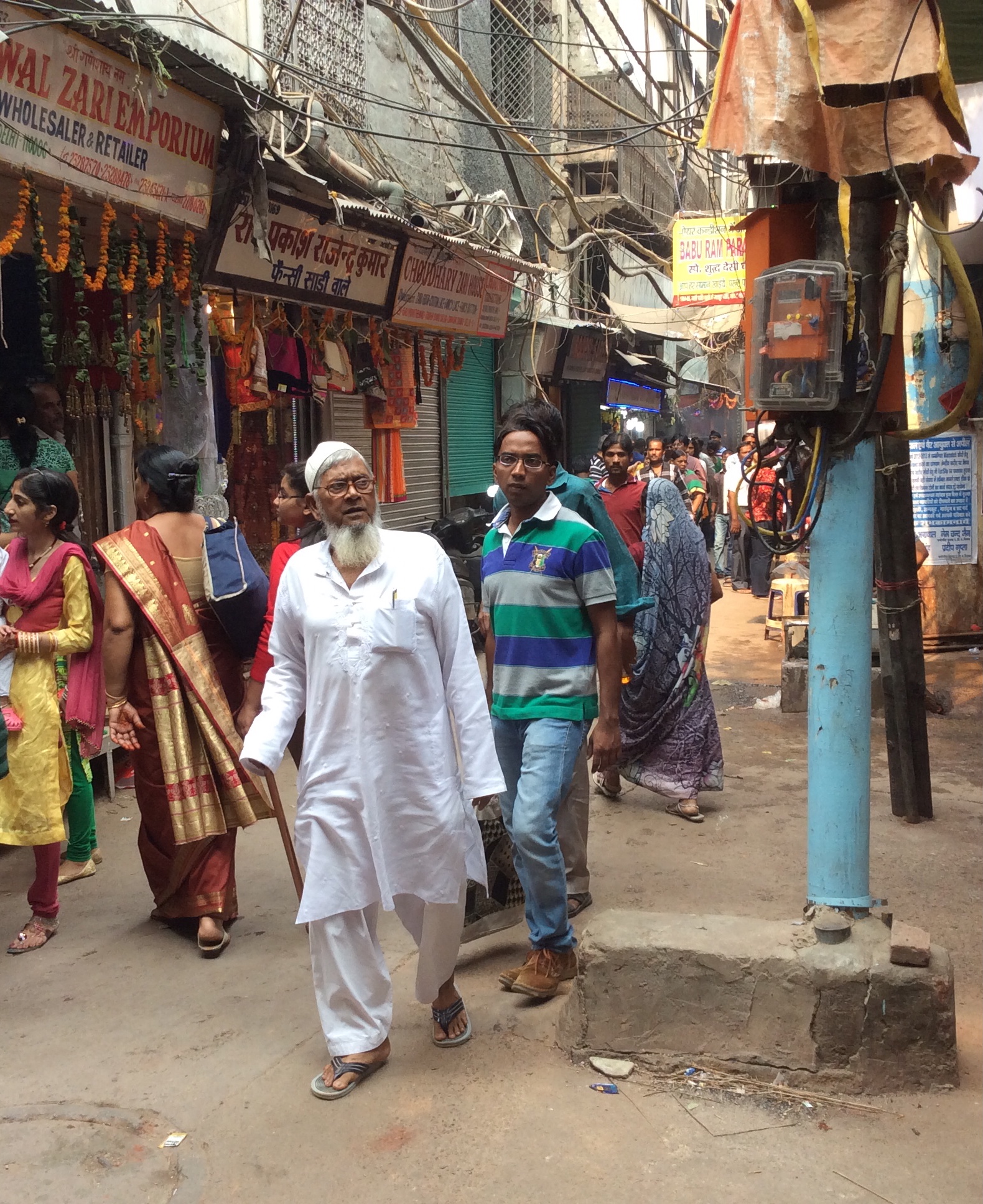
Though I’ve lived here for a number of years now, a recent trip to Old Delhi, like all trips to Old Delhi, opened my eyes once again to entirely other ways of being and living that remain a wonder even after seeing them many times. There is the wonder of wire, for example, and how the city caries on though wires are tied in Gorgonian knots most anywhere you choose to look up–yet it does, and that’s amazing. Monkeys climb around the neighborhood balconies, monkeys occasionally appear on the school roof, and climb along the wires, moving from building to building. People pull and push loads so large it seems it would be impossible for the driver to navigate. On the side of the street amidst busy traffic you might see someone getting his ear cleaned, a person taking a nap or quietly reading. Everywhere on the city streets people are engaged in activity–sweeping, selling, driving, sleeping, eating. A whole world that holds a thousand stories is laid before your eyes–narratives with intricacies and ways of being that remain a mystery to me, even though I view the story in process before my eyes.

It’s true that India is full of many wonders but on the other hand, it’s also true that living in India with its enormous population, pollution and poverty constantly poses questions I don’t have answers for, this is one of the benefits of continuing to live here. It confronts me every day with challenges to the heart, mind and body. How do you negotiate daily through thick traffic? How do you breathe through months of smoke and pollution where the particulate matter in the air consistently ranges in the dangerous zone? How do you  look at beggars on the street and who come to your door year after year and keep your heart open without looking away when there seems to be no end to their ongoing grief and pain? Even the dogs on the street carry in their bodies the imprint of loss and neglect. Look at their eyes and you can read their need. It is good to live with these questions, and to ponder them. They don’t go away, and won’t depart though I someday will. They make me ask questions about what is important in how I live, and what I’m doing with my life that matters–what are we doing together with the incredible gift of life on this earth. How are we using what we’ve been given for the good of all, including the earth itself?

When we see need in those around us, and of the earth around us, we can see the parts of ourselves that are lost, alone, and broken, and feel compassion. We can become more aware of our own interdependence on others. None of us are truly self-sufficient. Henri Nouwen says, “We can trust that when we reach out with all our energy to the margins of our society we will discover that petty disagreements, fruitless debates, and paralysing rivalries will recede and gradually vanish.”  Draw near, look the need in the eye. So often we don’t want to look at poverty in the eye. It’s too painful. We may not be able to fix the world with its pain and short comings. Still, we can reach out silently in our heart, with a “hello” of recognition. We can give a small offering of food. We can practice being present.

The traditional story “Loosening the Stopper,” from the Hassidic Jews of Poland describes a man who had a lot of money and gave generously to the poor. One day, however, the man was in conversation with fellow businessmen when a beggar approached him asking for money. The man didn’t want to interrupt his conversation to get his purse, so simply gave the beggar the loose change he had. The beggar threw the coin at the wealthy man, hitting him in the face, declaring it was an insult since he could give so much more and why didn’t he? The wealthy man decided that from then on he was going to give only a half-penny to anyone. When two rabbis approach him later asking for a donation, they agree to be grateful for whatever was given them that day. The wealthy man gave his half penny, and the rabbis thanked the man for his generosity. Later, the wealthy man returned and gave them much more money, again returning to giving generously.

The story concludes with one rabbi explaining to the other what it was that opened the wealthy man’s generosity. “It is also said that each step upward leads to another. Once we accepted his half-penny, we loosened the stopper on his generosity. Each gift he gave made the next one possible. Now, our willingness to receive has restored him to his goodness.” For those of us debating what to give, to whom and how, the wisdom in this story is to start somewhere. Give something. It is better to open up the stopper on your compassion than to go a lifetime holding back.

photo 1 (7)

Uncategorized

Taking Time to Live

In his book, Creating True Peace, Thich Nhat Hahn describes what life was like a number of decades ago when he was young, living in Vietnam, and people took time to live. He describes how people would organize a gathering– a poetry reading, birthday party, or party to mark the anniversary of a family member’s death, and how people would walk or bike to the reception, even if it took them all day or they had to leave the day before. When as many as four had arrived, they would be served food so they could eat together with others. When a fifth person arrived, that person waited for three more to arrive so they, too, could share their meal together. People sang, recited poetry, talked, and time was open and flexible so you could leave whenever you chose.  (p. 67) I’ve been trying to imagine what a life where relationships and being human together was more important than getting things done, where we have space to truly, deeply listen to each other and be heard, and when I came upon this description. I felt I got a glimpse of what that life might look like.

Thich Nhat Hahn describes another example that beautifully illustrates a way of living where people took time slowly, experiencing time in what I can only describe as deep living:

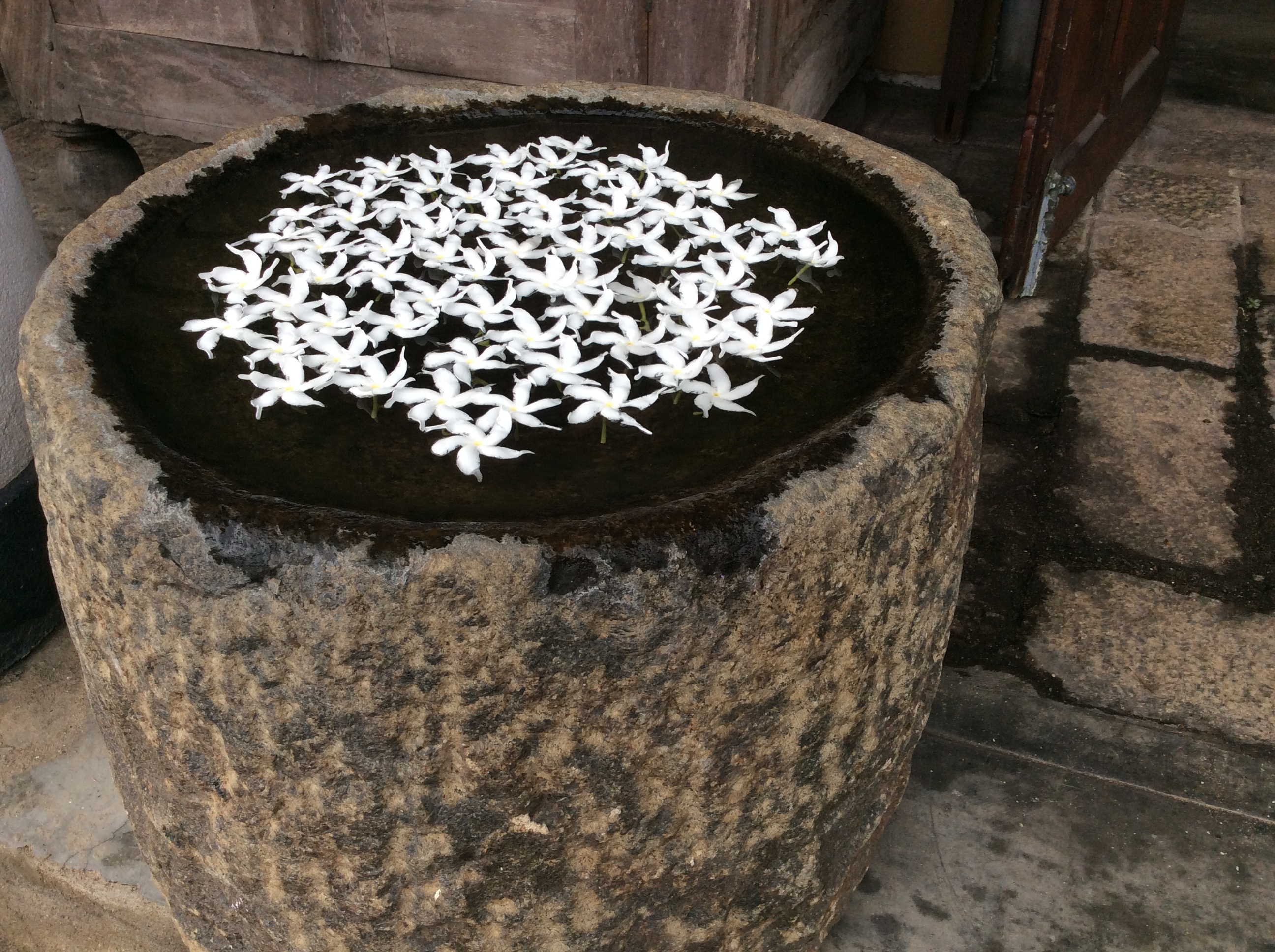
“Years ago in Vietnam, people used to take a small boat out into a lotus pond and put some tea leaves into an open lotus flower. The flower would close in the evening and perfume the tea during the night. In the early morning, when the dew was still on the leaves, you would return with your friends to collect the tea. On your boat, was everything you needed, fresh water, a stove to heat it, teacups, and a teapot. Then, in the beautiful light of the morning, you prepared the tea right there, enjoying the whole morning, drinking tea on the lotus pond.” (p. 68)

How astonishing and lovely that description is to me–to think that people had time to live like that. It’s interesting that these examples are found in his book about how to create peace, and this suggests to me that to be at peace has something to do with valuing time differently. Hahn asks the reader to consider, “Are we engaging in a lifestyle that touches the beauty and goodness within and around us, and leads us in the direction of compassion and understanding?… If what we now take refuge in—work, food, material comfort, television—cuts us off from our feelings, our family, and our society, it is not really a place of refuge. If our lifestyle numbs us to the reality of our suffering and that of others, we are moving in the wrong direction. We are isolating ourselves, and we are committing violence in the form of exclusion.” (p. 66) Beauty and goodness are values to be nurtured, and to nurture them requires space and time to grown organically if they are going to be places of refuge that enable us to give back to the world.

Thay’s quote reminds me of the quote I’ve included in earlier blog posts where Thomas Merton, quotes Douglas Steere, explaining that there is a “pervasive form of contemporary violence to which the idealist fighting for peace by nonviolent methods most easily succumbs: activism and overwork. The rush and pressure of modern life are a form, perhaps the most common form, of its innate violence. To allow oneself to be carried away by a multitude of conflicting concerns, to surrender to too many demands, to commit oneself to too many projects, to want to help everyone and everything is to succumb to violence. More than that, it is cooperation in violence. The frenzy of the activist neutralizes his work for peace. It destroys his own inner capacity for peace. It destroys the fruitfulness of his own work, because it kills the root of inner wisdom which makes work fruitful.” To be peaceful, or to be a peacemaker in this world is difficult. It doesn’t mean doing good deeds. It’s more difficult. It means learning how to be peaceful, and that means making different choices in our everyday lives.

“Nowadays,” Thich Nhat Hahn says, “you may have a lotus pond, but you do not have the time to look at it, let alone enjoy it in that way.” Nevertheless, Thich Nhat Hahn clearly directs readers to understand the days given to us are our life, and are “much more precious than money.” How can we truly live quality lives today in a world where our social structures generally function in a way that make it easy for us feel like we are Charlie Chaplin in the film, Modern Times, where his job is to constantly focus on the next item coming down the conveyer belt? Chaplin doesn’t have time to scratch his nose when a fly distracts him, much less find time to take life slowly enough to savor it. If we don’t have time anymore to make lotus tea like Thich Nhat Hahn describes, how can we at least learn how to savor our lives so that we are not merely focused and productive at work, but are living fully?

It has been several weeks since I’ve begun including a short, close observation practice into each day with the aim to see how the practice might open up a space for seeing how I might live differently. It’s not been easy finding the time each day for this practice, and admittedly, some days the observation has only been a few seconds long–a remembering to glance at the light coming through the window as I continue on, working, focused on my responsibilities. Even so, during the day, the thought surfaces periodically–pay attention, pay attention to your life–and I realize I am so focused on my work, that awareness of other aspects of life narrows in a way that lessens me.

It might happen that I spend the whole day inside simply with the goal to be prepared for the day that follows. What, then, happens to the importance of family or close relationships when I do this? What happens to my awareness of the wider world around me? How am I being a model of wholeness when I say to others that these are important to living? Over time, if this pattern continues, I will be losing something very valuable. That small glimpse at the light through the window while continuing to work reminds me, that I’m supposed to be observing life so I can learn how to live. I’m put on earth to live. I am here to be alive, not merely to breathe and move and perform a function. The sense of obligation and commitment to my responsibilities at work wins out, even while the lines from Mary Oliver’s poem, “Have You Ever Tried to Enter Long Black Branches” in her book, West Wind, come to mind,

Listen, are you breathing just a little, and calling it a life?
While the soul, after all, is only a window,
and the opening of the window no more difficult
than the wakening from a little sleep.

So, this weekend, something radical happened: I set my work obligations aside. Yes, and here’s the brief chronicle of what occurred: My husband and I talked during breakfast with family members at some length who’ve been in Italy for a month. We went grocery shopping, after which we took the metro across town to check out a new sporting goods store that might have shoes for the climbing club my husband works with. Using the public transport, we packed ourselves into the subway car with what must have literally been a thousand riders. It was a hot, tiring adventure that took most the whole day getting there and back. We had lunch at a market where we also bought a box of milk and had something repaired before returning home. After an hour’s rest, we went to a friend’s housewarming party where we met a number of new people, participated in several interesting conversations, and lit candles for an early celebration of the Indian Diwali holiday.

This morning I read the news, then weeded in the community garden with my husband. Later, I talked briefly with a friend I saw as I walked over to swim in the pool. After swimming, I worked on an art project in the clay room. This evening, my husband and I made dinner together, after which we watched a detective program on the computer.

It’s been ages since I’ve taken time off like this when not on a holiday. Actually, I feel as if I’ve had a holiday. I feel so alive! I could say it seems it takes so little to be so happy, but taking a weekend off isn’t really a small act. I don’t know how often I can put time aside like this, but I can truly say I feel more whole, more alive. I feel prepared to meet my students as a human being, not just as someone who has worked very hard. As a result, I have some questions about responsibilities that I didn’t have before. I have a responsibility to meet my students’ needs, to help them improve their skills, yes. But is the purpose of education only to help students compete eventually in a market place–on a job? I think not. The purpose of education is to help students discover who they are and how they can contribute to the world meaningfully. To live meaningfully means we also have a responsibility to live fully. To live fully means to pay attention to and nurture relationships with family, society, and the earth. Wouldn’t the world be better off if we all took time to grow these relationships? If we can’t do that, in whatever work we are involved in, we help those around us, including our children to do that. If we can learn how, then we will make it more possible for those around us to be able to live in ways that enable them to be more fully alive as well.

Some days my noticing practice has been a brief, purposeful glimpse through a window. Other days, observations seem to ride in to me on waves. Is the practice of daily observation leading me to see how to make a larger space for being, or was this past weekend a one time occurrence because of a natural break in a workload? I don’t yet know. What I do know is that the weekend has felt so enlivening, as if I’m living in a miracle, aware of the abundance of relationship. I am hoping to continue further down this path. I take my responsibility to my students at work seriously. To do that requires time. To live a full life requires giving oneself the space to be whole. This, too, requires time. Can the two be done together? Others have learned how, and maybe I can too.

Maybe you have some wisdom of your own about this path, dear readers. What does your journey look like? How does it feel?