place

Love is a Place–How Place Shapes Us

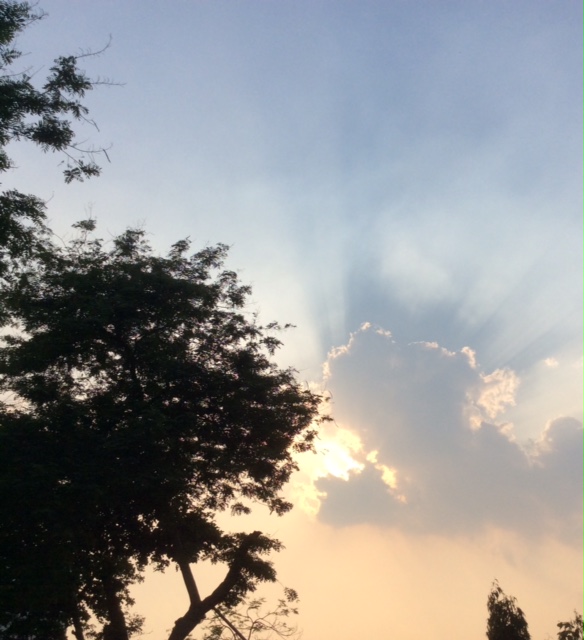
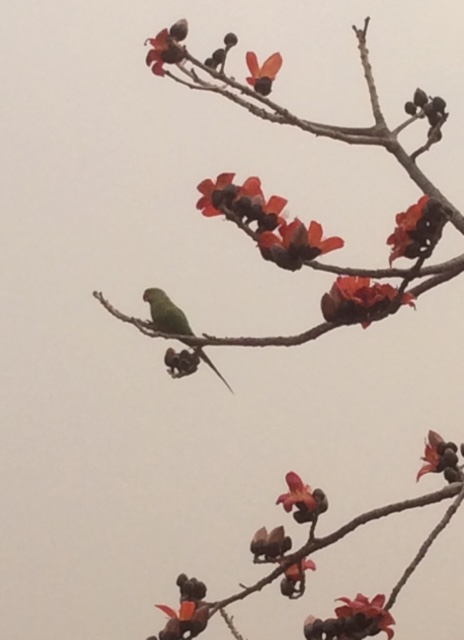
Two weeks ago as I rode home from the airport, Delhi was enveloped in smoke, the city’s signature perfume. One evening later the skies were full of lightning with rain pouring down heavily. Since returning from a trip to the Czech Republic and Austria, I’ve been thinking about what it is that makes a place. Some time back, when I first moved overseas, my husband and I sat in our Izmir, Turkey apartment, explaining the culture to ourselves–as we understood it at the time–our first experience of living in a foreign country, through using the designs in a carpet on our floor. It was world full of life, energy, color and sound, but still contained and shaped by tradition’s forms. Turkey is still the favorite place I’ve lived outside of my own home, still holds wonder and happiness in my memory.

Years ago, I visited Spearfish, South Dakota a small town where my parents had lived for some time, and where I still have relatives. While exploring the downtown, I came across a book in the bookstore window titled Dakota, A Spiritual Geography.  At the time, I didn’t know the author, Kathleen Norris, but noticed that she was living in Lemmon, South Dakota in a home she had inherited from her grandmother. Lemmon was the same town my father was born in. I had come to South Dakota for the purpose of getting to know a bit more about my family’s background. I had grown up in California, far from relatives except for my father’s parents who lived at the time lived nearby in Lemon Grove, California. I knew little of my family history except through the descriptions of my parents. I was drawn to Norris’s book and its subtitle in particular, because for some time I’d held the belief that the geography we grow up with shapes us in mysterious ways we don’t quite understand–affecting the way we think, what we value–shaping our souls. A few days previous to discovering the book, I had gone with my Aunt to see where my grandmother’s family was buried. My Aunt’s friend was an oral historian whose family knew my great grandparents. She had shown me the graves of my great uncles, and before walking back to the car, I went to stand in the middle of a field nearby. There, I found myself surrounded by the green wheat, an ocean of grass, the sky above infinite and blue. No sound pierced the silence as the earth’s  scent earth and the weight of its quietness seeped into my feet. This was my parents’ homeland, a geography they knew and that shaped how they saw the world–its colors, sounds, rhythms. My body felt the quality of its presence, affirming my sense that the land speaks to us. Dana Gioia’s poem, “Palabras,” talks about this idea as well. “El mundo no necesita de palabras. Sabe expresarse/en luz solar, hojas y sombras,” Gioia writes, “The earth doesn’t need words. It knows how to express itself/ in the sun, the leaves and shadows,” and it’s true. There is a kind of voice inside of the material world that speaks without words–something akin to music, but more abstract. Though Nature speaks volumes to us in its vast library of sound and movement, one artist has tried to show this voice visibly in an interesting way, attaching pens to a willow tree’s branches, making visible the branch’s movement, a fascinating idea. Small scratchings embodying the language inside the leaves’ dance.

My belief in geography’s affect on humans was affirmed some time later when I came across an article in Discover Magazin“Are the Desert People Winning?”  by Stanford anthropologist Robert Saplosky, where Sapolsky explains how anthropologist Robert Textor in his 3,000 page book, A Cross-Cultural Summary, written in 1967, noted after examining 400 world cultures and classifying them into nearly 500 traits that a “striking proportion of rain forest dwellers are polytheistic, worshipping an array of spirits and gods.” This pattern, Textor points out, can be observed in places like the Amazons, and Borneo, whereas “desert dwellers—the bedouin of Arabia, the Berbers of the western Sahara, the Kung of the Kalahari Desert, the Nuer and Turkana of the Kenyan/Sudanese desert—are usually monotheistic.” Sapolsky goes on to point out how there is a kind of singularity to the landscape in desert locations, where the world is reduced to essentials. Rain forest people, on the other hand, live amidst an abundance of plants, herbs, and animals. “Letting a thousand deities bloom in this sort of setting must seem natural,” states Sapolsky. Every place and culture has its uniqueness, and each place touches our lives and shaping us. We live in a place, and we respond to it, interact with it.

As we travel from one place to another, we carry with us the other places we have been, and the memory of those places. I have often wondered if this is why I enjoy countries very different in landscape from those similar to where I grew up, but am emotionally drawn to countries like Greece, Spain, and Italy, or the state of New Mexico in the U.S., because they remind me of where I grew up in the dry southern California desert with rolling hills and yellow grass spotted with granite boulders and chaparral. Dana Gioia in his TED talk about place explains that “the world looks different depending on where you see it from and who you see it with. It sounds different. It looks different. It tastes different.” He goes on to describe how until recently, people had to pay attention to the local landscape to provide them with the means to live, and that people visit foreign cities today because they enjoy the diversity that local art, architecture, soil, produce, weather, presents in any particular place. Related to this idea, the biologist, E.O. Wilson has written about biophilia–how humans have a natural affinity for nature. It is our source of life. Today, however, we often don’t know the names of the trees outside their windows or the plants we live beside on a daily basis. Gioia asserts that the standardization of the world in its architecture and foods, clothing, and other numerous effects of globalization on cultures, while increasing affordability, creates a loss in diversity. This is a “huge impoverishment of human spirit”–a loss in connection to where we live, Gioia stresses.

We are always changing and so are places. When I first moved to Santa Cruz, California from San Diego County, I wore sweaters most the summer long until about noon each day. It was cold! The world looked different–there were so many trees, and the coastline was rocky, and it didn’t seem to matter how you casually you dressed. These were small things, but many small things put together create a sense of place. During the Creativity Workshop I recently attended in Prague, the workshop leaders asked us to sit in a cafe and draw the soul of a person–not the physical features, but the soul. That was challenging. I observed a mid-aged woman with blond hair and noticed how calm she was. Her voice was quiet, as were her manners. She was in no hurry to eat or to make her point with her partner. I envisioned her to be the shape of a cloud, all edges soft, content to wrap around objects without having to take control. She would glide from place to place without rushing. She contained no sharp edges. She could float above the world and see things clearly. It was interesting to think of visualizing a person’s spirit embodied in material qualities. When I came back to Delhi, though, noting the city’s distinctive differences from where I had just been, I wondered what a drawing of the soul of a place would like–specifically, what would a drawing of Delhi’s soul look like? I’m still pondering that question, but the art piece would need to be kinetic with glints of glass, a mosaic of colors swirling, moving, rising out of dark space then turning into smoke, the scent of smoke filling the room.

Leaving a place you have known and loved and lived always carries with it a grief. A place grows inside us, we have a relationship with it, and to let go of it is loss. We mourn. I remember my dad standing on the path outside my house when he came to visit me just before I moved overseas. “You’re never coming home again,” he said, crying. I had never seen him cry but once before. I was looking at the move as the adventure of my life. He was looking at it as loss. Even though I’ve been living and wandering abroad for years now, I still carry the longing for open space, wide and wild space–the kind of landscape the western part of the United States still holds. I’ve lived in mega cities for many years. I enjoy tidy gardens where they can be found.  They are wonderful to behold with their shaped and contained designs, especially when greenery is rare, but to feel truly alive, I need wild space. E.E. Cummings writes in his poem, “Love is a Place,”

Love is a place
& through this place of
love move
(with brightness of peace)
all places

Not only is love a place, but I say place is also love. Through our connection to place our understanding of the world and of love begins. Last summer as I lay on the floor with the doors open so the sun and breeze could float in while I did my exercises, the sudden subtle perfume from the redwoods wafted in through the door and tears welled up in my eyes. The absolute perfection of that clean,  woodsy sweetness. There are more dramatic places in the world to live, I’m sure, and I recognize different people need different things. What is it about a place we call home that makes us want to go back to it? There are people, the familiar routines, the memory connect to place, but there is also something fundamental–the physicality of the place itself. You are in love with the land, you want to know it, care for it, understand it and its mystery. When you find the home of your heart, as I felt I had lying there on the floor inhaling the afternoon’s quiet and perfumed air in California’s Soquel Hills, you know it’s where you belong.

I look forward to the day when I can go home.

Uncategorized

Why read poetry? #2

“[O]ne of the reasons to invite poetry into our lives… [is] to meet our invisible guests—grief, joy, anger, doubt, and confusion. We read poetry from this deep hunger to know ourselves and the world.”

“…poetry is the genre of the inner life; therefore, the first, and most important, poetry door is the door of our hearts.” —Georgia Heard

Uncategorized

Poems To Reach Across Worlds–The Poetry Post


This fall I had a poetry post made for the school where I work. It’s a simple post with a plastic box for the poems and every couple of weeks I put copies of a different poem in the box. I include the author and publication site for the poem. To add interest and newness to the post, I made a ceramic plaque for it. It’s a pleasure to share poems I love in the box and to see them disappear day by day. I put about 15 poems in at a time and within a couple of weeks, enough people have found the poem meaningful enough to take with them. Occasionally, people write me a note telling me how much they appreciate the poem, or how it moved them, as someone did again this week for Maria Mazziotti Gillan’s poem, “Betrayal.”

This week I read the white paper for the Pioneer Institute, Public Policy Research, written by Anthony Esolen, Jamie Highfill, and Sandra Stotsky, “The Dying of the Light,” about the value of poetry instruction. Whereas the current trend in education is utilitarian and values data collection and sameness, poetry is something that enlivens the human spirit and the imagination. Poetry is an art form, doesn’t fit in a utilitarian category, and perhaps this is why it is minimized in the Common Core education standards. The Common Core, as the Huffington Post says, is “an education push that aims to make sure students across the United States are learning the skills they need to succeed in a global economy.” While one of education’s purposes is to help people find their place in the world where they can contribute to the common good using their abilities and skills, humans are much more than cogs in an economic machine, and education should nurture the human element as well–that part of us that is asks questions about existence and that stands in humility and awe before creation’s beauty. Or have we in our competitive workaday world and habitual rhythms lost our awareness of a world larger than our own–of creation in all its wonder?

Perhaps we need to ask ourselves what kind of world we want to live in and how are we nurturing our children through our education system to create that world. As Exolen, Highfill and Stotsky assert in “The Dying of the Light,” we might need to ask ourselves “What is a child for?” Do we want to raise our child to simply fill a role or do we want the child to be awake to life? One of poetry’s functions is to help the reader to see the world’s beauty, to notice life, and to experience it deeply in all its complexities and paradoxes. Poetry can help us see ourselves and our interconnection to the world and to each other. “One does not read poems to learn about poetic techniques. That again is backwards. One learns about poetic techniques, if one learns about them at all, the better to read poems; and one reads poems for their own sake–that is, because they are beautiful and wise,” say Exolen, Highfill and Stotsky. 

Though more poetry is being published than ever, poetry is not read by the general public nowadays. As we have culturally moved toward modernism and postmodernism, as in other fields artists, and poets, in general, no longer sense themselves as a voice of their culture or their time and place in history when they write. Gardner points out in his book, Truth, Beauty, and Goodness Reframed: Educating for the Virtues in the Twenty-first Century, that there is no longer any common agreement about what is beautiful. Beauty is more a matter of subjectivity he states. But does this mean it should not be nurtured? Humans were created in the image of God, our Biblical myth tell us. Robots may be able to do a lot of the thinking we used to do and do it more rapidly, but as E.O Wilson in his book, The Meaning of Human Existence, points out, “With more and more decision making and work done by robots, what will be left for humans to do? Do we really want to compete biologically with robot technology by using brain implants and genetically improved intelligence and social behavior? This choice would mean a sharp departure away from the human nature we have inherited, and a fundamental change in the human condition.” The humanities and the arts connect us to the essence of ourselves. They explore meaning amidst the myriad gray areas of life. We are alive when we are connected to a creative act. Wilson advocates that we “promote the humanities, that which makes us human, and not use science to mess around with the wellspring of this, the absolute and unique potential of the human future.” Our humanness and our relationship to the world is the very subject literature and poetry explore.

Pushing aside poetry and the arts in our educational system demeans our humanness and lessens the “unique potential of the human future,” to use Wilson’s words. Because it can’t be measured easily, because the processes are organic and slow, because they are subjective, does it necessarily mean poetry and the arts are not important? Dana Gioa, previously chairman of the National Endowment for the Arts, explains in his essay, Can Poetry Matter? Essays on Poetry and American Culture,” how people who write poetry and work in academic setting often are required to publish frequently in order to keep their jobs. He goes on to say, however, that “In art, of course, everyone agrees that quality and not quantity matters.” Creating anything takes time, and years of effort in most cases, to create quality.

Poetry is not reviewed seriously, Gioa says, and this is one of the reasons it’s not taken seriously. It used to be that poets once held many different occupations other than writing poetry. Nowadays, most poets are also teachers. Still, poetry matters to the “entire intellectual community,” Gioa explains, because it “involves the role of language in a free society. Poetry is the art of using words charged with their utmost meaning. A society whose intellectual leaders lose the skill to shape, appreciate, and understand the power of language will become the slaves of those who retain it—be they politicians, preachers, copywriters, or newscasters.” Gioa suggests that when writers share poetry, we share not only our own, but others’ as well, that we combine it with other arts, and that we devote more of our time in schools not to analyzing poetry, but to performing it. “Poetry needs to be liberated from literary criticism. Poems should be memorized, recited, and performed. The sheer joy of the art must be emphasized.” This is what kept it alive for centuries, Gioa asserts. Though I have referred to Gioa’s essay that I’ve quoted from on this blog in previous posts, I come back to it again in this post because of the insights it offers.

Poetry matters deeply to me, and I want others to be able to experience for themselves the gift it is to our lives–how it can wake us up, connect us to each other, and help restore us. A poetry post is one way to keep poetry’s voice alive and to allow people to see how it is that poetry enriches, inspires and strengthens us– how it continues to speak to our spirits.

The poem copies I put in the poetry post box this week are already gone. It encourages me to know Gillan’s poem has spoken to others the way it spoke to me. A poetry post is a simple way to share poems with others, and as one parent recently wrote me, “It is amazing to see how far the poems from this small box reach.”

Uncategorized

Making Space for Wonder

“Our goal should be to live life in radical amazement. ….get up in the morning and look at the world in a way that takes nothing for granted. Everything is phenomenal; everything is incredible; never treat life casually. To be spiritual is to be amazed.” –Abraham Joshua Heschel

In a few weeks my husband and I will be headed to Prague where we will be attending a workshop on creativity. To prepare for that workshop, we’ve been asked to go out in hunt for a variety of things we are to take photos of to bring to the conference– spirals in nature, human faces in man made objects, animals in clouds, inanimate objects that appear they are in love, living people who look like they belong to another century, and more. The past couple of weeks I’ve gone out for short walks around the area where I live, looking. Some things are just not easy to find. I thought human faces in man made objects, for instance, wouldn’t be so difficult. My husband’s family has a habit of looking for hidden objects in clouds, knots of wood, the trees. My father in law discovered the Virgin Mary in a whiskey bottle that he found in an abandon lot while out for a walk and had the neighborhood lined up to see it on his mantle. So, there’s a kind of family history in looking closely that we’ve practiced over the years. The results can be surprising.

I’ve had my students go on searches for things, given them a paint chip like ones you might find at the paint store and had them search for a week to see if they could match it with the exact color somewhere out in the world. Another thing I’ve asked them to find is something they think no one else would notice but that they think is interesting. A good part of a writer’s work is to notice things, I explain, things that are in plain sight but hidden because no one is taking time to notice them. A person can notice a lot of amazing things when paying attention. One of those things you might discover or rediscover is wonder. What you find is perhaps not really as important as the search. In the search you can find all kinds of wonders.

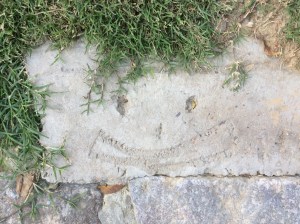
Eliot wrote “April is the cruelest month,” but February can definitely be difficult too. For many who live in cold countries, it’s a snowy month–snow stacked so high you’re blinded by the white on white emptiness. With windows blocked by icicles, you know spring is coming–color will eventually return to the streets–but that time seems far off. How do you get through those bleak times? This is where a search cIMG_3931omes in. Abraham Joshua Heschel writes, “Wonder rather than doubt is the root of all knowledge.” Give yourself something to search for, and wonder might  turn the corner to greet you at an unexpected moment. The other afternoon, I was out walking the campus where I live, looking here and there at things I’ve seen a thousand times, hoping to find a hidden face in an object so I could take a photo to bring to the workshop I mentioned earlier, but I could find nothing. Over and over again, I scrutinized objects. Nothing. I was telling myself, “There are simply no faces anywhere.” I looked down. There on the sidewalk was a face smiling up at me with a grass strand for a lock of hair. I couldn’t believe it! It’s the only face I’ve found so far in various ventures.
February may be cruel in other parts of the world, but is actually the best month if the year in Delhi. Here, February has the least amount of smoke in the air, it’s not too hot or too cold, and there are no dengue carrying mosquitos. What Delhi has a lot of in February are flowers. As I went out hunting for spirals in nature to photograph, I enjoyed looking at the splendid variety of spirals flowers present. From fibonacci spirals to the mandalas of a dahlia, flowers can make your head spin.

It’s not always easy to find what you’re looking for, however. One thing I’ve learned from living in India is that the good and bad, the exquisitely beautiful and the horrible are often side by side, as if they are part of each other. You don’t often get the one with out the other near by. Living here in India also presents questions there are no easy answers for, as I’ve written about before in these blog posts. Suffering is visibly present here. All you have to do is leave your house and go out into the street and you will see it. How to respond to it is constantly challenging.

Today, as I walked through the INA market, I was on the lookout for images of people who look like they could be from another century, as that is one of the things we are to take photos of for our creativity workshop. I saw scenes there that could have been from a past time, but I also saw scenes that make a person very conscious of all the animals sacrificed to meet our hunger. Food is glorious, but it carries with it a great deal of blood,  guts, and stench. Yes there is the beauty of flowers, the fabulous flavors of curried meat, but there is also some horror behind it all. Men torch feathers off fowl, and fur off goat heads. Boys scrub the goat heads in a plastic tub of water. Thwack, the butcher hacks a haunch of meat against a wooden block. A hundred or so chicken feet sit on a tray. Blood runs down the alleyway between shops. It’s all there, along with that beautiful cut of fish you are going to take home and barbecue.

Donald Hall’s poem, “Eating the Pig” describes well the complexity of the horrors that can come alongside the wonders,

and I am drawn to him, my brother the pig,
with his large ears cocked forward,
with his tight snout, with his small ferocious teeth
in a jaw propped open
by an apple. How bizarre, this raw apple clenched
in a cooked face! Then I see his eyes,
his eyes cramped shut, his no-eyes, his eyes like X’s
in a comic strip, when the character gets knocked out.

Then, there he is a few moments later, eating the pig and reveling in its flavor.

For myself, I scoop a portion of left thigh,
moist, tender, falling apart, fat, sweet.
We forage like an army starving in winter

After the pig has been devoured and just the head remains, he can’t help but feel a friendly affection for it and finds himself reaching out to pet it behind the ear as if might purr. As he does so, he sees his connection to the pig. He leans into the pig and whispers,

I take into myself, and digest,
wheat that grew between
the Tigris and the Euphrates rivers.

It’s not just this pig alone, it’s the way eating the pig connects him back to who we are before the time of empires–all the way back to prehistory. The poem ends by saying,

“Fire, brother and father,
twelve of us, in our different skins, older and younger,
opened your skin together
and tore your body apart, and took it
into our bodies.”

There is a reverence for the pig, a recognition for how consuming the animal roasted in this ancient, barbaric ritual connects him to both the pig and to human kind. Life is both full of wonder and horror simultaneously, and this poem clearly demonstrates the paradox.

One weekend morning a couple of weeks back, we opened the bedroom curtain and there sat a monkey eating the tomatoes off of our plant in the window box. (No wonder we’ve had so few tomatoes this year!) The other day a monkey got into our compost box that we have on our balcony and then smeared his hands across the kitchen window. Two days ago I looked out the window of my classroom to see two monkeys walking across the roof of the building opposite me, only to appear in the courtyard below a few minutes later. You can go along for years without barely a monkey surfacing anywhere. Things seem fine, and then suddenly, there they are, monkeys jumping on your roof, tramping through your garden, and getting into whatever they can. When a monkey is around you’ve got to be careful because you never know what they are up to.

It’s good to be aware of holding both the difficult things in balance–the days with the monkeys vs. the weeks and months without them, as well the truly wondrous moments that come along. Actually doing this takes practice. When things grow dull or difficult, when struggle or white snow is all that can be seen, we have to purposefully change our perspective so we don’t feel crushed under the weight. That’s hard. But we don’t have to wait until things become unbearable. For a few moments we can break the routine of work, we can lift ourselves out of a situation that feels full or sorrow or dread. There’s a variety of ways to do it. We can sing, walk out the door and notice the trees or birds, arrange some fruit in a bowl to give away, put on some music, dance around the room, push our hands in the garden soil, pull some weeds or pick some flowers. A paint chip or a spiral, a face in the cloud–it doesn’t have to be something big. It just needs to be something; something to take us out of ourselves and connect us to something bigger. Who knows what you will actually discover in the process. It might not be what you intended. Doing that something can help us nurture joy and wonder while at the same time continuing to recognize the realness of the struggle or sorrow that we continue to live alongside. Maybe it is this very sorrow and struggle we know so well that allows us to experience the depth of joy when we give ourselves to it, or when it comes along to surprise us like the smiling face in the cement. We know then how precious such joy truly is.

Uncategorized

Finding Ourselves and the Poetry of Maria Mazziotti Gillan

While looking for new ideas for teaching poetry this past week, I discovered a wonderful writer, Maria Mazziotti Gillan, an Italian American poet whose poetry recreates scenes with such vivid detail that you are literally inside the setting with her, living what it is she relates. In her poem, “My Daughter at 14: Christmas Dance,” Gillan puts the reader directly into the scene and the mind of a mother’s discussion with her daughter about her daughter’s experience at a dance. You feel the tension the mother experiences in wanting to support her daughter as at age 14, she learns to navigate emotions and relationships. While reading, you’re firmly aware of the difficulty and tension the mother experiences as she walks the line between affirming and cautioning her daughter.

We ride through the rain-shining 1 A.M.
streets. I bite back words which long
to be said, knowing I must not shatter your
moment, fragile as a spun-glass bird,

you, the moment, poised on the edge of
flight, and I, on the ground, afraid.

photo-8
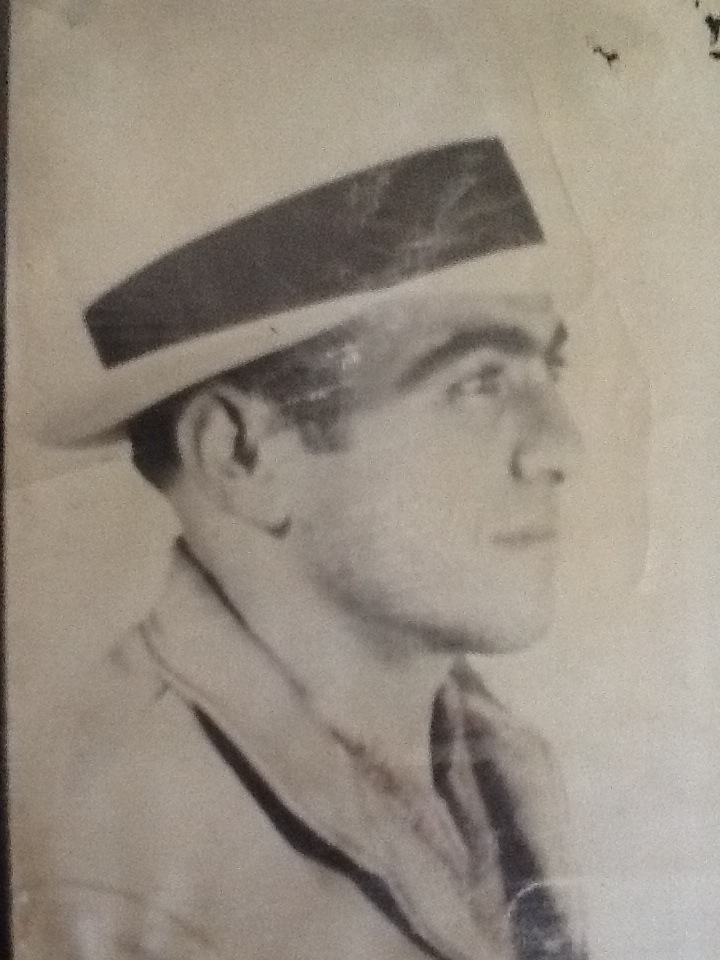
Alberico Gaetano Pacifico Citrino with son

You feel the human dilemma poignantly in this poem–the difficulty and challenge in knowing how to understand the needs of the situation and to love another in a way that allows freedom and growth–blossoming, rather than fear.

In another of her poems, “Betrayal,” Gillan describes a daughter’s embarrassment of her Italian-American father when she was younger, her mortification at his yellow teeth, how he drank coffee from a saucer, and how he didn’t speak standard English. Then, as a grown woman, the tables are turned, and the daughter’s son finds her embarrassing and tells her so. The daughter remembers an earlier moment in her youth and how she treated her father,


I was sixteen when you called one night from your work.
I called you “dear,”
loving you in that moment
past all the barriers of the heart.
You called again every night for a week.
I never said it again.
I wish I could say it now.

Dear, my Dear,
with your twisted tongue,
I did not understand you
dragging your burden of love.

It takes most of us a long time to truly hear each other, to comprehend others’ lives on a deeper level. A recurring theme in Gillan’s poems is the theme of shame about social class, and how that gets in the way of understanding each other. It has been years since the last time I read Dickens’ Great Expectations, but after reading Gillan’s poems this past week, I am reminded of scenes from the Dickens’ novel where Pip, too, is ashamed of his father. Pip, an orphan, also was raised in a working class family. He gains education through the generous gift of anonymous benefactor (that happens to be a convict, though he doesn’t know it at the time) and with that education, a growing sense of shame for his humble social class origins develops. “I wished Joe had been rather more genteelly brought up, and then I should have been so too,” Pip explains. His stepfather, Joe, dearly loves Pip, but with Pip’s growing sense of status and pride, he finds his relationship with Joe awkward and visits less and less often. It’s not until much later, when he learns who his benefactor is that Pip is able to move beyond his false sense of self, and build a view of the world that enables him to move beyond his fixation on relationships where he projects on to them his own desires for status and power and that caused him suffering. Gillan’s poems, too, demonstrate the kind of understanding about the self and others that comes through time,  experience, and suffering that allows empathy to grow.

The most powerful of Gillan’s poems that I read this past week was her poem, “Daddy We Called You.” The visual details in the writing are perfectly chosen to help the reader envision the scene of the daughter in the poem speaking with her boyfriend under a streetlamp light while never aknowledging her father’s presence as stands nearby at the bus stop, waiting for a bus to take him home from work. The daughter is ashamed of her father’s inability to speak standard English, embarrassed of his being an unskilled laborer in a world that honors status. Now, as an adult looking back at everything her papa did, the daughter recognizes the love her father had for her and for the family. That love was the foundation beneath her father’s life. Gillan portrays so well the kind of commitment fathers of this generation often had to their families–a commitment not given in words but lived out in faithful dedication to providing for their families, often through difficult physical work.

John Peter Citrino
John Peter Citrino

The final lines of “Daddy We Called You” demonstrate the awareness that time brings the daughter in this poem as she sees beneath her father’s actions to the heart of who he is–the way he bore up under  hard work and difficulty because of his devotion to his family. The photos here in this post are from Citrino family history because these men, too, like my own father, and those in the Gillan’s poem, were fathers who worked long hours not for themselves and their own reputations, but out of love and dedication to their families–in order to give their children a chance to do something with their lives more than they themselves had the opportunity to do.

In a world today where money and status are power, Gillan affirms in this poem the dignity of those those around us who are often ignored because of their humble positions in life. Yet it is because power and status are not the center of their sense of self that these very people in their humility can, if we have eyes to see, restore us to a sense of what is truly valuable: our commitment to relationships with others. Humble people, those unconcerned with status and whose lives are not centered around their own egos and desires like the father in Gillan’s poem, treat others with love and respect even though people around them may ignore them and fail to return their love. This strength of character demonstrates a way of living and being that are sorely needed in our world. Gillan’s poem closes with these lines,

Papa,
silk worker,
janitor,
night watchman,
immigrant Italian,
better than any “Father Knows Best” father,
bland as white rice,
with your wine press in the cellar,
with the newspapers you collected
out of garbage piles to turn into money
you banked for us,
with your mouse traps,
with your cracked and calloused hands,
with your yellowed teeth.

Papa,
dragging your dead leg
through the factories of Paterson,
I am outside the house now,
shouting your name.

The daughter shouts the name aloud because she finally sees who he is; she proclaims his name unashamed, and sees who she is in relationship to her father. Both powerful and moving, the poem closes in a moment of redemption. Wholeness is restored.

You can hear Maria Mazziotti Gillan reading the audio version of this poem here. I recommend it. You can also read the full words of the poem here.

What is it we hold as most precious in our lives? What do we live for from day to day? Italian American immigrants were mostly illiterate. Their ambitions weren’t to make it rich. Their central value was relationship–to provide for their families. The table is the symbolic center of that life, a gathering round in appreciation of the sustenance that bonded them. Whatever our heritage, it is good to be reminded of our roots–the earth and the bounty given there that holds us up, and then enables us to hold each other. We hold each other as we stand beside each other through each difficulty life gives. We are present, affirming the value and gift in the presence of each other.

Why are these poems important–poems about immigrants, about Italian immigrants? Italian immigrants were one of the largest groups of immigrants to the U.S., and yet their story isn’t well known. But more than this, these poems are important because most of us today, live with a mix of cultures and social class all around us. At the same time, there is so much misunderstanding between cultures and the social classes. The German poet, Rilke said, “Love consists of this: two solitudes that meet, protect and greet each other.” We need these poems because we need to learn how to see past the media representations of the “other” and find how to be human together. We need to discover how to find and be our true selves underneath the weight of what we see in advertisements, propaganda or other projections of what we think we should be. “For one human being to love another: that is perhaps the most difficult of all our tasks, the ultimate, the last test and proof, the work for which all other work is but preparation,” says Rilke. This is the true work of our lives, whatever it is we do or occupy ourselves with, and this is what Gillan’s poems reveal.

Uncategorized

Endeavors in Art

The world holds so much beauty–waterfalls and lakes, mountains and flowers. As Gerard Manley Hopkin’s poem, “God’s Grandeur” states,

The world is charged with the grandeur of God.
It will flame out, like shining from shook foil;

For a person to create anything of beauty, however, takes time, and learning to make something beautiful could take a lifetime. Nevertheless, the endeavor is a wonderful effort. Here are my two newest efforts, a lotus bowl and a bowl and plate for a friend’s baby. It’s a pale reflection of God’s grander but made with the hope that it is a small reflection of my love for that greater beauty.

IMG_3830 IMG_3827 IMG_3822 IMG_3814 IMG_3813 IMG_3812

Uncategorized

Out of Smoke and Silence

Last night the smoke in Delhi was thick. The acrid smell climbed in to all the crevices and cracks in doors and window frames and asserted itself with caustic breath. The air quality index nearby at RK Puram rated the particulate matter in the air as 534, which is rated as hazardous by the Environmental Protection Agency. AQI greater than 300, according to the Air Now air quality guide, “would trigger a health warnings of emergency conditions. The entire population is more likely to be affected.” We have three large air purifiers in our apartment, but last night breathing was still painful. The lungs ached.

Several years back, the World Health Organization stated that air pollution is the greatest threat to health, and in Delhi in particular. (See more here.) It’s worse on the roadsides, according to Time, in an article “New Delhi, the World’s Most Polluted City is Even More Polluted Than We Realized” writer Rishi Iyengar explains that “average pollution levels were up to eight times higher on city roads, the Associated Press reports.” With the number of diesel cars on the road, old cars, and the growing number of cars on the road, things are bad, and they are especially bad in winter when people burn whatever they can find in open fires in order to stay warm. The suffering continues. The problem continues.

Suffering, however, is a world wide phenomena, and comes in so many forms. Only a few weeks ago, you may recall, Boko Haram in Nigeria opened attack on villagers, burned people in their houses and left what CNN says was nearly 2,000 people dead. 30,000 people were displaced. This kind of suffering doesn’t end by people moving to a new location.

Coming to terms with the horror of such experiences make indelible marks on people’s lives that continues on for decades. You may recall genocide in other locations and eras as well. Between April and June of 1994, for example, the BBC  says, somewhere around 800,000 Rwandans were killed within the span of 100 days. That is a statistic that holds underneath it a grief too staggering to comprehend. Last week by accident, I came across the Isaha iteragera Misingi choir, from Kigali Rwandan choir on the Net. (Take a listen.) Since a friend of ours had lived there for several years, I wanted to hear them. Though I didn’t know the meaning of the words the choir sings, a spirit of joy and love comes through their bodies’ expression and their faces. It’s palpable, and I it made me wonder what it is that allows people who have known such deep suffering to express the sense of joy and open heartedness in their music.

We might be going along thinking we’re managing things okay from day to day. We may be able to do this for years, but then something happens that makes us realize we are standing on different ground: a loved one suddenly dies, becomes ill, has an operation or an accident. We lose our job, our house. What then? How do we manage? How might the way the Rwandans are dealing with their suffering suggest how others might deal with their suffering? What strikes me as particularly interesting is that in Rwanda, healing is taking place as a community and through community effort. As Henri Nouwen points out, “Suffering invites us to place our hurts in larger hands.” We go to the community for help and a growing number of Rwandans today are coming together to deal with the problems of the deep wound left behind from the catastrophic experience by using “community based sociotherapy.”

“The effectiveness of the sociotherapy in Byumba relies on the following principles which are considered as the backbone of the approach: Interest in people, Equality, Democracy, Here and Now, Responsibility, Participation, and Learning by Doing,” says Jean de Dieu Basabose in his article, “Community Based Sociotherapy” on the Insight on Conflict website connected with Peace Direct. Victims and offenders alike meet face to face, recognizing that they are in need of support and restoration. In learning to forgive, people are released from their suffering. (See the movie trailer, As We Forgive about this.) To add to this story, however, something worth noting is that in Rwanda, the offenders are also rebuilding the country. In recognizing the wrongs they committed, offenders work to take an active part in their communities in setting things right. Words and action together are making the change.

There are some principles here that are useful. We aren’t alone when we suffer. We rely on the resources within the community to move toward the needed changes. We work to build community and mutual respect for each other within the community. We nurture our spirits and skills so we can give to our communities what is needed. We do what we can in the sphere we are part of to helps create community.

Will that effort be enough? Will it end the air pollution problem within my life time? Will it end genocide? That depends on what we do with what we’re given. If we build community, we will have the support of those around us to carry us through the difficulties, and that is no mean comfort. In the midst of our suffering, it is good to know, as William Stafford says in his poem, “Assurance”

You will never be alone, you hear so deep
a sound when autumn comes. Yellow
pulls across the hills and thrums,
or the silence after lightening before it says
its names- and then the clouds’ wide-mouthed
apologies.

__

In the silence and the smoke, the loss, we can speak together for a better, more humane world. Though we will always be incomplete and fall short. We are human. But together we can hold each other up and become more than we are.

Uncategorized

Solitude, Song & Poetry

When power leads man toward arrogance, poetry reminds him of his limitations. When power narrows the area of man’s concern, poetry reminds him of the richness and diversity of existence. When power corrupts, poetry cleanses.John F. Kennedy

I’ve begun reading Diana Senechal’s book, The Republic of Noise. In the first chapter she talks about the “virtual clutter” of our lives–it’s jittery jangle that has us jumping–and how the slow movement that has caught on because people are trying to fight back and regain something meaningful in their lives. The problem, Senchal suggests is connected to “our weakened capacity for being alone and our dwindling sense of any life beyond the immediate scramble.” (p. 5) Senechal works to define a way of living that is neither disconnected from contemporary society, nor sucked into its whirlpool, and writes to help readers define the “strength it takes to do what we find most rewarding. The strength it takes time to build.”

Artists need hours alone behind doors tuned in to their work, she explains. So do we all. In our scramble for quick answers, she suggests that we may be going against what we really want. We need, instead, to be able to stand alone and apart, to know our own thoughts–thoughts not based on what someone will “like” on a social network site. What we need most of all, Senechal states, is solitude.  “We cannot have meaningful relationships with others unless we know how to stand apart. We cannot learn unless we make room for learning in our minds. We cannot make sound decisions unless we are able to examine the options on our own, in quiet, along with any advice or information at hand. We cannot distinguish fads from sound ideas if we have never questioned social pressures and fashions. We cannot participate in democracy without the deep understanding of the issues at stake. We cannot accomplish anything of beauty unless we are willing to spend many hours working on it alone. We cannot endure disappointment, rejection, bereavement, or distress unless we have a place to join in ourselves. Without solitude, our very thoughts tend toward one-liners. Without solitude, we set ourselves up for halfhearted pursuits. The catch is that solitude, by its nature, cannot be a movement. Each person must find it alone.” (p. 9-10)

I’ve recognized for years that I need a lot of quiet time in order to restore myself and regain energy for the week ahead where I interact with people all day long. I need the time to write, do art, go out into nature for a bike ride or walk. I need the soundless open hours for inner thought in order to gain the strength to go on giving the rest of the week, and it’s affirming to read a book declaring the value of solitude. In solitude, Senechal explains, we get to know who it is we really are and how to hold on to that knowing. We live in a society where collectivism (her word) is promoted. But, without knowing how to separate ourselves from a group, she states, we also won’t really know how to create community because we won’t have an authentic self to bring to a group.  Solitude allows us to confront ourselves–our faults and strengths, and gives us the opportunity to practice becoming who we are. It’s not going to wipe away problems but it will give us a way to “collect ourselves,” she explains, and can help keep us from giving up. When we let go of solitude, we give in to the group because we don’t have the strength to “stand up for something or to stand apart…Without time to stand back or the strength to separate oneself, one has little opportunity to form one’s own thoughts, let alone defend them.” This is the root of loneliness, Senechal suggests.

But where are we encouraged to stand apart, I wonder? Certainly, the arts is a place where individual expression is still valued. This is, in part, why I’m attracted to them. Perhaps it is also a reason why the arts and artists have long lived on society’s fringes. Artists live inside their respective cultures, but also nurture a critique of it. I’m reminded of an interview with Ilya Kaminsky on the Poetry Society’s web site. “Writing about blackbirds, in our day and age, is political,” he explained to the interviewer. Everything is political, he suggests. It’s true. People don’t give that much attention to nature, to our connection to the natural world, so, yes, writing about blackbirds, for example, can be a political act.  “Our job is to discover something new and fresh and transformative in language; to tell something unexpected or deeply moving about human condition,” Kaminsky continues. “We don’t get there by avoiding certain subjects all together. To do so is shallow.

” In the interview, Kaminsky states that Wallace Steven’s poem, “Mozart, 1935”, “is one of the greatest poems ever written during a time of war.” The poem describes the artist at work at the piano playing while the “The snow is falling/And the streets are full of cries.” In the way the pianist plays his music, he describes the world’s wordless grief, anguish and fear at that moment in history. The artist gives the humanity a way to express the soul. (Read the full poem here.) This is why the artist shuts the door and does his work, why she goes on doing the slow work of developing her skill, so that she can give back beauty to the world, and the strength needed to keep on going in the dark hour.

Earlier, I’ve written about the value of singing as a way to keep your heart open and to give you strength of heart for each day. A favorite song of mine for this, as I’ve said in a previous post, is O Sole Mio. It lifts the heart even on dark and gloomy days because when you hit the high notes, it can’t but help but carry out into the world your pain and grief as if on the wings of a bird or in the crash of a wave, and you are somehow lifted out of yourself as a result.

This past week I’ve woken up with a different song that has me breaking out into song, “How Can I Keep From Singing,” a hymn widely used by Baptists and Quakers alike. Though I’ve no idea what brought it to mind as I’ve not heard it sung in ages, I love the encouragement in the words when thinking of them in relationship to the problems across the world I read about in the news, those learn about from different people’s struggles and disabilities, and as I face each day hoping to give to it whatever is needed. The lyrics remind me that whatever difficulty I or others face, the difficulties of the moment are not totality of life experience. By not taking things completely at face value and assuming a wider view, I can keep myself from being consumed by whatever the problem of the moment is. There is a new creation, I can make in myself while practicing day to day–one not based on fear.

To do this I must center myself elsewhere on a larger, wider, deeper foundation that is drawn up out of the well of hours in solitude. When focusing on this center, the tempest can roar, but inside, I can know the storm isn’t the world. As the lyrics state, tyrants can roar, but their time will come to an end and their power pass away. Love’s truth is bigger. We can cling to that knowing, and in that clinging we can find ourselves restored again.

Living in this mind frame when things are falling apart is difficult. Music is one of the things to help us remember ourselves, and to stay centered. You might like this version of the song, sung with lovely harmony by the group T Sisters.  I especially like Eva Cassidy’s version of the song. She sings it with a gospel flair, and her voice delivers the lines with a soulful power that can’t help but strengthen one’s own soul while listening. Whoever you are reading this, whatever you are facing in your life, I hope you find the way to keep on singing.

“How Can I Keep From Singing?”

My life goes on in endless song
above earth’s lamentations,
I hear the real, though far-off hymn
that hails a new creation.

Through all the tumult and the strife
I hear it’s music ringing,
It sounds an echo in my soul.
How can I keep from singing?

Oh though the tempest loudly roars,
I hear the truth, it liveth.
Oh though the darkness ’round me close,
Songs in the night it giveth.

No storm can shake my inmost calm,
While to that rock I’m clinging.
Since love is lord of heaven and earth
How can I keep from singing?

When tyrants tremble in their fear
And hear their death knell ringing,
When friends rejoice both far and near
How can I keep from singing?

No storm can shake my inmost calm,
While to that rock I’m clinging.
Since love is lord of heaven and earth
How can I keep from singing?

My life goes on in endless song
Above earth’s lamentations,
I hear the real, though far-off hymn
How can I keep from singing?

Lord, how can I keep from singing?
Oh, how can I keep from singing.