Uncategorized

Invitation to a Reading

 Making a home while living between worlds can fulfill dreams. It can also cost you your life. Enter San Francisco’s turn of the century world through the eyes of an immigrant Italian family as they cope with complex challenges to their traditional way of life during a time of speakeasies, government corruption, natural disaster, the opening of the Golden Gate, and neighbors being sent to internment camps. For those of you in the San Francisco Bay Area, I will be reading poems from A Space Between, a story in narrative poetry showing an Italian family’s decision to leave Calabria and move to the US, and their challenges after their arrival. If you live in the San Francisco Bay area, I hope you can attend.

As a bit of background, the late 1800’s and early 1900’s was an era of populist politics and political bosses were a central part of the political setting. People from widely diverse backgrounds were living together without shared sense of community, common history or articulated shared beliefs and values. Political bosses rose in urban settings such as San Francisco. They manipulated voting, and were not opposed to using bribes or violence, and used people’s tight connection to their national origins to their own advantage to gain wealth and power. People flocked to the San Francisco after gold was discovered in 1848. Before the earthquake and fire of 1906, San Francisco was the center of industry on the West Coast and also one of the largest centers of population.

The hardships and challenges immigrants faced in the world they entered a century ago is similar to those people are facing today as the poem from A Space Between below illustrates.

GAETANO’S VIEW OF PROTECTION

With five bambini and a wife to care for, I’ve cut more
than corners to own my barber shops. I saved for years

to bring Luisa from Calabria. Worked hard after the quake
when people needed an extra hand to help rebuild. This city

is home now. I don’t need any papers to become American,
didn’t want to crouch in a trench during the War to prove it.

Luisa, the children, they needed me more
than the government. I’ve got friends, attend mass.

I don’t want to pay any protection people. The men
keep coming by asking for their dues. Sure, I’m Italian,

and every Italian doing business owes them. You can’t stand
alone, but those guys are crooks—gun running loan sharks,

gambling on the money they take from me to run their business.
They’re the ones I need protection from.

When Schmitz was mayor, boss Ruef demanded bribes from businesses.
Now that Ruef is in jail and Rolph is mayor, the new crime kings,

the McDonough brothers, run the police department with bribes.
The bosses crave their cut.

“One way or another, you’ll pay,” my cousin Amadeo reminds me.
“It may be America, but earthquakes come. Storms.

You need protection.” It might be prohibition, but San Francisco
isn’t dry. Irish, German, genovese or calabrese, for us, alcohol

isn’t evil. Back in 1906, Italians helped put out the Great Fire
with the wine they’d made in their basements.

The government disregards its own rules, though.
Prisons fill with those who drink while gangsters gain

from politicians who want their alcohol. Politicians’ power—
it’s a big show. They buy people like objects, play them

for what they can get or get away with.
Mayor Rolph invents stories for the press, makes money

from the prostitution house he owns.
I’ve given what I’ve had to to keep the business going.

My second shop on Market Street is doing well.
The bosses don’t like it. I pay the rent,

but they want more. Prohibition has made them
greedy. Things aren’t simple.

I don’t need to be handed a Mano Nera letter
from the Black Hand to feel the threat of harm.

I don’t fit with the Irish, can’t compete with the bail bond king,
McDonnough, his police and politician friends.

I’m not blind. Winds rising off the ocean can turn.
Gangsters might chase me down, wait for me

in some hidden hole, but I’m creating a future
for my children. Call me a hard-headed

testa dura calabrese, but isn’t this America?
I came to work. Let me do it.

Life is hard.
In Italy, our firstborn fell from a chair and died.

Every healthy man suffers. Food, family, home.
I’m not asking more than this for the work I do.

I’m a barber. I know what to cut and where.
Let me have what’s mine.

I stuff today’s earnings in my pocket, shut the shop,
step into the damp and dark. It’s December 5,

St. Nicholas eve. Nicholas, he knew about protection.
He was a real Godfather. He dropped those sacks of gold

down the chimney for that family so the parents
wouldn’t have to sell their children into slavery.

I’ll stop at the Shamrock Saloon like I was asked,
have a drink. Got to keep friends on every side.

(originally published in A Space Between by Bordighera Press.)

Southern Italian immigrants were skeptical of government because they had often been overlooked or mistreated by the various countries and governments that had occupied the land that had little consideration for its inhabitants. This past history encouraged a generalized distrust of government authority, leading to Gaetano’s reasoning of not needing to go through the paperwork to become an American citizen. People who came to the US at the turn of the last century weren’t required to become US citizens to live and work here. It wasn’t until 1978 that an amendment to the Immigration and Nationality Act of 1952 that it was unlawful to leave or enter the United States without a passport.

Leaving one’s country to move to a place you’ve never seen and enter a life with an uncertain future is a hugely difficult decision in any time period, including today. Immigrants from the past century helped build the America we live in today, despite the difficulties they faced.

Public concern and fears of the previous century about immigrants hasn’t gone away, however. On July 1, the US Senate passed a bill that increases the Immigration and Customs Enforcement’s budget threefold, a 265 percent annual budget increase, “the largest investment in detention and deportation in U.S. history,” according to the American Immigration Council, even though “In 2022, people without a documented status paid an estimated $25.7 billion in Social Security taxes. And a 2013 report by the Social Security actuaries concluded that earnings from immigrants without a documented status have a net positive effect on the Social Security trust fund, finding that they contributed a net $12 billion into the Social Security trust fund in 2010.”

US immigration policy has not had a major update for current social and economic realities since 1990. The immigration system we function under today in the US was never built for asylum. Instead of addressing the need to update the system, the U.S. Refugee Admissions Program has been suspended, and asylum seekers are being turned away. Additionally, backlogged cases can take years to move through the system, in part because there aren’t enough people working on the cases. The current US immigration system needs adequate funding so it can process people’s paperwork at the border in a timely manner and prevent delays in obtaining a visa.

Italian immigrants made significant contributions to the US in service, agriculture, construction and fishing industries. They cut stones for many of San Francisco’s buildings and laid the cobblestones the city’s streets. You may recognize some of Italian American’s other contributions: Actors/film producers: Frank Capra, Jimmy Durante, Rudolph Valentino. Artists: Attilio Piccirilli, with his five brothers: carved the Lincoln Memorial, Roger Morigi & Vincent Palumbo: carved the sculptures at the Washington National Cathedral. Joseph Barbera, cartoon artist. Inventor: Frank Zamboni—ice resurfacer. Singers: Enrico Caruso, Luisa Tettrazzini, Mario Lanza, Perry Como, Tony Bennett, Connie Francis, Frank Sinatra composer Henry Mancini, Nick La Rocca first jazz recording. Sports: Joe DiMaggio: baseball player, Rocky Marciano, boxer, Mario Andretti, car racing. Government: Angelo Rossi, Samuel Alioto. Workers: Carlo Tresca, labor organizer, Rose Bonavita: “Rosie the Riviter” Writers: Lawrence Ferlinghetti, Maria Mazziotti Gillan, Diane DiPrima. Businesses: Amadeo Giannini: founded Bank of Italy–became the Bank of America, Barnes & Noble, Chef Boyardee (Ettore Boiardi), Ghirardelli chocolate, Gallo, Italian Swiss Colony, Jacuzzi,  Robert Mondavi vineyards, Tropicana.

Like citizens of any particular country, immigrants want to provide for themselves and their families, but they also significantly benefit the places they live. When looking through just the economic lens, immigrants today contribute billions to the US economy. According to the American Immigration Council, “In 2023, immigrant households paid over $167 billion in rent in the housing market, and held over $6.6 trillion in housing wealth” among other significant contributions. As in the previous century, immigrants’ skills, cultural gifts, and offerings add exponentially to American cultural richness and life as well. (You can read more about the impact of immigration on the US and the many other ways immigrants benefit the US here.)

Years ago, I attended the Flight of the Mind writing workshop at a retreat center on the McKenzie River outside of Eugene, Oregon where Lucille Clifton was my workshop leader. Her statement of how poetry humanizes us has come back to me many times over the years. Now, as much as ever, we need to embrace those thoughts, practices, and actions that humanize us and bring us to a recognition of our mutual interdependence on each other.

None of us has all the skills or time needed to completely provide for even our basic physical needs of water, food, clothing, shelter and transportation. We need each other. My hope is that when reading A Space Between people will gain greater insight into the challenges immigrants face, that the book will open hearts and minds to see themselves in their neighbor’s faces.
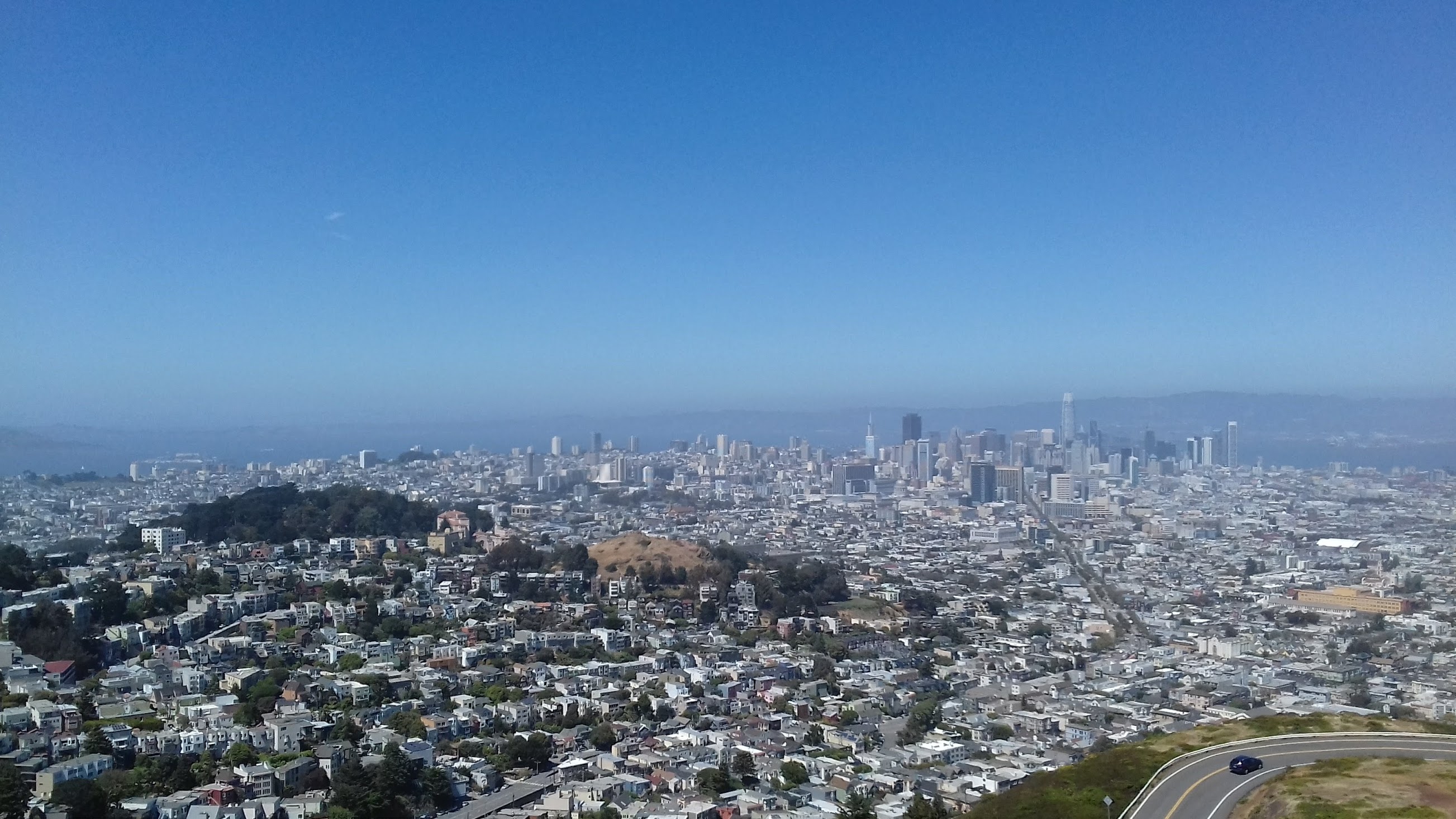
Overview of San Francisco

In his statement about the book, Nicholas Samaras wrote, “A Space Between” is a massive, ambitious effort of epic proportions that rewards with its interweavings of history, consequence, heritage and legacy. How heartening it is to witness in these poems the resonance through generations of immigration and sacrifice to provide for living, surviving, prospering. As the author smartly observes in her tight oxymoron, “Light hauls its weight from stone to stone,” it is refreshing to see forward in appreciation by looking back into the past that never leaves us.”

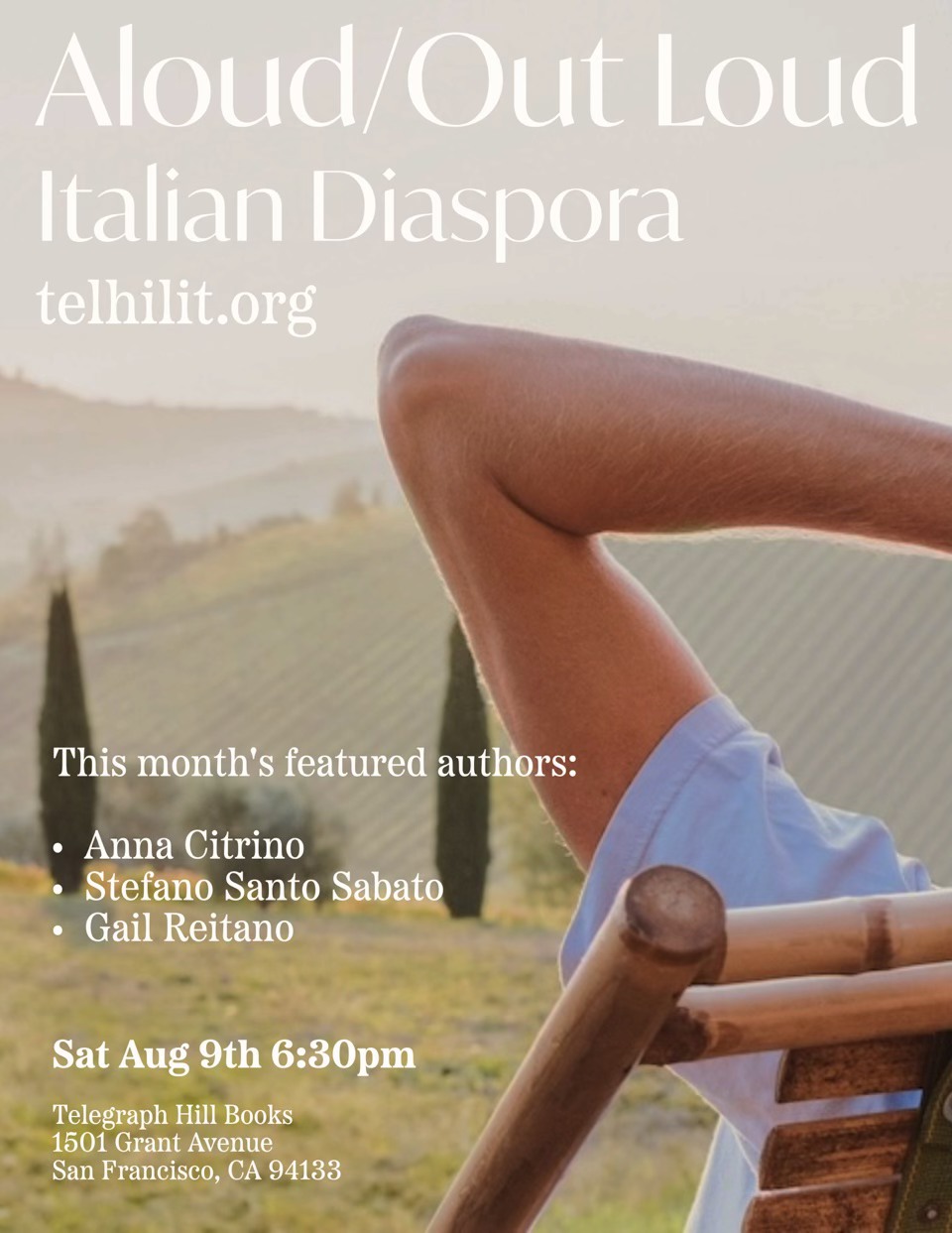
If you live in the San Francisco Bay Area, I hope you will come to the August 9 reading at 6:30 pm at Telegraph Hill Books, 1501 Grant Avenue, San Francisco, CA. Register online here to reserve your space. If you can’t make it to the reading, I hope you will read the book.
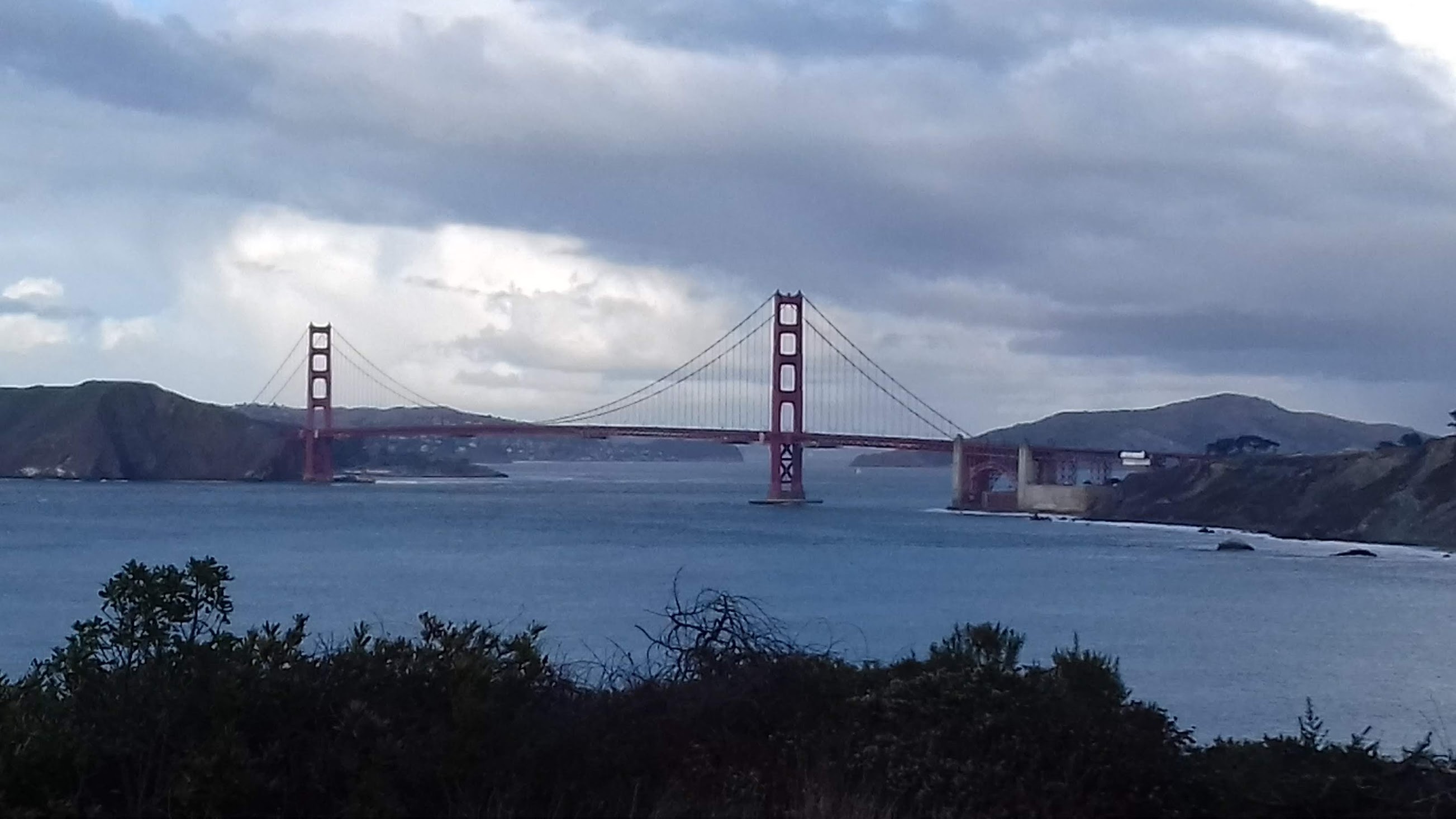
Golden Gate Bridge, San Francisco
art, music, poetry, Uncategorized, writing

The Incense of Fallen Leaves and the Seeds of Music

20190927_143022
Leaves in Nisene Marks forest, Santa Cruz County.

In his poem on the Jerry Jazz Musician site, “Paean for Coltrane,” Michael L. Newell writes,

Trane knew and blew rage
that was prayer prayer that was
rage engaged heart and mind
enveloped listeners in all
that could be
felt or known

in this miserable destructive
alluring astonishing enduring
world that enmeshes all
who pass through
conscious or unconscious
all is carnal spiritual joyous

In a world where words are so often manipulated and used in a way to distort or hide behind, music can move us into a place beyond words that enlarges the heart, becoming a prayer without words. Poetry tries to speak what is true, and to name what can’t be named. When experience becomes to large for words, music can become our poetry. As Newell so aptly describes, certain music in its melding of opposites–the miserable with the astonishing, the carnal and spiritual, the conscious and unconscious–is prayer as it moves beyond what can be articulated, and gives voice to the heart’s deepest suffering, joys, and yearnings.

Bertrand Russell wrote, “To be without some of the things you want is an indispensable part of happiness.” Much of life is about loss, about learning how to let go. It is in this bitter sweet space of letting go into transformation–of not clinging to what is, but of opening our minds, hearts, and arms to all that is passing, that we find meaning. Loss helps us to identify how all we have is gift, and can thus provoke in us an attitude of gratitude and openness that allows our spirits to expand. The boundaries between the known and unknown is the space where struggles occur, and where change and growth unfold. It is the space where stories live, and stories can teach us how to live.

20191111_104843
Japanese maple leaf

Autumn is a season between a world of fruitfulness and emptiness. Today, in an early afternoon amble around my neighborhood, the perfume of the redwood’s fallen leaves lifted from the earth beneath my feet as I walked. Much is dry and fallen at this time of year. The garden has gone to seed. Though the garden isn’t as beautiful as when it’s wearing its lush spring foliage or when offering its summer fruit, the seeds it produces as it lets go its life are beautiful for all the potential stored there, and for the promise of what they will bring. The memory of how to grow is embedded into their very fibre, each seed a storehouse of physically embodied knowledge. They know how to absorb nutrients, how to grow, how to create and recreate.

Some years back, while visiting Italy, I sat on a balcony overlooking Naples Bay at sunset as a boat pulled across the water into a flame of orange and red sky, and disappeared beneath the horizon. I thought then of how like this scene it must have been for  my husband’s immigrant grandparents when they journeyed from Italy to America–the feeling of deep longing and loss, as the shore of their homeland vanished from across sea, and they recognized they were leaving everything they knew for a world they knew little about. What an enormous risk it was. Their decision changed their lives and the future of all the descendants who came after them. From the point of departure, their lives were lived in the space between two worlds–the one they were born into, and the one they adopted in coming to the US. They never again returned to the land of their birth.

The lives of our ancestors are the seeds of our lives. Rising from the loam, the choice they made is the perfume of life now lived as a result that journey they took.

Citrino Naples Bay Cover idea
Naples Bay at sunset. (Photo, Michael Citrino)

Art in general, and music in specific, can bring together body and spirit to create an interior spaciousness where we are more willing to widen the heart’s boundaries.  Art arises at the intersection of loss and the need to find meaning and beauty. Art lives in the borderlands, in the space between where struggles exist. Music educates the heart. When I first heard Après un rêve, by Fauré, sent to me by a colleague I worked with in New Delhi, India, it evoked for me a sense of deep loss and a longing unable to be articulated in words. Immediately, the image of the ship I’d seen leaving Naples Bay and the journey my husband’s grandparents took in their hopes of finding a better world sunset came to mind. Imagining myself into that space sparked questions leading to research and many additional poems. That journey of imagination changed my world. 

Words are written thought. They have no physical weight, yet they can transform lives, can create or destroy worlds. Imagination is a seed. In searching to find, sense, hear, visualize and name the moments that defined and embodied the grandparents’ loss and their immigrant journey–the world they loved and left, as well as the new world they found–an entire world opened that was previously hidden. Whole histories were unveiled that I never before knew. 

Performed by Renata Bratt on cello, and Vlada Moran on piano, and recorded by Lee Ray, Faure’s Après un rêve on the link below is a gift to all–prayer without words. You can listen to the music, then listen again while while reading the poem below, “Luisa Leaves Home,” the initial poem I wrote in the series of poems that eventually unfolded into my newly published book with Boridghera Press, A Space Between. Maybe you will sense how the music inspired the poem, and perhaps it will be for you, too, a seed of some sort that opens for you a world. 


Luisa Leaves Home

Footsteps on the hard cobble last twilight—
harsh echoes that clattered through the brain

while I sat at the window, listening
to a child calling “Papa, papa,”
from a window above as his father

wended his way up the steep hill from the sea,
coming home from work.

Wind pushes the walls, and I unlatch
the door to narrow streets, barren hills
sloping abruptly into sea.

It is morning now,
and I am leaving this life’s empty cupboards,

going out of the stony house, the sun’s
lemon heat, the salted fish,

out from the familiar rooms and names, out
of all I know.

Down to the water, light rising
on the last day from the white shoreline
as it greets the ocean’s immensity, I go.

Slowly, the boat pulls from shore,
the hull breaking open the vast
expanse. From the sky’s broken
window, birds cry.

Father, mother, a silent photograph
held in my palm,
I lean forward over the stern,
into the rain,
and cutting wind.

20190731_152503

The ancient Pali text of “The Five Remembrances” says, “All that is dear to me and everyone I love are the nature to change. There is no way to escape being separated from them. My actions are my only true belongings. I cannot escape the consequences of my actions. My actions are the ground upon which I stand.” The grandparents’ journey of a hundred years ago parallels journeys people of our own time in various locations are taking now at great risk in order to create a better life for those they love and those that will come after them. May we all find the music that carries us into a wide place of being, and may the actions we take create consequences that allow the lives of those who come after us to have greater access to love and fulfillment. 

pilgrimage, poetry, Uncategorized

Journeys to Widen Our Lives

cropped-cropped-cropped-anna-header.jpg
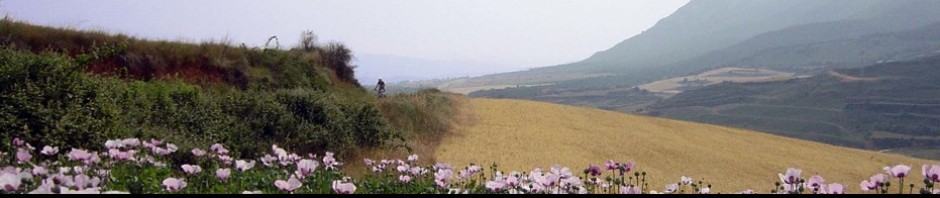
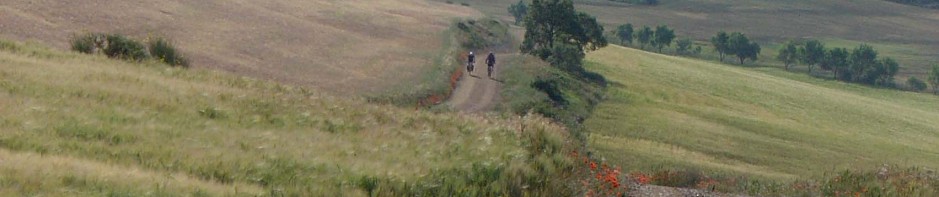
Anna biking the Camino de Santiago de Compestela, Spain

“We do not need to go to the edges of the earth to learn who we are, only the edges of our self.” – L.M. Browning, in Seasons of Contemplation: A Book of Midnight Meditations

Some journeys are external others internal. Pilgrimages are travels we make to places that we feel hold spiritual significance—that will speak to our inner selves and transform us. We might travel to a place where grandparents were born, to a significant site connected to our history or a religion we practice. Pilgrimages connected to poetry attract me. The year I lived in the UK, I wanted to follow the Stanza Stones poetry trail. Located in the Yorkshire moors of England, this 47 mile trail contains six Stanza Stones, poems written by Simon Armitage and carved into stones naturally found in there by Pip Hall. Armitage collaborated with the Ilkley Literature Festival organizers to create the poems for the trail. To walk a landscape is to absorb the land’s language. Arimtage’s poems connect walkers to the landscape with words as they encounter the poems as in these lines from his poem, “Snow,” “What can it mean that colourless water can dream such depth of white?” Though I wanted to walk at least part of this trail, I wasn’t able to find a good way to connect to it without better transport the weekend I had free to visit the area, so let go of the idea of this pilgrimage.

Walking Basho’s poetry trail is another pilgrimage I dream of going on. Following this pilgrimage path, walkers can hike the 17th century trail where the great haiku poet, Basho, traversed through northern Japan’s mountains to the Sea of Japan, passing by Shinto shrines, through pine covered islands, and hot springs along the way. I don’t know if I will be able to get to Japan any time soon to make the journey that inspired many of Basho’s poems. I look at photos of it on the Internet, though, imagining the quiet joy of walking for days beneath bamboo forests and among ancient trees.


We’re not always able to make the trek of our dream or travel to another land. Nevertheless, there are pilgrimages available to us all: quests through books, and our journey through time. A favorite journey I’ve been on since 2012 is one of the imagination. This sojourn began when I wanted to collaborate with a colleague I worked with who played the cello beautifully, and who was going to move away at the end of the year. I suggested a collaboration where I would write a poem for a piece of music he chose to play, and we would record the pieces together. The music he selected was Fauré’s, Après un rêve, (Op. 7, No. 1). The piece evoked a sense of loss and longing, transporting me to Naples Bay’s enormous circumference where I’d recently sat with my husband at sunset. As the sky burning gold-orange, we watched a boat pull from shore, heading toward the wide horizon. I thought of his grandparents departing Italy for America—how they left behind the world they knew as well as everything and everyone in their village of San Lucido on Calabria’s coast. They had no pictures of the world they moved to, didn’t speak the language, had little money and likely no maps. They never returned to Italy. Leaving was risky, enormously brave, and they would never be the same. Neither am I, as without their departure, I would’ve never met the man I married.

After writing the first poem, “Luisa Leaves Home,” in response to the music, I wondered many things: Why did they leave Italy? What was life like in San Francisco when they arrived? How well did different ethnic groups get along? What are Italian-Americans contributions to American culture? How did World War II change Italian-Americans? What does it mean to be Italian-American today? What does it mean to be American? Hundreds of questions surfaced, and I searched for answers. Paradoxically, the more I researched and wrote with the aim of unraveling threads from a century ago, the more mysterious and complex the world grew. The more questions I had.

I began listening to news items and other people’s stories with a second ear. I applied situations and information to the immigrants’ lives I was writing about, and reflected on how my experiences connected to their world. After sharing one of the poems with a relative, she looked me straight in the eyes and said, “That poem isn’t Noni. I don’t know who you think you’re writing about, but it isn’t my grandmother.” She was right. I never met her grandmother or lived in San Francisco. I didn’t grow up in an Italian American family or neighborhood. Neither do I speak Italian. Any of these qualifications would be beneficial in helping me write about Italian immigrants to America. The Italian grandparents were from a different time period and culture, and had little education. I had no way to access their lives or inner worlds and the family knew few facts. I couldn’t truly write in their authentic voices. Every writer has limitations of gender, culture, and time period, however. I felt drawn to understand and to journey inside Italian immigrants’ world, so I turned to research and imagination, constructing possibilities to embody a story. Research helped me to put the few facts I knew into a larger picture with a wider frame. Imagination created a bridge to a culture, time period, and people that gave me greater awareness of the complexities inside choices immigrants made.

We look in the mirror when we are at six, sixteen, or sixty. All that came in the years before is mostly hidden from view, disappeared, but still present beneath the surface, creating the life we see and experience. There are myriad stories inside one story. We’re many selves inside one body. It’s the same with cities. Years back I read Italo Calvino’s book, Invisible Cities, where Marco Polo describes to Kubla Khan various cities, all of which are actually Venice. I began to see San Francisco in this way as well as I wrote—its subtle elements still present revealing the past or rising from a foundation into a remodeled version. When visiting the City, I recognized places I’d never been because I’d seen them in historical photographs and could recall events that took place there. It isn’t just San Francisco I see differently now as a result of searching for answers to my questions. The world I live in is larger and has greater dimension because of questions I’ve explored answers to. The walk into an unfamiliar world has been a pilgrimage that  widened my perspective and has transformed me.

20180628_152554
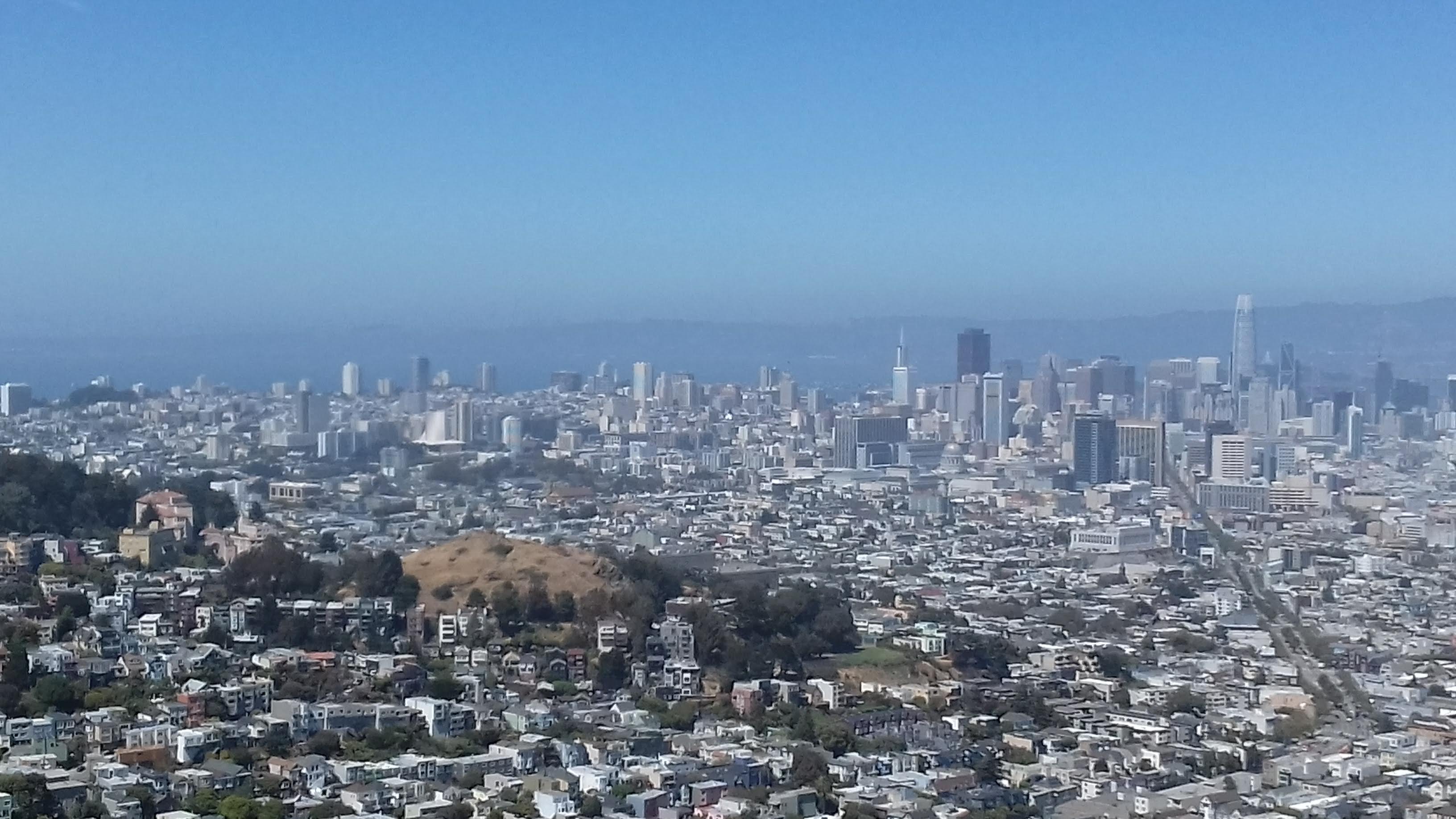
San Francisco from Twin Peaks

To step out on a journey into new territory can be unsettling for travelers. Today, people don’t think of Italians as the “other.” During the peak period of Italians immigration to America, however, Italians experienced prejudice. They were seen as lawless, treacherous, and having filthy habits. (See more at this CNN article, “When Italian immigrants were the other.”) Italians weren’t allowed to build a church inside Manhattan because city officials were fearful of Catholicism and the ceremonies they didn’t understand. The largest single lynching in America was of Italians in Louisiana 1891. Teddy Roosevelt, though not yet president, said of the lynching it was “a rather good thing.” The man who helped organize that lynching, John Parker, later became Louisiana’s governor in 1911.

Currently, similar to the time period one hundred years ago in America when Italian immigration to the US was at its peak, Americans’ fear of immigrants is heightened. Openness to new experiences, information and ways of seeing can enrich and expand our lives, and bridges that allow us to build deeper understanding of what is different can be helpful. Mahzarin Banaji co-author of Blindspot: Hidden Biases of Good People and Professor of Social Ethics in the department of psychology at Harvard explains in her interview with Krista Tippett that our minds are basically wired to distinguish differences in order to help us make sense of our world. This wiring creates biases and blind spots we’re not aware of.  Tests created by researchers to help you see your biases at Project Implicit. People can, however, gain understanding of biases and blind spots by exposing themselves to ideas and people that stretch their boundaries of familiarity. Challenges to people’s preconceptions presented in contexts allowing them to continue to feel safe can help people grow in their understanding of others different from themselves.

One terrific way to do this is through reading, as reading allows us to learn from others without having to take personal risks as we step into their lives. Scientific American’s October 23, 2013 issue reports social researcher, Emanuele Castano and PHD candidate’s research evidence showing how literary fiction, delves into characters’ thoughts and interactions. In literary fiction, explains Kidd, “Often those characters’ minds are depicted vaguely, without many details, and we’re forced to fill in the gaps to understand their intentions and motivations.” As a result, readers have to imagine characters’ inner thoughts. This kind of thinking nurtures empathy as it leads readers to understand the complexity in characters’ lives and to reach for why they might do things differently than expected.

20161218_150059

If reading literary fiction helps break down stereotypes and prejudices, enabling readers to develop empathy with those different from themselves, it follows that writing fiction could further expand this capability as authors not only step inside character’s minds, they create their thoughts and build contexts from which they flow. As a writer, you immerse yourself in your characters’ lives, become familiar with their setting, social context and way of seeing so that you can portray their world. You reveal your characters’ weaknesses and blind spots, and come to understand your own as well.

While most people aren’t fiction writers, we’re all creators of our own life stories. We can consciously aim to expand our understanding of new contexts and situations. Simple things like taking a new route home, listening to or playing a different type of music, going to a lecture on an unfamiliar topic, trying a new sport, hobby or food can all help us expand. We can learn a few phrases in a new language, take a class in a unfamiliar subject, learn about plants in our yard or types of architecture in the neighborhood, experiment with art or try building something. When meeting new people, we can ask questions to bring out their experiences or ways of seeing things. These actions may not seem like large leaps for some, nevertheless they can open new paths in our brains to carry us on journeys widening into new vistas of understanding.

Some journeys start before you know they’ve started. I’d written quite a few poems about Italian immigrants experiencing earthquakes, crossing the Atlantic, learning about the largest lynching in America, and Italians being removed from their homes to be taken to internment camps before I realized I was actually on a pilgrimage with them. I’ve made the pilgrimage with them as I could through writing, and the trek has caused me to view my own place in the world with greater humility.

Not every story is ours to tell, but this one called to me and I felt compelled to take the writing journey to tell it. A Space Between to be published by Bordighera Press (date to be determined) describes this journey, and I look forward to sharing it with you. If you want, you can read more about the book here.

cropped-dsc07530.jpg
Riding the Camino de Santiago