
I would like to step out of my heart
and go walking beneath the enormous sky –from “Lament,” Rainer Maria Rilke
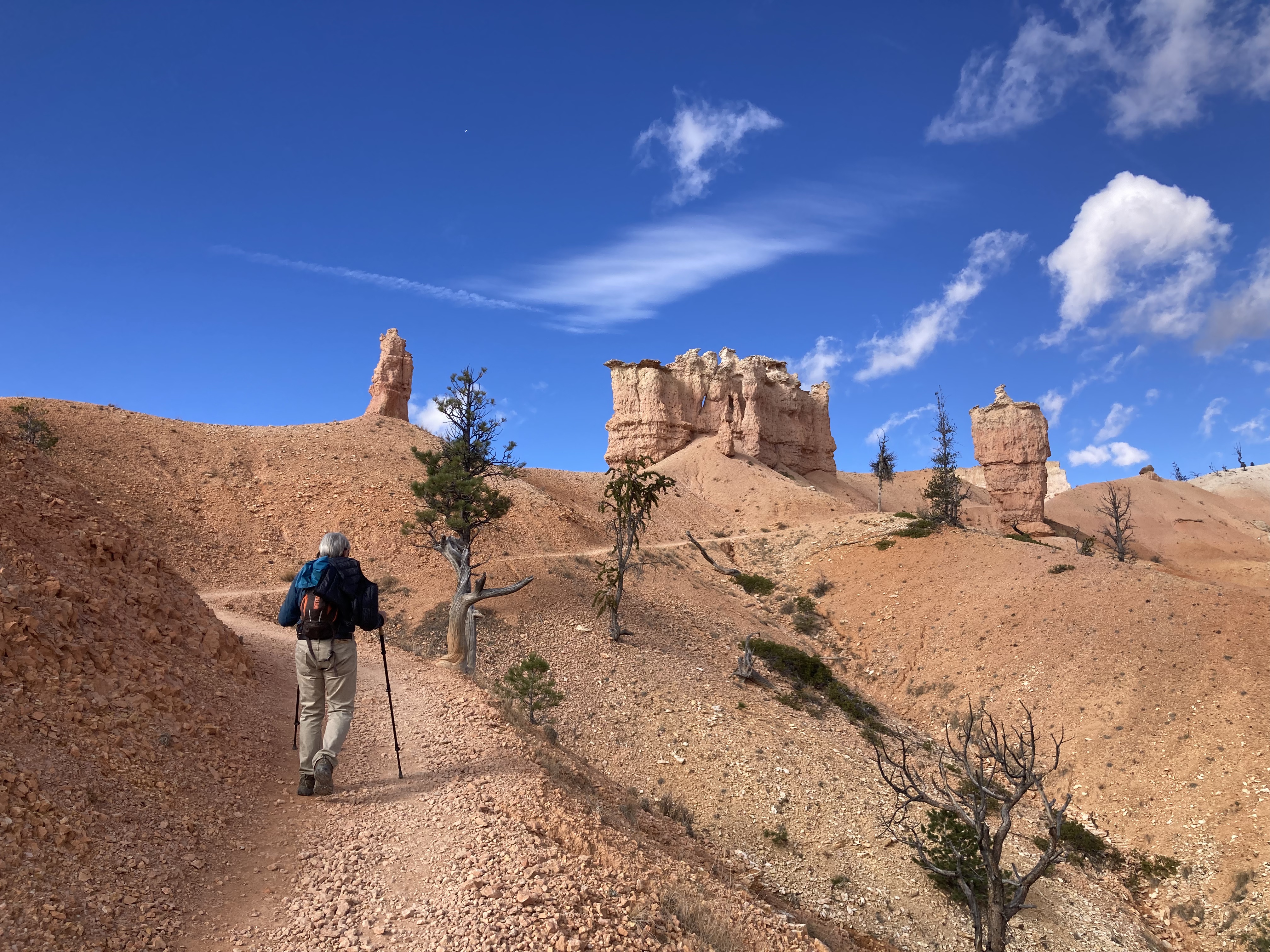
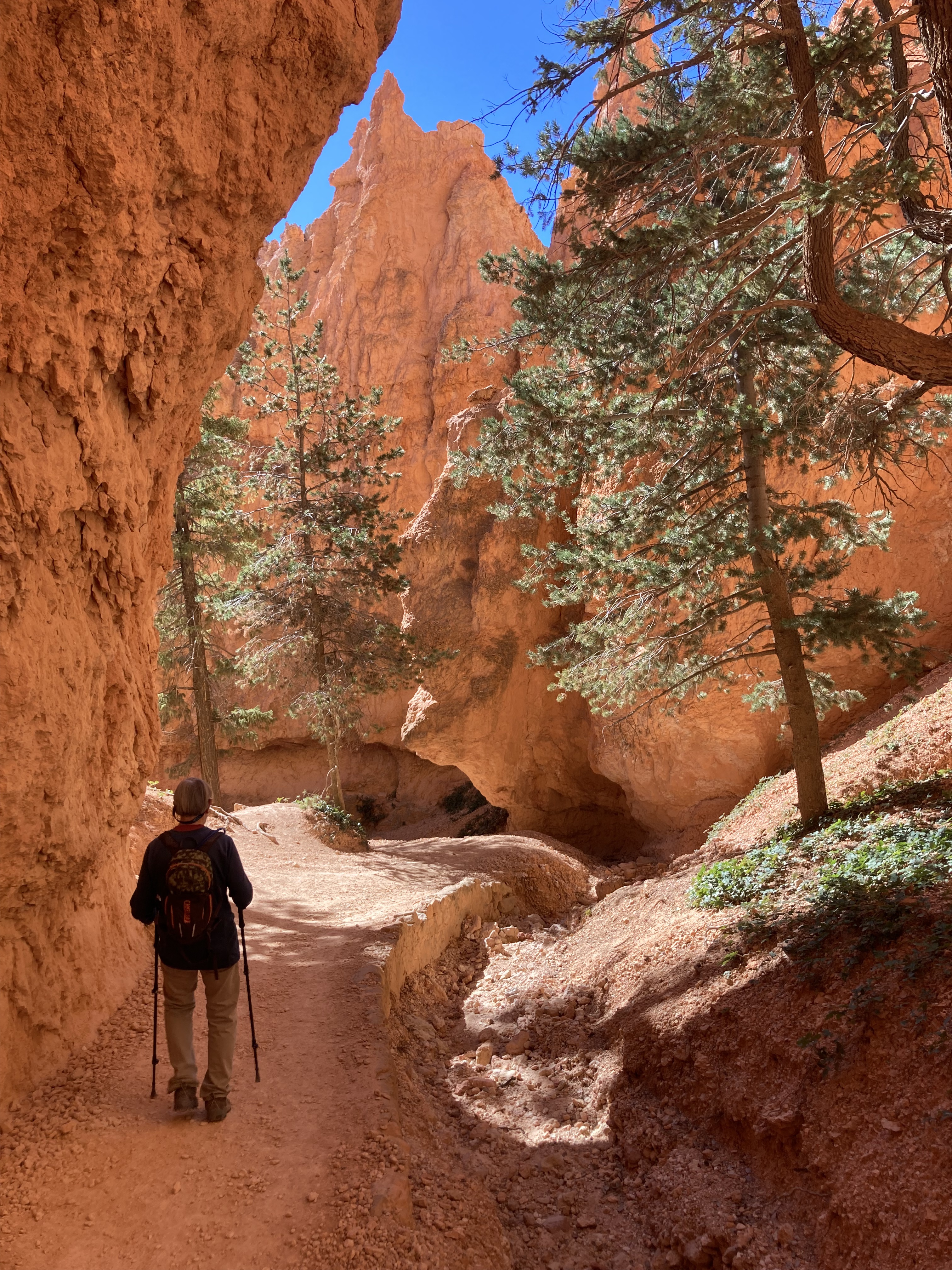
Today amidst an atmospheric river and rain’s downpour I’m welcoming the beginning of my life’s new decade. Earlier this month, I traveled in the US Southwest immersing myself in the landscape’s rugged expansiveness, its openness and astonishing beauty. From the Valley of Fire, to Zion National Park, Bryce Canyon to Capitol Reef, and from Goblin Valley to Antelope Canyon, over and over the land astounded me with its astonishing presence and elemental grandeur. Every turn of a path brought amazement. “I could point my camera in any direction, it wouldn’t matter. You can’t take a bad photo here,” remarked one man I met on the path at Bryce Canyon as he turned his camera this way and that. “How true that was, and how many thousand times did I say, “This is incredible!”

The desert is simply itself. It makes sense why in earlier times, people went to the desert for solitude. Indigenous people, Buddhist monks, and the Desert Mothers and Desert Fathers all sought out the desert as a place for reflection, meditation, and transformation. As Ryan Kuja writes in his article, “Desert Spirituality—‘The Place of Great Undoing,” “Metaphorically, the desert is a place of testing and transformation, of being divested of empire and ego.” Desertscapes are enormous reservoirs of silence. After walking for a time on various desert trails, I realized no words could ever adequately describe the land’s vast topography, its sweeping spaciousness, and the dramatic rise of its sheer rock faces. I simply fell silent.
Perhaps silence is the best way to walk through such landscape. Just put one foot in front of the other, let the walking shaking lose the mind’s rambling thoughts and obsessions. Allow the earth to seep up through the feet. Absorb the quiet and subtle shifts of air, and let the earth envelop you in its stillness.


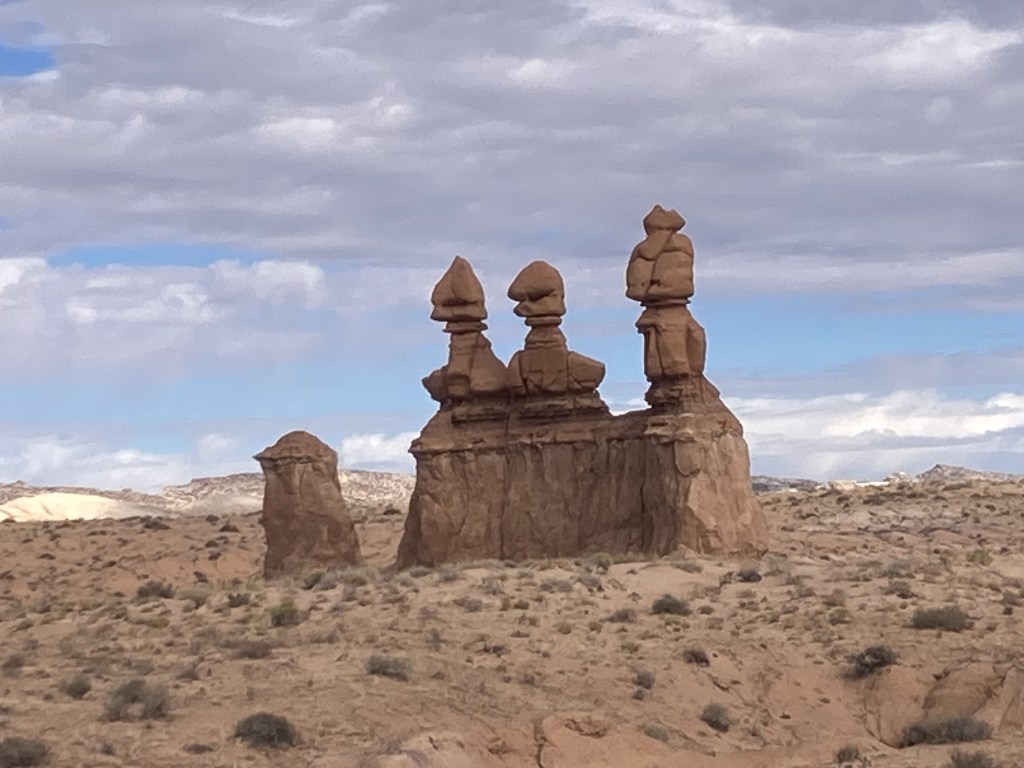
Walking the desert lands, my body recognized why it is the earth is a sacred gift, the miracle it is to be alive and witness its wonder. Great islands of cloud floated above through cerulean skies as I walked over swirling layers of colored sandstone and alongside sedimentary layers of stone and earth formed through many millennia—the earth visually telling me its story of persistent transformation and endurance.
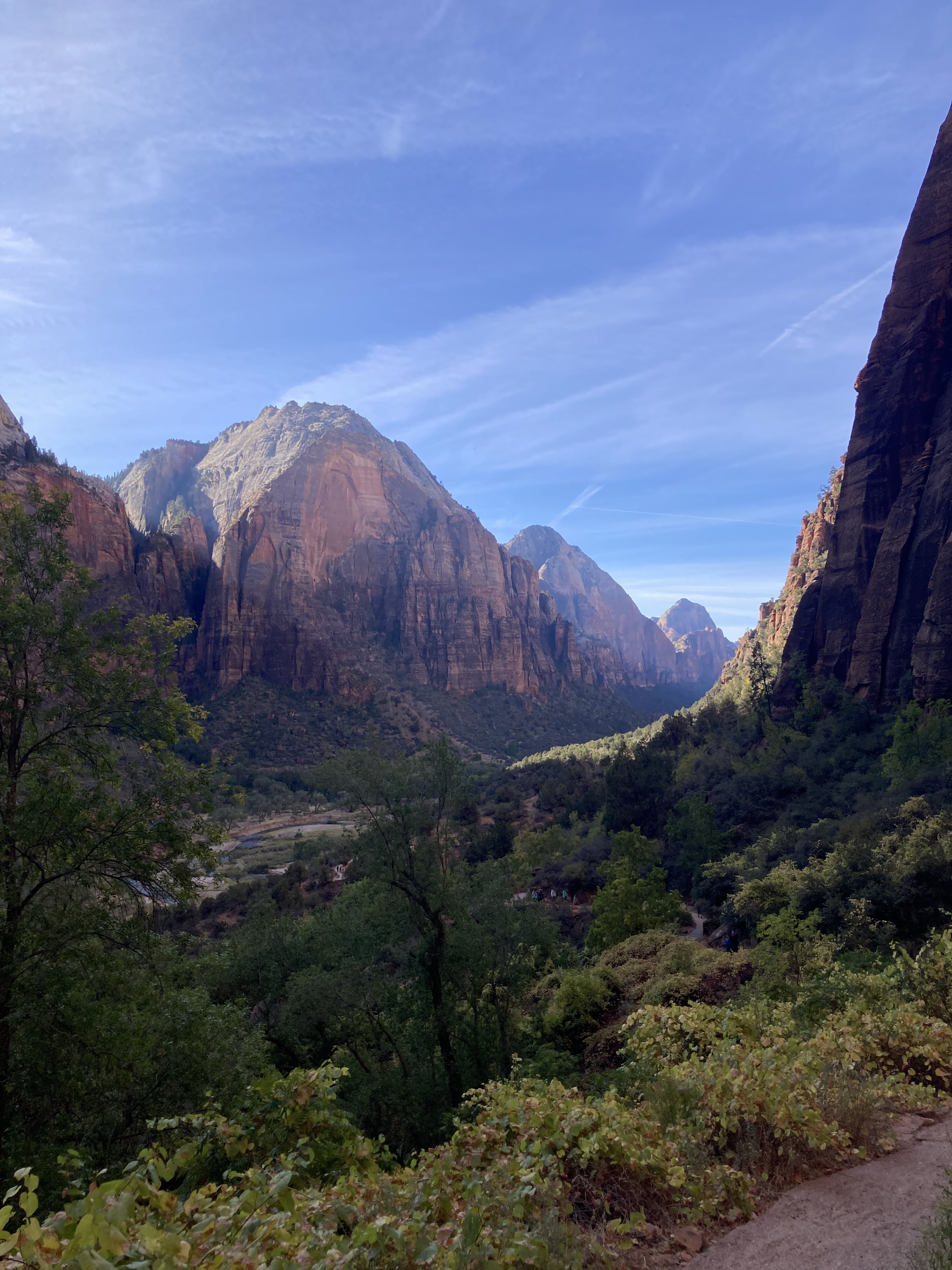
“Landscape is sacramental, to be read as a text,” writes Seamus Heaney. At Zion National Park the sandstone cliffs rise to formidable heights, thousands of feet up with sheer faces that catch morning’s sunrise blush and late afternoon’s glow. The name Zion alludes to the Biblical Zion, a hill in Jerusalem, or Jerusalem itself–a place described as a city of refuge, and by many a holy place. When walking through the park’s canyons and climbing Zion’s hills I felt distinctly aware I was traversing holy ground.
To spend time wandering through the desert’s expansive and pervasive openness is to become aware of one’s smallness and to enter a space of humility and awe. The desert is a good teacher. I noticed people everywhere walking with a sense of expectancy, ready to give a greeting or say a few friendly words, faces open. People were there purposely to find wonder and experience awe. As Abraham Joshua Heschel writes, “The beginning of our happiness lies in the understanding that life without wonder is not worth living.”
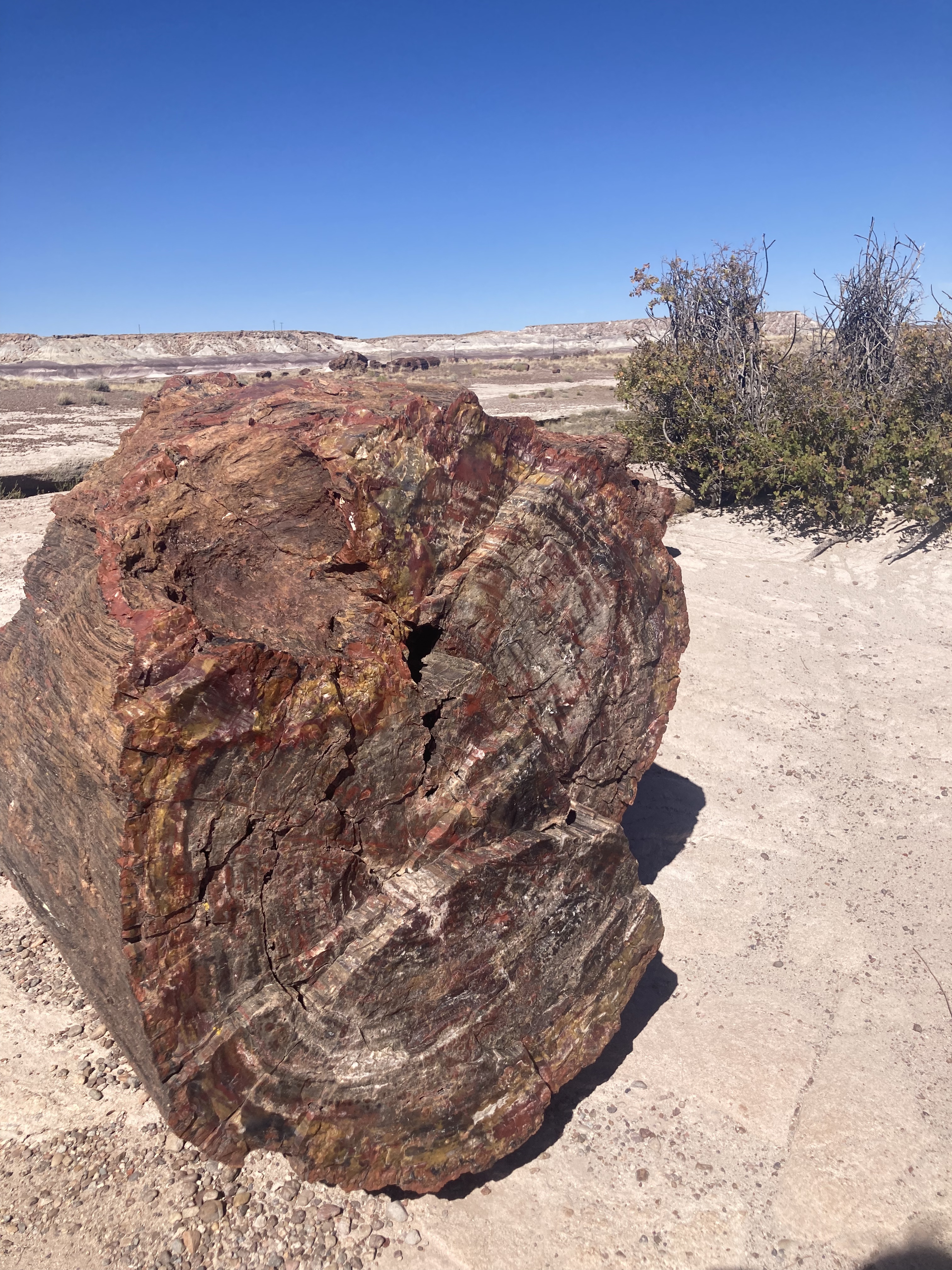
Looking ahead to the challenges the next decade might bring, or that any decade might bring in anyone’s life for that matter, the desert seems a solid place to go to contemplate one’s purpose and focus. Sitting in a swirl of uplifted sandstone looking across the miles of open earth to distant mountains, I became aware how the land abides by its own principles. The petrified trees in Arizona’s Petrified Forest were once located in a forest just above the equator before Earth’s tectonic plates gradually moved them over a multitude of millennia to where they now sit at 35 degrees north of the equator. Amazingly, the trees turned to stone even before T-Rex walked the earth. Earth erodes, changes and evolves according to rhythms billions of years old. Wind blows. Rain falls. The environment will forever continue to respond and change according to the steadfastness of its internal rules.

Earth is a wondrous place and it’s a phenomenal time to be alive. In the past decade, I lived on three different continents and witnessed amazing diversity in cultures, climates and geography. I don’t know where the current decade will take me, but I can count on the Earth continuing to function on the natural principles that have been there since its foundation. At Antelope Canyon, Arizona, a sacred site for Navajo people, I watched people emerging from the narrow crack in the ground thinking how it seemed as if was a kind of birth. I want to think of this birthday as a birth into a new era of life. I know there’s a lot I still want to learn about the world I live in, how to live in it better, and how to give back to people in a way that reflects their unique beauty and radiance.

In his poem, “Being a Person,” William Stafford writes,
Be a person here. Stand by the river, invoke
the owls. Invoke winter, then spring.
Let any season that wants to come here make its own
call.
Life brings unexpected challenges and aging generally takes a great deal of bravery and courage. I notice these qualities in those I know who are in their eighth and ninth decades. They often demonstrate these qualities in their determination to carry out every day tasks such as putting on their clothes when the shoulder joint doesn’t function without great pain, or when going swimming every day year round at 93 years old in order to maintain strength when it’s difficult to hold one’s body up, or when a grandmother daily walks around with an oxygen concentrator so she can continue to spend time with her grandchildren, as well as myriad other examples of fortitude, patience, and resolve the elderly possess.
It’s not a given that suffering must lead to a diminishment of one’s awareness of awe, wonder, or beauty. I respect people like 95 year old Dot Fisher Smith who continues to open to awe and the miracle of being alive, not “ceasing from exploration,” to use T. S. Elliot’s words, even as she knows her physical mobility is diminishing. “I have something to give,” she says in this short film, To Be in Awe, “my light, something ineffable that I don’t know…We’re here to experience the wonder of being in a body.” I wish to live this way into the uncertain decades before me, wish to give gratitude for the mystery and wonder of being alive.

Stafford ends his poem, “Being a Person” saying,
How you stand here is important. How you
listen for the next things to happen. How you breathe.
I want to say thank you to my parents, family, teachers, friends, collogues, former students, animal friends. Thank you to the earth I stand on, the garden I work to nurture, and to the many places I have visited and passed through. It’s not just Southwestern US that is phenomenal. Earth is phenomenal. Everything is in its own way incredible.
…There is so much beauty
left to see in this world. And I became what I am now to see it.
Timothy Donnelly from his poem, “The Light.”








 Anna Citrino---Poetry, Place, Pilgrimage