gratitude, snorkeling, Tabitha Cambodia

Beauty and Reasons to Travel

photo 3-13
Hikkaduwa beach, Sri Lanka

A trip this week to Hikkaduwa beach in Sri Lanka got me wondering about how places we travel to change us. Some trips I’ve gone on I thought I would return from changed, that my eyes would be opened to some newer, deeper understanding of life, but that didn’t actually happen. Other travel, however, has left an indelible impression on me–such as the trip to southern Italy to visit the towns of San Lucido and Amantea and walk the streets where my husband’s grandparents came from, or the summer I spent in Guatemala helping with relief efforts after an earthquake, also my first trip to India when I saw the way people lived a life so different from my own, and how difficult life was for so many. After visiting Sri Lanka this week, I’m left feeling deeply grateful for the places on earth where greenery and beauty are still in tact, where people can breathe deeply and the air is pure, for places where people can restore themselves. Hikkaduwa beach is such a place.

photo 1 (9)
Tsunami memorial, north of Hikkaduwa

Maybe we should be able to transform our minds and way of being without visiting other lands or worlds, but travel can boost our potential to do that as it places us in entirely different realities operating under different rules and understandings. Walking around in such a world for even a few days can help us to see things don’t necessarily have to be how they currently are. Old patterns can be broken. Something new can emerge. What we perceive as fixed boundaries defining the way the world is or functions, we discover when traveling, is actually a social construct that people collectively build and uphold, and that can change. Whatever the actual cause–whether it is simply time away, or new connections made as a result of being as totally new environment, what seemed impossible before travel to a different location often seems doable after travel.

Over the years of living and working abroad, I’ve been able to travel many places, and doing so has given me a clearer picture of the world. Unlike a few decades ago, nowadays, of course, a person with Internet access can simply look up an area of interest and view absolutely wonderful images. The mosaics in Ravenna, I learned after reading in William Dalrymple’s book, From the Holy Mountain, together with those in the cathedral in Trastevere in Rome, are Europe’s best examples of Byzantine mosaics outside of Istanbul. Traveling to Ravenna isn’t currently possible for me, however, but the online 360 degree view of some of these mosaics online at this site is truly stunning, and it’s fantastic to be able to see them. Then there are the videos of locations, like those on this site of Ravenna, that you can also explore.
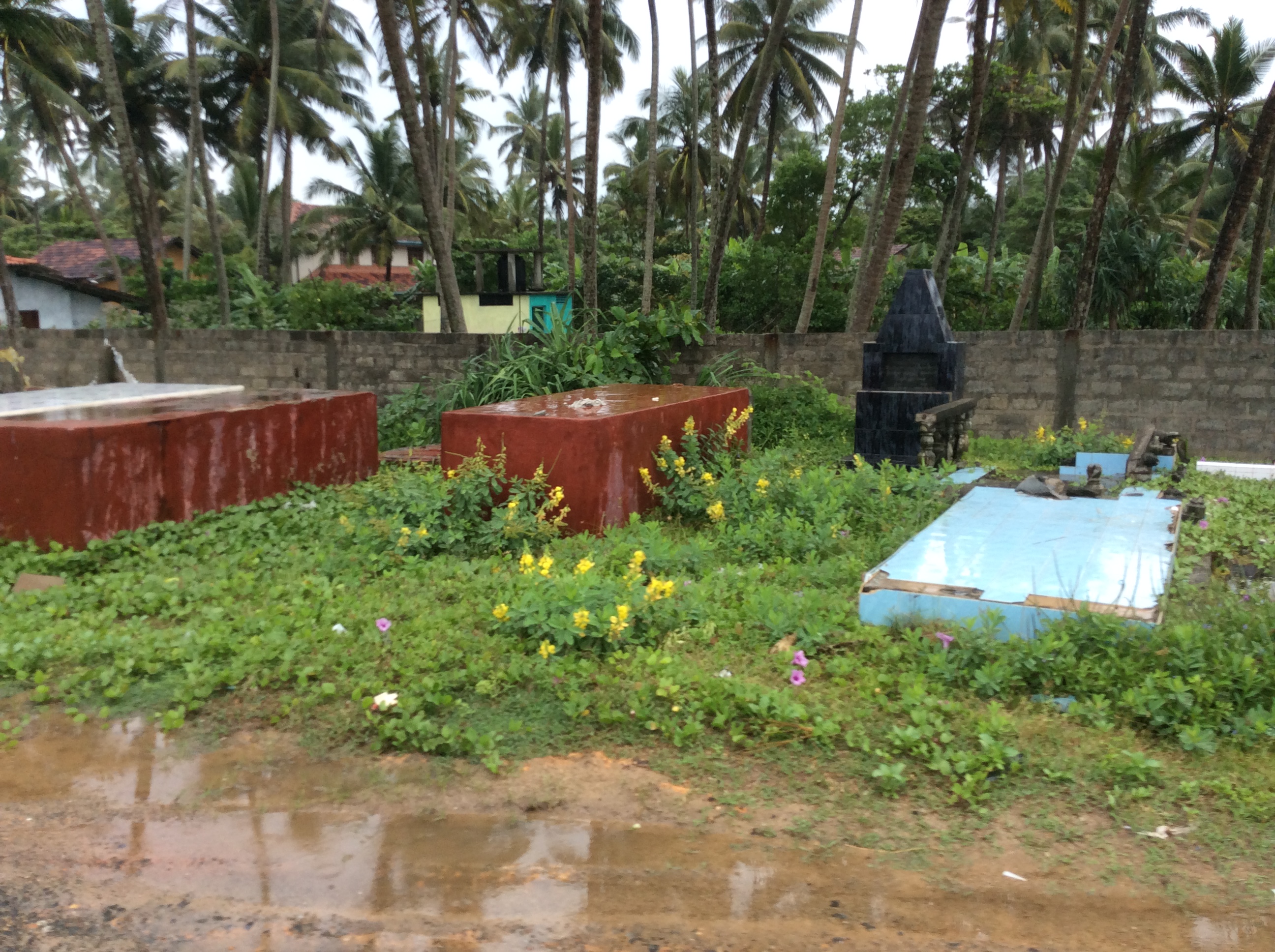
photo 2 (7)
Roadside grave from 2004 tsunami victims, Sri Lanka

Mini mind breaks that take us vicariously to other locations are not an adequate comparison to the kind of transformation that can occur from visiting a place in person, however. Traveling in person allows you to meet people, make connections, learn about history in context, find yourself in new contexts and situations, and to experience first hand the subtleties of a world built on different foundations. In the world today when so many are afraid of differences, it seems much good could come if people were able to travel often so that they could experience the contexts and causes that create various world views and realities. Perhaps we would find ourselves better able to listen to and understand those different from ourselves, and empathy between people would grow.

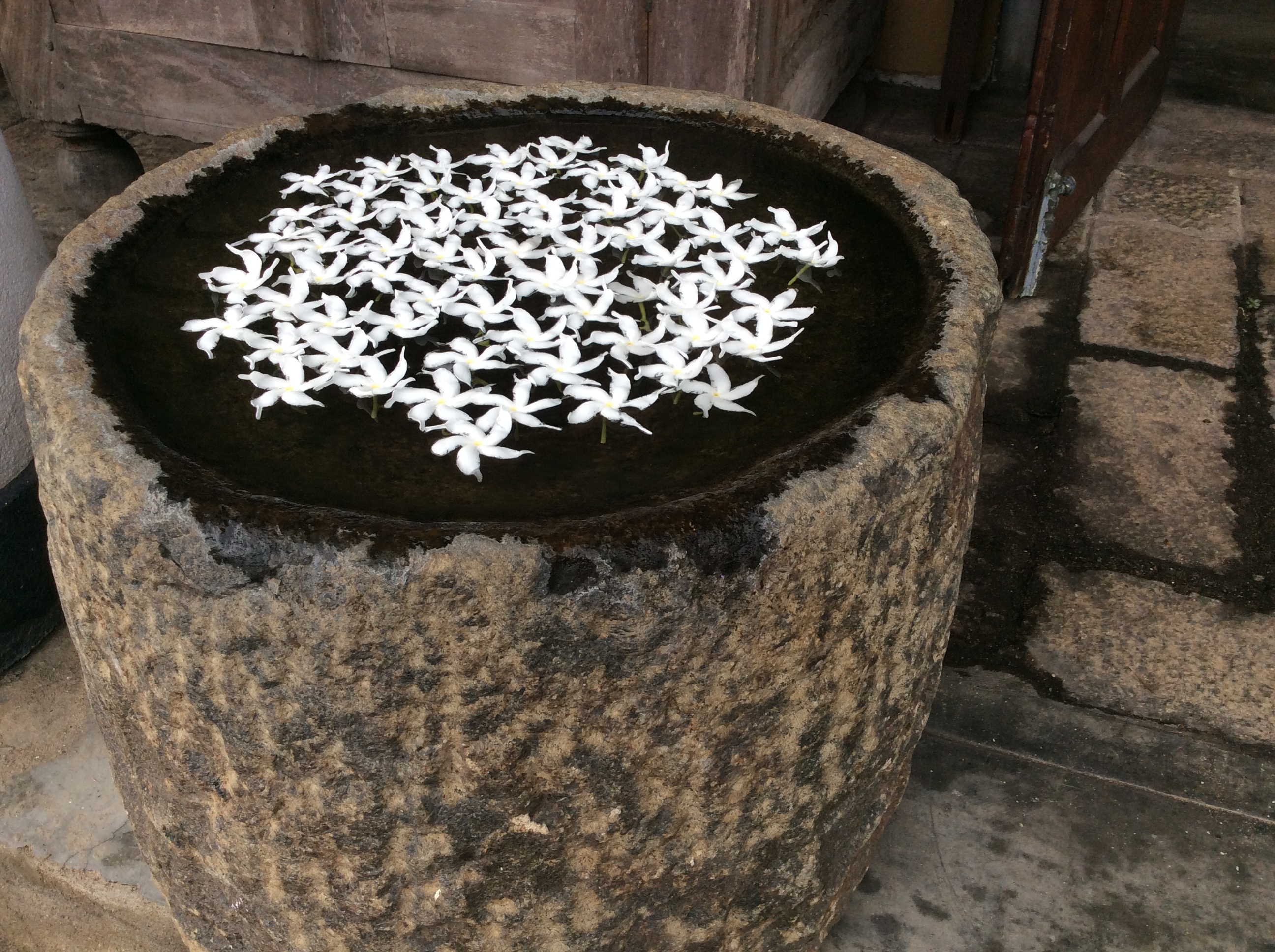
photo 3 (7)
Hikkaduwa home, Sri Lanka

On the other hand, the environmental state of the planet is a growing concern, and airline travel contributes to the unhealthy state of the environment, raising the question of when travel is justifiable. If we are traveling merely for pleasure, is the expenditure of fuel justifiable? When we arrive at the new location, does what we do there add to other’s lives in a positive, constructive way? It’s true that tourism is important to the economy of many places, but our current economic systems aren’t sustainable. If we care about the places we go to visit, and I do think that when we visit new places we generally have a greater affinity for them, how are we giving back something to these places as a result of our travel? How are we are connecting with a place  in a way that sustains it, as opposed to using it as a consumer–taking away from it what we can, and moving on to the next location? These are questions I’ve thought about for some time now.

A few alternative travel options people can try are opportunities like snorkeling with whale sharks in the Seychelles where a portion of the money you spend helps contribute to research and tagging efforts. Having done this previously, I can say it’s a fabulous experience–you have a close encounter with one of the most amazing animals on the planet, and you contributing to efforts to understand them better. If you want to read someone else’s blog post about this activity, see here. If you’re interested in places you can connect with to snorkel or dive with whale sharks, see here. Additionally, travelers can visit places like Ravenna and take a workshop where you learn to make a mosaic. The Shaw guides to art, writing, and other cultural workshops as well, lists thousands of learning travel opportunities around the world. An alternative option is travel where you can contribute to social efforts like helping to build houses with Tabitha Cambodia, something I’ve also done on several occasions and found a moving and valuable experience. All these reasons for travel are ways a person can either learn or give something back while traveling.

Still, just being in a new environment can broaden us, a bike ride through the mountains, for example, can help us understand the world in new ways. Sometimes a person just wants to see the art in France because of a love for art. Maybe others want to visit Eastern Europe to get a better sense of history there. Some people may want to climb Mt. Olympus because they loved their high school world history class and it would be a dream to visit the location in person. There are many reasons for desiring to travel and there are no simple guidelines for what are the right reasons to do it, but maybe one consideration to nurture could be how we might use our travel experiences to in someway give back to the world or enhance our relationship with others.

photo 1-22
Twilight, Hikkaduwa, Sri Lanka

This weekend when I put on my snorkel and stuck my head underwater and saw the thousands of fish swirling about in the shallow pool just off shore, the eels poking their heads out of the rock, the lion fish with their striped fins floating next to the coral wall, and the juvenile emperor angel fish dancing about their tiny holes wearing their fancy blue, white and black patterns, I was filled with joy. It was, after all, Thanksgiving weekend in America, and I felt fully alive and grateful for the earth’s abundance, for the life given me to experience such beauty.  I don’t know if one person’s experience of beauty can ripple out to others in a way that helps to restore lives, but more and more, I’m convinced of beauty’s importance for our lives. From Ravenna to the fish floating in Hikkaduwa’s beaches, could it be possible that if more people experienced nature’s beauty, maybe more would want to cherish and protect it and fewer would be willing to trade it away for economic gain? I’m encouraged by Mary Oliver’s poem in Swan: Poems and Prose.

DON’T HESITATE
Mary Oliver
If you suddenly and unexpectedly feel joy,
don’t hesitate. Give in to it. There are plenty
of lives and whole towns destroyed or about
to be. We are not wise, and not very often
kind. And much can never be redeemed.
Still life has some possibility left. Perhaps this
is its way of fighting back, that sometimes
something happened better than all the riches
or power in the world. It could be anything,
but very likely you notice it in the instant
when love begins. Anyway, that’s often the
case. Anyway, whatever it is, don’t be afraid
of its plenty. Joy is not made to be a crumb.

Uncategorized

The Importance of Doing Nothing

photo 1 (10)
Cloudscape, Wildomar, California

In an age of constant movement, nothing is so important as sitting still.“– Pico Iyre

This summer I was taking photos of clouds, fascinated by their shapes, something that is uncommon in Delhi’s skies this time of year where mostly what one sees is a haze hanging in the street from the ongoing air pollution. Gavin Pretor-Pinney, a graphic designer from the UK moved to Rome and began noticing clouds in paintings and it made him think he should do something more with clouds. He gave a lecture at an arts festival, and the Cloud Appreciation Society was born. The society post images, poetry and music inspired by clouds, and has a manifesto that essentially declares if we had blue skies every day, it would be monotonous. Clouds are nature’s poetry, expressing mood. Their beauty is overlooked, and contemplating them benefits the soul, the manifesto describes. I’ve got to say, the benefits are certainly enticing.

In his interview with Guy Raz on the TED radio program, Pretor-Pinney explains that gazing at clouds benefits us, and that we should really look up more often. “We need to be reminded that slowing down and being in the present – not thinking about what you’ve got to do and what you should have done, but just being here, letting your imagination lift from the everyday concerns down here and just being in the present. It’s good for you. It’s good for your ideas. It’s good for your creativity. It’s good for your soul.” I imagine staring at clouds does something similar for the mind as going for a walk–it encourages associative thinking and nurtures creativity as a result.

Currently, the air quality at the measuring station across the street of particulate matter in the air at 2.5 is at 253, which causes “significant aggravation of heart or lung disease and premature mortality in persons with cardiopulmonary disease and the elderly; significant increase in respiratory effects in general population,” according to the US embassy air quality data site here in Delhi. It hasn’t been a good day, overall, for cloud viewing, but the idea of finding value in letting the mind wander, allowing it to take a break from thinking about the long list of what needs to get done has got me interested wanting to drift with clouds. Recently, I participated in a guided imagery in which the leader asked people to go in their minds to a place that made them very happy. I went directly to my garden in California, and I visualized myself sitting in the dirt, letting it sift through my fingers. I wasn’t traveling to some fabulous location to dive, wasn’t wandering down a beautiful street in a foreign city or climbing a mountain. I was doing the most mundane thing, doing nothing, really, and was feeling supremely content. What is it about doing nothing that is so satisfying?

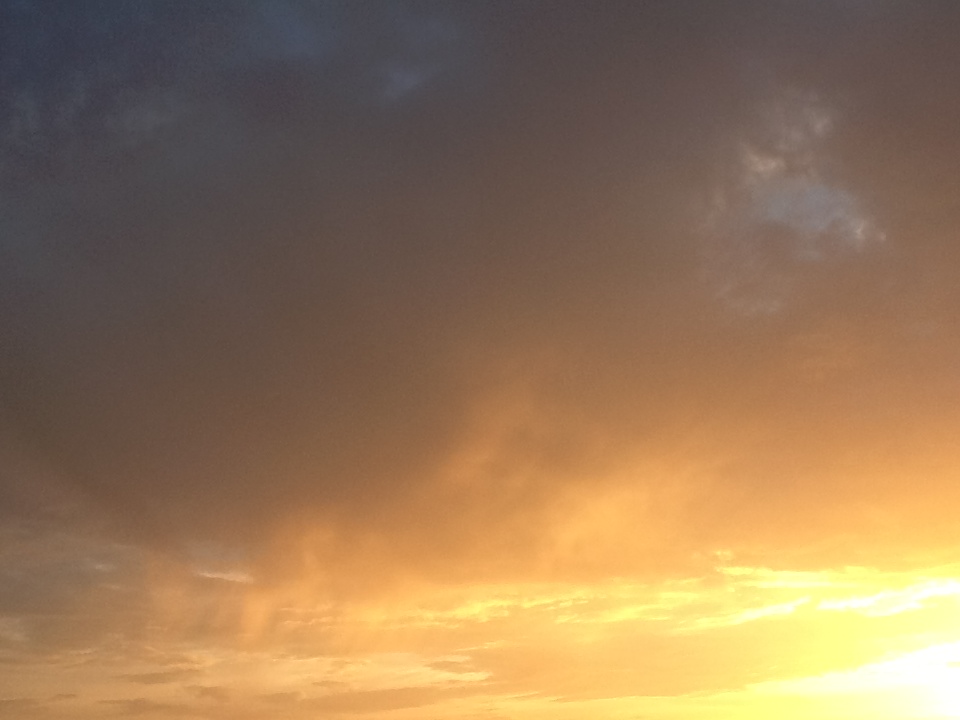
photo 2 (8)
Southern California clouds at sunset

It seems I’m not the only one thinking about the need to simply do nothing, Pico Iyer, known for his writing about global citizenship, in his TEDRadio hour interview, also with Guy Raz, “How Can We Find More Time To Be Still,” says he left New York because he was “making a living there, but wasn’t making a life.” What is more satisfying in life, he says, relationships and quiet exploration–the invisible things. Most people live in cities where the pace is intense. Often work place increases its demands. It is the constant speed of everything we do, Iyre suggests, that creates the yearning for the opposite. “…in an age of acceleration, nothing can be more exhilarating than going slow. And in an age of distraction, nothing is so luxurious as paying attention. And in an age of constant movement, nothing is so urgent as sitting still.”  The desire, the need, to do nothing is felt by many. Lawton Ursey on the Forbes site talks about Andrew Smart’s book Autopilot: The Art and Science of Doing Nothing. He explains that research shows that when not focused on a specific task, the brain becomes more active, “more organized and engaged in idleness.” This is a positive thing. It seems that focusing too hard on getting things done, might actually make us less efficient. Doing nothing, it appears, is underrated.

When we have to make difficult decisions, when we’re under stress, we are actually less able to see the big picture, less able to think clearly and act out of a wiser, balanced position. What can we do to take back our lives from the pressure of obligations and to create more space? Many people are talking about the need to create space in their lives so they can live a reflective life, but how many of us actually do it? We are admonished to find balance, but the structures and systems we live in make that very difficult. Over 200 years ago, Wordsworth wrote, “The world is too much with us; late and soon,/Getting and spending, we lay waste our powers.” It doesn’t seem much has changed in this respect since he penned those lines.

photo (10)When my recent 49 days of purposeful observation ended, the thing I realized is how much I have cramped my life into a corner, and how in need I am of opening up more space for being. My intention was to use the observation time to make more space in my life. Sometimes my “purposeful observation” was literally reduced to a few seconds.  I don’t think anything will open up and change much in my life if I continue to let the pressures of the world around me control my life. I must return to a practice that allows me to learn how to create space, and create life for myself. I suspect most of us can’t move away to a new city right now like Pico Iyre did. If we want more space in our lives to live and move and experience being, perhaps it would help if we could find one simple thing we can begin with where we are, and then start to practice it. For example, I might set a focus for the day, something I am going to purposefully work on, then coming back to it at the end of the day and keeping track of how it went. Something I long for is a sense of spaciousness, so maybe lighting a candle purposefully might be a good focus practice. For others who have a similar need, maybe it is sitting in the doorway sun for 10 minutes in the morning, if you have a house where you can do that, or for others it might be listening to a piece of music with full attention–one small thing to create a crack that will lead to a larger crack in the structure we’ve built that doesn’t makes space for breath, for living the other part of ourselves–our unlived lives, so to speak. Richard Rohr in his article in Sojourners, advocates a daily time of silence. I’m reminded that catholics have a practice of the Examen, and this might be useful for some. We don’t need to do all, be all, have all. Maybe we need to remind ourselves of  E.F. Schumacher’s idea more often, that small is beautiful, as his book title says. It can be enough.

We can be intentional with our time and presence. Creating the conditions for change and then practicing them until they habituate is necessary. All skills take training, even creating space for rest.

photo 1 (11)

Uncategorized

Living in a World of Need

Why do I continue living in India year after year? There are practical reasons, of course, but there are other reasons too. Just last week, for example, I saw a camel walking down the road amidst busy traffic. One doesn’t see that sight on the street every day! It’s not exactly common here either, but then again, it’s not something that could never happen.

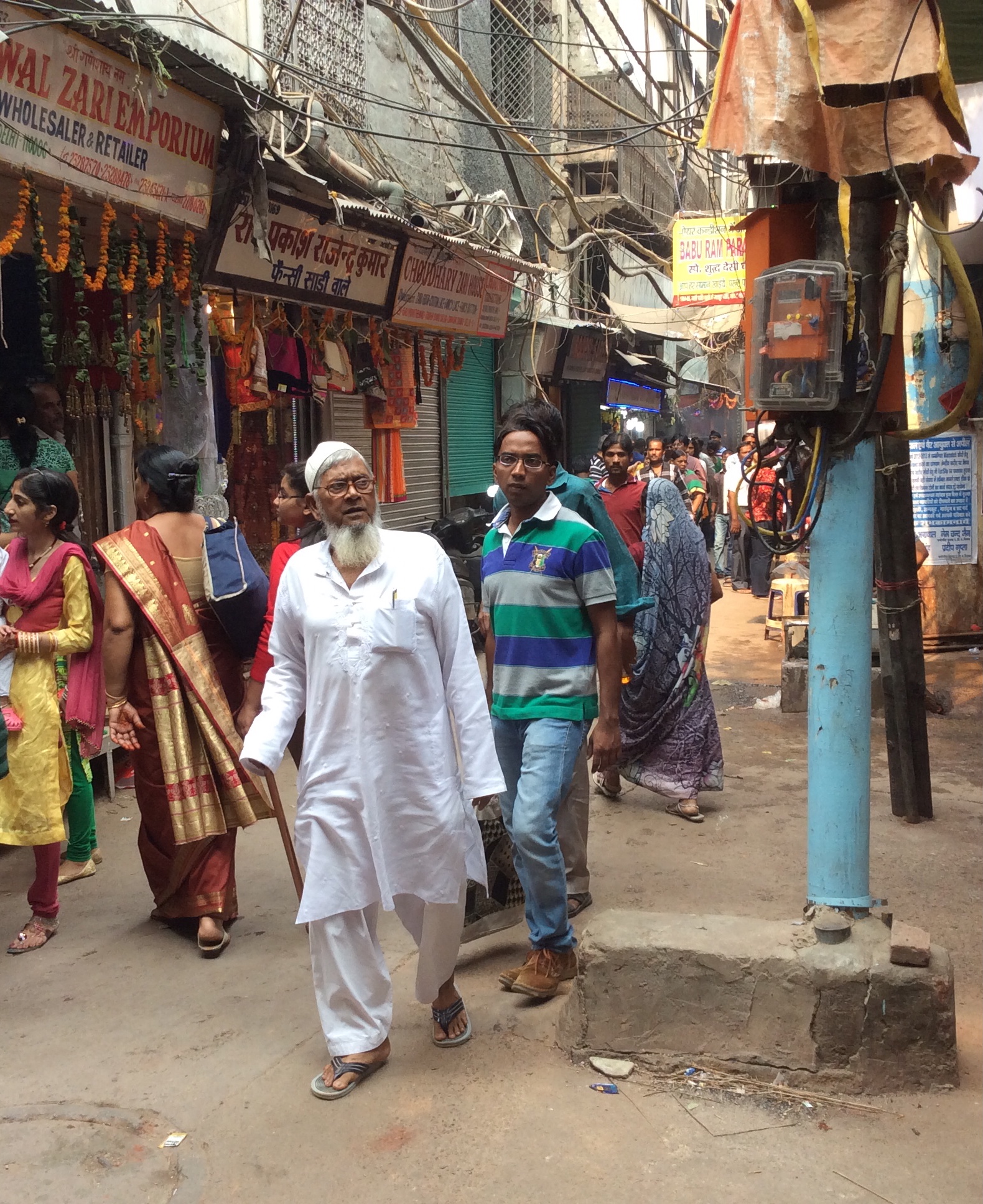
Though I’ve lived here for a number of years now, a recent trip to Old Delhi, like all trips to Old Delhi, opened my eyes once again to entirely other ways of being and living that remain a wonder even after seeing them many times. There is the wonder of wire, for example, and how the city caries on though wires are tied in Gorgonian knots most anywhere you choose to look up–yet it does, and that’s amazing. Monkeys climb around the neighborhood balconies, monkeys occasionally appear on the school roof, and climb along the wires, moving from building to building. People pull and push loads so large it seems it would be impossible for the driver to navigate. On the side of the street amidst busy traffic you might see someone getting his ear cleaned, a person taking a nap or quietly reading. Everywhere on the city streets people are engaged in activity–sweeping, selling, driving, sleeping, eating. A whole world that holds a thousand stories is laid before your eyes–narratives with intricacies and ways of being that remain a mystery to me, even though I view the story in process before my eyes.

It’s true that India is full of many wonders but on the other hand, it’s also true that living in India with its enormous population, pollution and poverty constantly poses questions I don’t have answers for, this is one of the benefits of continuing to live here. It confronts me every day with challenges to the heart, mind and body. How do you negotiate daily through thick traffic? How do you breathe through months of smoke and pollution where the particulate matter in the air consistently ranges in the dangerous zone? How do you  look at beggars on the street and who come to your door year after year and keep your heart open without looking away when there seems to be no end to their ongoing grief and pain? Even the dogs on the street carry in their bodies the imprint of loss and neglect. Look at their eyes and you can read their need. It is good to live with these questions, and to ponder them. They don’t go away, and won’t depart though I someday will. They make me ask questions about what is important in how I live, and what I’m doing with my life that matters–what are we doing together with the incredible gift of life on this earth. How are we using what we’ve been given for the good of all, including the earth itself?

When we see need in those around us, and of the earth around us, we can see the parts of ourselves that are lost, alone, and broken, and feel compassion. We can become more aware of our own interdependence on others. None of us are truly self-sufficient. Henri Nouwen says, “We can trust that when we reach out with all our energy to the margins of our society we will discover that petty disagreements, fruitless debates, and paralysing rivalries will recede and gradually vanish.”  Draw near, look the need in the eye. So often we don’t want to look at poverty in the eye. It’s too painful. We may not be able to fix the world with its pain and short comings. Still, we can reach out silently in our heart, with a “hello” of recognition. We can give a small offering of food. We can practice being present.

The traditional story “Loosening the Stopper,” from the Hassidic Jews of Poland describes a man who had a lot of money and gave generously to the poor. One day, however, the man was in conversation with fellow businessmen when a beggar approached him asking for money. The man didn’t want to interrupt his conversation to get his purse, so simply gave the beggar the loose change he had. The beggar threw the coin at the wealthy man, hitting him in the face, declaring it was an insult since he could give so much more and why didn’t he? The wealthy man decided that from then on he was going to give only a half-penny to anyone. When two rabbis approach him later asking for a donation, they agree to be grateful for whatever was given them that day. The wealthy man gave his half penny, and the rabbis thanked the man for his generosity. Later, the wealthy man returned and gave them much more money, again returning to giving generously.

The story concludes with one rabbi explaining to the other what it was that opened the wealthy man’s generosity. “It is also said that each step upward leads to another. Once we accepted his half-penny, we loosened the stopper on his generosity. Each gift he gave made the next one possible. Now, our willingness to receive has restored him to his goodness.” For those of us debating what to give, to whom and how, the wisdom in this story is to start somewhere. Give something. It is better to open up the stopper on your compassion than to go a lifetime holding back.

photo 1 (7)