community, place, trees, Uncategorized

Our Many Homes

When researching for my book A Space Between, I learned histories, geographies, and perspectives I was previously unaware of. Though born an American citizen, there are many histories I am unaware of even in my own place of birth. Locations we inhabit today are the crossroads of many histories and people. As Italo Calvino showed in his book, Invisible Cities, the place we live contains many worlds.

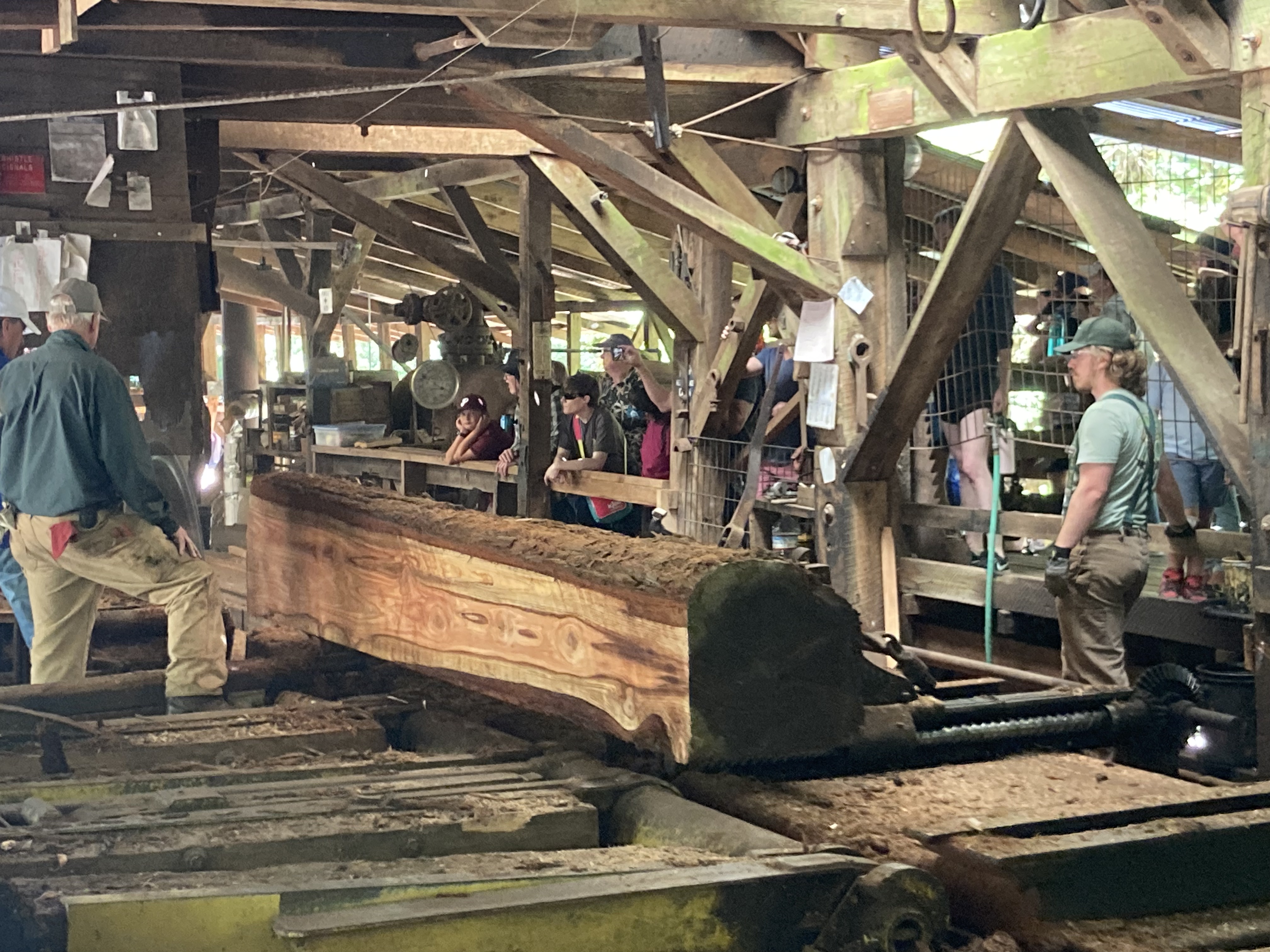
Recently, I visited Sturgeon’s Mill in Sonoma County where I observed the mill, in operation a only few days a year, that cut redwoods that provided the lumber for rebuilding houses after the 1906 San Francisco earthquake and subsequent great fire where over 3,000 people died and 80% of the city was destroyed. To date, that quake remains the deadliest in US history. According to Redwood Ed: A Guide To The Coast Redwoods For Learners and Teachers, in 1905 85-90% of the redwood forests were not yet logged. (You can view several astonishing historical photos of loggers cutting redwoods on this site when scrolling down.) The mill is steam powered, and still operates four weekends a year run by a group of volunteers.

A visit to Sturgeon’s Mill allows observers a glimpse of how redwood was processed into lumber used for building during the era before and after the 1906 San Francisco quake and fire. Old-growth redwood forests store at least three times more carbon above ground than any other forest on earth,” says Altea George. When traveling through San Francisco’s neighborhoods today, however, the disappearance of much of California’s redwoods in the effort to rebuild the city after the quake isn’t something we often think about.
Though the value of preserving forests is better understood now than it was in the last century, following WW2 between 1945 and 1948, sawmills around the Bay Area more than tripled. A further housing boom in the 1960s added to the demand for redwood and fir lumber. “Today over 95% of the original redwood forest area has been logged at least once.”

Redwood stump at Armstrong Woods State Park, California

Our homes today are the result of ideas and products from many origins we’re often not conscious of. As Kamala Harris has stated, “You exist in the context of all in which you live and what came before you.” Wherever we go, we carry our histories with us. Our ancestors’ histories and modes of thinking have shaped our lives and way of being in the world. Those living in California’s wider Bay Area still inhabit many houses constructed with redwood taken from forests after the 1906 quake. The quake led to changes in the way commercial buildings are made. Previous to the quake, concrete buildings were thought ugly. Because concrete is an inflexible material, people didn’t want to use it in an earthquake zone. One building that didn’t fall during the quake, the Bekins building , was made of steel reinforced concrete. This observation led to a change in building codes in 1908 influencing the way urban structures are built in cities today.
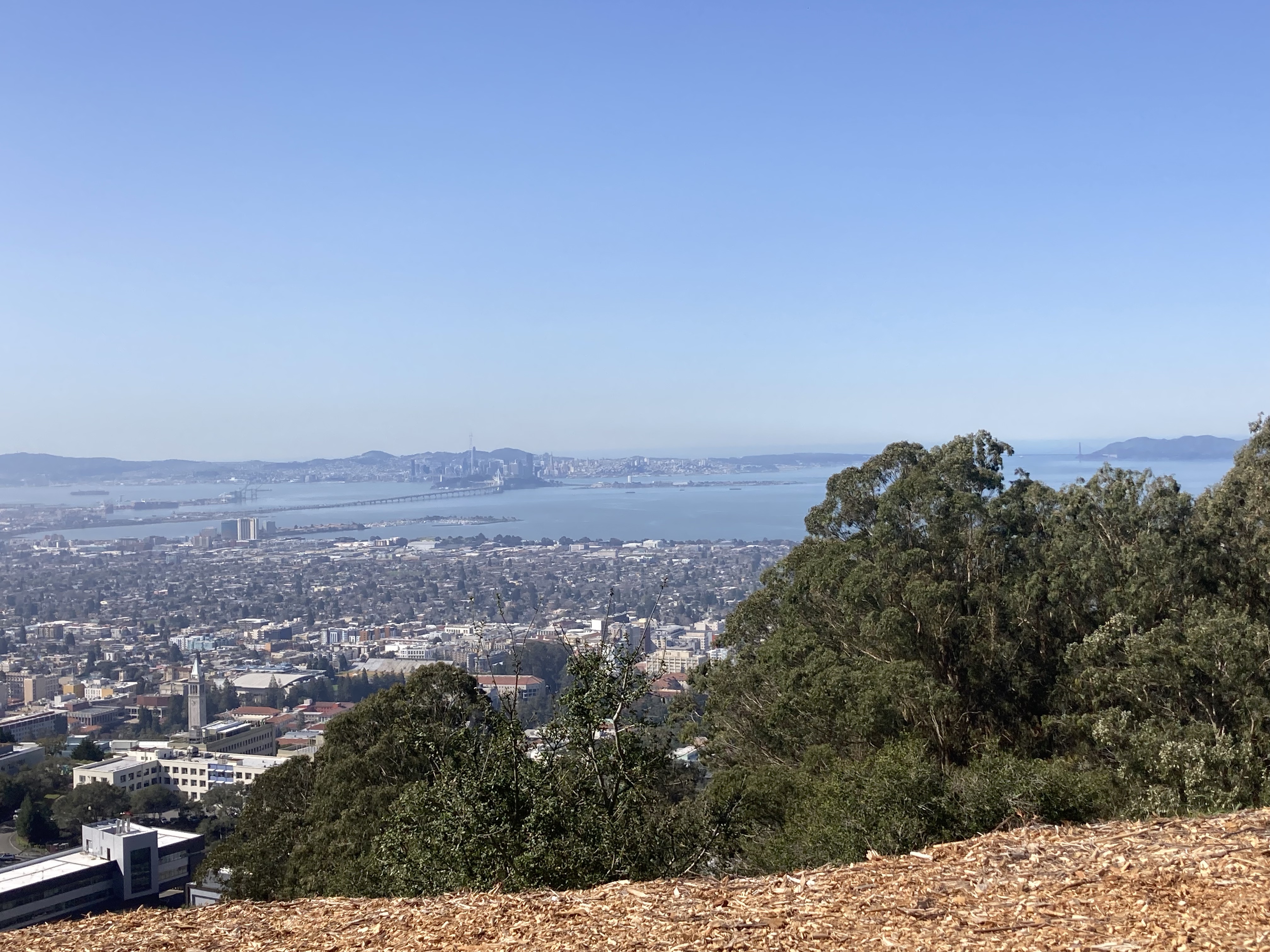
A California native, I grew up on a hillside strewn with granite boulders and covered with yellow grass. Evenings, I listened to cricket throb and coyotes calling across the valley. Soundscape ecologist Bernie Krause tells us, “Every soundscape that springs from a wild habitat generates its own unique signature, one that contains incredible amounts of information.” Not only does the built environment help us understand where we are, the land itself speaks in a way that helps us recognize where we are, and I’ve loved the way the land I was born on has sung its shape into my heart. 

I’ve also stood on a red rock resting outside the small town of Wheatland, Wyoming where my mother was born, the plain stretching far into the distance, and sensed its solid presence rise through my feet. Outside Chugwater, Wyoming where my great grandparents and great aunts and uncles lived and worked, I’ve stood in a field between the thick grassy strands of wheat and felt its welcome, touching vicariously the land of my origin though I’ve never lived there. 

Driving down roadways, we move with the traffic’s flow, all those around us carrying their own histories and stories. Whitman wrote, “(I am large, I contain multitudes.)” We don’t have to have lived in a place to sense a connection to it. Many homes coexist in us. There’s the home of our native tongue, the home of our way of seeing and thinking, and the home of particular clothes we wear that allow us to feel relaxed. There’s the home of foods that comfort us such as spaghetti, or tom kha gai soup, the home of routines with morning tea or coffee, for example, and the home of habits we follow such as reading the morning news, sitting for a morning meditation, or taking an evening stroll. 

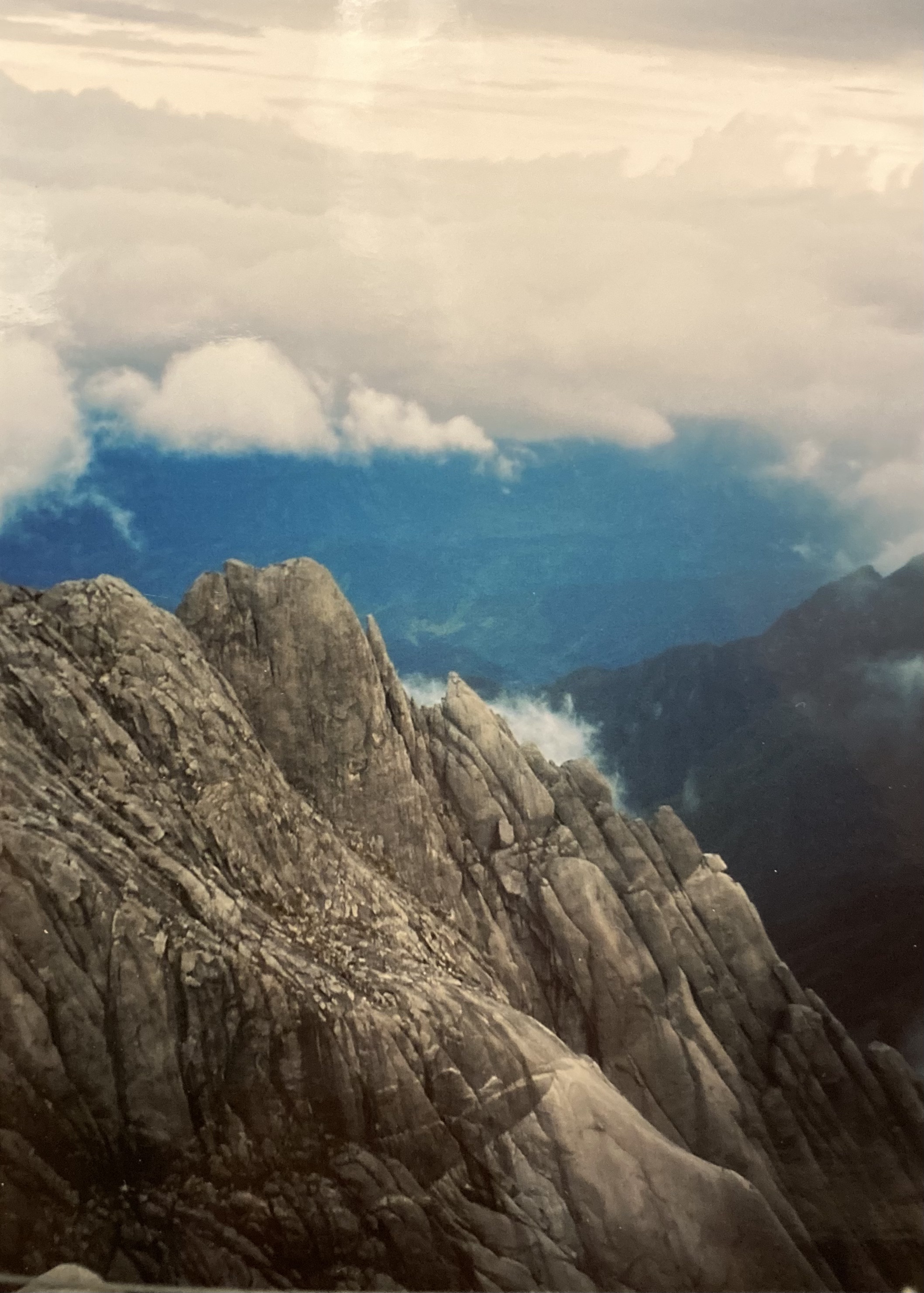
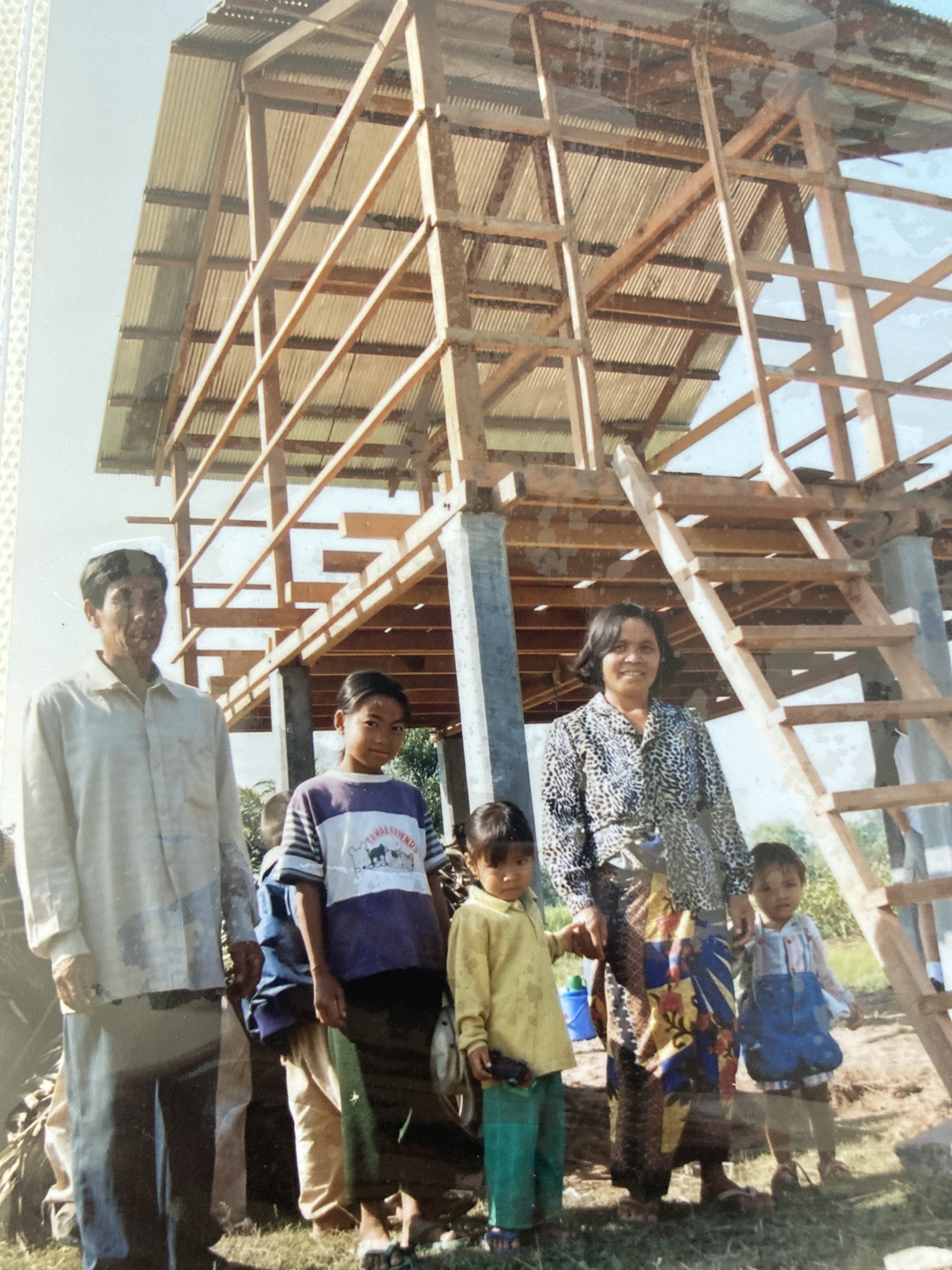
We rely on resources from around the world to create homes we live in. What is the value of knowing the history and origins of our way of life that have come together to create a place we call home? I’ve lived in six different countries outside of the US. Each one has left its imprint and came to feel like a kind of home. We can move across the world, to live in or visit a place that has entirely different protocols for how to eat food or negotiate and still can find connections to those around us, to the city, or the natural world. In Vietnam I’ve stood with hundreds of others in Tien Son Cave who lifted their arms with hands outstretched hoping drops of sacred water. In Saudi I’ve shared iftar after Maghrib prayer, and have stood in an empty lot with students in Kuwait, waiting to be cleared after a bomb threat. I’ve worked with fellow divers and a Cambodian family to build house, celebrated the Mid-Autumn Lantern Festival with friends in Singapore, and endured torrential rains in the forests on Mt. Kinabalu. I’ve attended weddings in New Delhi, and funerals in the US. I’ve ridden calmly to my destination with thousands of strangers on subways in London and St. Petersburg, been swept along by undersea currents near Palau. I’ve walked through Columbia’s Catedral de Sal de Zipaquirá carved by miners beginning in the fifth century BC, and have stood on the African continent’s southernmost edge and thought of the many ships that sailed past its windy coast whose voyages changed the shape of history. Each experience and countless others have helped me understand that though I was born in a particular place, my actions are part of a greater stream of life. All that has come before me as well as the variety of ways people interact with the world shape what I experience at any one point in time. What we call home is a collective making. Each of us are part of a greater whole. As Whitman writes in Leaves of Grass, “Past and present and future are not disjointed but joined.” Each of us is a continuation of the past, an embodiment of the present. We hold the future in the way we pass on our thoughts and carryout our actions and intentions.

William Stafford, in his poem, “Being a Person,” writes,

Be a person here. Stand by the river, invoke
the owls. Invoke winter, then spring.
Let any season that wants to come here make its own
call. After that sound goes away, wait.
A slow bubble rises through the earth
and begins to include sky, stars, all space,
even the outracing, expanding thought.
Come back and hear the little sound again.
Suddenly this dream you are having matches
everyone’s dream, and the result is the world.
If a different call came there wouldn’t be any
world, or you, or the river, or the owls calling.
How you stand here is important. How you
listen for the next things to happen. How you breathe.

Though we are born into a particular place in time and way of thinking, we benefit from expanding our awareness of the worlds and people that create the place we call home. We can renew our lives through choosing to be hospitable to new ideas and ways of being, even seemingly foreign ones. Here’s a few possibilities: Ask relatives about the stories of their lives and the experiences that shaped them. Try taking a new route home or tasting a new food. Listen to a type of music you’re not familiar with. Practice a few phrases in a language you don’t know. Visit an art gallery and read about how that art connects to the thinking of a particular era. Read about the history of your city. Find out the names of plants on your street, which are native to your area and which aren’t. Learn the story of a bridge or building in your area. Have a conversation with someone of a different background, age, or ability level from you. Listen to what they tell you about their lives. Look for new insights and connections. There are many ways to renew and expand our experience of home and to be at home with those around us.

Every day we make use of ideas or rely on inventions passed on to us from elsewhere and previous times. The wheel, the battery, and the telephone–we rely on myriad things that weren’t part of our original human home. Languages borrow words from other languages when there’s no equivalent in one’s own language. For example, the Turkish language has borrowed the word asansör  from the French ascenceur (elevator in English) and the Japanese language has borrowed arubaito アルバイトfrom the German word for part-time job arbeit. None of us are the product of a single, unified story. Embracing new words, ideas, and even worlds can enable us to thrive and grow whole.

Lumber mills like Sturgeon’s here in Sonoma County that cut the redwoods that rebuilt San Francisco after the 1906 quake changed California’s environment. Ancient redwood forests once occupied 2 million acres. After visiting redwoods near Eureka, California, John Reid in his opinion article “Thinking Long-Term: Why We Should Bring Back Redwood Forests” published on the Yale School of the Environment‘s website writes, “The beginning of the old growth is like a threshold between beauty and magic. The giants make time visible. Which makes me think a thousand years forward. If an entire landscape of this should exist in the year 3023, students of our culture may be tempted to conclude that, in our time, forests were sacred.” We share the world together with our neighbors as well as those across the world. What are your dreams for the kind of home you want to inhabit? Most of us would like to live in a world that is both beautiful and kind. As Stafford says, “this dream you are having matches/ everyone’s dream, and the result is the world…/ How you stand here is important…How you breathe.”

place, poetry, spirtuality

Going Wild–Walking Out Into Nature

“Odd as I am sure it will appear to some, I can think of no better form of personal involvement in the cure of the environment than that of gardening. A person who is growing a garden, if he is growing it organically, is improving a piece of the world. He is producing something to eat, which makes him somewhat independent of the grocery business, but he is also enlarging, for himself, the meaning of food and the pleasure of eating.”– Wendell Berry

In a few weeks I will be back home in California and able, once again, to walk out my door onto the earth and stand in the garden. I will pick berries and pull weeds, prune and plant. Growing a garden connects us directly to the earth. To garden is to learn something of what the earth needs and to care for it–to have a relationship with the earth and to love it. I miss that garden, that particular piece of earth. If earth is our mother, then I am its child, and sometimes I just want to go home–home to that particular landscape that looks and smells like home, where I have dug and weeded and planted, have walked many times–where I’ve given the trees names. When I go home, I will look out my window to see trees and mountains. I will be surrounded by nature. What a gift that is to the soul; what a pleasure to walk through greenery in forests and wild places.

But all this is still a few weeks away. For now, I am still in India. Last week was labor day holiday, and I took a short trip with friends to Musoorie, a city in the Himalaya foothills, a hill station resting at 6,500 feet, and place with roots from the time of the British Raj that is today popular with honeymooners. A walk along Camelback Road, brought views of iris growing wild on the forest covered hills, steep valleys, and the snowcapped Himalaya in the distance. We arrived during a rain storm, and the following morning, the sky was as blue as I’ve seen skies get in India. Tree leaves literally glowed in the light. This is the India I love to be in, the mountains, where the urban coat can be cast off, and the world’s natural form emerges. I felt myself alive again, filled with a sense of wholeness, looking out at the world in wonder.

Often after being out in nature, I feel more whole, as if I have returned to myself, as if in some odd way I’m being healed even though I may not have been particularly aware that I was “ill.”  Since returning to Delhi, I’ve come across an Atlantic Monthly article explaining new research showing how, as the article’s title says, “Nature Resets Our Minds and Bodies.” People who can view nature from their windows after operations generally recover more quickly, for example. “The business of everyday life — dodging traffic, making decisions and judgment calls, interacting with strangers — is depleting, and what man-made environments take away from us, nature gives back,” reports Adam Alter. The theory for how nature does this is called Attention Restoration Therapy, Alter explains. Human made environments ramp up our attention. Nature, on the other hand, asks little of us, and therefore calms our attention. The Japanese, the article goes on to say, have long advocated what they term forest bathing– long walks amongst trees, breathing in the wooded air, and the research on the effects of this activity “compared with people who walked through urban areas, shinrin-yoku patients had lower blood pressure, lower pulse rates, and lower cortisol levels, a marker of reduced stress.” That’s pretty nice! You don’t have to go to Japan to experience forest bathing, however. People in California, are promoting this idea as well, and you can head out into any forest. The idea, according to Brian Wu of the LA Times, is to go slowly, not walking more than three miles in four hours, take rests as you like, drink water or green tea, read.

Going to the mountains, or going to the garden. As it turns out, gardening, too, is good for the soul. Sue, Stuart-Smith, in her Telegraph article, “Horticultural therapy: ‘Gardening makes us feel renewed inside,” suggest that when we plant seeds we interact with the earth in a way that binds us to the mystery of how a seed produces life and our minds connect that with the mystery of our own lives. When gardening, one learns the importance of cutting away and pruning, of digging and weeding–all metaphors for what we must do in our own lives if we are to nurture what it is we have as seeds within us that want to grows.

American culture seems filled with the notion of getting somewhere, setting goals, becoming somebody. We get caught in the stimulus, the distraction of competition. After a while, however, this all grows tiring or we can lose track of who are, what we care most about. We lose our zest for life and get caught up in trying to make our mark or make a living, when we’re not actually living very much. Instead, we are walking through one procedure to the next, only partly alive. Feeling this sadness, this loss, however can be a very good thing as it can lead us back to ourselves. Wendell Berry writes,

It may be that when we no longer know what to do,

we have come to our real work
and when we no longer know which way to go,
we have begun our real journey.

The mind that is not baffled is not employed.
The impeded stream is the one that sings.

As Berry implies, obstacles and questions we don’t have answers for can help us find what makes us sing. When we open ourselves to the Mystery, or to mysteries bigger than our own life, we can experience how everything that is worth something in life isn’t necessarily connected to our effort or accomplishment. Our life stream wants to move from behind the dam that blocks it. It wants to flow, and confronting the question of why it isn’t can help us find they way to let our lives sing again.

The Karmapa, Ogyen Trinley Dorje, in his book The Heart is Noble, writes, “The particular profession or job you do is not the most important factor…Whatever work you do, you have to give yourself opportunities to just be. Even if it is only once a day, you should find a moment to just be  yourself in the course of each day. This could be through a short period of meditation or quiet reflection in the morning or the evening, or in whatever way best suits you. The point is to reconnect with yourself. Otherwise, the whole day you are running around and busy, and it is easy to lose yourself. To guard agains this, you should make efforts to return to yourself and recollect what is essential for you.”

Whether it be forest bathing, gardening, or painting on pottery–as I have done this afternoon–whatever it is, let us find those things that return us to ourselves, that allow our hearts to sing so that when we come to the end of our day or days, we will find that we have lived, we have truly lived.

Uncategorized

What Ties You to Where You Live

photo-30
Coast above Santa Cruz at Año Nuevo

It’s a beautiful day here in Santa Cruz, California. The sun shines off the oak trees as I sit in front of the post office, observing the wonderful kinetic sculpture at the front of the mall, Santa Cruz’s main downtown street, with its silvery wheels inside of wheels spinning, turning, and reflecting the morning sun coming down. If you stand at the ocean’s edge on West Cliff Drive, you can see 50 miles across the bay to Monterrey. Further up the coast you can walk along the cliffs near Wilder Ranch and stare out past the waves into the plain of stretching water and the fabulous sense of freedom it evokes.

photo-31I’m sure that people love the towns and counties they live in for a variety of reasons. Santa Cruz is a wonderful place to live and to spend time. Something I especially love about the area is the wide variety of people here. The town has a strong sense community, and you can also enjoy diverse outdoor activities in the area: hiking, kayaking, surfing, biking. I love books, and Bookshop Santa Cruz in downtown Santa Cruz, with its wide variety of reading choices, is a fantastic place to while away several hours. Also, the presence of the University of California, Santa Cruz and Cabrillo College offer additional character and interest to the town. Shakespeare Santa Cuz is held every year at UCSC, and Cabrillo College has its music festival. Additionally, there are many choices of restaurants to try and several farmers markets to buy locally grown food.

Temperatures in the area tend to be mild–not too hot, and not too cold. The mountains with redwoods are only minutes from the beach, allowing for micro climates and micro plant communities as well. As you can see, there are many things to like about this town, but there are things to like about many places. Delhi has it’s historical monuments and ancient history. Japan, Ireland, Italy, Greece, Hungary, New Zealand, Zimbabwe–the list could go on and on, all have amazing monuments and each their unique beauty, so, what is it that bonds me in particular to this location? I think it is my connection to and interaction with the natural world here. Wild sweet peas and California poppies shine their sunny faces along the roadsides, oaks dot the hillsides and grassy meadows, redwoods grow in the hills 15 minutes inland from the beach. Their presence is something that has grown in importance to me over the years The trees on my land seem almost like part of my family. I love to stand in the yard and suddenly smell their enigmatic perfume drifting by. When you visit a place, it may be beautiful, but you’re just passing through. When you repeatedly come back to a place or live in an area, you see it in all it’s moods. It grows inside of you and becomes part of the geography of your soul.

photo-28More than this, I am working on the land here, getting my hands in the soil, digging, weeding, planting, watering, harvesting fruit, herbs, and vegetables from the garden. Bit by bit the garden grows, and I am watching as plants surprise me, like the red flame grape that is taking over the arbor and currently has a hundred clusters of grapes on it, and the blue berries that have given us several bowls full of fruit since arriving home. They are beautiful to see in the morning with the dew gathering on their dusty blue fruit. The sun shines through the grape leaves, and they glow like stained glass. Each plant has its own character and habit, and as I work with them and care for them, I learn from them. I previously felt bad about cutting back the lavender, for example, but now that I have, it is growing more profusely and seems much happier, making me think that a limitless pruning might  be good for all of us at certain times, whether that means minimizing our possessions according to what no longer helps us become our best selves, or learning self-control, not giving in to all of our desires, again, so that we can be more of the person we most want to be in the long run–the bigger picture of our lives.

At night here in the Soquel hills just south of Santa Cruz, a myriad of stars illuminate the sky. It is a rare and wonderful thing to be so enveloped in nature as I am when I am here, to constantly be aware of the earth’s gifts, to be able to walk out on to the earth instead of a sidewalk, to be able to smell the air’s sweetness–air without smoke or chemicals. It seems a miracle here every day in my home county. I suppose if you lived here every day you might start to think that this is the way the earth is. In reality, I think places like this, communities that still have open space and nature around them are becoming more rare. Living in a place that allows me too connect with nature on a daily basis feeds my spirit, brings me a sense of peace and renewal, and is deeply satisfying. Maybe this is because I grew up in a rural area and it is part of the geography of my soul, something I long for after living in so many large cities in my adult life. Is it the same for others? What connects you to the place you live?

Uncategorized

Things of Consequence

“As long as you don’t lose your mind, all outer strife is inconsequential.”  Teresa of Avila

One advantage of having a broken wrist and bronchitis at the same time is that since you know you can’t do much, you can more easily accept that you will be taking the days slowly. You can give yourself over to your body’s natural rhythms, rising with the sun’s blossoming light, and waiting until after the fireflies begin to blink in the meadow before going to bed. Meals and the after dinner walk down the driveway are focal points of the day. This all seems fairly good. You tell yourself you are learning to live with a different rhythm and not to worry about accomplishing things. Here at the farm cottage outside of Assisi, I wake each day to an enormous oak that expands its arms across the meadow. Its work as a tree is to sink down roots and grow. Little by little.  It takes all the time it needs to become what it is meant to  become and is not worried about getting anywhere fast. The birds sing their songs above its head, the sun shines in the grassy field where the tree sits. Shadows rise and fall across its face but the oak simply continues to do what oak trees do, lift its arms and breathe. Somehow, I think it’s easier for a tree to go slowly and live deliberately than it is for a person, but I’m practicing.

oak tree outside my cottage window at Casa Rosa, Assisi, Italy

Two days ago when I had to go to the hospital for a follow-up X-ray of my fractured wrist, I was curious about whether the idea of slow living would extend to the world of medicine or not. The answer is yes. People at the hospital both here in Assisi where I got the X-ray, and at Perugia where the doctors read the X-ray were cordial and helpful, but it all took a long time–most the day, in fact. First there was paperwork and then waiting to do, and then more paperwork and more waiting. No one seemed in any particular hurry to get the X- ray copy done quickly. It would be ready whenever it would be ready, and it was assumed you could wait. This portion alone took an hour. Then we were sent to the cashier where we waited in line again, after which we then had to go to another city for a doctor to read the X-ray. The hospital facilities looked significantly better, however, than the hospitals in the south. The World Health Organization rates Italy’s health care as very good. Is it better to go to doctors who don’t seem pressed for time, who work at a slower pace? Maybe this would enable them to make more considered decisions. On the other hand, maybe they are less motivated to do a good job because their reputation is not as important in a system where the government pays you the same amount of money regardless of how many patients you see or the quality of your reputation. I don’t think I have enough information to make that judgment. I am using the health care my workplace in New Delhi has provided me in order to receive help, but I am also very thankful I could go to a hospital and get help here. So many people tout the advantages of slow living as a less stressful way of life, making us healthier in general. It leads me to wonder what people from the medical profession would have to say about “slow” medicine? What would their definition of it be and would they advocate for it?

Illness is a place, a world of its own. Its borders aren’t always clearly marked, but you know  when you are there. The world of illness functions by different rules and works at a different pace. It’s a fuzzy sort of place where things appear slightly out of focus but you are too tired to care. You think more slowly, and odd activities that you normally wouldn’t do seem strangely attractive to you, like sleeping most the day, or drinking liters of water or juice. Strangers ask how you feel and offer to help you that normally would never occur to them. But that’s the point. You aren’t in your normal world. You are experiencing the world of illness, and though that world is rather limiting, the limitations are all for a greater good–to help you become whole again. Now that I’ve had the cast on my arm for more than a week, I can say that I have some idea of what it would be like to have an exoskeleton. There might be some advantages to an exoskeleton,  such as not getting sunburned easily, and you can prop your arm on the edge of a table and pivot it up and down without pinching your skin, but I can report unequivocally that I still prefer the bones under the skin. Though illness has a way of distorting and changing reality, it also has a way of retuning reality so that you can see more of what really matters most to you.

Admittedly,  there have been times in the last week when everything felt like it was moving all too slowly and I might have termed my experience as confining, not merely slow. I was stuck inside for lack of being able to breathe well when in my mind I wanted to go on long walks and explore the world. All year while living in Delhi I’ve been thinking of how narrow my life is–all lived within a radius of a few hundred yards for months on end. Sometimes I think of those people who sit in toll booths on the freeway, and wonder how they bear it. How do they feel day after day doing the same thing? How do they make meaning in their lives when so many hours a day are spent doing something routine and mindless? I’ve been longing for a change of scenery and for space, for new images, and here I am in Italy, a definite change, and yet, as a result of being ill, I’ve spent a lot of time sitting around in the same space. I could stay at home in California and enjoy the scenery of my yard there immensely. I did not have to come to Italy for that.

Or did I? I don’t know whether it’s a result of being ill and seeing things differently or if it is a result of enough trips to Italy now that I understand it on a different level, or if it because I have slowed my life down enough that I finally see what it is I really want, but what I see clearly now is that where I most want to be is at my home in California. Italy is beautiful, it’s true–the rolling hills of patchwork agriculture across the country, the ancient hilltop cities with their thousand year old churches made of stone. For several years now Michael and I have looked at property in Italy online, and have considered buying. But now I realize that I don’t want to live in a stone house with tiny windows off of a narrow stone street with no raw earth to walk on or ancient trees spreading their arms in my back yard. I need wild places. I need a garden. I need the redwoods. The ancient churches and cities of Italy have their stories to tell, and those stories have added to mine. Sitting here with the window open to the world in this little cottage in the hills where St. Francis walked and worked listening to the breeze rustle the trees and the birds sing, my sweet husband’s hand on my foot as I write, I know where I really want to be is at my home in Soquel.

This doesn’t mean I don’t ever want to travel any more. There are still places I want to see–Croatia, more of Greece, St. Petersburg, Prague, Morocco. And I also know it will take a few more years of living in the narrow situation of life in Delhi before I can afford to return home to CA, unless I can find some way to create an income there. But every life has its confinements, its narrow places that make it what it is. I’ve experienced a lot of ways of living over the past twenty one years of living and traveling in foreign countries but I want to live and make my home in Soquel where we are creating Gratitude Gardens. Look for further progress on the garden over the next few years.