poetry, spirtuality, Uncategorized

A Visit from the Dalai Lama and 10,000 Shades of Blue

More important than what was recorded, these evenings
deepened my life: they framed every event

or thought and placed it with care by the others.
As time went on, that scribbled wall—even if
it stayed blank—became where everything
recognized itself and passed into meaning.

–William Stafford, “Keeping a Journal”

image

“The next hot job in Silicon Valley is for poets,” says the Washington Post today, describing how the tech industry is working to improve the interactive quality of the voice and personalities behind the artificial intelligences we interact with on the Internet, like Apple’s Siri, Amazon’s Alexa, and Microsoft’s Cortana. To do this, software engineers are turning more and more to poets, fiction writers and comedians in a new wave of jobs in artificial intelligence. Additionally, an article in Motherboard, Robots are coming for our poems,”now two years old, examples are given of robots co-authoring Shakespearian sonnets and haikus. An android learns the algorithms of language you give it, makes predictions about what words will be chosen over others, and uses these to write a poem. I don’t know the definition of “co-authored” as it is used in the context of the robot working together with a human, or how many trials it took to get a poem that feels cohesive and reads like a poem, but I enjoyed the sonnet, as well as a haiku a robot created that are included in the article.

Sasha Chapin’s article, “When robots write poetry,” written this past February, also describes how the algorithms are used that enable robots to write poetry. More interesting, however, is Chapin’s statement at the end of the article, “The coming artificial beings may love good poetry for the same reason we do: how it can seem to bridge the boundaries between consciousnesses. But they will possess a consciousness we couldn’t possibly understand. And when they write poetry, it will not be for us.”

While I question whether robots have consciousness, as Chapin implies, there is a difference between a living, human mind raising questions and pondering life and poetry artificial intelligence produces using algorithms, rather than conscious reflection. The Atlantic reports that number of non-book readers has tripled since 1978. Currently, I’m preparing to present a week long workshop on poetry and poetry writing with middle schoolers at ACS Hillingdon International School, a school just outside of London. As I consider what those students’ interests and concerns might be, I’m turning over the question in my mind, why is it we write for purposes other than to carry out necessary tasks, and in particular, what value does writing poetry hold?

Though  it may be helpful to learn that the job market is currently opening up for poets and fiction writers in the tech industry, there are deeper reasons to write and to read poetry, and these have to do with the poetry’s potential to connect us to the physical world, notice its mystery, and value its presence. If you’ve not seen this short TED talk about the worldwide telescope, it’s worth viewing. What Google earth has done to map the world is now being pieced together for the universe, enabling you to map your own virtual tour of the universe with images currently available. When I watched the talk and viewed the images, I felt humbled by the wonder of all that is—the immensity of creation and the miracle that I’m alive on this planet, existing amidst it all. Writing poetry is the opportunity to reflect on that wonder. Perhaps it’s interesting that a robot can write poetry, but how much more amazing it is to experience the poetry writing process yourself—to try and put words to what it means to be alive in this moment. As Salman Rushdie describes, “A poet’s work is to name the unnameable, to point at frauds, to take sides, start arguments, shape the world, and stop it going to sleep.” That’s a challenging task, but certainly a valuable one.

Recently, the Dalai Lama visited the school where I work. During his talk to the student body, he repeatedly emphasized humanity’s interconnectedness with each other and with the natural world. A compassionate heart and a calm mind go together, he explained, and a disturbed mind affects the body. There’s hope for a more compassionate world if we make an attempt, he said. With anger, there is no hope, and he admonished us to make an effort.
With effort, this century can be a happy, a peaceful century, he explained. When there is too much stress, violence comes. Human rights violations are first emotional problems, he stated. Violence comes as a consequence of emotional problems. “We have to make an effort to promote more warm heartedness so there will be no opportunity to kill or bully, because we take care. No one can survive without community,” he said. Selfishness destroys your own happiness. “Society is the basis of our happy life, so we have to take care of society. West needs East. Southern and Northern worlds need each other—not this notion or that,” he said. Around us we see so much fear and distrust, yet friendship is dependent on trust, and trust is dependent on compassion, he explained. Narrow mindedness and shortsightedness brings disaster.

In aiming to build a compassionate world, poetry is a valuable asset. Poetry nurtures our inner life and helps us to understand what it means to be human and to stand in relation to the world around us. Robots might be able to write, but we are human. We want to know what that means—what we can give to the world to meet its deep need, and thereby meet our own deep desire to feel we belong in this world by knowing what we can give to it. Writing poetry, in its aim to find the best words to describe experience, requires observation and awareness, as well as reflection. Because the problems we face both individually and collectively are complex, the practices of observation, awareness are especially needed. Deep reflection, allows us to work out our connections to each other and to the natural world, along with the disconnects we experience in trying to do so. Deep reflection is the territory poetry explores.

Before Old French gave the English language the word “orange,” English speakers referred to the color as yellow-red, ġeolurēad in Old English, according to, Matt Soniak, writer for Mental Floss. It’s not that orange didn’t exist before we had the word, but having the word created a clearer picture of the idea. Tech Insider the origins of another color, blue in this video, demonstrating that without a word for something we physically experience, such as the color blue, people have significant difficulty recognizing it. This phenomena emphasizes the benefit of both verbalizing what we are experiencing, as well as reflecting on those experiences in written words. Additionally, because languages have their own music and mirrors, reflecting the world in different ways, speaking and writing in more than one language expands the potential language has to enable us all to better understand ourselves and our interconnection to others and the world around us. If we are going to find how to live together peacefully, as the Dalai Lama suggested is both possible and important, we need tools to do so. Writing and poetry in specific, is a wonderful tool to use for this purpose. As T. S. Elliot said, “Poetry may make us from time to time a little more aware of the deeper, unnamed feelings which form the substratum of our being, to which we rarely penetrate; for our lives are mostly a constant evasion of ourselves.”

It’s possible that one could sit with pen in hand or type at the computer, and plod mindlessly through a series of steps or items and produce writing. I’ve read this kind of writing before. But if taken to heart, writing can be a tool that enables the mind to unwind its string of thoughts and make patterns that hold meaning and change our lives both individually and collectively. Poetry and literature is our attempt to explore the meaning of being human. As Barry Lopez, explains, “I believe in all human societies there is a desire to love and be loved, to experience the full fierceness of human emotion, and to make a measure of the sacred part of one’s life. Wherever I’ve traveled–Kenya, Chile, Australia, Japan–I’ve found the most dependable way to preserve these possibilities is to be reminded of them in stories. Stories do not give instruction, they do not explain how to love a companion or how to find God. They offer, instead, patterns of sound and association, of event and image. Suspended as listeners and readers in these patterns, we might reimagine our lives. It is through story that we embrace the great breadth of memory, that we can distinguish what is true, and that we may glimpse, at least occasionally, how to live without despair in the midst of the horror that dogs and unhinges us.” We need stories, and poetry. They are our thread through the labyrinth of existence.

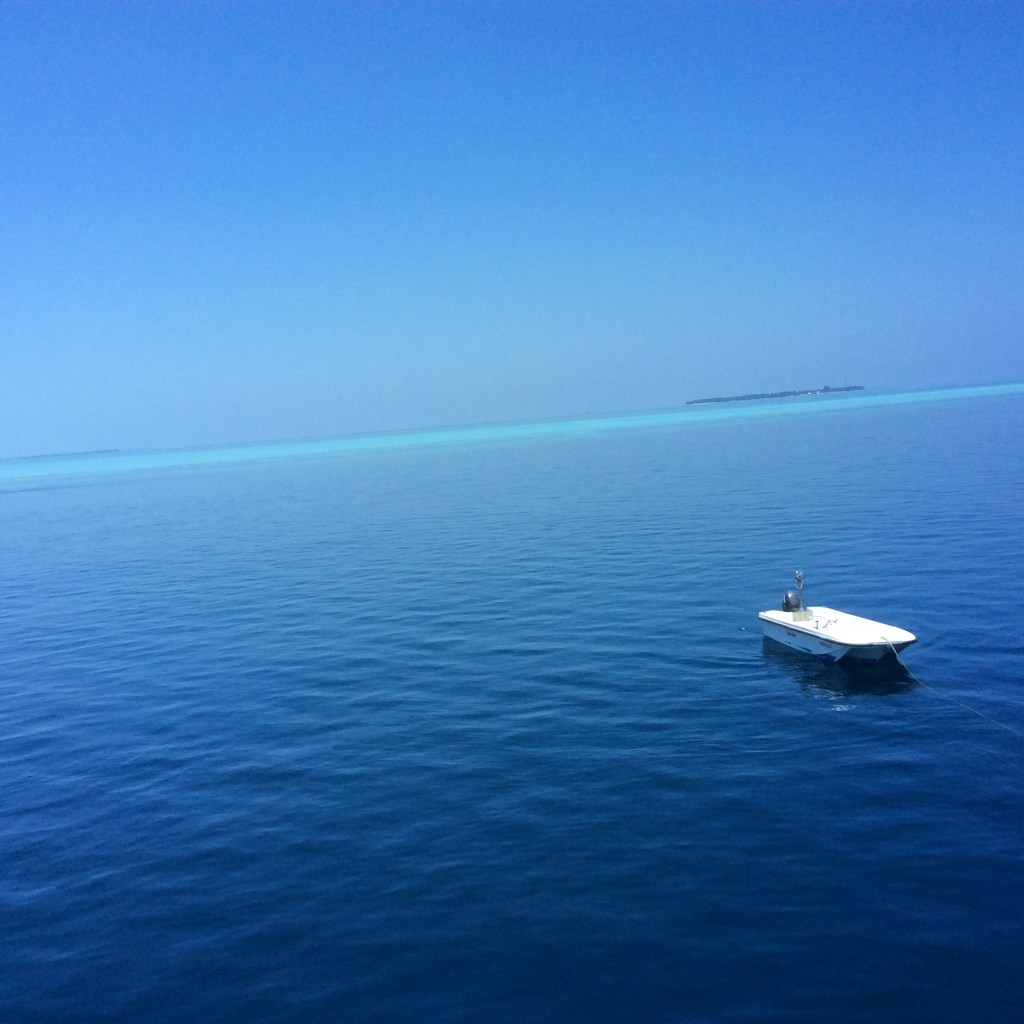
While diving in the Maldives a few weeks back, the boat I was living on passed over and past 10,000 shades of blue—blues we have no word for. I found a wonderful color palate for different shades of blue, along with their names on Wikipedia, but though many colors are represented here, it falls far short of what the eye actual sees—the way the white-blue sky bends down into the sea and becomes the sea, for example, or the depth of blue reaching for infinity behind the shoals of yellow, white and black banner fish, along with all the subtle gradations between shades of turquoise as water shallows and then brushes against white sand shores. To try and name any of the experiences we have is to call them, again, into existence, and to share with others what moves us, and what is meaningful–this is what poets aim to do. It is the focus and goal of their efforts, even though what we hold most precious is often beyond naming. “The power of poetry,” says Michael Lewis, “is the ability to express the inexpressible, and to express it in terms of the unforgettable.”

If we are to build a compassionate world, we need to be able to recognize how to nurture our lives and wellbeing of the world around us. We need to be able to reflect on our lives. In his poem, “Keeping a Journal,” William Stafford, identifies the value of writing in his closing lines when he explains how through the process of writing he found his journal to be a place where “everything/recognized itself and passed into meaning.” To speak with an open heart in a journal or a poem takes courage, but in doing so, we can gain insight into ourselves and our relationship to the world, insight that can enable us to transform the way we live and interact. Writing poetry helps open our eyes and reach for meaning. As David Whyte says in his poem, “The Opening of Eyes”

That day I saw beneath dark clouds
the passing light over the water
and I heard the voice of the world speak out,
I knew then, as I had before
life is no passing memory of what has been
nor the remaining pages in a great book
waiting to be read.

It is the opening of eyes long closed.
It is the vision of far off things
seen for the silence they hold.
It is the heart after years
of secret conversing
speaking out loud in the clear air.

We write and our lives are deepened. This is what is important about poetry—it teaches us how we can live.

Uncategorized

Dancing Into Dimminishment

image

You may have seen 81 year old Sarah Paddy Jones dance the tango with Nico Espinosa and astonish crowds in Madrid, or on stage in Britain’s Got Talent for the fact that she is old and is yet able to do things that people even much younger than her can’t do. It’s amazing and inspiring to watch the grace and flexibility of these dancers. Ms. Jones has followed her passion, and worked very hard to be able to dance with such strength and beauty. Being tossed around over someone’s body and sliding across the floor with ease isn’t the norm, though probably, more elderly people might be able to move fluidly if they worked at building their strength and simply moved more often. Do we especially admire Ms. Jones, however, not because she dances well, but mostly because she is moving like a younger person would? Even with great determination, would such a dream of dancing like Ms. Jones be possible for many of those who might desire to dance like her at her age? When Ms. Jones comes on stage, the judges look highly doubtful of her ability. After they see what she can do, however, they praise her for her ability to move like a younger person. Ms. Jones is following her heart’s calling, and it’s wonderful to see her moving inside the flow of dance. Is emulating the ability of younger people, however, what older people should in general aspire to? Ms. Jones found in dance what feeds her heart and deepens her soul, and this is the reason to honor her efforts. This is what we, too, can follow into old age–the thread of who we are, so that we ripen further into what brings us wholeness. Nevertheless, while I marvel at Ms. Jones and admire her skill, I also wonder about our expectations of others and of ourselves as we age. We can’t always fix what wears out as we get older, and eventually, our bodies do wear out. It’s also important to recognize that aging and the narrowing of our powers is a normal part of everyone’s life. While we should still stretch to deepen our lives, it also might be important to understand who we are as we get older, and to move toward developing more of that, rather than emulating what younger people do, even if it’s what our culture applauds.

Diminishment comes in myriad forms. It’s not something we we want to think about or accept–losing our job, our health, a friend, a family member, our home, our country. Individually and collectively we define what quality of life means, and set our life compasses to move in that direction. What is the attitude and focus that engenders ongoing engagement and satisfaction in life, that creates wholeness all the way up to the end? We expand our understanding, develop new skills, polish others, yet for all this effort and growth, diminishment is still a destination we will all eventually arrive at before passing from this world, and we will need to understand how to stand in relationship it. How do we also learn to live into an era of loss, to accept weakness in ourselves, to invite and even welcome humility? What is the purpose of our life’s trajectory if in the end we lose everything? These are questions to live into.

Some time back, I saw this video shared on the Internet, of a man singing to his 92 year old wife on her death bed, and I thought, this couple has the something that keeps them whole, even through the stages of complete diminishment: They are fully alive to each other. I remember singing to my father as he lay dying, remember, too, reminding him of stories about things we did together, things he told me that he did when he was a child–climbing a windmill, running 16 miles through the forest at night because his feet were his only transport and he wanted to see my mother. As I watched my father during the evenings of his last days, the room seemed so utterly silent as he rested there, so still and unresponsive. As I now look back on this time, however, that experience of utter and complete silence has grown to seem significant. At the time, I so much wanted to feel the presence of something larger holding us during those final hours. What I felt most, however, was a profound silence weighted beneath everything–something like the weight of the ocean’s water at its great depths–the deepest blues fading into darkness. Nevertheless, underneath all the weight, there remained something light, something small like breath–and each breath seemed significant. We learn what love is through the love our parents bring us, and through our relationship with our partners and friends.  As James Agee wrote in A Death in the Family, “I hear my father and my mother and they are my giants, my king and my queen, beside whom there are not others so wise or worthy or honorable or brave or beautiful in this world. I need never fear: nor ever shall I lack for loving-kindness.” When my father lay dying, though the room felt so empty, I became aware that love was larger than any one particular love. During those last days my father’s life diminishing before my eyes, I realized that the love I felt for him wasn’t an isolated thing. It was connected to the love I felt for my sister who had watched over my parents for more than a decade through as their health diminished, and connected, also, to the love of all the others in my life who have lifted me up, supported and sustained me from day to day, year to year. Love lives beyond death.

image

Rowan Douglas Williams, Archbishop of Canterbury, in his interview with Image magazine about the poet James Harpur’s book, The Wound of Knowledge, says, “interesting thing about great poetry is the silence it generates. This is a complex area, but the great holy silence at the heart of things is not just an absence or a cessation. It’s what happens when you’ve been led to this point…The silence, when you get there, has become pregnant.” Poetry, aims to articulate and give in words the presence of such moments of deep loss. Great poetry not only generates silence, however, it also rises up out the silence of the losses that press down to crush us. Loss somehow is necessary in order for us to move beyond the borders of ourselves. Beyond the borders of ourselves a wider something awaits.

Perhaps it seems odd to be writing about loss on Easter Sunday. You’d think it might be better to turn my mind to thoughts of renewal and rebirth. Yesterday, I lost my journal in the airport on a flight back to India, however, and I’m still grieving that loss. In it were half a year’s writing, reflections, travel observations, seeds of thought about projects I’m currently working on or planned to work on. What I feel as a result of this loss is grief. I can’t think of a better word. I realize that there are much greater losses in life than this. In comparison to so many other people’s losses, this is utterly miniscule. I recognize other ideas will arrive and I will write them in future journals. But I can’t replace the pages of reflections, images, awarenesses, or ideas written in that lost journal. They are more than words. They are my exploration and expressions of what it means to be alive in the world. And that is gone.

imageAges ago now, I remember sitting in a parking lot in St.Paul, Minnesota during winter listening to Robert Bly reading a poem on the radio. I don’t recall the poem’s title or the specific lines, but Bly’s lines astonished me with the picture they created of words emerging from the mouth into the air in visible puffs. I pictured the words taking on physical shapes, having presences. Form. Being. Words have presence and meaning beyond their mere articulation, though often incomplete or imperfect, they are mirrors of our souls. For me, they are the ladder I make to climb into a place of being.

Words guide and change our lives, but they also point to larger realities that live beyond words. Recently, Ben Slavic, a colleague I work with described how he had previously worked with Sauk, Myskoke, and Chickasaw people whose languages are dying out. Only a few native speakers remain. What is it like to lose your language? We are, in fact, losing many languages world wide per year. Do those languages go on existing in some form, he wondered? “Maybe they want to hear them again, loudly and everywhere amidst the laughter and tears of life – fully alive again…Where do words go after they are spoken?” My colleague wondered, “Is there a kind of residue, an echo, of them left over somewhere? Do they get to be fainter and fainter echoes of themselves in some parallel universe of sound?” In the BBC article, “Languages: Why we must save dying tongues,” author Rachel Nuwer writes that “languages are conduits of human heritage…convey unique cultures,…contain an accumulated body of knowledge, including about geography, zoology, mathematics, navigation, astronomy, pharmacology, botany, meteorology and more.” Also, as Nuwer explains, “languages are ways of interpreting the world, and no two are the same. As such, they can provide insight into neurology, psychology and the linguistic capacities of our species.” These all seem very important, yet, as Nuwer describes, “Over the past century alone, around 400 languages – about one every three months – have gone extinct, and most linguists estimate that 50% of the world’s remaining 6,500 languages will be gone by the end of this century.”

If all we say disappears into air, if the dear companion of our own body in the end loses all its capacity, if thirty years from now all people remember of who we are or what we said or did are a few dates and our occupation, if everything shifts and changes, where do lost words, lost time, lost lives and worlds go? What is their value and meaning?

In her poem, “Happiness,” from her book, Broken Cup, Margaret Gibson writes about her husband’s Alzheimer’s. She quotes her husband reading what the Dalai Lama says, “An art, not a right, happiness,” then later closes the poem with a memory,

long ago, after
a night of reading each other’s
poems aloud, every
blessed one of them,
the road beneath us seen through the rotting-out
porous floor of the old jeep
as we traveled at the
speed of light, and nothing, nothing
could slow us down
or keep us
separate from each other
or the road, wherever it took us.

The commitment to love is what creates meaning, Gibson suggests, even in our loss. This is a hard lesson, and Gibson’s writing about loss is surpassingly powerful. In the closing poem of Broken Cup, “A Good Death,” Gibson tells about her husband who she recognizes will in the end lose all words.

…may you also, while now there’s time
practice dying

before you die. May you daily stand outside time’s rush
whose rivering is

our natural light, and there on the steep lip of what we call
darkness,

call me angel, if angel I am; draw sunbursts in the rain lit air;
sing your heart out.

Great being, radiantly still. And near.

In learning to be present and open to all that is, Gibson seems to say, we find how to bear diminishment.

This past week I was scuba diving in the Maldives. On one of the dives, I found myself kneeling on the sandy ocean floor 25 meters below the surface in front of table coral raised before me like an altar. I watched as manta rays six 10 to 15 foot wide circled and circled over my head like enormous communion wafters in a repeated mantra of movement. Rocked and bowed by the surge, I absorbed the vision of the mantas’ presence. They had come to the table coral simply because they wanted the wrasse who live there to clean them, but as I watched them swoop over me with their great wings as if they were the Passover angel, I grew humbly aware of the immensity, mystery and wonder of being completely immersed in the arms of nature. I knew I was very much alive, and part of something enormous and beyond explanation or comprehension. Animals can be identified, their behaviors and environment explained, but something much greater happens than the sum of individual parts when we enter their world, and encounter them, something there will never be enough right words to describe.

I have lost my journal, and though I’m still able to go diving, though I can go on to keep new journals and write new poems,  in the end, though I may cry for it all to come back to me, I will need to let it all go. Maybe this is when resurrection has the possibility to occur–after we go down into the depths of death or hell. We come to where we recognize we must or can let things be what they are, and trust that somehow in our diminishment we are still whole, that there is something significant moving in the depths of that diminishment beyond what the losses all add up to.

image

art, poetry, Uncategorized, writing

Looking Deeply: Art, Poetry, and Presence

Barry Lopez in his children’s book, Crow and Weasel, writes, “Remember on this one thing, said Badger. The stories people tell have a way of taking care of them. If stories come to you, care for them. And learn to give them away where they are needed. Sometimes a person needs a story more than food to stay alive. That is why we put these stories in each other’s memories. This is how people care for themselves.”

Stories connect us to the people who came before us, the narratives they live out and the tales they tell us about what the world is, and who we are in the world. We live by the stories that have shaped and taught us. They give meaning to our experience and direct us in our journey. Stories condense experience, give us the opportunity to examine our difficulties, and to reflect on how our struggles might enable us to grow.

The oldest form of story is poetry. Before poems were ever written, they were told. People’s histories were given in poetry–words constructed to call up experiences through sound and imagery that evoked emotion and helped people remember who they were, what they had done, and why it was important. In listening to poetry, we can step inside a reflection of life that holds up a mirror, and at the same time speaks to something beyond what is experienced. It is a way to reconnect to what it means to be human and to the mystery of existence. As Dana Gioia writes, “In a moment’s pause another world / reveals itself behind the ordinary.” By extension, because poetry was once connected to other art forms, stories, music, and dance, these are doors we can open to that allows us to walk into a larger reality, to see the world from a wider perspective.

image

The idea that the physical world intersects with the spiritual world is an ancient one, found in many traditions; the Celtic, Catholic, and Native American being a few examples of these. St. John Damascene, a Syrian monk who lived from c. 675 or 676 –to 749 CE, wrote a defense for the use of icons (see more here) that shaped the direction of the church. Though others at the time argued against the use of icons and representational art. God is bigger than any particular physical form, the thinking went, and therefore representation of God in icons should not be allowed. St. John of Damascene argued, however, that if God became human in the form of Christ, then two are intermingled. The sacred could be seen living and breathing through the human form, and therefore it was completely acceptable, he argued, to create icons, to worship through icons, and to paint the human form. In fact, art was a way for the illiterate to see God, Damascene explained, and to read the story of God’s compassion for and interest in humans through the paintings. Damascene demonstrated an acceptance of paradox, and the idea that one’s thinking doesn’t have to be contained in tight boxes of either or. William Dalrymple, in his book, From the Holy Mountain, quotes Damascene saying, “‘…the flower of painting makes me look, charms my eyes as does a flowering meadow and softly distils the glory of God in my soul.'” Through painting, as through nature, Damascene declares, God communicates his presence in the world, and art is a central way in which humans can experience and connect with the Divine.

imageThough Dalrymple describes the cave where St. John of Damascene wrote these thoughts in The Fount of Knowledge, as “crude and primitive,” he goes on to say that, “Without Damascene’s work, Byzantine ars sacra would never again have been permitted, Greek painters might never have been able to pass on their secrets to Giotto and the Siennese, and the course of the Renaissance, if it had happened at all, would have been very different.” I’m very grateful for Damascene’s words and thoughts regarding art. Without them, we’d likely be deprived of much beauty, and the spirit that speaks through that beauty.
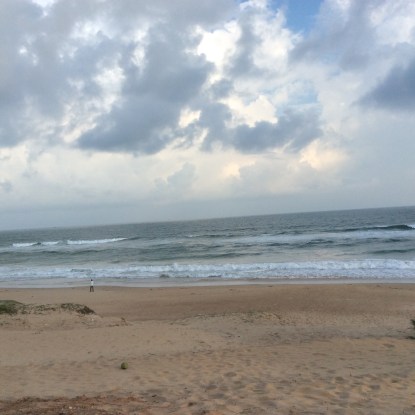
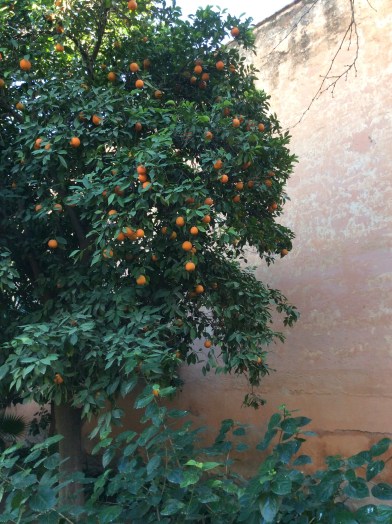
In her poem, “Pray for Peace,” Ellen Bass speaks of this interconnection of the everyday world around us with the world of spirit.

Pull weeds for peace, turn over in your sleep for peace,
feed the birds, each shiny seed
that spills onto the earth, another second of peace.
Wash your dishes, call your mother, drink wine.

Shovel leaves or snow or trash from your sidewalk.
Make a path. Fold a photo of a dead child
around your VISA card. Scoop your holy water
from the gutter. Gnaw your crust.
Mumble along like a crazy person, stumbling
your prayer through the streets.

Though a way of communicating half forgotten these days, Bass helps the reader to see that prayer can be any act we do with full attention and heart. When we pay attention to our lives, doing what we love presence, that is prayer–a breathing, walking prayer that adds meaning to our lives, and enables us to grow toward wholeness. Making a routine out of things saves energy and time, but even routines can be done with attention and heart. How do we cultivate the kind of noticing awareness in our every day lives, the ways of being that enable the act of living to become prayer?

Involvement in a creative act is a central way to connect the physical world with the inner world. Though there are a variety of art forms that can enable a person to live in fuller awareness of a connection to life’s mystery, writing is an excellent path from which to begin this journey. Whenever I leave the house, I carry imagemy journal, a small book that easily fits inside a pocket. I carry it because at any time something might appear, or someone might say something that needs to be noticed, and I want to be ready. My journal is my fishing line, so to speak. Though I may miss many things swimming in the world around me, because I’m prepared with pen and paper to notice something, I am more likely to find and catch something than if I had no tool at all to help me. Whatever I’m working on as a writer, I look and listen for moments that speak to me while moving through the day—a random phrase, a gesture, a sudden familiar scent that might embody the idea I’m reaching for in a writing piece I’m working on. I remain attentive to sounds, textures, colors, actions—the world’s details that define a place or time. As a result of knowing the questions I’m living with and what I’m looking for, things tend to show up and announce their connection like a kind of internal spark. Suddenly, as if witnessing the embodiment of a metaphor, I see, for example, how something I’m looking at or hear is related to something seemingly completely different. The discovery has a wonderful quality to it, and to then write it out is to be able to embody that insight. Sharing it with others deepens a sense of connection to the world.

Writers aim to name the world, and doing so is to participate in a kind of co-creation of life, at least this is how I experience what happens while writing, and it is one of the motivating reasons to write. To write is to observe closely, and to observe closely moves me to an awareness that I am part of a greater something beyond myself–that I swim in the mystery of existence. Writing is a path that allows me to enter a space where I’m both fully present in my life, and somehow not present at the same time as I step inside the weave of words. This is because I’m living inside of the thing I’m writing about, and what I’m writing about is bigger than me. As poet Nicholas Samaras explained to me once, writers are always writing, even when not writing. I agree with Samaras when he says, on Poetry Net, “God is in the point of my pen.” In losing myself in the work I am doing, I’m made more alive, full, and solid. It’s a paradox.

image

Writing poetry can be a kind of prayer. My father wrote stories and poetry, but my mother taught me to pay attention to the world around me. She constantly noticed the natural world, flowers on the bank or scent of orange blossoms from the orchard, bees at the birdbath, a fox that came through the front yard, or hawks that circled above the hill behind us. The wind as it blew through the pines where she grew up in the Black Hills of South Dakota, was an ancient choir, she said. As she described the experience to me, I could hear the wind as if it were real. She recalled wild gooseberries’ tart flavor, and told me the names and shapes of wildflowers that grew on the land of her childhood home. Her descriptions lived in my mind as if they were real. Even though where I grew up in eastern San Diego county’s dry desert–very different from the Black Hills, I felt preciousness my mother’s memories of her childhood’s natural environment. Her respect for those experiences nurtured in me a love of my own childhood’s natural environment.

I played outside every day as a child, climbed around on granite boulders, or sat inside the branches of an avocado, umbrella or pepper tree. Our front door often stood open to the outside air. I ran through the yard barefoot, watched clouds parade by, and sunsets spill across the horizon. Coyotes’ yips echoed through the valley in the evening. Crickets sang. Stars came out. These were all gifts, and I belonged to that earth. The experience of growing up in such a place with the opportunity to experience the natural world as part of the rhythms of every day life created in me a foundation for wanting to remain connected to the earth. To have our feet on the earth, to literally ground our selves there, is life engendering. If deprived of such experiences, I think our bodies and spirits still long for them without possibly even knowing it.

image

Poetry relies on imagery and figures of speech. It integrates the physical world with the world of language. It tells abstract ideas by recreating the physical world. It reconnects the writer and the reader back to place, and this is a central reason why I find it so powerful. In our world, the culture of the workplace pushes us to compete, to gain power and control. When writing poetry, however, I interactively participate in reconnecting to the physical world and the presence residing beneath and inside the movement of life. I trace my origin of wanting to write back to these childhood experiences of connection to the earth’s vibrant, sustaining presence. Willa Cather writes in My Antonia, “I was something that lay under the sun and felt it, like the pumpkins, and I did not want to be anything more. I was entirely happy. Perhaps we feel like that when we die and become a part of something entire, whether it is sun and air, or goodness and knowledge. At any rate, that is happiness; to be dissolved into something complete and great. When it comes to one, it comes as naturally as sleep.” To be able to wander in time, to play in a landscape or place is to be transformed and enlarged by it. Writing poetry focuses the writer on presence, and in doing so, helps move the writer toward wholeness. I recommend it.

image

place, Uncategorized

In the Presence of a Natural Woman

At seventy-three years old, Aretha Franklin sings Carole King’s song, “Natural Woman” at Lincoln Center with perfect timing, range of voice, power and outright presence. If you ever wondered what you might have to offer the world in your aging years, listen to her sing, and you will know what is possible—a person who knows who she is, who is in full possession of herself, and who gives her gifts—her talents and skill to the world as a blessing. This is beauty.

imageDaniel O’ Leary, a priest in Leeds and former teacher at St. Mary’s University College in London writes, “I like to think that each one of us, when we act out of our true essence rather than out of our false ego, when we refuse to betray our authentic self, when we are in close touch with our own sacred centre, in spite of persistent temptation, persuasion and compulsion to conform and to compromise – that when we act in this way we transform every room we enter, every conversation in which we take part, every relationship we engage in and every project we initiate or join.” Aretha Franklin was most certainly singing from with in the center of her true essence when performing at Lincoln Center, her presence transforming not only those in the room, as evidenced by Carole King’s overwhelmed and enthusiastic reaction to the performance, and by Obama who wiped tears from his eyes, but transforming also those who watch Aretha via the Internet. How do we live like that–from the center of ourselves, moving beyond the desire to demonstrate our skill, ability, talent, or worth—beyond the need to compete and claim a space, beyond nervousness and fear about perceived success—and instead, move into the depths of our own selves, to rest in the acceptance of who we are, including our imperfections and incompleteness? How do we live with open arms, surrendering into life in order to walk into a larger world, so we can let go into our own transformation?

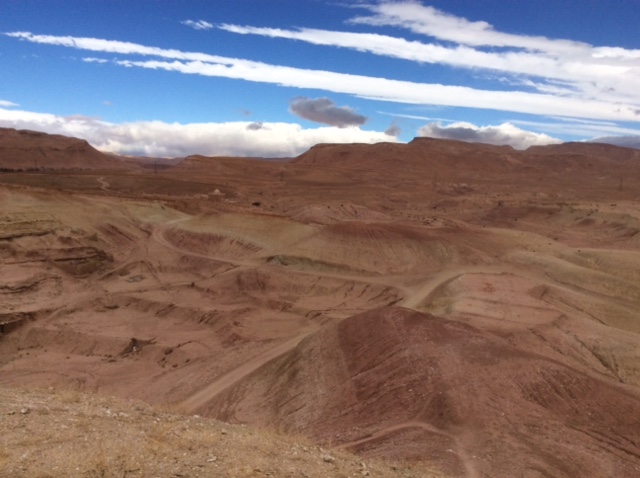
Recently, while traveling through Morocco’s enormous outback of the Atlas Mountains, I noticed how in the desert, the earth lays itself open for all to see. Nothing is hidden, the layers, folds, slumps, the red years of surface soil eroding away to the green rock beneath, solidity slowly wasting away–all is revealed. The Atlas Mountains, opens its chest to Allah, lays bare its red heart. Each ripple and rock stripe, distinctly visible and known. How vulnerable the earth is, face open to sun and wind. The sky kisses the earth. Goats, their shadows following them like dark drifting clouds, amble slowly across the red soil, grazing. Earth’s muscles loses hold. Rocks walls crumble—bones turning into gravel. Mountains slide into valleys in slow, smooth heaps. Complete with folds and flares, in her old age, the earth wears her skirt of splayed sand and rock, swirled out as in slow, ponderous steps–an ancient dance still in play. Continuously, the earth’s age reveals her beauty.

FullSizeRender

Erosion reveals the layers of earth’s substrata. As in our own lives, the surface wears away as time continues, revealing the bedrock of who we are, what we are built on—what our foundation consists of. When standing in Morocco’s 10 meters (thirty three foot) wide Todra Gorge, the color and stone rise 600 metres (1,969 ft) above in gold-red walls, surround you with their millennia of patiently layered rock, cut through by the Todgha River. The slow turning folds and twists that made the canyon’s strength, humble you, leave you without words. We take the wadi and the world in at a glance—the entire landscape gifted to us, a grace delivered as simply as the sky kissing the earth–a beauty, that like an abstract painting, strips away all to its bare forms and essence–joining us to the oneness lying beneath. To stand in the Todra Gorge is to connect to your foundation, to stand inside it. Experience it.

Later, a bit further down the road in the Dades Gorge, I woke the next morning to the view outside my window: the leaves of a tree trembling in the gold, early light of morning’s breeze. Everything around the trees delicate leaves was rock. Solid and still. The sun rose, turning the gorge’s walls to rust. Then, the tree, too, stood still as the stone surrounding it.

The next day, after traveling on to Ait Bin Haddou, I climbed the hill that overlooks the mud walled city. Walking along, Here you can find calcite formations strewn across the earth in palm-sized slabs, and can see the bubbling up in pillow-like form from beneath the soil’s shallow cover. The earth wears stripes here and spots of purple. Wind rushes across the earth, kicks up dust, and streaks the sky with long cloud flares. The sky is the very definition of blue—long vowels of ooooohhhh, moving with the wind’s rough breath, the scattered stones the earth’s consonants. The earth speaks.

In mountains, in sky, in her erosion and old age the earth speaks. She has no pretensions. In full possession of herself, she gives her gifts to the world as blessing. She’s the natural woman. She knows who she is, and she is singing.

Looking out on the morning rain
I used to feel so uninspired
And when I knew I had to face another day
Lord it made me feel so tired
Before the day I met you, life was so unkind
But you’re the key to my peace of mind

‘Cause you make me feel
you make me feel
You make me feel like a natural woman.

Ait Bin Haddou
Ait Bin Haddou
Uncategorized

Welcoming the Strangers

In America we read in the news of shootings, and Trump asks for the deportation of the nearly 11 million that are living in the US without permission. Last September, 17,000 Columbians fled Venezuela after 1,500 Columbians were deported from Venezuela. Syrians escaping their country as a result of the war have created the greatest migration since WWII. All this, and yet at Christmas we wish each other peace. At the start of the new year, even to strangers we often wish others happiness. Nevertheless, division lines between who is deemed as an insider and who is an outsider seem to be growing. Though it may seem that tensions are about race or religion, often times, if one digs deeper, however, the root of the tension is economic. Recent research in Germany, the  Washington Post reports, that those who are economically disadvantaged are those who are more likely to be persuaded that race and religion are causes of fear. “According to polls, whites with a high school degree or less disproportionately favor Trump. These are the same people who have seen their economic opportunities decline the most in recent years. This group also disproportionately favors tough restrictions on immigration.”

In Morocco the country I recently visited, however, a different story is promoted by the people on the street. Tourism is important to Morocco’s economy. They depend on welcoming diversity, and across Morocco you hear Moroccans tell you a story of living in harmony with others. In Tangier a synagogue, mosque, and church are within visual sight of each other. In Fez, a man tells us “We sit in the cafe talking together, Jew and Muslim. The prayer call comes. We go off and pray, then come back and pick up the conversation. We are friends.” It’s true that the majority of Moroccans are Muslim, and that only 1% are other–Christian, Jewish or Baha’i. Even so, people in Morocco have an attitude of open hospitality.

While walking around the area of Fez where the majority of Jews once lived before the sate of Israel was created and most moved to Israel, I saw an old man sitting on the street having difficulty getting up. A person near him saw his difficulty and came over to help him. To sit on the street is not an uncommon thing in Morocco. Many people do it in Morocco in order to take in the sun as well as to sell things. Some sit on the street because they are poor. To notice someone’s difficulty to stand demonstrates an awareness of others, and a sense of community. This wasn’t a singular act. Later that day, I also noticed an older man walking up a side street with a cane. His outer cape was slipping from his shoulder and the man walking up behind the older man noticed this, and stopped to lift the robe to the old man’s shoulders, then continued on his way as if helping the other were commonplace, the most natural thing in the world. Again, here I saw an awareness of others demonstrated in simple acts. On several occasions and by different people I was told that people who live near each other help one another. They share their lives with each other and are like family. They aren’t people who happen to live near each other. They communicate.

Even in the Fez medina–the winding open air market, one of the most known souqs in the world, and full of pedestrian traffic, a beggar woman looked at me kindly with a wide, open smile when I greeted her saying “Assalamu ‘alaykum.” Again, at the Moulay Idriss tomb, three women sitting on mats leaning against the wall greeted me with smiles much wider and longer than simple politeness when I said “Sabah al-khair.” At breakfast in the guesthouse where we stayed in Fez, the woman serving us breakfast went about her work with joy in her movements and her voice. It was clear her work wasn’t merely her job; it was her way to give happiness to others. The French woman at the table across from us said something, and the woman serving us food leaned over to hug her and say something to her in a cheerful voice, then went on with her work. In Bhalil, a Berber village outside of Fez, a woman invited us in to see her cave house when she saw my husband and I walking by. She was hanging her laundry out and happened to see us, and wanted us to visit. In Ait Bin Haddou a shop owner invited us to share his lunch, later insisting we return to share tea.

Not all encounters in Morocco were like this. On the streets there is the hustle bustle of business, and children wrestling with each other and running around in active play as they walk to and from school–people are involved in their own lives and worlds, as they would be anywhere. It’s also true that crime in Morocco has risen over recent years, according to the Numbeo web site as well as the Knoema website. Crime statistics are not like what you notice in the US, however, where according to BBC there were 353 mass killings in 2015,62 shootings at schools,12,223 people killed in gun incidents, and 24,722 people were injured in gun incidents.  Flight attendant Rose Hamid stands up in silent protest when, according to CNN Trump “suggested that Syrian refugees fleeing war in Syria were affiliated with ISIS.” She is booed and shouted at to get out, according to the article. In contrast, when visiting Morocco, non muslims are welcomed and shown hospitality, a quality often ignored by the media, but  found throughout this dominantly Muslim country. Why is it that Moroccans recognize the stranger and honor him or her and in America, we are afraid of the stranger? When in  Ait Bin Haddou, one man told me “To visit a country is not only to see, it is to learn something about the culture.”  Maybe the person greeting you as you walk by wants to sell you something from his shop, but he also wants to sit with you and get to know some of your story. It seems we could learn from the Moroccan’s approach to things.

image

As Barry Lopez writes, ““Everything is held together with stories. That is all that is holding us together, stories and compassion.” Maybe we need to become hospitable to our own selves and the the things we don’t understand, our questions and struggles–to the stranger inside us. Maybe conversations with the other–with those we are afraid of–would better help us understand not only their own story but our own. Lopez writes, “Conversations are efforts toward good relations. They are an elementary form of reciprocity. They are the exercise of our love for each other. They are the enemies of our loneliness, our doubt, our anxiety, our tendencies to abdicate. To continue to be in good conversation over our enormous and terrifying problems is to be calling out to each other in the night. If we attend with imagination and devotion to our conversations, we will find what we need; and someone among us will act—it does not matter whom—and we will survive.” If we can’t travel to foreign countries and immerse ourselves in another way of seeing and being, we can read novels by writers from or about other cultures. We can view documentaries. It is still possible to expand our understanding through others’ stories.

W. S. Merwin in his poem, “To the New Year,” writes,

so this is the sound of you
here and now whether or not
anyone hears it this is
where we have come with our age
our knowledge such as it is
and our hopes such as they are
invisible before us
untouched and still possible

The US Bill of Rights supports the right to diverse voices. We can recognize the strength in that diversity and honor it. Living together as citizens of a country is a kind of marriage. The German poet, Rilke, speaking of marriage said, “…once the realization is accepted that even between the closest people infinite distances exist, a marvelous living side-by-side can grow up for them, if they succeed in loving the expanse between them, which gives them the possibility of always seeing each other as a whole and before an immense sky.” As we come closer to hear each other’s stories, we will see and hear another world. Look and look again. You will see more. When we listen closely, we will understand better.

image


Uncategorized

Chefchaouen, Morocco Blues

image
Chefchaouen

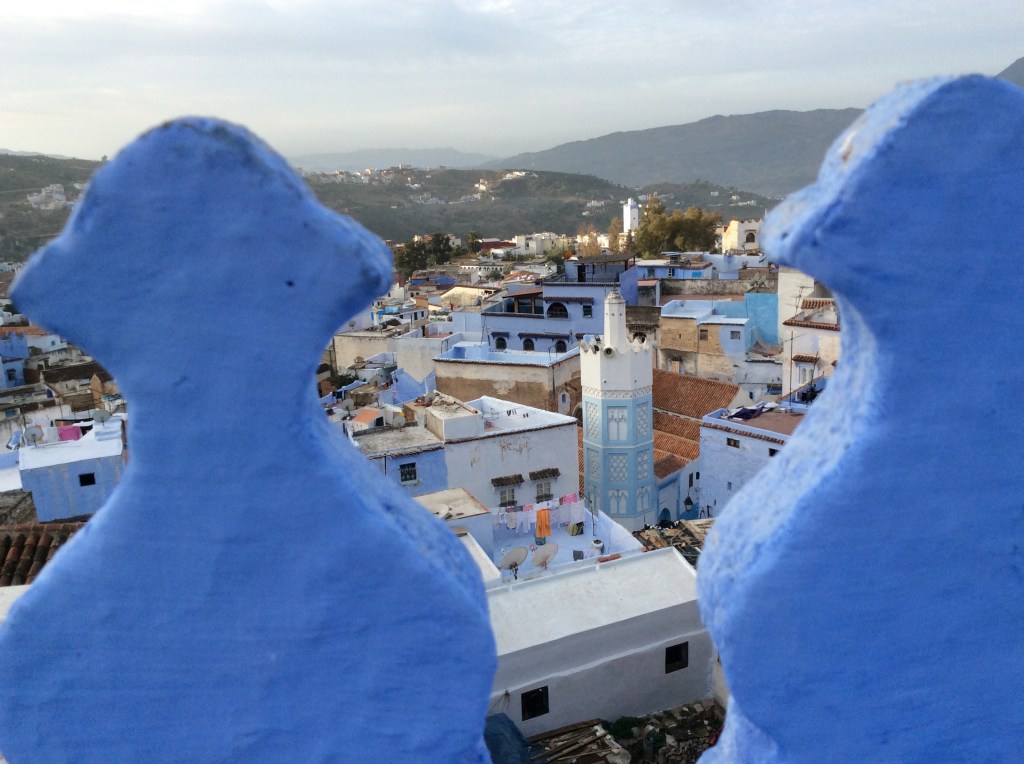
It’s a blue world in Chefchaouen, the small city of narrow, winding streets in the Riff mountains of northern Morocco. The blues here tell the story of the Jews who left Spain when in 1492 the monarchs, Isabel and Ferdinand, throwing off five hundred years of Muslim control, required Jews to leave or to convert to Christianity. Many Jews left behind their property at that time and migrated to Morocco, with many settling in Chefchaouen.

Though most of the Jews have left Chefchaouen now, immigrating to Israel and elsewhere after Morocco attained independence in 1956, the city is still blue. This is because the citizens have painted the walls various blue shades. Morocco can get very hot in the summer with temperatures reaching 40 degrees Celsius. The cool colors make the temperature feel cooler, and the blue color is thought by some to help keep mosquitos away. In Andalusia, in southern Spain, people painted their city walls, and the tradition was carried on when the Jews arrived in Morocco. Today, people come to visit Chefchaouen because its walls sing the blues in myriad tones. People come because Chefchaouen is beautiful.

What you want to do in Chefchaoen is wander the streets and discover its nooks where a fountain may flow out from a royal blue wall, or stand inside the blues that reflect off each other in narrow alleys, shining out from a street painted with moons and stars, blues that curl into quiet corners. The blues of Chefchaoen create a peaceful state. “Where are you from?” asks a man standing in the door where the community oven is located. We tell him, and he says, “Welcome to my country.” All over Morocco I’ve been asked this question, and always the reply is “Welcome to my country.”

It’s not just a saying. Morocco is a welcoming country. Just recently, Jews of New York City acknowledged Morocco’s extension of welcome and refuge to Jews during World War Two. Moroccan culture, like cultures in other Muslim countries I have visited, is generous spirited and open hearted. Always when visiting, and often when doing business, people offer you tea. I was taking a photo of my husband in a small street in Chefchaouen, and didn’t see a woman walking there, who stopped and waited while I took the photo. I was filled with delight at the beauty of the place. When I lifted my eye from the camera lens, I saw the woman and apologized. Her response was to smile. She reached out her hand, placed it on my heart, still smiling, and said a few words as she walked on, brushing gently by in her cream colored robe as she continued down the street. Though I hadn’t understood her words, I understood her intent, and felt I had been blessed.

Walking through the central plaza, I see a mother holding her baby close in her arms. Bent tenderly toward the child, over and over she speaks . An hour later, I stroll back through the same area, and she is still there, still cradling her small child in her arms. Wrapped snug in warm blankets and crooned to, this child is dearly loved, at peace. Islam means submission to God. The root of the word is the same as is used in the Arabic greeting, “Assalamualaikum,” meaning “Peace be with you.” Implied, is the idea that to submit to God is to submit to peace.  There is lots of business in Chefchaouen, people selling their wares, vegetable markets, people hanging out their laundry. Old men in jellabiyas tap along the stony pavement with their canes, women hang out the laundry atop the roofs. Amidst the activity of daily life, prayer call drifts across the streets. The people of Chefchaoen, continue on in their beautiful town, practicing a way of peace.


pilgrimage, place, poetry, spirtuality, Uncategorized

To Bodhgaya and Beyond

The great story weaves closer and closer, millions of
touches, wide spaces lying out in the open,
huddles of brush and grass, all the little lives.

–William Stafford, from “Over in Montana”

IMG_9362
Buddha on the side of the temple at Bodhgaya

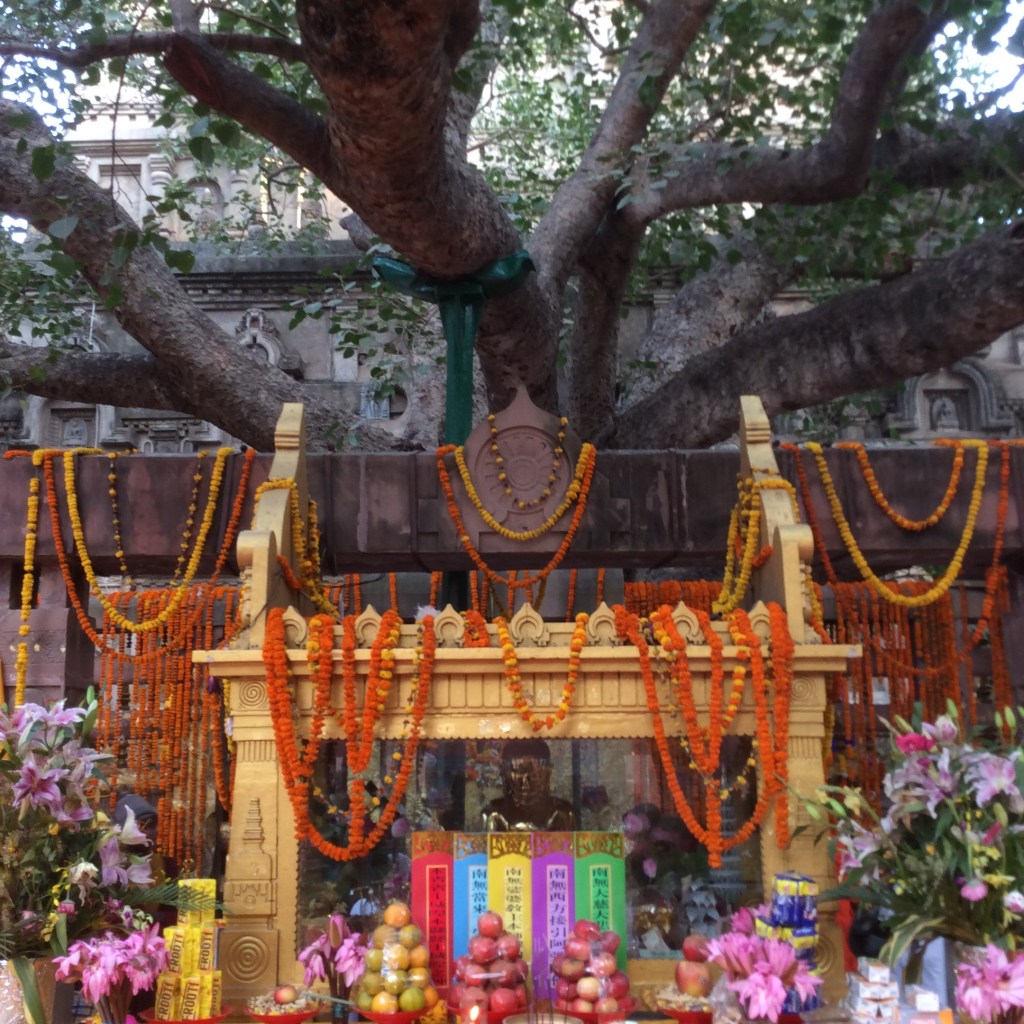
Bodhgaya, India, is the place where the Buddha attained enlightenment after forty-nine days of meditation under the ficus, otherwise known as the Bodhi tree, a tree related to the mulberry. Because Bodhgaya is a place of historical significance,  I wanted to visit it while living in India. Two weekends ago, I had that opportunity.

The Bodhi tree is a ficus religiosa . Its leaves, even without a breeze, are said to be continuously moving. “O Ashvatha, I honor you whose leaves are always moving…,” says a verse in the Bhagavad Gita about the tree. Gods are thought to live in the leaves causing them to move, and thus the official name, ficus religiosa–the religious fig. The name fits, in particular for the bodhi tree in Gaya. Though the tree standing in Bodhgaya now isn’t the actual tree the Buddha sat under, it’s a relative. Sanghamitta, the daughter of the 3rd century BC Indian emperor, Ashoka’s, brought a branch of the original tree the Buddha sat under to Sri Lanka and planted it in Anuradhapura. The original tree was destroyed, how is uncertain. There are various versions (see more here) of how this occurred, though most accounts state that the a shoot from the Sri Lanka tree was brought back to India and replanted at the original spot.

IMG_9405
Bodhi tree, Gaya, India, where the Buddha attained enlightenment

Bodhgaya is a holy site and a pilgrimage destination. One of the things that struck me the most while in Bodhgaya, was how many distinctive faces I saw as I sat near the tree, observing as people made their circumambulation around the shrine. Many visiting were monks and nuns performing ritual prayers, but others were like me, there to stand in a place considered holy, and to absorb what it had to share. For all the crowds, the place still manages to have a sense of calm, probably because so many there are intent on doing their prostrations and sending up prayers.

IMG_9367

It struck me how similar people are in the way they express devotion or carry out holy acts, though they are from different religions. Burning candles and incense, offering prayers, bowing down, ringing bells, bringing flowers,–these are commonly used in acts of worship in many religions. Bodhgaya attracts a wide spectrum of people from Buddhist countries, but people from many walks of life and countries in various parts of the world had come to stand in the spot where so many before have journeyed to send up their hearts’ longings–or possibly to set them down. Possibly, however, some pilgrims had come simply with an openness, willing to receive whatever understanding their minds brought to them while standing there, listening to their heart’s inner whisperings.

I’ve been learning about Buddhism, since arriving in India nine years ago, and somehow I expected to feel moved while standing in such a holy place. Instead, I found myself noticing people’s feet, and thought of the many journeys people had taken to arrive at this place where our lives briefly intersected with a smile or a short glimpse.

Once surrounded by forest, Bodhgaya it is now a city with apartments, shops, restaurants and hotels. To imagine the place as it was when the Buddha spent time there requires you to stretch your imagination. People continue to come to this place, because they wish to make a connection with the long chain of seekers, hoping to gain insight into how to live.

Pilgrimages are taken for many reasons, but one important reason is to the desire to expand beyond the boundaries one currently lives in– to break through the skin into something new, perhaps as the snake does when it sheds its old skin because it has grown bigger. Thoreau, purposefully set out to let his soul grow bigger when he spent a year living outside of Cambridge, Massachusetts on Walden Pond and wrote his famous meditations on living known as Walden. Thoreau speaks to the those of us who have felt the desire to step out of the hamster cage of events that keep us continuously rolling, and who long to live meaningfully. “Every man is tasked to make his life, even in its details, worthy of the contemplation of his most elevated and critical hour,” Thoreau asserts, and we are led to explore the idea that every life is worthy contemplation, of spending time reflecting on what our actions mean. This act isn’t meant to benefit just a few lucky ones who can take the time off to do so. We can do this daily as when we give our full attention to whatever it is we are doing, wherever we are walking or sitting. Listening deeply to those we are in relationship, listening to the world we walk through allows us to sense the holiness of life itself underneath the surface of all that is.

While wandering through the temple grounds at Bodhgaya, I read a quote on a plaque. The quote’s first portion eludes me, but the second portion read something like “Now I enter the forest of my old age,” and it struck me as a metaphor for transformation in general. We may have been walking through a plain before where things could be easily seen, but when we change, we enter a forest. Things aren’t necessarily easily found or understood. Perhaps we are even purposefully looking for a different path from the paths we once knew or walked. A whole new life can appear. As we age, though, I think of forests in the fall, flames arising from the myriad leaf faces, the sugar inside burning before the leaves let go to the earth.

Thoreau chose to go to the woods, and set aside a year to live in a small cabin on Walden Pond. Many of us can’t do that, or at least don’t feel it’s possible until reaching such an age where regular work ceases. Thoreau bravely took time out to consider to look for life before old age.  Thoreau chose to live simply during his year away, in order to find what it is that matters in life. He went to the woods, he said “because I wished to live deliberately, to front only the essential facts of life, and see if I could not learn what it had to teach, and not, when I came to die, discover that I had not lived. I did not wish to live what was not life, living is so dear; nor did I wish to practice resignation, unless it was quite necessary. I wanted to live deep and suck out all the marrow of life, to live so sturdily and Spartan- like as to put to rout all that was not life, to cut a broad swath and shave close, to drive life into a corner, and reduce it to its lowest terms, and, if it proved to be mean, why then to get the whole and genuine meanness of it, and publish its meanness to the world; or if it were sublime, to know it by experience, and be able to give a true account of it in my next excursion.” This is a brave statement. It requires an openness to life, to what you might understand if you listen to the world around you, including listen to the physical world.

The Buddha, as well, encouraged people to let go of their attachments in order to find life. We may be born in one place, have a particular history or speak a certain language, but we need each other’s differences. The interconnected nature of our physical environment itself demonstrates this reality. Other people in other places with perspectives different from our own have experiences worth listening to, insights worth understanding. I notice fear is such a strong motivating force in the media but it creates so much suffering. The Buddha’s path began with a question, “How do I relieve suffering?” What if we were to live differently? What if everyday in recognition of life’s dearness we deliberately asked “How do I live so I learn what life has to teach me today? How do I live today so that I don’t discover when I come to die that I’ve never lived?”

James Wright, in his poem “The Blessing,” shows the reader what it is like to live attentive to the details before us as he describes his encounter with ponies off the side of highway in Rochester, Minnesota who “have come gladly out of the willows/ To welcome my friend and me.” The ponies greet he and his friend with “shy bows,” then begin munching the grass again, as they have been all day. As the speaker of the poem carefully observes them, he becomes aware of the wonder breathing beneath the experience, “…Suddenly I realize/ That if I stepped out of my body I would break/ Into blossom.” We become more than we are when we let ourselves experience that we are connected to all that is.

May we all break into blossom.

IMG_9318


Uncategorized

A Story in Ceramic: The Mad Hatter’s Wife

Mad Hatter's Wife teapot front
Mad Hatter’s Wife teapot

“Everything is held together with stories. That is all that is holding us together, stories and compassion.”

–Barry Lopez

The newest ceramic collaboration between my husband, Michael, and I came out of the kiln this week. Last spring I wrote about painting on this piece, The Mad Hatter’s Wife teapot. She was only half baked before, so to speak, but after sitting for the summer, she’s now fully cooked and ready for the world. Michael made the piece, explained that she was the Mad Hatter’s wife, then told me he was giving it to me to paint my masterpiece. When I heard that, I knew I had to push myself to do something more than what I’d done before. I began imagining what a woman would have to be like if she were married to someone who was crazy.  She already had bold features and a sassy gesture with her hand on her hip, inferring she knew how to deal with whatever she might be confronted with. She’d also need to draw on the power of nature–the sun, moon, stars, and rivers to keep herself together through whatever came her way. She’d be a free spirit, not bound by expectations of others, but instead acting out of the inner resources of herself  in order to keep sane. This would mean that her inner child would be very much alive. Flowers, creativity spirals, humming birds, bees, a river of hearts, blue nazar to keep away the evil, wild colors and patterns–they all weave together in her mind, part of the fruit in the garden of her inner self.

I’ve not yet come up with her name–perhaps readers can suggest a name. Maybe it is Norma (meaning of the north) as her hair is blond, and looks windblown. She’s not a tidy woman. She is, however, alive with spontaneity and she never wears hats–even in the winter. Her hair has to move. She’s got a heart-shaped bindi on her forehead, and hearts on her finger tips. Whatever she touches is imprinted with heart. Jewels encircle her arms, and the sun explodes off her hip in a sunflower burst. Yes, she’s a force to contend with. The Mad Hatter knows this of course. Life with her scintillates with energy. Her tea always tastes good.

Barry Lopez in his children’s book, Crow and Weasel, says, “Sometimes a person needs a story more than food to stay alive. That is why we put these stories in each other’s memories. This is how people care for themselves.” The story I invented for the Mad Hatter’s Wife, and the act of painting itself restores. I’ve painted this teapot, and like all the work of done with drawing or painting, I surprise myself each time that what I am making approaches what I am hoping for. I don’t think the teapot is my masterpiece yet, but it is compared to what I’ve done previously. I love how the subject has got me thinking of stories behind the stories we know. How is it we survive the craziness of the world? This is what painting on the Mad Hatter’s Wife got me thinking about.

People go to places like the Rothko Chapel in Houston to meditate, the dark colors bringing them into a deep interior space where in that quietness they can reconnect with the stillness that lies underneath experiences, a different story with a presence waiting to be heard. Jane Hirschfield, in her book, Ten Windows, says in her preface, “Good art is a truing of vision, in the way a saw is trued in the saw shop, to cut more cleanly. It is also a changing of vision. Entering a good poem a person feels, tastes, hears, thinks, and sees in altered ways. Why ask art into a life at all, if not to be transformed and enlarged, by its presence and mysterious means… “And by changing selves, one by one, art changes also the outer world that selves create and share.” This is what happens to me when I sit down to paint or to write; I am transformed, and something in the act of creating compels me to return again and again. It is a spring of water that refreshes. We enter into the world of creating and we are made new. This is why tea from the Mad Hatter’s Wife teapot is so restorative. You drink it, and you take time to reconnect to that time when you were a child rolling down a hillside of grass, climbing a hillside and lazing on a granite stone for an hour, listening to the wind as it moved a dead branch, watching as birds circle overhead. You know that place inside, and making art takes you there again to rediscover the way you interconnect to the world, the way life moves through you–the gift it is to be alive.

Uncategorized

Black Mold and Bravery

Black mold has invaded our apartment and is growing in the walls. For days now I’ve not slept well. First workers came and pulled off the tiles in the bathroom to fix the leaky pipe, releasing the reeking smell into the air. They have since tiled the wall back in this week, but the caustic smell is still there. The mold is masked, but continues on inside the wall and is pushing its way through into the living room.

Clearly, the mold had been there for some time, though we didn’t realize it. Red or puffy eyes in the morning, wheezing at night, draining sinuses, rashes on the skin, and yes, even hair loss, which I’ve been noticing for some time now and wondering why it is happening, these (and more) are the signs of reaction to mold, but because we couldn’t see it, we didn’t know the mold was growing behind the walls until the neighbors complained their walls were showing stains.

When the workers broke open the walls they released the toxic smells. Recently, a colleague and I were discussing how we might get better at connecting with people and situations we found difficult in our work. She asked if I had listened to Brene Brown‘s TED talk “The Gift of Imperfection.” I hadn’t, but went home that evening and listened to several of her talks. One of Brown’s statements, out of many that resonate with me is this: “Unused creativity is not benign; it metastasizes. It turns into grief, judgement, sorrow, and shame.” I thought of the mold behind the wall. A pipe behind a wall leaks. You don’t realize it, but the mold begins growing, and eventually you have a problem you can’t fix simply by breaking open the tile, repairing the leak, and then tiling the wall back up. The mold is growing now, and you’ve got to remove it and create something new.

Since the apartment I live in isn’t mine, I don’t get to make the choice about removing the mold growing in the wall or covering it back up with tile, however. The choice of putting something in the wall that kills the mold, or to mask it with clorox instead, isn’t mine. As I lie in the bed at night coughing, I think of the people everywhere who are living with mold or who have lived in oppressive environments.

When the Czech writer and illustrator Peter Sis, came to the American Embassy School here in Delhi several years back, he explained over dinner with a small group of teachers that he is a man without a country. The country he was born into, Czechoslovakia, no longer exists. Those words have echoed in my mind ever since. It took Odysseus 10 years to make it back home after the Trojan wars. That is a long time, but some people can never return home because there is no home to return to. There is suffering in situations like these. Once you are gone a decade from your home, you are changed. You might return home, but you won’t necessarily every be at home again as the world of home, like a ship under sail, continues on its own trajectory while you have been sailing along a different route encountering land and storms not like those you might have experienced had you stayed on the ship you began on. All seas are not the same.

When some people leave home, they don’t want to return, however. My husband’s grandparents came from Italy, but when asked if he would like to go on a trip with us to visit Italy, his father expressed absolutely no interest in it. “Why would I want to go there?” was his response. That was the end of the conversation. As someone who loves travel, is curious about the world, and wants to understand the roots I’m connected to, that statement perplexed me. Currently, I’m reading Milan Kundera‘s book of essays, Encounter.  In his essay, “Exile as Liberation According to Vera Linhartova,” Kundera quotes her saying, “The writer is above all a free person, and the obligation to preserve his independence against all constraints comes before any other consideration. And I mean not only the insane constraints imposed by an abusive political power, but the restrictions–all the harder to evade because they are well-intentioned–that cite a sense of duty to one’s country.” People have fled their countries because of war, have been exiled for their ideas or their writing. But some people don’t chose to return because greater than a bond to history or language, is the person’s desire to choose his or her own path, one that has given them what they sense to be a greater freedom, freedom they wouldn’t have if they returned to the world their history is rooted in. France allowed Linhartova’s creative freedom. Freedom is connected to struggle.

My husband’s grandparents gave up their lives in Italy, and struggled under great difficulty to make a life in the United States. Similar to Linhartova, remaining outside the country of their birth was a choice. The struggle to make a life in another country and culture allowed their children and grandchildren greater opportunity and freedom. Standing between two worlds, they found a home outside of the definitions of home they knew. They lived on the edge of great challenges and risk. Brene Brown says in her interview with Krista Tippett “The Courage to Be Vulnerable”  on Tippett’s site On Being, “The …beautiful thing I look back on in my life is coming out from underneath things I didn’t know I could come out from underneath…the moments that made me, were moments of struggle.” Our family’s Italian grandparents, like immigrants in general, were brave. Their stories aren’t without loss and grief, but they they followed the path that called to them, and today, without ever having met them, I feel gratitude for the daring their lives demonstrated in giving up the world they knew in exchange for a life still full of difficulty, but one lived with hope and a sense of possibility.

Living here in India, I constantly see people struggling for survival. I want the people I encounter to know they will get to eat every day, to be able to go to school, to realize they have stories worth telling and hearing, that their lives have meaning and their creative expression is valuable. But the poor of the world, and those without opportunity are often unseen and ignored. To go to school in Delhi, a child needs a uniform. Some families are too poor to buy the uniforms, and therefore, their children don’t attend school. There is need.

Outside the gates of our school here in Delhi this morning, children who live in the slum across the street waited to be measured for school uniforms that teachers here at our school are raising money to buy for them. Education will give these children opportunity.

John Ciardi, in his poem, “Matins,” writes about a poor woman who died on the streets of Paris,

It froze in Paris last night and a rag doll
that had been a woman too tattered-old to notice
turned up stiff on a bench. So the police,
who spend least on the living, paid to haul
nothing to nothing. She could have lived for a week
on what the bureau will spend on paper work;

The poem goes on to describe how more was spent on the woman after she died than it might have taken to help her live, and find how to give her a place in the world. Ciardi’s poem closes with these words:

…Every child
risked from love and held must be put down
to walk itself away, and turn by turn
become another. This dirty doll unheld
by any arm is one altar piece
from which mad Francis learned to be a priest.

It takes courage to notice the things in our lives and our world that aren’t going so well, that are like the mold growing behind the wall, and to move out into a life of challenge, but the possibility of greater freedom. If we continue to ignore those things that are eating away at us, however, or don’t give creative expression to it when it’s not in our power to change things, eventually the mold breaks through the wall and we’re no longer living in a life engendering place.

Inside the world of discomfort and the wreaking smell of mold, some are brave enough to break open walls and persevere as they reach to find a path with their lives that offers hope and makes a difference. Noticing the poverty around him is what called St. Francis to live his life under the vow of poverty, a life given to empathy and compassion that still touches our lives centuries later. The world could use more people as brave as he.

It is late afternoon and we have returned from the art room where my husband, Michael, holds an adult art afternoon on Sundays where many people (like myself) are exploring art for the first time, learning they can make things they didn’t know they could. Now he’s out in the community garden planting seeds because tonight is the blood moon, a rare lunar eclipse of a super moon, and a good time for planting, he says. It’s an effort, he explains, to make a healthy life for people. “To love ourselves and support each other in the process of becoming real is perhaps the greatest single act of daring greatly,” Brene Brown states. From organizing the effort to raise the funds for having the children’s uniforms made so they can go to school, to helping people discover ways to be creative, to planting seeds, to preparing this evening’s meal, which he is about to do, my husband is a man who day by day is following St. Francis’s path of giving himself to the world around him. If we are going to change the world, surely it will take each of us being faithful in the small things with those around us daily. As Mother Teresa said, “that is where our strength lies.”

Geography, place, Uncategorized

The Geographies That Shape Us

What are the geographies that have entered your heart? As we embark on our exploration of how the physical world affects culture, consider the ways that the places you have lived have shaped you and your understanding of the world.

Nature writer, Barry Lopez, in his book, About This Life, says “Over the years, one comes to measure a place, too, not just for the beauty it may give, the balminess of its breezes, the insouciance and relaxation it encourages, the sublime pleasures it offers, but for what it teaches. The way in which it alters our perception of the human. It is not so much that you want to return to indifferent or difficult places, but that you want to not forget.”

How has the cultures and your interactions with the physical environments in the places you’ve lived influenced and shaped the way you think and the experiences you have had? How might your reflection on this question guide the kinds of things you want to learn and discover about the country you are researching about?  How might your experiences help you focus your research, write up your understandings, and talk with the class about topics you think are personally meaningful and important?