This is for the woman who took her children to the Red Sea to paddle through water their father had never touched, though he grew up beside it every day looking into its face.
This is for the woman who became a divemaster though told it was dangerous and she’d be seen in a wetsuit, how she led other women underwater though it was illegal, teaching them the ways of fish, discovering together another world, finding every day is a good day to dive.
This is for the women who wore abayas atop their wetsuits as if they were merely onlookers while meeting the Coast Guard, and the men on the boat the only divers.
This is for the friend who stood on the boat deck wearing her snorkel and mask, black robe flapping with wind, smilingly determined to explore what lay beneath the sea’s sun-smoothed surface— all of us others planning to join her.
This is for the women who broke the law by choosing to dive, who probed shipwrecks and gazed at their gaps, who entered through holes blasted into steel holds—how vessels once so strong no water could enter, are now broken open, sunken, propellers forever halted, going nowhere.
This is in celebration of the women who saw wrecks in water clear as windows, the happiness engendered when something so big, so seemingly sturdy, in its destruction became a place of beauty decorated with soft corals, animated with angel and broom-tailed filefish sweeping through.
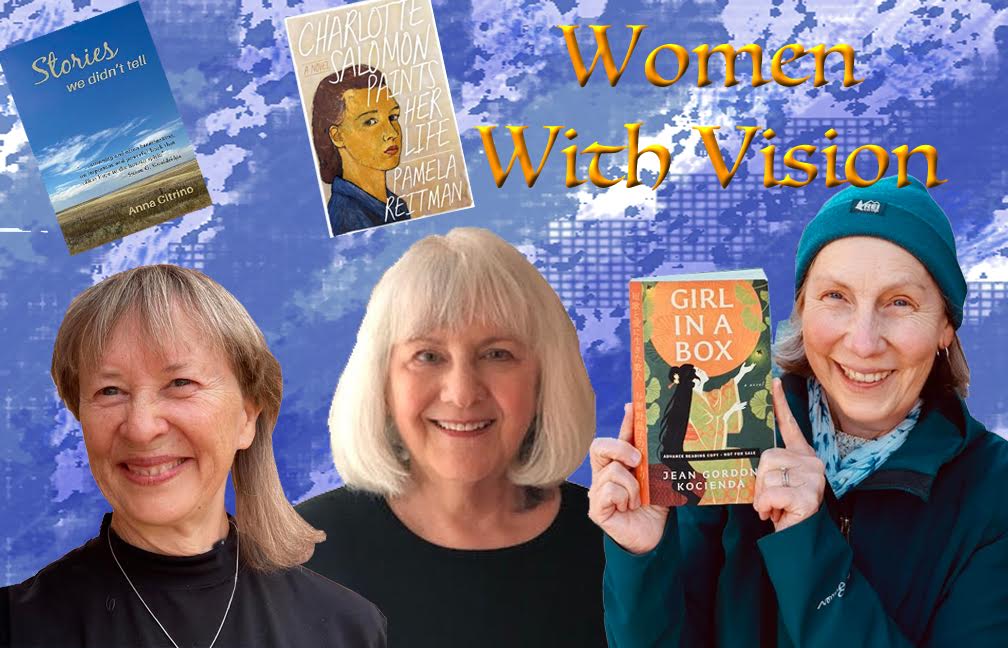
It’s Women’s History Month. I will be reading with authors, Jean Gordon Kocienda, and Pamela Reitman and Elaine Rock, lifting the voices of women from cultures across the world, celebrating them with readings of poetry, nonfiction, and story.
Come share a meal March 26 at 5:00 pm at the Aqus Cafe in Petaluma, Sonoma County, CA and listen to a few stories of some amazing women.
“Earth teems with sights and textures, sounds and vibrations, smells and tastes, electric and magnetic fields. But every animal can only tap into a small fraction of reality’s fullness. Each is enclosed within its own unique sensory bubble, perceiving but a tiny sliver of an immense world.”― Ed Yong, An Immense World: How Animal Senses Reveal the Hidden Realms Around Us
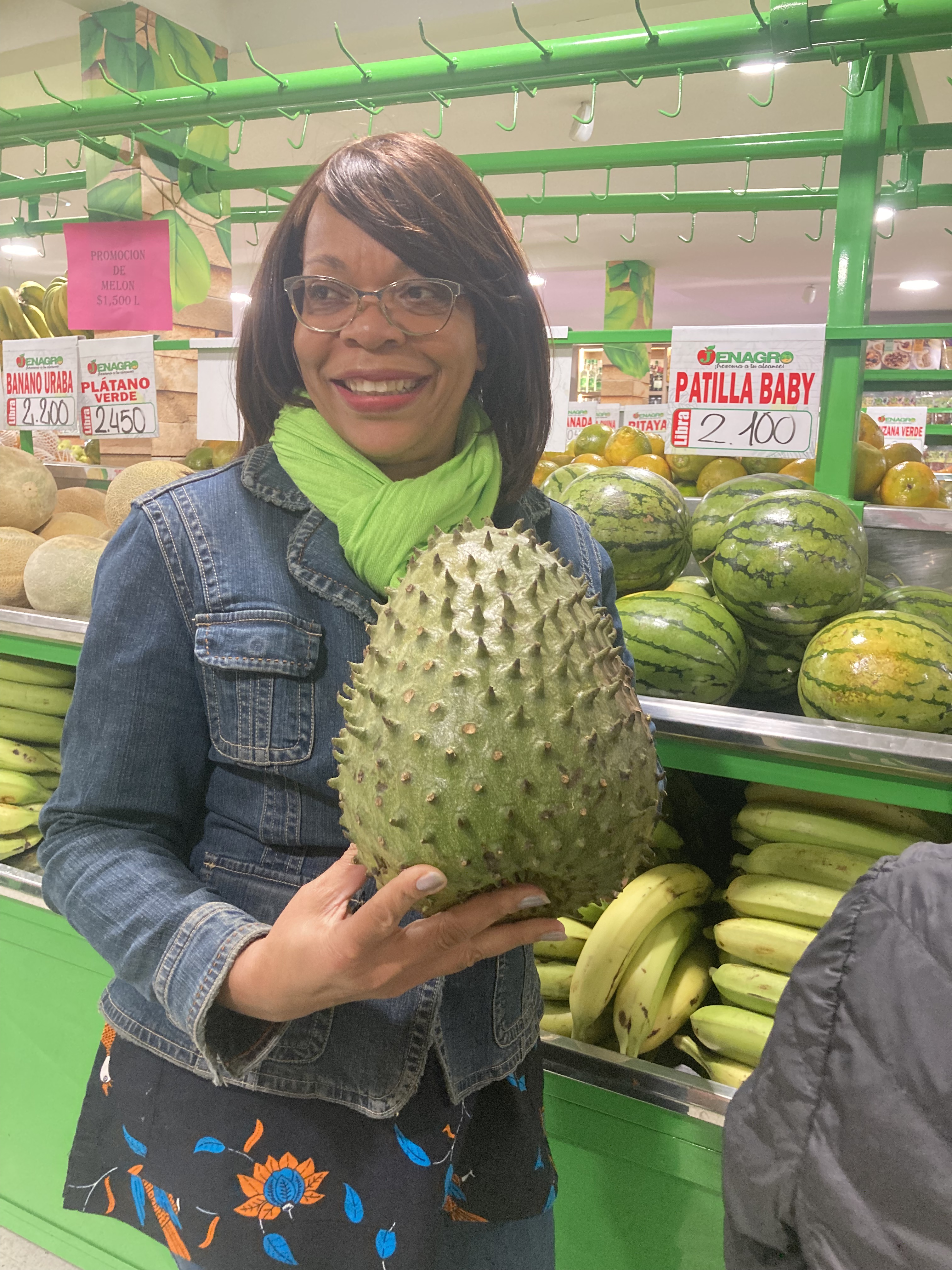
An absolute plethora of fruits grow in the country of Colombia. In a recent trip to Bogota I visited a local produce market and explored a different world of fruits and vegetables from those familiar to me in the temperate climate where I currently live. Colombia’s fruits are unique to many other tropical countries because they are native to the Andes mountains.
At the market, my friends and I wandered slowly through the aisles examining the fruits’ textures and inhaled their distinct fragrances. Here’s some of what we found:
The enormous and spikey guanabana, also known as soursop, paw paw, or graviola.
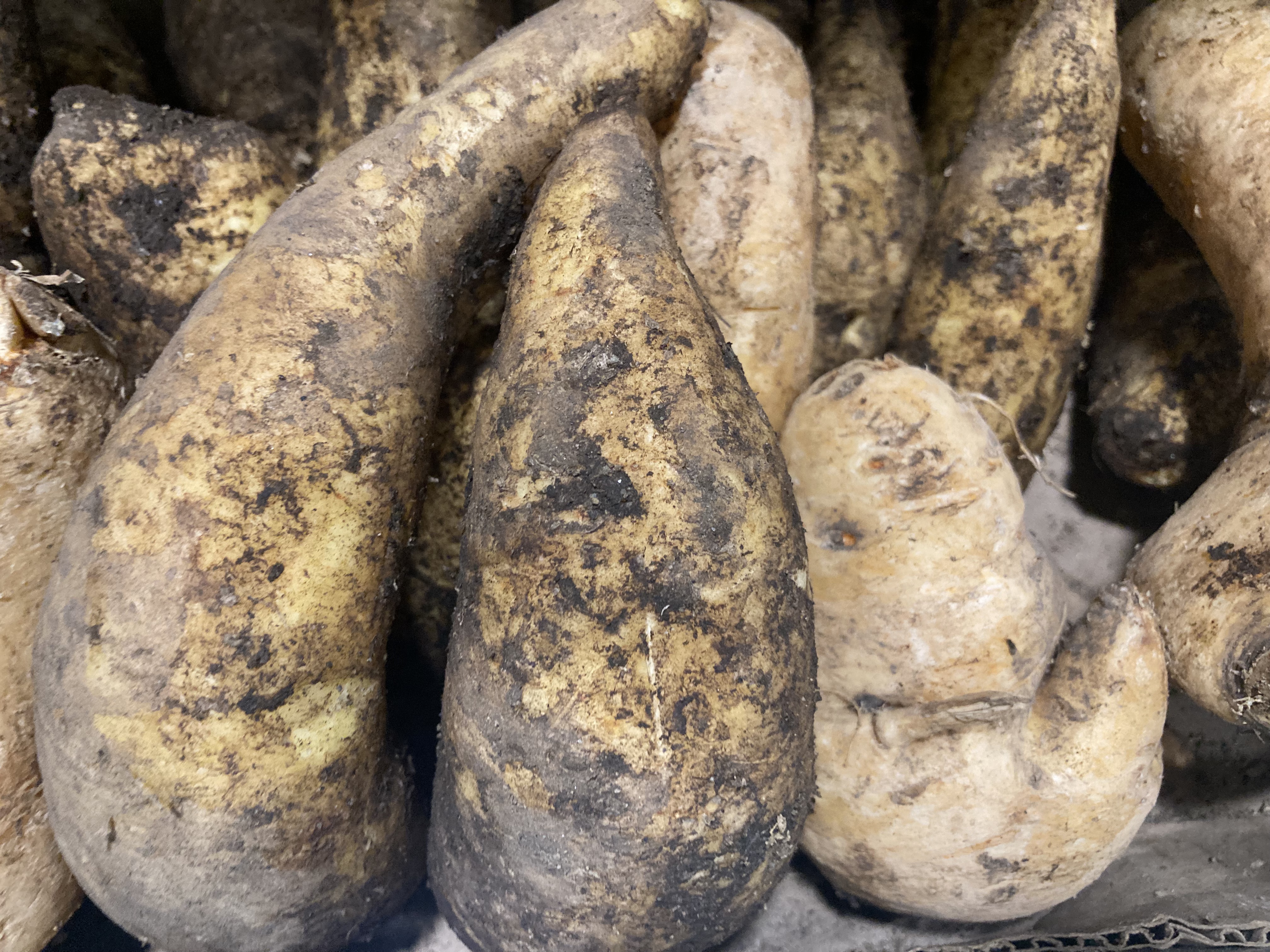
Chuguas, a type of tuber that has been cultivated for thousands of years by indigenous people of the Andes.
Pepino guiso, a kind of vegetable used in stews or sauces.
Cubios, another indigenous tuber of the northern Andes with a similar taste to a potato.
The Colombian zapote comes from the Amazon rainforest.
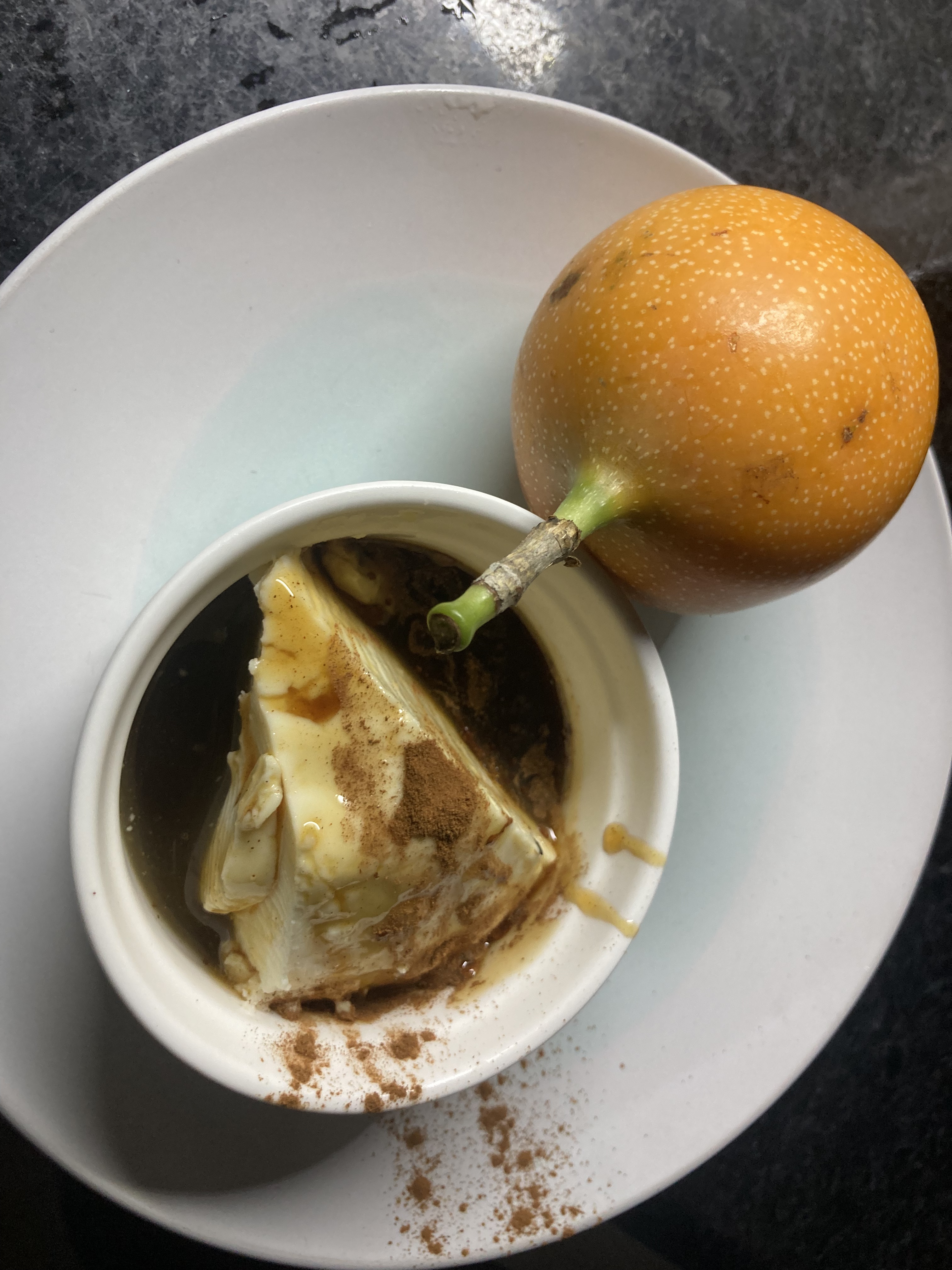
Granadilla, similar to a passion fruit.
Lulo, a citrus-flavored fruit native to the Andean region,
Tomato arbol rojo, eaten raw, as a juice, or cooked in hot sauces.
Ciruela roja, the word translates into English as “red plum,” but this fruit is a tropical fruit that actually belongs to the cashew family.
Curuba, also known as a cloud passion fruit since it is grown in high elevation cloud forests.
Platanos, bananas specifically used for frying.
Star fruit.
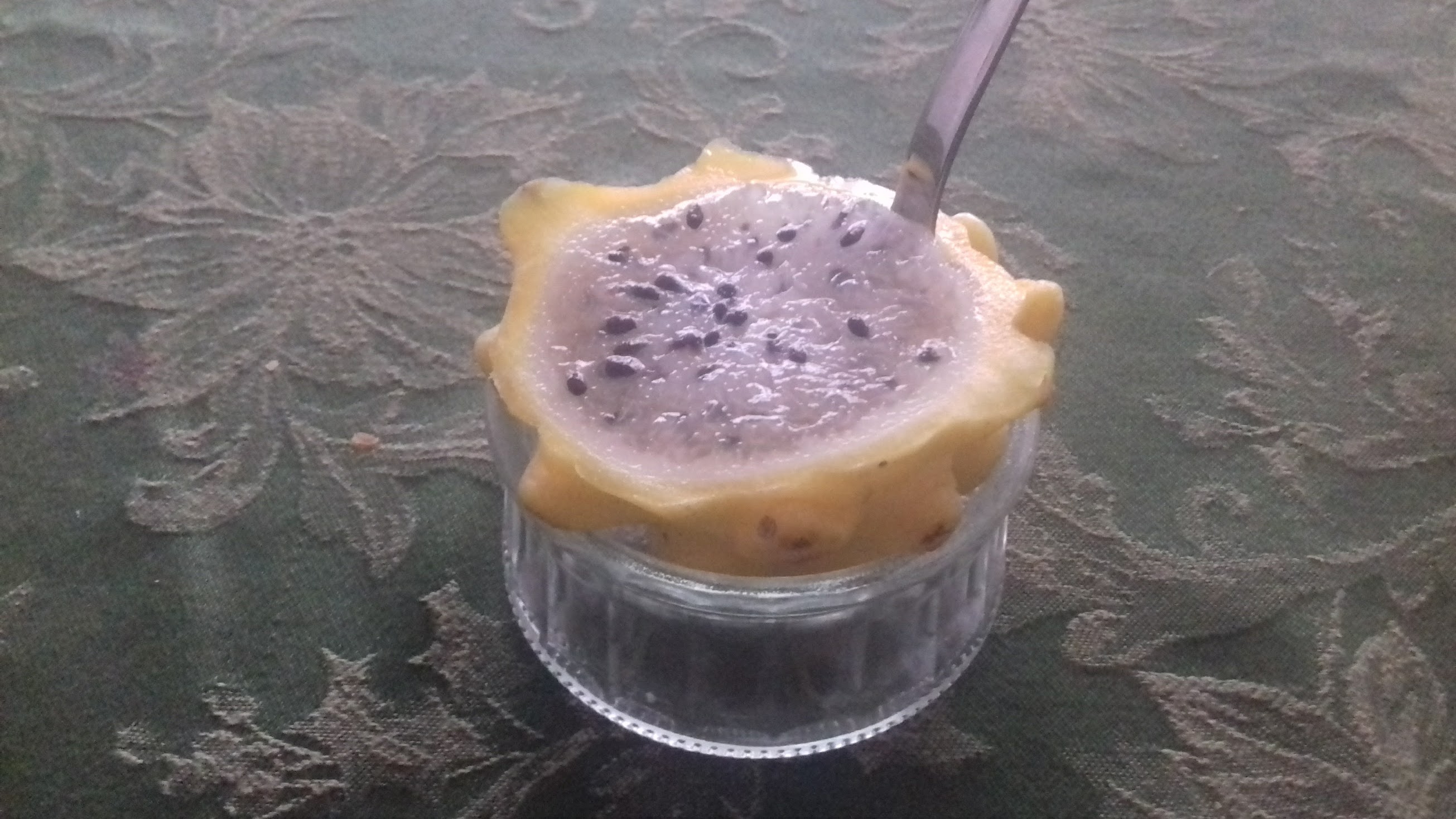
cubiosfeijoatomate arbol rojopepino guisozapotedragon fruitmoraplatanoschuguaspapaya and mango
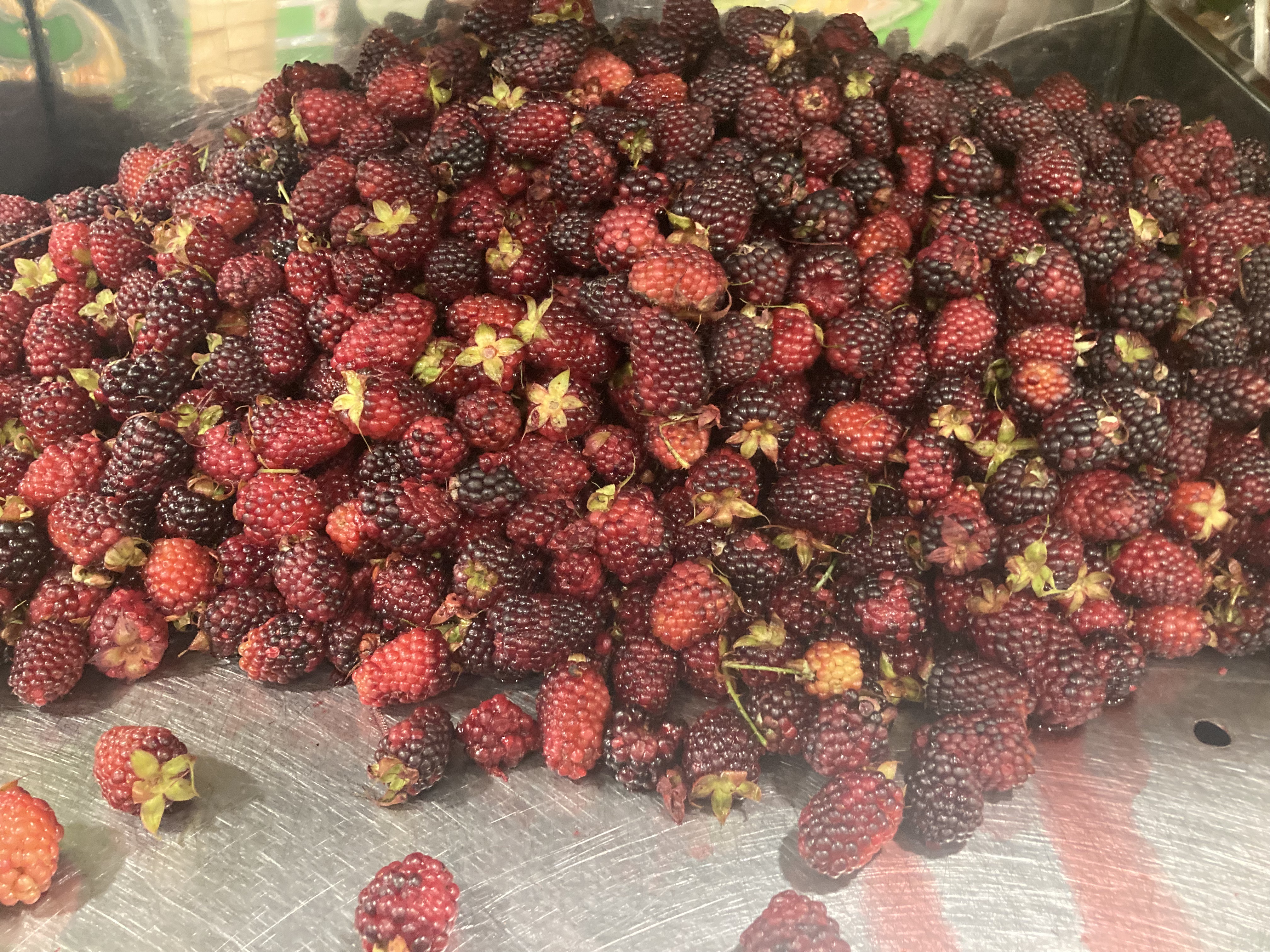
We also found some fruits more commonly known in the US such as pomelo, mora or mulberry, feijoa, a pineapple guava, dragon fruit, and maracuya, and passion fruit.
As Ed Yong describes, the world abounds with an enormous variety but we “tap into a small fraction of reality’s fullness.” The small fraction of reality that my California yard holds of Earth’s enormous variety are a lemon, lime, mandarin, pomegranate, sour cherry, plum, apple, loquat, kumquat, and fig tree. In addition we grow a variety of berries: strawberry, boysenberry, blackberry, blueberry, as well as a currant shrub, and two grape vines. Throughout the year I observe the plants’ growth, and in summer look forward to tasting their fruit, and sharing them with neighbors and friends. Without exposure to other worlds, I might think my world and what it holds is the whole world.
As Yong points out, “By giving in to our preconceptions, we miss what might be right in front of us. And sometimes what we miss is breathtaking.” We’re mostly unaware in our day to day lives of the astounding amount of life around us everywhere that contributes to the life-force that sustains us. According to the Seed Collection site, a single handful of soil “(about 200g) suitable for growing crops can contain a staggering number of organisms: 50km of fungal filaments, about 5000 individual insects, spiders, worms and molluscs, 100,000 protozoa, 10,000 nematodes, and 100,000 million bacteria (that’s 100,000,000,000 individual single-celled organisms!)” We likely don’t typically think about that when stepping into a garden.
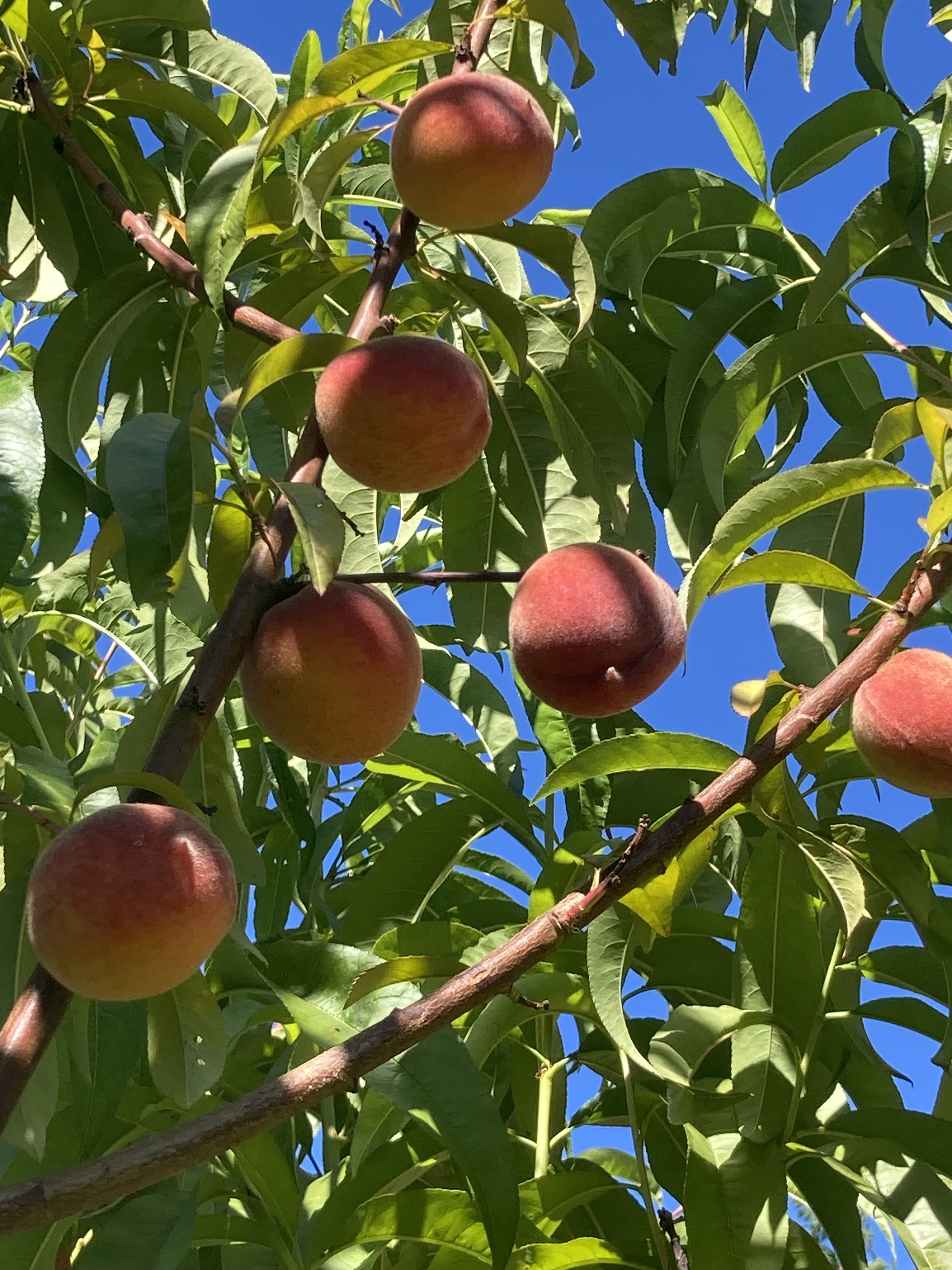
I think of the fruits in my yard as native because I’ve grown up with them and they are familiar. In reality, though, these fruits originated in other lands. The peach, for example came from China, and spread through Asia and Europe before being brought to the new world by Spanish explorers. The pomegranate, according to the Kew Royal Botanic Gardens, is one of the oldest fruits known to humans and is thought to have originated in Iran, southwest Pakistan, and portions of Afghanistan. (Surprisingly, the pomegranate is technically a berry.) Black currants are native to northern Eurasia. The sour cherry likely has its origin somewhere between the Black Sea and the Caspian Sea according to Science Direct. The fig (related to the mulberry) is native to an extensive area ranging from Asiatic Turkey to northern India.
The association between apples and US culture has had such a strong connection since WW2 that there’s a common saying, “As American as apple pie.” Apples, however, came from Kazakhstan, in central Asia east of the Caspian Sea. In fact, the former capital of Kazakhstan, Alma Ata, means “full of apples.” Wild blueberries are one of the few fruits in my garden that originated in North America. After the glaciers receded approximately 10,000 years ago, they began to appear in the area known as The Barrens of Maine, and in Eastern Canada, and Quebec. My life is thoroughly enriched because of what has been brought to me from worlds beyond the borders of where I live.
Travel to a different part of the world to walk around in a different biome or culture, and one right away becomes more alert to the differences of landscape, climate, unique ways of organizing reality and ways of interacting with it.
It’s human to like what is comfortable and known. In a world where much feels uncertain, where countries and people are pulling into themselves, fearful of what’s to come. People generally want to avoid situations that provoke fear. The natural world, however, wants to offer its abundance irregardless of the challenging environment it finds itself in. Wandering through the Bogota neighborhood market was a window into the natural world’s extravagant diversity, not just to see and touch it, but also to taste it. What an enlivening experience that can be!
The plant world opens, and opens into a universe of wondrous fecundity of 400,000 plant species. We are part of the natural world that created the cornucopia of thousands upon thousands of fruits found worldwide. Even in the most ordinary of days, to walk on this earth is an extraordinary thing. It took eons upon eons to create the world as we know it in all its rich variety. Like each of us, I’m here to allow myself to participate in that life flow–to let it in, immerse myself in it, and share it with others. Humans are meant to share the fruits of our lives as season after season we re-vision who we are and give back to life. As Kate Baer writes,
Idea
I will enjoy this life. I will open it like a peach in season, suck the juice from every finger, run my tongue over my chin. I will not worry about clichés or uninvited guests peering in my windows. I will love and be loved. Save and be saved a thousand times. I will let the want into my body, bless the heat under my skin. My life, I will not waste it. I will enjoy this life.
“Travel makes one modest. You see what a tiny place you occupy in the world.” ― Gustave Flaubert
Though I’ve lived in mega cities for decades, my family heritage is from small town rural America. I lived 25 miles from the ocean when growing up but my family rarely went there as my parents grew up in inland states where oceans and swimming in general, were foreign to their way of being in the world. My parents’ worlds were consumed with work and with keeping the family afloat. As a result, our family stayed at home and rarely went anywhere. Our big weekly event was the trip to the grocery store. We didn’t go camping or head out on a vacation to explore new areas. We didn’t go out to dinner. Our lives were simple and we accepted it.
Anna at home on her trike at 4 years old
But I had an uncle who retired early, traveled abroad, and who walked across England and rode a train across Russia. And I have a brother who worked in places like Germany, Brazil and Japan. These were worlds unknown to me, entirely different than the world I knew, and I was curious.
As a young adult I imagined that if I saved my money for years I might be able to travel abroad for a couple of weeks once in my life. I wanted to be more than a tourist though. I wanted to be able step inside another world the way one steps into a lake, let it soak into me and experience it in depth.
Reading can take one into worlds while sitting in your living room chair. I moved half way across the country to live in a snowy environment that was foreign to me. After college, I went back to school again and took the courses to become an English teacher. I read what Anais Nin wrote about Morocco’s labyrinthine city of Fez, stepped inside the pages of Dickens’s London, traveled in my imagination to Paton’s South Africa in Cry the Beloved Country, and Cisnero’s Hispanic neighborhood of Chicago in House on Mango Street.
Then I learned I could live and work abroad as a teacher. Using most of the money in the bank for airline tickets, my husband and I flew to Boston for interviews hoping to go anywhere at all in Latin America, as I wanted to learn Spanish. Instead, we got job offers in Turkey. We’d seen no photos of the campus, our housing, or of the city where we’d be living. We spoke no Turkish and the salary was minimal, but we accepted the employment opportunity and the adventure of our lives began. Living and working in Turkey opened the world for me, and was the start of twenty-six years of living and traveling abroad.
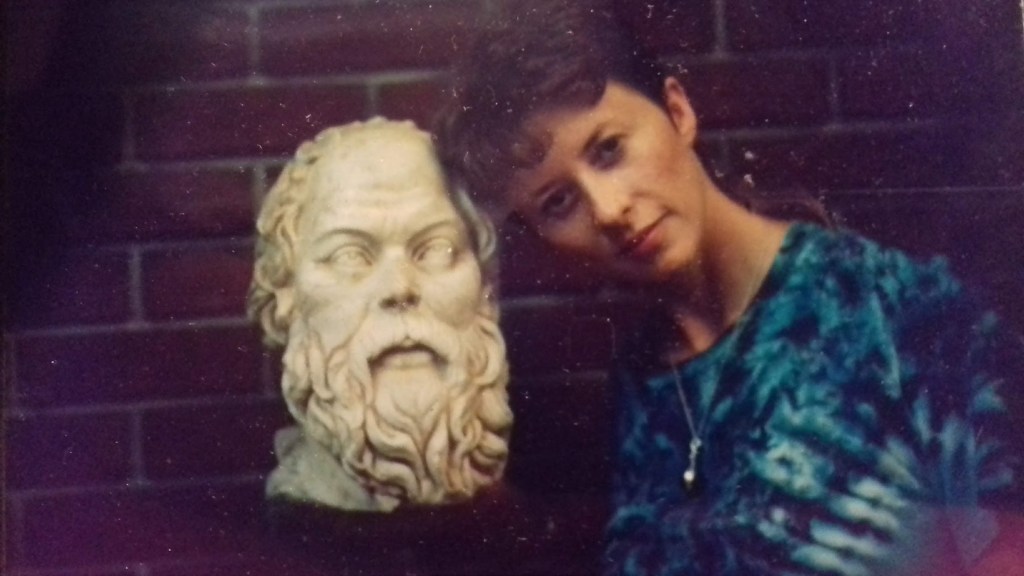
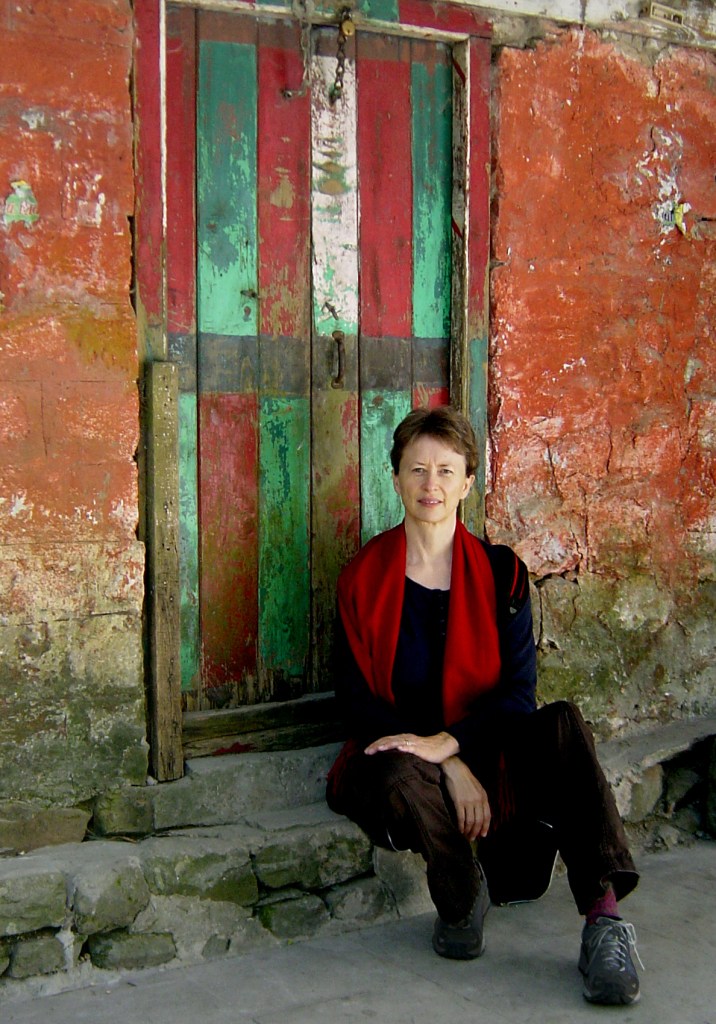
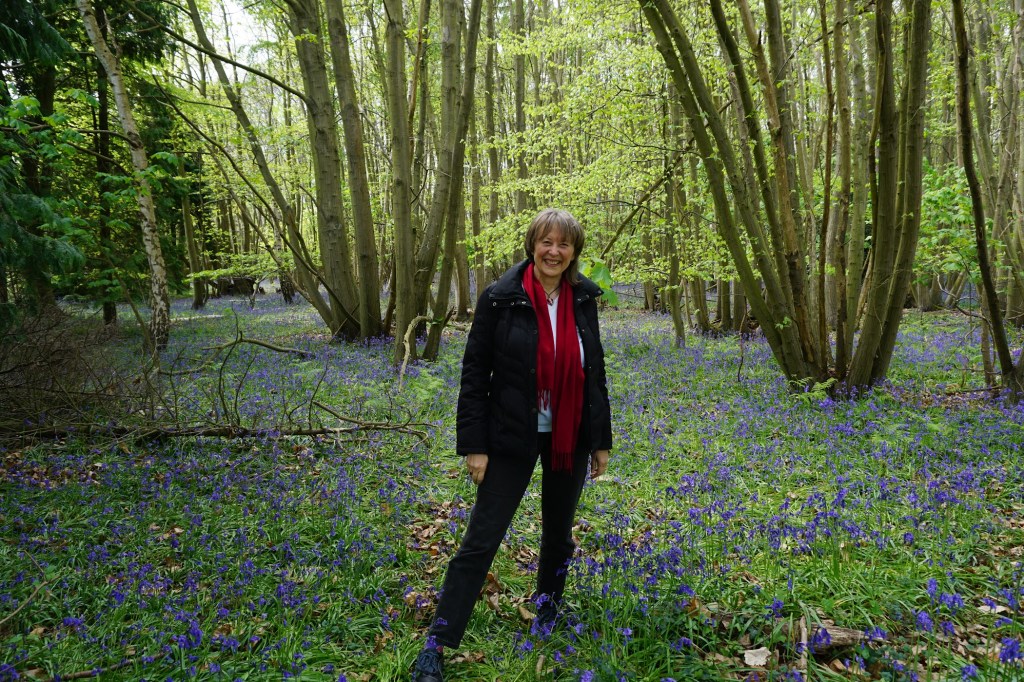
Socrates & me in Turkeyat Falika Island, Kuwaitin Singapore classroomat poetry event, Riyadhin Dharmshala, Indiain a UK field of bluebells
Sometimes people travel for adventure, work, to reconnect to family or attend an important event, other times to step away from a difficult environment or experience. In the Middle Ages the main reasons for travel were for trade, warfare, diplomacy, and religious pilgrimage. The Old Latin word for a pilgrim is “peregrine,” as in the peregrine falcon that takes a year to fly from the Arctic Circle to South America and back again. The word peregrine also means “foreigner.” Certainly, when traveling outside of your normal habitat, you are a foreigner in a world that functions in a variety of unique ways different from what’s familiar. The change of one world for another is what makes travel exciting though sometimes is also what can bring on what Paul Fussell in his 1988 essay “From Exploration to Travel to Tourism”identifies as travail. The etymology of the word traveler, is travail, one who struggles or labors, likely because travel in the Middle Ages when the word entered English from Old French, travel was extremely difficult. It’s often the travails of travel, missing a flight, getting trapped in an elevator when the electricity goes out, or getting lost while trying to get to a particular location, that make for the best travel stories.
Barbara Brown Taylor in her book Holy Envy, writes quotes John Philipp Newell who tells how early Christians sometimes described pilgrimages as “’seeking the place of one’s resurrection,’” because such a journey meant dying to their old boundaries in order to find a new life out beyond the buoys.” In our own day a time widening our boundaries of understanding and compassion in order to gain new ways of and living with people different from ourselves could be extremely beneficial. Experiencing environments other than what we are familiar with often opens up new ways of seeing ourselves and new questions to live with and be curious about.
Living in India for nine years made me much more conscious of the extravagant privilege of having a home, water, warm clothes, and food to eat. Living in India humbled me. The experience raised for me persistent questions I don’t have adequate answers for and made me grapple with how to live in a world that holds so much despair, loneliness, and greed, yet at the same time offers such profound beauty and astonishing expression of tender human care and generosity. I may not have found the place beyond the buoys of my old life, but I am certainly changed, and far more aware of how challenging life can be for people, as well as how kind people can be in the midst of those challenges.
The medieval Irish monk, St. Brendan’s went on a pilgrimage in a l traditionally constructed leather boat, or a curragh. His venture is one of astounding courage. The boat was made of either a wooden frame or wattle covered with ox hides tanned in oak bark then softened with “grease” which was likely lanolin. The monks set up a mast and sail, then went searching for the legendary island of Paradise around the North Atlantic for seven years, reaching as far as Iceland and possibly beyond according to details written down in the Navigatio Sancti Brendani Abbatis. Cramped in tight quarters of the small boat with periods of intensely cold weather, gales, pack ice, uncertainty regarding food, and lacking modern communication or maps, the monks most certainly experienced the travail Fussell writes about. (You can read more about Tim Severin’s 1976 reenactment of a route along the outer Hebrides of Scotland then onward to Newfoundland here.) Travail forces us to notice our boundaries of comfort and to move beyond them. They require us to imagine a larger world, and to reach out for connection beyond what we already know.
Wiring in Old Delhi
“Before tourism, travel was conceived to be like study,” says Fussell, “and its fruits were considered to be the adornment of the mind and the formation of judgment. The traveler was a student of what he sought. One by-product of real travel was something that has virtually disappeared, the travel book as a record of inquiry and a report of the effect of the inquiry on the mind and imagination of the traveler.” Approaching travel as inquiry, allows one to enter into other cultures with a sense of openness to see what they might teach us. We can intentionally provoke our curiosity about places we want to travel to and arrive with questions about things we want to better understand from perspectives other than our own. Alternatively, the place we travel to encourages questions to arise. “Humility,” writes David Brooks, “is the awareness that there’s a lot you don’t know and that a lot of what you think you know is distorted or wrong.” Because we’re not in a familiar world when traveling, we rely on others more. Observing other people’s ways of doing things, we can be brought to an awareness that our way of seeing the world is but one way of viewing reality, and that there can be equally valid ways of responding to and interacting with life. Or at least become aware of how our own ideas might be limited or in need of revision.
Letting go familiar territory to travel into unknown lands is not the same as being a tourist, according to Fussell. “Tourism soothes you by comfort and familiarity and shields you from the shocks of novelty and oddity. It confirms your prior view of the world instead of shaking it up. Tourism required that you see conventional things, and that you see them in a conventional way. Tourism can operate profitably only as a device of mass merchandizing, fulfilling the great modern rule of mediocrity and uniformity.” We live in a world of global interconnection and communication, relying on each other for resources and exchange of goods. In multicultural societies where people of different religions, languages, economic and social backgrounds rely on each other for basic societal functions, open communication and cooperative interaction–seeking to see others from the perspective of their own eyes and the world they live in seems essential. Aiming to reach beyond what is comfortable, and conventional is a worthy aspiration. What a benefit it could be for us to move beyond a tourist’s way of being in the world and instead invoke the spirit of a traveler, one who is willing to step inside their questions about worlds different from their own, willing to let our views of what we identify as the “other” open and be ruffled a bit, and the curtains of our unconscious or misguided conceptions pulled back so that we see each other more fully and discover how to befriend new understandings of worlds beyond our own and the people who inhabit them.
To gain a new perspective or open ourselves to new world we don’t necessarily need to get on an airplane or train. We can simply travel to a side of town we’re not familiar with, visit a place that’s different from one’s habitual territory such as a mosque, cathedral, or temple where people aren’t those you typically identify with. The idea is to put one’s feet into a world not one’s own, and to listen to and interact with people you don’t usually interact with—to intentionally invite in the stranger. There are whole worlds coexisting right around us, the world of plants and animals is one that we often don’t notice. “Earth teems with sights and textures, sounds and vibrations, smells and tastes, electric and magnetic fields. But every animal is enclosed within its own unique sensory bubble, perceiving but a tiny sliver of an immense world,” reads the introduction to science journalist Ed Young’s book, An Immense World. “…Because in order to understand our world we don’t need to travel to other places; we need to see through other eyes.”
Whether traveling to a foreign country or to a different part of our own city, moving beyond the borders of familiarity to encounter ways of thinking and interacting different from our own can help us to see ourselves more clearly, gain a vision for how we might discover our interconnectedness to other lives, and to discover an energy that helps us imagine a larger, more caring and inclusive world to participate in and nurture. This coming year, I want to expand my heart and vision further. I want to live in a world where I see the radiance in others I encounter, am a mirror of their brightness, where I my heart is open to a world that is full of wonders. As Rumi has written, “I wish I could show you when you are lonely or in darkness the astonishing light of your own being.” Here is my song for you in this liminal space between the ending of this year and the start of the next. Barbara McAfee
I would like to step out of my heart and go walking beneath the enormous sky –from “Lament,” Rainer Maria Rilke
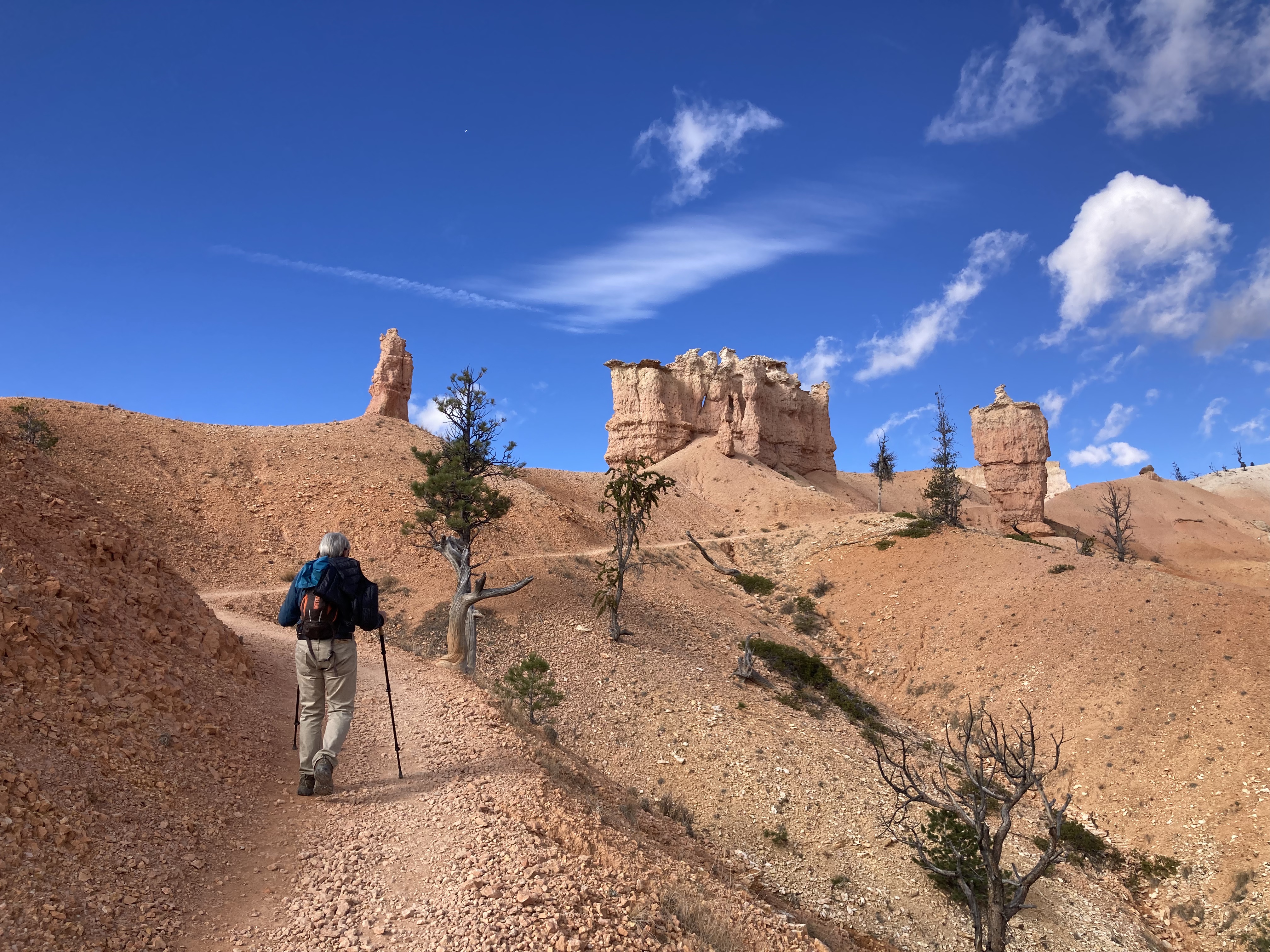
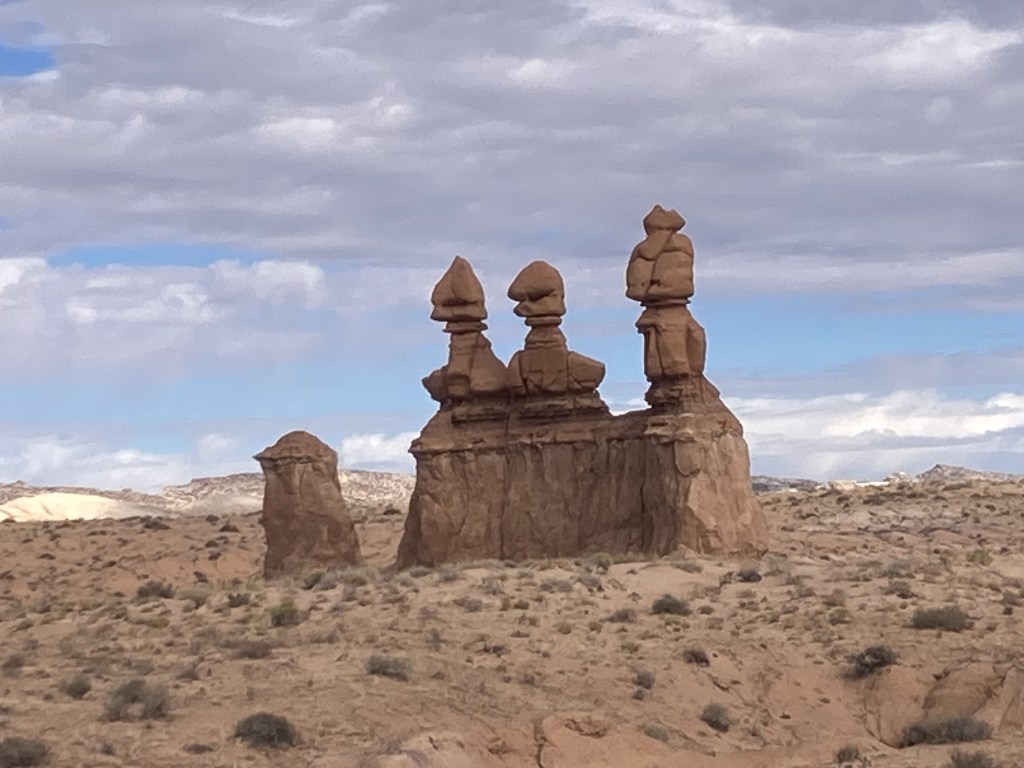
Today amidst an atmospheric river and rain’s downpour I’m welcoming the beginning of my life’s new decade. Earlier this month, I traveled in the US Southwest immersing myself in the landscape’s rugged expansiveness, its openness and astonishing beauty. From the Valley of Fire, to Zion National Park, Bryce Canyon to Capitol Reef, and from Goblin Valley to Antelope Canyon, over and over the land astounded me with its astonishing presence and elemental grandeur. Every turn of a path brought amazement. “I could point my camera in any direction, it wouldn’t matter. You can’t take a bad photo here,” remarked one man I met on the path at Bryce Canyon as he turned his camera this way and that. “How true that was, and how many thousand times did I say, “This is incredible!”
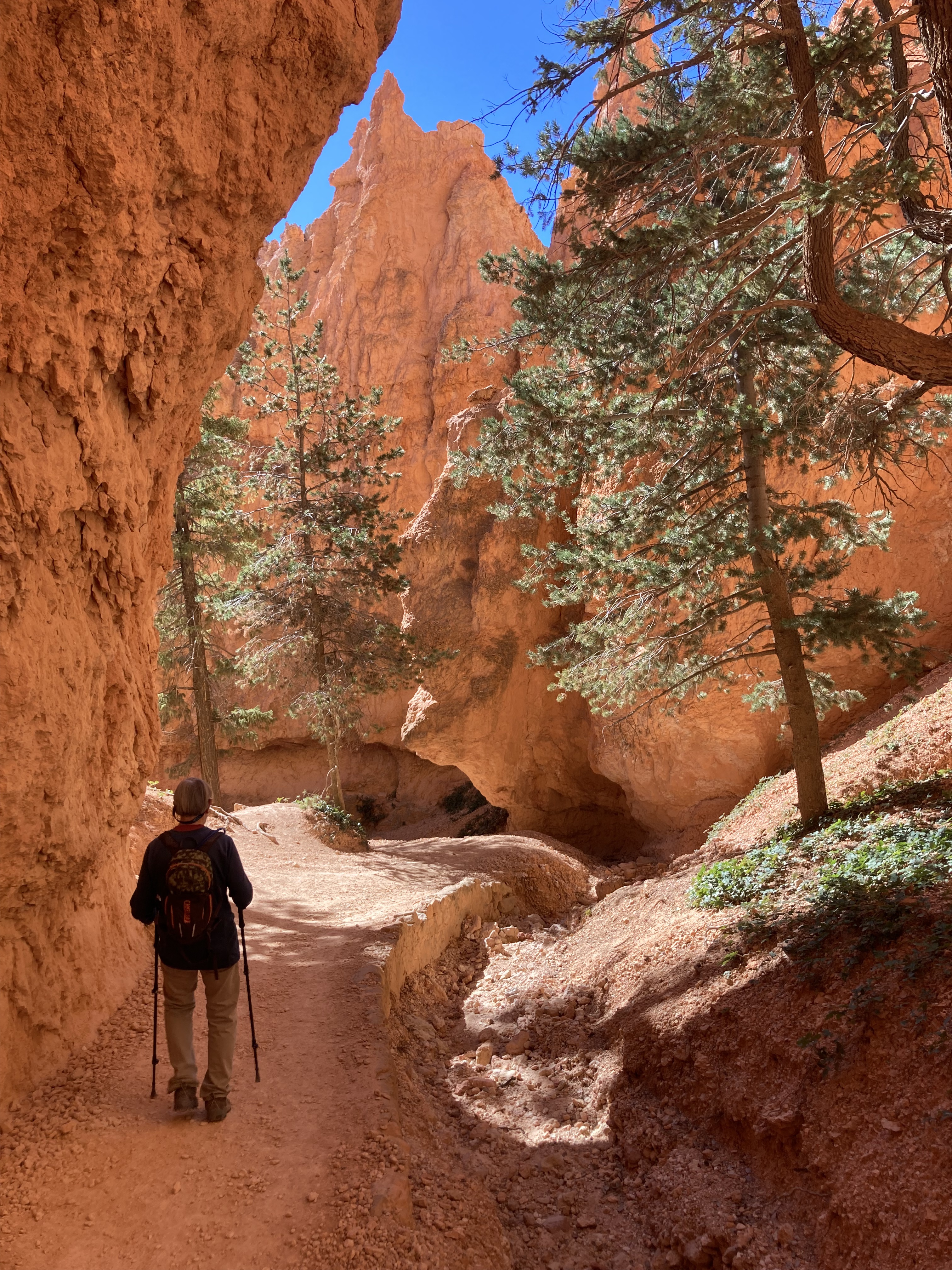
Bryce Canyon, Utah, USA
The desert is simply itself. It makes sense why in earlier times, people went to the desert for solitude. Indigenous people, Buddhist monks, and the Desert Mothers and Desert Fathers all sought out the desert as a place for reflection, meditation, and transformation. As Ryan Kuja writes in his article, “Desert Spirituality—‘The Place of Great Undoing,” “Metaphorically, the desert is a place of testing and transformation, of being divested of empire and ego.” Desertscapes are enormous reservoirs of silence. After walking for a time on various desert trails, I realized no words could ever adequately describe the land’s vast topography, its sweeping spaciousness, and the dramatic rise of its sheer rock faces. I simply fell silent.
Perhaps silence is the best way to walk through such landscape. Just put one foot in front of the other, let the walking shaking lose the mind’s rambling thoughts and obsessions. Allow the earth to seep up through the feet. Absorb the quiet and subtle shifts of air, and let the earth envelop you in its stillness.
Capitol Reef Valley of FireGoblin Valley
Walking the desert lands, my body recognized why it is the earth is a sacred gift, the miracle it is to be alive and witness its wonder. Great islands of cloud floated above through cerulean skies as I walked over swirling layers of colored sandstone and alongside sedimentary layers of stone and earth formed through many millennia—the earth visually telling me its story of persistent transformation and endurance.
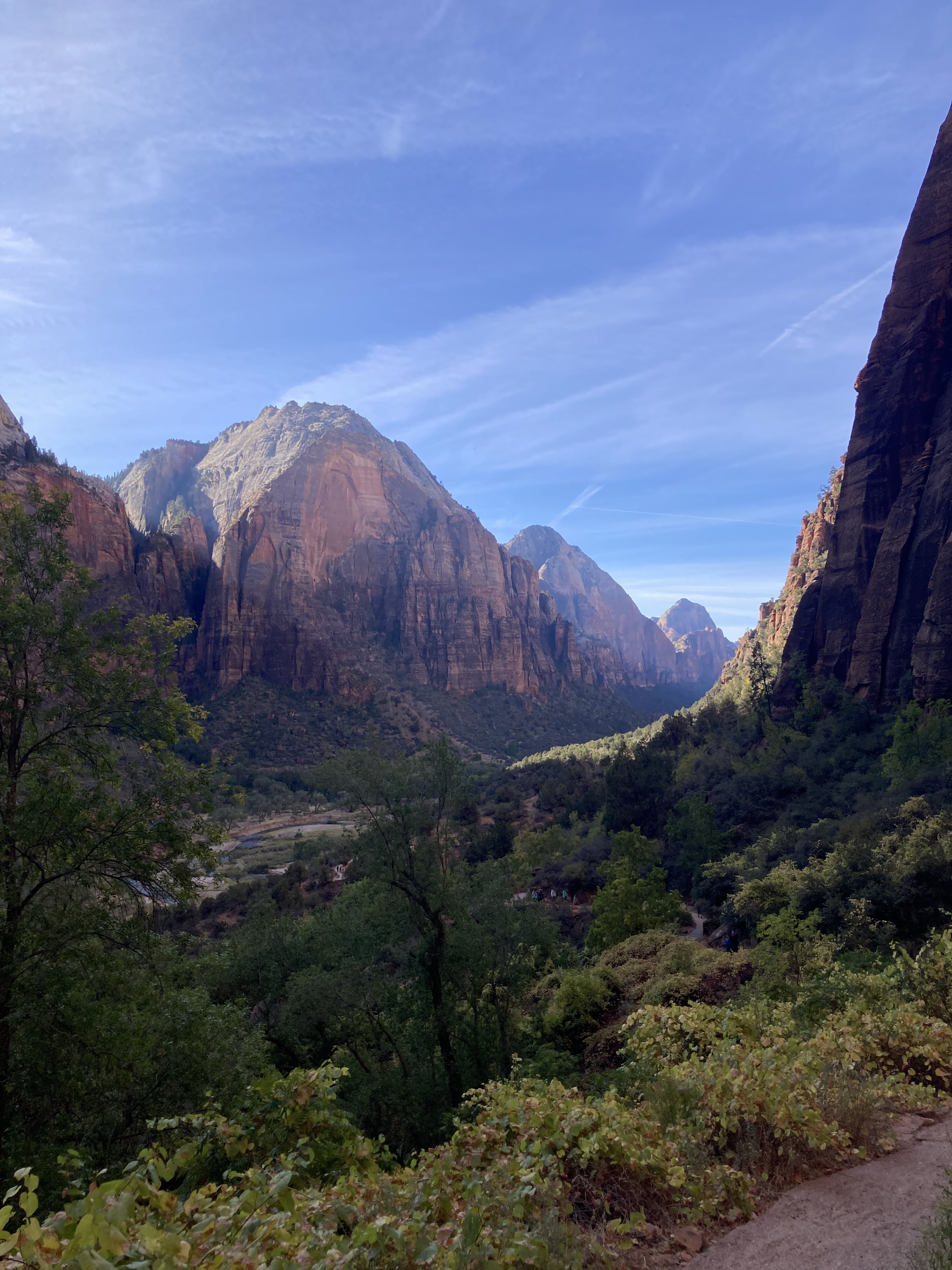
“Landscape is sacramental, to be read as a text,” writes Seamus Heaney. At Zion National Park the sandstone cliffs rise to formidable heights, thousands of feet up with sheer faces that catch morning’s sunrise blush and late afternoon’s glow. The name Zion alludes to the Biblical Zion, a hill in Jerusalem, or Jerusalem itself–a place described as a city of refuge, and by many a holy place. When walking through the park’s canyons and climbing Zion’s hills I felt distinctly aware I was traversing holy ground.
from the Scout Lookout path at Zion National Park, Utah, US
To spend time wandering through the desert’s expansive and pervasive openness is to become aware of one’s smallness and to enter a space of humility and awe. The desert is a good teacher. I noticed people everywhere walking with a sense of expectancy, ready to give a greeting or say a few friendly words, faces open. People were there purposely to find wonder and experience awe. As Abraham Joshua Heschel writes, “The beginning of our happiness lies in the understanding that life without wonder is not worth living.”
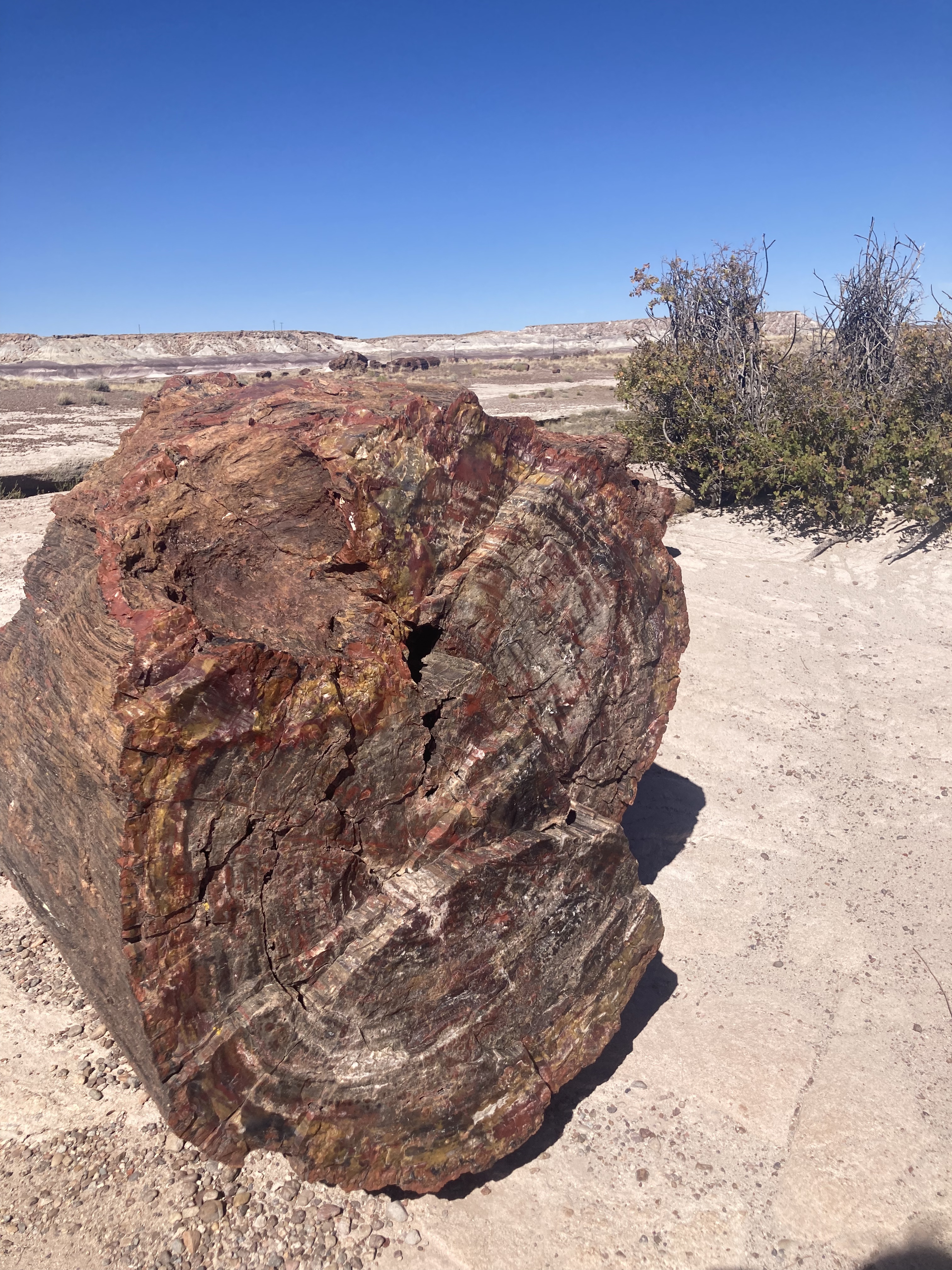
Looking ahead to the challenges the next decade might bring, or that any decade might bring in anyone’s life for that matter, the desert seems a solid place to go to contemplate one’s purpose and focus. Sitting in a swirl of uplifted sandstone looking across the miles of open earth to distant mountains, I became aware how the land abides by its own principles. The petrified trees in Arizona’s Petrified Forest were once located in a forest just above the equator before Earth’s tectonic plates gradually moved them over a multitude of millennia to where they now sit at 35 degrees north of the equator. Amazingly, the trees turned to stone even before T-Rex walked the earth. Earth erodes, changes and evolves according to rhythms billions of years old. Wind blows. Rain falls. The environment will forever continue to respond and change according to the steadfastness of its internal rules.
Earth is a wondrous place and it’s a phenomenal time to be alive. In the past decade, I lived on three different continents and witnessed amazing diversity in cultures, climates and geography. I don’t know where the current decade will take me, but I can count on the Earth continuing to function on the natural principles that have been there since its foundation. At Antelope Canyon, Arizona, a sacred site for Navajo people, I watched people emerging from the narrow crack in the ground thinking how it seemed as if was a kind of birth. I want to think of this birthday as a birth into a new era of life. I know there’s a lot I still want to learn about the world I live in, how to live in it better, and how to give back to people in a way that reflects their unique beauty and radiance.
Antelope Canyon
In his poem, “Being a Person,” William Stafford writes, Be a person here. Stand by the river, invoke the owls. Invoke winter, then spring. Let any season that wants to come here make its own call.
Life brings unexpected challenges and aging generally takes a great deal of bravery and courage. I notice these qualities in those I know who are in their eighth and ninth decades. They often demonstrate these qualities in their determination to carry out every day tasks such as putting on their clothes when the shoulder joint doesn’t function without great pain, or when going swimming every day year round at 93 years old in order to maintain strength when it’s difficult to hold one’s body up, or when a grandmother daily walks around with an oxygen concentrator so she can continue to spend time with her grandchildren, as well as myriad other examples of fortitude, patience, and resolve the elderly possess.
It’s not a given that suffering must lead to a diminishment of one’s awareness of awe, wonder, or beauty. I respect people like 95 year old Dot Fisher Smith who continues to open to awe and the miracle of being alive, not “ceasing from exploration,” to use T. S. Elliot’s words, even as she knows her physical mobility is diminishing. “I have something to give,” she says in this short film, To Be in Awe, “my light, something ineffable that I don’t know…We’re here to experience the wonder of being in a body.” I wish to live this way into the uncertain decades before me, wish to give gratitude for the mystery and wonder of being alive.
Looking toward Zion National Park, Utah
Stafford ends his poem, “Being a Person” saying,
How you stand here is important. How you listen for the next things to happen. How you breathe.
I want to say thank you to my parents, family, teachers, friends, collogues, former students, animal friends. Thank you to the earth I stand on, the garden I work to nurture, and to the many places I have visited and passed through. It’s not just Southwestern US that is phenomenal. Earth is phenomenal. Everything is in its own way incredible.
Navajo Loop, Bryce Canyon, Utah
…There is so much beauty left to see in this world. And I became what I am now to see it.
“As long as you don’t lose your mind, all outer strife is inconsequential.” Teresa of Avila
One advantage of having a broken wrist and bronchitis at the same time is that since you know you can’t do much, you can more easily accept that you will be taking the days slowly. You can give yourself over to your body’s natural rhythms, rising with the sun’s blossoming light, and waiting until after the fireflies begin to blink in the meadow before going to bed. Meals and the after dinner walk down the driveway are focal points of the day. This all seems fairly good. You tell yourself you are learning to live with a different rhythm and not to worry about accomplishing things. Here at the farm cottage outside of Assisi, I wake each day to an enormous oak that expands its arms across the meadow. Its work as a tree is to sink down roots and grow. Little by little. It takes all the time it needs to become what it is meant to become and is not worried about getting anywhere fast. The birds sing their songs above its head, the sun shines in the grassy field where the tree sits. Shadows rise and fall across its face but the oak simply continues to do what oak trees do, lift its arms and breathe. Somehow, I think it’s easier for a tree to go slowly and live deliberately than it is for a person, but I’m practicing.
oak tree outside my cottage window at Casa Rosa, Assisi, Italy
Two days ago when I had to go to the hospital for a follow-up X-ray of my fractured wrist, I was curious about whether the idea of slow living would extend to the world of medicine or not. The answer is yes. People at the hospital both here in Assisi where I got the X-ray, and at Perugia where the doctors read the X-ray were cordial and helpful, but it all took a long time–most the day, in fact. First there was paperwork and then waiting to do, and then more paperwork and more waiting. No one seemed in any particular hurry to get the X- ray copy done quickly. It would be ready whenever it would be ready, and it was assumed you could wait. This portion alone took an hour. Then we were sent to the cashier where we waited in line again, after which we then had to go to another city for a doctor to read the X-ray. The hospital facilities looked significantly better, however, than the hospitals in the south. The World Health Organization rates Italy’s health care as very good. Is it better to go to doctors who don’t seem pressed for time, who work at a slower pace? Maybe this would enable them to make more considered decisions. On the other hand, maybe they are less motivated to do a good job because their reputation is not as important in a system where the government pays you the same amount of money regardless of how many patients you see or the quality of your reputation. I don’t think I have enough information to make that judgment. I am using the health care my workplace in New Delhi has provided me in order to receive help, but I am also very thankful I could go to a hospital and get help here. So many people tout the advantages of slow living as a less stressful way of life, making us healthier in general. It leads me to wonder what people from the medical profession would have to say about “slow” medicine? What would their definition of it be and would they advocate for it?
Illness is a place, a world of its own. Its borders aren’t always clearly marked, but you know when you are there. The world of illness functions by different rules and works at a different pace. It’s a fuzzy sort of place where things appear slightly out of focus but you are too tired to care. You think more slowly, and odd activities that you normally wouldn’t do seem strangely attractive to you, like sleeping most the day, or drinking liters of water or juice. Strangers ask how you feel and offer to help you that normally would never occur to them. But that’s the point. You aren’t in your normal world. You are experiencing the world of illness, and though that world is rather limiting, the limitations are all for a greater good–to help you become whole again. Now that I’ve had the cast on my arm for more than a week, I can say that I have some idea of what it would be like to have an exoskeleton. There might be some advantages to an exoskeleton, such as not getting sunburned easily, and you can prop your arm on the edge of a table and pivot it up and down without pinching your skin, but I can report unequivocally that I still prefer the bones under the skin. Though illness has a way of distorting and changing reality, it also has a way of retuning reality so that you can see more of what really matters most to you.
Admittedly, there have been times in the last week when everything felt like it was moving all too slowly and I might have termed my experience as confining, not merely slow. I was stuck inside for lack of being able to breathe well when in my mind I wanted to go on long walks and explore the world. All year while living in Delhi I’ve been thinking of how narrow my life is–all lived within a radius of a few hundred yards for months on end. Sometimes I think of those people who sit in toll booths on the freeway, and wonder how they bear it. How do they feel day after day doing the same thing? How do they make meaning in their lives when so many hours a day are spent doing something routine and mindless? I’ve been longing for a change of scenery and for space, for new images, and here I am in Italy, a definite change, and yet, as a result of being ill, I’ve spent a lot of time sitting around in the same space. I could stay at home in California and enjoy the scenery of my yard there immensely. I did not have to come to Italy for that.
Or did I? I don’t know whether it’s a result of being ill and seeing things differently or if it is a result of enough trips to Italy now that I understand it on a different level, or if it because I have slowed my life down enough that I finally see what it is I really want, but what I see clearly now is that where I most want to be is at my home in California. Italy is beautiful, it’s true–the rolling hills of patchwork agriculture across the country, the ancient hilltop cities with their thousand year old churches made of stone. For several years now Michael and I have looked at property in Italy online, and have considered buying. But now I realize that I don’t want to live in a stone house with tiny windows off of a narrow stone street with no raw earth to walk on or ancient trees spreading their arms in my back yard. I need wild places. I need a garden. I need the redwoods. The ancient churches and cities of Italy have their stories to tell, and those stories have added to mine. Sitting here with the window open to the world in this little cottage in the hills where St. Francis walked and worked listening to the breeze rustle the trees and the birds sing, my sweet husband’s hand on my foot as I write, I know where I really want to be is at my home in Soquel.
This doesn’t mean I don’t ever want to travel any more. There are still places I want to see–Croatia, more of Greece, St. Petersburg, Prague, Morocco. And I also know it will take a few more years of living in the narrow situation of life in Delhi before I can afford to return home to CA, unless I can find some way to create an income there. But every life has its confinements, its narrow places that make it what it is. I’ve experienced a lot of ways of living over the past twenty one years of living and traveling in foreign countries but I want to live and make my home in Soquel where we are creating Gratitude Gardens. Look for further progress on the garden over the next few years.
Beginnings are connected to endings, and endings to beginnings. Every time something is born, something else passes away. This past weekend, my husband Michael, and I spent our time moving to a new apartment. Our move was only one floor above, not a very big move, still it seems new and different. Since the move was so close-by, I hadn’t given a whole lot of thought about the move being much of a change other than wondering how we were going to manage to find the time to pack and then unpack with so little time left in India before we would be leaving for the summer. Nevertheless, as the opportunity to move opened and I carried box after box up the stairs, I found myself repeatedly thinking about how this phase of my life was ending–my time in the apartment with its idiosyncrasies of the toilet pipes that run and then stop running on their own, the particular scent of the rooms, the tree leaves grown thick over the window–all that was over!
One phase of my life was complete but another had begun. Sunday night we went to dinner with our friend Kamal, and her family, in celebration of her acceptance into the teaching program at a university in Calgary. To become a teacher is Kamal’s dream, and she is entering a new phase of her life as she sets off for college in a city and country unfamiliar to her now. It’s all so very exciting, but at the same time, a bit scary because of its unfamiliarity.
Since I’ve moved many times in my life, I’ve often wondered what it is like for people who stay in one location their whole lives, or for those who have rarely moved. What is it like to grow deep roots in one place? How might it change the way you see the world? Imagine having friends who have known you your whole life, who have seen you grow and change, who have watched as you developed new skills, and who were there to encourage you along the way! You would have friends you share a long history with, who know you well enough that you could sit with them in silent communion. That would be a rare gift. You would also know a landscape intimately–its myriad shades of sunlight and shadow. A good steward of the land, you would have taken care of it through all forms of weather and seasons. The land itself would your trusted friend.
That is one version of what it could be like to stay in one place your whole life. My life has not followed this path, though. Instead, I have repeatedly stepped into the unknown or semi-known. Doing this gets more challenging as you grow older and feel greater pressure to save up financial resources for the years when you will not work and yet need to go on paying for your living expenses. Adventures involve the unpredictable and the unexpected, and moving into unknown territory often is not easy, as you never feel fully settled in any one place. On the other hand, the advantage of moving frequently is that it has served as a bell that reminds me to repeatedly come back to the idea of how precious the time is in each place I live in or travel to. Often, I only have a brief time to be with old friends from my hometown each summer, or just a hand full of days with family members every few years, so those days and whatever they contain are dear.
Quite a number of years ago now I read Bruce Chatwin’s Songlines, a book that helped me see the value of life of a migratory life in a new way. Chatwin explains, “As a general rule of biology, migratory species are less ‘aggressive’ than sedentary ones.
There is one obvious reason why this should be so. The migration itself, like the pilgrimage, is the hard journey: a ‘leveller’ on which the ‘fit’ survive and stragglers fall by the wayside.”
Chatwin says our “real home is not a house, but the Road, and that life itself is a journey to be walked on foot.” This is a terrific promotion of the value of walking, and the view of life one gains through the pace a journey takes when on foot. I’m intrigued, though, by the notion of life itself being a pilgrimage, a hard journey. If we can recognize that those walking beside us as fellow travelers, young, old, rich, poor, of different religions and different cultures, we can learn from each other and can better understand how to find our way.
Our “way” has something to do with understanding how these mundane things of our lives, like packing up our house and moving, or walking to work or standing in line at the cafeteria, are what life is. The every day events and conversations and how we carry them out, are what make the fabric of our lives. In the commonplace of our lives lies the journey itself. It is a pilgrimage where the inner journey meets the outer that occurs whether we leave home or stay in the same place our entire lives. One reason I continue to pick the transitory life is that it forces me to continue to think about the place where the inner and outer journeys meet and to make myself take note of how I am walking.
This time of year in the world of international schools, the environment I live and work in, many people are moving away, both students and teachers. Thirteen years spent in one place, perhaps, and then that someone is gone. Last weekend, as I sat in the room with a group of friends singing, I was looking at the faces of three people I will not see again here next year, Vicky and Ron and Deanna. They are such a natural part of my world here that it is very difficult to imagine them gone. Even though we speak of it, though we have going away parties, though we talk about their plans, and look forward to them enjoying their new experiments in living, my mind goes on affirming their presence. I suppose that is because they aren’t quite gone yet, and because I know we will still be in communication after they are gone. But as Vicky says, they are “history.” Their influence on my life will no longer be the way it was. Still, the influence of their presence on my life continues. I know I have quoted Buechner several times already on these postings, but Buechner says it well, “When you remember me, it means you have carried something of who I am with you, that I have left some mark of who I am on who you are. I means that you can summon me back to your mind even though countless years and miles may stand between us. It means that if we meet again, you will know me. It means that even after I die, you can still see my face and hear my voice and speak to me in your heart.”
Good-byes are a kind of death, it is true. There are always too many things going on when they occur, and we are never quite ready for them. But they are also a beginning. The Hindus demonstrate this understanding of the cycle of life and death in their god, Shiva, who is both the creator-destroyer. The Jewish scriptures of Ecclesiastes say, “There is a time and a place for everything under heaven, a time to be born and a time to die.” The Celts in ancient Ireland began their new year in winter. For Christians, Jesus’ death brings life. In the midst of death, life is being born. When you are carrying the weight of boxes up stairs for hours on end, it’s just plain hard. Your feet get tired and your back as well. But that’s the way new things get born– step by step you carry your load to the new location and set it down. Of course, it’s always very nice when someone can help you carry the weight. We are on this road together, we can do that no matter where we are. As fellow pilgrims say on the road to Santiago de Compostela, “Buen camino,” happy travels.
























 Anna Citrino---Poetry, Place, Pilgrimage