art, poetry, Uncategorized, writing

Looking Deeply: Art, Poetry, and Presence

Barry Lopez in his children’s book, Crow and Weasel, writes, “Remember on this one thing, said Badger. The stories people tell have a way of taking care of them. If stories come to you, care for them. And learn to give them away where they are needed. Sometimes a person needs a story more than food to stay alive. That is why we put these stories in each other’s memories. This is how people care for themselves.”

Stories connect us to the people who came before us, the narratives they live out and the tales they tell us about what the world is, and who we are in the world. We live by the stories that have shaped and taught us. They give meaning to our experience and direct us in our journey. Stories condense experience, give us the opportunity to examine our difficulties, and to reflect on how our struggles might enable us to grow.

The oldest form of story is poetry. Before poems were ever written, they were told. People’s histories were given in poetry–words constructed to call up experiences through sound and imagery that evoked emotion and helped people remember who they were, what they had done, and why it was important. In listening to poetry, we can step inside a reflection of life that holds up a mirror, and at the same time speaks to something beyond what is experienced. It is a way to reconnect to what it means to be human and to the mystery of existence. As Dana Gioia writes, “In a moment’s pause another world / reveals itself behind the ordinary.” By extension, because poetry was once connected to other art forms, stories, music, and dance, these are doors we can open to that allows us to walk into a larger reality, to see the world from a wider perspective.

image

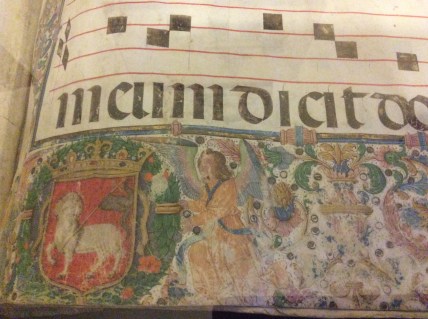
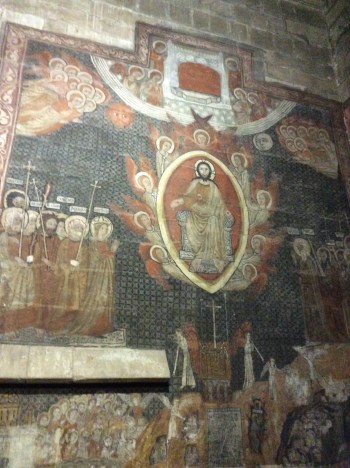
The idea that the physical world intersects with the spiritual world is an ancient one, found in many traditions; the Celtic, Catholic, and Native American being a few examples of these. St. John Damascene, a Syrian monk who lived from c. 675 or 676 –to 749 CE, wrote a defense for the use of icons (see more here) that shaped the direction of the church. Though others at the time argued against the use of icons and representational art. God is bigger than any particular physical form, the thinking went, and therefore representation of God in icons should not be allowed. St. John of Damascene argued, however, that if God became human in the form of Christ, then two are intermingled. The sacred could be seen living and breathing through the human form, and therefore it was completely acceptable, he argued, to create icons, to worship through icons, and to paint the human form. In fact, art was a way for the illiterate to see God, Damascene explained, and to read the story of God’s compassion for and interest in humans through the paintings. Damascene demonstrated an acceptance of paradox, and the idea that one’s thinking doesn’t have to be contained in tight boxes of either or. William Dalrymple, in his book, From the Holy Mountain, quotes Damascene saying, “‘…the flower of painting makes me look, charms my eyes as does a flowering meadow and softly distils the glory of God in my soul.'” Through painting, as through nature, Damascene declares, God communicates his presence in the world, and art is a central way in which humans can experience and connect with the Divine.

imageThough Dalrymple describes the cave where St. John of Damascene wrote these thoughts in The Fount of Knowledge, as “crude and primitive,” he goes on to say that, “Without Damascene’s work, Byzantine ars sacra would never again have been permitted, Greek painters might never have been able to pass on their secrets to Giotto and the Siennese, and the course of the Renaissance, if it had happened at all, would have been very different.” I’m very grateful for Damascene’s words and thoughts regarding art. Without them, we’d likely be deprived of much beauty, and the spirit that speaks through that beauty.
In her poem, “Pray for Peace,” Ellen Bass speaks of this interconnection of the everyday world around us with the world of spirit.

Pull weeds for peace, turn over in your sleep for peace,
feed the birds, each shiny seed
that spills onto the earth, another second of peace.
Wash your dishes, call your mother, drink wine.

Shovel leaves or snow or trash from your sidewalk.
Make a path. Fold a photo of a dead child
around your VISA card. Scoop your holy water
from the gutter. Gnaw your crust.
Mumble along like a crazy person, stumbling
your prayer through the streets.

Though a way of communicating half forgotten these days, Bass helps the reader to see that prayer can be any act we do with full attention and heart. When we pay attention to our lives, doing what we love presence, that is prayer–a breathing, walking prayer that adds meaning to our lives, and enables us to grow toward wholeness. Making a routine out of things saves energy and time, but even routines can be done with attention and heart. How do we cultivate the kind of noticing awareness in our every day lives, the ways of being that enable the act of living to become prayer?

Involvement in a creative act is a central way to connect the physical world with the inner world. Though there are a variety of art forms that can enable a person to live in fuller awareness of a connection to life’s mystery, writing is an excellent path from which to begin this journey. Whenever I leave the house, I carry imagemy journal, a small book that easily fits inside a pocket. I carry it because at any time something might appear, or someone might say something that needs to be noticed, and I want to be ready. My journal is my fishing line, so to speak. Though I may miss many things swimming in the world around me, because I’m prepared with pen and paper to notice something, I am more likely to find and catch something than if I had no tool at all to help me. Whatever I’m working on as a writer, I look and listen for moments that speak to me while moving through the day—a random phrase, a gesture, a sudden familiar scent that might embody the idea I’m reaching for in a writing piece I’m working on. I remain attentive to sounds, textures, colors, actions—the world’s details that define a place or time. As a result of knowing the questions I’m living with and what I’m looking for, things tend to show up and announce their connection like a kind of internal spark. Suddenly, as if witnessing the embodiment of a metaphor, I see, for example, how something I’m looking at or hear is related to something seemingly completely different. The discovery has a wonderful quality to it, and to then write it out is to be able to embody that insight. Sharing it with others deepens a sense of connection to the world.

Writers aim to name the world, and doing so is to participate in a kind of co-creation of life, at least this is how I experience what happens while writing, and it is one of the motivating reasons to write. To write is to observe closely, and to observe closely moves me to an awareness that I am part of a greater something beyond myself–that I swim in the mystery of existence. Writing is a path that allows me to enter a space where I’m both fully present in my life, and somehow not present at the same time as I step inside the weave of words. This is because I’m living inside of the thing I’m writing about, and what I’m writing about is bigger than me. As poet Nicholas Samaras explained to me once, writers are always writing, even when not writing. I agree with Samaras when he says, on Poetry Net, “God is in the point of my pen.” In losing myself in the work I am doing, I’m made more alive, full, and solid. It’s a paradox.

image

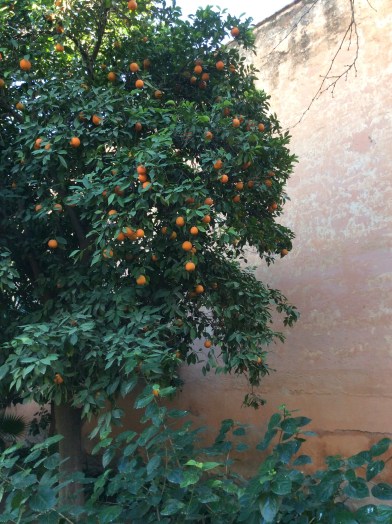
Writing poetry can be a kind of prayer. My father wrote stories and poetry, but my mother taught me to pay attention to the world around me. She constantly noticed the natural world, flowers on the bank or scent of orange blossoms from the orchard, bees at the birdbath, a fox that came through the front yard, or hawks that circled above the hill behind us. The wind as it blew through the pines where she grew up in the Black Hills of South Dakota, was an ancient choir, she said. As she described the experience to me, I could hear the wind as if it were real. She recalled wild gooseberries’ tart flavor, and told me the names and shapes of wildflowers that grew on the land of her childhood home. Her descriptions lived in my mind as if they were real. Even though where I grew up in eastern San Diego county’s dry desert–very different from the Black Hills, I felt preciousness my mother’s memories of her childhood’s natural environment. Her respect for those experiences nurtured in me a love of my own childhood’s natural environment.

I played outside every day as a child, climbed around on granite boulders, or sat inside the branches of an avocado, umbrella or pepper tree. Our front door often stood open to the outside air. I ran through the yard barefoot, watched clouds parade by, and sunsets spill across the horizon. Coyotes’ yips echoed through the valley in the evening. Crickets sang. Stars came out. These were all gifts, and I belonged to that earth. The experience of growing up in such a place with the opportunity to experience the natural world as part of the rhythms of every day life created in me a foundation for wanting to remain connected to the earth. To have our feet on the earth, to literally ground our selves there, is life engendering. If deprived of such experiences, I think our bodies and spirits still long for them without possibly even knowing it.

image

Poetry relies on imagery and figures of speech. It integrates the physical world with the world of language. It tells abstract ideas by recreating the physical world. It reconnects the writer and the reader back to place, and this is a central reason why I find it so powerful. In our world, the culture of the workplace pushes us to compete, to gain power and control. When writing poetry, however, I interactively participate in reconnecting to the physical world and the presence residing beneath and inside the movement of life. I trace my origin of wanting to write back to these childhood experiences of connection to the earth’s vibrant, sustaining presence. Willa Cather writes in My Antonia, “I was something that lay under the sun and felt it, like the pumpkins, and I did not want to be anything more. I was entirely happy. Perhaps we feel like that when we die and become a part of something entire, whether it is sun and air, or goodness and knowledge. At any rate, that is happiness; to be dissolved into something complete and great. When it comes to one, it comes as naturally as sleep.” To be able to wander in time, to play in a landscape or place is to be transformed and enlarged by it. Writing poetry focuses the writer on presence, and in doing so, helps move the writer toward wholeness. I recommend it.

image

Uncategorized

Beauty and Justice

IMG_7053
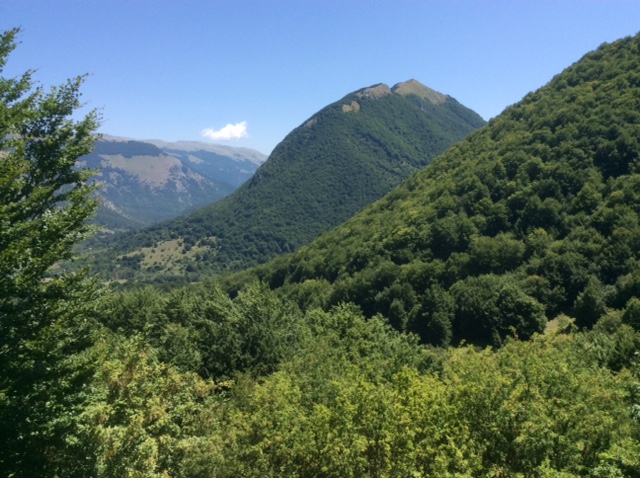
Mountains in Abruzzo National Park

 “Man is hungry for beauty. There is a void.”—Oscar Wilde

In the streets of my Delhi neighborhood, workers are building new apartments. Women carry sand on their heads. Bricks are stacked on the walkway. Yesterday the populous celebrated Republic Day, and I was reading Pamela Timms’ book, Korma Kheer & Kismet, the chapter titled “Independence Day in Sadar Bazar” where she describes the civic protests of 2011 where social activist, Kisan Baburao “Anna” Hazare, began a hunger strike in protest of government corruption. Concerned with the amount of interest Hazare stirred up in the populace, prime minister of the time, Manmohan Singh responded, ‘”Corruption manifests itself in many forms. Funds meant for schemes for the welfare of the common man end up in the pocket of government officials. In some other instances, government discretion is used to favor a selected few. There are also cases where government contracts are wrongfully awarded to the wrong people. We cannot let such activities continue unchecked.”’ Hazare’s hunger strike began the day after the prime minister made the statement, reports Timms, and goes on to describe some of the corruptions in the system—food vendors paying as much as a quarter of their salaries to the police to be able to stay open, and rickshaw drivers paying as much as 20% of their salaries to police to prevent their tires from being slashed, families having to pay bribe money to secure a place for their child at school. (p. 55) (You can read an overview of large-scale corruption in India here if you wish.)

It’s no surprise that corruption is present not only in India. It is a worldwide problem in both businesses, see a list here of top business corruption cases, and governments. Take a look at the thematic map from Transparency International here, to see a visual representation of corruption levels in countries across the world. Justice doesn’t prevail. In many cases, it’s simply the way the world functions where people live, and the everyday person, if he or she wants to function in society, doesn’t have a lot of choice about it.

With corruption and misuse of power so widespread, an enormous percentage of people in the world are pawns to those who hold the power. How do people manage? How do people—any of us and all of us—caught in such systems go on living with good conscience? I remember listening to Garth Lenz describing on his TED Talk about the effects of mining for oil in Canada’s tar sands had on the native people of the area. Parents in that area are caught in the dilemma of needing to feed their children, yet the toxins in the river are causing cancers at the rate of 10 times what it is in other parts of Canada. Because it’s very costly to fly in all the food a person needs in order eat, the aboriginal people are forced to eat the food “..as a parent, I just can’t imagine what that does to your soul. And that’s what we’re doing,” says Lenz. (transcript available here.) Certainly there were people during the time of Spain’s inquisition, in Nazi Germany and in Pol Pot’s Cambodia who didn’t agree with the government’s position but felt compelled to go along with the crowd mentality for fear of their own lives and those of their children’s. Certainly, there are people today in our own institutions who disagree with the use of power and yet are afraid of speaking out for fear of losing their jobs and the livelihood for their families. Not everyone can just move on or move out to a new situation, new job, new country, new life, and even if that were possible, where might one live or work where corruption was not part of the way of life? We have to learn to live in a fallen world.

I’m reminded of Maria Mazziotti Gillan’s poem, “I Open a Box,” in her book, Ancestor’s Song, where she describes her Italian immigrant mother’s doctor coming to her New Jersey tenement to assist her in the delivery of her baby. He arrives late, and Gillan’s mother has already given birth, cut the umbilical cord, and washed her child. When the doctor finally arrives, he doesn’t even enter the room. Instead, he distances himself from the situation.

“He washed his hands, wiped
them on one of the rough linen towels
I brought from Italy, stood in the doorway.
“You’ll be okay,” he said, and left.
“Oh, well,” my mother said, “I think
he was afraid of catching it.”
“Catching what?” I asked.
“Poverty,” she said.

IMG_7119
New Delhi neighborhood street.

Poverty is often perceived by wealthier countries as something out there over there, not mine not related to one’s own life. Like the doctor at the door, people want to distance themselves from the poor, not realizing their lives are connected. We may want to stand at the door like the doctor of this poem observing a world we don’t want to be a part of. We may think we can wash our hands, bid others well and walk away, and disconnect ourselves from what we don’t want and live in a different neighborhood. But our lives are intertwined. One example: A few years back, students in my speech class debated whether the lithium beneath Bolivia’s salt flats should be mined. The area is of tremendous beauty yet the area holds more than half the world’s lithium. Lithium is a lightweight metal used in powering our high tech products—iPhones, iPods, and other handheld devices. Now, as the world searches for alternative energy and looks towards ways to store electricity in batteries in order to meet more of our needs, including the use of batteries for electric vehicles, the need for lithium grows in greater and greater demand.

Dan McDougal, in his article on Mail Online “In search of Lithium: The battle for the third element” quotes a lithium-ion battery producer, Mary Ann Wright of Johnson Controls-Saft, ‘Since a vehicle battery requires 100 times as much lithium carbonate as its laptop equivalent, the green-car revolution could make lithium one of the planet’s most strategic commodities.’“ There’s not enough lithium to power the world’s 900 million vehicles, however, McDougal observes. Bolivia has significantly large amounts of the needed lithium to produce the batteries for the growing electric car industry, an industry that most people perceive as a green technology. Mc Dougal reports that according to “William Tahil, research director with technology consultancy Meridian International Research, ‘to make just 60 million plug-in hybrid vehicles a year containing a small lithium-ion battery would require 420,000 tons of lithium carbonate – or six times the current global production annually.” To continue, McDougal goes on to report that “The US Geological Survey claims at least 5.4 million tons of lithium could be extracted in Salar De Uyuni, while another report puts it as high as nine million tons.”’ Bolivia is a very poor country. Child workers are exploited, but children work to help their families. While mining the mineral would bring needed jobs and money into the country, a problem is that mining the mineral requires an abundance of water, and water is a rare commodity in Bolivia’s high desert. Bolivia has experienced exploitation by outsiders before in the tin and silver mining industries. An overuse of water could significantly affect the country and its people in numerous ways—making it difficult to have enough water for daily use, as well as for farming. Additionally, mining pollutes water with toxins as well. McDougal asks his readers “Is the world’s need for a green solution to transport worth the destruction of this unique environment and way of life that it lives on?”

Transportation is necessary. Our society is structured in such a way that few of us can walk to work. We need some way of getting to work. We want to do that in the least harmful way to the environment and others. As a result, in the desire to move away from our dependence on oil, many people are looking toward buying an electric car. These same people may be unaware that in doing so they are connected to moral dilemmas of another sort. We are all part of the greater web of being.

IMG_6990
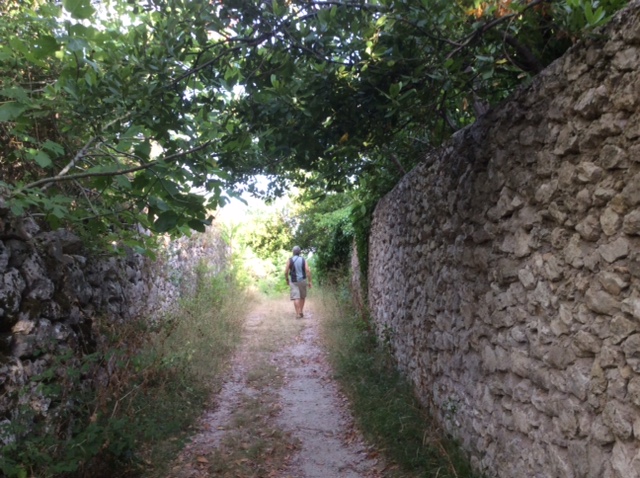
Walls and grass in Vicalvi, Italy sunset.

Parker Palmer, in his book, The Courage to Teach, which I’m currently reading, talks about the biologist Barbara McClintock, who was given the Nobel Prize in 1983 for her work that changed our understanding of genetics. Prior to her work, people thought of genes as separate things, not in connection to the environment they were a part of. Palmer explains that McClintock’s interviewer who wrote her biography, Fox Keller, “wanted to know, ‘What enabled McClintock to see further and deeper into the mysteries of genetics than her colleagues?’ McClintock’s answer, Keller tells us, is simple: “Over and over again she tells us one must have the time to look, the patience to ‘hear what the material has to say to you,’ the openness to ‘let it come to you.’ Above all, one must have ‘a feeling for the organism.’” We co-create our world. We can’t stand at the door. The burden of the cost of anything is born by all eventually. As Palmer goes on to say, “Modern knowledge has allowed us to manipulate the world but not to control its fate (to say nothing of our own), a fact that becomes more clear each day as the ecosystem dies and our human systems fail.” (p. 57) Perhaps, then one important way of living inside of corrupt systems and move ourselves and society toward greater wholeness is to do what we can with those around us to build and restore relationships constructively. Some things or many things may not be in our power. But some things will. We can learn to listen closely to the interrelationships of people and things so we gain a greater connection to life. With this understanding, we can better comprehend what actions will create harmony both with others and with nature.

IMG_7054
Abruzzo National Park, Italy.

Dostoyevsky said, “Beauty can save the world.” While it may not appear to be a solution to growing environmental and social concerns, the idea deserves a closer look. What connection does beauty have in showing us a way through our dilemmas of how to live in unjust social systems? The New York Times “Books” section, published in 1987 includes an excerpt from Richard Ellman’s essay “Oscar Wilde.” Ellman relates the story of Oscar Wilde coming to New York City in 1882. “Beauty is nearer to most of us than we are aware,” Wilde explained talking to reporters. One of the reporters wanted to know if a nearby grain elevator was beautiful. Earlier in the conversation, Wilde had said, ‘I am here to diffuse beauty, and I have no objection to saying that.” As reporters continued probing, Wilde explained further his ideas about beauty. ”’It’s a wide field which has no limit, and all definitions are unsatisfactory. Some people might search and not find anything. But the search, if carried on according to right laws, would constitute estheticism. They would find happiness in striving, even in despair of ever finding what they sought. The renaissance of beauty is not to be hoped for without strife internal and external.” ”Where then is this movement to end?” ”There is no end to it; it will go on forever, just as it had no beginning. I have used the word renaissance to show that it is no new thing with me. It has always existed. As time goes on the men and the forms of expression may change, but the principle will remain. Man is hungry for beauty. . . . There is a void; nature will fill it. The ridicule which esthetes have been subjected to is the only way of blind unhappy souls who cannot find the way to beauty.”’ Creating a world of beauty is creating the ideal world. Creating a heaven, so to speak. To do so will take great effort. But people are hungry for it, as Wilde says. We are hungry for beauty, and that hunger connects to the desire for a world without corruption. Without corruption, beauty has a better chance of thriving.

Elaine Scarry, author of On Beauty and Being Just, speaks on her Harvard Thinks Big, “Beauty as a Call to Justice” about how experiences of beauty help to move humans toward justice. When we experience the beautiful, we are pulled out of our everyday way of interacting with our surroundings. We stand still. We are transfixed, she explains. In those moments, beauty pours into us an awareness of the “surfeit of aliveness.” It takes us out of ourselves, and connects us with a larger reality. Scarry makes the case that this experience of beauty helps lead us to love what we see and to want to care for it and have a relationship with it.

IMG_7048
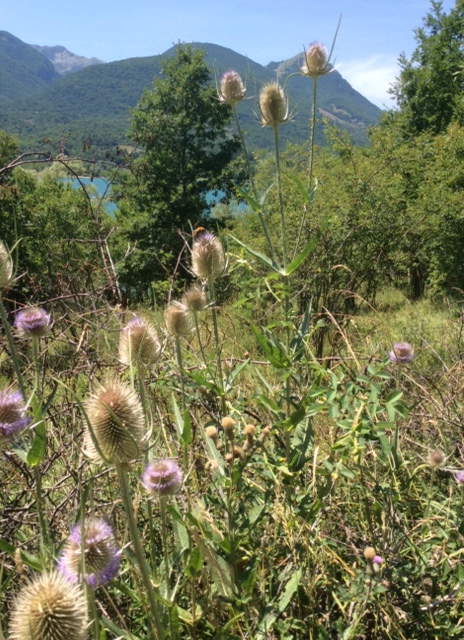
Wildflowers, Vicalvi, Italy.

I don’t know if its true as Keats said in his “Ode to a Grecian Urn” that “Beauty is truth, truth beauty,–that is all/Ye know on earth, and all ye need to know,” but I do believe we need to have a much deeper knowing of beauty than we currently hold. There is a relationship between our loss of beauty in many of our urban environments, a loss resulting from our pragmatic values that relegates beauty to the bottom realms, and efficiency to the higher realms of priority. When I speak of beauty, I’m not talking about beauty in the decorative or commercial sense. I’m speaking of the beauty such as nature gives us in a star strewn sky or a valley sweeping down in green fields from stoney mountain peaks. I’m speaking of the beauty Scarry described above—that stops us short, that overwhelms, and then lifts us out of ourselves. Is our culture’s pragmatic love of efficiency causing us to structure society in such a way that it’s actually challenging to make deep connections with others? We have connection to people on Facebook, but does the minimalistic communication that exists there nurture deep conversation and relationship? I doubt it. Could it also be true that our lack of seeing ourselves as connected to the beauty of the Bolivian salt flats and the lives of Bolivian miners as we pursue our technological development (and other similar realities) is part of the reason corruption continues to thrive? Do people act in ugly ways because they live in a world where connection to the natural world is broken? In glimpses of beauty, we can see the world we want to belong to, a world of balance and wholeness, and are drawn to it. If we gave beauty a place of respect and honor in our cultures, possibly we would treat the world with more respect. If we developed more of a relationship with those around us and with the natural world, wouldn’t we understand our connection to the world and realize more fully the effects of our choices? Is our collective loss of beauty causing us to lose our souls?

IMG_6955
At the castle ruins, Vicalvi, Italy.

I never used to understand the Jesus prayer—the ancient prayer that says, “Have mercy on me.” I felt it seemed too focused on the negative and I already struggle to move beyond my failures. But as I see myself more and more intertwined with the existence of all that is, I see the value of this prayer. What the world is or isn’t, isn’t all up to me, but I’m also a part of all that is. How do we live in a corrupt world and yet continue to grow toward wholeness? The problems are all much bigger than me but mercy is extended. “For the Beauty of the Earth” is an old song that carries with it the idea of giving praise for the world around us and to the skies. Perhaps the ongoing practice of noticing and valuing beauty in the world, as the words of this song illustrate, acts to create a greater awareness of our interconnectivity. It’s worth trying.

One of the especially valuable aspects of creative work—of art and literature, of writing—is the way it nurtures the inner life. The artist must look very carefully at whatever she or he is drawing in order to see it and how it functions in relationship to itself and to the world it inhabits. In writing, an author must delve inside the subject with imagination in order to understand the subject and the interrelationship of the subject to oneself and the world. To write or to do art is to cultivate beauty. It is a way to reconnect to the world, is a way of making whole again as telling our story is a way of making us whole again. The flourishing of this kind of empathetic understanding that comes through our interaction with literature and the arts is important to not only the continuance of the world, but the continuance of a world that is good to live in.

Wherever we are, we can work with others to create greater wholeness. If we are going to change at all, it will be a step-by-step movement toward wholeness. In the mean time, we can pray as we walk, “have mercy,” and, by grace, we will continue on.

IMG_6975
At Vicalvi castle, above the Comino Valley, Italy
Beauty, creativity, spirtuality, Uncategorized

At The Edge of Emptiness

“Prayer begins at the edge of emptiness.”–Abraham Joshua Heschel

IMG_4144

Heschel’s words strike me because there are a lot of things I don’t have answers for. Aware of my smallness in face of the suffering around me every day, I stand at the edge of emptiness and cry out.

When riding out into traffic, I’ve started a practice of looking into beggars’ faces who come to my window, or when someone speaks to me in the market asking for money, or when I see who is suffering, a family living on the street, for example, also animals who suffer, and in my mind I say, “I wish you well.” It’s a kind of prayer, and though it’s not directly answering the needs they have, it’s a way to keep my heart open–to keep noticing even though I might not be able to help the person in the way they ask of me. I want to see their humanness, and to be reminded of my own weakness and vulnerability.

Certainly, even in the lives of the desperately poor, there also must be times of joy. Even so, the human need in Delhi, is great. All the arms reaching out, the eyes–the world’s needs are immense. This week Nepal has its worst earthquake since 1934. The suffering is enormous. It will take decades, to recover, life times to become new, and we feel the grief hanging in the air as we go about our day.

The poverty in this world is not made up of physical poverty only, however. There is poverty of spirit, poverty of heart, and this is where I think that those of us in the developed world have a great lack. Everywhere around us today, from psychologists like Martin Seligman and his ideas about flourishing, to religious leaders like Matthieu Ricard, people are talking about how to be happy. Even Pope Francis has come up with his list of 10 tips for a happier life such as taking time off to be with your family, and spending time in nature. People who study what makes us happy tell us that focusing on what brings us a sense of well being actually helps us to become happier, and of course that is a good thing. But sadness and melancholy are also a part of life, and experiencing sadness and melancholy can help us become more compassionate, as Courtney Stephens explains on this animated TED Ed lesson. We learn from our sadness how to be more human.

I don’t know how best to respond to the sadness in the world, the grief so many feel, but want to give something of myself to meet that need. One must start somewhere, however small. It’s the start that counts. It makes room for greater opening, and I know I need to open.

FullSizeRenderFor months now I have been working on poems on the subject of food. It has taken some time, longer than I expected because new ideas for poems keep surfacing. I am now nearing the end of the poems I want to write for this series. I hope I’ve written well enough that after putting the poems into a manuscript I’ll find a publisher so I can use the proceeds from its sale to give to an organization that helps prevent hunger here in India. I hope it will be of some good. In the process of writing these poems, I’ve also been rereading about creativity, and returned today to Rilke’s Letters To a Young Poet where I read,

“…Everything is gestation and then birthing. To let each impression and each embryo of a feeling come to completion, entirely in itself, in the dark, in the unsayable, the unconscious, beyond the reach of one’s own understanding, and with deep humility and patience to wait for the hour when a new clarity is born: this alone is what it means to live as an artist: in understanding as in creating.

In this there is no measuring with time, a year doesn’t matter, and ten years are nothing. Being an artist means: not numbering and counting, but ripening like a tree, which doesn’t force its sap, and stands confidently in the storms of spring, not afraid that afterward summer may not come. It does come. But it comes only to those who are patient, who are there as if eternity lay before them, so unconcernedly silent and vast. I learn it every day of my life, learn it with pain I am grateful for: patience is everything!”

The need in India has been here for decades. It’s not going to go away in the near future. The sidewalk on the street where I live is in a perpetual state of change. It’s put together one month only to be torn up the next, a metaphor for my own incompleteness–of starting over, trying to make things work, change, to get things “right.” Whatever it is that causes that sidewalk to have to be torn up so often is a mystery. It’s just the way things are here. Likewise, whatever it is we are making or doing with our lives, it isn’t necessarily what we see on the surface. What’s really happening comes from a place far deeper, beyond the reach of our own understanding. I look into the face of my partner who I’ve known for decades now, and find him still a mystery, and stand in wonder. Who am I, I don’t even really know. Definitions, lists and examples aren’t enough to explain. Similarly, how can I in any way touch or meet the vast needs of a world as immense as India? I can’t. As Shakespeare wrote in Sonnet 65,

Since brass, nor stone, nor earth, nor boundless sea,IMG_4080
But sad mortality o’er sways their power,
How with this rage shall beauty hold a plea,
Whose action is no stronger than a flower?
O! how shall summer’s honey breath hold out,
Against the wrackful siege of battering days,
When rocks impregnable are not so stout,
Nor gates of steel so strong but Time decays?
O fearful meditation! where, alack,
Shall Time’s best jewel from Time’s chest lie hid?
Or what strong hand can hold his swift foot back?
Or who his spoil of beauty can forbid?
O! none, unless this miracle have might,
That in black ink my love may still shine bright.

We are all frail and mortal. Beauty’s action may be no stronger than a flower, but still we need that flower. We all need to be touched, to be met, to be needed. So, I write on, my words, tiny splotches on computer screens of light wavering inside the colossal of India’s immensity, prayers of pale petals– ink floating down the Yamuna hoping to touch other lives.

Uncategorized

Finding Space–An Invitation

Over the past few weeks I’ve been doing further research about Italian immigrants in San Francisco, San Francisco in the early 1900’s, reading some of Billy Collins’ poetry, editing a couple of articles to send out for possible publication, barbecuing pizzas with my husband and friends, listening in Spanish to some cultural programs about food in various regions of Spain, along with various other things important for me to keep abreast of things at my work, which this year, again, includes totally new systems and ways of approaching things.

photo-35
Just One Thing—Simplify.

About three times a week I get to the swimming pool, the gym about twice, and I aim to go on walks, though recently these have been fairly short. While I’ve done a number of things I want to do, drawing, as I was doing during the summer months, has now diminished to less than one page of drawings a week in my sketchbook. Books I want to read wait on a table. The clarinet I finally got out of the carry case last year with the intention learning to play currently sits on the shelf. I want to feed the things I’m passionate about. The reality is that each of these things takes time. To sum it up, there are many more things I want to do than I have time to do. Whatever it is we want to do or be takes practice, and this includes reshaping our life to live in a way that enhances our own well-being and sense of wholeness. For decades, I have pondered Thoreau’s quote from Walden, “Simplify. Simplify.” This still isn’t easy to do.

This past week I viewed the program, “Killer Stress–A National Geographic Special with Robert Sapolsky.” Sapolsky, a neuroendocrinologist, biologist, and researcher at Stanford University, explores the effects of stress–how it ages us more quickly, reduces our health, and cuts into our well-being–and yet how multi-tasking and stress is actually valued and promoted in our culture. Stress is difficult to escape. We all live in a social system. How can we live as free people, rather than slaves to a system that positions competition, power and financial success as centrally important? Sopolsky’s research lead him to observe how a troop of baboons, animals that are known to be aggressive, combative and nonsocial, became peacefully cooperative and nonaggressive after the dominant males suddenly died off as a result of contracting tuberculosis. The encouraging news in this study is that even though aggressive and destructive habits had been the way the baboons had functioned for decades, when they entered a new social construct where the aggressive males died, the whole community was able to become peaceable, even when new baboons entered the community. (See more at “Warrior Baboons Give Peace a Chance.”) Maybe there is hope for us too.

In his essay, “Slavery in Massachusetts,” Thoreau says, “It is not enough to be industrious; so are the ants. What are you industrious about?” In his essay, Thoreau admonishes readers to place their humanity before money, before laws– “policy is not morality,” suggesting that if we want to live humanely, we must place the way we relate to each other at the center. We must consider what it means to live wholly, what we mean when we say we want to live not as slaves to industry, but more fully.

photo-34
What are we industrious about? What do we want to harvest?

So, how does this hopeful change where baboons learn how to live together peacefully apply to our own lives? Many of us continue to live in aggressive societies where community and connectedness are not held as central values, where diverse ways of seeing, being and unique contributions are not seen or held dear because the system is rolling down the track like a locomotive train, intent on getting on with whatever its own vision is. In her recent article on Brain Pickings, “The Shortness of life: Seneca on Busyness and The Art of Living Wide Rather Than Living Long,” writer Maria Popova quotes Roman philosopher, Seneca “It’s not that we have a short time to live, but that we waste a lot of it. Life is long enough, and a sufficiently generous amount has been given to us for the highest achievements if it were all well invested…Life is long if you know how to use it.” This is a stunning, paradoxical thought. We have time! As Thoreau suggested, it’s not that we’re busy doing something–what is it we are busy about that eats the time that would allows to understand we are living fully? Are we nurturing our passions–the things that makes us feel connected to our heart’s deep need and fully alive? If life is long enough if we use the time we have to fully live, how do we reshape our lives to do that. If, like many of us, we find we need to be on the institution train for a period of time, how can we still make use of the station stops? How do we open the window and feel the breeze and make sure to look up and notice the dragon flies swarming above the nearby trees?

In the hopes of recovering more life and a sense of space inside myself, I’m aiming to practice the act of purposeful noticing–looking for one small thing each day to connect myself more to the heart of the days I’m living–to the physical world, and to the life of those around me. I want to release myself from the world of walls, at least briefly every day, and every day remind myself that I am alive in a physical world full of wonder. I reside in a body that is allowed to wander and walk here on this earth. Walking, Ferris Jabr tells us in his recent article in the , “Why Walking Helps Us Think,” not only improves our memory, attention, and staves off degenerating brain cells, it also, through its rhythmic quality, creates a mental state that nurtures creativity and innovative ideas. Now that’s wonderful news!

I’ve decided to take a small, probably slow walk each day, and will couple it with a practice Naomi Shihab Nye suggests people consider–the practice of writing down just a few lines a day, maybe three, for example, of things I notice and observe. A short walk and three lines are manageable. I plan to try this for 40 days, a length of time long enough to notice change but short enough to feel doable. My desire is to observe how this small act might shift my thinking, perceptions of time, and way of being and living to allow me more of a sense of freedom and connectedness to the physical world around me.

I began my first observation yesterday, with noticing the tree in the school yard that was suddenly cut down. The tree has been a focal point of observation I’ve returned to many a morning over the last seven years as I’ve watched birds gather in that tree–crows and kites mostly. Last year, the tree was struck by lightning and was in distress. Its center branches had dead. Then, yesterday morning, I heard the sudden crack from my apartment as the tree’s center trunk broke apart–the result of the school’s gardeners pulling it down. Only this past Tuesday I had been standing next to it, noticing the sap dripping down its sides at various points on its trunk, as if it were grieving over the recent difficulties it had experienced. All day, the gardeners were cutting up the trunk and branches. Now the tree is half its original size. Everything changes. What was once present, is suddenly gone.

photo-33
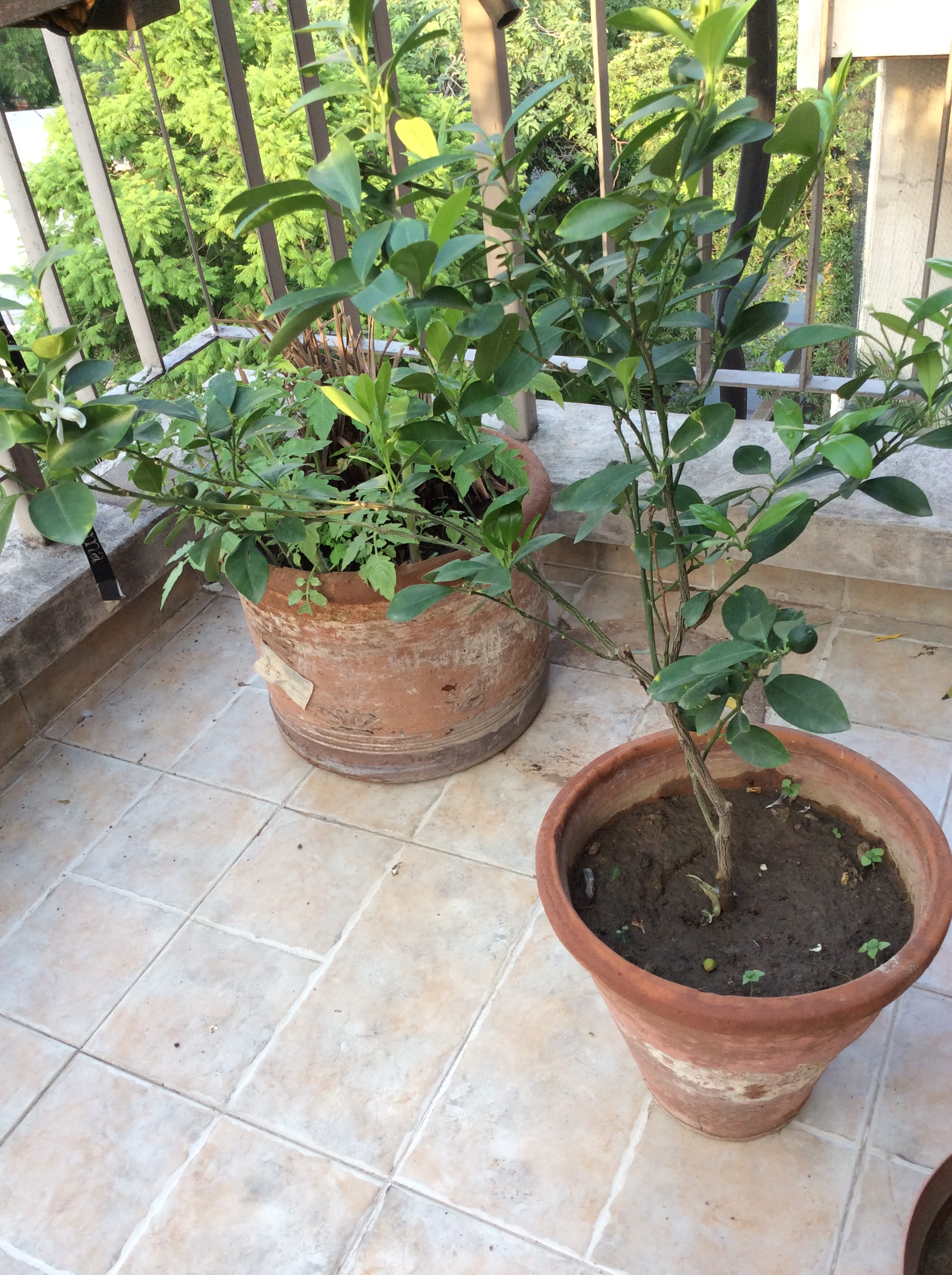
Observation: Lime tree with fruit and blossoms

The photo here shows today’s observation, our lime tree, one year old and putting out an abundance of leaves, blossoms and tiny fruit. It is a happy tree, ready for a larger pot. We hauled up several new plant containers four flights to place on our balcony with the hope of enhancing our garden there. The lime tree is thriving. We had orange groves the entire time I was growing up. When I smelled the one blossom that’s currently open, I was reminded of my mother who always sent me orange blossoms in the mail after leaving home. Citrus blossoms are always sweet.

I’ll post later the other things I observe in the coming week, and invite you to try this along with me and let me know what subtle things begin to shift in your own awareness over the course of time–what it is you discover through the practice? Do you feel an increased sense of health, awareness of nature, gratitude, wholeness, connectedness to life, your neighborhood, or the world? What is it that happens when we practice grounding ourselves in place, when we pay attention to the suchness of things? If forty days is too long for you, try 20 or four and see how that goes–whatever feels right for you in your desire to shift things in your life.

As E. E. Cummings writes,

being to timelessness as it’s to time,
love did no more begin than love will end;
where nothing is to breathe to stroll to swim
love is the air the ocean and the land…

Love is the voice under all silences.

I want to listen inside that silence and notice the miracle of love that holds me up day by day.

Everything is miracle Peter Meyer explains in his song, “Everything is Holy Now.”


gardening, poetry

Coming Back to the Garden

Gratitude Gardens
Gratitude Gardens

I sit looking out over my yard while I write, the sun neither too warm nor too weak– a perfect gentleness for a summer afternoon. I see the stone steps under the grape arbor, and the thyme that fits between the cracks, and think of how those cracks are like the summer holiday, the space in my life that I am hungry for. The quiet. I sit here satisfied simply to absorb the green and the random dove or falcon call. At unexpected moments the scent of redwood or pine wafts through. Restaurants and movies can be good. Shopping for supplies is necessary. But many of us also need to walk in the woods, go down to the river or ocean, sit by flowers or a slab of granite, or get our hands in the dirt to find ourselves again. I am one of those. This morning I decided to read Rilke again, and pulled from my shelf the volume of Selected Poems From Rainer Maria Rilke with translation from Robert Bly. In his A Book for the Hours of Prayer, Rilke writes,

1.
I live my life in growing orbits
which move out over the things of the world.
Perhaps I can never achieve the last,
but that will be my attempt.
I am circling around God, around the ancient tower,
and I have been circling for a thousand years,
and I still don’t know if I am a falcon, or a storm,
or a great song.

As a traveler, I’ve circled around the globe exploring and discovering, but there is another kind of travel, that of the inner pilgrim, traveling within trying to understand what it means to live and how to live meaningfully so that we can learn who we are and why we are here on earth–what it means when we meet and greet each other, what it means to be in relationship to others, to the earth, to this place in time. Like Rilke, I don’t know if I will ever achieve this, but this is my attempt.

Herb Bed at Gratitude Gardens

Here on my land while watering the garden, pulling weeds, or planting, I realize how deeply satisfied I am, how little it takes to make me feel content. I feel settled inside, whole. All the years of travel and exploration, these have been good. But the continuous striving that the workplace emphasizes seems irrelevant here in a garden that holds to an organic pace of being. Things grow according to the pace they were meant to grow at. The gardener nurtures them along by making sure there is adequate soil and light, plants the plants with others they are compatible with, tomatoes with basil for example, or strawberries with borage–but the true becoming is there in the mystery of biology and the seed. All the years of working and the practice of my work, reading, writing, and then I come home to the garden and sense I have found my true self, or it is at least a place I want to find myself in.

A metaphor for life, the garden has much it can help us understand about ourselves: that there are seasons and cycles for everything, the value of weeding to protect the life you are nurturing, that plants have personalities so to speak–some need more sun, others shade, which plants help them grow better, make them taste sweeter, and which protect. Gardens take work. If you want something to grow, you have to put in the effort by digging, planting, tending, and harvesting. Gardening can be a contemplative act. When you get your hands in the soil, you start to understand the connections to your own life. These are the connections I want to explore and know through our experiment in living here at Gratitude Gardens, a garden we are slowly building over the years here on our land.

At Gratitude Gardens we will raise our food and use the garden as a place to connect to the creative process in a variety of forms, for writing and art. We have planted herbs, flowers, grapes and fruit trees, and this summer are expanding the raised beds to make way for future food. Most anything we practice intentionally with our hearts can be a spiritual path that will teach us more of how to live if we are willing to view it in that way. For me, building a garden is an important part of that practice, and I want to believe there are others like me who feel hungry for the quiet, want to connect or reconnect to the earth and learn how to listen to what it has to tell us about life.

Gratitude Garden in its Beginning Stage

Adam and Eve left the garden. Everyone leaves. It’s the path of learning, knowing, of growing up. But we can come back too. We can make a garden. Yes, it’s made by the sweat of the brow, but that is an important part of learning what the gift of a garden is, and learning how to find yourself in one.

Maybe you, too, “have been circling for a thousand years,” or feel you have, and like Rilke, “still don’t know you “are a falcon, or a storm, or a great song.” Why not go on inner pilgrimage? Discover and claim your path so you can find through that work how it is you can come back to the garden.

Uncategorized

The Value of Waiting

“Adopt the pace of nature. Her secret is patience.” –Ralph Waldo Emerson

Outside of Riyadh, Saudi Arabia, during the month of February wild iris grow in ribbons of purple across the desert in an area called Tumair. They open between 1:00 and 2:00 in the afternoon. Not before. You can light a flame near them, shine bright lights near them, but they don’t open before it’s their time. There are things you can control, and things you can’t. It’s good to know the difference. From nature we learn that all things have a natural timing. Seasons are cyclical. Most of us find it difficult to wait for things we long for. We don’t like waiting for a web site to load up on the computer, we don’t like waiting in lines or in traffic. We eat on the run. Making things go fast is important to so many so much of the time but learning to wait is also both important and undervalued.

Before Christmas this year, I woke early, the room still full of darkness, and I remember how when I was a child I would wake several times in the night, wondering if it was Christmas morning yet. Though we don’t have a Christmas tree in our house, as a child, I loved lying under the tree in the evenings when the colored lights were on. I would peer up through the branches with the tensile and decorations and imagining the thoughts of the tree when it lived in the forest, and then the thoughts it had as it stood in our living room. One of the best parts of Christmas, though, was waiting for Christmas day to arrive. At our house, we put the packages under the tree ahead of time. As we sat around the Christmas tree in the evenings, we could see all the packages, but we knew we couldn’t open them. We had to wait. When I think of it now, perhaps one of the things that made Christmas was so special was the waiting for it to arrive.

This year, a friend gave us a wreath. I didn’t know much about the tradition of a wreath earlier, but have been reading and learning more about them and how they are connected to the season of advent in the Christian church, as well as that of pre-Christian traditions to represent the cycle of seasons and of life’s presence in the midst of winter. This wisdom is a helpful one to nurture and practice, as it provides a structure in which to consciously practice how to wait. Waiting is an important part of understanding something’s value. In his essay, “The End of Advent” that I recently read in The Best American Spiritual Writing, Joseph Bottum, described Christmas as a season of “anticipation run amuck, like children so sick with expectation that the reality, when at last it arrives, can never be satisfying.” Most of us want to live a life that is satisfying. Our life situations are constantly changing. We have to be flexible and be able to stick with difficult situations, how to wait them out, in order to better understand how to live happily and well. You may have heard of the marshmallow experiment at Stanford where researchers gave children a marshmallow with a choice to either have one immediately or wait longer and be able to get two. The researchers followed up with the children latter, and those who were able to resist had SAT scores that were “on average, 210 points higher than those of those who waited only 30 seconds.” That’s astonishing, and it suggests that those who can think about the choices, and those who practice learning how to wait have nurtured an important character trait that can help them in life.

Connecting the idea of impulsive behavior and the inability to wait to the world at large, we are all aware of the way our modern life has used natural resources without restraint causing widespread environmental problems such as deforestation and desertification. Perhaps our desire and systematic use of these resources without restraint or adequate consideration of the long term effect on the world or our lives are our metaphorical marshmallow. With the ecological problems we are facing today, restraint could be a very good quality to practice that over time could create a shift in consciousness that would create a healthier environment for both us and for the planet.

Genesis tells us the earth was formed in darkness. The Celts told stories in the dark half of the year. Darkness, an organic pace of growth, waiting—these are all qualities associated with creativity. Currently, I’ve been working on a series of related narrative poems about immigrants from Calabria, in southern Italy, to San Francisco during the early 1900’s. The writing has required research about the time period, culture, and the locations of both Calabria and San Francisco. It’s a challenging, engaging and new kind of writing for me, and many times I have written into a situation where I’m not sure where to go next. Many of the poems in the series are told through the point of view of a particular person, and I’ve had to push deeply into the imagination to try and grasp the meaning that might emerge from a life dealing with the particular historical problems or relationship issues a particular poem explores. Finding what will work best for the poem means being open to a variety of possibilities and trying them out. There is a spectrum of possible ways to develop an idea, and to dig into the inner core of what situations or events suggest so that they reveal a deeper meaning in the writing that is honest and true takes time. Sometimes a piece needs to sit for days, weeks, or even months before the way through to completion appears. Other times the whole form needs to be altered, or entire sections cut out. When you are creating something you care about, what matters is not the speed at which the task is accomplished, but the quality of the work. Forcing the creativity to come out usually results in ruining or breaking the work. Perseverance is essential to the creative act. You have to put in the time but the path towards the end product isn’t typically a direct line. You also need to nurture the environment that will enable the idea to emerge, and then let it surface.  Anne Morrow Lindbergh said, “The sea does not reward those who are too anxious, too greedy, or too impatient. One should lie empty, open, choiceless as a beach—waiting for a gift from the sea.” Essentially, the creative act requires a kind of waiting for a gift from the sea. You do your work, practice your skill, you prepare, but you also need to hold a receptive mind, and this involves active observation, purposeful noticing, listening deeply and staying attune to what’s coming up from the questions you hold, play as well as time away from the work itself. I recall Naomi Shihab Nye’s quote on the Bill Moyer’s Language of Life series where she is talking to a group of young writers and says something about how you may be writing your poem thinking you are going to church and it takes you to the dog races instead. You have to listen to the writing, the work and tune your ear so you can learn to understand what it is telling you it needs. Even with years of practice and study, this takes time to learn.

When making a speech or delivering a monologue or a joke, we are aware of the value of the pregnant pause. Timing, waiting is important and can make the delivery of the message more powerful. Restraint, learning to wait is a practice that in time, brings fruit we benefit from both individually and collectively. Its a new year. It seems a good season for planting the seeds for that fruit.

Uncategorized

Remembering How to See

“But what the poets sees with his always new vision is not what is “imaginary”; he sees what others have forgotten how to see. The poet is always inadvertently stripping away the veils and showing us his reality. Many poets, as we know, go mad because they cannot bear the worlds of illusion and falsehood in which most human beings spend their lives.” – Karl Shapiro, “What is Not Poetry?”

Writing is a way of getting to the truth of what I see, a way to peal back the layers, to ask what is this I have experienced,  how do I name it, what is its essence? There are two kinds of knowing–the experience itself, and then the re-experiencing when in the act of writing. Writing  allows me to burrow in to the original experience and know it more completely. The experiences I have nurture ideas for writing, and the writing enriches and deepens the experience. The two things are intimately intertwined.

Writing poetry is a way to keep alive, to keep in touch with the mystery. Wanting to name the mystery doesn’t lessen it, instead it helps to increase its wonder. I want to always be filled with wonder like I was as a child looking out the window of the house my father built at the sea of fog as it filled the valley below leaving islands of hills. The hills and the fog were not just objects with names, they were part of a geography that absorbed me into itself and defined me.

“The poet,” Shapiro says,”sees what others have forgotten how to see. “How do people arrive at the place where they forget how to see? How do I live in such a way that I am not asleep, so that I nurture the eyes and ears of the heart?

When I write, I am try to see with eyes open, to understand, to touch the live nerve where life touches the bone so that I know what my experiences are trying to say to me about how to live. If I want to write well, I must listen intently to the life around me and live with an attitude of vulnerability and humility. I can’t allow myself to get wrapped up in the desire to have a name, status, power, or be concerned with the competition or what others say about my work. Focusing on how people might perceive me or my work, would drain the real strength of my work and effort. It would distract, from the goal of writing itself, and get in the way of seeing and understanding that makes for good writing. The important thing is the work of writing, and to find as I write how to draw closer to being able to say what can’t be said–to stand inside the holy space of life. I must live leaning in to my experiences, looking, listening–then write what I see and hear, including the questions.

Our culture is very interested in competition and position, making it difficult to keep focused on the work of living deeply and writing honestly. A poet must be fully immersed in the world, seeing it, knowing it, but at the same time outside of it. As Shapiro goes on to say in the same essay, “Whenever the poet is not “oned” with the experience we can always detect the forcing, the insincerity.” It is this oneness with our experiences and with the world that allows us to know we are alive, and opens the door for us to experience meaning.